Winter Centerpiece Ideas: 12 Stunning Looks That Make Your Table Feel Warm and Elegant
When the days turn short and the evenings stretch long, the dining table becomes the warmest spot in the house — and a good centerpiece is what makes it feel that way. These winter centerpiece ideas are built for the whole season, from the first frost in late autumn through the last cold snap in early spring, and they rely on frost, evergreen, candlelight, and natural texture rather than anything that only works in December. None of them needs a florist or a big budget, and if you want a version dressed up for the holidays, these Christmas centerpiece ideas show how the same winter base adapts to a festive table.
Winter looks different from every other season because the palette does the heavy lifting. Deep green, frost white, silver, warm wood, and soft candlelight flatter almost any dining room, and they look just as good on a quiet Tuesday as they do at a gathering. Keep the arrangement low enough to talk over, choose one clear focal point, and let the rest of the table breathe.
Key Takeaways
What makes a centerpiece feel like winter rather than Christmas? Frost, snow, evergreen, bare branches, and candlelight — elements that last all season — instead of red-and-gold ornaments or anything tied to a single holiday.
How tall should a winter centerpiece be? Keep everyday arrangements under 12 inches tall so guests can see each other, or go deliberately tall and slim above 24 inches with a narrow vase or candlestick.
What is the easiest winter centerpiece for a beginner? A candle cluster on a wooden board, with pinecones and a few evergreen sprigs tucked around the bases — it takes five minutes and looks finished immediately.
How long will fresh evergreen last on the table? Cedar and fir hold their needles for two to three weeks indoors if kept away from radiators and direct heat, while eucalyptus dries gracefully and keeps its shape even longer.
Can one centerpiece last all winter? Yes. Build a neutral base — a tray, a bowl, or a garland — and swap one small element, such as cranberries for citrus, to refresh it through the season.
1. How Does a Frosted Evergreen Garland Create an Instant Winter Table?
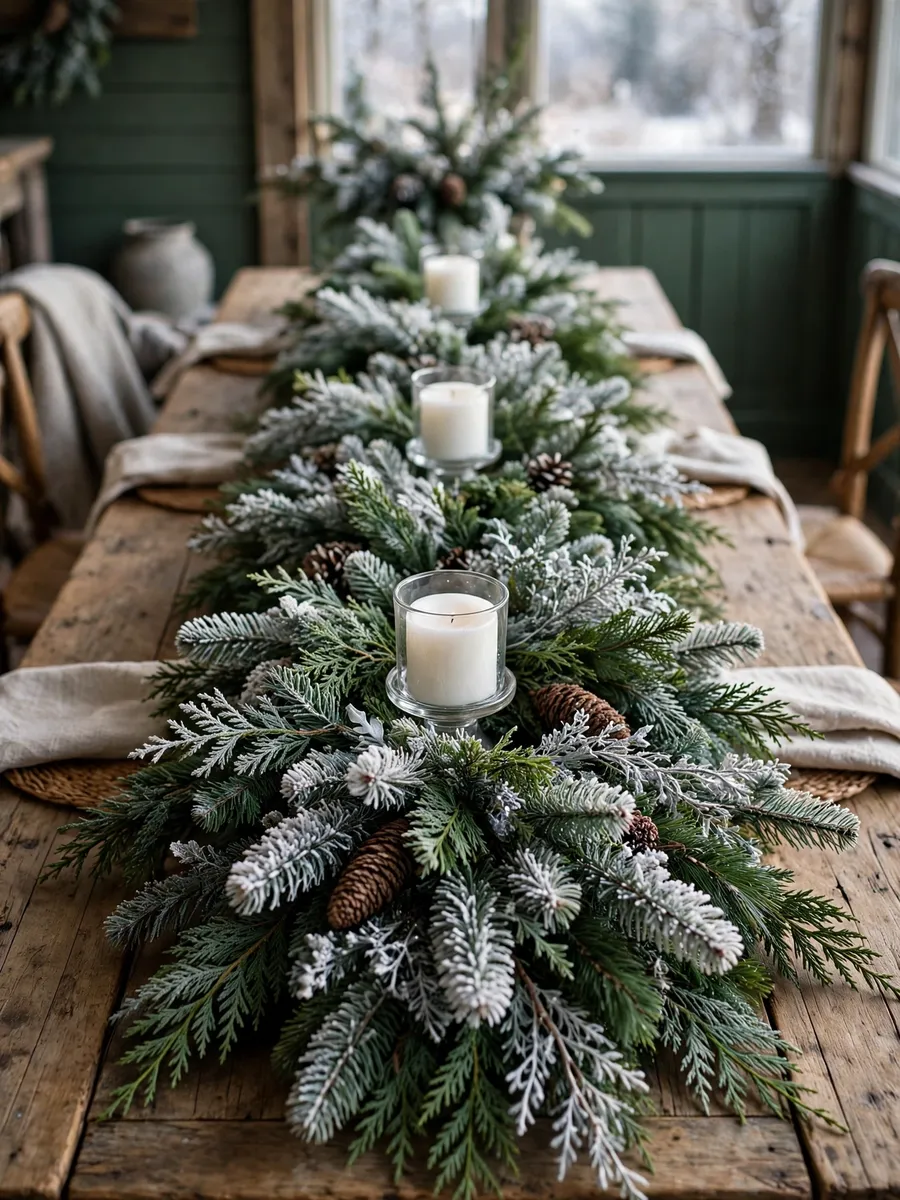
A frosted evergreen garland is the closest thing to an instant winter table: it covers the bare middle of the table, brings in the scent of fresh greenery, and its pale frosted tips catch the light beautifully. Lay it straight down the centre and you already have a centerpiece before adding a single candle.
Picture a long farmhouse table with a cedar and fir garland running its full length, three short white pillar candles nestled along it, and a few small pinecones tucked into the greenery.
Quick tips:
- Overlap garland pieces by a few inches so there are no bare gaps.
- Keep the garland about six inches wide so place settings stay comfortable.
- Mist fresh greenery lightly every few days to slow drying.
2. What Makes a White Candle Cluster So Warm on a Cold Evening?
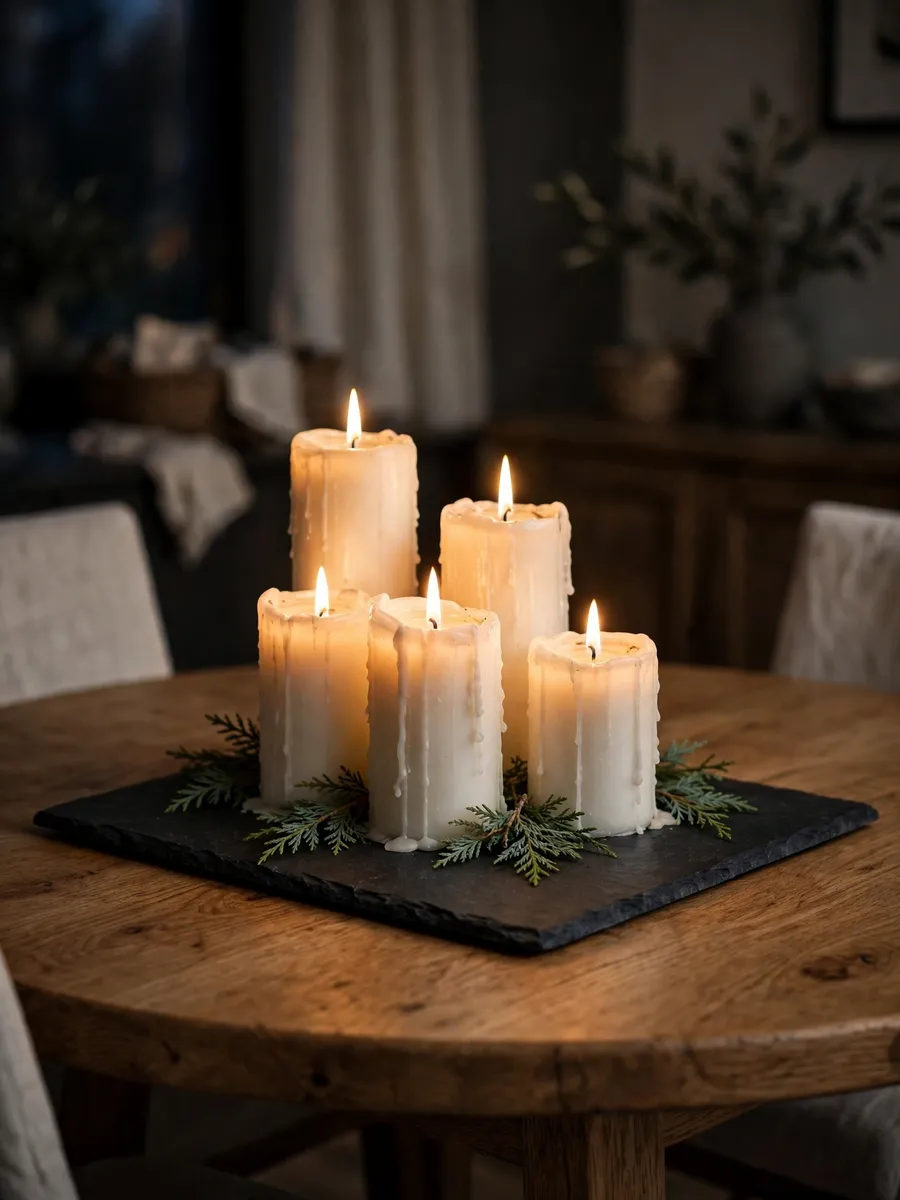
Nothing warms a winter table faster than candlelight, and a cluster of white candles does it with almost no effort at all. Group three, five, or seven candles together — odd numbers always look more natural — and mix pillar candles with slim tapers so the eye travels up and down instead of landing on a flat row. The white wax keeps the look calm, while the flames add a golden glow.
Try five white pillar candles of different heights on a dark slate tray, with a small sprig of cedar beside each base.
Quick tips:
- Use unscented candles so fragrance never competes with the food.
- Place a heat-proof tray under every candle to protect the wood.
- Trim wicks to about a quarter of an inch before lighting for a steadier flame.
3. How Do Birch Logs and Pinecones Bring the Outdoors In?
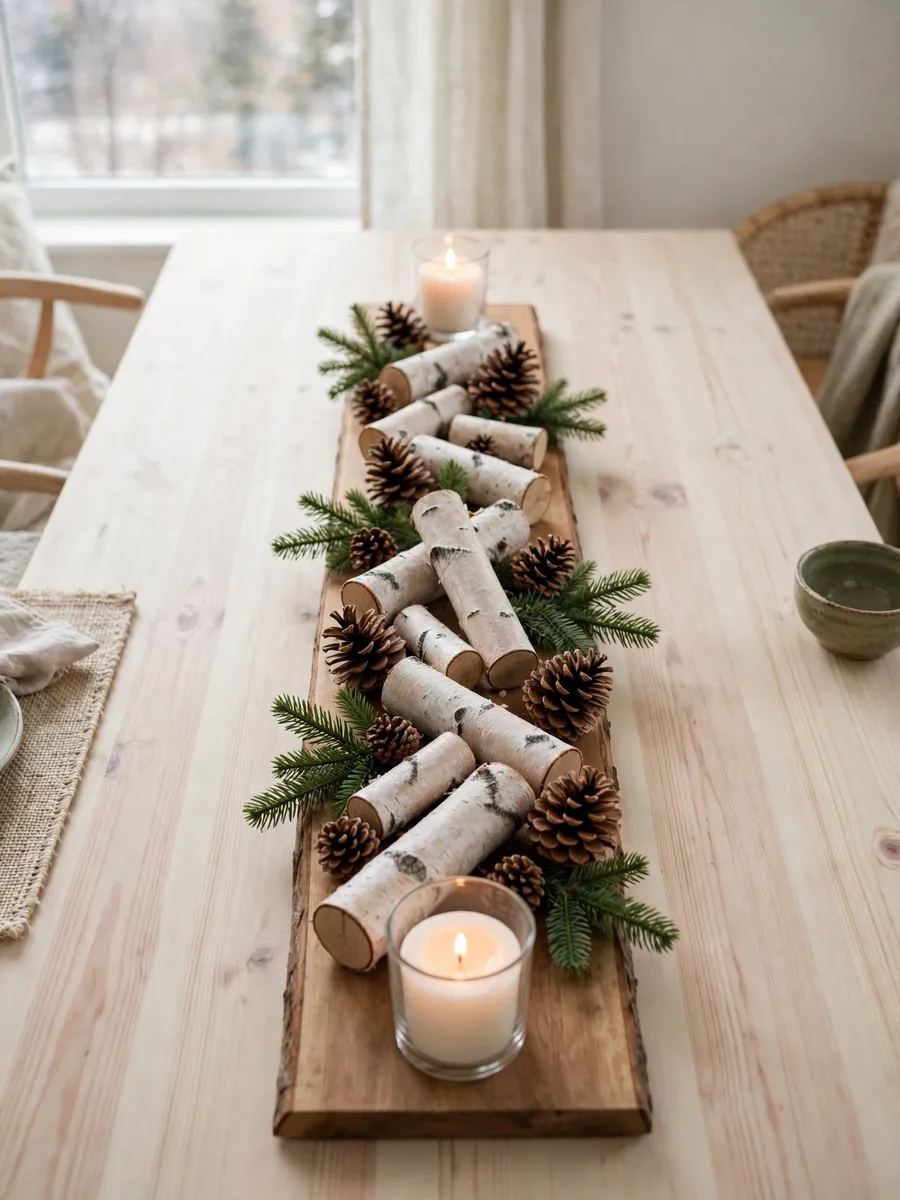
Birch logs and pinecones are winter in its simplest form — pale bark, rough texture, and the quiet feeling of cold woods. A few short birch logs laid across a wooden board, with pinecones of different sizes grouped around them, create a centerpiece that feels collected rather than decorated, and it costs almost nothing if you gather the pieces yourself.
Imagine a long wooden board on a pale pine table, holding three short birch logs, a cluster of pinecones, and a few sprigs of fresh fir.
Quick tips:
- Choose logs with clean white bark and trim any loose pieces.
- Mix pinecone sizes — large, medium, and small — for a natural look.
- Keep candles in glass holders when greenery is nearby for safety.
4. Why Does a Silver-and-Ice-Blue Palette Feel So Wintery?
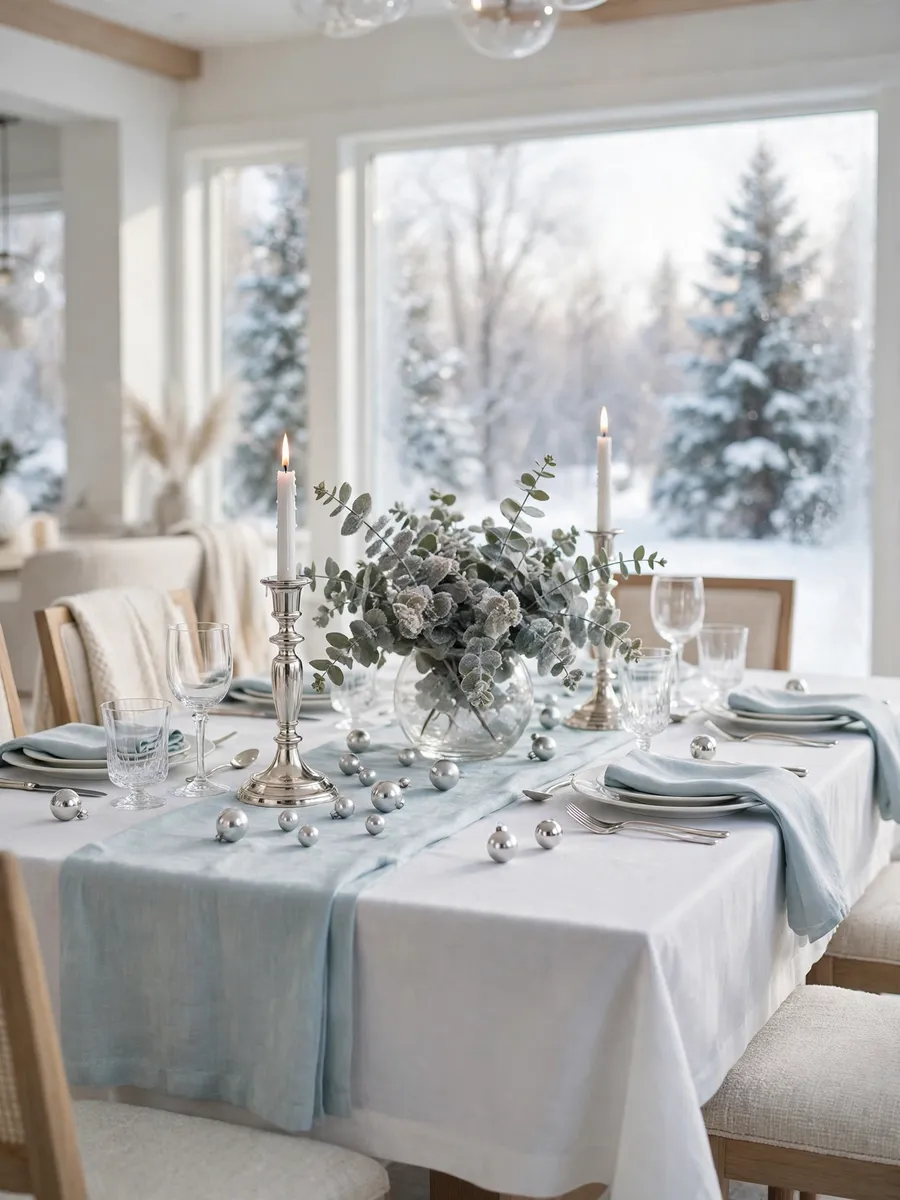
Silver and ice blue feel wintery because they borrow their colours from the season itself — frost on a windowpane, pale winter light, and the cool shine of ice. A centerpiece built on this palette looks crisp and elegant without trying hard: silver candlesticks, a pale blue runner, and a few frosted branches are enough, and the cool tones make candlelight look warmer by contrast.
Picture a white tablecloth with a pale ice-blue runner, silver candlesticks holding slim white tapers, and a low glass vase of frosted eucalyptus in the middle.
Quick tips:
- Repeat the silver at least three times so it reads as a palette, not an accident.
- Keep the blue pale — ice blue, not navy — for a frosty rather than heavy feel.
- Mix matte and shiny silver for depth instead of one flat finish.
5. How Can a Simple Cranberry Bowl Become a Stunning Centerpiece?
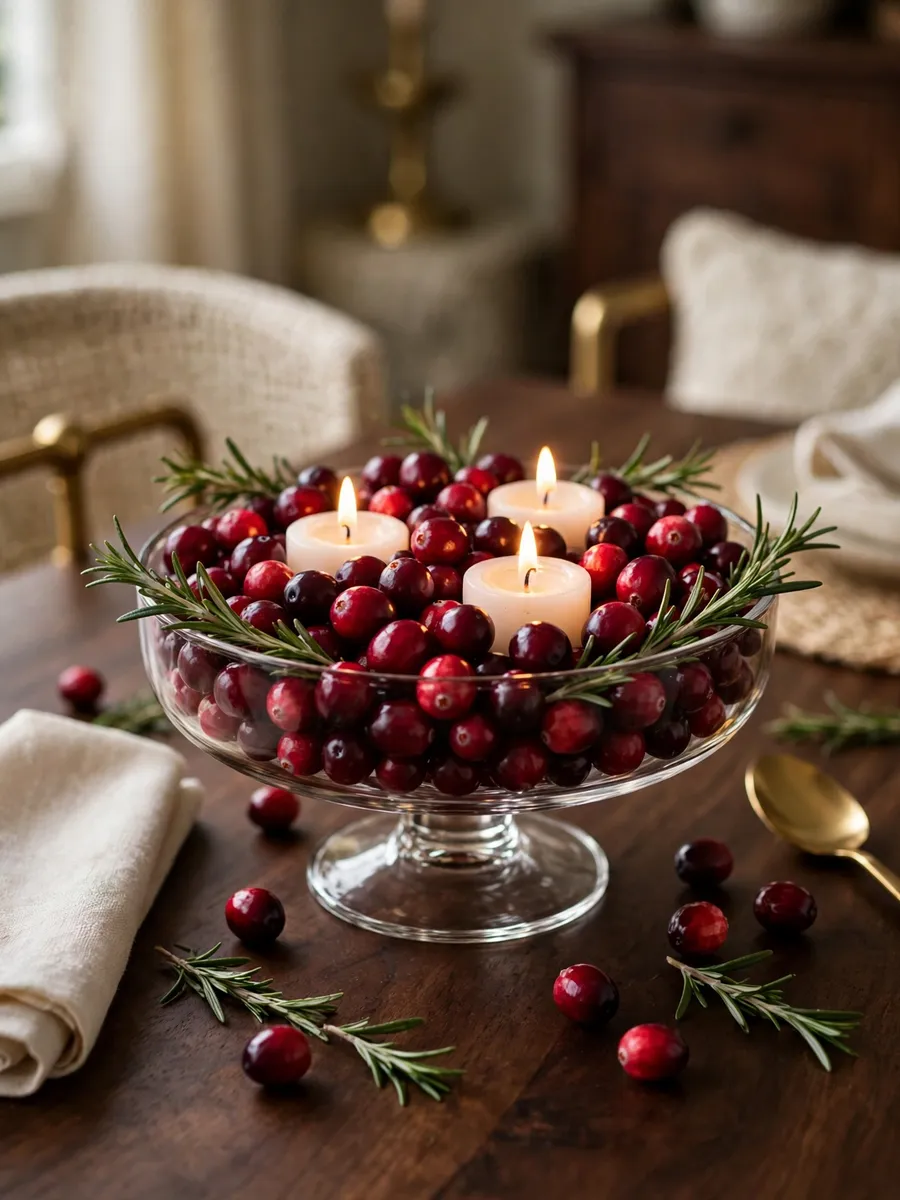
A bowl of fresh cranberries is one of the smartest winter centerpieces because it is beautiful, cheap, and genuinely seasonal — the deep red berries glow against white ceramic or clear glass, and they hold their colour for weeks without any care at all. Fill a wide, shallow bowl, nestle a few evergreen sprigs among the berries, and you have a centerpiece that took two minutes to build. If you enjoy layering fruit into a festive table, these Thanksgiving centerpiece ideas show how the same approach adapts to a holiday gathering.
Try a low glass pedestal bowl of fresh cranberries, with three short white votives set into the berries and rosemary sprigs around the rim — on dark walnut the berries look almost jewel-like.
Quick tips:
- Choose firm, unblemished berries and rinse them before displaying.
- Use a wide, low bowl so the berries spread out instead of piling up.
- Replace any soft berries every few days to keep the bowl fresh.
6. What Makes a Lantern With Fairy Lights the Easiest Winter Centerpiece?
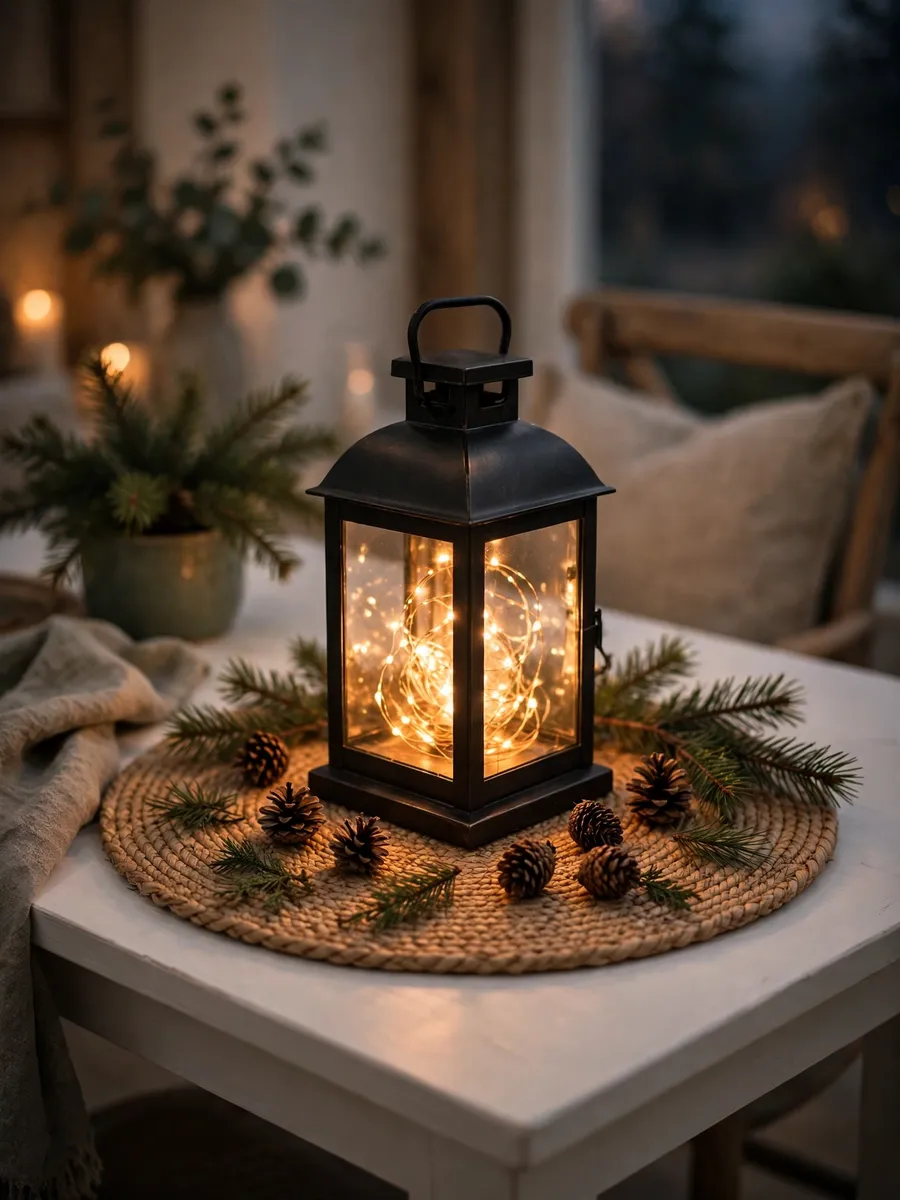
A lantern with fairy lights is the easiest winter centerpiece because there is almost nothing to arrange: set the lantern in the middle of the table, coil a short string of warm fairy lights inside it, and the glass panels do the rest, scattering tiny points of light across the table and the walls. It needs no water or fresh greenery, and looks just as good unlit by day as glowing in the evening.
Picture a matte black metal lantern, about fourteen inches tall, with warm white fairy lights coiled inside and a few small pinecones around its base on a woven placemat.
Quick tips:
- Choose warm white lights, not cool white, for a cosy rather than icy glow.
- Use battery-operated lights with a timer so the lantern lights itself each evening.
- Match the lantern’s metal finish to your other tableware for a pulled-together look.
7. How Do You Style Snowy Branches Without Overdoing It?
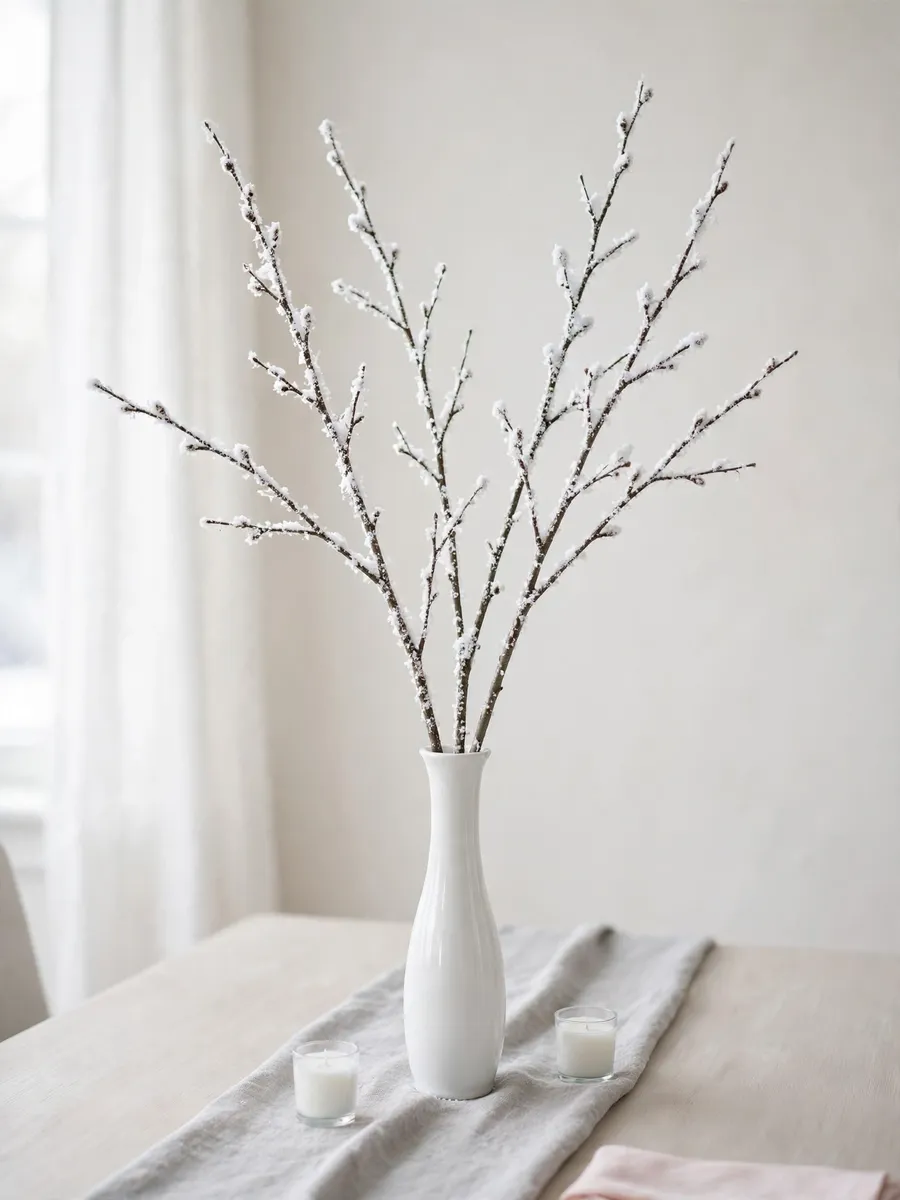
Snowy branches are dramatic, but they only work when you show restraint — three or five branches in a tall, simple vase will always look more elegant than a crowded bundle. Choose branches with interesting shapes, dust them lightly with faux snow, and let the empty space around them do the talking. Treat the branches as sculpture: one clear silhouette, plenty of air, and nothing competing with it.
Imagine a tall, slim white ceramic vase holding five slender branches dusted with faux snow, on a pale ash table with a soft grey linen runner and two small white votives at the base.
Quick tips:
- Use an odd number of branches — three or five — for a natural shape.
- Keep the vase tall and narrow so the branches stand upright and stable.
- Step back and remove one branch if the arrangement looks crowded.
8. Can Citrus and Rosemary Really Work as a Winter Centerpiece?
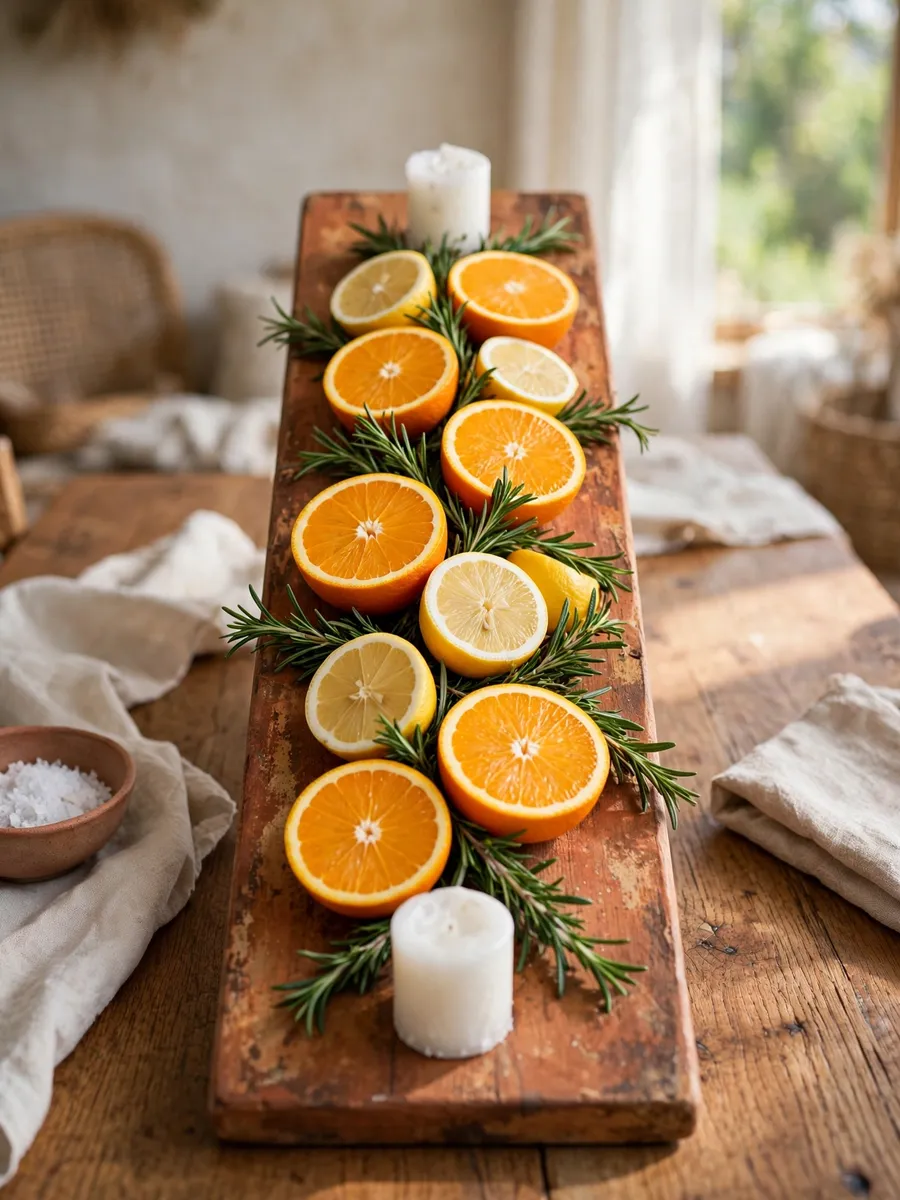
Citrus and rosemary work surprisingly well as a winter centerpiece because they bring the two things a cold-season table often lacks: bright colour and fresh scent. Halved oranges and lemons glow amber against dark wood, their cut faces catch the light, and rosemary’s deep green needles add the evergreen note that ties the whole arrangement to winter. The scent is gentle and clean, and the fruit stays handsome for days.
Try a long wooden board holding halved oranges and lemons, cut sides up, with rosemary sprigs between them and two short white pillar candles at either end.
Quick tips:
- Cut citrus just before guests arrive so the faces stay bright.
- Use a wooden board or tray to protect the table from juice.
- Mix orange and lemon for a two-tone look, or keep one fruit for calm.
9. How Does a Cozy Knit Runner Change the Whole Table?
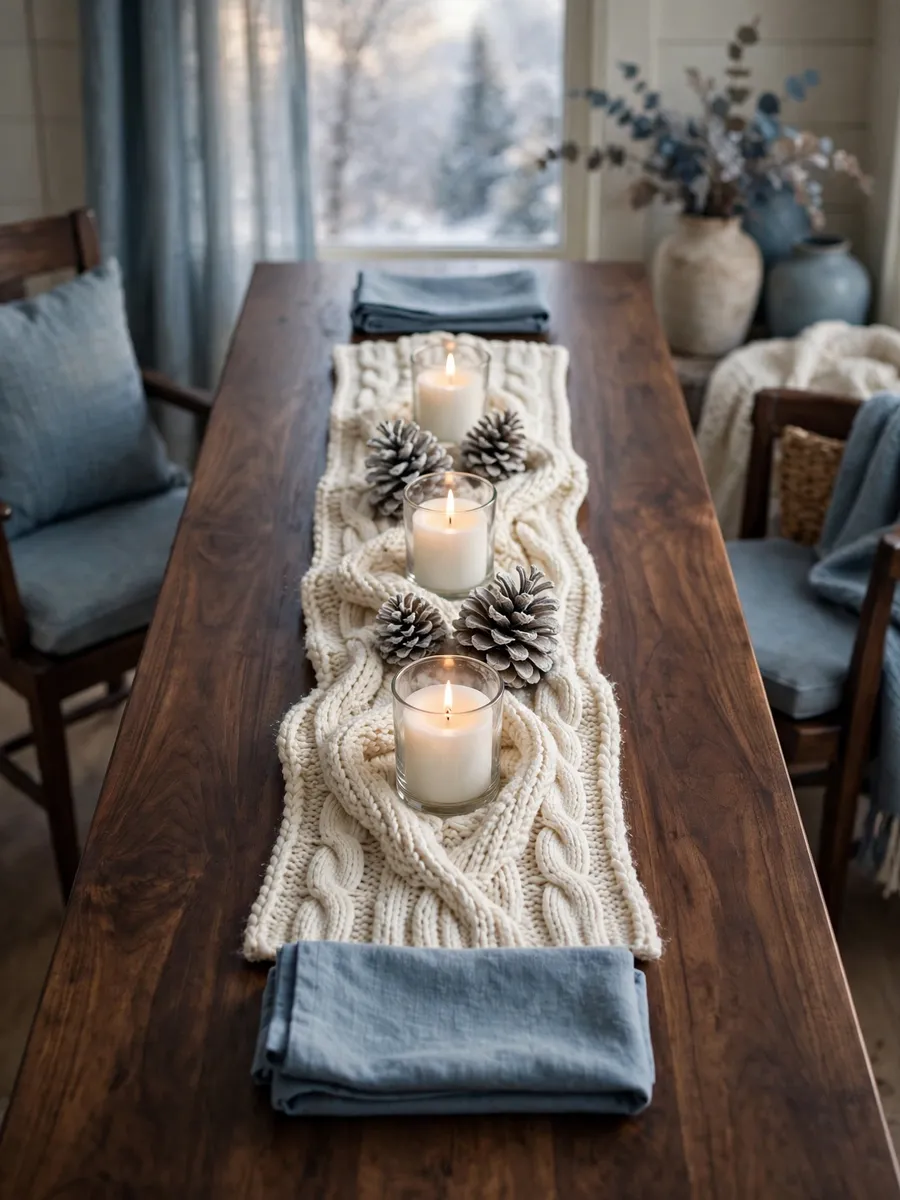
A knit runner changes the whole table because it changes how the table feels before anyone notices what is on it. Soft, chunky knit in cream or dusty blue softens hard wood and makes the table look inviting in a way linen never quite manages in winter. Lay it down the centre, add a few low candles and a small cluster of pinecones, and the runner itself becomes the centerpiece.
Picture a chunky cream knit runner down a dark walnut table, with three short white pillar candles spaced along it and a few frosted pinecones between them.
Quick tips:
- Choose a runner that hangs eight to twelve inches over each end.
- Keep candles in glass holders so wax never touches the knit.
- Pick a washable knit if the runner will see regular family dinners.
10. What Makes a Crystal Vase With Bare Branches So Elegant?
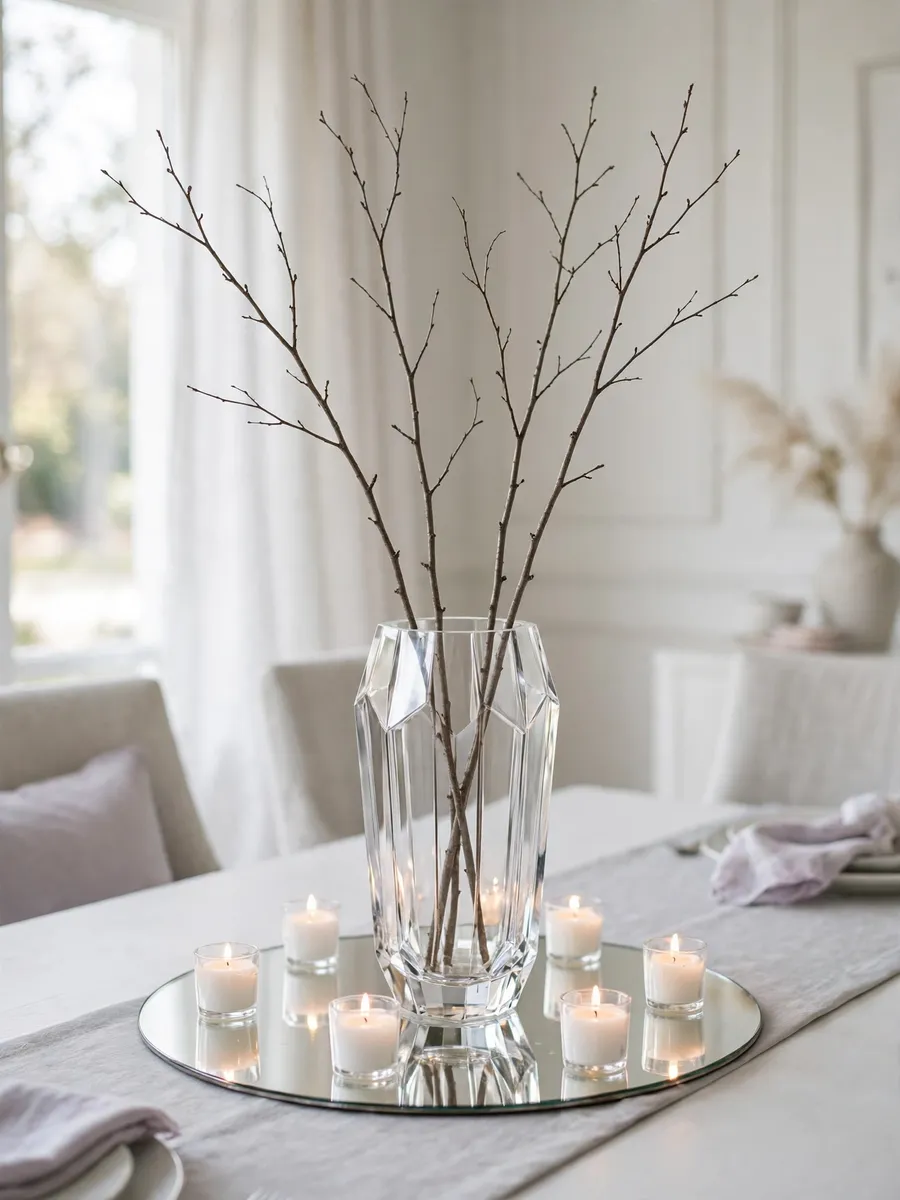
A crystal vase with bare branches is elegant because it is almost nothing at all — clear glass, pale wood, and empty space, arranged with confidence. The crystal catches and throws the light, the branches add a single graceful silhouette, and the lack of colour makes the whole arrangement feel calm and deliberate. It suits formal and minimalist dining rooms especially well, where a busy arrangement would fight the room.
Consider a tall, faceted crystal vase holding five slender bare branches, on a round mirror tray in the middle of a white table, with small white votives around the base.
Quick tips:
- Choose branches with graceful curves, not straight sticks.
- Keep the vase clear crystal so the stems stay visible.
- Place the vase slightly off-centre on a long table for a modern feel.
11. How Do Pinecones and Plaid Create a Cabin-Winter Feel?
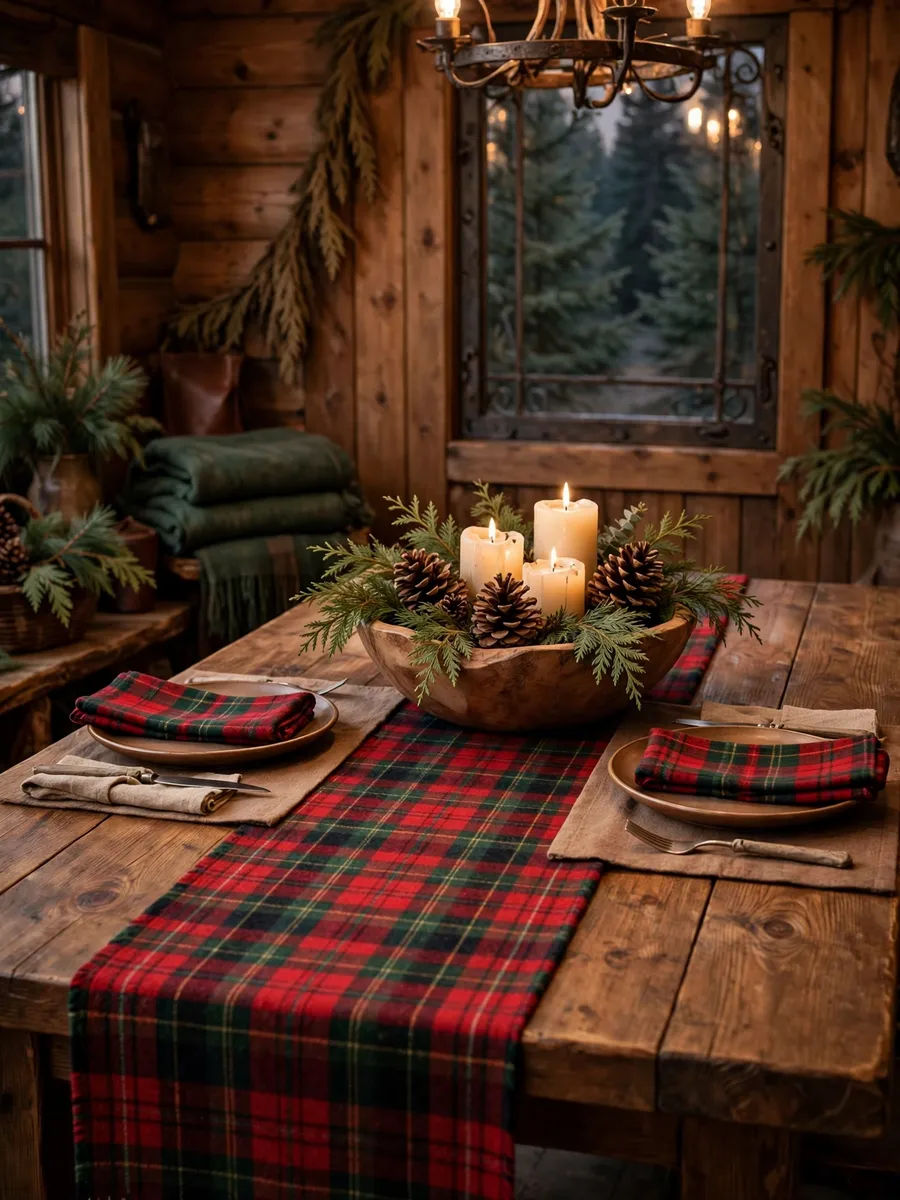
Pinecones and plaid create a cabin-winter feel because they are the two textures everyone associates with a warm room on a cold night: rough, natural pinecones and soft, woven wool in a classic red or green check. Layer a plaid runner down the centre, arrange a low line of pinecones and evergreen sprigs along it, and add a few chunky candles — the table suddenly feels like a lodge dining room.
Imagine a red-and-green plaid runner on a rustic pine table, with a wooden dough bowl filled with pinecones, cedar sprigs, and three short cream pillar candles.
Quick tips:
- Keep the plaid to one or two pieces so the table does not feel busy.
- Mix pinecone sizes and add a few cedar sprigs for softness.
- Use chunky candles — slim tapers can look lost against bold plaid.
12. Why Does a Minimal White Ceramic Bowl Work All Winter Long?
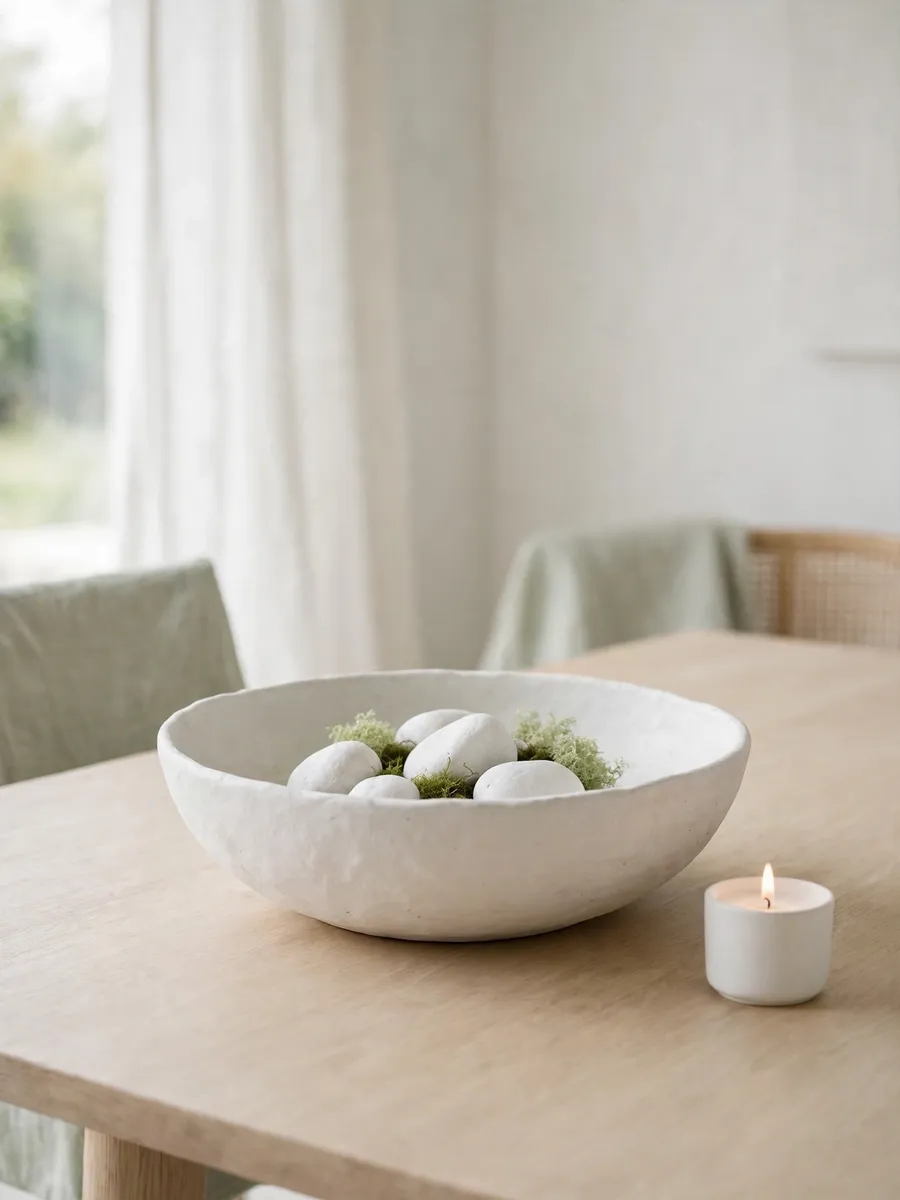
A minimal white ceramic bowl works all winter long because it asks nothing of the season and gives back a quiet, calm focal point that suits every mood the winter months bring. Empty, it is a piece of sculpture; filled with smooth white stones, a handful of moss, or a few frosted pinecones, it becomes a small winter landscape. It never clashes with the room, never needs watering, and looks just as good in January as in November.
Picture a wide, shallow white ceramic bowl alone in the middle of a pale oak table, holding five smooth white stones and a small tuft of green moss.
Quick tips:
- Choose a bowl with a handmade feel — an uneven glaze adds character.
- Keep the contents minimal: one material, three to five pieces at most.
- Match the bowl’s tone to your tableware so the table feels cohesive.
Frequently Asked Questions
What are the easiest winter centerpiece ideas for beginners?
Start with a candle cluster on a wooden board: three white pillar candles in different heights, a few pinecones, and some evergreen sprigs tucked around the bases. It takes about five minutes, needs no special skills, and looks finished immediately.
What are the best natural elements for a winter table centerpiece?
Evergreens such as cedar, fir, and eucalyptus are the foundation of most winter arrangements, joined by pinecones, berries, and dried citrus slices. They add fragrance, colour, and texture while keeping the display organic.
What fruits work well in winter centerpieces?
Seasonal fruits such as cranberries, pomegranates, apples, pears, and oranges add vibrant colour and a fresh touch to a winter table. Cranberries are the easiest choice because they hold their colour for weeks, while halved oranges bring a warm glow and gentle scent.
How do I make my winter centerpiece last longer?
Choose hardy greenery such as cedar or fir, soak stems in water before arranging, and keep the arrangement away from radiators and direct heat. Refresh fruit or flowers as needed, and remove any brown or brittle greenery promptly.
How tall should a winter centerpiece be?
Keep everyday centerpieces under 12 inches tall so guests can see each other easily across the table. If you love height, go deliberately tall and slim — over 24 inches — with a narrow vase or candlestick, because the eye can see around a slim shape.
Conclusion
The best winter centerpiece ideas are not the most elaborate ones — they are the ones that fit your table, your habits, and the way you actually gather through the cold months. Start with one clear focal point, keep the arrangement low enough to talk over, and build it from frost, evergreen, and candlelight so it lasts the whole season rather than a single week. Then let it live on your table, swap one small element when you want a change, and enjoy sitting down to a table that feels warm, calm, and finished.