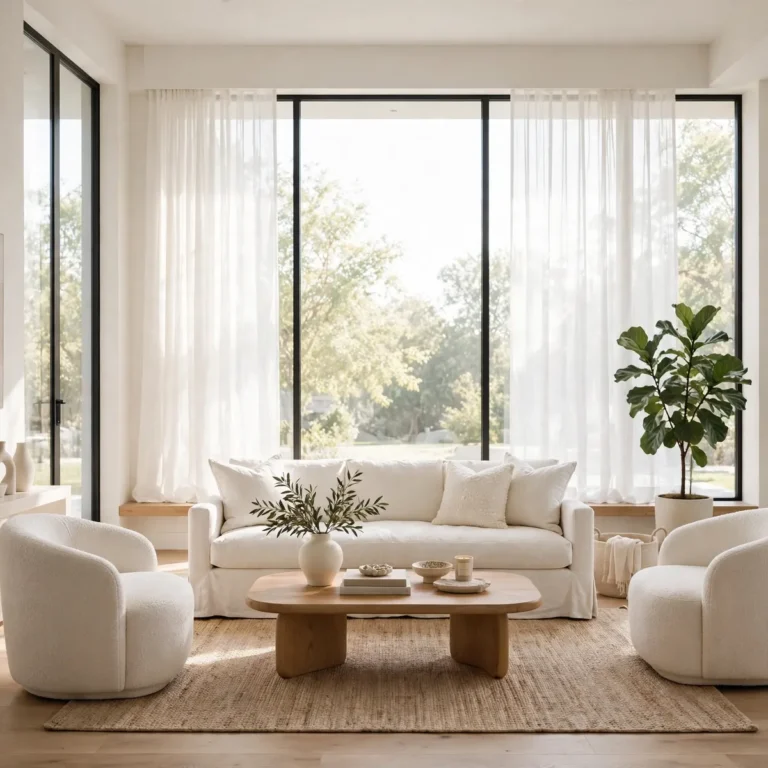
12 Stunning Living Room Plant Ideas That Instantly Make Your Living Room Feel Fresh, Lush and Alive
Key Takeaways
Q: What are the best living room plant ideas for a fresh look? A: Add one large floor plant, such as a monstera, beside the sofa.
Q: Which plants survive low light? A: Snake plants, ZZ plants and parlor palms cope well with dim corners and irregular watering.
Q: Are living room plants safe for pets? A: Parlor palms and pilea are safe, while monstera, pothos and peace lilies are toxic if chewed.
Q: How many plants does a living room need? A: Three to five plants of mixed heights usually fill a living room without crowding it.
The best living room plant ideas match the right plant to the right spot in your room, so every plant looks good and stays alive. A tall monstera beside the sofa adds instant drama, a snake plant fills a dark corner, and a trailing pothos softens a high shelf. This guide shares twelve stunning ideas for every light level, with real plant names, pots and placements you can copy today.
Before you buy anything, check how much light each spot actually gets: a sharp shadow at midday means bright light, a soft shadow means medium light, and almost no shadow means low light. If your room is short on floor space, plan the layout first with our small living room ideas, then add plants around the furniture you already have.
How Can a Monstera Beside the Sofa Transform Your Living Room?
A monstera beside the sofa turns an ordinary seating area into a lush focal point, because its large split leaves add height and a tropical feel without taking over the room.
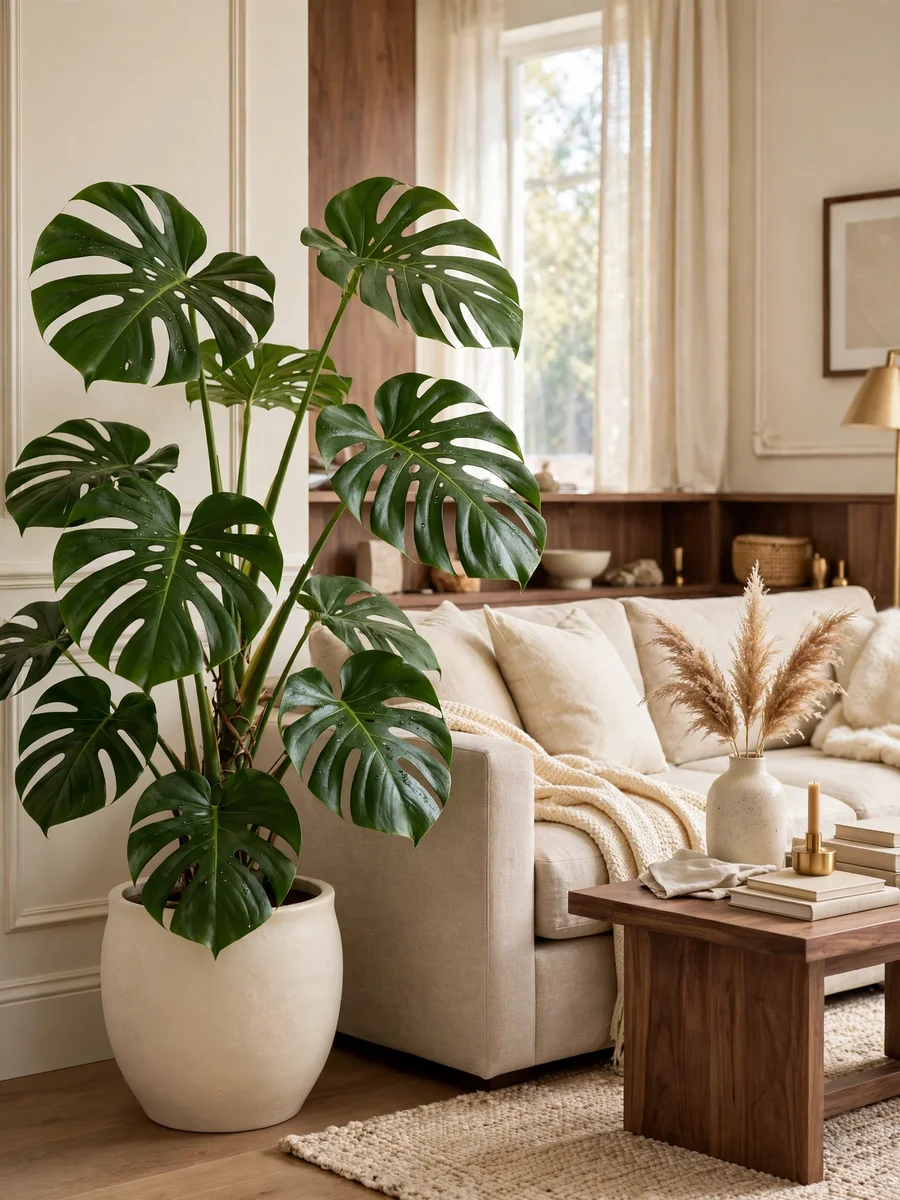
Place a mature monstera deliciosa in a cream ceramic pot at the end of your sofa, in bright indirect light from a nearby window. Sit it slightly behind the sofa arm, so the leaves frame the seating area.
Rotate the pot every two weeks so the leaves grow evenly, and water when the top two inches of soil feel dry. Wipe the leaves monthly with a damp cloth. Monstera is toxic if chewed, so keep it out of reach of pets.
Quick tips:
- Choose a pot with drainage holes.
- Add a moss pole once it starts climbing.
- Keep leaves away from cold draughts.
Where Should a Fiddle Leaf Fig Go for the Best Light?
A fiddle leaf fig grows best within a few feet of a bright east or west window, where it gets several hours of gentle direct sun.
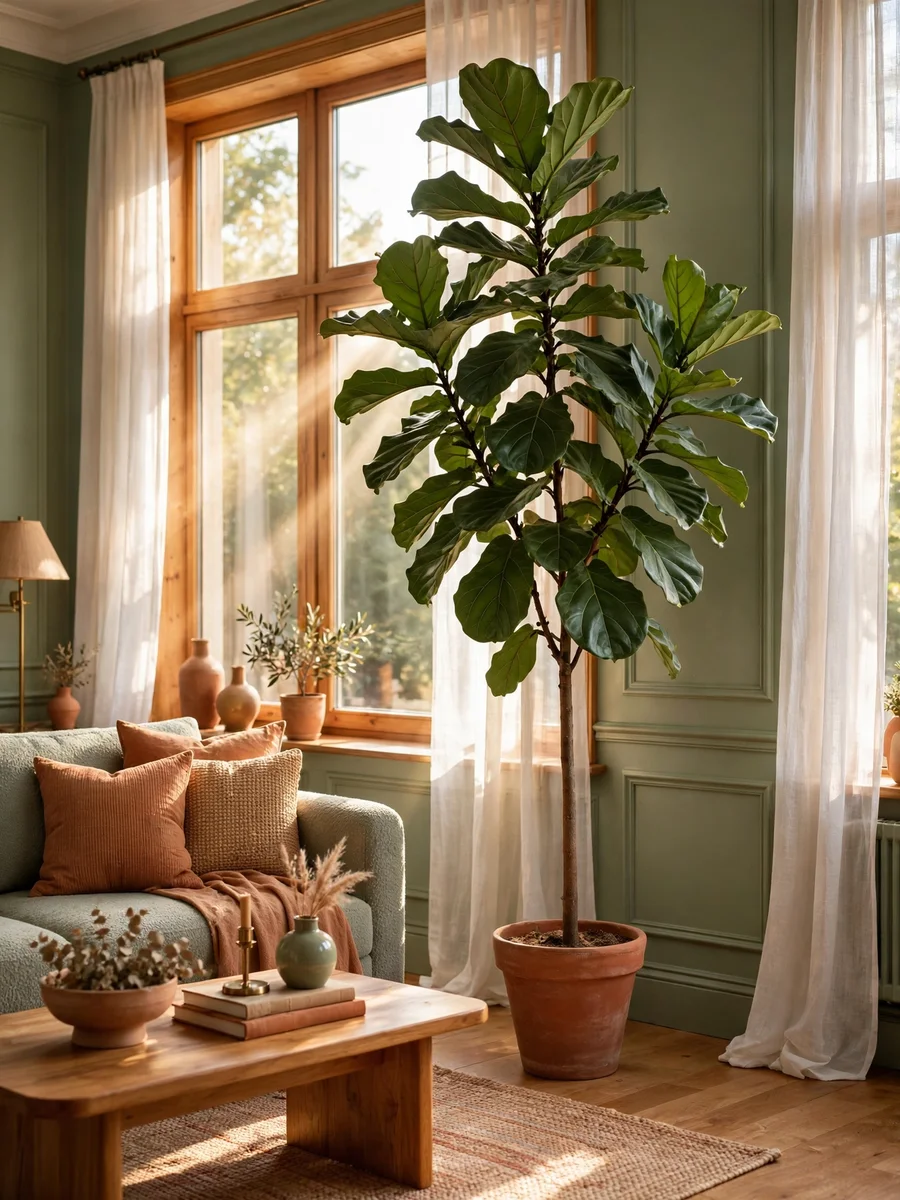
Set a fiddle leaf fig in a terracotta pot beside a tall window with sheer curtains, which soften the strongest sun. Keep it in one corner near the window, because it needs steady light and dislikes being moved.
Check the soil weekly and water only when the top inch is dry, then let excess water drain away fully. If brown spots appear, check for overwatering first. Fiddle leaf figs are toxic if eaten, so they suit homes without curious pets.
Quick tips:
- Pick one spot and leave it there.
- Rotate the pot monthly for even growth.
- Dust the broad leaves regularly.
Can a Snake Plant Really Thrive in a Dark Living Room Corner?
Yes, a snake plant can thrive in a dark living room corner, because it tolerates low light, dry air and infrequent watering better than most houseplants.
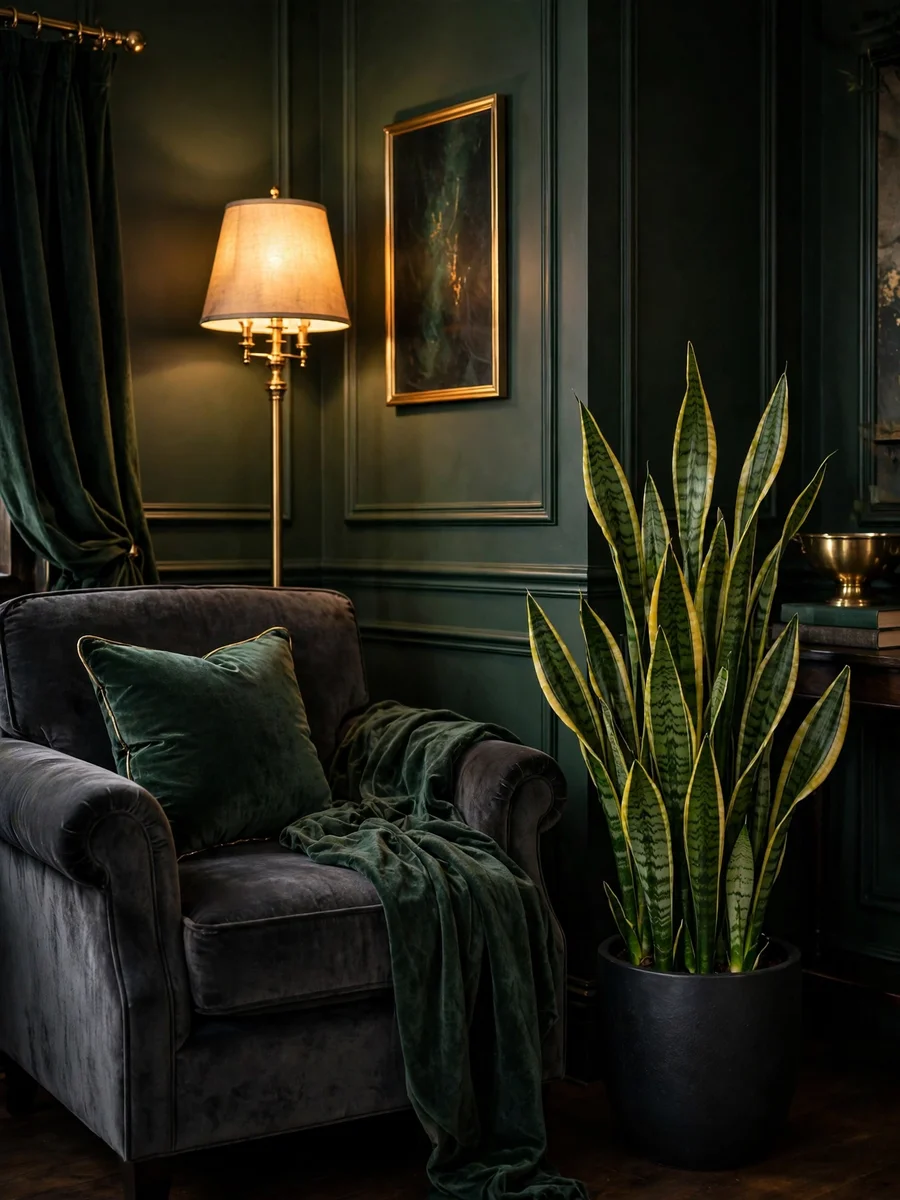
Place a snake plant, also called sansevieria, in a matte black pot in the corner beside a charcoal armchair, where other plants would struggle. Its tall upright leaves add structure to a dead corner.
Snake plants store water in their thick leaves, so they need very little attention. Water every few weeks in winter and every two weeks in summer, and always let the soil dry out between waterings. Snake plants are toxic if chewed, so keep them away from pets.
Quick tips:
- Water less than you think you should.
- Use a tall pot for upright leaves.
- Move it nearer a window in winter.
How Do You Style Pothos Trailing From a High Shelf?
Pothos trailing from a high shelf softens the top of a living room wall, because its long vines fill empty vertical space that furniture cannot reach.
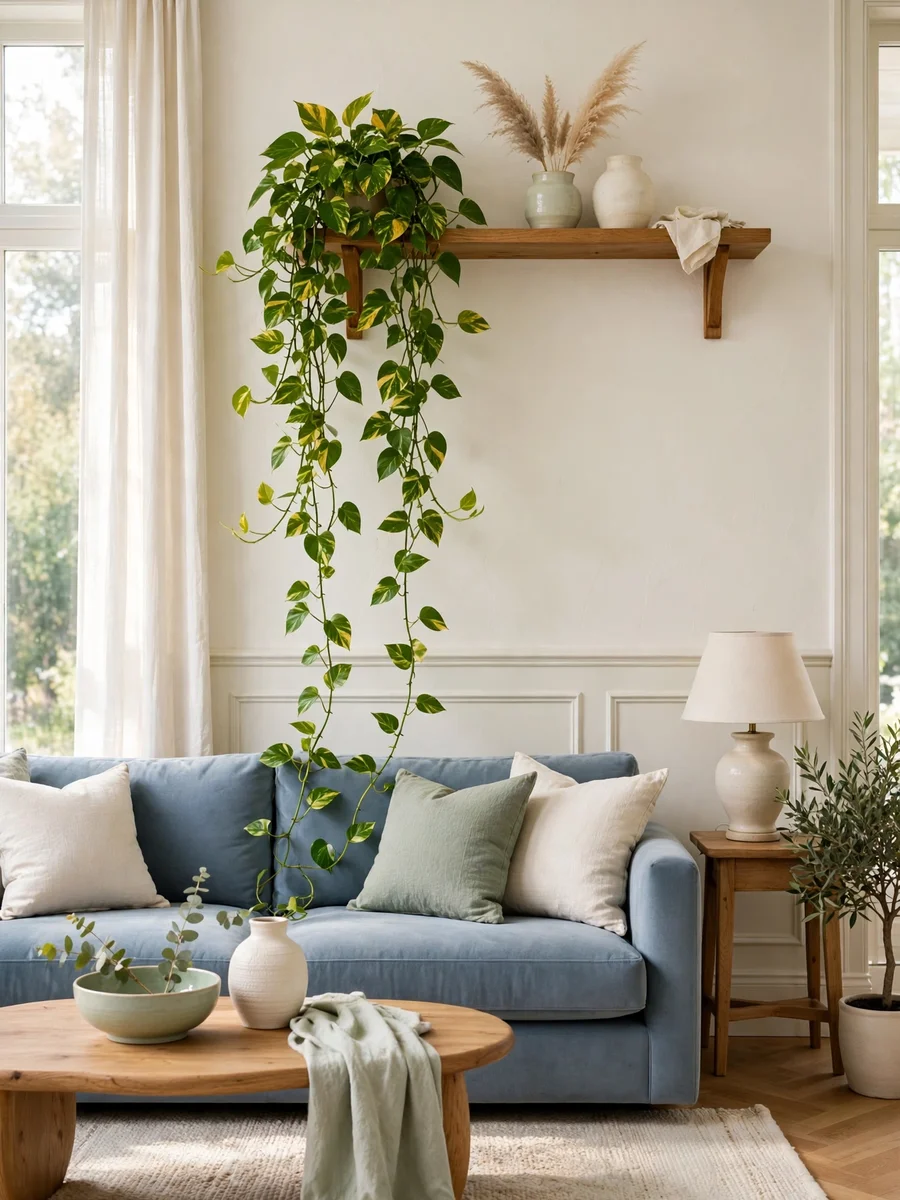
Hang a golden pothos in a simple white pot on a wooden wall shelf above a dusty blue sofa, and let the vines trail down two to three feet. The shelf should sit at least six feet high, so the leaves stay above head height.
Pothos grows fast in medium light and tolerates low light too. Water when the top inch of soil dries out, and trim the longest vines in spring for fuller growth. Pothos is toxic if chewed, so keep the vines above the reach of pets.
Quick tips:
- Train vines along a hook or rail.
- Pinch back leggy stems.
- Wipe dust from the leaves.
Why Is a ZZ Plant Perfect for Your Living Room Entryway?
A ZZ plant is perfect for a living room entryway, because it survives low light, missed waterings and draughts from the front door while staying glossy and full.
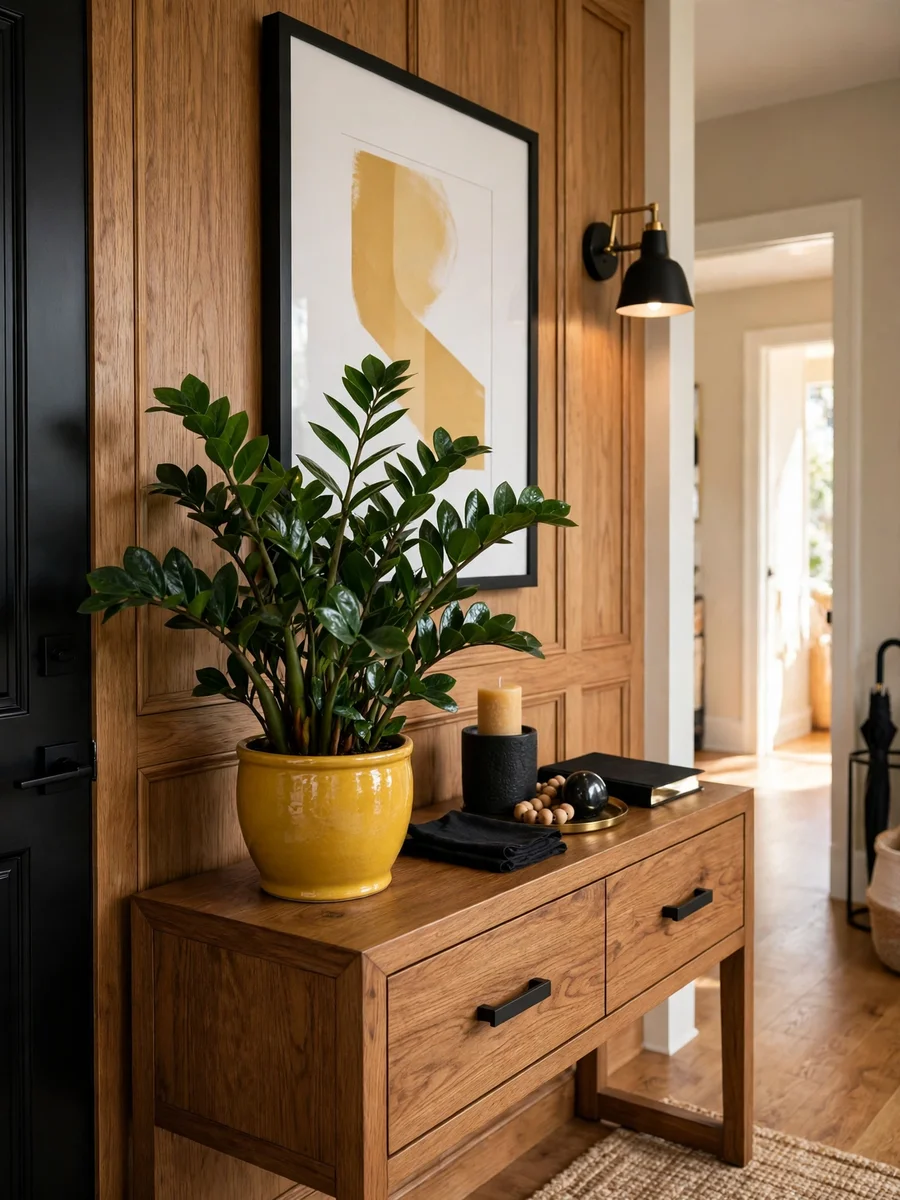
Place a ZZ plant in a mustard yellow ceramic pot on a wooden console table just inside the living room entrance, where it greets guests without blocking the doorway. A plant around two feet tall suits a standard console.
ZZ plants store water in their rhizomes, so they forgive forgetful owners. Water once every three weeks, or less in winter, and always empty the saucer. ZZ plants are toxic if eaten, so keep them away from pets and small children.
Quick tips:
- Choose a heavy pot that cannot tip.
- Clean the leaves monthly with a damp cloth.
- Repot only when roots crowd the pot.
Will a Bird of Paradise Work by a South-Facing Window?
Yes, a bird of paradise works beautifully by a south-facing window, because it loves the strong direct light that most houseplants find too harsh.
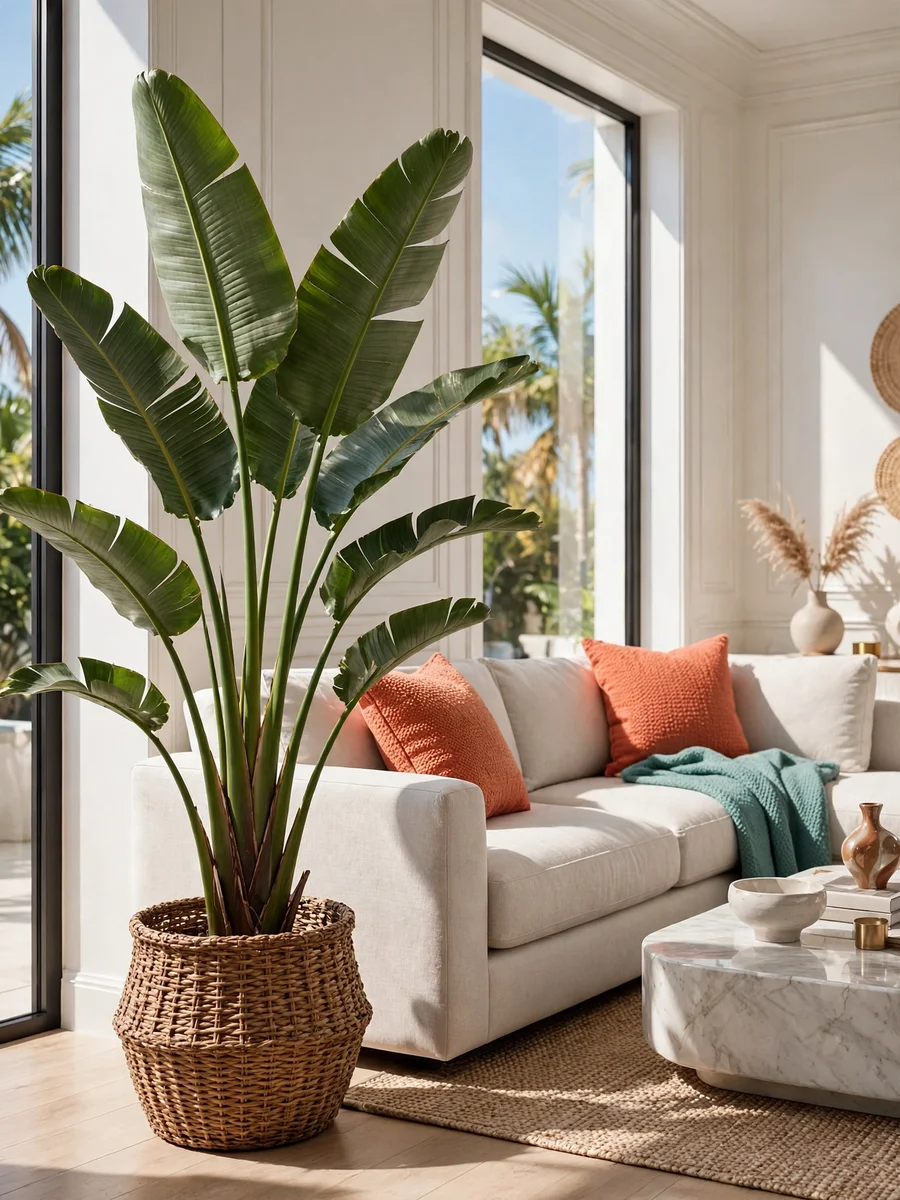
Set a bird of paradise in a woven rattan basket beside a tall south-facing window, where it gets at least four hours of direct sun each day. Its huge banana-like leaves create a resort feel, so give it room to spread.
This plant drinks more than most, so check the soil twice a week in summer and water when the top two inches feel dry. Mist the leaves, because dry air can split the leaf edges. Bird of paradise is toxic if chewed, so it suits a pet-free corner.
Quick tips:
- Give it the brightest spot in the room.
- Turn the pot weekly for straight growth.
- Feed monthly in spring and summer only.
How Can a Rubber Plant Fill That Awkward Furniture Gap?
A rubber plant fills an awkward furniture gap perfectly, because its tall stem and large glossy leaves add height and colour to a narrow space nothing else fits.
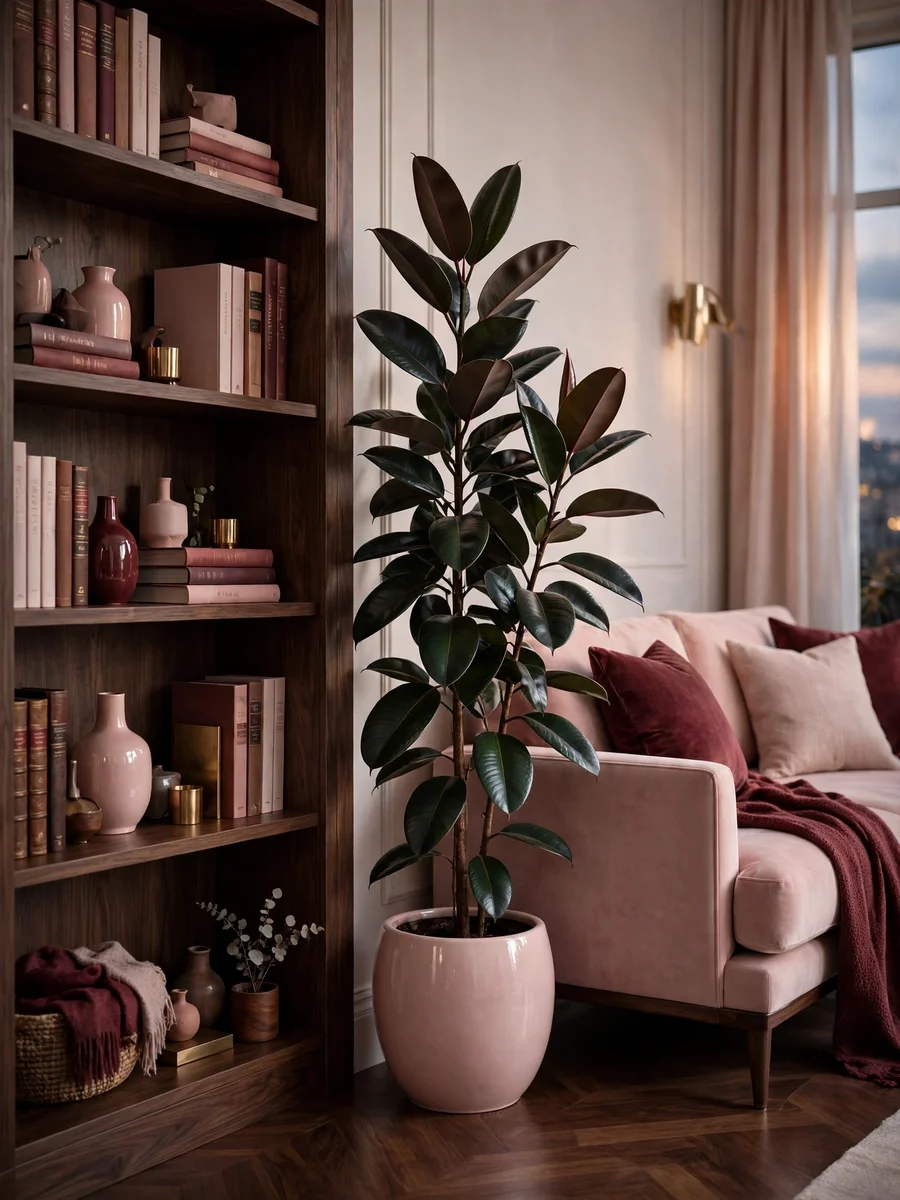
Slide a rubber plant in a blush pink pot into the gap between a bookshelf and the sofa. A burgundy rubber plant adds contrast against pale walls.
Rubber plants prefer bright indirect light, but they tolerate a medium-light gap well. Water when the top inch of soil dries, and wipe the broad leaves regularly. If you are layering the look, our living room rug ideas can help you ground the arrangement with the right rug. Rubber plants are toxic if chewed, so keep them away from pets.
Quick tips:
- Measure the gap before buying the pot.
- Stake the stem while it is young.
- Prune in spring for side branches.
Is a Peace Lily the Right Plant for a Console Table?
A peace lily suits a console table, because it stays compact, flowers in low to medium light, and adds soft white blooms where direct sun rarely reaches.
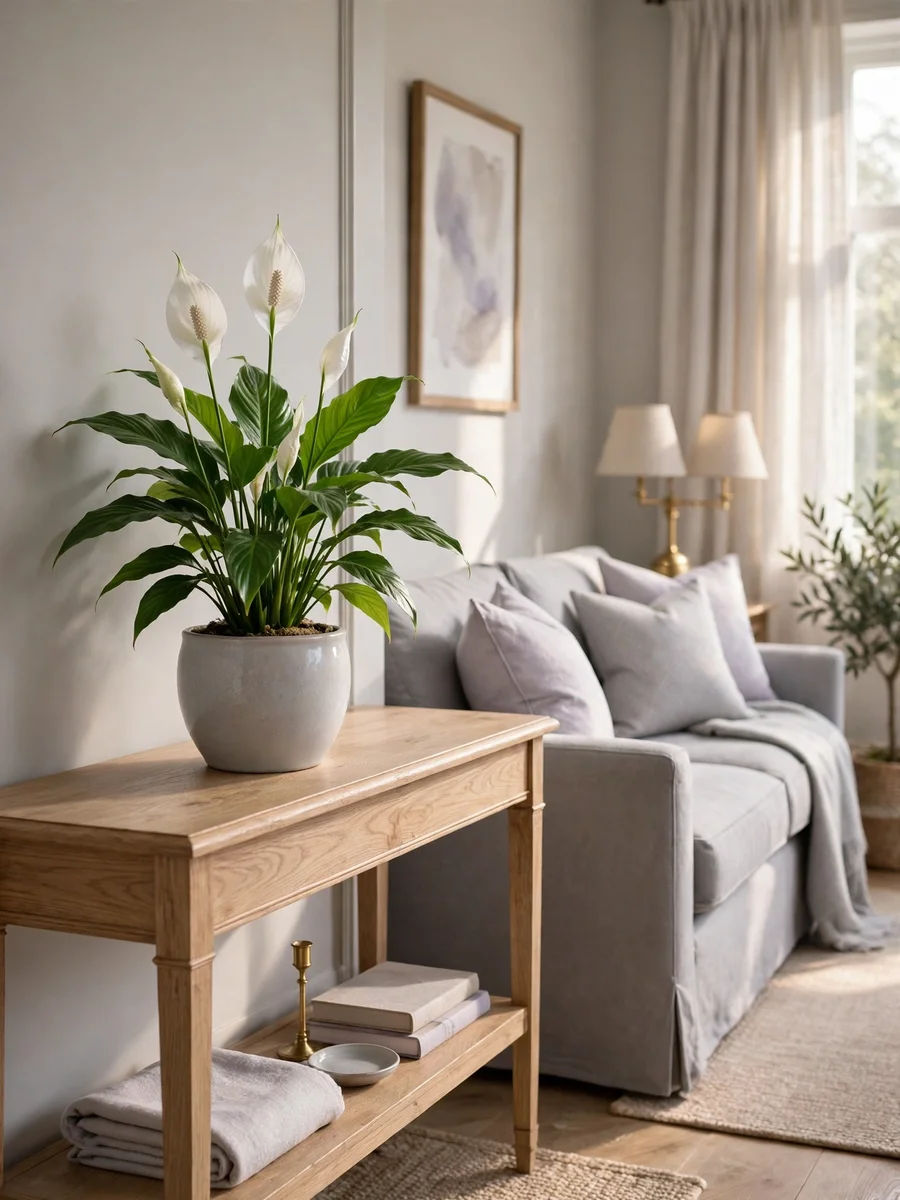
Place a peace lily in a pale grey ceramic pot on a light wood console table behind the sofa or against a hallway wall. At around eighteen inches tall, its white flowers sit just above the table surface.
Peace lilies like consistently moist soil, so water when the top inch feels dry and never let the plant wilt badly. They also enjoy humidity, so a weekly misting suits them well. Remove spent flowers to encourage new blooms. Peace lilies are toxic if chewed, so place them beyond a pet’s reach.
Quick tips:
- Use a tray under the pot.
- Water with room-temperature water.
- Cut yellow leaves off at the base.
How Do You Style a Parlor Palm on a Side Table?
A parlor palm on a side table adds soft feathery texture at arm height, which makes a seating area feel layered and finished without a large floor plant.
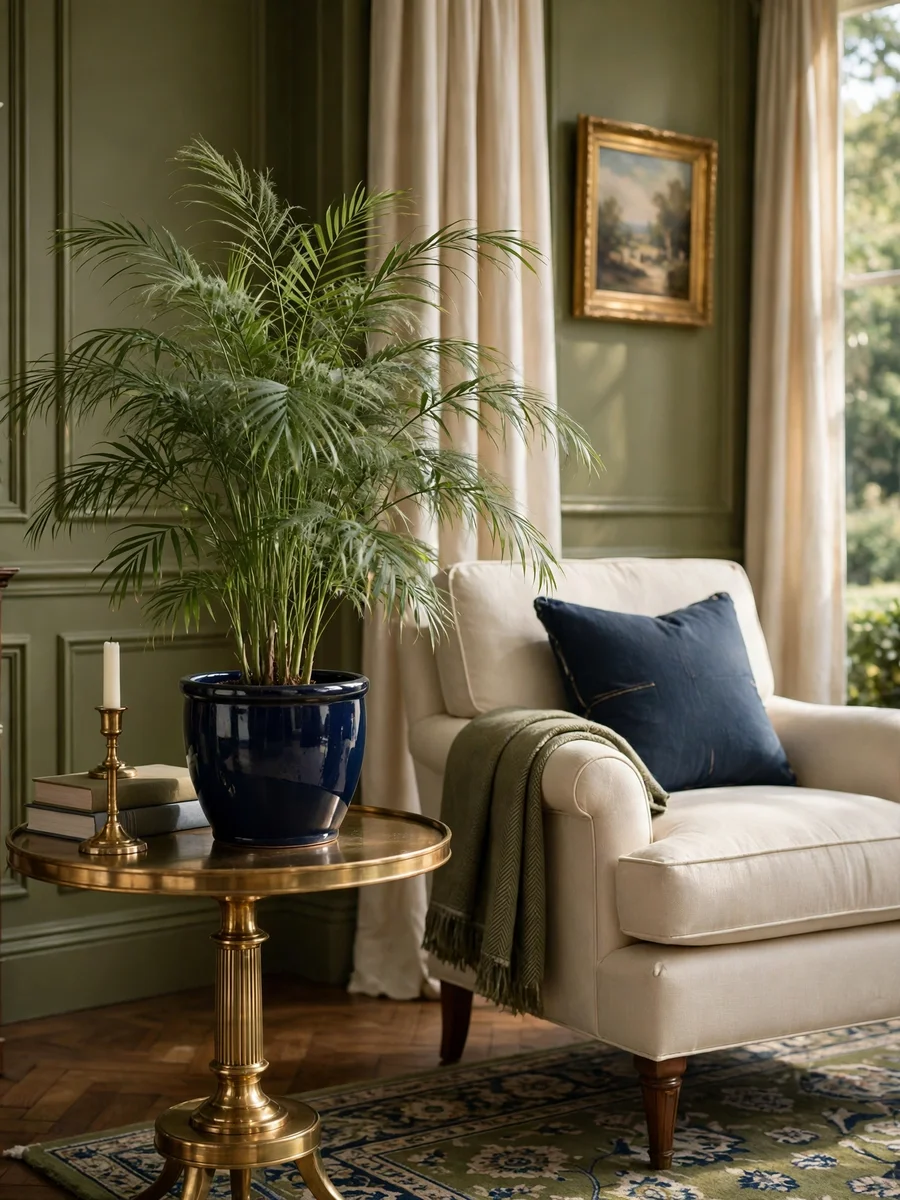
Set a parlor palm in a navy blue ceramic pot on a round brass side table beside a cream armchair. At around two feet tall, it sits below a table lamp without crowding the chair.
Parlor palms grow slowly and tolerate low to medium light, which makes them one of the most forgiving tabletop plants. Water when the top inch of soil dries out, and mist the fronds occasionally. Unlike most tropical houseplants, parlor palms are non-toxic to cats and dogs, so they suit a pet-friendly living room.
Quick tips:
- Keep the pot on a flat, level table.
- Trim brown frond tips.
- Repot every two to three years in spring.
Where Does String of Pearls Look Best on a Floating Shelf?
String of pearls looks best on a floating shelf at eye level or above, where its bead-like stems spill over the edge and catch the light.
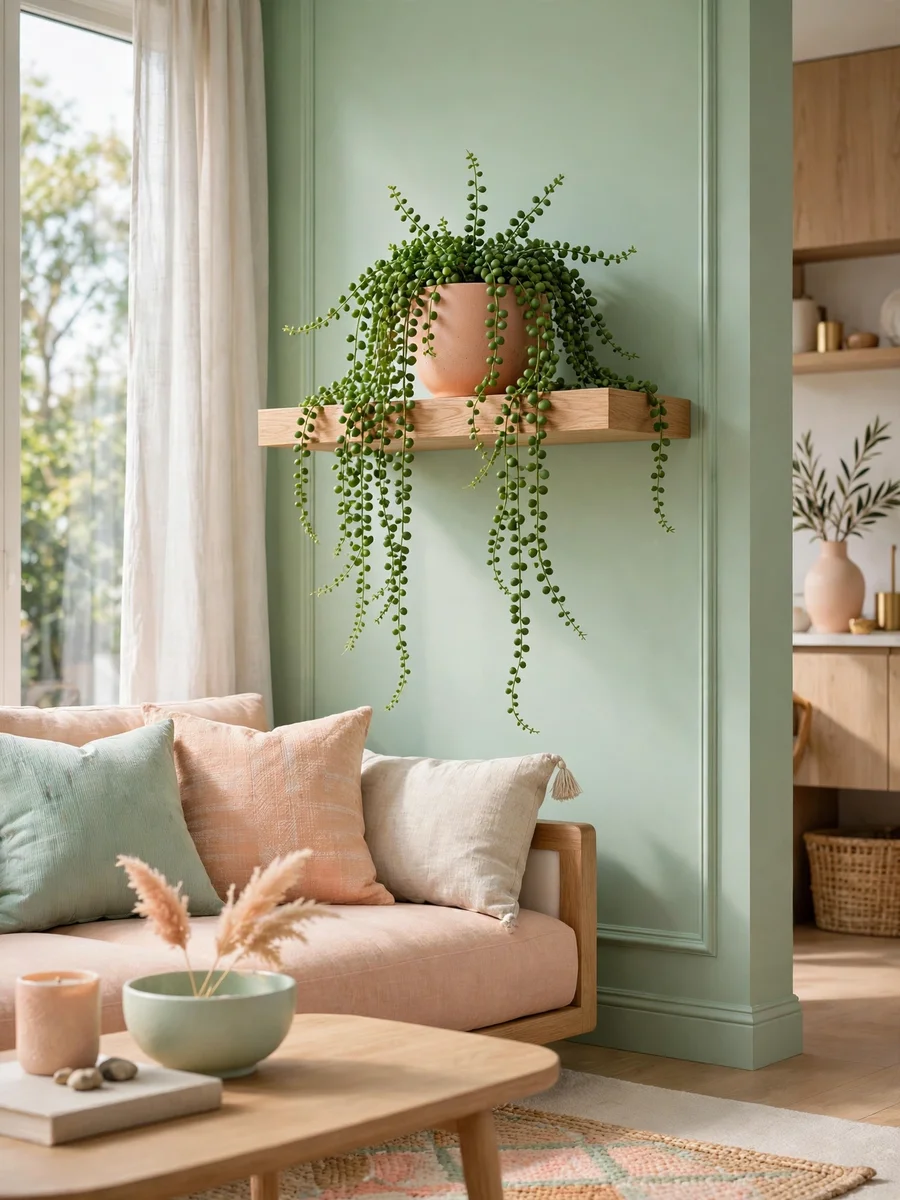
Place a string of pearls in a small pot on a floating oak shelf beside a window, and let the stems trail down eighteen inches or more. The shelf needs bright indirect light, because the beads need light on top to stay plump and full.
This succulent stores water in its beads, so water only when the beads feel slightly soft. Overwatering is the most common cause of failure, so use a free-draining cactus mix and a pot with drainage holes. String of pearls is toxic if eaten, so keep it high above pets.
Quick tips:
- Water from the base.
- Give the top of the plant direct light.
- Handle the stems gently.
How Can a Philodendron on a Plant Stand Add Height to Your Living Room?
A philodendron on a tall plant stand adds height to a living room corner, because it lifts trailing leaves to eye level and fills the space between furniture and wall art.
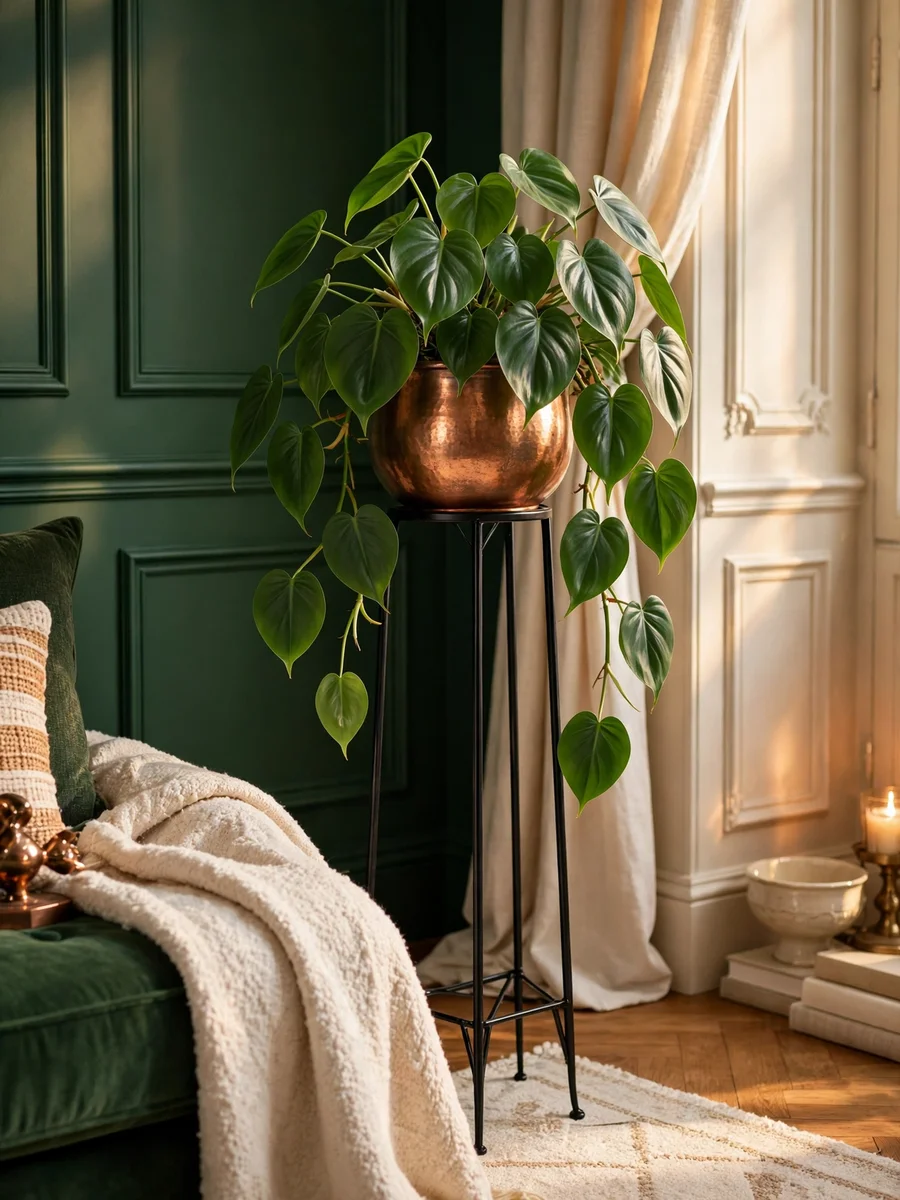
Place a heart-leaf philodendron in a copper pot on a black metal plant stand about two feet high, in a cosy corner near a window. The trailing stems cascade over the edge and soften the corner.
Philodendrons thrive in medium to bright indirect light and forgive the odd missed watering. Water when the top inch of soil dries, and trim the longest stems in spring to keep the shape full. Philodendrons are toxic if chewed, so keep the trailing stems out of reach.
Quick tips:
- Choose a sturdy stand.
- Guide stems up a small trellis.
- Feed lightly in the growing season.
Is a Pilea the Cutest Plant for a Living Room Windowsill?
A pilea is one of the cutest plants for a living room windowsill, because its round coin-shaped leaves look playful and modern.
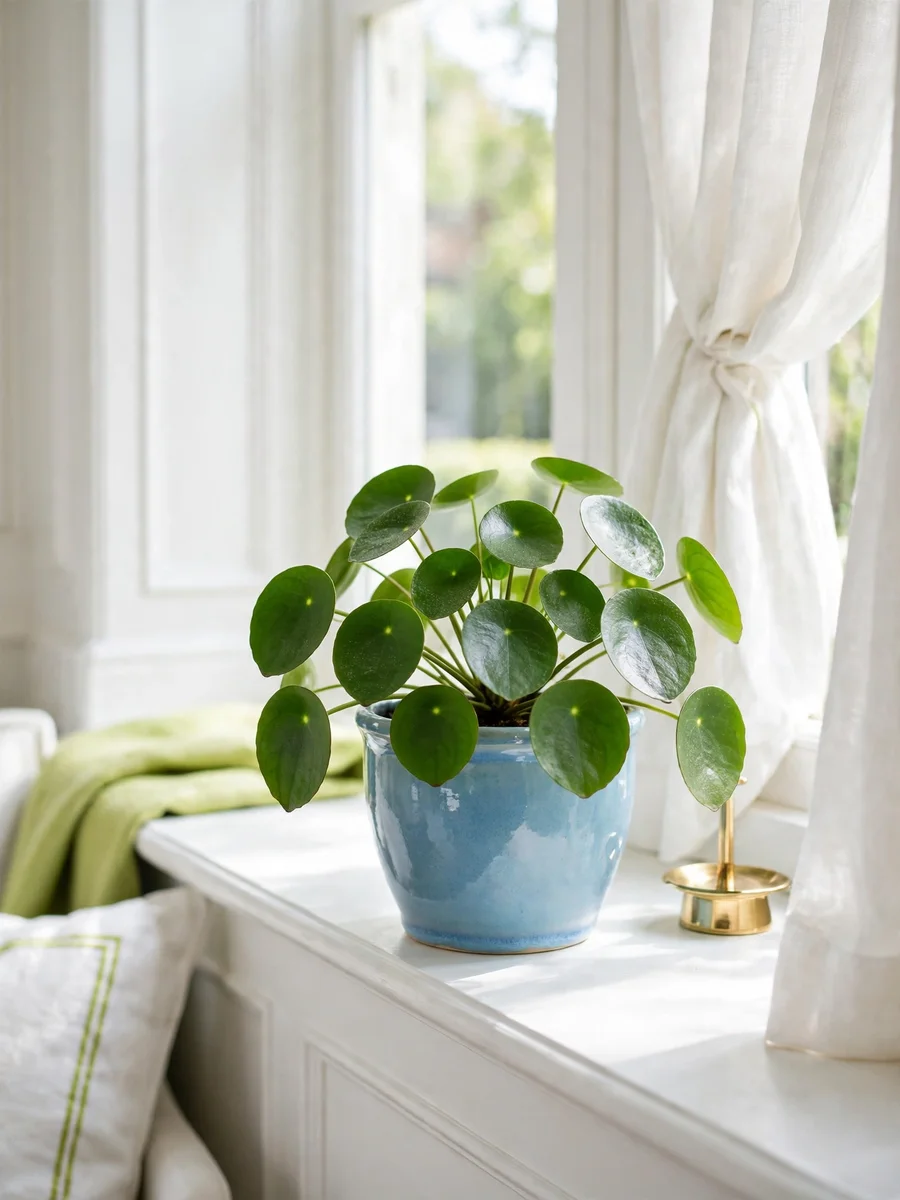
Set a pilea peperomioides in a sky blue ceramic pot on a bright white windowsill, where it gets gentle morning sun. At about twelve inches tall, it suits a narrow sill without blocking the window.
Pilea likes bright indirect light and regular watering, so check the soil weekly and water when the top inch feels dry. Rotate the pot every few days, because the leaves turn toward the light. It produces small baby plants, called pups, to pot up and share. Pilea is non-toxic to cats and dogs, so it suits a pet-friendly windowsill.
Quick tips:
- Rotate the pot often to keep it upright.
- Remove pups once they have leaves.
- Keep it away from cold glass in winter.
Which Living Room Plants Suit Your Light Level?
Use this comparison before you buy, to match each plant to your light level and check pet safety.
| Plant | Light level | Water needs | Pet safe |
|---|---|---|---|
| Snake plant | Low to bright | Very low | No |
| ZZ plant | Low to medium | Very low | No |
| Parlor palm | Low to medium | Moderate | Yes |
| Peace lily | Low to medium | Moderate | No |
| Pothos | Low to bright | Moderate | No |
| Philodendron | Medium to bright | Moderate | No |
| Monstera | Bright indirect | Moderate | No |
| Rubber plant | Bright indirect | Moderate | No |
| Pilea | Bright indirect | Moderate | Yes |
| String of pearls | Bright indirect | Very low | No |
| Fiddle leaf fig | Bright, some direct | Moderate | No |
| Bird of paradise | Bright, direct sun | High | No |
If your living room is mostly low light, start with a snake plant, a ZZ plant or a parlor palm. If you share your home with pets, build the room around parlor palm and pilea.
Frequently Asked Questions
Which plants are best for a low-light living room?
Snake plants, ZZ plants, parlor palms and peace lilies suit a low-light living room, because they grow slowly and stay healthy with little direct sun. A snake plant or ZZ plant needs watering only every few weeks, while a parlor palm is also safe for pets.
Which living room plants are safe for pets?
Parlor palms and pilea are safe for cats and dogs, so they are the best choices for a pet-friendly living room. Most other popular living room plants, including monstera, pothos, philodendron, peace lilies, snake plants, ZZ plants and rubber plants, are toxic if chewed. Keep those plants on high shelves or tall stands.
How many plants should a living room have?
Three to five plants usually suit an average living room: one large floor plant, one or two medium plants and one trailing plant. A small living room looks best with three plants, while a large open-plan room can carry seven or more. Start with three, and add more only where a spot still feels empty.
How do I keep plants alive near a TV or heater?
Keep plants at least three feet from a heater or radiator, because hot dry air scorches leaves and dries soil quickly. Near a TV, choose a plant that tolerates warmth and low light, such as a snake plant or ZZ plant, and water it more often in winter. Wipe dust from the leaves regularly, and move the plant away if leaf tips turn brown.
Conclusion
The right living room plant ideas start with your light, not with the plant you like most in the shop. Match a monstera or fiddle leaf fig to a bright window, a snake plant or ZZ plant to a dark corner, and a pothos or string of pearls to a high shelf. Add one plant at a time, and your living room will soon feel fresh, lush and alive all year round.