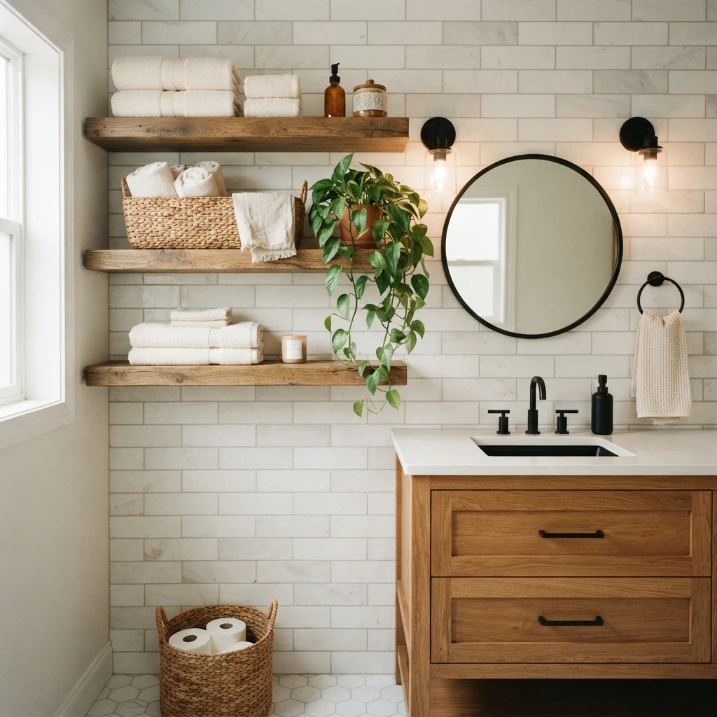
Minimalist Bathrooms Ideas That Aren’t About Having Less—They’re About Choosing Better
Minimalist bathroom ideas are often mistaken for empty counters, plain white walls, and rooms stripped of personality. In reality, a successful minimalist bathroom is less about removing everything and more about choosing each feature carefully. The right materials, storage, lighting, fixtures, and proportions can make a bathroom feel calm without making it feel unfinished.
The most convincing spaces give useful features more than one job. A floating vanity provides storage while exposing more floor. A recessed shower niche keeps products organized while becoming part of the architecture. Natural stone can supply pattern without extra decoration. This approach creates a bathroom that feels polished, practical, and comfortable for everyday life.
Start With A Clear Material Palette

Before choosing accessories, decide which materials will define the room. Limiting the palette helps a minimalist bathroom feel cohesive rather than visually busy.
A simple combination might include warm white walls, pale oak cabinetry, light stone, and brushed metal. For a moodier room, charcoal stone, walnut, soft beige, and dark metal can create a restrained spa-like effect.
Try repeating the same finishes in several places instead of introducing a new material with every feature. Consistency gives even affordable finishes a more considered appearance.
Use Frameless Glass To Keep Sightlines Open

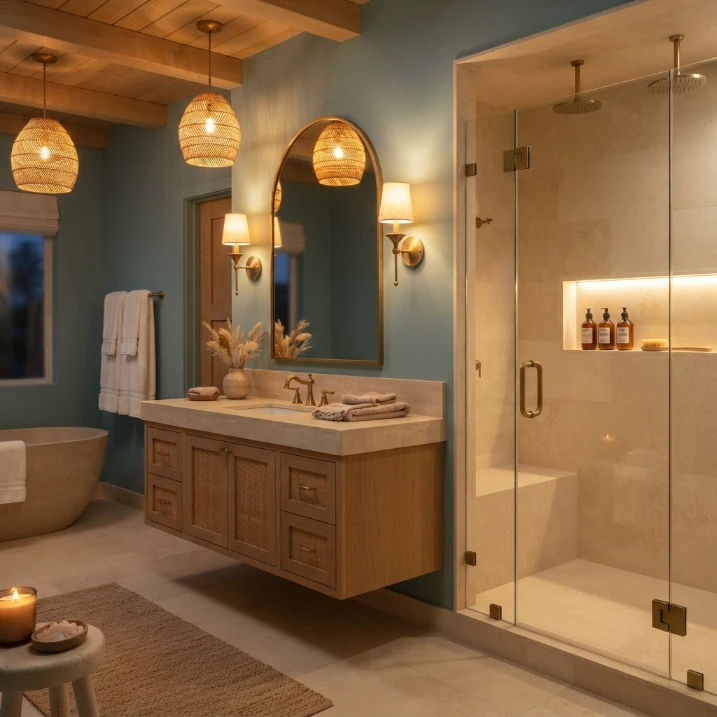
A frameless glass shower is especially useful when working with a compact bathroom because it avoids creating a strong visual barrier across the room. The shower remains defined without making the floor plan appear divided.
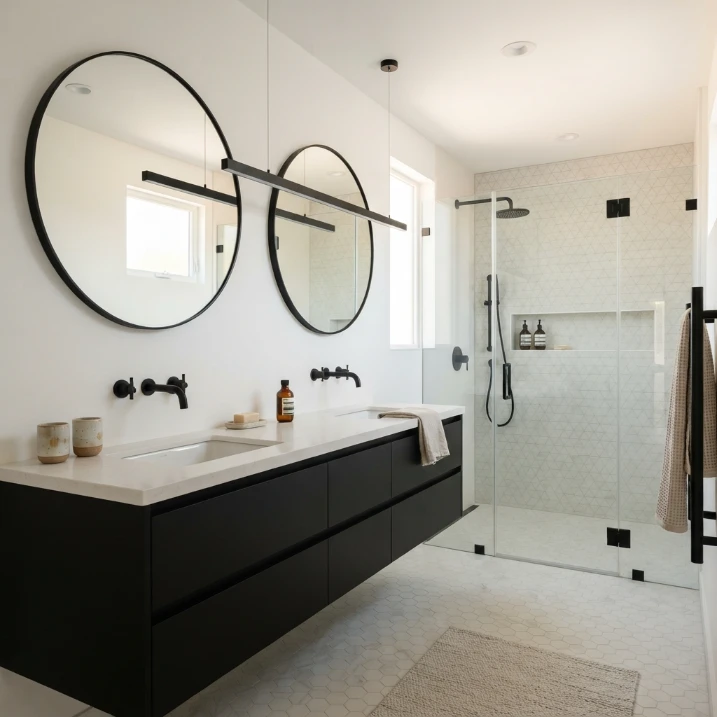
If you prefer more structure, a slim dark frame can work beautifully. Repeat that finish on the faucet, mirror, or small hardware so it feels intentional rather than isolated. For more ways to work with strong contrast, see our black-and-white bathroom ideas.
Choose A Floating Vanity With Real Storage
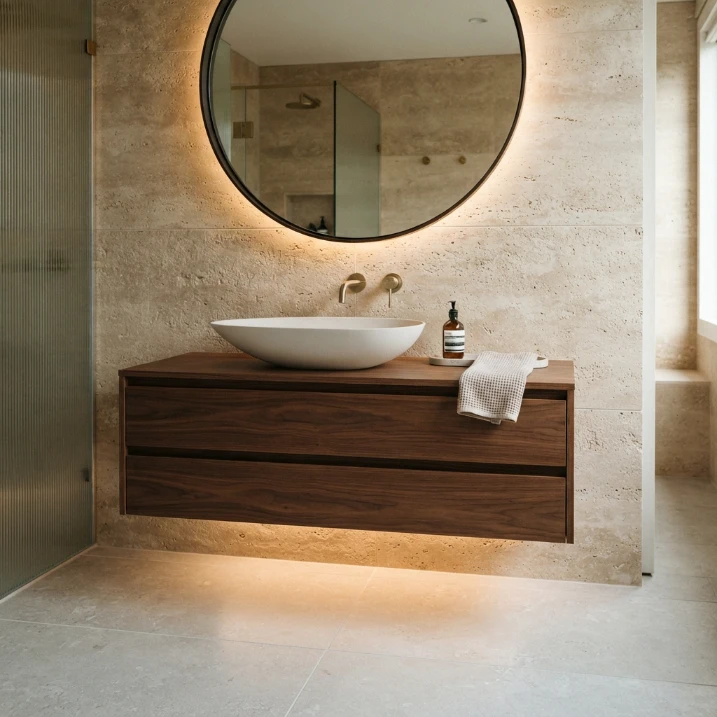
Floating vanities are a favorite in minimalist bathroom ideas for a practical reason: they make more of the floor visible, which can help the room appear lighter and less crowded.
But appearance should not come at the expense of storage. Choose deep drawers or well-planned cabinets that can hold everyday toiletries, cleaning products, and spare supplies. Keeping those necessities behind a clean cabinet front reduces countertop clutter without forcing you to own less than you actually need.
Turn The Shower Niche Into An Architectural Detail

A recessed shower niche replaces bulky hanging organizers and corner racks with storage that sits inside the wall. It can also become one of the room’s most attractive details.
Use the same tile as the shower for a nearly seamless result, or introduce a subtle stone or mosaic finish if you want controlled contrast. Soft integrated lighting can add a hotel-like glow, but any electrical installation in a wet area should be designed and installed according to applicable bathroom safety requirements.
Warm Minimalism With Natural Wood

Minimal does not need to mean cold. Wood is one of the easiest ways to soften stone, tile, glass, and ceramic surfaces.
Oak, walnut, teak-inspired tones, and warm wood-look finishes can work on vanities, shelving, stools, or small architectural details. Pair them with cream, taupe, sand, or soft gray instead of stark white if you want a more relaxed atmosphere.
If warm earthy rooms appeal to you, our beige and brown bathroom ideas offer more ways to layer natural-looking neutrals.
Let Curves Soften Clean Architecture
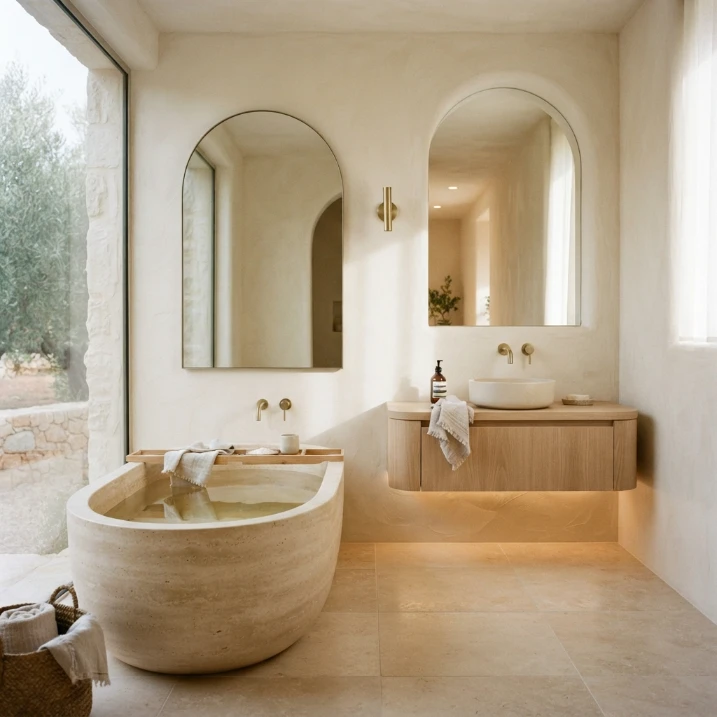
Minimalist rooms often contain many straight lines: tile joints, cabinetry, shower screens, countertops, and doorways. Introducing a few curves keeps all that geometry from feeling severe.
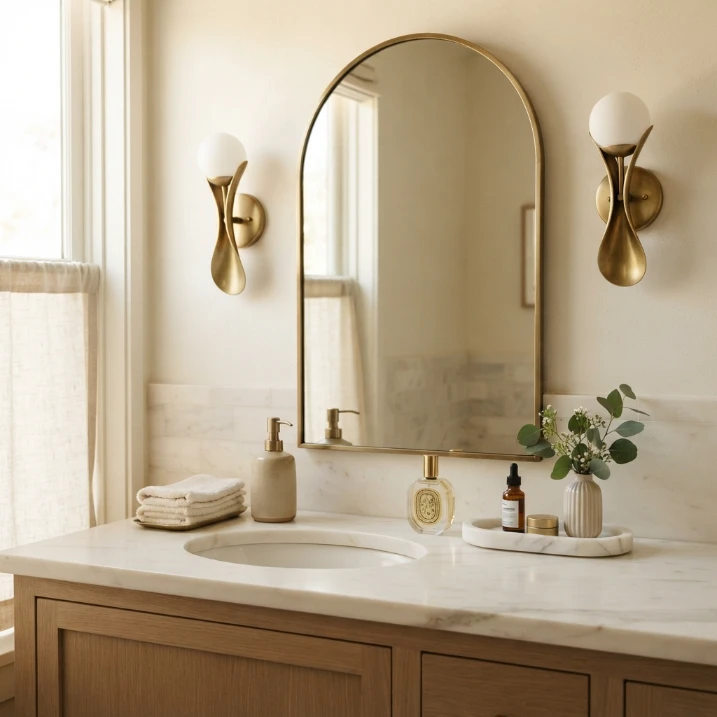
An arched mirror, rounded vessel sink, softly curved tub, or plastered niche can add visual movement without adding clutter. One or two curved features are usually enough to make the room feel more welcoming.
Create A Moody Minimalist Bathroom

White is not a requirement for minimalism. Deep gray, charcoal, espresso brown, forest green, and near-black can all create calm rooms when the palette remains controlled.
The key is lighting. Combine practical mirror lighting with soft ambient illumination, and bring in a warmer material such as wood or brushed brass to keep dark surfaces from feeling flat. Natural light from a generous window or skylight can be particularly effective.
For a stronger dramatic direction, visit our dark moody bathroom ideas.
Try Organic Minimalism Instead Of Perfect White

Organic minimalism replaces sterile perfection with tactile surfaces and natural shapes. Limewash-style walls, plaster-inspired finishes, travertine, warm timber, handmade-looking ceramics, and woven textures can provide character without requiring shelves full of decorations.
Keep the palette closely related so the texture becomes the interesting part. Cream, sand, mushroom, warm gray, and pale wood are particularly easy to combine.
Use One Rich Color With Restraint
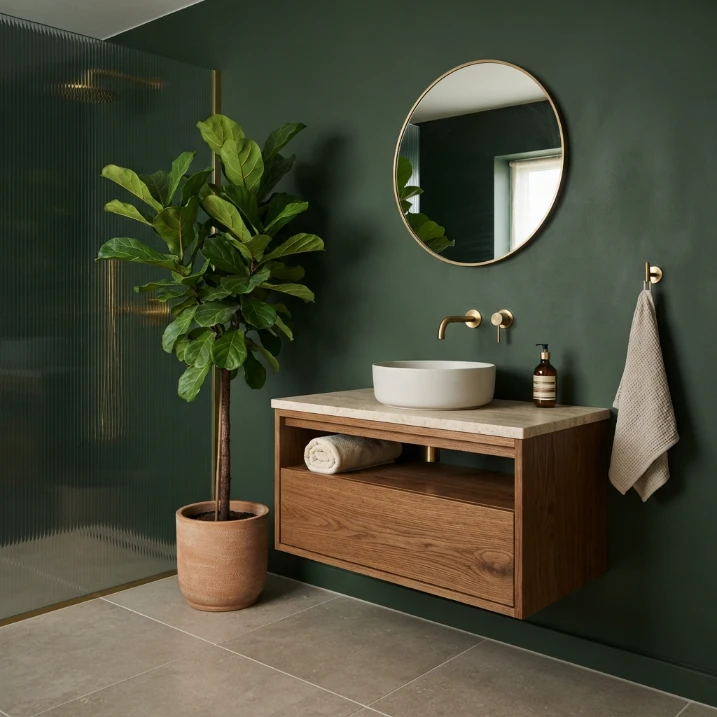
Color can absolutely belong in minimalist bathroom ideas. Instead of scattering many accent colors around the room, choose one dominant shade and let neutral materials support it.
Muted olive or forest green can look sophisticated beside natural wood and warm stone. Dusty blue works well with pale oak and brushed metal. Even terracotta can feel minimalist when the shapes and surrounding finishes remain simple.
If green is your preferred direction, our green bathroom ideas show several ways to use the color without overwhelming the space.
Let Terrazzo Or Stone Supply The Pattern
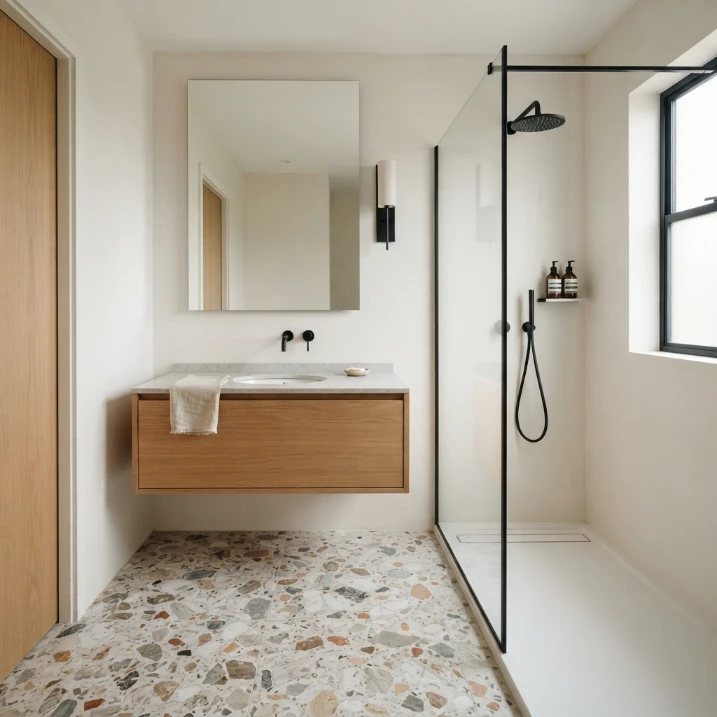
A minimalist bathroom does not need to avoid pattern completely. The easiest approach is to let the material itself provide it.
Terrazzo, veined marble, travertine, limestone-look porcelain, or subtly mottled tile can bring movement to the room while allowing accessories to remain simple. Choose one visually active surface rather than using several competing patterns.
Build Lighting Into The Design
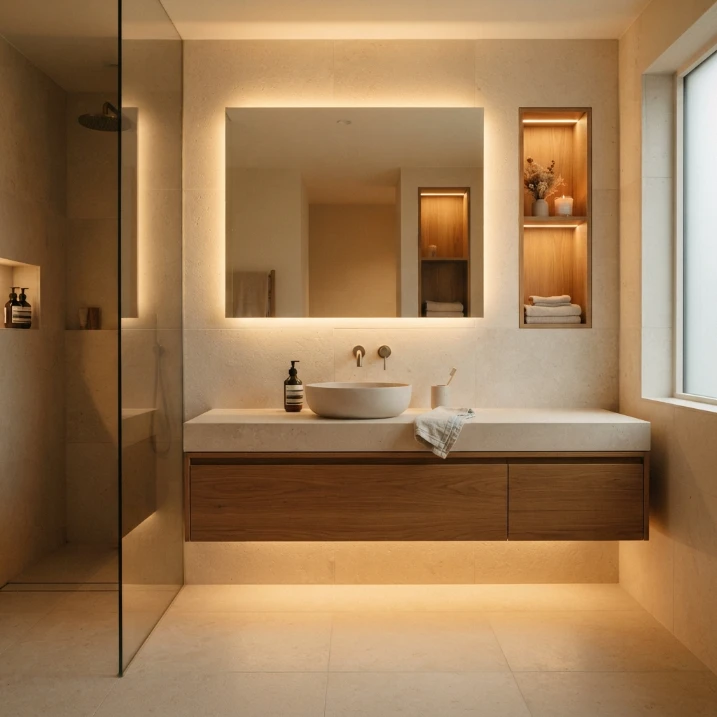
Lighting should feel like part of the architecture rather than something added at the end. Backlit mirrors, discreet ceiling lights, wall sconces, and concealed lighting beneath a vanity can create layers without filling the room with decorative fixtures.
For daily routines, make sure the mirror area has useful, flattering illumination rather than relying only on ambient light. A beautiful minimalist bathroom still needs to function well first thing in the morning.
Make A Small Bathroom Feel Intentional
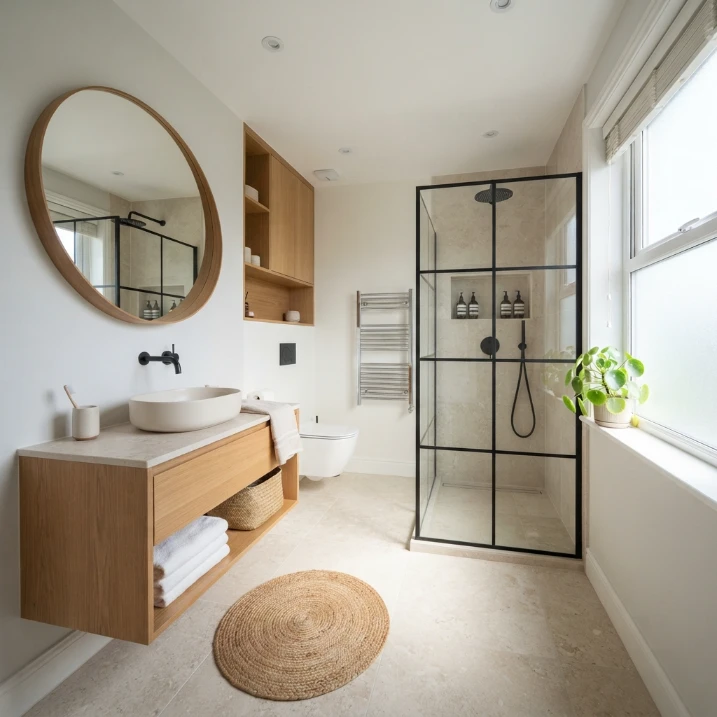
Small bathrooms benefit greatly from minimalist thinking because every centimeter has to work harder. A wall-mounted vanity, clear shower screen, large mirror, integrated storage, and continuous flooring can reduce visual interruptions.
Avoid shrinking every object just because the room is small. One generously sized mirror or a strong vanity can create a more confident composition than several tiny decorative elements.
For an especially compact layout, you may also find useful ideas in our half bathroom ideas.
Keep Countertop Styling Simple But Not Empty

A completely bare counter is not the only route to a minimalist look. A hand soap dispenser, small tray, folded hand towel, or single vase can make the room feel lived in while keeping visual noise low.
Group practical items instead of scattering them. Matching or coordinating containers can also reduce the visual impact of everyday packaging. For specific styling examples, see our bathroom counter decor ideas.
Choose Fewer Details With More Character
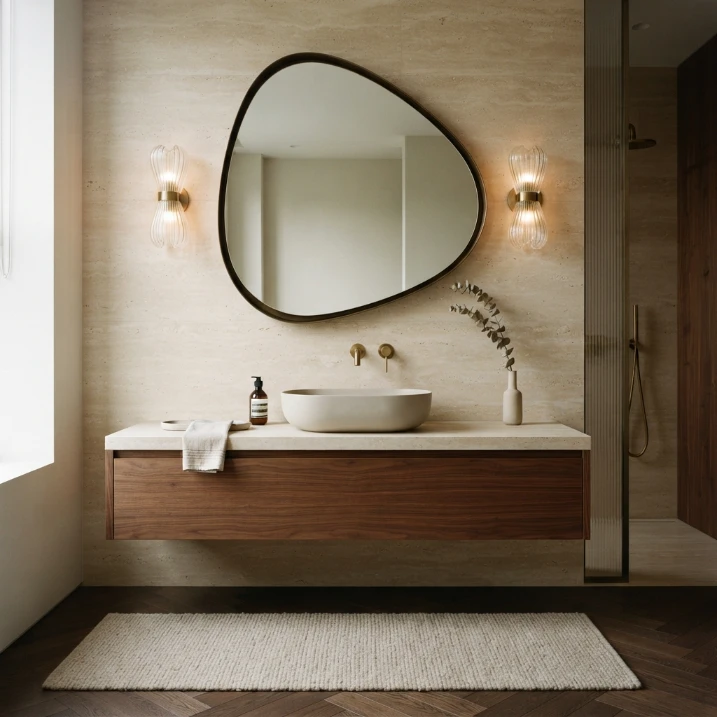
When there are fewer decorative elements, each selection becomes more noticeable. That makes shape, texture, finish, and scale especially important.
Instead of buying several small accessories, consider one sculptural mirror, a beautifully shaped basin, distinctive wall sconces, or a quality faucet. The goal is not necessarily to spend more; it is to make each visible choice contribute to the overall design.
Final Thoughts
The best minimalist bathroom ideas are not based on an arbitrary rule about how many things a room should contain. They are based on clarity. Storage has a purpose, materials relate to one another, lighting supports both atmosphere and function, and decorative details are chosen rather than accumulated.
Start with the way your bathroom needs to work, then simplify the visual language around those needs. When every major element earns its place, the result can feel spacious, comfortable, and refined without ever becoming empty or impersonal.