Before You Design A Whimsical Kids Bedroom, Read This First
A whimsical kids bedroom is a child’s room designed to spark imagination while still working for sleep, play, and everyday life. Think storybook palettes, a canopy or treehouse bed, fairy lights, and one memorable focal point, balanced with reachable storage, washable textiles, and furniture that can grow with your child.
The best whimsical kids bedroom ideas balance magic with function. Start with a clear color palette, add one hero feature like a mural or reading nook, and keep the biggest pieces flexible so the room adapts from toddler years to tweens. For younger children, our toddler girl bedroom ideas show how to keep the same magic age-appropriate.
The best whimsical kids bedroom designs also think about how children actually use the space. A reading nook should be reachable, storage should be easy to use, and the bed should feel cozy rather than simply decorative. With thoughtful layers of color, texture, lighting, and playful details, the room can feel magical while remaining comfortable on school mornings.
1. Layer Color With Playful Ceiling Decor
Start with a cheerful base and then bring the eye upward. Paper stars, bunting, lightweight garlands, colorful pendant shades, or simple hanging shapes can make the ceiling part of the story. This is especially useful in a smaller room because vertical decoration adds personality without taking away floor space.
Try a palette of soft blue, warm cream, muted coral, mustard, and natural wood. Keep the furniture quieter so the ceiling and textiles can provide the playful energy. A checkerboard or softly patterned rug can anchor the room and create a defined play area. A concrete version: paper stars and a bunting garland over the bed, a colorful pendant shade in the center, and a low bookcase so the ceiling does the storytelling while the floor stays clear. Add warm fairy lights along the picture rail for a bedtime glow.

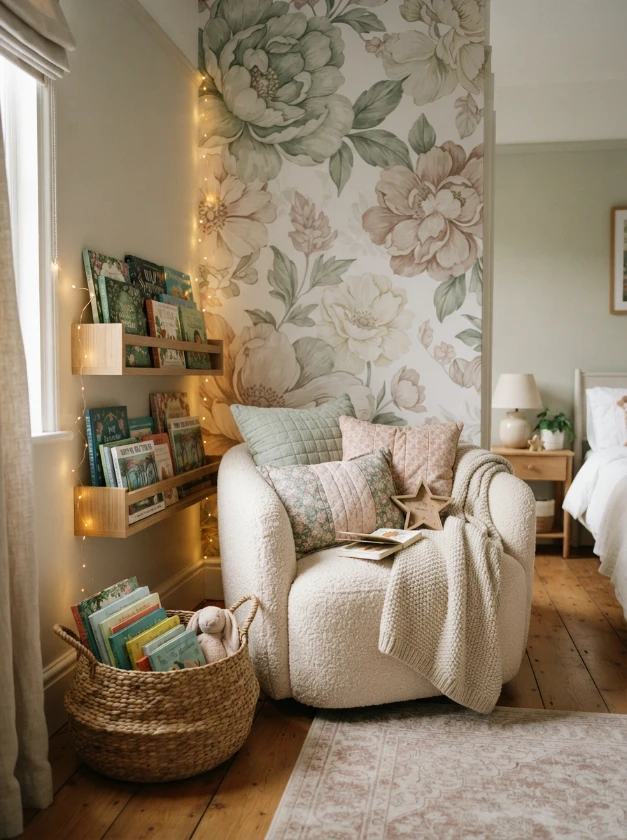
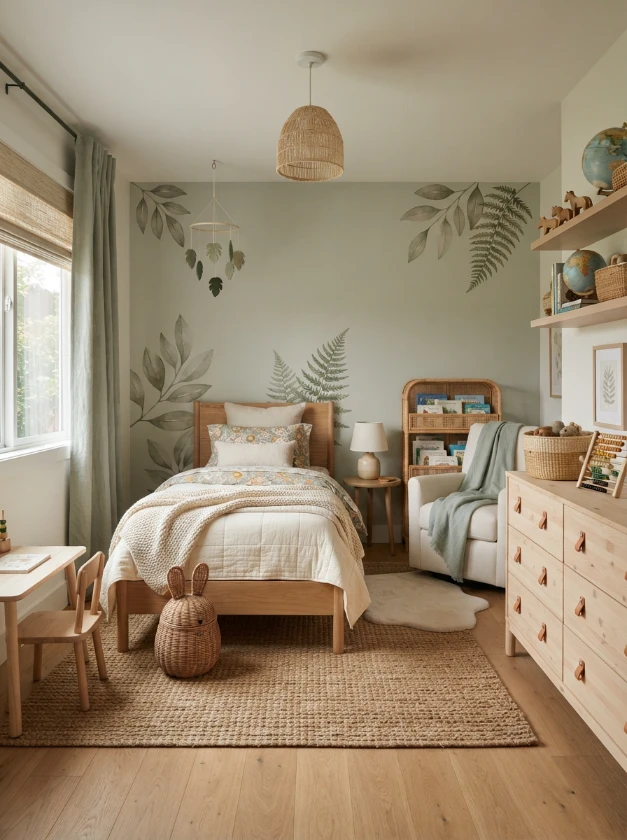
2. Build A Storybook Reading Nook With Soft Florals
A floral mural or oversized botanical print can instantly create a storybook feeling. Choose muted sage, dusty rose, buttercream, and faded blue rather than extremely bright colors if you want the room to remain useful for several years.
Place floating picture ledges or low book displays at child height. Add a plush chair, quilted cushion, woven basket, and warm fairy lights around the reading area. The result is decorative and functional at the same time, giving the child a quiet place for books and imaginative play. For example, a sage-green floral mural behind a low book ledge, a quilted floor cushion in buttercream, and a woven basket for picture books create a nook that works from age three to ten. Wrap fairy lights around the ledge so it doubles as a nightlight zone.
3. Create A Cozy Window Desk With Vintage Details
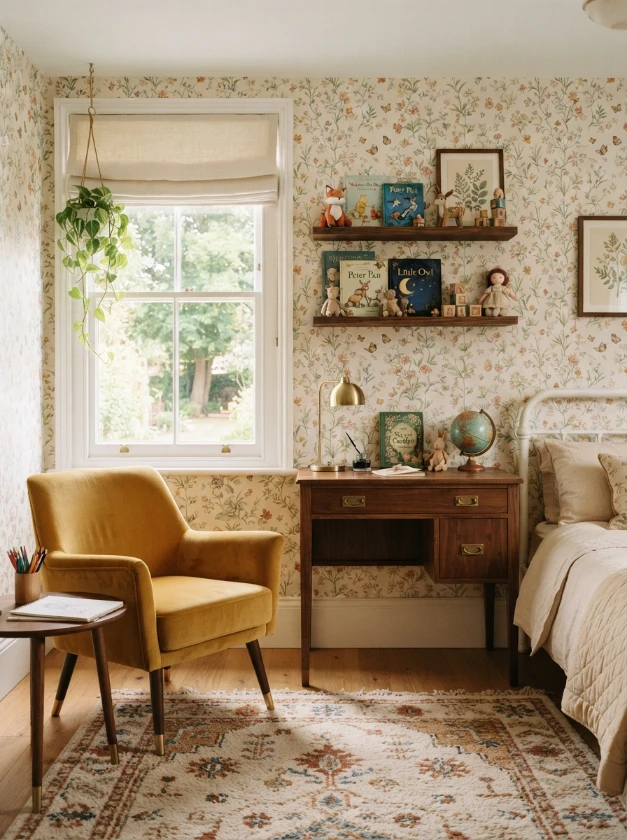
A desk beneath a window makes excellent use of natural light and gives a child a dedicated place for drawing, homework, crafts, or quiet activities. Add floating shelves above the desk for books and small treasures while keeping the floor open.
For a vintage-inspired palette, combine dusty blue or floral wallpaper with warm mustard, walnut, cream, and aged brass. A patterned rug can visually connect the desk to the rest of the room. Use baskets to contain toys and supplies so the whimsical look does not become cluttered. Try a small pine desk under the window, floating shelves at child height for treasures, and a dusty-blue patterned shade on the desk lamp.
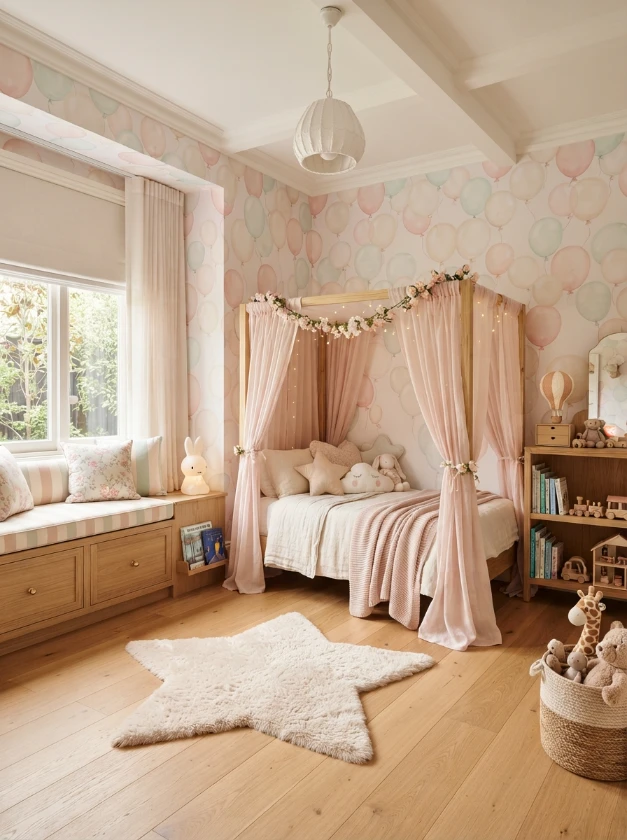
4. Use Balloon Wallpaper And A Built-In Bench
Repeating balloon shapes can make a room feel playful while still looking polished. Soft blush, mint, cream, and pale blue are particularly effective because they create color without making every surface compete for attention.
If the layout allows it, place a bench beneath a window. A cushioned seat can become a reading spot, while drawers or baskets underneath provide hidden storage. Balance the patterned wall with calmer flooring, simple wood furniture, and a few textured cushions. Use removable balloon-print wallpaper so the theme lifts off cleanly when tastes change, and choose a bench with a hinged seat for hidden toy storage.
5. Turn The Bed Into An Enchanted Forest Retreat
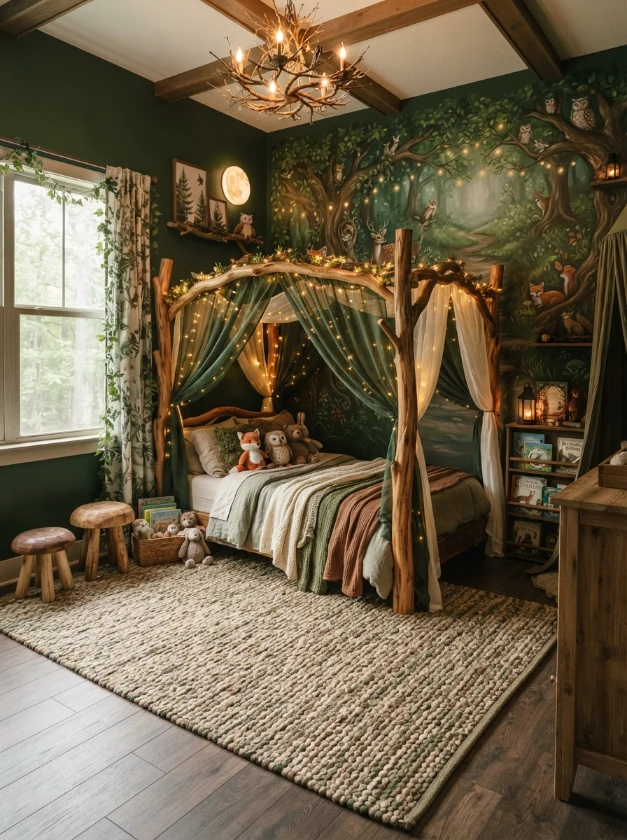
Nature-inspired bedrooms work beautifully when the theme is built from materials rather than cartoon characters. Think forest-green walls, warm brown wood, mushroom-shaped accents, leafy artwork, woven textures, and soft animal-inspired accessories.
A wooden canopy over the bed can become the main architectural feature. Add warm string lights inside the canopy and use a large textured rug to soften the floor. Keep storage simple and low so the forest theme remains the hero rather than getting lost beneath toys. Concrete example: forest-green walls, a simple wooden canopy frame, mushroom-shaped stools, and warm string lights tucked inside the canopy. This is also the most boy-friendly whimsical theme: skip the florals and lean into wood, green, and adventure.
6. Create A Secret Wardrobe Reading Hideaway
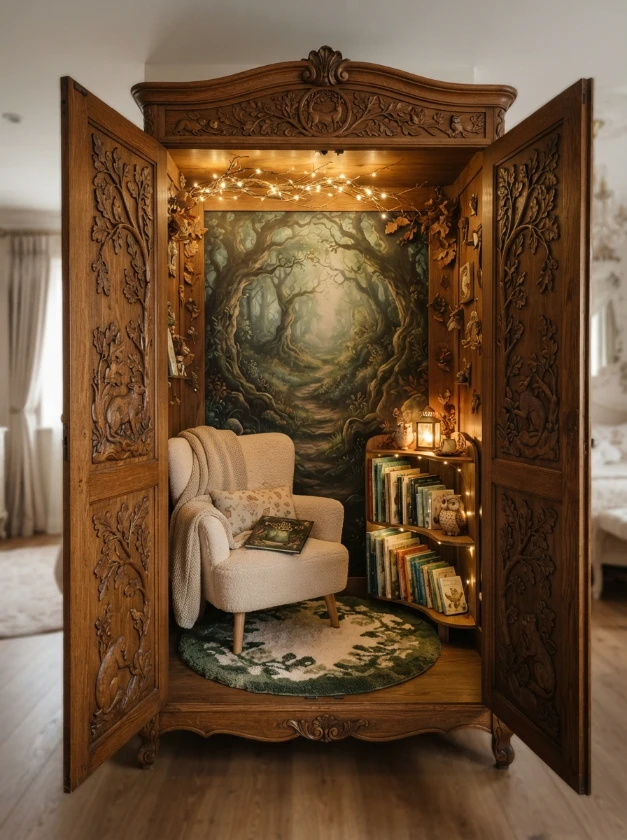
A hidden nook can turn an ordinary bedroom into an imaginative escape. If there is a deep wardrobe, unused alcove, or compact corner, create a small reading space with a padded seat, soft rug, low book storage, and gentle lighting.
Use a forest or garden mural inside the nook to create depth. Darker greens and browns around the edges can make the center feel farther away, while warm integrated lighting keeps the space inviting. Make sure the nook remains well ventilated, safely accessible, and easy for the child to exit. Keep the nook to a padded seat, a small battery-powered lantern, and low book storage; avoid heavy drapery near the opening so the space stays airy and safe.
7. Add A Rustic Treehouse Bunk Bed
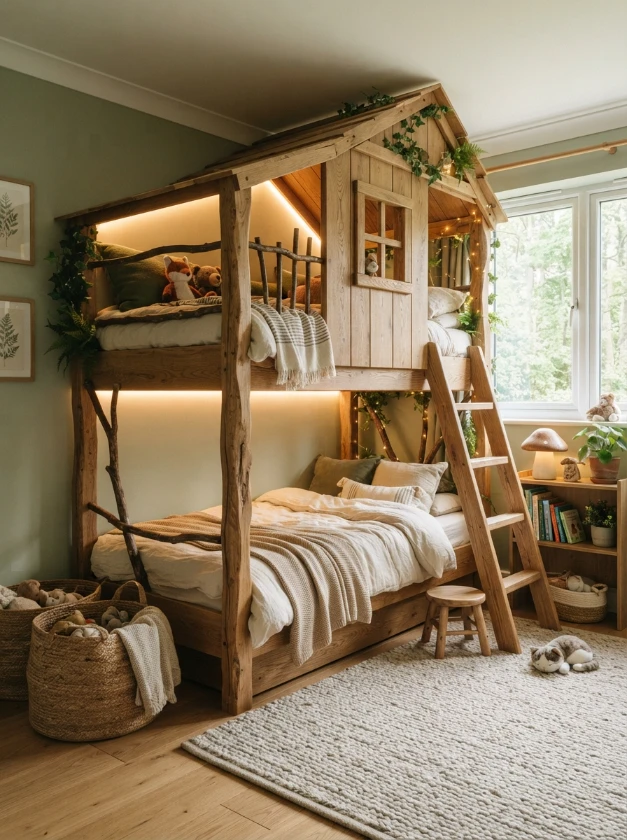
A house-shaped or treehouse-style bunk can become a dramatic focal point without requiring a room full of themed accessories. Natural wood, linen bedding, woven baskets, and earthy green accents keep the design calm and timeless.
Let the upper bunk carry most of the visual drama while the lower sleeping area stays simple. Layer warm lighting underneath the loft and use a small amount of greenery to reinforce the outdoor feeling. Safety comes first: secure guardrails, a stable ladder, suitable mattress depth, and age-appropriate construction should guide the design. Choose a treehouse bunk rated for your child’s age, anchor it to the wall, and keep the ladder rungs wide and grippy; the upper bunk carries the drama while the lower stays a simple sleep space.
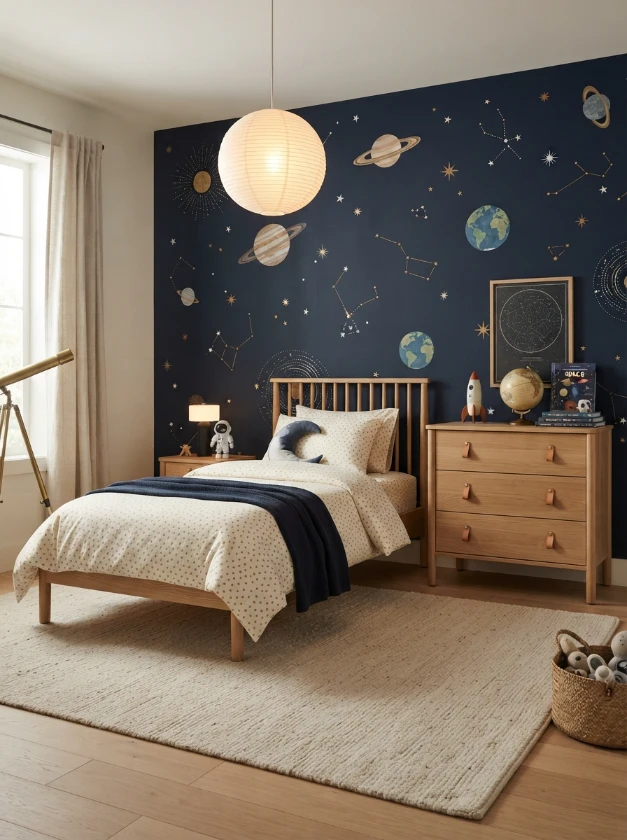
8. Design A Calm Outer Space Accent Wall
For a child who loves planets and stars, one deep navy feature wall can create a dramatic galaxy without turning the entire room into a cartoon theme. Add spaced planets, small stars, moon shapes, or subtle constellation details to create visual rhythm.
Keep the rest of the room lighter with natural wood, cream bedding, and simple furniture. A spherical pendant or globe lamp can repeat the rounded shapes of the planets. This approach keeps the theme recognizable while allowing the room to mature with the child. Paint one wall deep navy, add glow-in-the-dark stars and a few planet decals, and keep bedding cream; the galaxy reads magical without turning the room into a cartoon.
9. Style A Soft Pink Cottage Loft
A house-shaped loft bed can create a fairytale mood while also using vertical space efficiently. Soft pink walls, delicate floral details, creamy textiles, and natural wood create a gentle palette that feels sweet without being overwhelming.
Built-in shelves or storage beneath the loft can hold books, toys, and baskets. Use tone-on-tone pinks rather than many unrelated shades, then introduce cream and warm wood to create contrast. Quilts, curtains, and a soft rug add the texture that keeps the room from feeling flat. Tone-on-tone pinks are the key: blush walls, rose bedding, and cream curtains keep the cottage loft sweet rather than overwhelming.

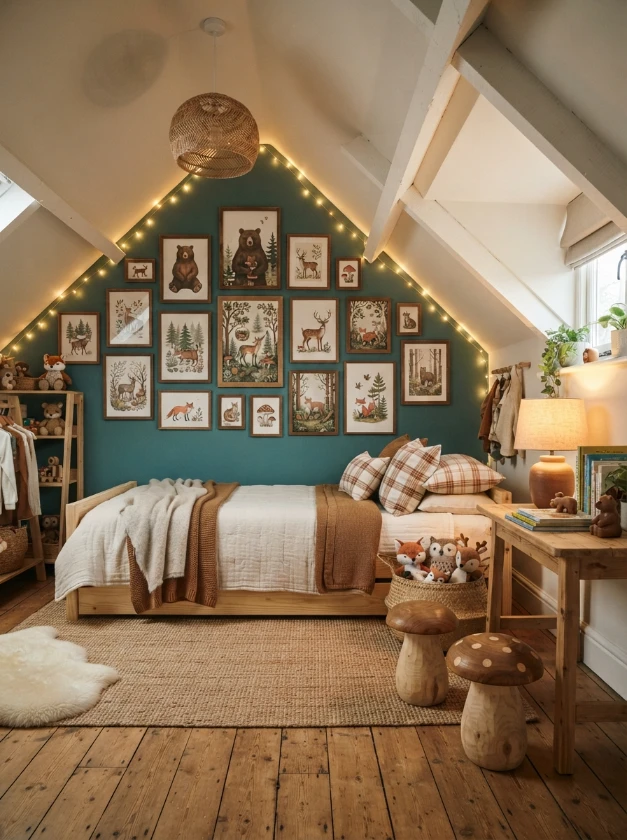
10. Make An Attic Wall The Woodland Gallery
An attic bedroom can turn sloped ceilings into a design feature. Instead of hiding the unusual architecture, emphasize it with warm string lights that follow the roofline. A rich teal or muted forest-green wall can create a dramatic backdrop for woodland artwork.
Group framed prints closely enough to feel like a collection, but keep the frame finish consistent. Add warm bedding, a small lamp, mushroom-inspired stools, and woven textures to make the space cozy. The key is to repeat a few colors so the gallery wall feels connected to the rest of the room. String warm fairy lights along the roofline, group woodland prints in matching frames, and add a mushroom stool; the sloped ceiling becomes the room’s best feature.
11. Build A Room That Grows With Imagination
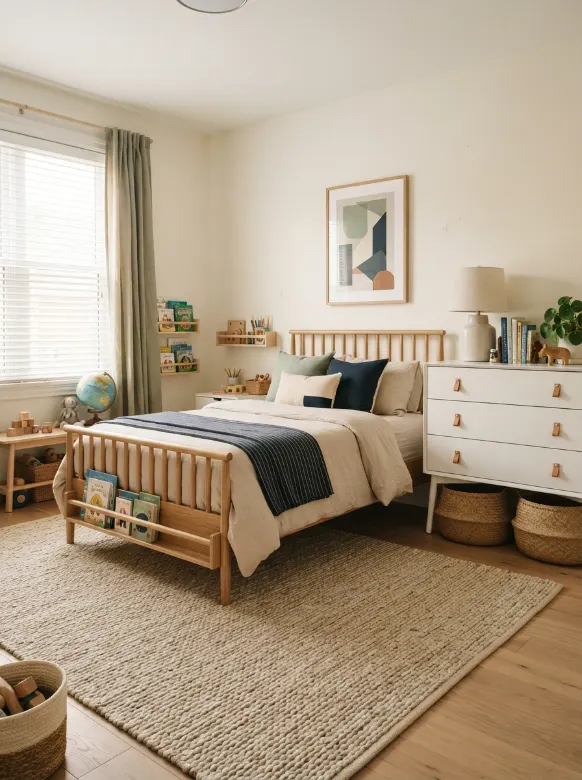
The most successful whimsical kids bedroom ideas use a flexible foundation. Choose durable furniture in natural wood, cream, soft green, or another adaptable neutral, then bring the strongest theme through removable wallpaper, bedding, artwork, rugs, curtains, and accessories.
Create simple zones for sleeping, playing, reading, and creative work. As interests change, you can replace a few decorative layers instead of redesigning the entire room. This keeps the room practical and makes it easier to move from one childhood interest to another.
Make the grow-with-me plan concrete: when dinosaurs give way to space, you only need to swap the bedding, the art prints, and the canopy fabric. Keep furniture in natural wood or cream, walls in an adaptable neutral or one easy-to-paint accent color, and the theme in removable layers like wallpaper, decals, and textiles. Our big kids bedroom ideas post shows how these same flexible foundations carry through to the tween years.
Whimsical Kids Bedroom Ideas on a Budget
A whimsical kids bedroom does not need a designer budget. The cheapest high-impact moves are paint, decals, and lighting: one accent wall in a storybook color, removable wall decals or peel-and-stick wallpaper instead of a mural, warm fairy lights (a few dollars a strand), thrifted wooden furniture painted cream, and a DIY canopy made from curtain panels and a hula hoop. Spend real money on the mattress and one good rug; theme everything else from the budget layers.
Whimsical Kids Bedroom Ideas for Small Rooms
Small rooms go whimsical vertically. Use the ceiling and walls for the story (stars, bunting, wall decals) and keep the floor clear. Choose a loft or cabin bed with storage or a desk underneath, wall-mounted book ledges instead of a bookcase, one multi-use piece like a storage bench that doubles as a reading seat, and light wall colors with the theme in textiles. Mirrors and warm lighting keep a small whimsical room from feeling busy.
Safety Notes for Whimsical Kids Bedrooms
Whimsy should never trade off against safety. Anchor tall furniture to the wall, use non-toxic low-VOC paint, keep canopy drapes tied back and away from the child’s neck and face during sleep, choose cordless or cord-guarded window coverings, use battery or low-heat LED lights inside canopies and nooks, and pick a bunk or loft rated for your child’s age with proper guardrails.
Which Whimsical Ideas Suit Which Ages
| Age | Best ideas | Why |
|---|---|---|
| Ages 3 to 5 | Storybook nook, balloon wallpaper, soft florals | Low, reachable features; nothing to climb |
| Ages 6 to 8 | Enchanted forest bed, space accent wall, wardrobe hideaway | Imaginative play peaks; reading nooks get daily use |
| Ages 9 to 12 | Treehouse bunk, window desk, woodland gallery | Bigger-kid furniture; themes that do not feel babyish |
What Makes A Whimsical Kids Bedroom Work?
A whimsical kids bedroom works best when every decorative layer has a purpose. Repeat two or three colors, vary textures, and give toys and books accessible storage. Leave some calm wall and floor space so the eye has somewhere to rest.
Warm lighting also makes a major difference. Combine a main ceiling light with a bedside lamp, reading light, or soft accent lighting. Finally, choose one hero feature for each room, such as a canopy bed, mural, gallery wall, loft, or reading nook. A clear focal point makes the design feel intentional rather than crowded.
Whimsical Kids Bedroom FAQs
How do I make a kids room look whimsical on a budget?
Start with the three cheapest high-impact layers: paint one accent wall in a storybook color, add removable wall decals or peel-and-stick wallpaper, and string warm fairy lights. Thrift wooden furniture and paint it cream, then theme with bedding, art, and textiles. Spend real money only on the mattress and one good rug.
How do I pick whimsical kids bedroom ideas that last as my child grows?
Keep the expensive, permanent layers neutral: natural-wood or cream furniture, an adaptable wall color, and clear activity zones. Put the theme in removable layers like bedding, decals, curtains, and art. When interests change, you swap three things instead of redesigning the room.
What decor makes a kids room look whimsical?
The fastest whimsy signals are a canopy or draped fabric over the bed, fairy or string lights, one mural or statement wallpaper wall, playful shapes like stars or balloons, and a dedicated reading nook. Pick two or three of these rather than all of them so the room stays calm.
Can a small bedroom still feel whimsical?
Yes, by decorating vertically. Put the story on the ceiling and walls with stars, bunting, and decals, keep the floor clear, and use multi-purpose furniture like a loft bed with a desk or a storage bench that doubles as a reading seat. Light wall colors and warm lighting keep it from feeling busy.
Is a treehouse bunk safe for young kids?
A treehouse bunk is best for ages six and up, following the manufacturer’s age guidance. Choose one with full-length guardrails on the upper bunk, a sturdy wide-rung ladder, a mattress that sits well below the top of the guardrail, and anchor the frame to the wall. For under-sixes, keep the whimsy at floor level with a nook or canopy instead.
Final Thoughts
Creating a magical children’s room does not require covering every surface with a theme. Start with a strong palette, comfortable furniture, useful storage, and clear activity zones. Then add storybook details through murals, lighting, textiles, playful shapes, and meaningful accessories.
The goal of a whimsical kids bedroom is to create a room that feels special now and can still adapt later. When imagination is balanced with proportion and function, a whimsical kids bedroom becomes more than a pretty space—it becomes a comfortable setting for reading, playing, creating, and growing.