Top Stunning Ornamental Grasses Ideas for a Better Landscape
Ornamental grasses can change the way a landscape feels without making the planting scheme look overworked. Their fine blades, airy plumes, upright forms, and gentle movement bring texture where shrubs can feel heavy and flowers can feel temporary. They also work across very different design languages, from formal entry gardens to relaxed cottage borders and clean contemporary yards.
If your outdoor space needs more structure, softness, or year-round visual interest, the right grass can become the bridge between hardscape and planting. The key is to choose the form, scale, color, and placement carefully rather than treating every grass as the same.
1. Frame the Entry With Soft, Upright Texture
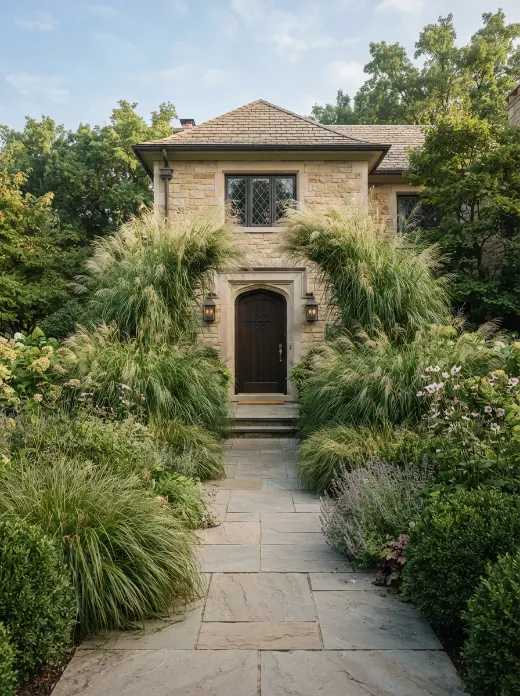
A front entrance is one of the easiest places to use ornamental grasses because their vertical shape naturally draws the eye toward the door. Plant a few generous clumps on either side of a walkway, keeping the center route open.
For a formal home, combine them with clipped evergreen shrubs or low boxwood. For a relaxed exterior, let the planting spill more naturally around stone or brick. The contrast between tidy architecture and flowing foliage gives the entrance a polished but welcoming character.
2. Soften a Brick or Stone Patio
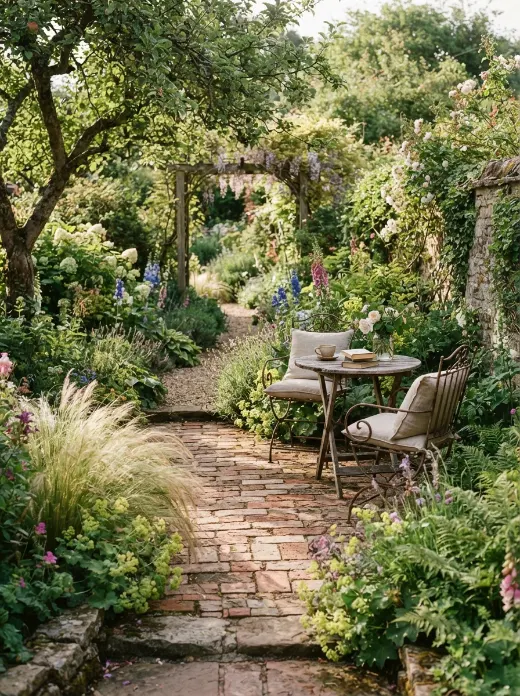
Hard surfaces can make an outdoor room feel visually rigid. Ornamental grasses soften that effect by placing fine foliage along the edge of brick, pavers, or natural stone.
Use medium-height varieties around seating areas so they frame the patio without blocking conversation or views. Repeat the same grass in several groups rather than placing one specimen in isolation. Repetition creates rhythm and makes the planting feel intentional.
Warm brick pairs especially well with green, bronze, or straw-colored foliage. Pale stone can take cooler blue-green varieties and silvery accents.
3. Create a Clean Modern Border
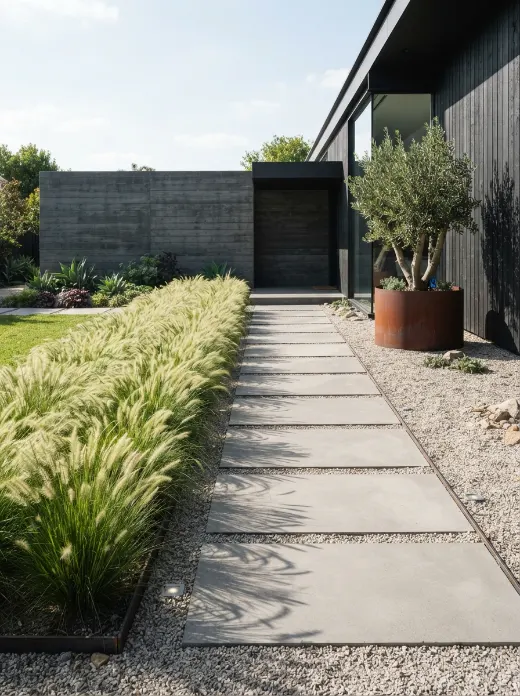
A contemporary landscape benefits from restraint. Instead of mixing many plant types, select one or two ornamental grasses and repeat them in a long, confident border.
Plant in generous groups with consistent spacing. A narrow bed of grasses beside concrete pavers or a dark retaining wall can create a strong architectural line while still feeling alive.
For the most refined effect, keep the ground plane simple. Gravel, large-format pavers, or smooth stone will let the texture of the grass remain the visual focus.
4. Build a Relaxed Cottage-Style Garden

Cottage landscapes do not need to be perfectly symmetrical. Ornamental grasses can provide the loose, natural texture that connects flowering perennials, shrubs, and informal paths.
Place taller grasses toward the middle or back of the border and use lower mounding forms near the path. Combine them with lavender, salvia, coneflowers, roses, or other plants suited to your local conditions.
The goal is not to make every plant compete. Let grasses act as a quiet layer between colorful blooms so the whole garden feels fuller without becoming chaotic.
5. Add a Woodland Feel With Layered Planting

In a partly shaded garden, choose grass-like plants and ornamental grasses that tolerate the available light, then combine them with ferns, hostas, shrubs, and textured ground covers.
Use different leaf shapes to create depth. Fine blades beside broad leaves produce contrast, while taller clumps can guide the eye through a winding path.
Natural stone, weathered timber, and muted foliage make this approach especially attractive around woodland-style homes. Keep the materials understated so the planting remains the main feature.
6. Use Grasses as a Poolside Texture

Pool areas often contain large stretches of paving, water, and hard edging. A carefully planted band of ornamental grasses can make the transition from patio to garden feel much softer.
Choose varieties that suit the pool’s exposure and avoid plants that shed excessively into the water. Place larger clumps at the outer edge of the pool zone where they can provide movement without interfering with circulation.
Combine soft grasses with stone, clipped shrubs, or broad-leaved plants for a balanced resort-like atmosphere.
7. Design a Japanese-Inspired Calm Corner
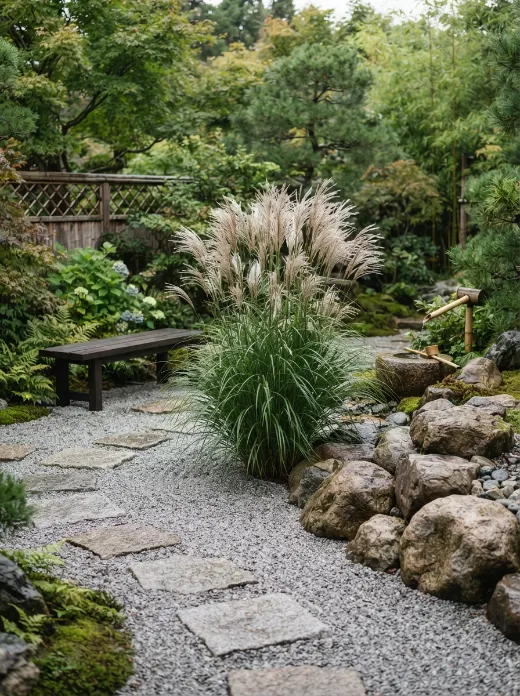
A small group of ornamental grasses can bring a sense of movement to a minimalist garden. Pair one strong clump with gravel, stepping stones, a simple bench, or a sculptural rock.
Keep the plant palette limited. The beauty comes from spacing, texture, and negative space rather than from filling every corner.
Arching blades can echo the shape of a small water feature or soften a straight wall. The result is a quiet composition that feels intentional from every angle.
8. Create a Color-Rich Seasonal Border

Not all grasses stay the same color throughout the growing season. Some shift from fresh green to gold, bronze, copper, or warm red tones, giving the border a changing appearance.
Use a simple row or broad drift to make seasonal color more noticeable. Dark stone or mulch can strengthen the contrast, while neighboring evergreen plants keep the composition grounded after the grass changes color.
Before choosing a variety for its color, check how it performs in your climate and how much sun it needs.
9. Bring Texture to a Pollinator-Friendly Path
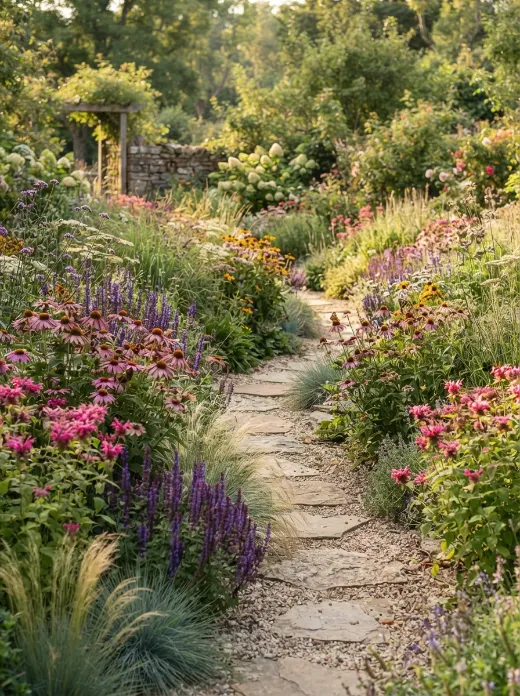
A garden path can feel much more inviting when planting gradually rises and falls along its edges. Lower ornamental grasses can define the route, while taller flowering plants create a soft backdrop.
Add pollinator-friendly perennials that suit your region, such as coneflower, salvia, bee balm, or other locally appropriate choices. The grasses provide a fine-textured base while flowers bring seasonal color.
Use natural curves instead of rigid rows if you want a more relaxed look. A combination of gravel, stone, grasses, and flowers can feel both designed and natural.
10. Style Large Containers With Sculptural Grasses

You do not need a large garden bed to enjoy ornamental grasses. Large containers can bring their shape and movement onto a patio, balcony, porch, or small courtyard.
Choose a substantial planter with enough room for the mature root system. Tall grasses work well as a focal point, while trailing plants or low foliage can soften the base.
For an upscale look, repeat two or three matching containers rather than collecting many unrelated pots. Stone, matte ceramic, concrete, and textured planters work particularly well with grass foliage.
How to Choose the Right Grass for Your Landscape
Start with the growing conditions instead of choosing a plant only because it looks good in a photograph. Check sunlight, soil drainage, moisture, winter temperatures, mature height, and spread.
Think about the role the plant needs to play. A compact clumping variety can define a walkway, while a tall plume-forming grass can create a screen or focal point. Blue-green foliage can cool a hot planting scheme, while bronze and gold tones can add warmth.
It is also important to understand whether a variety is clumping or spreading. Clumping plants generally stay in a defined area, while spreading types can require more management. Local extension services, reputable nurseries, and plant labels can help you confirm mature size and regional suitability.
How to Make Ornamental Grasses Look Expensive
The most polished landscapes usually rely on repetition and editing. Choose a limited plant palette, repeat key forms, and give every group enough room to mature.
Use hardscape materials that relate to the architecture of the house. If the home has warm brick, consider warm gravel, stone, or bronze-toned foliage. If the exterior is contemporary, large pavers and restrained planting can create a cleaner connection.
Edges matter too. Keep paths defined, remove weeds before they become noticeable, and refresh mulch or gravel when needed. A beautifully planted border can lose its impact when its boundaries become messy.
Lighting can also transform the design after sunset. Low, warm landscape lights placed near paths or below taller plants can reveal the movement of the foliage without making the garden feel overly bright.
Common Mistakes to Avoid
One common mistake is choosing a plant that will become too large for its location. Always consider mature height and width before planting near windows, paths, fences, or utility areas.
Another mistake is using too many unrelated varieties. Variety can be attractive, but repetition creates stronger visual rhythm. Three well-selected plant forms often look more sophisticated than ten competing textures.
Finally, avoid ignoring the surrounding architecture. The best landscape feels connected to the house, not like a separate collection of plants. Repeat colors, materials, and shapes so the garden feels like part of the overall property.
Final Word
Ornamental grasses can give a landscape an unusual combination of softness, structure, movement, and seasonal character. They can frame a front door, soften a patio, define a modern border, support a cottage planting scheme, or add calm texture beside stone and water.
The strongest result comes from matching the grass to the space, repeating it thoughtfully, and balancing its movement with solid forms such as stone, evergreen shrubs, walls, and paths. Start with one area of the garden, study the light and soil, and choose varieties that will genuinely thrive there.
With careful placement and a restrained plant palette, ornamental grasses can become one of the most useful design elements in a beautiful outdoor space.