13 Powerful Deck Design Ideas for a Cohesive Outdoor Retreat
A beautiful deck should feel like a natural extension of your home—not a collection of outdoor furniture placed on a platform. The most successful deck design ideas begin with a clear purpose, a thoughtful layout, and a consistent visual language. When the materials, furniture, lighting, and landscaping work together, even a modest deck can feel polished, comfortable, and intentional.
This guide explains how to plan a deck with beautiful colors that looks designed from every angle. You will learn how to create functional zones, choose a coordinated palette, improve movement, layer lighting, and add personality without making the space feel busy.
1. Start With How You Will Use the Deck

Before choosing furniture or decorative details, decide what the deck needs to do. A space used for morning coffee has different requirements from one designed for family dinners, outdoor movie nights, or weekend entertaining.
- Create a dining zone if meals are the priority.
- Reserve a comfortable lounge area for conversation and reading.
- Leave a clear route between the house, stairs, and garden.
- Place cooking or grilling equipment away from the main seating area.
Once the purpose is clear, every later choice becomes easier. The deck will feel intentional because each feature supports a real activity.
2. Divide the Space Into Clear Outdoor Zones

Zoning is one of the most useful deck design ideas for both large and small yards. You do not need walls to separate functions. An outdoor rug, a change in furniture direction, a pergola, planters, or a subtle change in elevation can define one area from another.
Keep dining furniture together, place lounge seating around a central table or fire feature, and avoid scattering individual chairs around the perimeter. A grouped layout feels calmer and makes conversation easier.
3. Choose a Controlled Color Palette

A deck can quickly look random when every item has a different finish. Start with two or three main colors. Warm wood, soft cream, charcoal, olive green, and muted terracotta are easy to combine with garden surroundings.
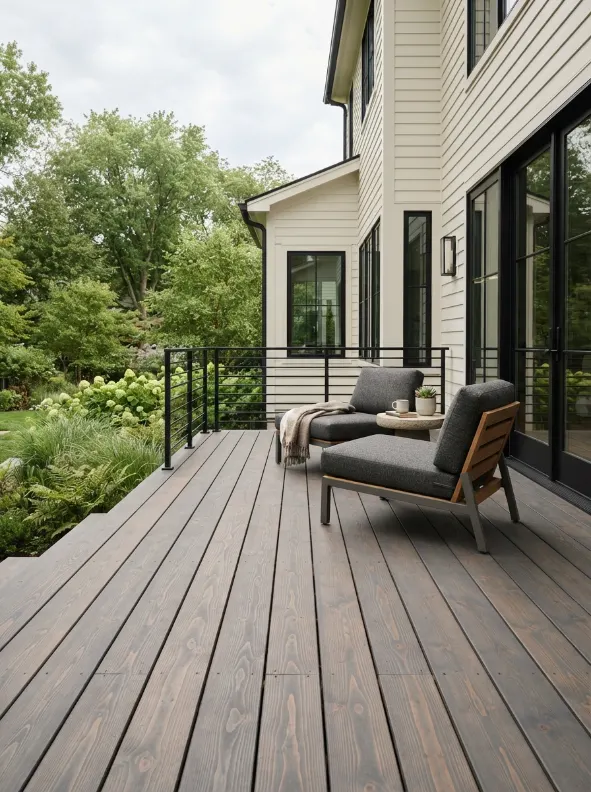
Repeat one finish in several places—for example, black metal in the railing, lighting, and furniture frames. Repeat wood tones in the deck boards, pergola, and planters. This repetition creates visual rhythm without making the space feel matched or overly formal.
4. Make the Deck and Pergola Feel Connected
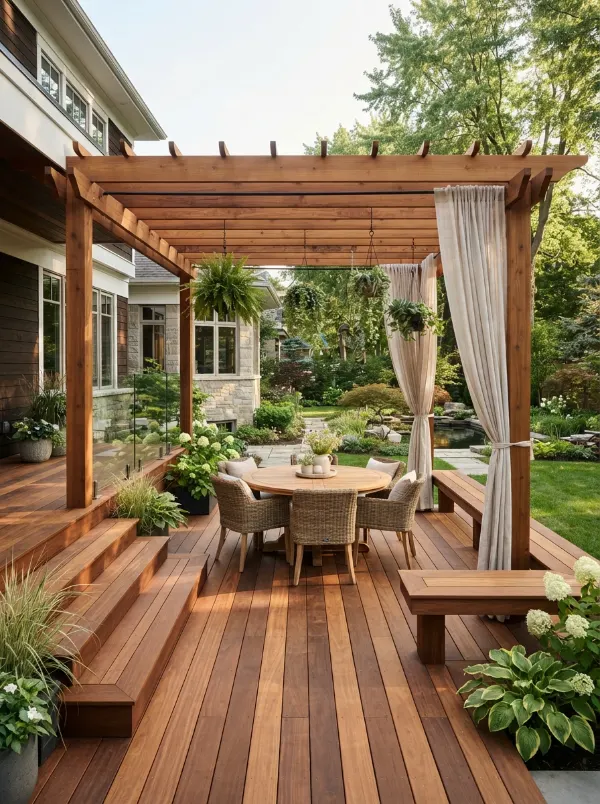
A pergola should look like part of the architecture rather than a separate object placed above the deck. Match its stain or paint to an existing deck detail, exterior trim, or nearby fence. Use the pergola beams to define a dining or lounge zone and keep the furniture beneath it proportionate to the structure.
Hanging planters, climbing greenery, or soft outdoor curtains can add texture. Keep the accessories limited so the strong lines of the pergola remain visible.
5. Use Furniture With the Right Scale
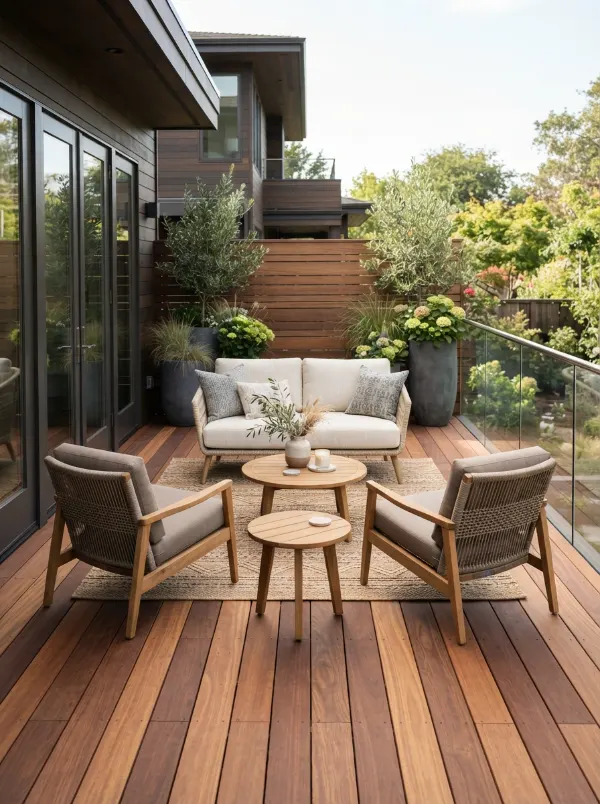
Oversized furniture can make a deck feel cramped, while undersized pieces can make a large deck feel unfinished. Measure the available floor area and preserve comfortable walking space around tables, doors, and stairs.
Choose fewer, better-sized pieces instead of filling every corner. A compact sofa, two lounge chairs, and a small table may feel more luxurious than a crowded arrangement of mismatched seating.
6. Design the Stairs as Part of the Composition

Deck stairs are not only a practical connection to the yard. They can create a strong arrival moment. Wide steps, consistent riser heights, contrasting treads, and integrated lighting make the transition feel deliberate.
Use the same material family on the stairs and deck, but consider a slightly darker tread or a contrasting edge for definition. Keep planters or furniture away from the main walking line.
7. Layer Lighting for Evening Comfort
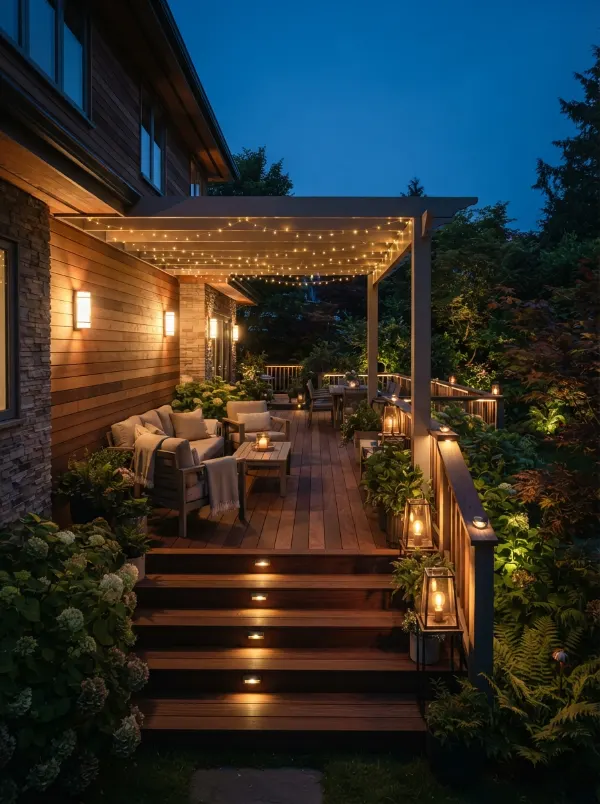
Good lighting makes a deck useful after sunset and helps the entire design feel more finished. Combine several gentle sources rather than relying on one bright fixture.
- Use step lights to guide movement.
- Add warm sconces near doors and walls.
- Use string lights beneath a pergola for atmosphere.
- Place lanterns near seating or along the edge.
- Use subtle under-bench or railing lighting for depth.
Choose a consistent warm color temperature. Lighting should reveal the layout, not create glare.
8. Repeat Shapes and Materials
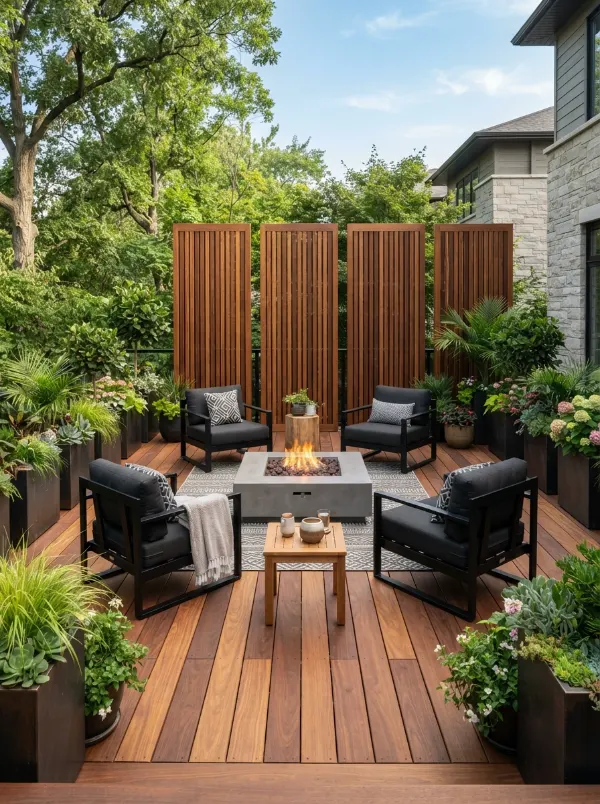
Repetition is a simple way to make different elements feel related. Square planters can echo a square fire table. Vertical railing lines can be repeated in privacy screens or slatted walls. Rounded chairs can soften a deck filled with straight architectural lines.
Repeating shapes gives the eye a pattern to follow. It also prevents a large outdoor space from feeling like a collection of unrelated purchases.
9. Add Greenery That Softens Hard Lines
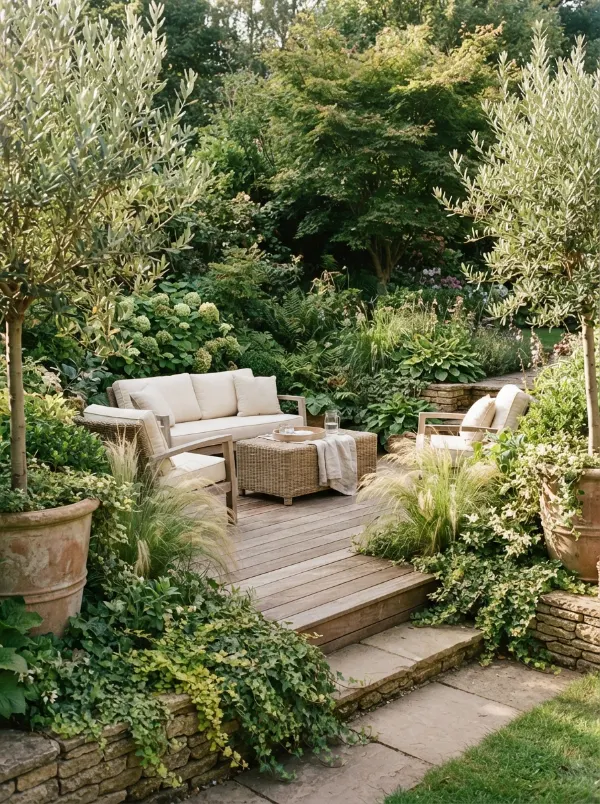
Wood, stone, metal, and concrete can look severe when used without organic contrast. Plants soften those materials and connect the deck to the surrounding landscape.
Use a mix of tall planters, low containers, trailing plants, and nearby garden beds. Keep plant colors coordinated with the overall palette. Evergreen foliage creates structure, while seasonal flowers add a controlled accent.
10. Make Storage Look Deliberate

Visible storage does not have to ruin the design. Choose benches with hidden compartments, a slim storage box, or a screened area beneath a raised deck. If firewood, cushions, or gardening tools must remain visible, arrange them neatly and repeat the same containers or materials.
Order is especially important on small decks. A clear surface makes the space feel larger and gives decorative features room to stand out.
11. Create a Strong Focal Point

Every successful deck benefits from one main visual anchor. It might be a pergola, fireplace, outdoor dining table, sculptural planter, view, or dramatic light fixture.
Place the focal point where it can be seen from the house. Then keep surrounding elements quieter. Too many competing features make a deck feel random, while one clear anchor gives the design hierarchy.
12. Plan for Comfort in Every Season

A deck feels more intentional when it works beyond perfect weather. Add shade through a pergola, retractable canopy, umbrella, or mature planting. Use weather-resistant cushions, washable rugs, and throws for cooler evenings.
Think about wind direction, afternoon sun, drainage, and the position of doors. Comfort is not an extra detail; it is part of the layout.
13. Keep the Design Timeless
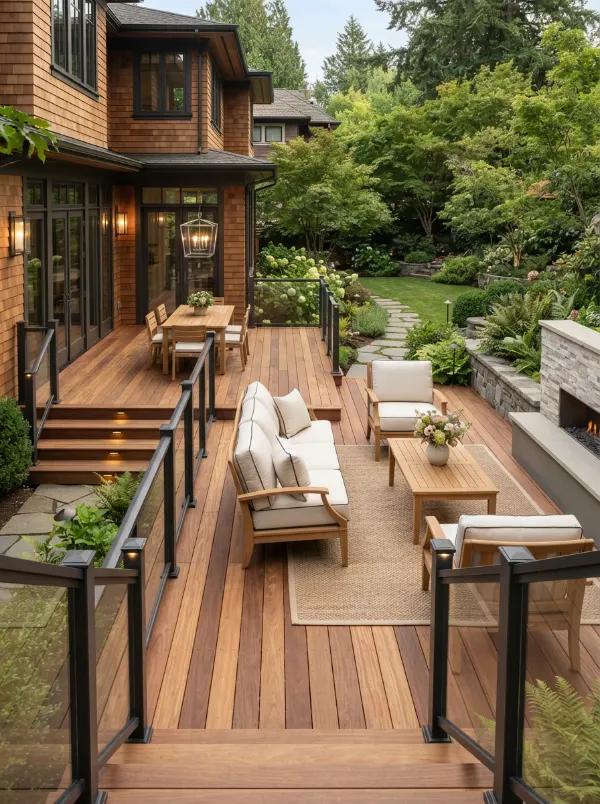
Trendy accessories can be fun, but the permanent parts of a deck should be chosen for longevity. Prioritize durable decking, safe railings, quality hardware, practical lighting, and a palette that will still feel attractive in several years.
Use pillows, planters, and small accessories to introduce changing styles. This approach keeps the expensive elements calm and allows the look to evolve without a complete renovation.
Final Thoughts
The best deck design ideas are not about adding more. They are about making every choice support the way you live outdoors. Begin with purpose, organize the layout into zones, repeat materials and finishes, use lighting thoughtfully, and add greenery to soften the structure.
When the deck has a clear flow and a consistent visual story, it feels comfortable, welcoming, and connected to the home. That is what turns an ordinary outdoor platform into a truly intentional retreat.
FAQs
How do I make a small deck feel designed?
Use compact furniture, one clear seating zone, a limited color palette, vertical greenery, and layered lighting. Keep the walking route open.
What materials look cohesive on a deck?
Repeat one or two materials, such as warm wood with black metal or pale composite decking with cream upholstery and stone accents.
Should deck furniture match?
It does not need to match exactly. It should share a color, material, shape, or finish so the overall arrangement feels related.