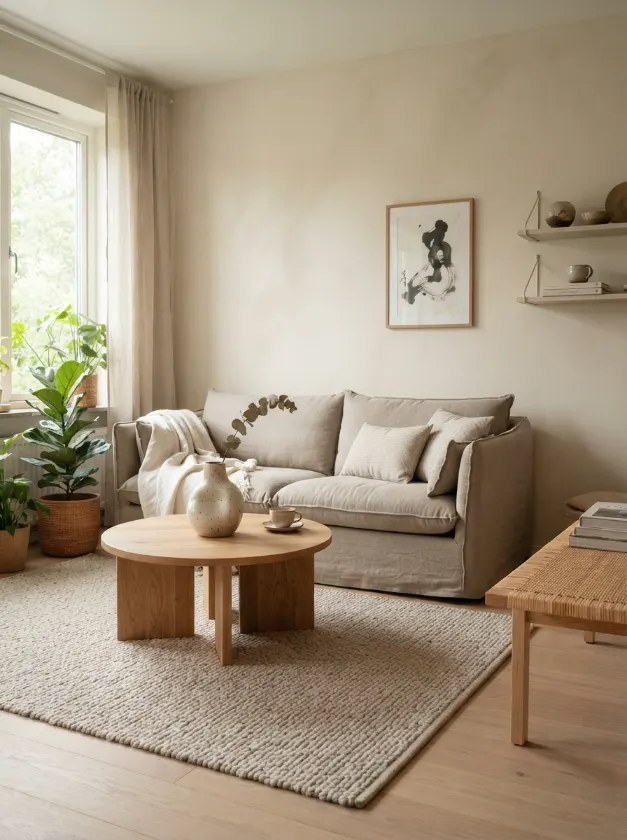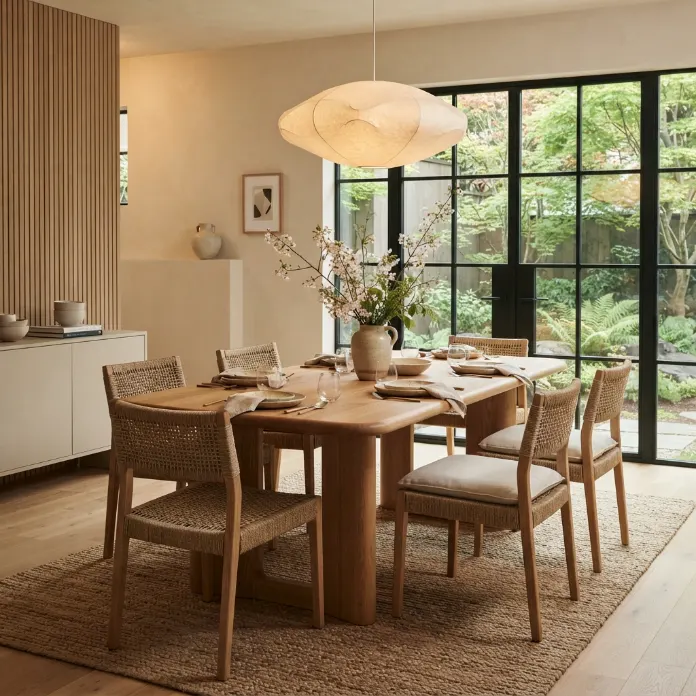
10 Brilliant Japandi Entryway Ideas for a Calm, Warm Home
A Japandi entryway should feel calm the moment you walk through the door, but calm does not mean empty. The strongest spaces combine Japanese restraint with Scandinavian warmth, using natural materials, gentle contrast, practical storage, and carefully chosen shapes. When an entry feels unfinished, the problem is usually not that you need more decoration. It is that the pieces you have are not working together.
The best Japandi entryway ideas treat the entrance as a small composition. A bench gives you a place to sit, a mirror adds softness and light, hooks handle everyday essentials, and wood introduces warmth. The result feels useful first and beautiful because every detail has a reason to be there.
Below are ten ways to style a Japandi entryway with the same quiet, editorial character as the reference design: warm woods, plaster-like neutrals, rounded forms, woven texture, hidden storage, and soft lighting. Use the ideas that suit your space rather than trying to copy every detail.
1. Create a Warm Slatted-Wood Entry With a Floating Bench
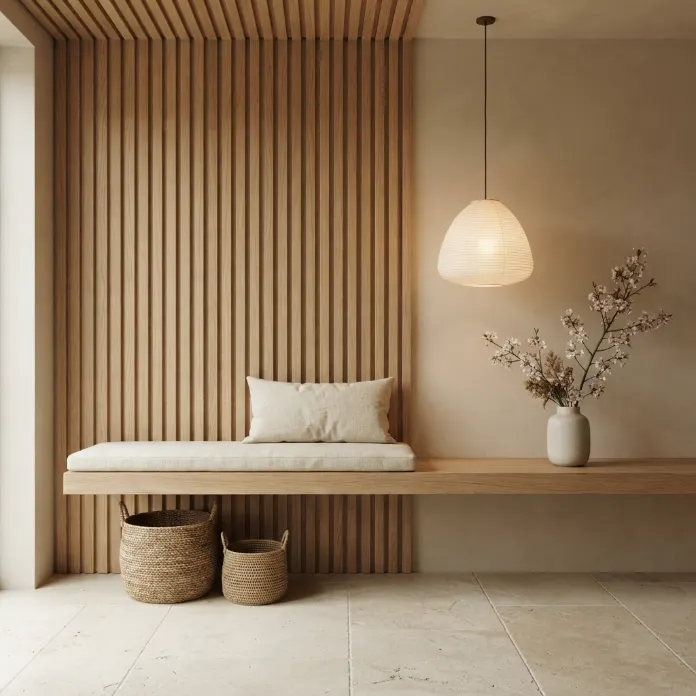
Vertical wood slats are one of the easiest ways to give a Japandi entryway architectural character. For a small Japandi entryway, this approach adds personality without sacrificing openness. Pale oak or ash slats can run behind a simple floating bench, creating rhythm while keeping the floor visible.
Use the space beneath the bench for woven baskets or closed drawers. This keeps shoes and everyday items out of sight while preserving the clean look that makes Japandi interiors feel relaxed. Keep the palette narrow: warm wood, soft beige, cream, and one darker accent are enough.
A rounded paper pendant or softly diffused ceiling light works especially well here. The combination of vertical lines and gentle curves prevents the wood from feeling too rigid.
2. Pair a Textured Wall With an Arched Mirror

A slightly textured plaster wall can make a Japandi entryway feel richer without introducing strong color. Think warm ivory, mushroom, sand, or pale taupe rather than stark white.
Above a slim console or floating shelf, place an oversized arched mirror. The curve breaks up the straight geometry of the furniture and reflects natural light back into the entrance. A dark frame can add a small amount of contrast while still keeping the composition restrained.
Finish the arrangement with one ceramic vessel, a few dried branches, and a low basket. Leave visible wall space around the arrangement. Negative space is not wasted space in Japandi design; it is part of the composition.
3. Make a Long Hallway Feel Like a Calm Design Experience
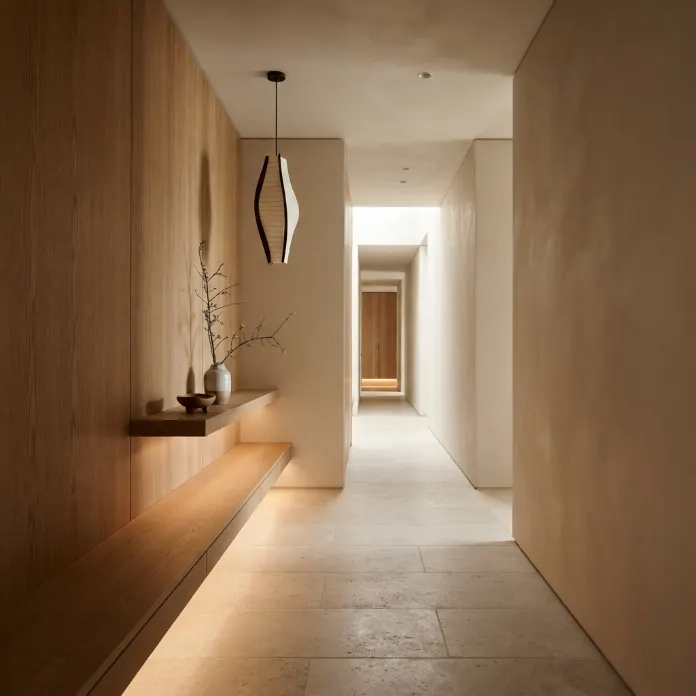
If your entrance opens into a long hallway, use repetition instead of filling every wall. A Japandi entryway works best when the walkway stays visually open. A consistent wood tone, a narrow stone or wood floor, and several warm light sources can make the entire route feel connected.
Layer lighting at different levels. Recessed ceiling lights can provide general illumination, while concealed lighting beneath a ledge or bench creates a softer glow. A sculptural pendant can become the visual anchor without making the hallway feel busy.
For a finished Japandi entryway, keep furniture close to the wall and protect the walking path. A narrow bench, slim ledge, or small plant can create zones without interrupting movement.
4. Add Floating Shelves and Hooks for Everyday Function
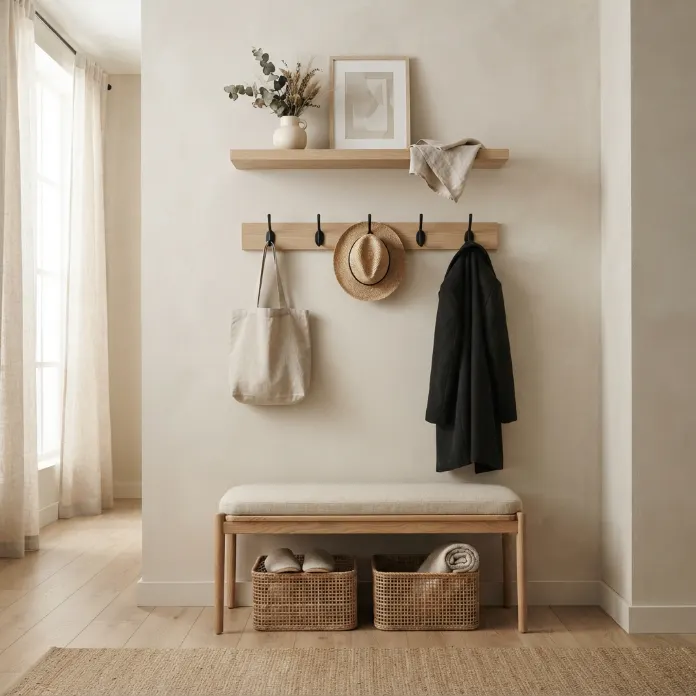
Minimalism works best when it solves real problems. A Japandi entryway can look beautifully simple while still giving you a place for coats, bags, keys, and shoes.
Install a row of understated hooks beneath one or two floating shelves. Keep the spacing even so the wall feels organized. A slim bench below creates a useful seating zone, while baskets underneath hide the items you do not want on display.
Choose hooks and hardware in matte black, brushed brass, or warm wood, depending on the rest of the room. Then add only a few decorative objects: perhaps one small artwork, one ceramic piece, and a restrained branch arrangement.
5. Use a Soft Bench Nook to Define the Entrance

A partial slatted divider can turn an open entrance into a distinct zone without making the home feel closed off. This works particularly well in apartments and open-plan homes where the entryway shares space with a living area.
Place a compact bench beside the divider and add a thin neutral cushion. Woven baskets beneath the seat provide practical storage, while a small shelf above can hold keys or a single decorative object.
Under-bench lighting is another useful detail. A warm, indirect glow makes the furniture appear lighter and adds depth after sunset. Keep the rest of the styling low and simple so the divider remains the architectural feature.
6. Soften the Space With Arches and Tonal Neutrals

When a Japandi entryway uses several shades from the same neutral family, the space can feel layered without relying on bold contrast. Combine warm beige walls with pale timber, oatmeal textiles, ivory ceramics, and slightly darker natural accents.
Arched doorways, curved mirrors, and rounded stools are useful because they soften the strong lines often found in minimalist furniture. If your entry is very square, even one curved element can make the composition feel more relaxed.
Keep decorative objects sculptural rather than numerous. A rounded vase, small bonsai-style plant, folded textile, or handmade bowl can add character without creating visual noise.
7. Keep a Vertical Slat Wall Light and Airy

A full slat wall can be dramatic, but it does not have to make a small entrance feel heavy. Pair the timber with a floating bench, pale flooring, and a light-colored wall or ceiling.
The floating design matters because it keeps the floor visible. That small visual gap can make a narrow Japandi entryway feel more spacious and easier to clean.
For decoration, use one round mirror, one branch-filled vase, and a simple woven runner. Repeating the same wood and textile tones throughout the arrangement creates cohesion without requiring many accessories.
8. Style a Japandi Console With an Organic-Shaped Mirror
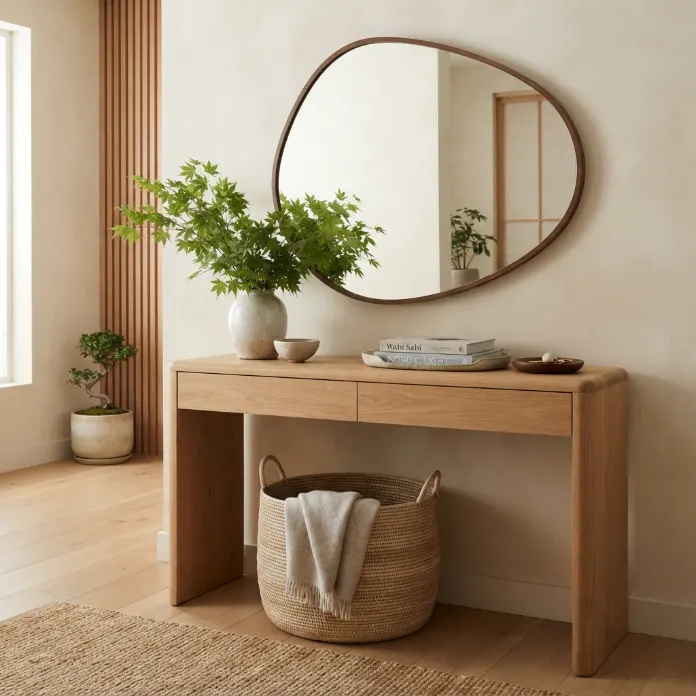
A console is useful when you need a dedicated drop zone for keys, mail, and small everyday items. Choose one with clean proportions and open or softly closed storage rather than ornate detailing.
Above it, try an organic-shaped mirror instead of a perfect rectangle. The irregular outline introduces a natural quality that complements Japandi’s emphasis on imperfect, tactile materials.
Style the surface in small groups. A ceramic vase, a shallow tray, a few stacked books, or a modest branch arrangement is enough. Keep open shelving curated because anything visible becomes part of the design.
9. Build Full-Wall Storage Without Losing the Calm

For busy households, the most useful Japandi entryway may be the one with the most storage. A full-height unit can combine closed cabinets, open cubbies, hooks, and a bench while keeping everything visually consistent.
Put daily shoes and clutter in closed storage, frequently used bags on hooks, and only your most attractive objects in open compartments. This creates three levels of visibility: hidden, functional, and decorative.
Warm oak, light ash, or medium natural wood can make a large storage wall feel softer. Add woven baskets in similar tones if you need flexible organization. Before installing anything, measure the walkway carefully so the storage does not overwhelm the entrance.
10. Use Dark Wood for Quiet Contrast
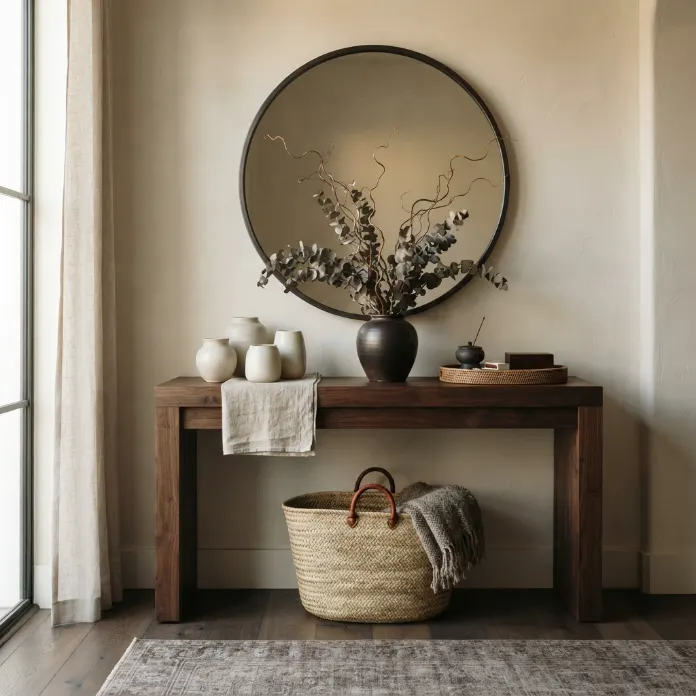
Japandi does not have to be pale from floor to ceiling. A dark walnut or smoked-oak console can give the entryway a stronger visual anchor while the surrounding walls remain warm and light.
Balance the darker furniture with an ivory wall, a rounded mirror, pale ceramics, and woven accessories. The contrast creates depth without turning the space into a high-drama interior.
Texture matters even more when the palette is restrained. Mix matte ceramic, natural wood grain, linen, woven fibers, and dried branches so the entrance feels tactile rather than flat. Let the dark piece breathe by keeping the surface styling minimal.
How to Make a Japandi Entryway Feel Finished
The secret to a successful Japandi entryway is not the number of objects. It is the relationship between them. Start with one strong architectural element, such as slatted wood, a textured wall, or a beautifully proportioned console. Then add the practical layer: seating, hooks, storage, or a tray.
Next, bring in softness through woven materials, linen, a small rug, rounded ceramics, or natural branches. Finally, check the lighting. Warm, diffused illumination can make even a simple entrance feel considered and welcoming.
Use repetition to create harmony. Repeat a wood tone, echo a curved shape, or carry the same neutral shade through the rug and accessories. At the same time, avoid matching everything perfectly. Japandi feels natural when materials have subtle variation and handmade character.
Common Japandi Entryway Mistakes to Avoid
- Adding too many accessories: choose fewer pieces and give each one room to breathe.
- Using only cool white: warmer whites, beige, taupe, and natural wood usually create a softer result.
- Ignoring storage: visible clutter quickly destroys the calm effect, so plan hidden organization first.
- Using only straight lines: add an arch, round mirror, curved vase, or softly shaped stool.
- Mixing too many wood tones: two related finishes are often enough for a cohesive entrance.
- Relying on one harsh light: layer ceiling, wall, pendant, or indirect lighting where possible.
Final Word
A beautiful Japandi entryway is not supposed to look empty. It should look edited, useful, warm, and intentional. Natural wood creates structure, soft neutrals create calm, curves add balance, and smart storage keeps everyday life from becoming visual clutter.
Whether you have a narrow hallway or a generous entrance, start with function and build the styling around it. A bench, mirror, hooks, baskets, and warm lighting can be enough when their proportions and materials work together. The result is an entrance that feels peaceful from the first step inside—and connected to the rest of your home.