Japandi Bedroom Ideas: 10 Stylish Designs for a Calmer Home
A Japandi bedroom brings together the warmth of Japanese interiors and the relaxed simplicity of Scandinavian design. The result is a room that feels calm, useful, and beautifully balanced without looking bare.
What makes this style work so well is restraint. Instead of filling the room with matching furniture and decorative pieces, Japandi design focuses on natural materials, soft contrast, thoughtful storage, and a few pieces that genuinely earn their place.
If your bedroom feels visually busy, too cold, or difficult to relax in, these ideas can help you create a more peaceful setup without making the room feel plain.
1. Start With Warm Natural Wood

Wood is one of the easiest ways to give a Japandi bedroom the right feeling. Choose oak, ash, walnut, or another natural finish with visible grain instead of heavily glossy furniture.
A wooden bed frame, bedside table, bench, or simple wall panel can bring enough warmth to make a neutral room feel comfortable. You do not need wood everywhere. One or two larger pieces can be enough.
I’ve noticed that rooms feel more settled when the wood tones are repeated in small ways. A timber bed paired with a small wooden stool or frame can make the whole room feel intentional.
2. Use a Soft Neutral Base
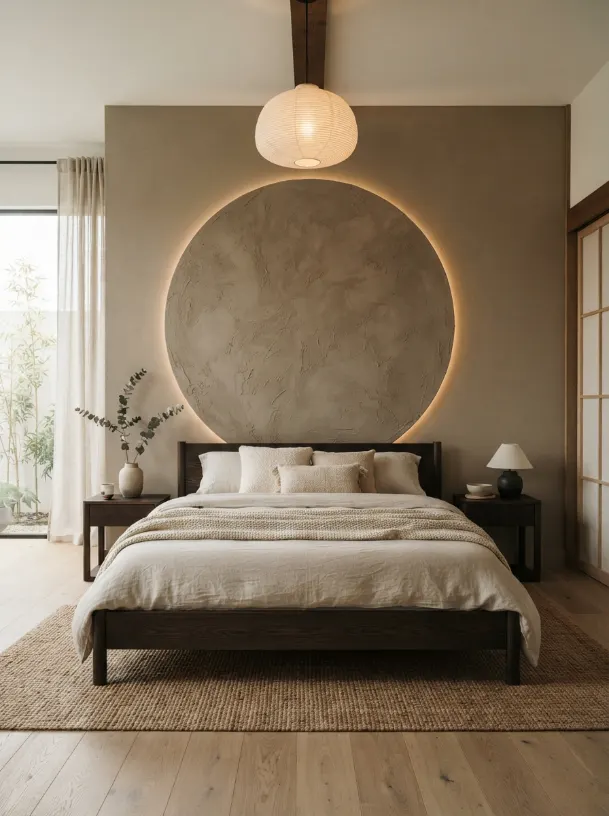
Start with warm white, ivory, beige, taupe, sand, or light greige. These shades give the room a quiet background and allow natural materials to stand out.
Avoid making every surface exactly the same color. A slightly darker rug, warmer bedding, or pale clay accent can add enough variation to keep the room interesting.
The goal is not a completely white bedroom. The goal is a soft palette where every color feels related.
3. Choose a Low, Simple Bed
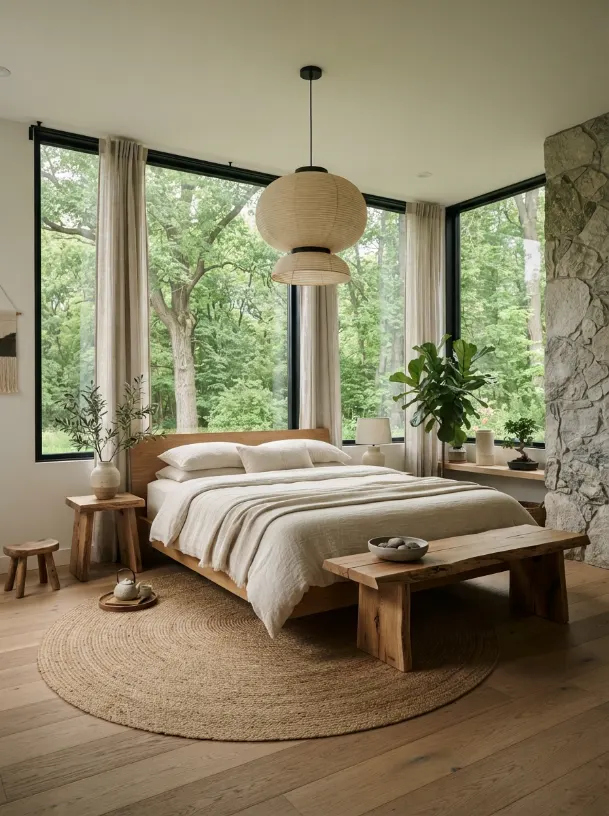
A low-profile bed works especially well in Japandi interiors because it keeps the visual weight of the room close to the floor. This creates an open feeling and supports the simple character of the style.
Look for a clean wooden frame or an upholstered platform bed with an uncomplicated shape. Skip oversized decorative headboards if your room is small.
For a little more softness, layer natural bedding in cotton or linen. Keep the folds relaxed rather than arranging everything too perfectly.
4. Add Texture Instead of Extra Decoration

One reason minimalist bedrooms can sometimes feel cold is that they rely too heavily on flat surfaces. A Japandi bedroom solves this with texture.
Try linen bedding, a woven basket, a wool or cotton rug, a boucle cushion, a paper lantern, or a lightly textured wall finish. These details add visual interest without creating clutter.
Texture is particularly useful when your color palette is simple. Even three neutral shades can feel rich when they appear in different materials.
5. Let Natural Light Do the Work
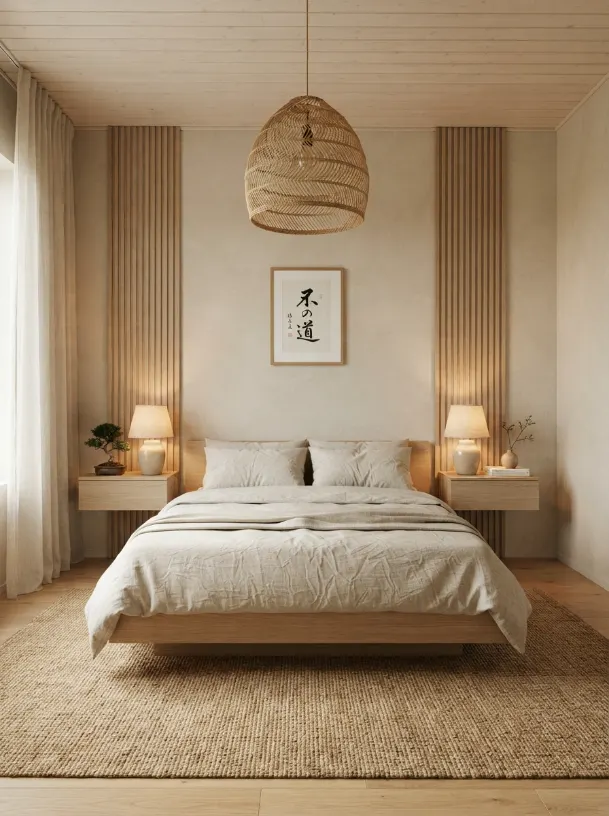
Japandi rooms usually benefit from soft, natural light. Keep window treatments simple so daylight can spread through the bedroom.
Sheer curtains can soften bright sunlight while still keeping the room airy. If privacy is important, combine them with a simple blackout layer that can be closed at night.
At night, use warm lamps instead of relying on one strong ceiling light. A bedside lamp, floor lamp, or small wall light can create several gentle layers of illumination.
6. Bring in One Strong Organic Shape
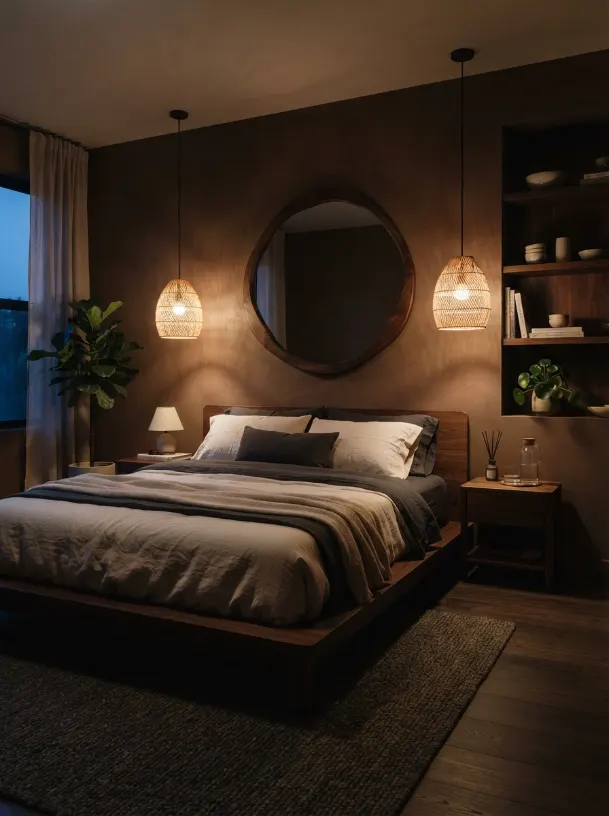
Clean lines are important, but a room made entirely from straight edges can feel rigid. Add one rounded or sculptural element to soften the composition.
This could be a curved headboard, round mirror, arched wall detail, oval bedside table, or softly shaped lamp. One clear shape often has more impact than several decorative objects.
Keep the surrounding furniture simple so the curved element has room to breathe.
7. Use Plants as Living Texture

A small plant can bring color and natural movement into a neutral bedroom. Choose varieties that suit your available light and keep the container simple.
A tall plant beside a dresser can fill an empty corner, while a smaller plant on a bedside table can add life without taking over the room.
If you do not have enough natural light for live plants, dried branches or a restrained botanical arrangement can create a similar visual effect.
8. Build Storage Into the Design

Clutter can quickly change the feeling of a bedroom. In Japandi interiors, storage is part of the design rather than something added after everything else is finished.
Choose bedside tables with drawers, closed wardrobes, under-bed storage, and simple baskets for smaller items. Keep everyday objects contained so the main surfaces stay clear.
This is especially helpful in a small bedroom. You can also find more practical inspiration in these DIY room decor ideas for teens, particularly for making limited space work harder.
9. Add Contrast With Darker Accents

A completely pale room can sometimes lose definition. Small touches of charcoal, dark brown, black, or deep olive can give the design a stronger outline.
Try a dark lamp base, picture frame, curtain rod, bedside table, or woven basket. You only need a few darker accents to create contrast.
If you enjoy a moodier bedroom, you can also look at these dark elegant bedroom ideas for ways to use deeper tones while keeping the room comfortable.
10. Keep the Styling Purposeful
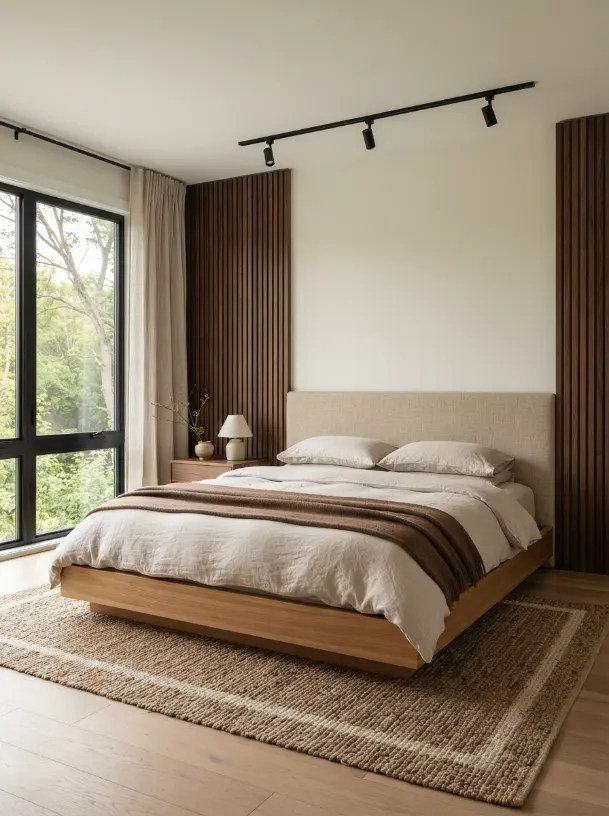
The final step is knowing when to stop. A Japandi bedroom should not need a large collection of accessories to feel complete.
Choose a few useful or meaningful pieces. A ceramic vase, framed artwork, small stack of books, handmade bowl, or simple candle can be enough for a bedside surface.
Before adding another decoration, look around the room and ask whether it improves the space or simply fills an empty spot. That small habit can make the room feel much more considered.
What Most Modern Bedrooms Get Wrong
Many modern bedrooms look polished in photographs but are not especially comfortable to live in. Too many matching pieces, harsh lighting, excessive open shelving, and decorative clutter can make a bedroom feel more like a display than a place to rest.
Japandi design takes a different approach. The room can still look stylish, but comfort and usefulness come first. Materials feel natural, storage is practical, and decoration has a reason for being there.
How to Make a Japandi Bedroom Work in a Small Space
You do not need a large bedroom to use this style. Start by reducing visual weight. Choose furniture with simple profiles, keep the floor as open as possible, and use closed storage for items that would otherwise remain visible.
A mirror can help reflect natural light, while a pale rug can visually soften the floor. Wall-mounted lighting can also free up bedside surface space.
Most importantly, avoid buying furniture simply because it matches the style. Measure the room first and choose pieces that leave comfortable walking space.
How to Make the Room Feel Cozy Without Adding Clutter
Cozy does not have to mean crowded. Add warmth through materials rather than quantity. A soft duvet, textured throw, natural rug, warm bedside lamp, and wooden furniture can create plenty of comfort.
Layering is also useful. Instead of adding several pillows and decorations, combine two or three different textures in a restrained palette.
In my experience, a room often feels cozier after removing a few unnecessary things and improving the lighting. The extra space becomes part of the design.
Final Thoughts
A Japandi bedroom works because it makes simplicity feel warm rather than empty. Natural wood, soft neutrals, tactile fabrics, gentle lighting, organic shapes, and practical storage create a bedroom that is easy to live with.
You do not have to copy a showroom. Start with the parts that solve a real problem in your room. Replace one bulky piece, improve the lighting, clear one surface, or introduce a warmer material. Small changes can shift the entire atmosphere.
FAQs About Japandi Bedrooms
What colors work best in a Japandi bedroom?
Warm white, cream, beige, taupe, light brown, soft gray, muted green, and natural wood tones work especially well. Small amounts of charcoal or black can provide contrast.
Can a Japandi bedroom be cozy?
Yes. Use layered natural textures such as linen, cotton, wool, woven materials, and soft rugs. Warm lighting and natural wood also help the room feel comfortable.
Is Japandi suitable for a small bedroom?
Yes. Its simple furniture profiles, restrained color palette, and emphasis on useful storage can work particularly well in smaller rooms.
What furniture should I choose for Japandi style?
Look for simple wooden beds, low-profile furniture, clean-lined storage, natural materials, and pieces with minimal decorative detailing. Comfort and proportion should guide the choices.