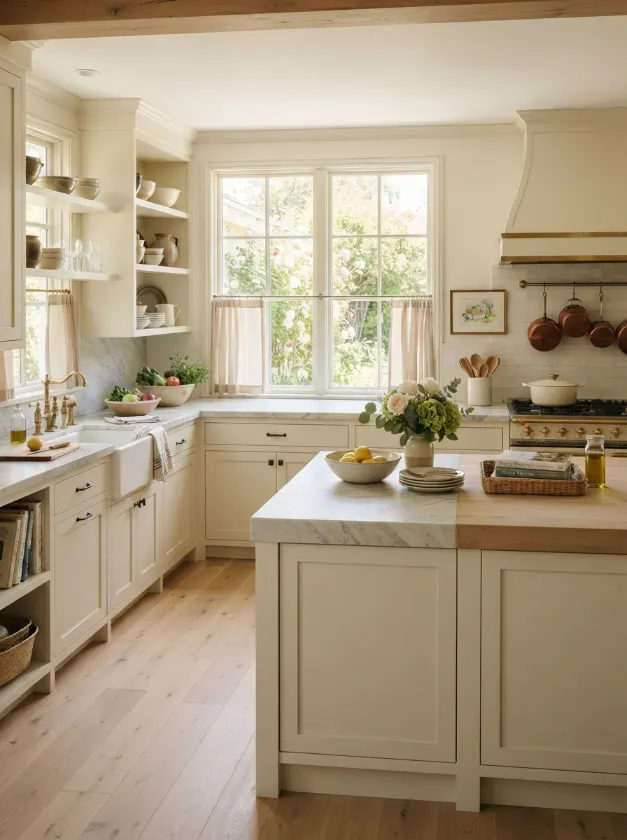
Post Modern Interior Design: 15 Chrome Decor Ideas for a Modern Home
Modern interiors can start to feel a little too predictable. White walls, pale wood, soft curves, and muted finishes are beautiful, but after seeing the same formula everywhere, a room can lose some personality.
Post modern interior design brings a different kind of energy. It plays with shape, shine, contrast, and a little visual surprise. Chrome is especially useful because it reflects light, adds a crisp metallic note, and works with both nostalgic and contemporary pieces.
The trick is not to fill a room with shiny furniture. The most successful spaces use chrome with warmer materials such as wood, stone, leather, wool, linen, and textured upholstery. That balance keeps the room interesting without making it feel like a showroom.
Here are 15 practical ways to bring post modern interior design into a home while keeping the result comfortable and livable.
1. Start With One Chrome Statement Piece

The easiest way to test post modern interior design is to begin with one noticeable chrome piece.
A tubular chair, sculptural floor lamp, round mirror, or small side table can give a neutral room a completely different character. You do not need to replace your existing furniture. Let the new piece act as the visual punctuation.
I have found that this approach is especially useful in rooms that already have good furniture but feel slightly flat. One reflective object can catch daylight and lamp light, creating movement that a matte finish cannot provide.
Keep the rest of the room relatively quiet. If the chrome piece has an unusual shape, let that shape do the talking.
2. Pair Chrome With Warm Wood
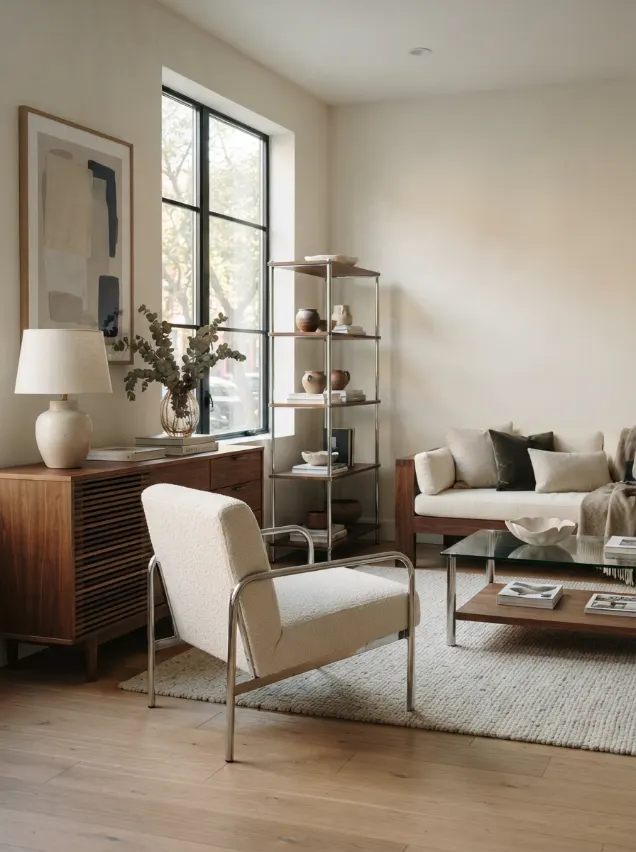
Chrome can look cold when every nearby surface is also sleek and reflective. Warm wood solves that problem quickly.
Try a chrome dining chair beside an oak table, a polished metal lamp over a walnut console, or a chrome coffee table on a warm wood floor. The contrast gives both materials more presence.
Light oak creates a softer Scandinavian feeling, while walnut makes the room richer and more dramatic. Either can work with post modern interior design because the metal supplies the crisp contrast.
For a Pinterest-friendly look, keep the wood grain visible. Natural variation makes the polished metal feel less formal and more lived in.
3. Use Curved Chrome Furniture
Curves are one of the easiest ways to make chrome feel playful rather than severe.
Look for tubular frames, rounded side tables, curved chairs, circular bases, or softly bent shelving. These shapes bring a subtle retro reference without forcing the room into a full period theme.
A curved chrome chair can work beautifully beside a boxy sofa because the two silhouettes balance each other. If the room already has many rounded pieces, choose one stronger geometric shape instead.
The goal is visual variety. A room becomes more interesting when straight lines and curves have a reason to share the same space.
4. Add a Chrome Mirror for Light and Depth

A chrome-framed mirror is one of the simplest ways to bring the style into a smaller room.
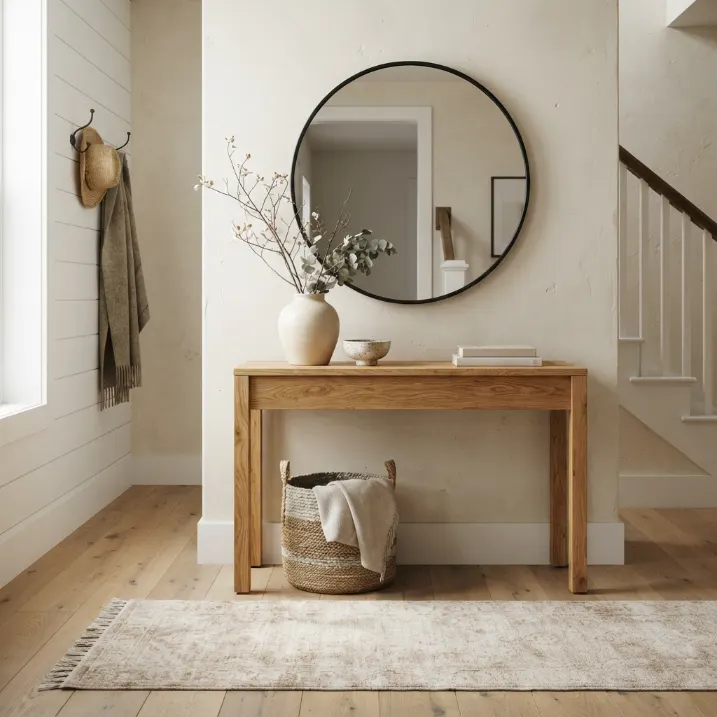
Place a large round mirror above a console, dresser, or narrow entry table. The reflective surface can bounce daylight around the room, while the slim metallic frame adds definition without visually weighing down the wall.
Pay attention to what the mirror reflects. A beautiful window, artwork, plant, or warm lamp makes the reflection part of the design.
Avoid placing it where it mainly reflects a blank wall or a cluttered storage area. The mirror should add something useful to the view.
5. Try a Chrome and Glass Coffee Table

Glass and chrome make a strong pairing because both materials have a light visual footprint.
A transparent glass top allows the room beneath it to remain visible, while the metal frame introduces structure. This can be particularly helpful in a compact living room where a heavy wooden table may make the floor area feel crowded.
Add a textured rug underneath to bring warmth and definition. A ceramic bowl, a few books, or one sculptural object can finish the table without filling every inch.
In my experience, restraint matters more with transparent furniture. Too many small objects can make a clear surface look messy very quickly.
6. Bring in Sculptural Chrome Lighting
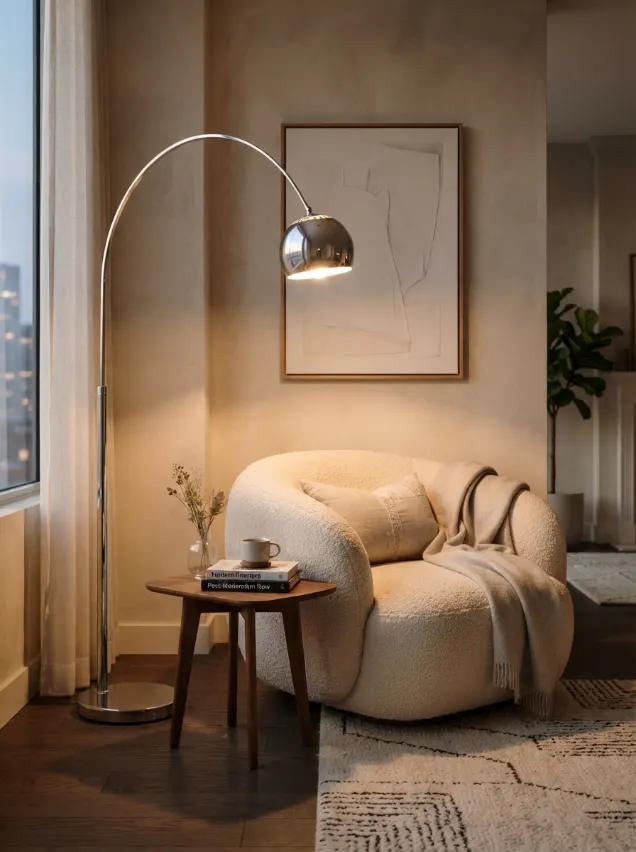
Lighting can introduce post modern interior design without changing the rest of the furniture.
Look for globe lamps, tubular floor lamps, stacked metal forms, adjustable chrome sconces, or unusual pendant silhouettes. The fixture becomes both a source of light and a decorative object.
Warm bulbs are important here. A soft warm glow takes the edge off reflective metal and makes the room feel comfortable in the evening.
For a stronger visual effect, place one sculptural fixture where it can be seen from the main entrance or seating area. It will naturally become a focal point.
7. Mix Chrome With Stone and Marble

Chrome becomes more sophisticated when paired with natural stone.
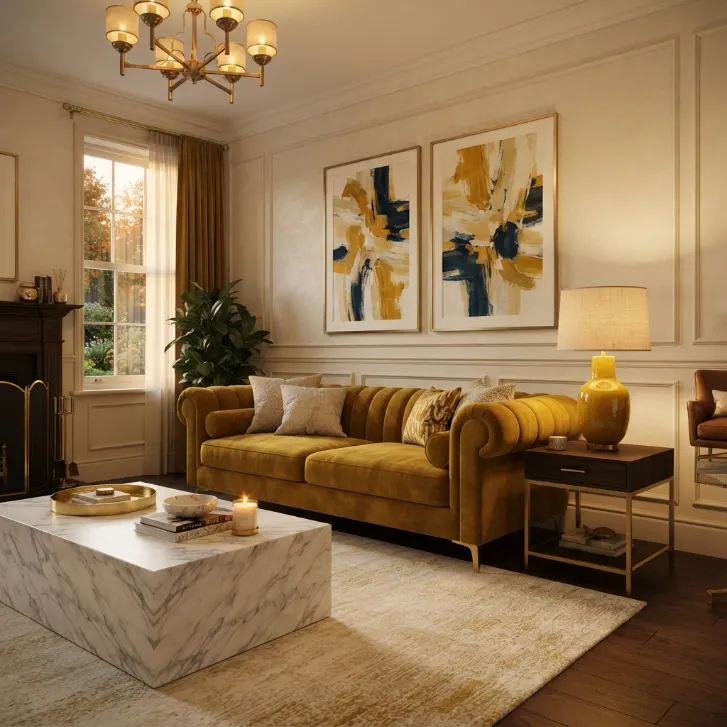
A chrome console under a marble surface, a small metal side table beside a travertine sofa table, or chrome hardware against a stone backsplash can create a polished but grounded composition.
Veining is especially useful because it introduces organic movement. Instead of having several competing patterns, let the stone provide the visual variation while the chrome supplies a clean reflective edge.
If the stone is heavily patterned, keep the surrounding furniture simple. This prevents the room from becoming visually noisy.
8. Use Chrome in the Dining Area

The dining room is a natural place for post modern interior design because furniture silhouettes are easy to see.
Try a round glass dining table with tubular chrome legs, chrome-framed dining chairs, or a sculptural pendant above a simple wooden table.
You can also keep the dining furniture traditional and introduce chrome through lighting or accessories. A vintage wooden table can look surprisingly fresh with a contemporary metallic fixture above it.
Keep the tabletop practical. A simple ceramic vase, linen runner, or small bowl often looks better than a collection of decorative objects.
9. Let Chrome Accent a Soft Upholstered Room
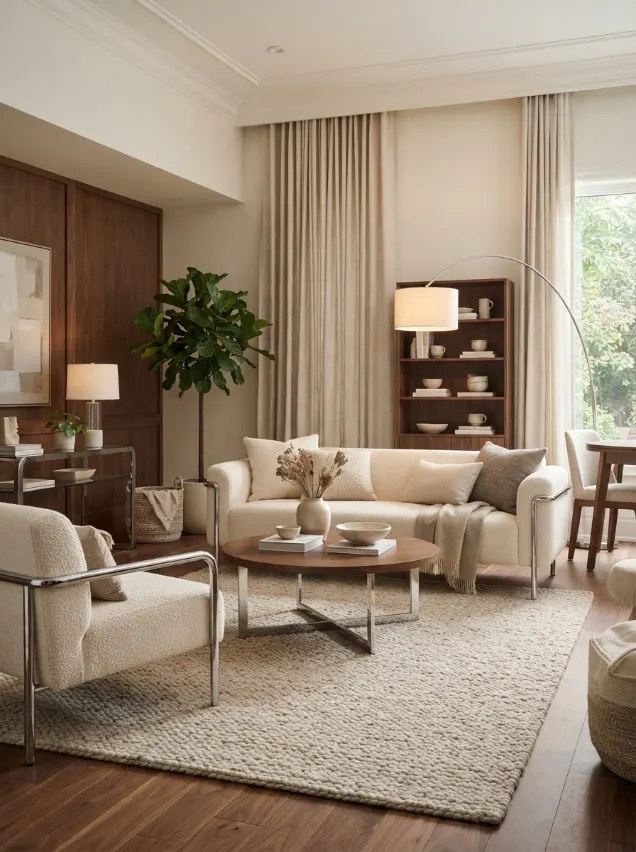
Soft upholstery makes reflective metal feel much more approachable.
Think boucle seating, linen curtains, wool rugs, velvet cushions, and textured throws alongside chrome. The difference in texture creates depth even when the color palette stays neutral.
This is one of the most useful combinations for anyone who likes modern rooms but does not want them to feel sterile.
Choose one or two chrome pieces rather than repeating the finish on every surface. The metal works best when the eye notices it, then moves naturally toward the softer materials around it.
If you also enjoy the softer side of Japandi design, see our Japandi living room ideas for another approach to balancing clean lines with warm textures.
10. Add Small Chrome Details in the Kitchen

You do not need a complete kitchen renovation to experiment with the look.
Chrome cabinet pulls, a chrome faucet, slim metal stools, reflective pendant lights, or a small chrome appliance can introduce the style in controlled doses.
This works especially well with white, cream, natural wood, charcoal, or stone kitchens. The metallic finish adds a little visual sharpness without changing the entire palette.
If your kitchen already contains several finishes, count them before adding another. Repeating one metallic finish in a few places usually looks more intentional than introducing several unrelated metals.
11. Use Chrome Shelving Without Making It Feel Busy

Open shelving can make a room feel lighter, but the wrong styling can quickly become cluttered.
A slim chrome shelf works best when the objects around it have different heights and textures. Combine ceramics, books, wood objects, glass, and one or two plants.
Leave some empty space. That gap is not wasted space. It gives the eye a place to rest and allows the metal frame to remain visible.
If everything on the shelf is silver or chrome, the display can feel flat. Warm materials give the arrangement more depth.
12. Combine Chrome With Bold Post Modern Color

Chrome does not have to live in a beige or white room.
For a more expressive version of post modern interior design, pair it with burgundy, cobalt blue, forest green, burnt orange, deep plum, or soft pink.
The easiest method is to keep the larger furniture neutral and introduce color through one chair, rug, artwork, lamp, or group of cushions.
Chrome reflects those surrounding colors, which can make the finish feel different throughout the day. That changing quality is part of its appeal.
13. Create a Chrome Accent Wall Moment
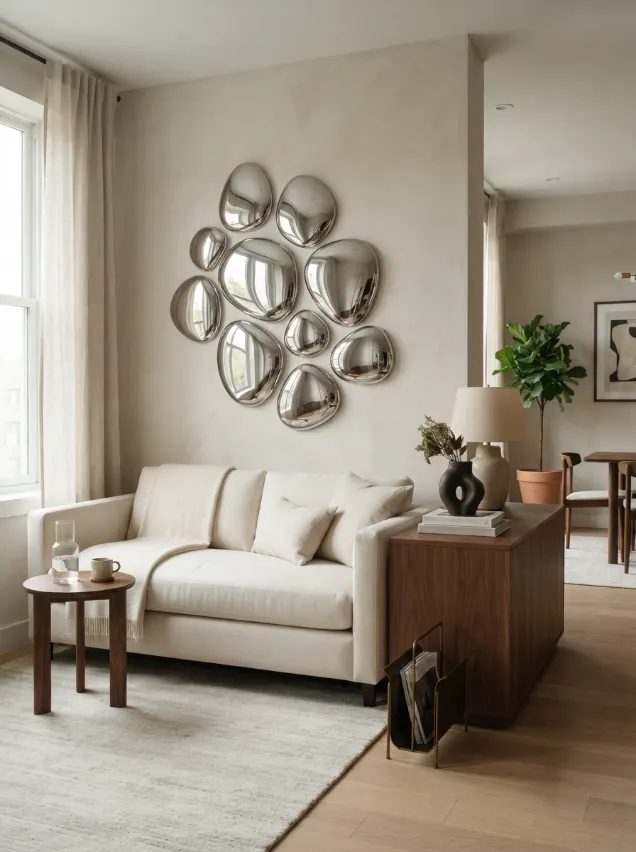
A full metallic wall can be overwhelming, but a smaller wall feature can be striking.
Consider a collection of rounded chrome mirrors, a sculptural metallic artwork, reflective wall panels, or a single oversized chrome-framed piece.
Before installing anything, check what the surface will reflect. Chrome is highly visual because it mirrors its surroundings. A busy reflection can make a carefully designed room feel chaotic.
A simple background usually gives reflective wall decor the strongest impact.
14. Balance Chrome With Handmade Pieces
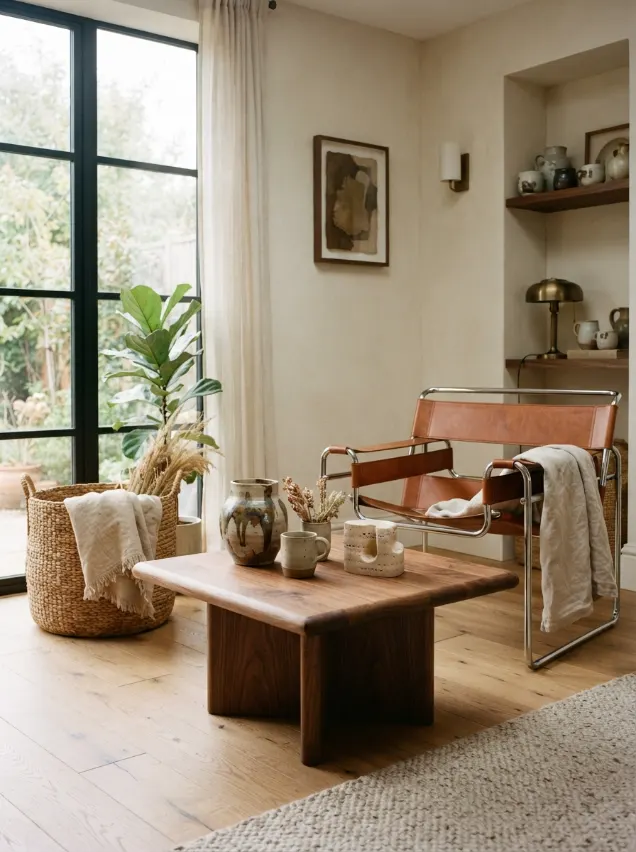
Post modern interior design does not have to mean perfectly manufactured surfaces everywhere.
Handmade ceramics, woven baskets, carved wood, linen textiles, and imperfect stone pieces can make chrome feel warmer and more personal.
This combination is especially useful if you like the look of contemporary interiors but want your home to feel collected over time.
I have seen this balance work particularly well in neutral rooms. The handmade pieces add small variations in shape and texture, while the chrome provides a cleaner modern line.
For more ideas on using the same design language across another room, take a look at our Japandi bedroom ideas and Japandi bathroom ideas.
15. Keep the Whole Room Edited

The most important lesson is knowing when to stop.
Post modern interior design becomes more convincing when each unusual element has enough room to be noticed. You do not need chrome chairs, chrome tables, chrome lighting, chrome shelves, and metallic art all in one room.
Choose a few pieces that serve different purposes. One can provide shape, another can reflect light, and another can add a small metallic detail.
Then bring in warm materials to keep the room comfortable. Wood, stone, linen, wool, leather, ceramics, and plants can all soften the harder visual quality of polished metal.
If you are starting from scratch, choose your largest furniture pieces first. Add chrome afterward. If your room is already furnished, begin with one small accent and build only if the result feels right.
Post modern interior design works best when it feels like a natural expression of your taste rather than a checklist of trends.
FAQs
What is post modern interior design in simple terms?
It is a playful, contrast-driven style that mixes shape, shine, and a little visual surprise. Instead of the predictable formula of white walls and pale wood, it uses reflective materials like chrome alongside warm natural ones to give a room more personality and energy.
Why is chrome so popular in post modern interiors?
Chrome reflects light, adds a crisp metallic note, and works with both nostalgic and contemporary pieces. It catches daylight and lamplight in a way matte finishes cannot, creating movement and visual interest in a room.
How do I use chrome without making my home look like a showroom?
Start with one statement piece and balance it with warm materials like wood, stone, leather, wool, linen, and textured upholstery. Keep the rest of the room relatively quiet so the chrome can act as visual punctuation rather than the whole sentence.
What materials pair best with chrome?
Warm wood, natural stone and marble, soft upholstery (boucle, linen, velvet, wool), handmade ceramics, woven baskets, and plants. The key rule from the article: let the stone or wood supply organic variation while the chrome supplies a clean reflective edge.
Can chrome work in a small room?
Yes. A chrome-framed round mirror above a console can bounce daylight around the room, and a glass-and-chrome coffee table has a light visual footprint that keeps a compact living room from feeling crowded. Just be careful about what reflective surfaces mirror.
What colors work with chrome beyond neutrals?
Chrome does not have to live in a beige or white room. Burgundy, cobalt blue, forest green, burnt orange, deep plum, and soft pink all pair well. Keep larger furniture neutral and introduce color through one chair, rug, artwork, or group of cushions.
How many chrome pieces should I use in one room?
Fewer than you think. Choose a few pieces that serve different purposes: one for shape, one to reflect light, one small metallic detail. Chrome becomes more convincing when each unusual element has enough room to be noticed, so edit ruthlessly and stop before the room feels like a checklist of trends.
Can I mix chrome with other metal finishes?
If your kitchen or room already contains several finishes, count them before adding another. Repeating one metallic finish in a few places usually looks more intentional than introducing several unrelated metals.
Conclusion
Post modern interior design is not about filling a room with shiny furniture. It is about contrast: the crisp, reflective line of chrome against the warmth of wood, stone, linen, and handmade pieces. That balance is what keeps the style interesting without making it feel cold or staged.
The most important lesson is knowing when to stop. One statement piece can transform a flat room. A few well-chosen accents can add energy. But chrome works best when each piece has enough room to be noticed and the surrounding materials give it warmth to reflect.
Start with one accent, see how the light plays with it through the day, and build only if the result feels right. When it works, post modern interior design feels like a natural expression of your taste, not a checklist of trends