15 Homeschool Room Ideas That Actually Work for Restless Kids
A restless child does not always need a stricter desk, a quieter parent, or a more traditional classroom setup. Sometimes the room itself is asking too much. A hard chair says sit still. High shelves say wait for help. A crowded wall competes for attention. A tiny desk leaves no room for projects.
The most useful homeschool room ideas start from a different question: how does your child actually learn, move, read, build, draw, and take breaks?
That shift can change the whole room. Instead of trying to make a child behave like they are sitting in a classroom, you can create a learning space that gives them safe ways to move while still providing structure.
The homeschool room featured by Homifying uses ideas such as floating shelves, flexible seating, chalkboards, low tables, floor cushions, color coding, and multipurpose furniture. The strongest lesson from that approach is simple: the room should support the child’s habits rather than force every child into the same setup.
1. Start With Movement Instead of Fighting It
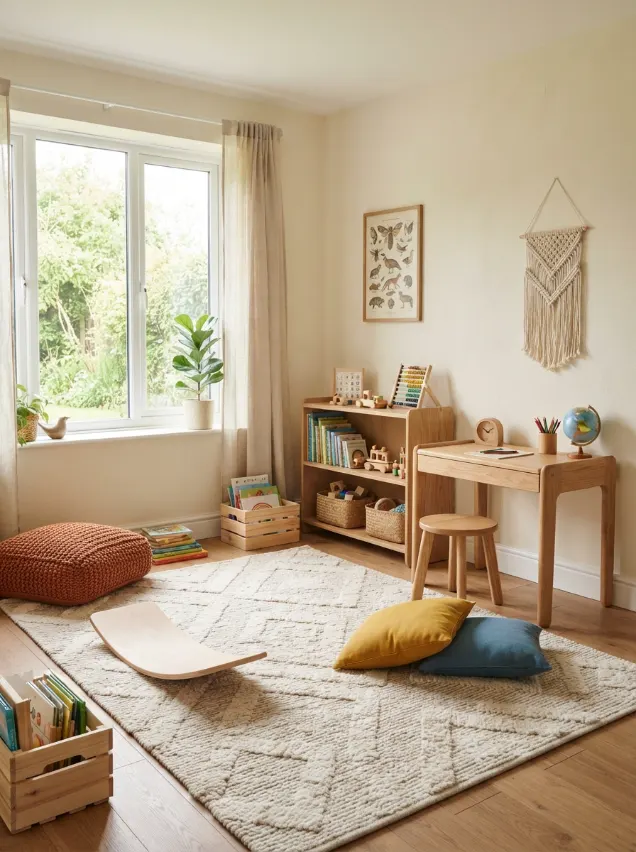
If your child gets up every few minutes, do not make the entire room revolve around keeping them in one chair. Give movement a place in the design.
Leave a clear strip of floor beside the main desk. Add a small reading cushion, a standing surface, or a low activity table nearby. This creates natural changes of position without turning every lesson into a trip to another room.
A useful rule is to separate movement from distraction. A child can stand, stretch, carry a book to the reading corner, or work on the floor without having access to every toy in the house.
2. Choose Flexible Seating for Different Tasks
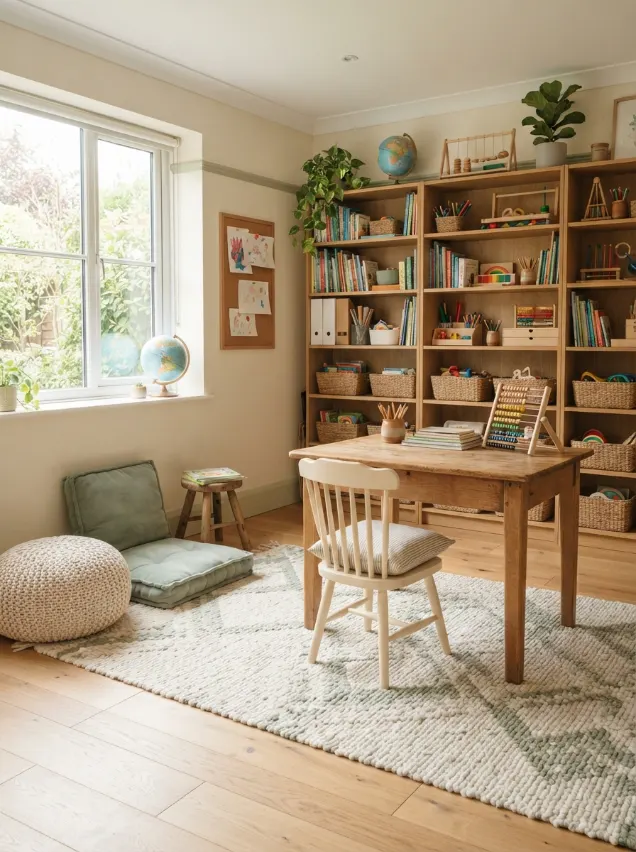
One chair does not need to handle the entire homeschool day. A supportive chair can work for handwriting, while a floor cushion may be better for reading. A small stool can work for a quick art activity.
Try two or three seating options rather than filling the room with furniture. Keep the choices visually simple so the room still feels organized.
For younger children, lightweight pieces are especially practical because they can move them independently. Floor cushions, poufs, a small wooden stool, or a child-sized chair can all create variety without requiring a large room.
3. Create a Floor Work Zone
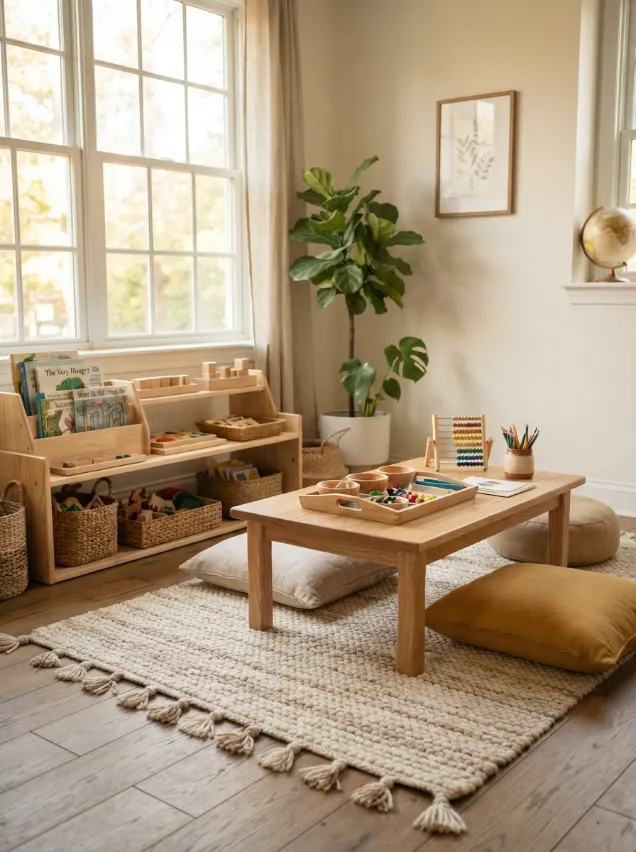
A floor area gives active learners another way to work. Use a washable rug, a low basket for supplies, and a small tray or lap desk. This can become the place for reading, puzzles, building projects, flash cards, or hands-on lessons.
The goal is not to make every lesson happen on the floor. It is to give the child a planned alternative when sitting at a desk stops working.
Keep the zone close enough to the main workspace that supervision remains easy. A floor station beside the desk can feel like part of the same classroom rather than an escape from it.
4. Turn Vertical Walls Into Useful Storage
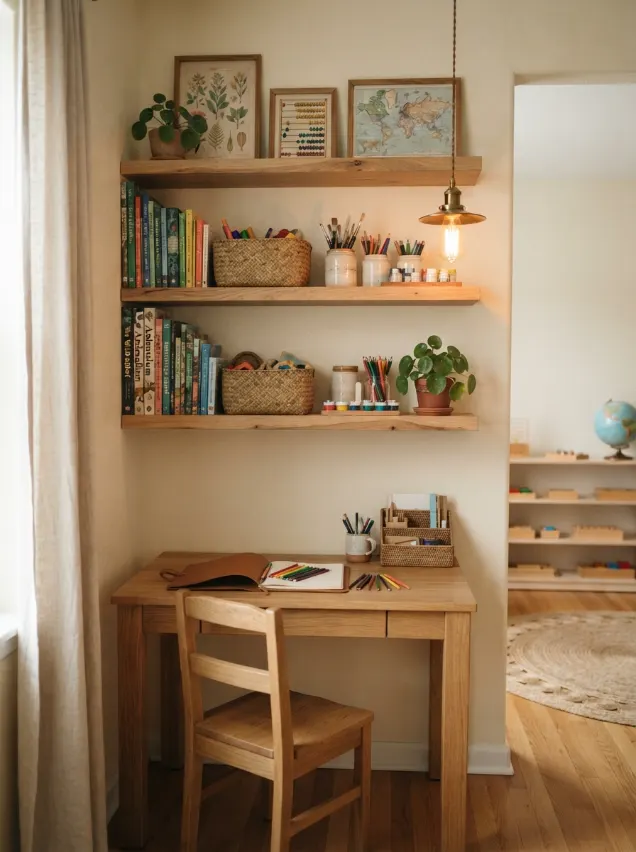
Floating shelves are one of the smartest ideas from the competitor room because they move storage upward while keeping the working surface open.
Use higher shelves for books and decorative pieces that do not need constant handling. Put frequently used pencils, notebooks, manipulatives, and art materials in lower baskets or drawers.
For a narrow room, vertical storage can be especially helpful. A slim ladder shelf, wall-mounted ledges, or a compact pegboard can provide storage without taking over the floor.
Safety matters here. Anchor tall furniture securely to the wall, and keep heavy items low. HGTV’s child-room guidance also emphasizes securing taller furniture and considering safe storage hardware.
5. Use Rotating Shelves Instead of Showing Everything
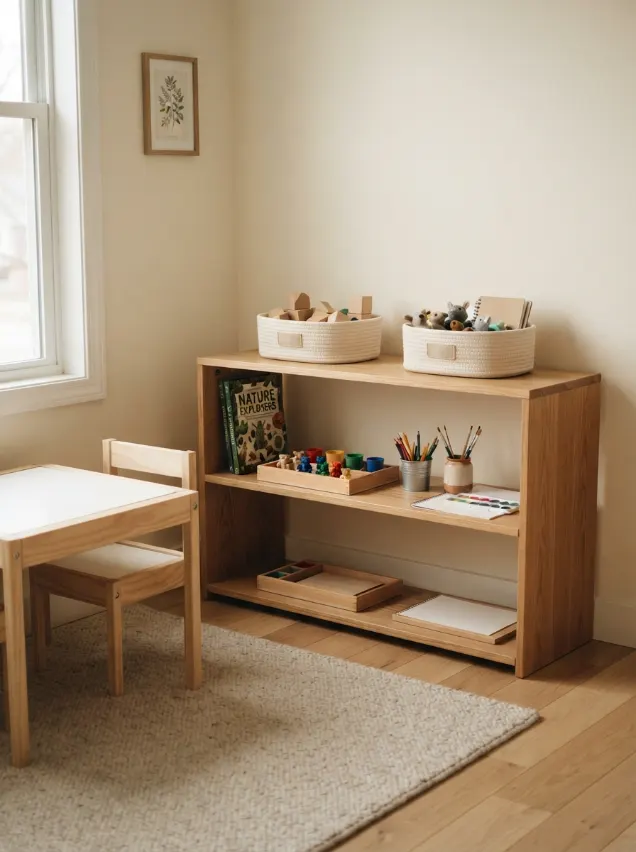
A shelf packed with every workbook, toy, craft supply, and educational game can look exciting to an adult but overwhelming to a child who is easily distracted.
Try a rotating shelf. Keep only the materials connected to the current lessons visible. Store the rest in labeled bins elsewhere.
For example, a weekly shelf might hold one reading basket, one math tray, a science book, and the supplies for the current project. Change the display as the unit changes.
This also gives the room a fresh feeling without buying new decor every few weeks.
6. Put the Daily Schedule Where the Child Can See It
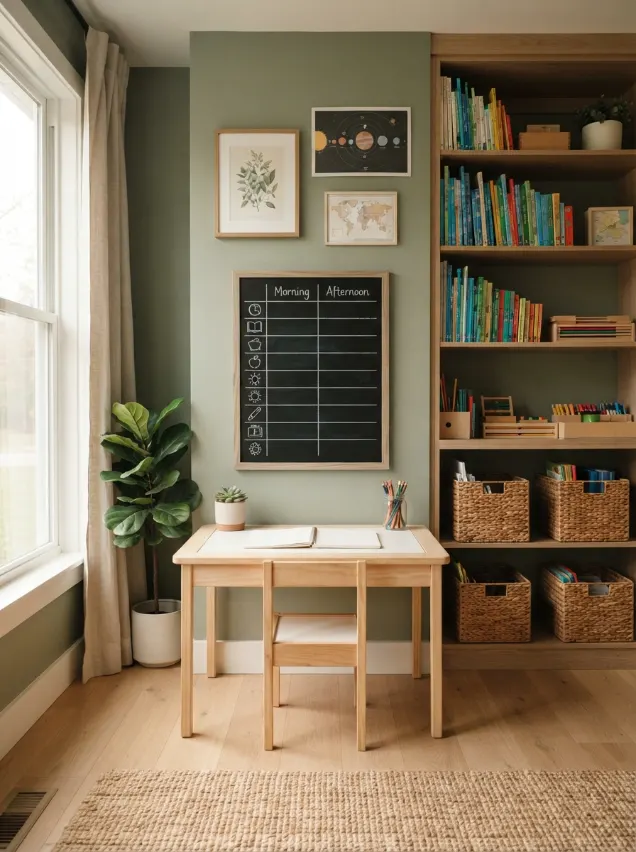
A visual schedule can make the room easier to understand before the school day even begins. A whiteboard, chalkboard, magnetic board, or simple framed checklist can show what comes next.
Keep it short. Instead of listing every tiny task, group the day into recognizable blocks such as reading, math, project time, lunch, outside time, and quiet reading.
For a restless learner, the value is often the transition cue. They can see that math is followed by movement or that a difficult task has a clear stopping point.
7. Keep the Color Palette Fun Without Making the Room Chaotic

Color can make a homeschool room feel warm and inviting, but too many competing colors can also add visual noise.
Choose two or three main colors and repeat them through chairs, baskets, artwork, and small accessories. Natural wood is an easy anchor because it works with both bright and muted palettes.
You do not need a rainbow classroom to make learning feel cheerful. A soft blue wall with warm wood and mustard accents can feel lively without becoming visually busy. The same principle works with sage, terracotta, cream, or muted yellow.
8. Divide the Room Into Small Activity Zones
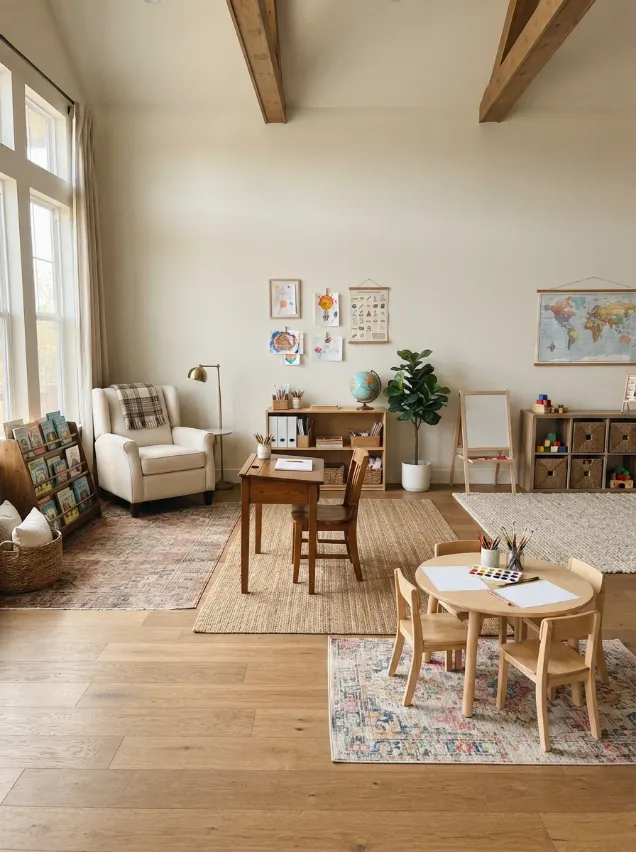
One large table in the middle of a room can make every activity feel identical. Small zones give the child visual clues about what happens where.
You might create a writing zone with a desk, a reading zone with a cushion and bookshelf, an art zone with washable supplies, and a movement zone with open floor space.
These do not need walls. A rug, lamp, shelf, or change in furniture direction can create enough separation.
This approach is also useful in shared rooms. A corner of a dining room can become the school zone during the morning and return to its normal purpose later.
9. Give Projects Enough Surface Space
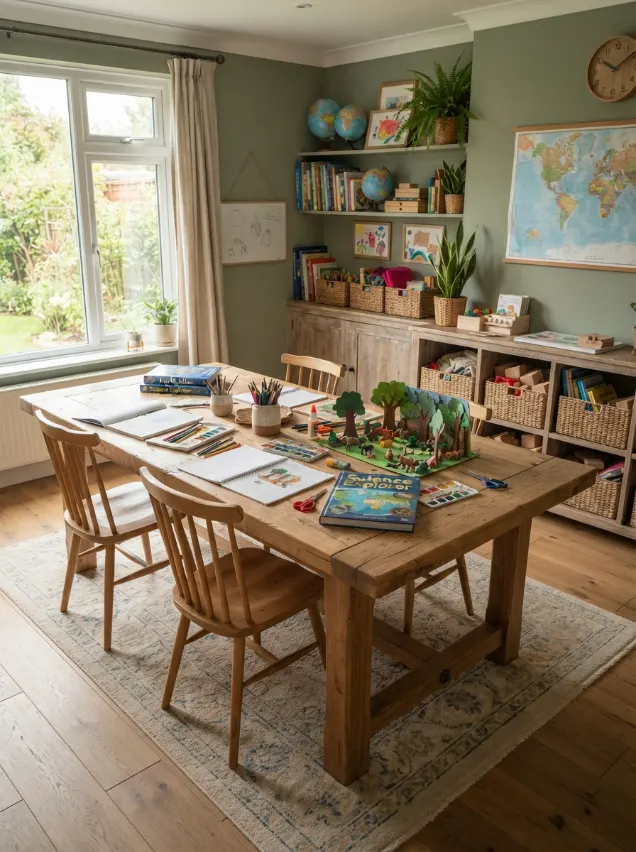
A small desk may look tidy in a photograph but become frustrating when a child needs a workbook, notebook, pencil case, ruler, and project materials at the same time.
Choose a work surface based on how the child actually works. A compact table with enough elbow room is often more useful than a tiny desk designed only for one notebook.
If floor space is limited, consider a wall-mounted folding desk, a console-style worktop, or a dining table that doubles as the main homeschool surface.
Keep a tray nearby for unfinished work. That way, the table can be cleared without forcing the child to dismantle a project before it is finished.
10. Use Natural Light and Layered Lighting
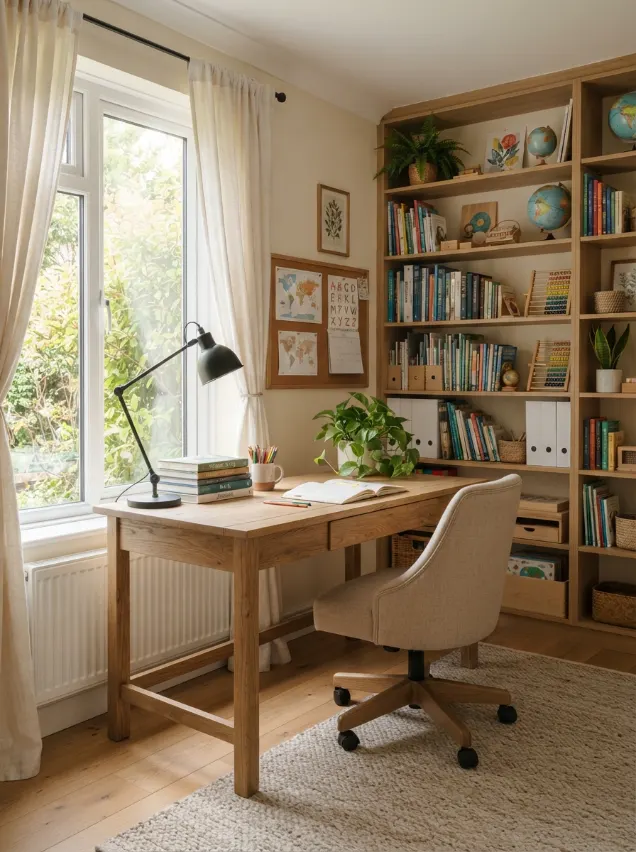
Place the main workspace near useful daylight when possible, while watching for glare on screens and workbooks.
Then add task lighting for cloudy afternoons and darker corners. A warm desk lamp or wall light can make a reading nook feel distinct from the main work area.
Lighting should support the task rather than become another visual feature competing for attention. HGTV’s lighting guidance notes that lighting affects visibility and everyday comfort, which makes it an important part of any learning space.
11. Add a Quiet Reset Corner
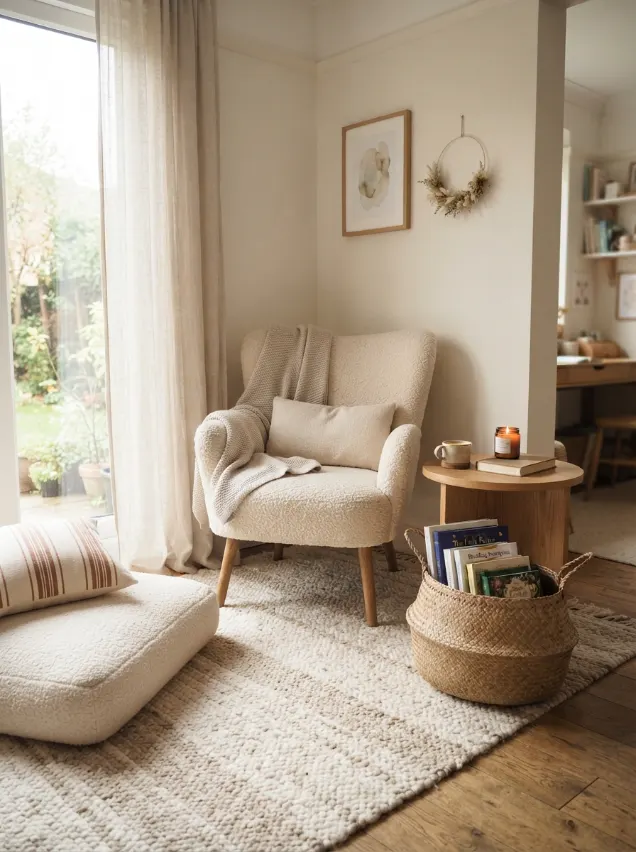
A restless child may need a short pause before they can return to a difficult lesson. A small reset corner gives that pause a defined place.
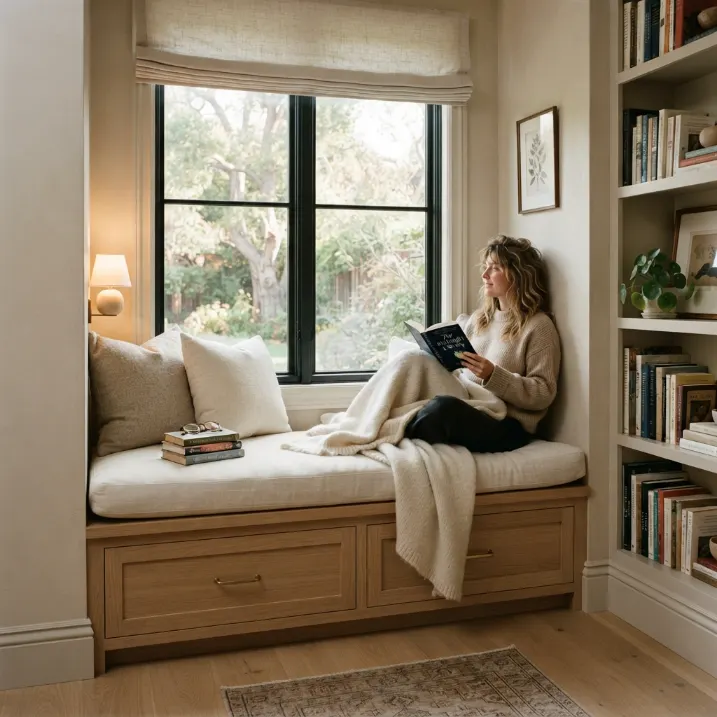
Use a comfortable cushion, a soft rug, a few books, and perhaps a small basket with quiet activities. Keep it visually calmer than the main learning zone.
The key is to avoid turning the corner into a reward station packed with toys. It should feel like a short break, not a completely different room.
A defined break area is also consistent with practical homeschool guidance from HGTV, which recommends creating a small space where children can pause and recharge.
12. Make Small Shared Spaces Work Harder
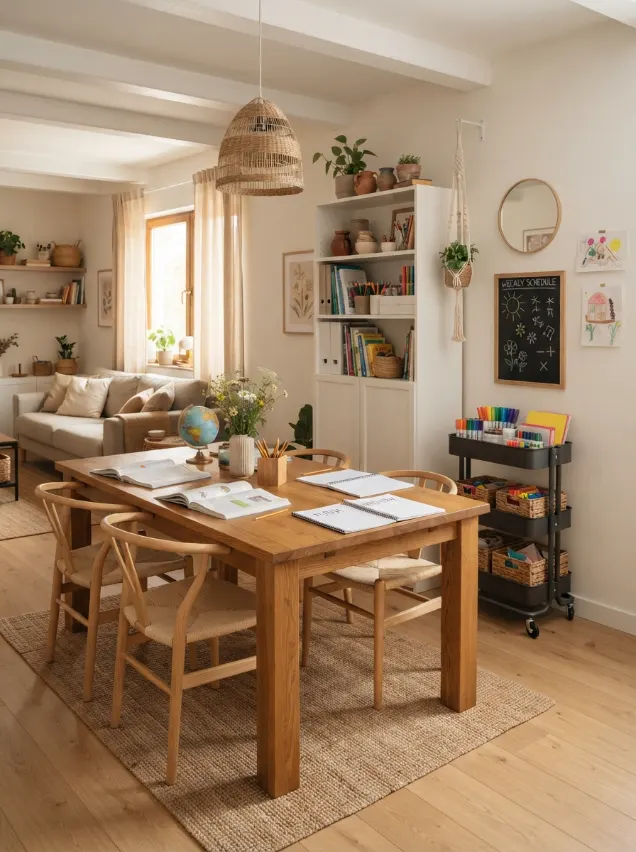
You do not need a spare bedroom to create effective homeschool room ideas. A dining nook, living room corner, bedroom wall, or large closet can work if the system is clear.
A rolling cart is useful for a shared room because it can carry supplies in during school time and move away afterward. A fold-down desk can disappear when the room needs another purpose.
For a dining room setup, keep the main table attractive enough that it still feels like part of the home. A simple storage cabinet, baskets, and a framed schedule can provide the school function without making the whole room look like a classroom.
If your learning space shares a living area, you may also like our Japandi living room ideas for inspiration on keeping functional zones calm and visually cohesive.
13. Choose Materials That Feel Good to Use Every Day
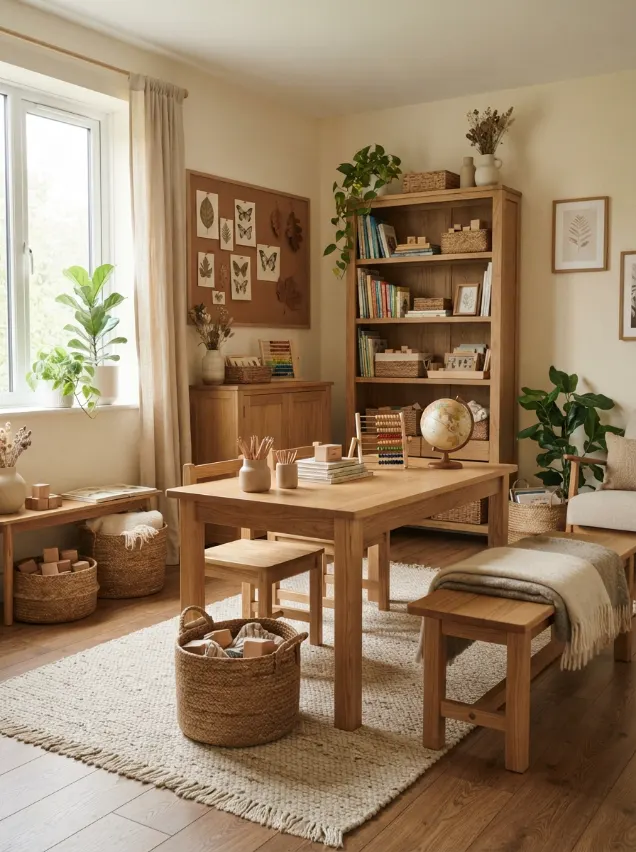
Texture matters more than people expect. A cold plastic chair, glossy table, and harsh overhead light can make a room feel institutional.
Wood, woven baskets, cotton rugs, linen curtains, cork, and matte finishes can soften the space. These materials also fit naturally into many home decor styles.
For a child who touches everything, choose finishes that are easy to clean. The most beautiful homeschool room is not helpful if you are afraid to let your child use the supplies inside it.
Keep art materials in washable containers and place messy activities on a surface that can handle paint, glue, clay, or water.
14. Let the Child Personalize One Part of the Room
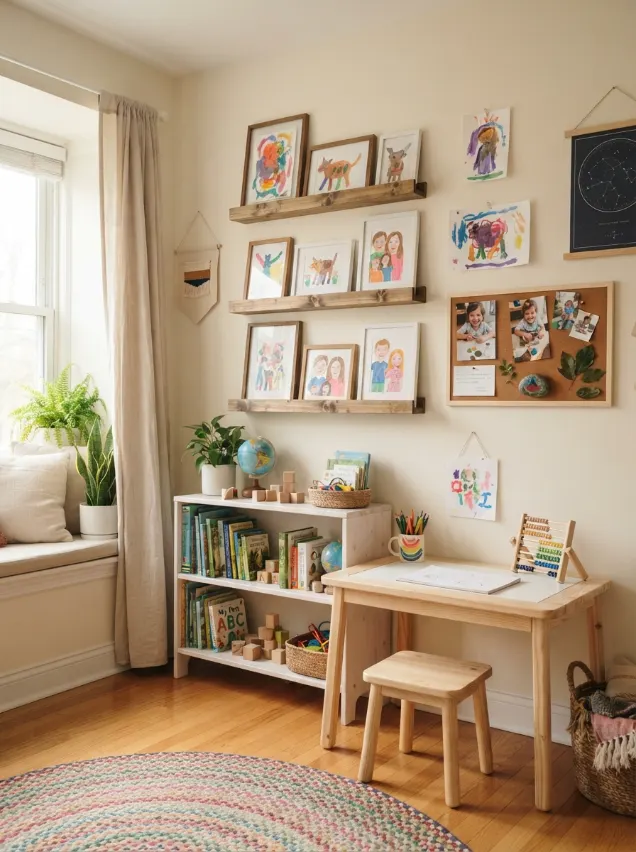
A learning space should not feel like an adult-designed office that happens to contain a child.
Give the child one area they can control. It could be a small display shelf, a corkboard, a section of chalkboard, or a rotating artwork wall.
Let them choose a few books to display, arrange their favorite supplies, or decide which artwork stays up. This creates ownership without requiring the entire room to match their latest favorite color.
The competitor setup gets this right in several ways by giving children reachable surfaces for schedules, drawings, maps, and changing displays. The design feels more personal because the child can interact with it.
15. Build the Room Around Your Actual Homeschool Routine
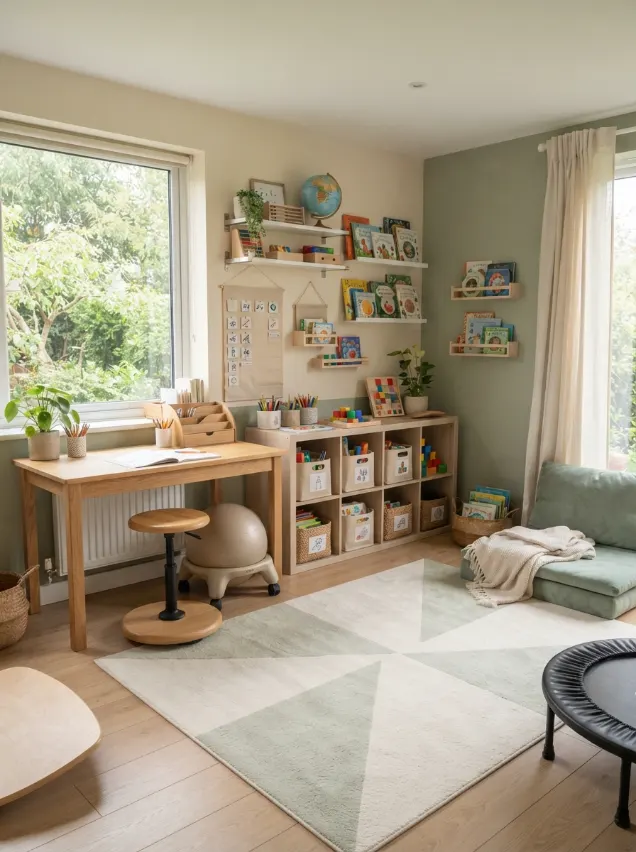
This is the idea that ties everything together. Do not design your homeschool room around a photograph. Design it around what happens between breakfast and lunch on an ordinary weekday.
Notice where your child naturally chooses to read. Notice which supplies disappear first. Notice whether they focus better near a window or in a quieter corner. Notice whether they prefer standing, sitting, kneeling, or moving between tasks.
Then adjust the room.
Maybe the expensive desk is barely used, while the dining table works perfectly. Maybe the tall bookcase creates too much visual clutter, while three low shelves make everything easier to reach. Maybe the room does not need more decor at all. It needs a clearer path between activities.
That is the real lesson behind useful homeschool room ideas. The best space is not the one that looks most like a classroom. It is the one that makes learning easier to start, easier to continue, and easier to put away.
If you are designing a room that needs to look beautiful as well as function well, keep the permanent pieces simple and let the learning materials change. A calm base of wood, neutral walls, practical storage, and comfortable seating gives you room to adapt as your child grows.
For more ideas about keeping bedrooms calm and functional, see our minimalist bedroom ideas. The same principle applies here: reduce visual friction, keep useful items accessible, and give every important activity a natural place.
A homeschool room does not have to control a restless child. It can give that child enough structure to know what comes next and enough freedom to learn in a way that feels natural.
FAQs
What is the best homeschool room setup for a restless child?
The best setup gives movement a planned place instead of fighting it. Leave open floor beside the desk, add a reading cushion or low activity table, and create small zones for writing, reading, art, and movement. The room should let the child change position without leaving the learning space.
Do I need a separate room for homeschooling?
No. A dining nook, living room corner, bedroom wall, or large closet can work. A rolling cart for supplies, a fold-down desk, and clear visual boundaries like a rug or framed schedule can turn a shared space into a functional school zone.
What kind of seating works best for active learners?
Two or three seating options usually beat one perfect chair. A supportive chair for handwriting, a floor cushion for reading, and a small stool or lap desk for art give the child variety. Lightweight pieces are best for younger children who can move them independently.
How do I keep the room from becoming a distraction?
Separate movement from distraction, keep only current-lesson materials visible on a rotating shelf, and limit the color palette to two or three main colors. Give projects their own surface and tray so work can be cleared without dismantling it.
What should a homeschool schedule board include?
Keep it short and grouped into blocks: reading, math, project time, lunch, outside time, quiet reading. For a restless learner, the real value is the transition cue, they can see a difficult task has a clear stopping point and that movement comes next.
What materials should I choose for a homeschool room?
Wood, woven baskets, cotton rugs, linen, cork, and matte finishes soften the space and feel good to use. Choose washable, easy-to-clean surfaces so you are never afraid to let your child actually use the supplies.
How can my child feel ownership of the space?
Give them one area they control: a small display shelf, corkboard, chalkboard section, or rotating artwork wall. Let them choose books to display, arrange favorite supplies, or decide which artwork stays up.
Conclusion
A homeschool room does not have to control a restless child. The strongest idea running through every suggestion here is a simple one: build the room around how your child actually learns, moves, reads, builds, draws, and takes breaks, not around how a classroom says they should.
You do not need more furniture, more color, or more decor. You need a clearer path between activities: a place to move, a place to focus, a place to reset, and a schedule the child can see. Start small, watch where your child naturally reads and works, notice which supplies disappear first, and adjust the room to fit those habits.
The best homeschool room is not the one that looks most like a classroom. It is the one that makes learning easier to start, easier to continue, and easier to put away.