Minimalist Decor Ideas: 15 Calm Ways to Make Your Home Feel Intentional
Minimalist decor works best when a home feels calm without feeling bare. The difference usually comes down to a few thoughtful choices: useful furniture, quiet colors, natural textures, and enough breathing room for each element to matter.
The goal is not to remove personality. It is to make the things you keep feel more intentional. A soft linen curtain, a sculptural lamp, a warm wood table, or one oversized artwork can often do more than a room full of small accessories.
These Minimalist Decor Ideas focus on that balance. Each one is practical enough for a real home, but polished enough to inspire your next Pinterest save. You will also find simple ways to adapt the look if you are decorating on a budget, working with a small room, or simply tired of visual clutter.
1. Start With a Warm Neutral Foundation

White is not the only option for a minimalist home. Warm ivory, oatmeal, soft beige, mushroom, pale taupe, and gentle greige can create a quieter foundation while keeping the room bright.
Use one main neutral on the walls, then bring in slightly deeper shades through furniture and textiles. This creates contrast without relying on strong color. In my experience, a warm neutral palette is also easier to live with because everyday shadows and small marks are less obvious than they are on stark white surfaces.
2. Let Natural Wood Add The Warmth

Minimal rooms can feel flat when every surface is painted, polished, or glossy. Natural wood solves that problem quickly. A light oak console, walnut side table, cane cabinet, or simple wooden stool adds warmth without making the room feel busy.
Choose one or two wood tones and repeat them around the room. Repetition makes the furniture feel connected rather than randomly collected.
3. Choose One Strong Focal Point
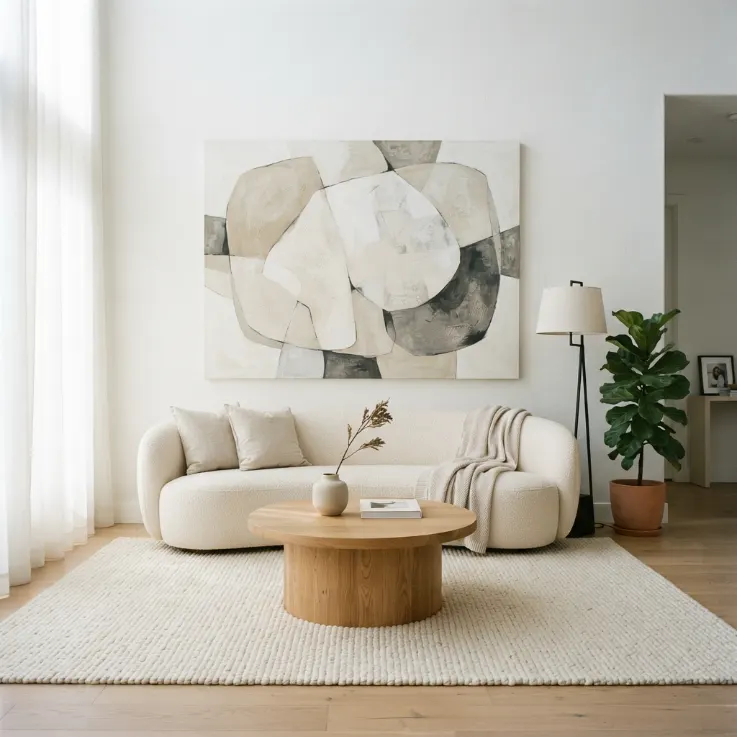
A calm room still needs something that catches the eye. Instead of decorating every wall, choose one focal point and give it space.
This could be an oversized abstract artwork, a large mirror, a sculptural pendant, a beautiful fireplace, or even a statement chair. Keep the surrounding pieces quieter so the main feature has room to breathe.
This approach is especially useful in small homes. You can create visual impact without filling precious floor or wall space.
4. Layer Texture Instead of Adding More Color

If a neutral room feels boring, resist the urge to immediately add bright accessories. Texture often creates the depth you are missing.
Combine linen, wool, boucle, cotton, stone, ceramic, wood, and woven fibers. A smooth coffee table beside a textured rug and soft upholstery can make a simple palette feel rich.
One of the most useful Minimalist Decor Ideas is to change the surface rather than the color. The room stays peaceful while becoming much more interesting to look at.
5. Keep Furniture Visually Light

Heavy furniture can make even a tidy room feel crowded. Look for pieces with slim legs, open bases, rounded edges, or raised silhouettes.
A floating media console is a good example. Because more of the floor remains visible, the room can feel more open. The same principle works with nightstands, benches, desks, and entryway cabinets.
You do not need to replace every piece. Start with the largest item that makes the room feel visually heavy.
6. Give Your Shelves More Empty Space

Open shelving is beautiful when the eye has somewhere to rest. A common mistake is filling every shelf from end to end.
Instead, group a few books with a ceramic object, add one small plant, and leave a generous section empty. Vary the height of the objects, but keep the color palette connected.
If your shelves still look crowded after editing, remove one more item. That final bit of restraint often makes the biggest difference.
7. Use Sculptural Lighting As Decor
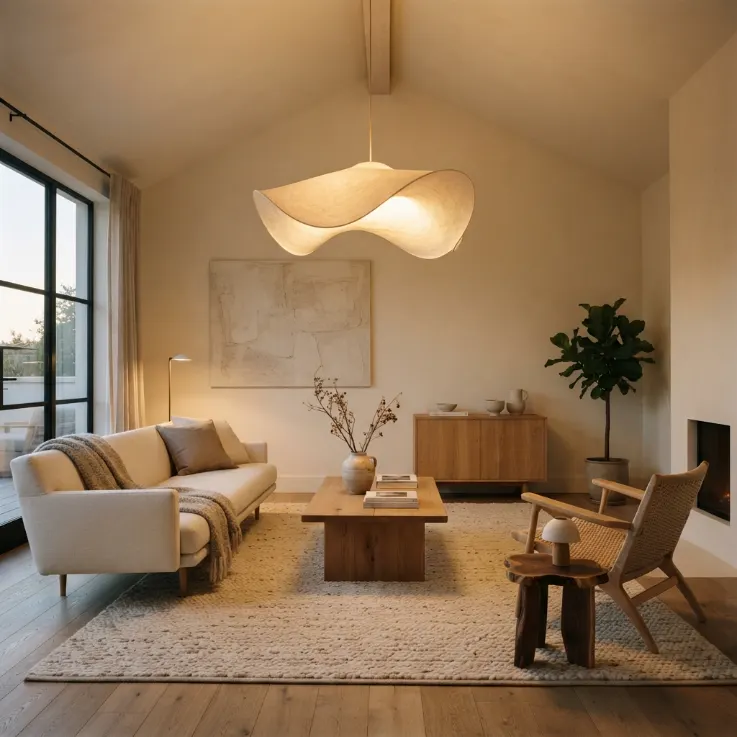
Lighting should not be an afterthought in a minimalist interior. A simple room can become much more memorable with a beautifully shaped pendant, floor lamp, wall sconce, or table lamp.
Look for soft curves, paper shades, natural materials, matte finishes, or interesting silhouettes. Then use warm bulbs so the room feels welcoming after sunset.
Layering light is important too. Combine overhead lighting with a floor or table lamp instead of depending on one bright fixture.
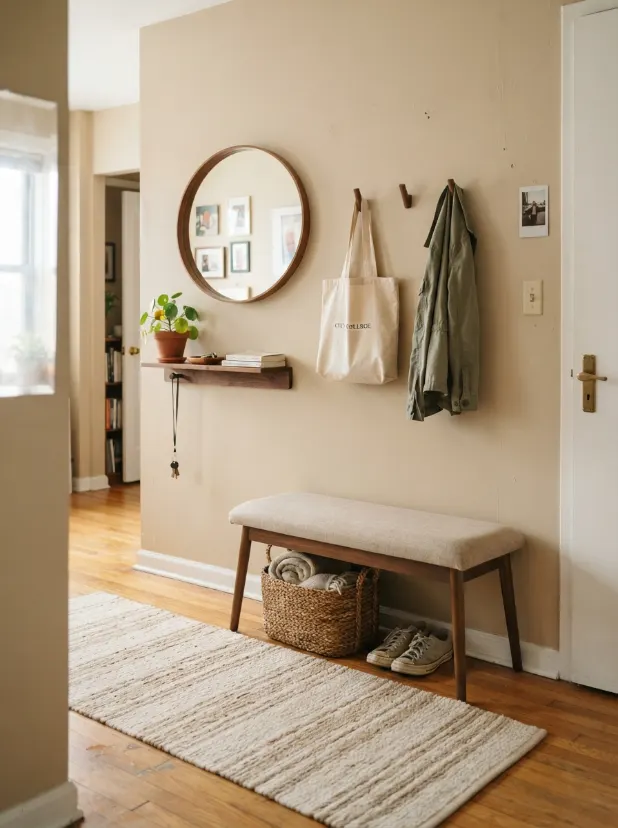
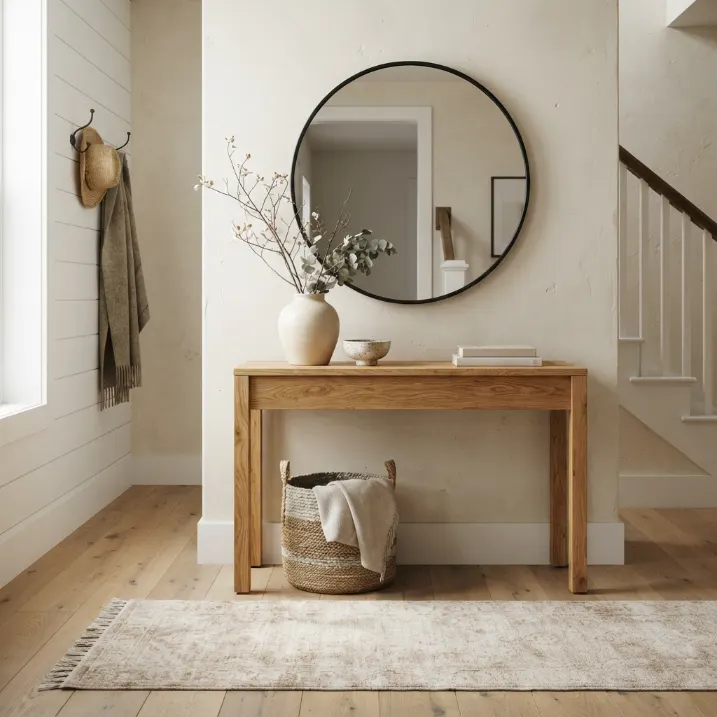
8. Create A Calm Entryway
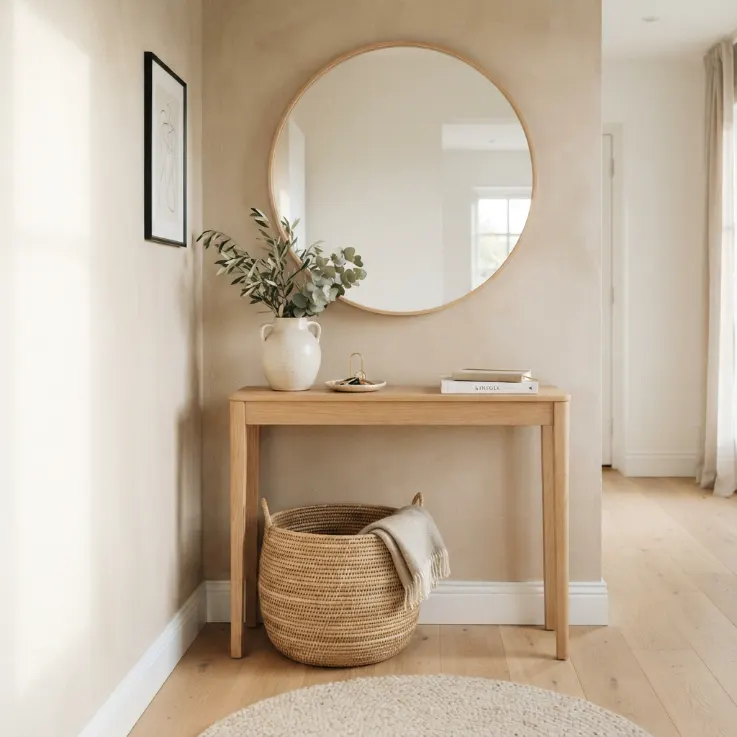
The entryway sets the tone for the rest of the home. Keep the essentials close, but avoid turning the first few feet of your house into a storage zone.
A slim console, round mirror, small tray, woven basket, and one natural branch can be enough. Give shoes, keys, and bags a concealed place so the visible surfaces stay clear.
For another approach to a restrained entry, see our Japandi entryway ideas.
9. Make Everyday Objects Look Intentional

Not everything in a home needs to be hidden. Some practical objects can become part of the design when they are chosen carefully.
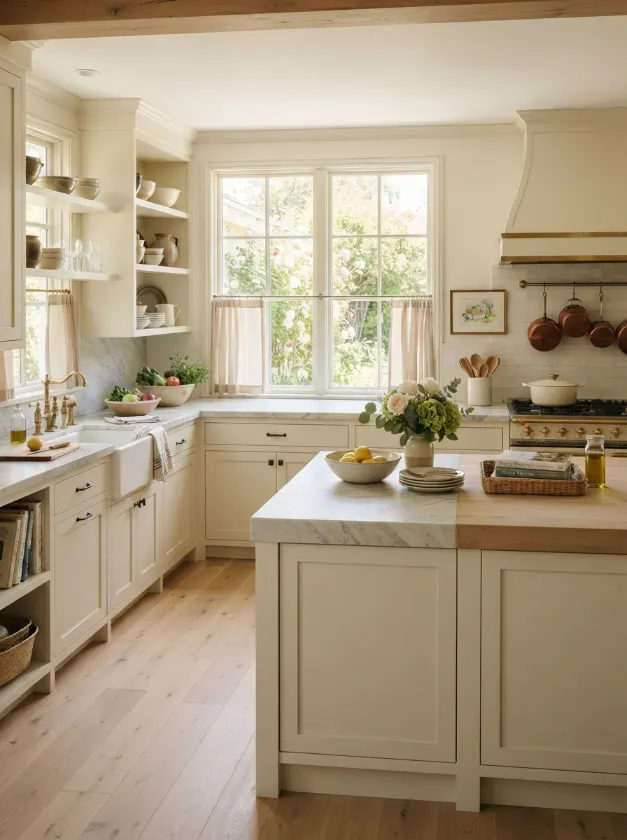
A wooden cutting board can lean against a kitchen backsplash. A beautiful ceramic soap dispenser can sit beside the sink. A woven laundry basket can stay visible instead of being pushed into a corner.
The trick is consistency. Choose useful objects that share a similar material, color, or visual character.
10. Use Curved Shapes To Soften Clean Lines

Minimalism can become overly angular when every piece has sharp corners. Add a curved mirror, rounded coffee table, arched doorway, circular pendant, or softly shaped chair.
Curves create a gentle contrast against straight cabinetry, rectangular rugs, and clean architectural lines. You only need a few. One large curved feature can be enough to change the mood of a room.
11. Keep Countertops And Surfaces Edited

Clear surfaces are one of the easiest ways to make a home feel calmer, but completely empty counters are not always practical.
Keep the things you use every day, then group them intentionally. A tray can hold coffee essentials. A ceramic bowl can collect keys. A small lamp can make a console more inviting.
The goal is not perfection. It is giving everyday items a clear home so they do not spread across every available surface.
12. Add Greenery With A Simple Shape

Plants bring life into a neutral interior without requiring a complicated color scheme. For a minimalist look, choose plants with clear silhouettes and attractive foliage.
An olive tree, rubber plant, snake plant, or simple branch arrangement can add height and organic movement. Use a restrained planter in ceramic, stone, terracotta, or natural fiber.
One substantial plant can have more impact than several tiny pots scattered around the room.
13. Design A Bedroom That Feels Uncluttered

The bedroom benefits enormously from visual restraint because it is one of the spaces where you want your mind to slow down.
Choose simple bedding in related neutral shades, keep bedside styling limited, and avoid storing too many decorative objects on the nightstand. Soft curtains and a textured rug can add comfort without creating visual noise.
If you enjoy Japanese and Scandinavian influences, our Japandi bedroom ideas offer another way to combine warmth with restraint.
14. Use Art Instead Of More Accessories
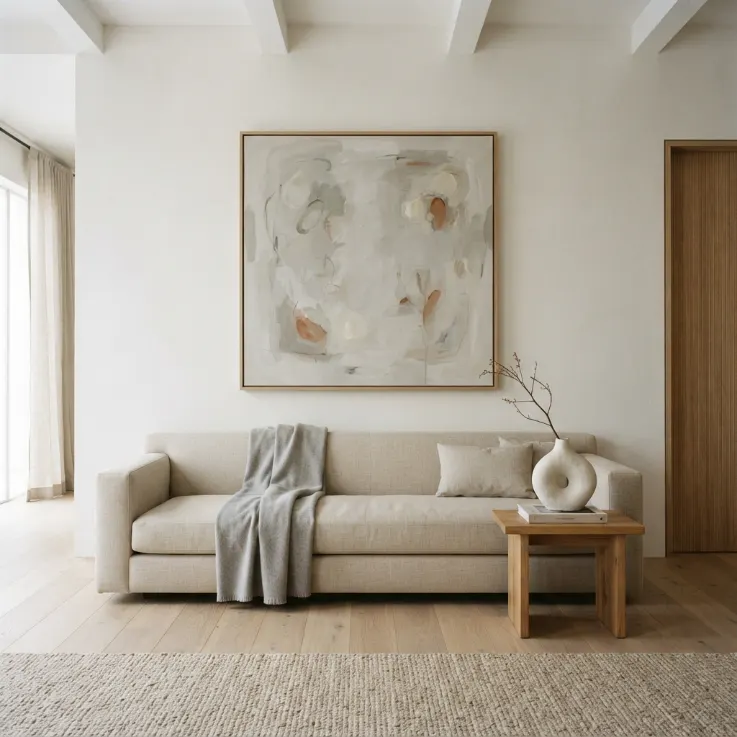
When a wall feels empty, you do not always need several small decorations. One large artwork can provide color, shape, and personality while keeping the composition simple.
Choose art that relates to the room’s existing palette. Abstract forms, muted landscapes, botanical studies, and black-and-white photography can all work beautifully.
Hang it with enough surrounding space that it feels like a deliberate feature rather than something squeezed between furniture.
15. Let Your Home Look Lived In
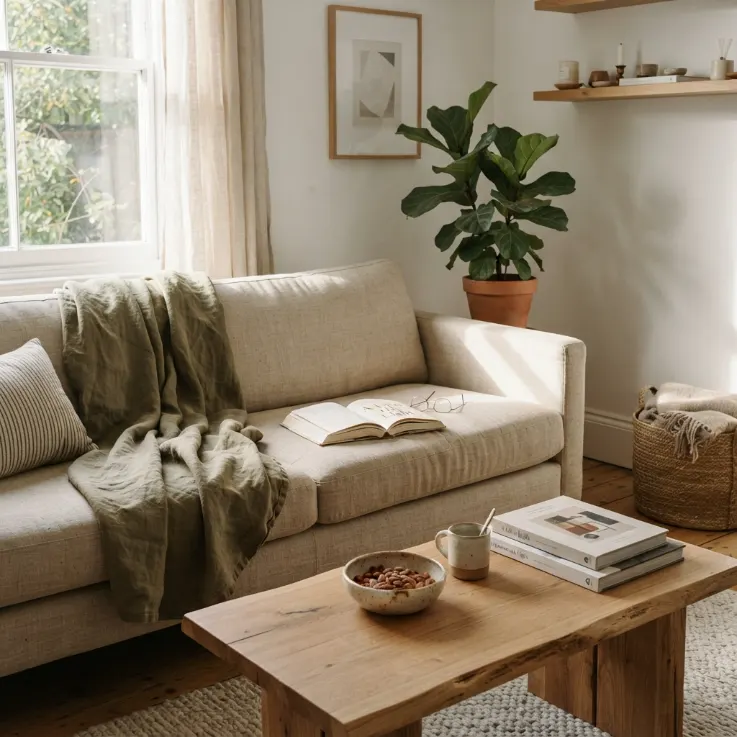
The most successful minimalist interiors are not sterile. They contain books, blankets, flowers, photographs, handmade pieces, and objects connected to the people who live there.
That is the part of minimalism worth keeping: remove what does not serve you, then give the remaining things room to be appreciated.
In my experience, a home becomes more convincing when it looks like someone actually lives there. A folded throw on the sofa, a favorite book on the coffee table, or a handmade bowl in the kitchen can add more warmth than a shelf full of decorative objects.
How To Make Minimalist Decor Work In A Small Home
Small spaces do not need more decoration to feel finished. They usually need better editing.
Start by choosing furniture that serves more than one purpose. Use wall-mounted storage where practical, keep walkways clear, and select a limited palette so separate areas feel connected. Mirrors can help reflect natural light, while furniture with visible floor space can make the room feel less crowded.
Before buying anything new, remove three items you no longer use. This simple habit can reveal that your room needs less furniture rather than more.
What Makes Minimalist Decor Feel Warm Instead Of Cold?
Warmth comes from materials, lighting, texture, and personal details. If your room contains only white walls, glossy surfaces, and hard furniture, it may feel more clinical than calm.
Add natural wood, soft textiles, warm lighting, ceramics, woven materials, and a few meaningful objects. The palette can stay simple while the sensory experience becomes much richer.
FAQs About Minimalist Decor Ideas
What are the key elements of minimalist decor?
The key elements are intentional furniture, a restrained color palette, useful storage, open space, natural textures, balanced proportions, and carefully chosen decorative pieces. The aim is clarity rather than an empty room.
How do I make minimalist decor feel cozy?
Use warm neutrals, layered textiles, natural wood, soft lighting, rugs, curtains, and a few personal objects. Texture is particularly useful because it adds depth without making the room visually busy.
Can minimalist decor work with a small budget?
Yes. Start by editing what you already own instead of shopping first. Rearrange furniture, remove visual clutter, change lighting, group accessories, and add one or two natural materials. These changes can make a noticeable difference without a large purchase.
Is minimalist decor the same as having an empty home?
No. Good minimalism is about intentional choices. A minimalist home can contain books, art, plants, textiles, and sentimental objects. The difference is that each item has a reason to be there.
How often should I declutter a minimalist home?
There is no fixed schedule. A practical approach is to review items when storage becomes difficult, surfaces start filling up, or something has not been used for a long time. Small, regular edits are usually easier than one large decluttering project.
Conclusion
The best Minimalist Decor Ideas do not ask you to make your home empty. They ask you to become more selective about what stays visible.
Start with one room and make one thoughtful change. Warm up a neutral palette with wood, replace visual clutter with useful storage, introduce texture, improve the lighting, or give one beautiful object more space around it.
Over time, these small decisions can create a home that feels calmer, more personal, and easier to live in. That is the real strength of minimalist design: not having less for the sake of less, but making more room for the things that genuinely matter.