20 Bookshelf Styling Ideas That Make Any Room Look Designer
A bookshelf can hold a lot of things and still look unfinished. The difference is rarely the number of books you own. It usually comes down to spacing, height, color, texture, and the way each group relates to the next.
The best bookshelf styling ideas make a shelf feel useful and personal at the same time. Books remain easy to reach, while ceramics, artwork, plants, and small objects add visual interest without making the shelves feel crowded.
I have noticed that the biggest improvement often comes from removing a few things rather than buying more decor. Once the shelf has some breathing room, it becomes much easier to see what is missing and what is already doing enough.
These ideas are designed for real homes, not just perfect room photos. You can use them on a tall bookcase, a low console shelf, built-ins, floating shelves, or a small corner unit.
1. Group Books by Color for a Softer Visual Flow

Color is one of the easiest bookshelf styling ideas to try because it can change the overall impression without changing the furniture. These bookshelf styling ideas are especially helpful in open-plan rooms where the bookcase is visible from several angles.
You do not need to create a rainbow shelf. Instead, group similar tones together. Cream, tan, brown, muted green, dusty blue, and black can each form small visual families. If most of your books have bright covers, turn a few spines inward or mix them with neutral objects.
Leave small gaps between color groups so the arrangement does not look like one solid block. A cream ceramic vase between two warm book groupings can create a natural pause.
This works especially well in rooms where the furniture and walls already have a strong color palette. The shelf then supports the room instead of competing with it.
2. Mix Vertical Books With Horizontal Stacks
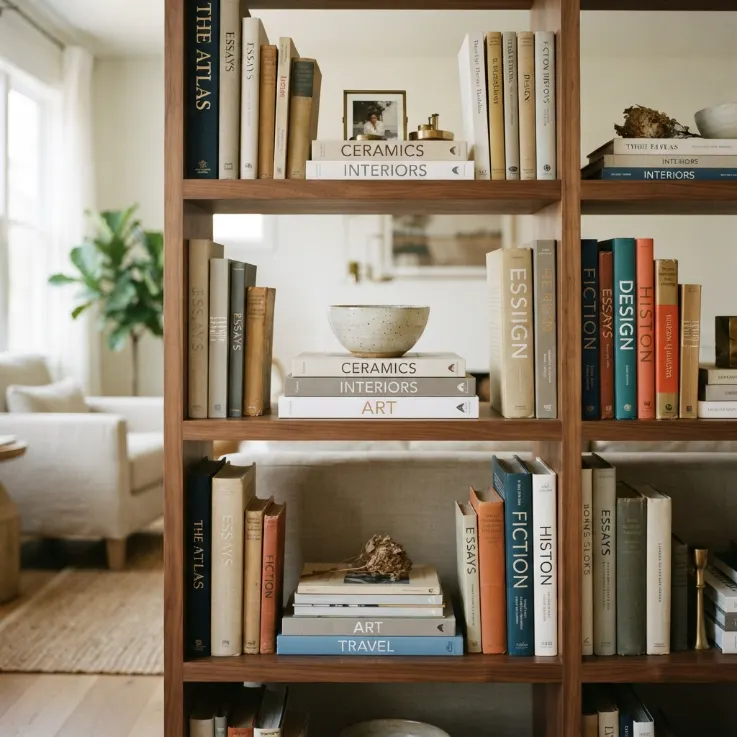
A shelf filled entirely with upright books can look stiff. A few horizontal stacks create changes in direction and give you natural spots for small decorative objects.
Start with your tallest vertical group. Then add a short stack beside it or on another shelf. Place a small bowl, candle, or sculptural piece on top of one stack.
Keep the stacks stable and practical. Three to six books can work well depending on their size. Avoid creating piles so tall that you have to move half the shelf every time you want one book.
Among the most useful bookshelf styling ideas, this one costs nothing and can usually be done in a few minutes.
3. Leave Negative Space Between Decor Groups
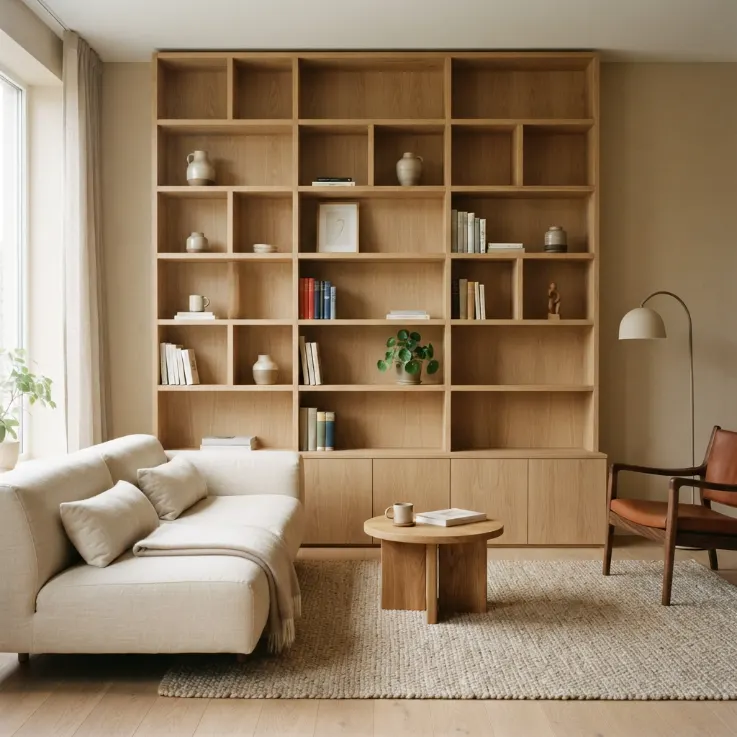
Empty space is part of the design. If every shelf is packed from edge to edge, individual pieces lose their impact.
Try arranging two or three objects together, then leaving a clear section beside them. On another shelf, reverse the balance. This creates rhythm without making every level look identical.
A useful test is to step back several feet and look at the whole bookcase. If your eye cannot find a quiet area, remove one or two objects.
In my experience, this is often the moment a crowded bookshelf starts looking intentional. Simple bookshelf styling ideas often work because they create a visual pause instead of another focal point.
4. Add One Plant for Natural Movement
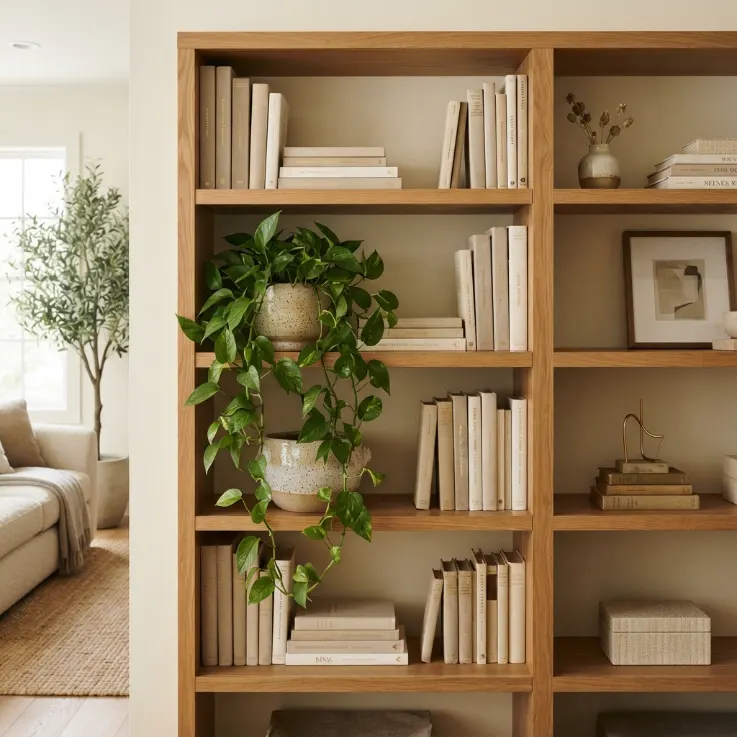
Plants soften the straight lines of shelving and bring a little life into a room. One plant can be enough.
A trailing pothos can spill gently over a shelf edge. A compact olive-style plant can add height. A small fern can work well in a lower-light reading corner, depending on the conditions in your room.
Choose a planter that supports the existing palette. Matte ceramic, terracotta, stone, and woven containers are easy options.
Do not place plants on every shelf. One of the quieter bookshelf styling ideas is to let greenery appear only where it adds shape or softness.
5. Create a Balanced Asymmetrical Arrangement
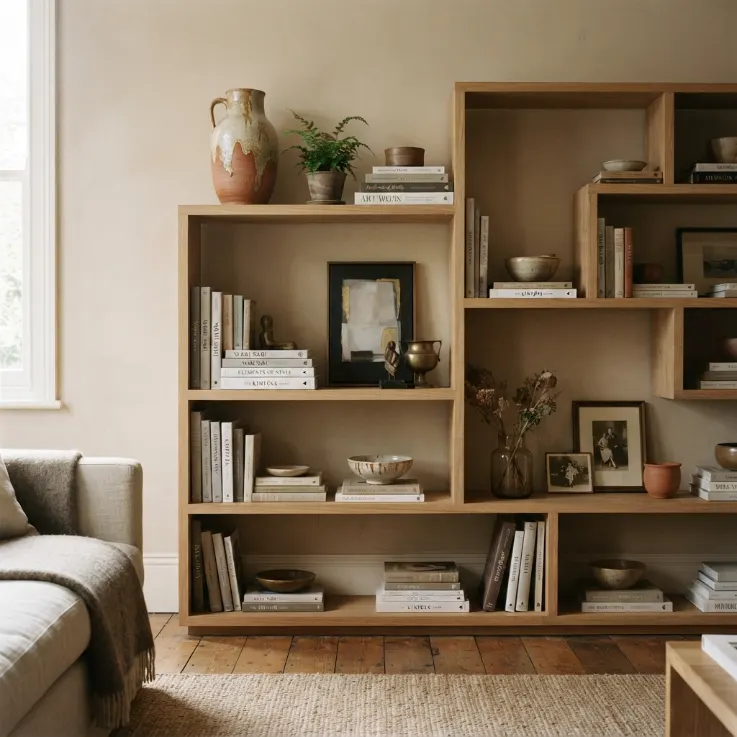
Perfect symmetry can make a bookcase feel formal, while complete randomness can look messy. A balanced asymmetrical arrangement sits comfortably between the two.
Place a taller object on one side, then create visual weight on another shelf using a wider stack of books or a larger artwork.
The objects do not have to match. They simply need similar visual weight. This is a useful foundation for bookshelf styling ideas because balance does not require identical pieces. A dark ceramic vase can balance several lighter books, for example.
Many bookshelf styling ideas work because the eye moves around the composition rather than stopping at one heavy cluster.
6. Use Artwork to Break Up Rows of Books
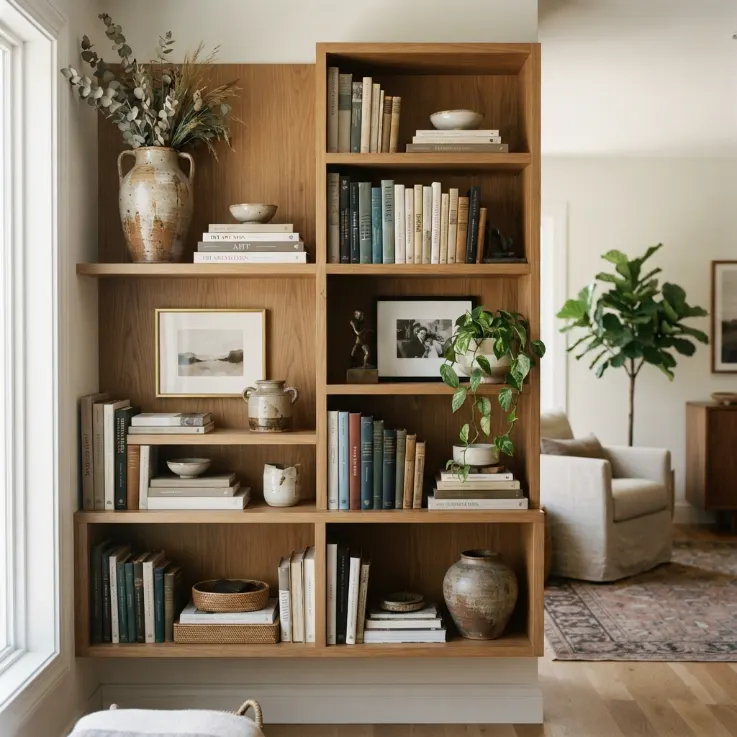
Books do not have to be the only thing your shelves display. Small framed artwork can add height, color, and personality.
Lean a frame against the back of the shelf rather than hanging it. This creates a relaxed layered effect and makes it easy to change later.
Try one larger frame instead of several tiny pieces. Then place a small object in front of it, such as a ceramic vessel or a short stack of books.
If your shelves are shallow, check that the frame does not block the books you use regularly. Practical bookshelf styling ideas should make daily use easier, not harder.
7. Style a Shelf Around One Sculptural Object
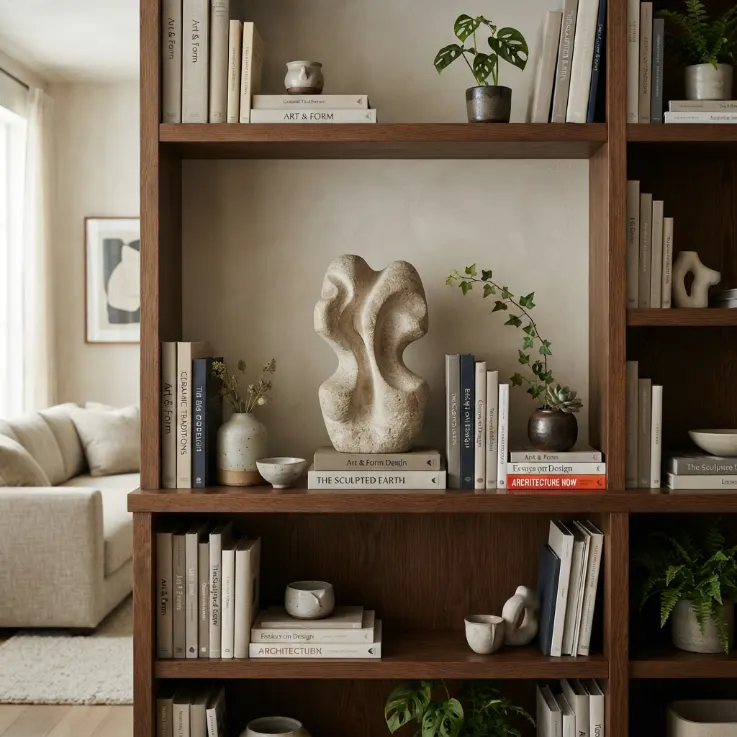
A sculptural object can act as a visual anchor. It might be a stone bowl, carved wooden piece, unusual vase, abstract ceramic, or small piece of vintage decor.
Place the larger object first. Then add books and smaller pieces around it instead of trying to make every item equally noticeable.
This approach is useful if your book collection is visually busy. A single strong shape can give the shelf a focal point without adding lots of extra decoration.
The key is restraint. One memorable object usually has more impact than five competing ones. This is one reason bookshelf styling ideas can feel expensive even when the objects are simple.
8. Use Warm Lighting to Make Shelves Feel Cozy
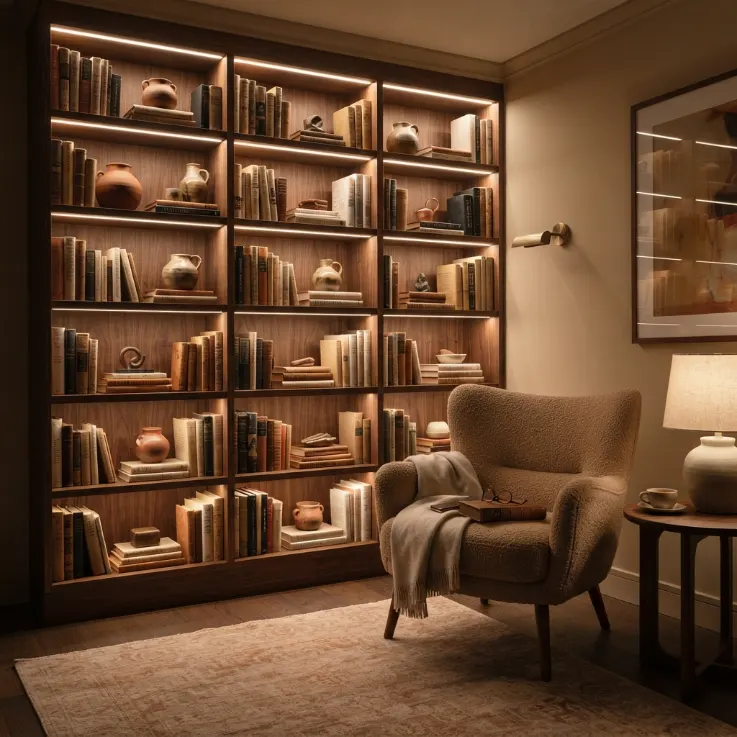
Lighting can completely change a bookshelf after sunset. Warm LED strips, small picture lights, or compact rechargeable lamps can highlight the shelves without requiring a major electrical project.
Place lighting where it illuminates book spines and decorative objects without shining directly into your eyes.
Warm light works particularly well with wood shelves, neutral walls, leather furniture, and earthy decor.
If you are collecting bookshelf styling ideas for a reading room, think about lighting as part of the composition rather than an afterthought. Thoughtful bookshelf styling ideas consider the room after dark too, not just the daytime photograph. The shelf should look good both in daylight and in the evening.
9. Turn a Low Bookshelf Into a Styled Console
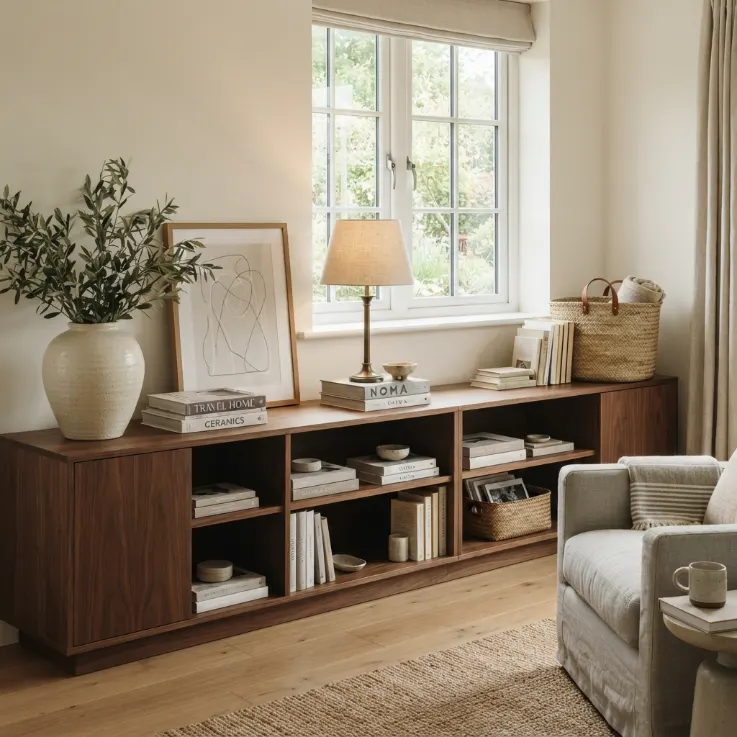
Low shelving gives you a different opportunity because the top surface becomes part of the room.
Use the upper surface for a lamp, artwork, plant, or a few larger decorative objects. Inside the shelves, keep a mixture of books and baskets or boxes for practical storage.
A long horizontal arrangement benefits from variation. Place the tallest item toward one side and use shorter pieces toward the other.
This can work beautifully behind a sofa, beneath a window, or along a dining room wall where a tall bookcase would feel too heavy. For compact rooms, bookshelf styling ideas like this make storage feel lighter and more intentional.
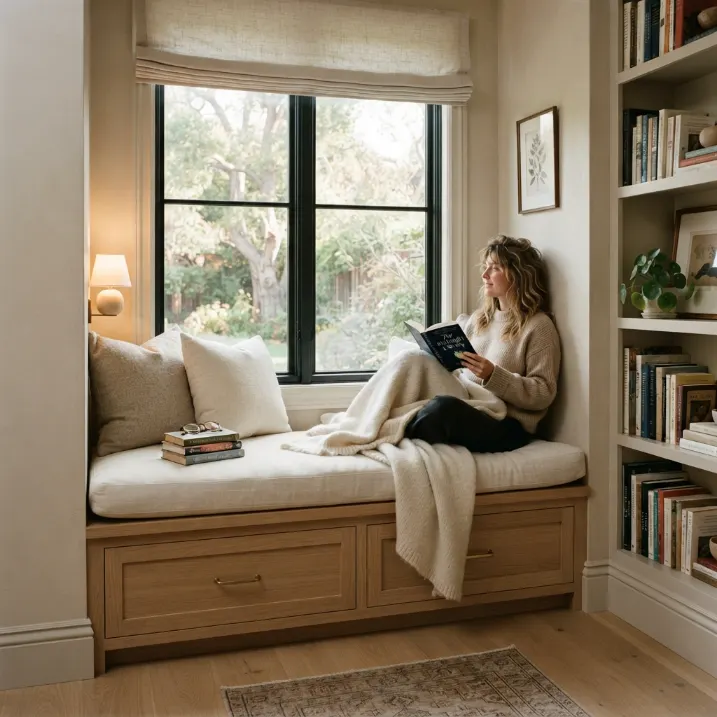
10. Make a Reading Nook Around the Bookshelf
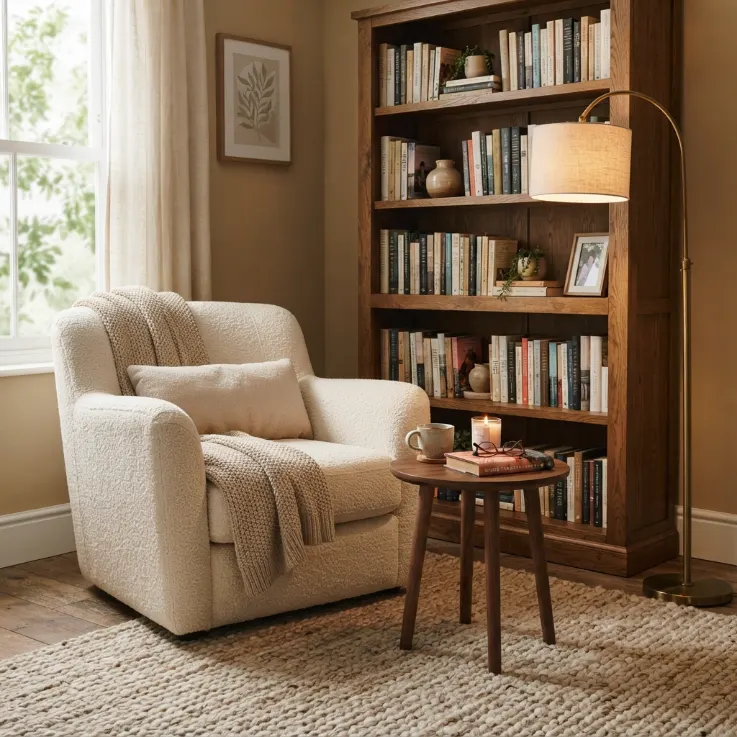
A bookshelf becomes more meaningful when the surrounding furniture supports how you actually use it.
Place a comfortable chair nearby, add a small side table, and use a floor lamp or wall light for reading. A rug can visually connect the chair and shelving into one zone.
Keep the decor on the shelf relatively calm so the area feels restful rather than visually busy.
For another small-space idea, see Homesifying’s Reading Nook Ideas, which explores ways to make an unused corner feel purposeful.
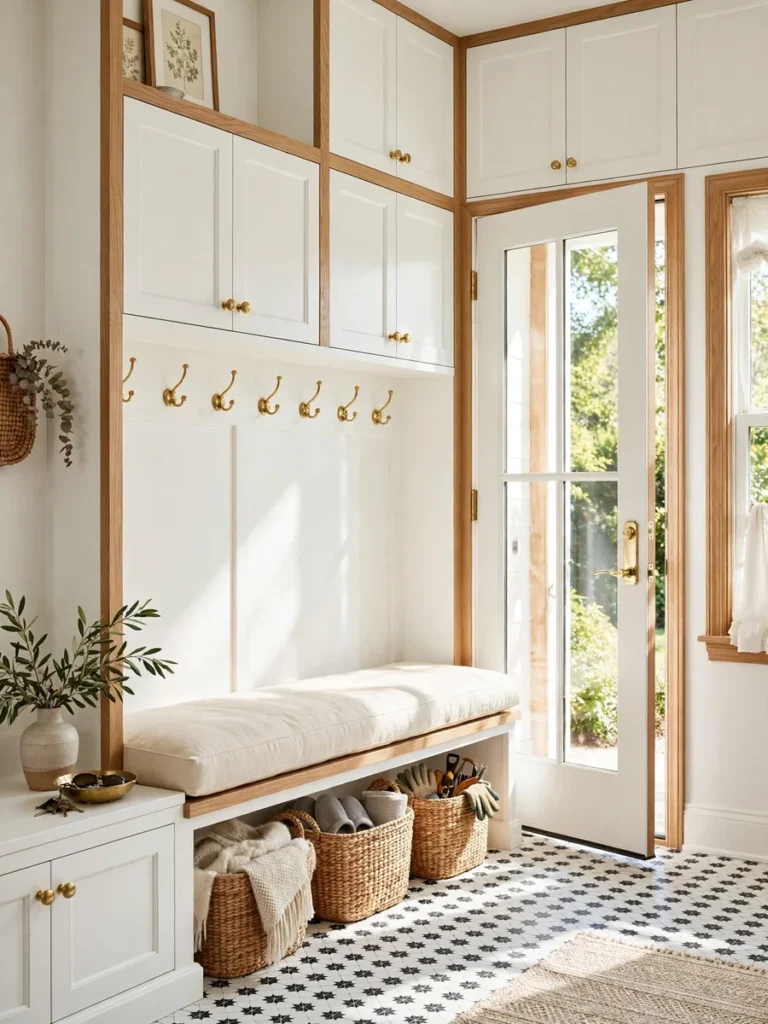
11. Use Baskets to Hide the Less Beautiful Stuff
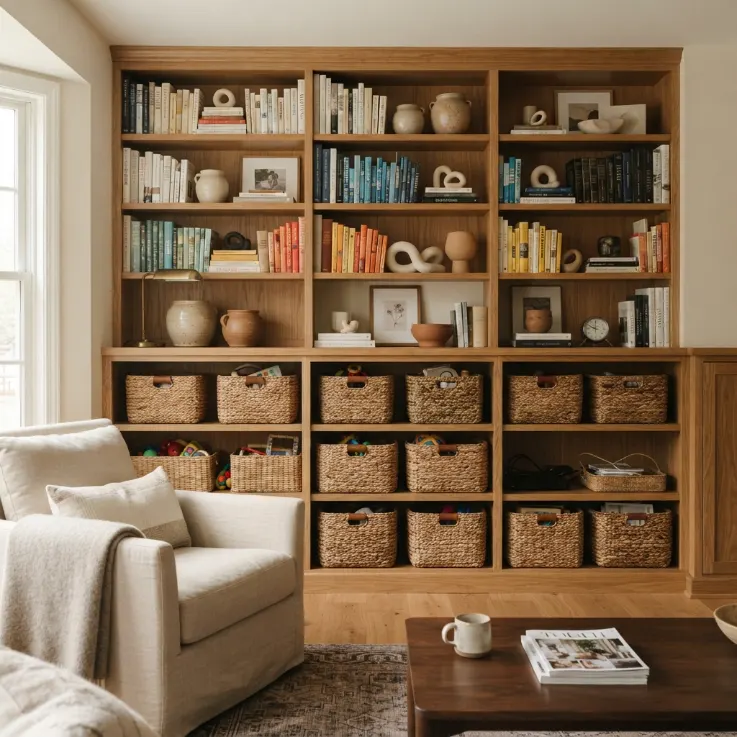
Not everything on a bookshelf needs to be displayed. Baskets can hide cables, papers, remote controls, toys, or other everyday items that make open shelving look chaotic.
Choose baskets that fit the shelf dimensions and repeat their material or color elsewhere in the room.
Place heavier storage baskets on lower shelves. Keep frequently used items within easy reach.
This is one of the most practical bookshelf styling ideas for family homes because it allows the shelves to look calm without pretending that everyday clutter does not exist.
12. Add Vintage Pieces for Personality

A shelf made entirely from new decor can feel generic. One or two older pieces can give it a sense of history.
Try a vintage vase, old framed print, wooden box, brass object, or secondhand ceramic. The item does not have to be expensive or rare. It simply needs to look different from the newer pieces around it.
Mix the older object with modern books and simple shapes. That contrast can make the whole shelf feel more personal.
If you like rooms that feel collected over time, this approach is worth trying before buying another matching decor set.
13. Repeat One Accent Color Across the Shelves
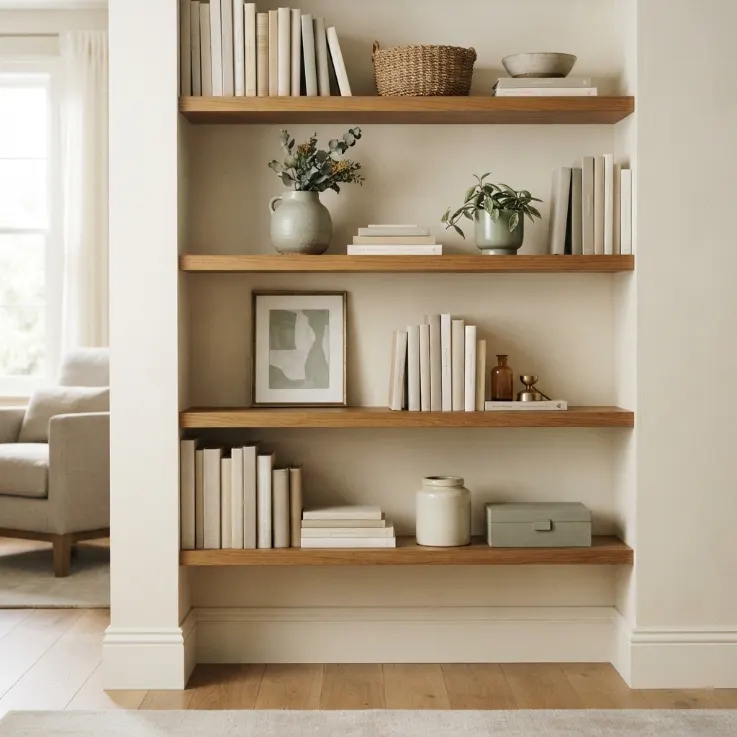
A small accent color can tie a large bookcase together. Choose one shade that already appears somewhere else in the room.
For example, a muted green can appear in a plant pot, a book cover, and a small piece of artwork. A warm black can repeat through frames, candleholders, and hardware.
Do not force the color onto every shelf. Repetition works best when it feels subtle.
This is especially helpful if your books have many different spine colors. A repeated accent gives the eye something familiar to notice among the variety.
14. Style Deep Shelves in Layers
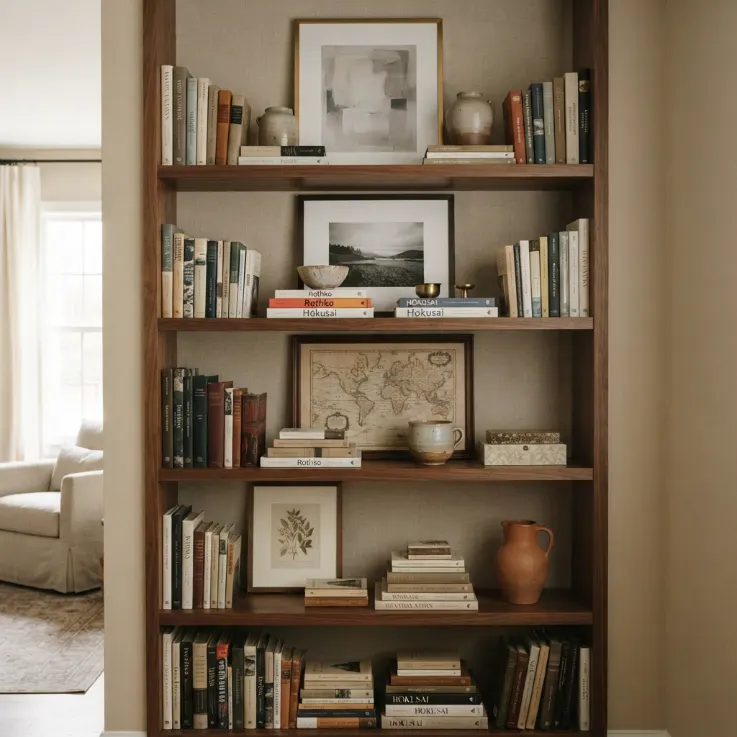
Deep shelves can create a problem because small objects may disappear at the back. Layering solves that without filling the entire shelf.
Place larger books or artwork toward the back. Then bring a shorter stack or decorative object slightly forward.
Make sure the front pieces do not make the books impossible to remove. A beautiful arrangement that you have to dismantle every day will not stay that way for long.
Layering is one of the bookshelf styling ideas that can make built-ins feel richer because it uses depth instead of simply adding more objects.
15. Keep the Bottom Shelves Visually Heavier
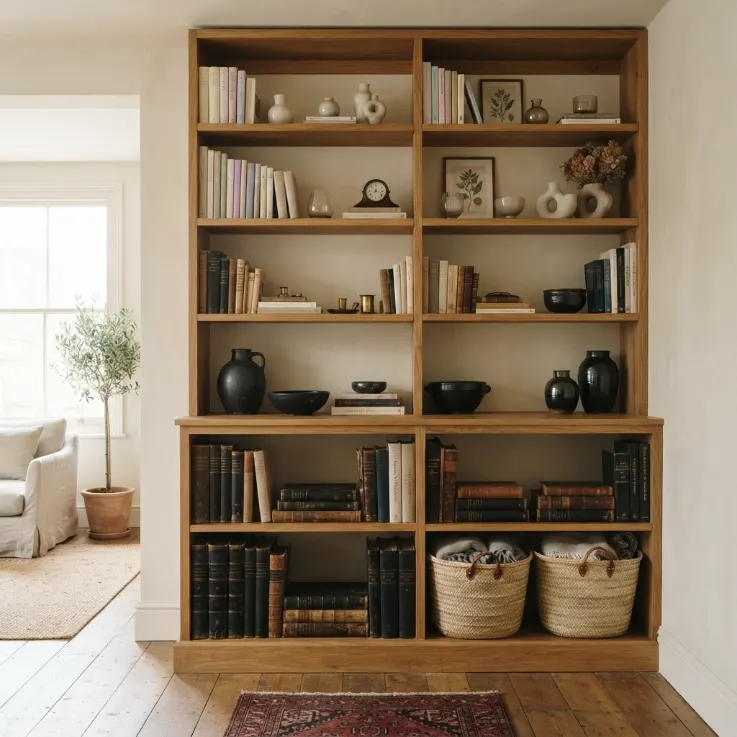
A bookcase usually feels more grounded when the lower shelves carry slightly more visual weight.
Use larger books, baskets, heavier ceramics, or darker objects toward the bottom. Keep delicate pieces and lighter arrangements higher up.
This does not mean every bottom shelf should be full. It simply gives the overall composition a stable base.
The same principle can help with tall open shelving where the upper sections might otherwise feel too heavy.
16. Create a Calm Neutral Bookshelf
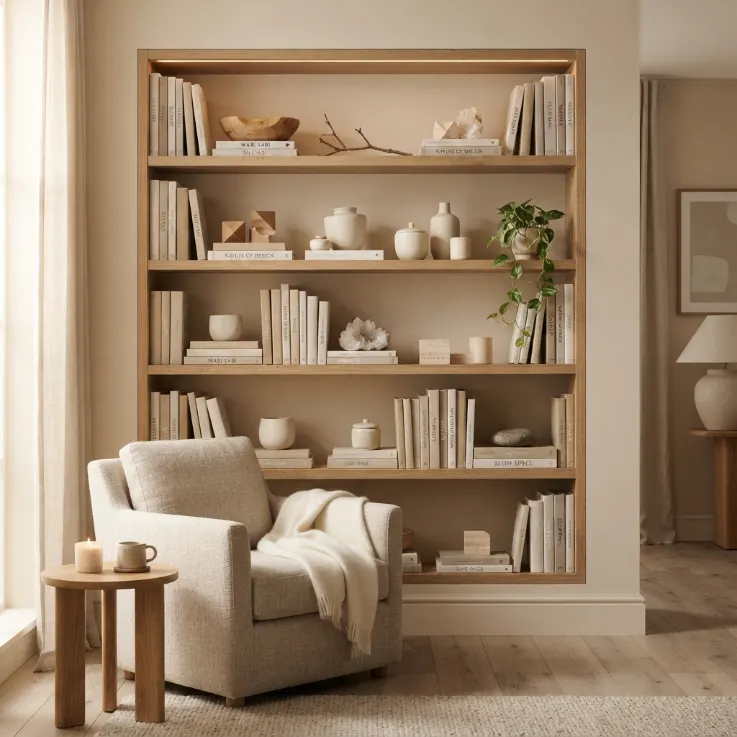
Neutral shelves can be incredibly warm if you mix enough texture.
Use books with cream or tan covers, natural wood, stone, linen, matte ceramics, and soft greenery. Vary the shapes so the shelf does not become one flat beige block.
A neutral palette is especially useful if the room already contains colorful furniture or artwork. The bookcase can then act as a quiet background.
Homesifying’s Minimalist Decor Ideas offers another useful reference for using restraint without making a home feel empty.
17. Make a Maximalist Shelf Feel Organized
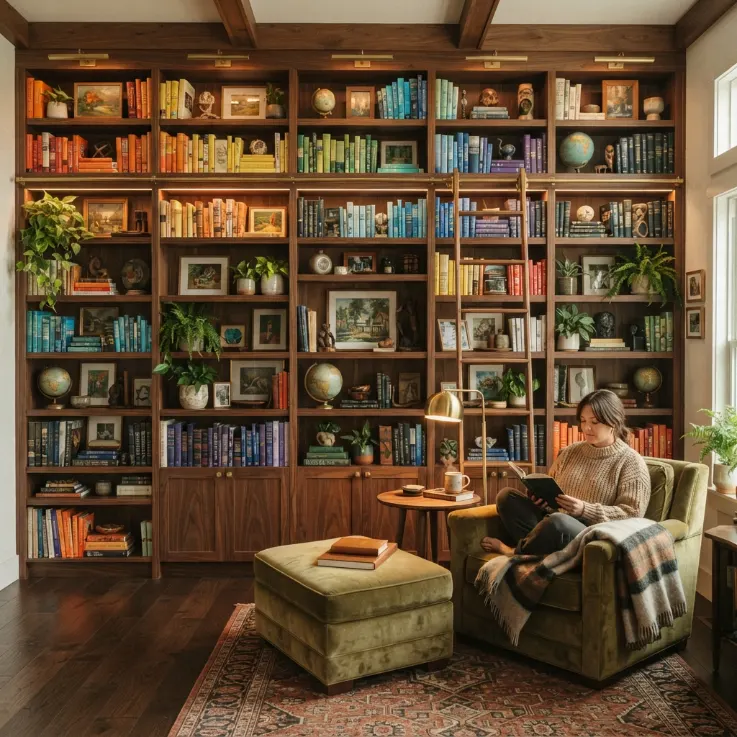
You do not have to choose minimalism. A full bookshelf can feel rich and interesting if there is repetition within the variety.
Repeat a few colors, materials, or shapes across the entire unit. Group books in different orientations, then add artwork, plants, ceramics, and personal objects between them.
Avoid filling every compartment equally. A few quieter sections will make the fuller areas feel intentional.
These bookshelf styling ideas are especially useful for home libraries where the books themselves are part of the visual character.
18. Give a Small Corner Shelf a Clear Focal Point
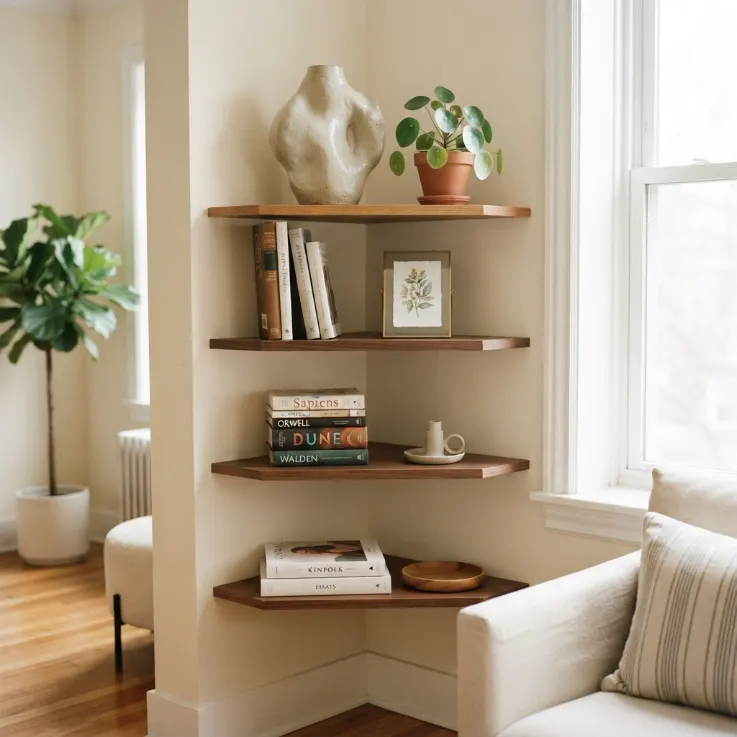
Small shelves need editing even more than large ones. Choose one focal object for the top or most visible section, then keep the surrounding pieces simple.
A small plant, sculptural vase, framed print, or stack of favorite books can become the anchor. These bookshelf styling ideas keep the focal point clear without making a small shelf feel busy.
Repeat one or two materials below it. For example, use wood, cream ceramic, and a little greenery throughout the unit.
This prevents a small shelf from becoming a random collection of tiny objects.
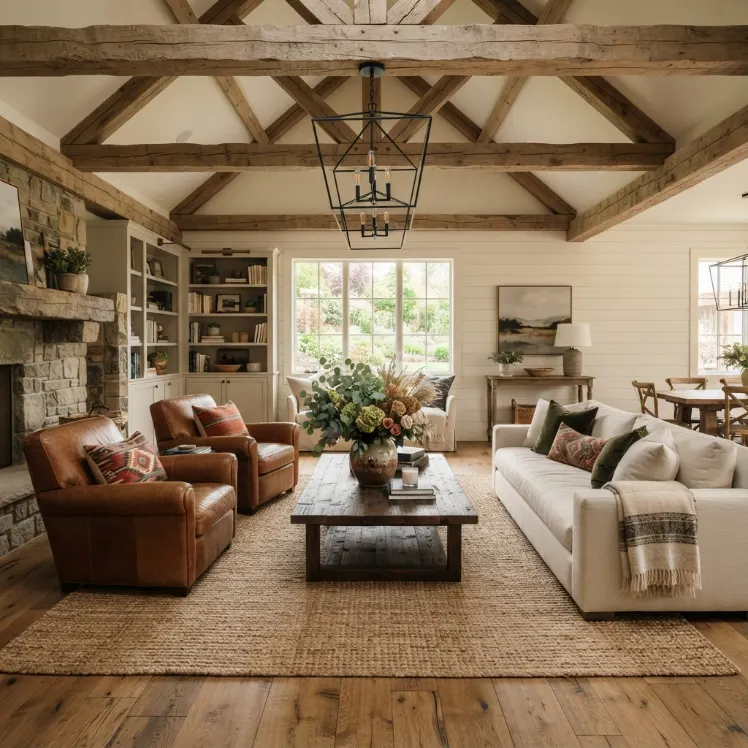
19. Style a Fireplace Bookshelf With More Warmth
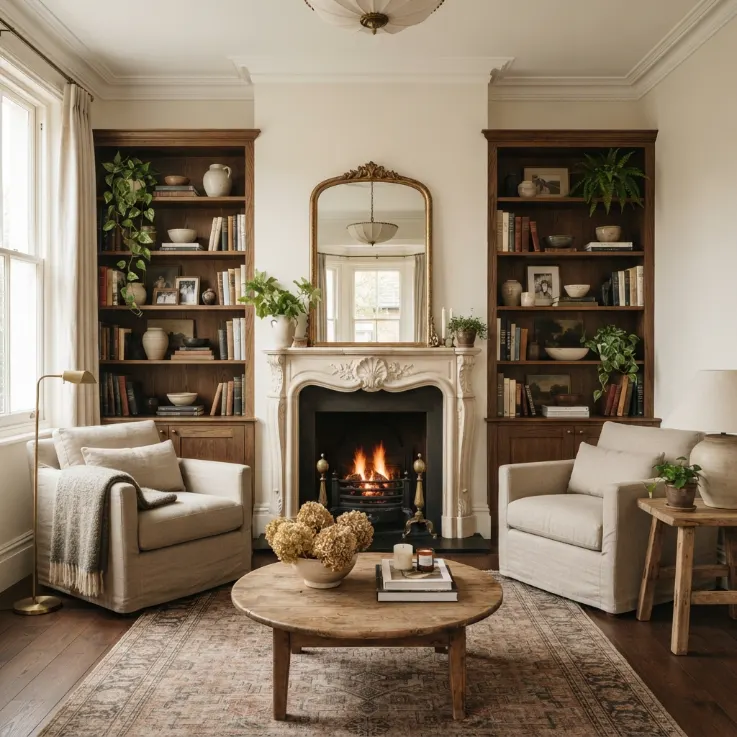
Built-in shelves around a fireplace already have a strong architectural presence. The styling should support that structure rather than fight it.
Use books, artwork, ceramics, and greenery in loose groups. Keep the largest visual pieces closer to the center or lower sections, depending on the fireplace design.
If the fireplace surround has strong color or texture, simplify the shelves around it. If the fireplace is plain, the shelves can carry more personality.
The result should feel connected from floor to ceiling rather than like separate decorative zones.
20. Finish With a Personal Shelf That Tells Your Story
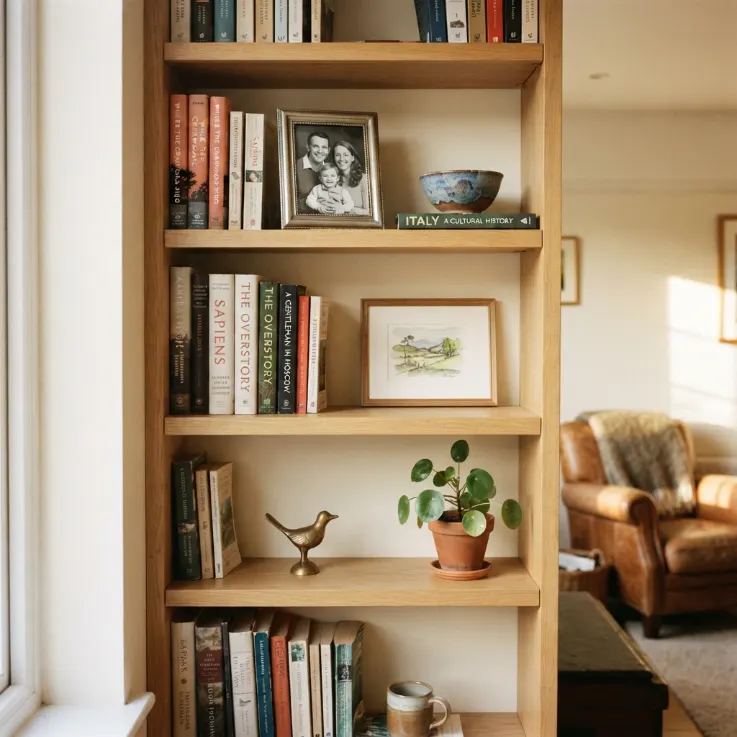
The most memorable shelves usually contain things that mean something. A travel book, family photo, handmade bowl, inherited object, or small piece of art can make the arrangement feel like a home rather than a showroom.
Choose a few personal pieces and give them room. They do not need to be expensive or perfectly coordinated.
This is where the best bookshelf styling ideas become personal. Start with what you actually love, then use spacing, height, color, and texture to make those pieces work together.
Frequently Asked Questions About Bookshelf Styling Ideas
How do I make my bookshelf look professionally styled?
Start by removing everything and grouping your books and decor separately. Put the books back first, using both vertical and horizontal arrangements. Then add a few objects at different heights and leave some open space between groups.
How many decorative items should I put on a bookshelf?
There is no fixed number. The size of the shelves matters more than the item count. A small shelf may need only three or four objects, while a large built-in can support more. Stop adding pieces once the arrangement begins to feel crowded.
Should books be arranged by color?
They can be, but they do not have to be. Color grouping works well if you want a calmer appearance. If you prefer a more natural library feel, mix the colors and use artwork, plants, and objects to create balance.
How do I style a bookshelf without buying new decor?
Shop your own home first. Move vases, frames, baskets, plants, bowls, and books from other rooms. Try several combinations before buying anything. Changing the arrangement can make familiar objects feel completely different.
What should I put on top of a bookshelf?
A taller object can work well, especially if the bookcase is visually plain. Try a plant, large vase, framed artwork, or sculptural piece. Make sure the item is stable and does not look too heavy for the furniture.
How often should I restyle my bookshelf?
There is no need to change it constantly. Seasonal changes can be enough. You can swap a few books, artwork, textiles, or natural elements while keeping the main arrangement intact.
Conclusion: The Best Bookshelf Styling Ideas Leave Room to Breathe
A beautiful bookshelf is not created by filling every empty spot. It comes from giving books, objects, artwork, and personal pieces enough space to work together.
Start with what you already own. Group similar colors, mix vertical and horizontal books, vary heights, add a little greenery, and leave some shelves quieter than others. Those simple bookshelf styling ideas can make a bigger difference than a cart full of new accessories.
If the shelf feels crowded, remove something. If it feels flat, add texture or change the height of one group. If it feels impersonal, bring in something that has a story behind it.
That is the real value of thoughtful bookshelf styling ideas. They do not require a huge budget or a perfect collection of decor. They simply help you arrange ordinary things in a way that feels balanced, useful, and unmistakably yours.