Birdcage Decor Ideas: 17 Stylish Ways to Make Decorative Cages Feel Intentional
Birdcage decor has moved far beyond its old garden-party image. A decorative cage can become a striking centerpiece, a soft wall accent, or a tiny display that gives an overlooked corner some character. The difference between charming and cluttered usually comes down to one thing: how the pieces inside and around the cage relate to each other.
The strongest birdcage decor ideas use the cage as a frame rather than treating it as the entire decoration. That simple shift makes the arrangement feel considered. You can bring in flowers, books, greenery, candles, seasonal accents, or even leave parts of the cage empty. In my experience, leaving a little breathing room often makes the finished display look more expensive.
If your home leans romantic, cottage-inspired, vintage, rustic, or eclectic, these ideas give you practical ways to style a decorative cage without making it feel random.
1. Let a Hanging Birdcage Hold Trailing Greenery
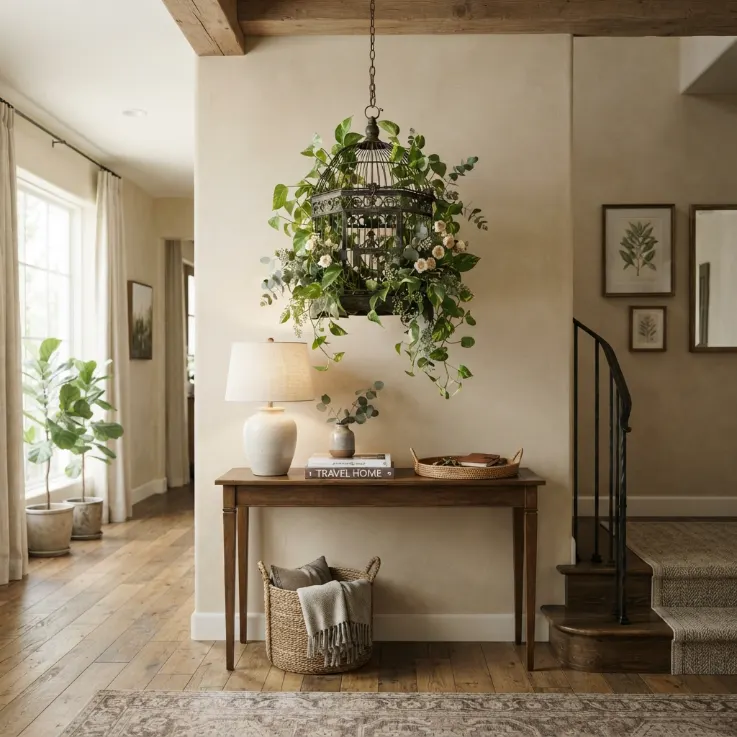
A hanging cage becomes instantly softer with trailing greenery. Choose vines that fall through the bars and extend slightly beyond the bottom edge. Pothos, ivy, eucalyptus stems, or realistic faux greenery can all work.
Keep the center fairly open so the metal shape remains visible. Add a few small flowers only where you need color. This is one of the easiest birdcage decor ideas for an entryway, covered porch, or sunny reading corner.
2. Create a Vintage Floral Centerpiece

For a dining table or console, use a vintage-style cage as the frame for a compact floral arrangement. Cream, blush, dusty rose, and muted green create a soft palette that works especially well with brass or aged gold finishes.
Instead of filling every opening, allow a few stems to cross the bars naturally. Place the tallest flowers slightly off-center. The small imbalance keeps the display from looking stiff.
3. Build a Rustic Garden Scene

A larger decorative cage can hold a miniature garden scene using moss, twigs, small pots, stones, and a few delicate flowers. Start with a low base and build upward gradually.
Give the eye three levels to explore: something low, something in the middle, and one taller focal element. This creates depth without requiring a large collection of accessories.
4. Turn a Blank Wall Into a Botanical Display

Several cages can work together as a wall arrangement. Mix two or three sizes, then repeat one visual element such as greenery, a black finish, or an aged metal texture.
Do not space every piece at identical distances. A relaxed arrangement feels more like collected home decor and less like a store display. This is especially useful above a console or along a narrow wall that needs texture.
5. Add a Tiny Fairy Garden Inside
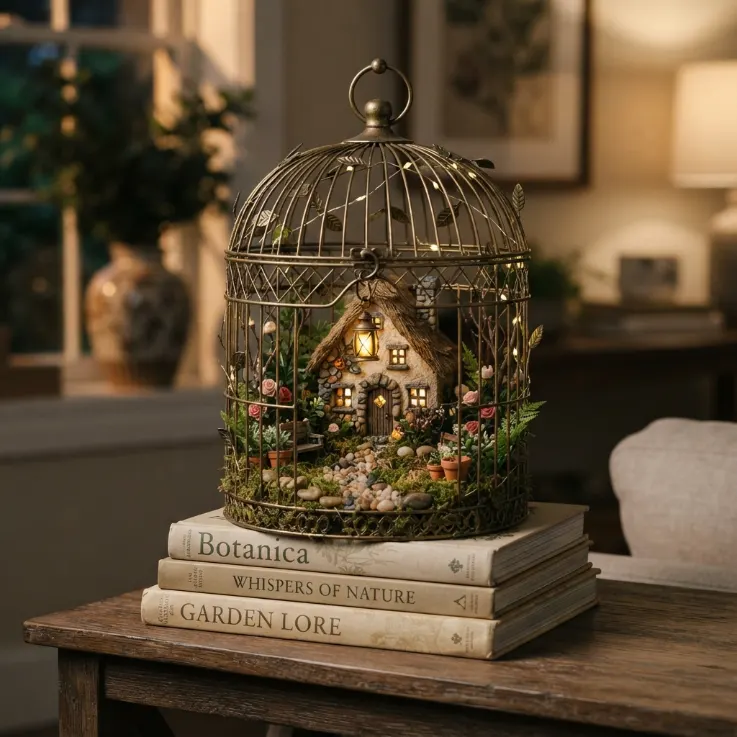
A miniature fairy garden gives a decorative cage a playful purpose. Use a tiny house, moss, pebbles, miniature plants, and one small focal object.
Scale matters here. If the accessories are too large, the miniature setting loses its charm. Keep most pieces low and let one small structure provide the vertical focus. Warm micro lights can add a gentle glow after sunset.
6. Use a Birdcage as a Candle Lantern

For a cozy evening arrangement, place battery-operated candles inside a cage. Flameless candles are the practical choice because the metal enclosure can make access and ventilation awkward for real flames.
Choose warm white light rather than bright white. The goal is a soft glow that emphasizes the cage’s curves and creates small shadows on the nearby wall or table.
7. Style One With Dried Flowers

Dried flowers are ideal if you want a display that lasts longer than fresh stems. Pampas grass, bunny tails, dried hydrangeas, wheat stems, and preserved foliage can create a relaxed arrangement.
Keep the color range restrained. Natural beige, cream, tan, and soft brown work beautifully with aged metal. This approach is also easy to refresh as the seasons change.
8. Make a Dark Cage Feel Moody and Sophisticated
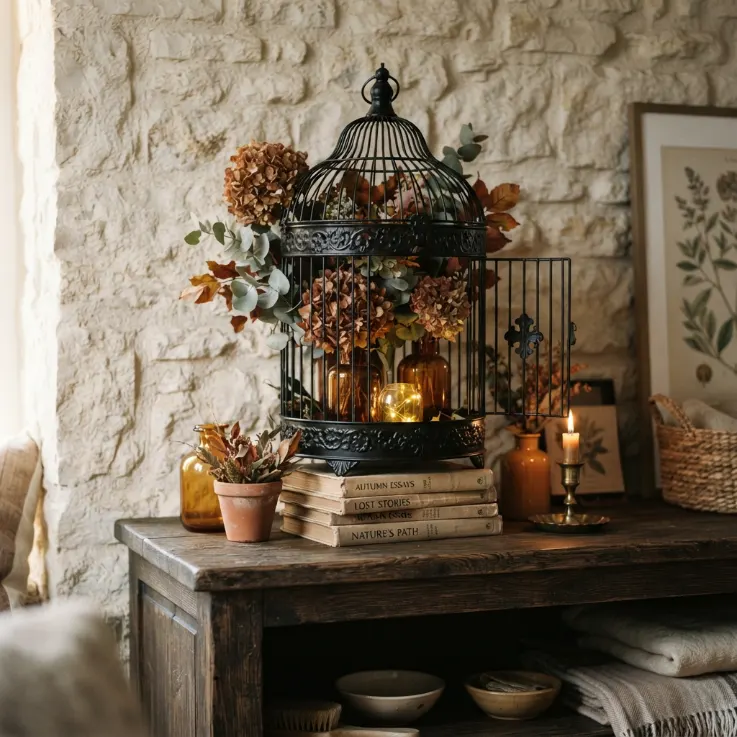
A black or charcoal cage can become a dramatic focal point without making the room feel heavy. Pair it with warm-toned flowers, amber glass, old books, or muted autumn accents.
Place the arrangement against a lighter wall or near natural wood so the dark metal has contrast. One strong focal color is usually enough. Too many competing colors can make the display lose its calm quality.
9. Try an Asymmetrical Floral Arrangement

Not every arrangement needs to sit neatly in the center. Let flowers and greenery lean toward one side of the cage, creating a clear direction for the eye.
Choose one dominant side first, then balance it with a smaller detail on the opposite side. This gives you the relaxed look of natural growth while keeping the composition controlled.
10. Use a Small Cage on a Stack of Books
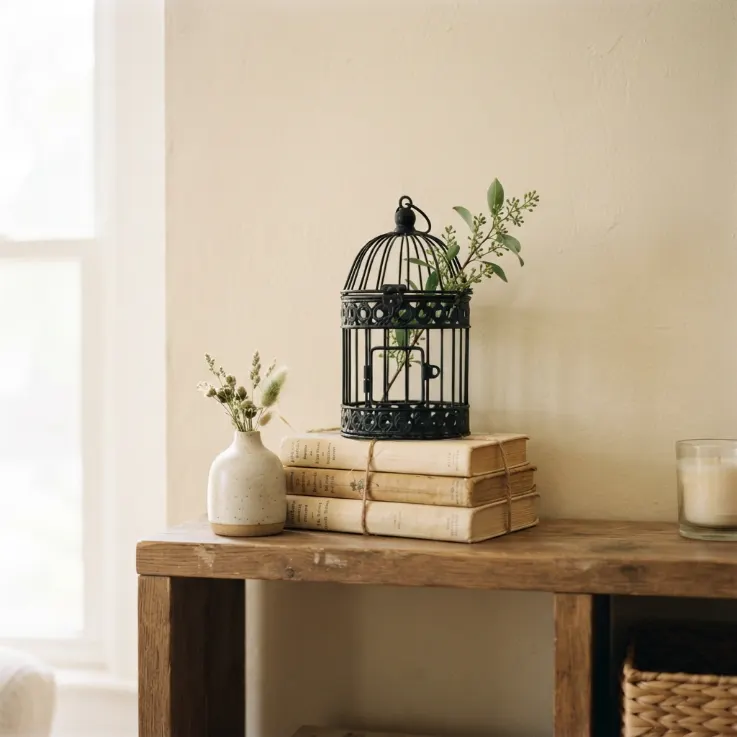
A tiny decorative cage can look surprisingly polished when placed on a stack of books. Add one small botanical element inside and keep the surrounding surface quiet.
The books create height, while the cage adds a delicate architectural shape. This works on bedside tables, bookshelves, office shelves, and console tables where a full centerpiece would take up too much space.
11. Create a Soft Romantic Table Display

For a romantic dining setting, combine a pale cage with linen, glassware, soft flowers, and a few understated metallic details. Repeat one color from the cage somewhere else on the table so the arrangement feels connected.
A simple linen runner can provide enough texture beneath the display. Avoid placing several tall decorations around the cage, because the focal point can quickly become difficult to see.
12. Add Seasonal Details Without Rebuilding the Whole Display
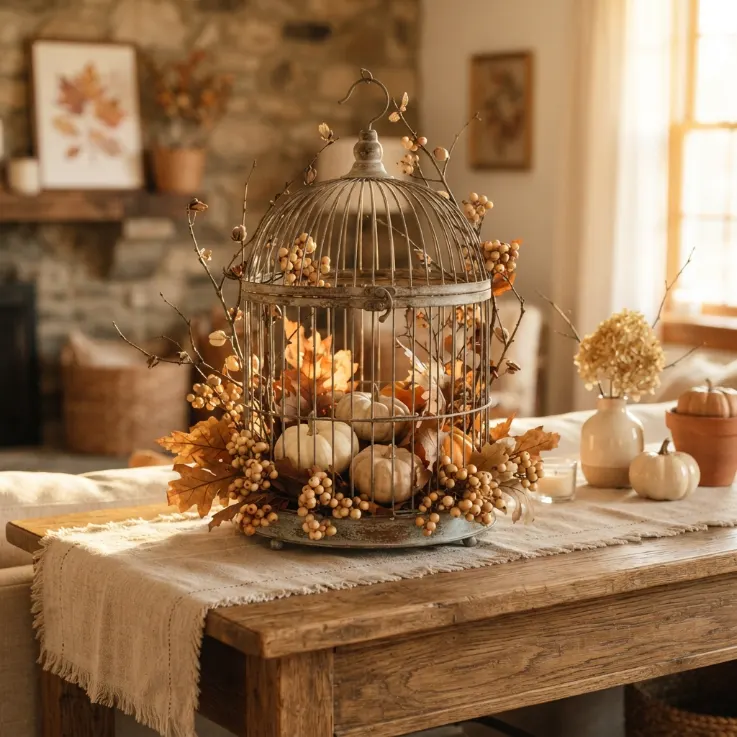
One reason birdcage decor ideas are useful is that the same base piece can change throughout the year. In spring, use small flowers and fresh-looking greenery. For autumn, switch to dried leaves, berries, and warm neutral accents. During winter, use pine branches, white berries, and soft lights.
Keep the cage itself unchanged. Swapping only the interior details saves storage space and helps the display feel familiar while still giving the room a seasonal update.
13. Frame a Small Collection of Favorite Objects
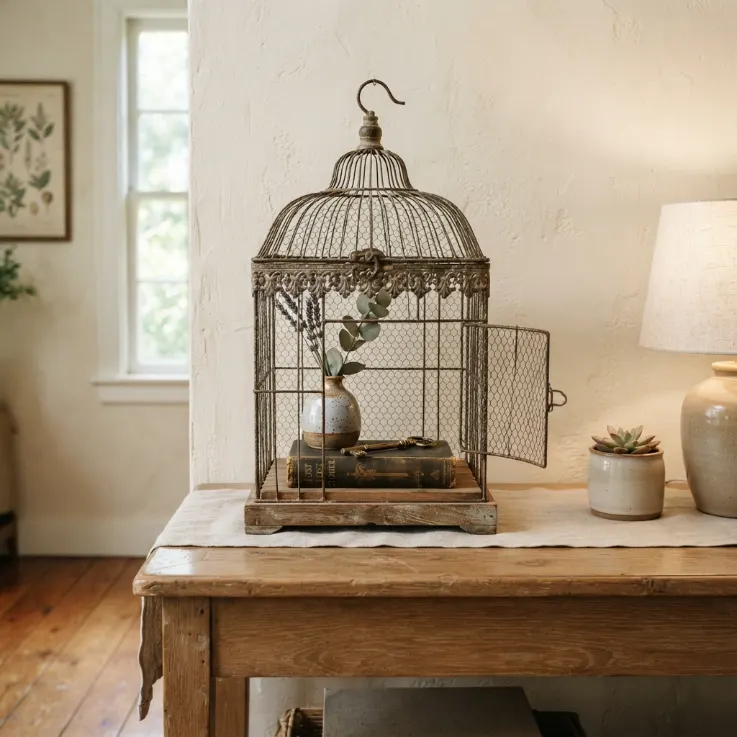
A cage does not always need plants or flowers. Use it to display a few objects that have personal meaning, such as a small ceramic piece, an old book, a decorative key, or a miniature vase.
Choose two or three related objects rather than filling the entire cage. The open bars already create visual detail, so a restrained interior usually looks stronger.
14. Pair Natural Wood With Aged Metal

One of the most reliable combinations is hard metal with warm natural wood. Place the cage on a wooden tray, console, stool, or dining table, then add soft greenery inside.
The contrast prevents the display from feeling too delicate. It also helps vintage-style cages fit into homes with modern furniture instead of looking like isolated antiques.
15. Hang a Cage Beside a Mirror

A small cage mounted or suspended beside a mirror can create a layered wall composition. The mirror reflects light and expands the visual field, while the cage adds texture.
Keep the two pieces connected through shape or finish. For example, a black cage can work beside a black-framed mirror, while an aged brass cage can repeat a brass detail elsewhere in the room.
16. Leave Part of the Cage Empty

This may be the most useful styling lesson of all. You do not have to fill every section. Empty space gives the eye somewhere to rest and allows the cage itself to remain visible.
Try placing the main object toward the lower third and leaving the upper section open. A few trailing stems can bridge the two areas without making the arrangement feel crowded.
17. Make the Cage the Quiet Focal Point
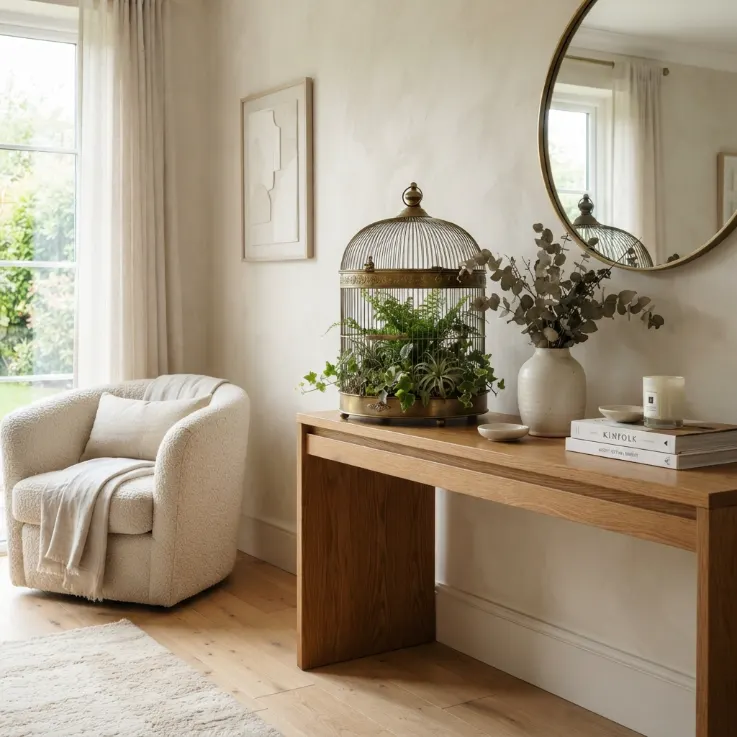
Sometimes the best arrangement is the simplest one. Use a beautifully shaped cage with one strong interior element, then let the surrounding room do the rest.
This approach works particularly well in small spaces. Instead of adding several small decorations, choose one piece with enough shape and texture to hold attention. The result feels intentional without requiring a large styling budget.
How to Make Birdcage Decor Look Intentional
The most successful birdcage decor ideas usually follow a few simple principles. Start with a focal point, then add supporting texture instead of collecting random objects. Repeat one color or material somewhere nearby so the cage belongs to the room.
Scale is just as important. A tiny cage can disappear on a large console, while a huge cage can overwhelm a narrow shelf. Step back after styling and check whether the cage feels proportional to the furniture around it.
Finally, think about negative space. Empty areas are part of the composition. They make flowers, greenery, lights, and decorative objects easier to appreciate.
Where to Use Decorative Birdcages at Home
A decorative cage can work in more places than a dining table. Try one on an entry console, kitchen shelf, fireplace mantel, bedroom dresser, covered patio, sunroom, or living room bookcase.
If your style is already calm and minimal, use one simple cage as a focal accent. If your room is more eclectic, a small collection of cages can create a stronger visual story. For another calm decorating approach, see our minimalist decor ideas.
You can also borrow the same balance of natural materials and soft textures used in Japandi living room design. The cage does not have to look traditionally vintage. A simple black or natural metal version can fit into a quieter modern room when paired with restrained greenery.
Common Birdcage Styling Mistakes to Avoid
The first mistake is filling the cage simply because there is empty space. A decorative cage needs breathing room. The second is mixing too many unrelated colors, which makes the display look busy instead of collected.
Another common issue is ignoring the background. A detailed cage against a heavily patterned wall can become difficult to read. Give the piece enough visual contrast to stand out.
Finally, consider safety. Keep real flames away from dry flowers, paper, fabric, and other flammable materials. Battery-operated lights are a safer option for enclosed decorative displays.
Frequently Asked Questions About Birdcage Decor Ideas
What can I put inside a decorative birdcage?
You can use flowers, faux greenery, dried stems, books, candles with suitable safety precautions, miniature garden pieces, seasonal accents, or a small collection of meaningful objects. Choose items that suit the size of the cage and leave some open space.
How do I make a birdcage look less cluttered?
Start with one focal object and add only a few supporting pieces. Use a limited color palette, vary the heights slightly, and leave visible empty sections between objects.
Can birdcage decor work in a modern home?
Yes. Choose a simple cage with clean lines and pair it with restrained greenery, natural wood, ceramic pieces, or neutral textiles. The surrounding materials can make a vintage-inspired object feel appropriate in a modern room.
Where should I place a decorative birdcage?
Good locations include entry consoles, dining tables, shelves, mantels, bedroom dressers, covered patios, and sunrooms. Choose a spot where the cage has enough surrounding space to remain visually clear.
How often should I change the styling?
There is no fixed schedule. Seasonal changes are an easy reason to refresh the interior, but a simple arrangement can stay in place for months if it still works with the room.
Conclusion
Good birdcage decor is less about filling a cage and more about creating a small composition. Start with one focal element, add texture carefully, repeat a color or material from the room, and keep enough empty space for the structure to remain visible.
Whether you prefer flowers, greenery, dried stems, candlelight, or tiny collected objects, a decorative cage can give an ordinary surface a distinct point of interest. The goal is not to make the cage louder. It is to make the whole arrangement feel like it belongs there.