Coffee Table Decor Ideas That Look Styled, Not Staged
The short answer to styling a coffee table: give it three things — something tall, something flat, and something that gathers the rest together. A tall vase of branches, a stack of books, and a tray to corral the smaller pieces will make almost any coffee table look finished, and it leaves enough room for real life. The rest is just choosing which materials and shapes suit your living room.
Below are 12 designer-tested coffee table decor ideas that work with rectangular, round, small, and two-tier tables alike. Each one keeps the table functional while making it look like someone with very good taste lives there. And because a coffee table is the anchor of a cozy living room, getting this one surface right lifts the whole room.
1. Start With the Three-Part Formula
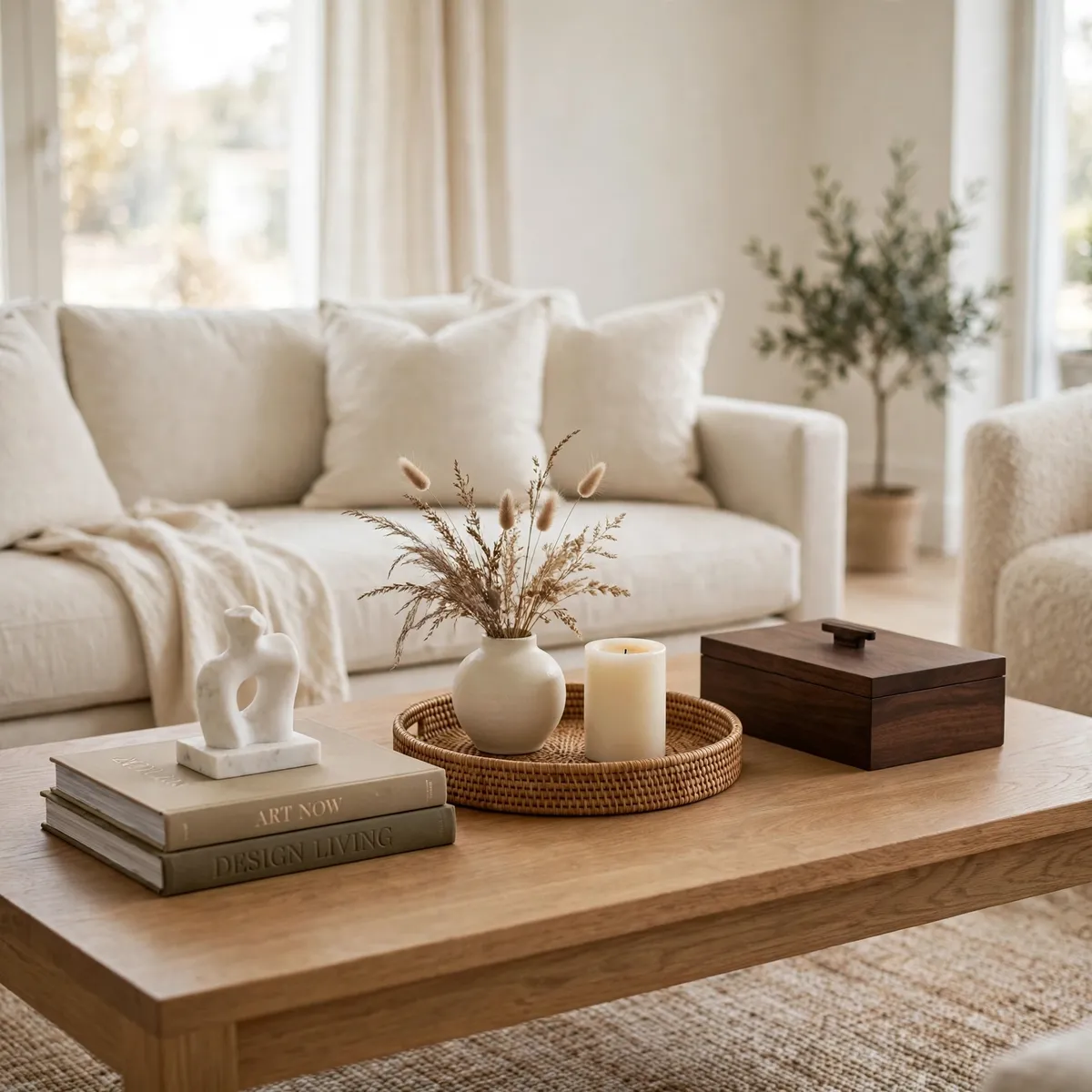
If styling ever feels overwhelming, memorize this: books, tray, box. A low stack of books anchors one end of the table and gives smaller objects something to sit on. A tray in the middle gathers loose items — a candle, a small vase, a dish for keys — into one tidy vignette. And a lidded box at the other end swallows the clutter of daily life, like remotes and chargers, without looking like storage.
The reason this formula works is proportion: the table gets divided into three zones instead of scattered into five or six lonely objects. Designers rely on it because it reads as intentional from every angle of the room, and it’s forgiving — almost any three beautiful objects you already own will fit the roles. Once the zones are set, styling the table stops being a puzzle and becomes a five-minute arrangement.
Quick tips
- Make the book stack two or three books thick — one book looks like an afterthought.
- Choose a box with a lid, not an open basket, so the clutter stays invisible.
- Leave at least a third of the tabletop empty for drinks and daily use.
2. Corral Everything With a Tray
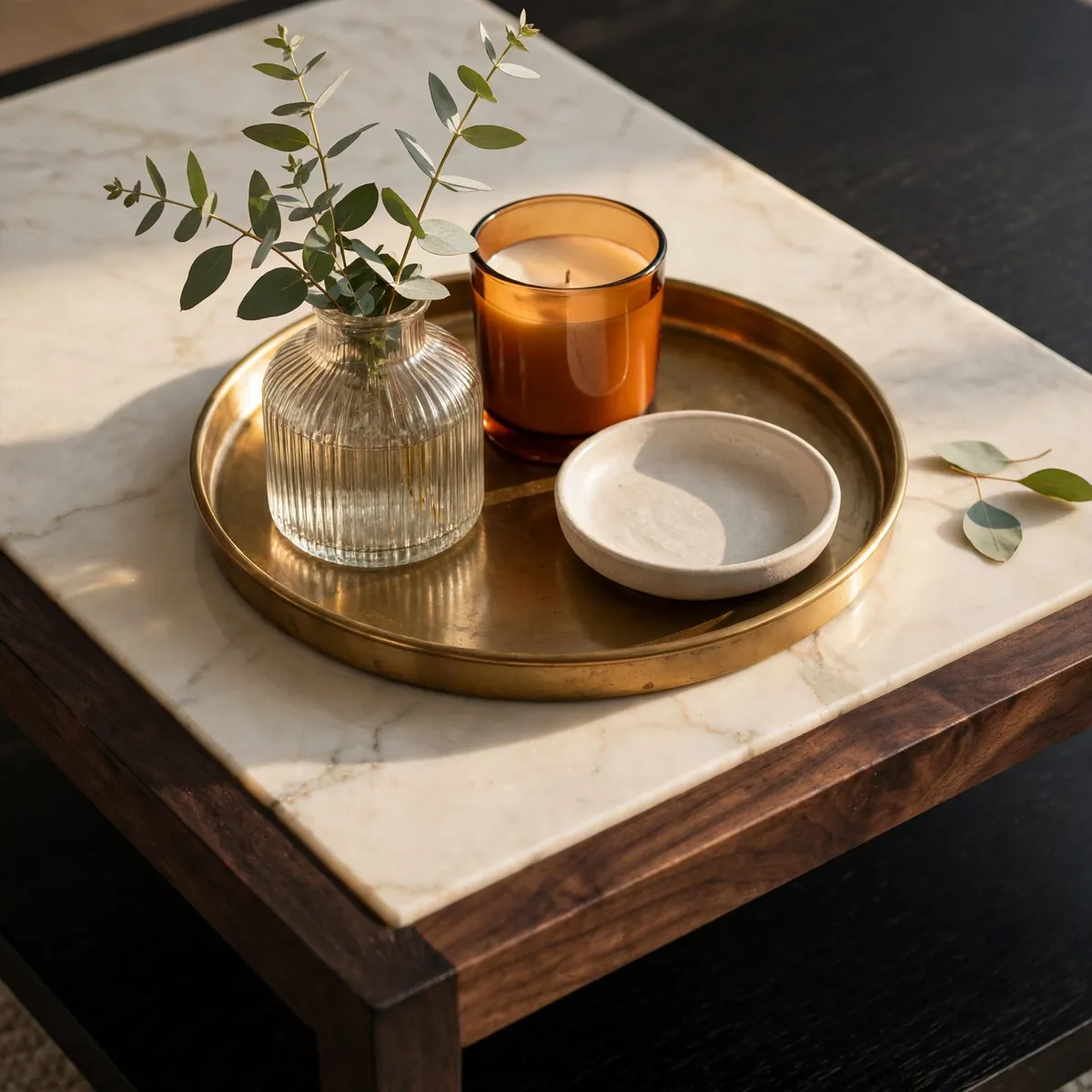
A tray is the single fastest fix for a messy-looking coffee table. Small objects scattered across a big surface read as clutter, but the same objects inside a tray read as a vignette. Trays also do practical work: you can lift the whole thing off when guests arrive, wipe the table underneath, and set it back down without re-styling a thing.
Quick tips
- Pick a tray in a contrasting material — brass on marble, rattan on dark wood — so it stands out as its own layer.
- Group three to five small items inside; an empty tray looks unfinished.
- A tray with handles is easier to move and doubles as a serving piece.
3. Use the Rule of Three and Vary the Heights
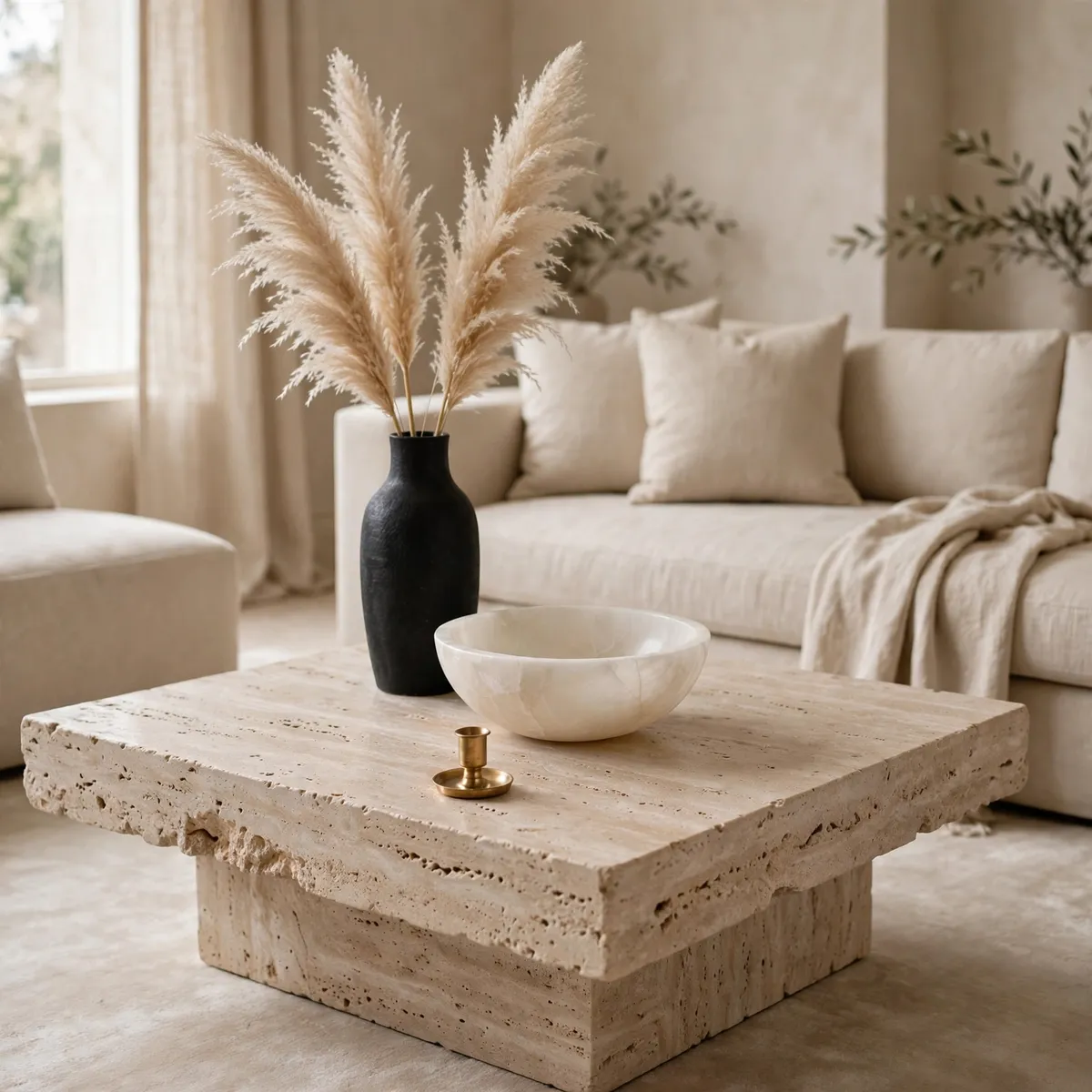
Decorators lean on the rule of three because the eye finds odd numbers more interesting than even ones. On a coffee table that means three objects, or three groupings, arranged at three different heights: something tall (a vase with branches), something medium (a bowl or stack of books), and something low (a candle or small dish). The height variation is what makes the arrangement feel layered instead of flat.
Place the tallest piece slightly off-center — dead center looks formal and stiff — and let the other pieces step down from it like a staircase. This trick alone can rescue a table full of beautiful objects that somehow look dull, because the problem is almost always that everything sits at the same height.
Quick tips
- Books count as height-builders: stack objects on top to create mid-levels.
- Don’t overthink the count — three heights matters more than exactly three objects.
- Step back and squint: if the silhouette looks like a flat line, add height.
4. Let Books Do the Heavy Lifting
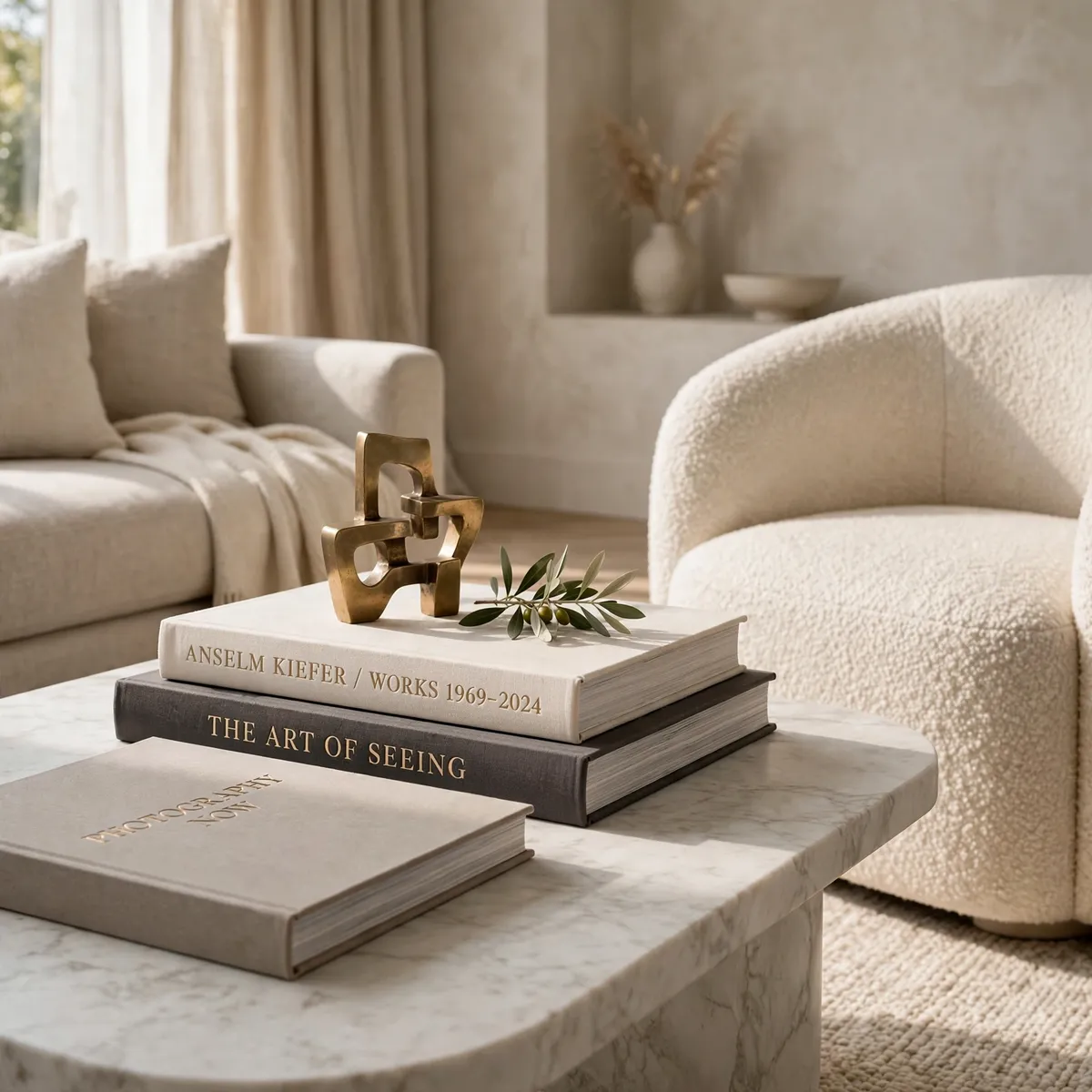
Coffee table books earned their name for a reason: a stack of two or three large books is the easiest base layer in decorating. They add weight and color, they can be chosen to show your interests, and they raise smaller objects to eye level so nothing disappears against the tabletop.
The books themselves should be big — standard novels are too small for the job. Choose covers whose colors flatter your room, and don’t be afraid to turn a book so the spine faces whichever direction looks best. A small sculpture, a candle, or a sprig of greenery on top of the stack turns the pile into a pedestal for something you love.
Quick tips
- Stack largest book on the bottom, smallest on top — like a pyramid.
- Two stacks on a long table, one on a small table.
- Rotate covers seasonally for a free refresh.
5. Mix Something Vintage With Something Modern
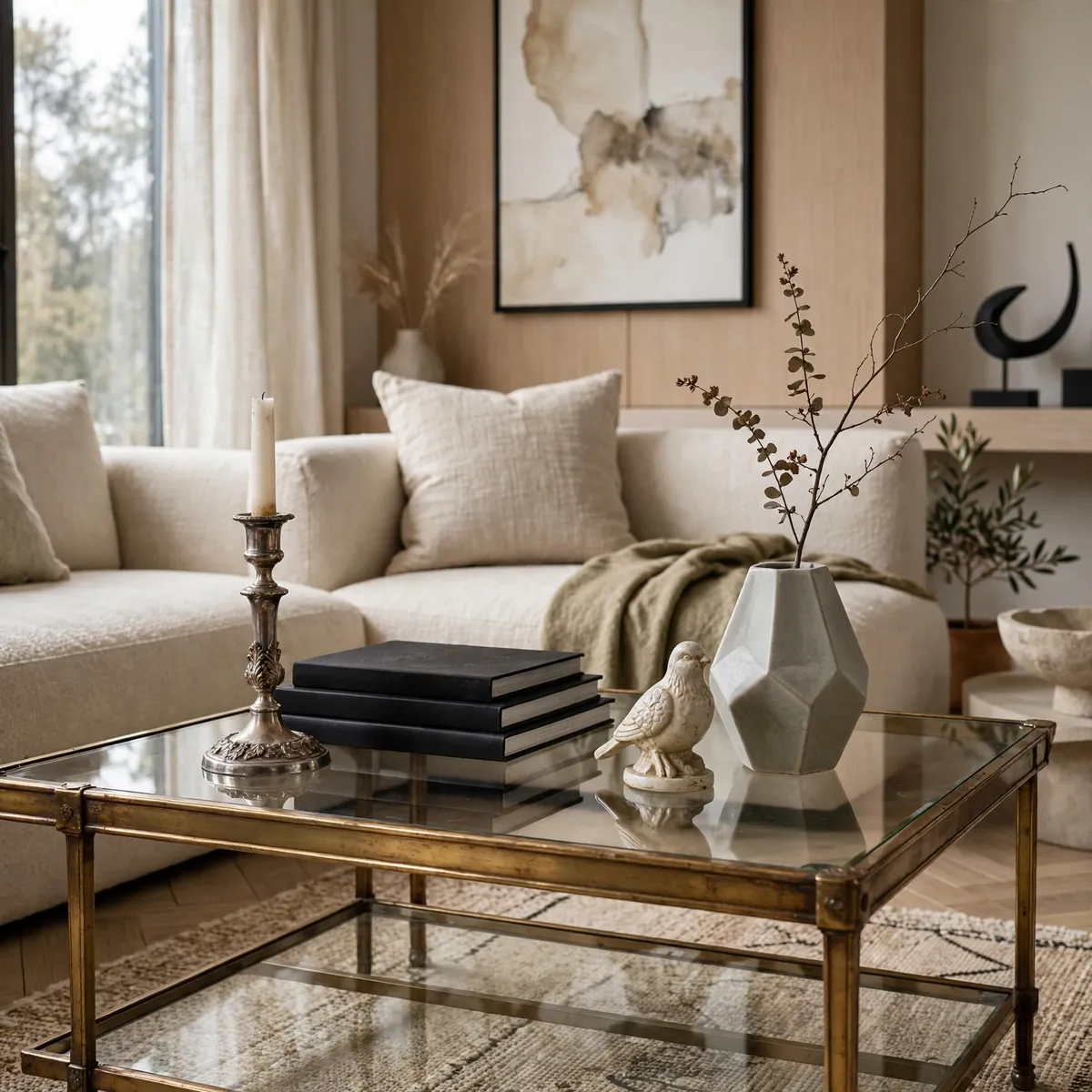
A coffee table styled entirely from one era can feel like a showroom. The rooms that get complimented most pair a sleek modern piece — a geometric vase, a minimalist book — with something that has a past: a brass candlestick from a flea market, a carved wooden bowl, a vintage figurine. The contrast gives the tabletop character and makes it look collected rather than purchased in one trip. One or two vintage pieces is the sweet spot; more than that and the table starts telling someone else’s story instead of yours.
Quick tips
- Vintage brass and silver work with almost any modern material.
- Keep vintage pieces small so they read as accents, not the main event.
- Thrift stores and antique markets are the best sources — look for interesting shapes first.
6. Bring in Greenery or Dried Branches
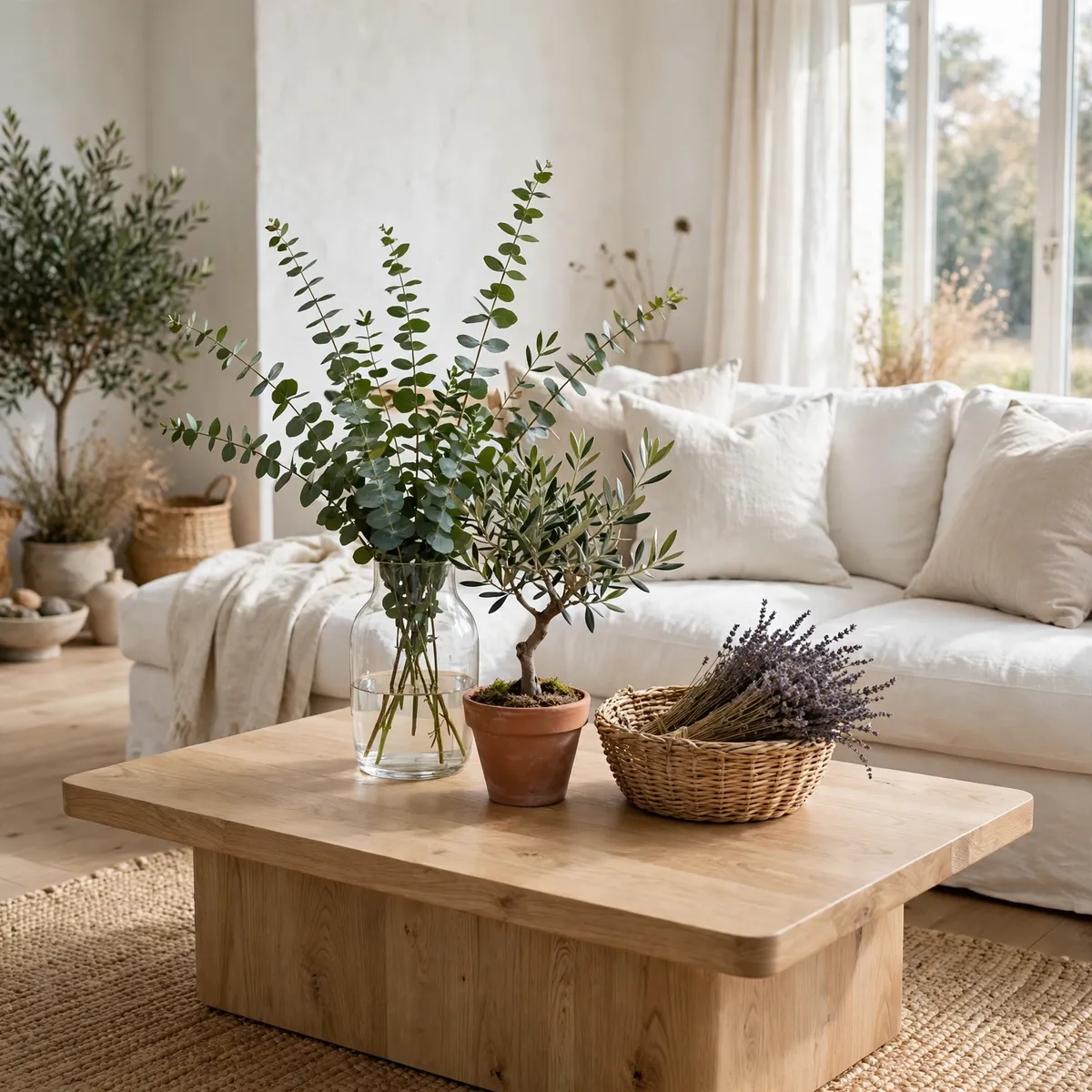
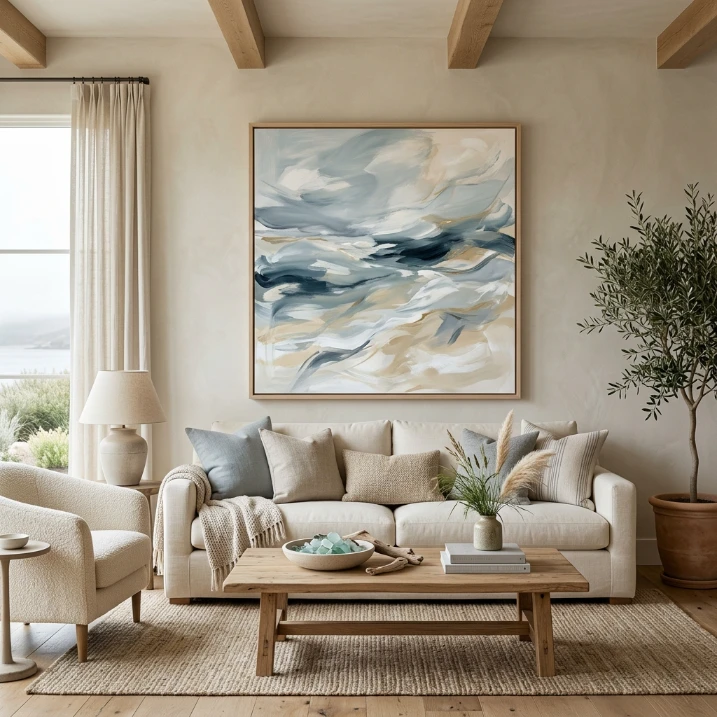
Something living — or something that was living — keeps a styled table from feeling static. A clear vase with eucalyptus branches, a small potted olive tree, or a bundle of dried pampas grass adds height, texture, and a bit of movement. Fresh stems need water and weekly replacing, which is a chore many people skip; dried branches and grasses give the same soft silhouette and last for months. If you go fresh, choose one generous stem arrangement rather than several tiny sprigs — scale matters more than variety on a low table.
Quick tips
- Dried grasses and branches last months; fresh stems last a week.
- Tall stems belong off-center, angled slightly so they don’t look like an antenna.
- Keep leaves and branches well above the sightline of the sofa so they don’t block conversation.
7. Add Candlelight for Instant Warmth
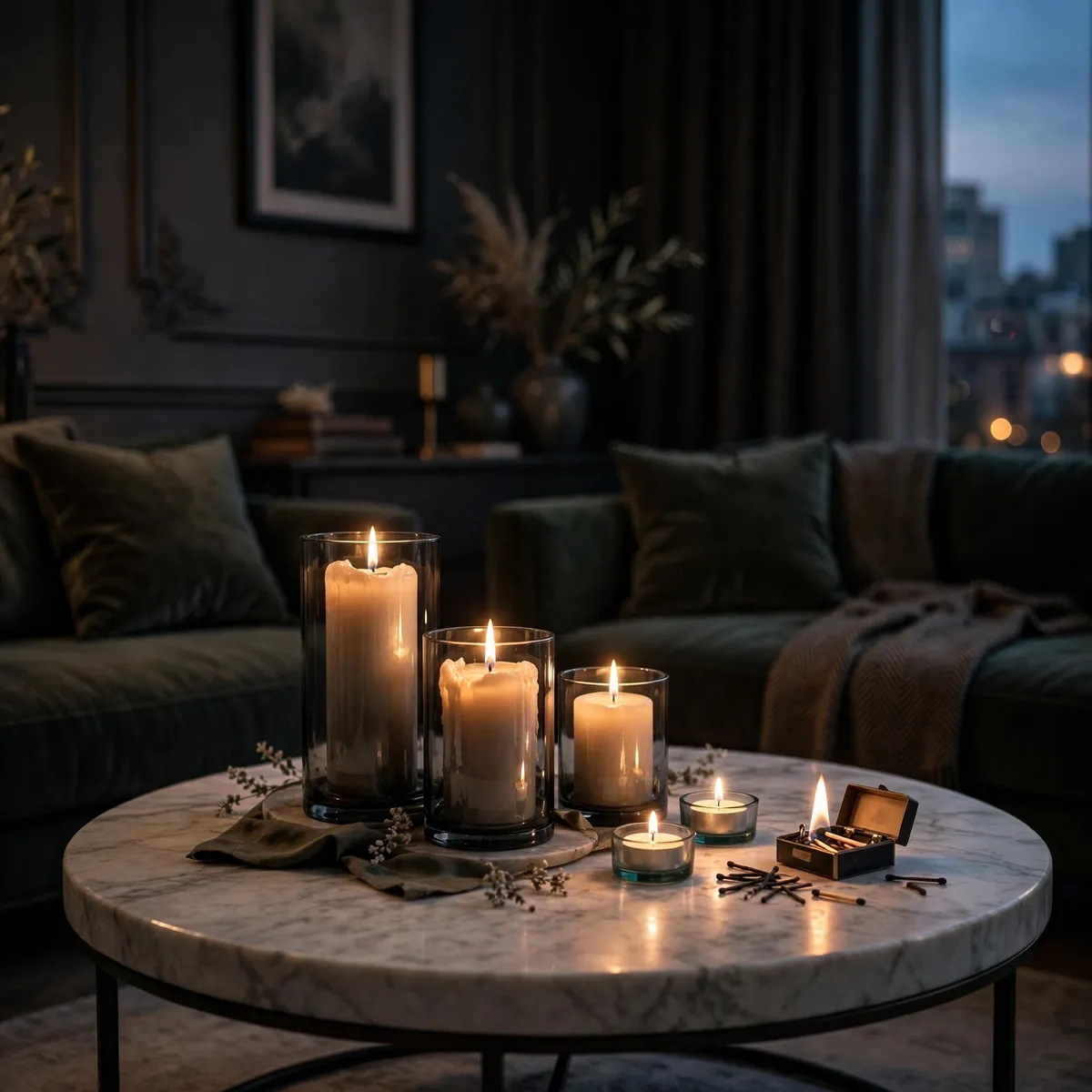
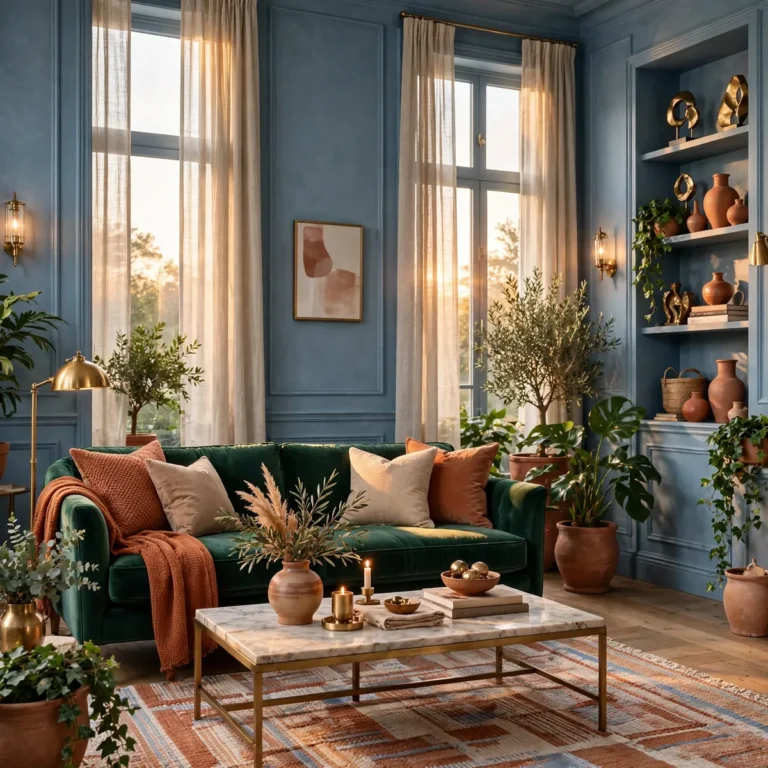
Candles do for a coffee table what good lighting does for a photograph: everything looks better. A cluster of candles in different heights — pillar candles in glass hurricanes, a couple of tea lights, a scented candle with a beautiful vessel — adds glow and scent at once. Group them in odd numbers and vary the heights the same way you would any other objects. In the daytime they read as sculptural; at night they become the whole mood of the room. Flameless LED candles have become genuinely convincing and are worth considering if the table sits within reach of children or pets.
Quick tips
- Unscented pillars for looks; one scented candle for fragrance — two competing scents clash.
- Stick to one candle color family (all white, all amber) for a calm look.
- Trim wicks and keep candles away from branches and dried grasses.
8. Lean Into Natural Stone and Wood
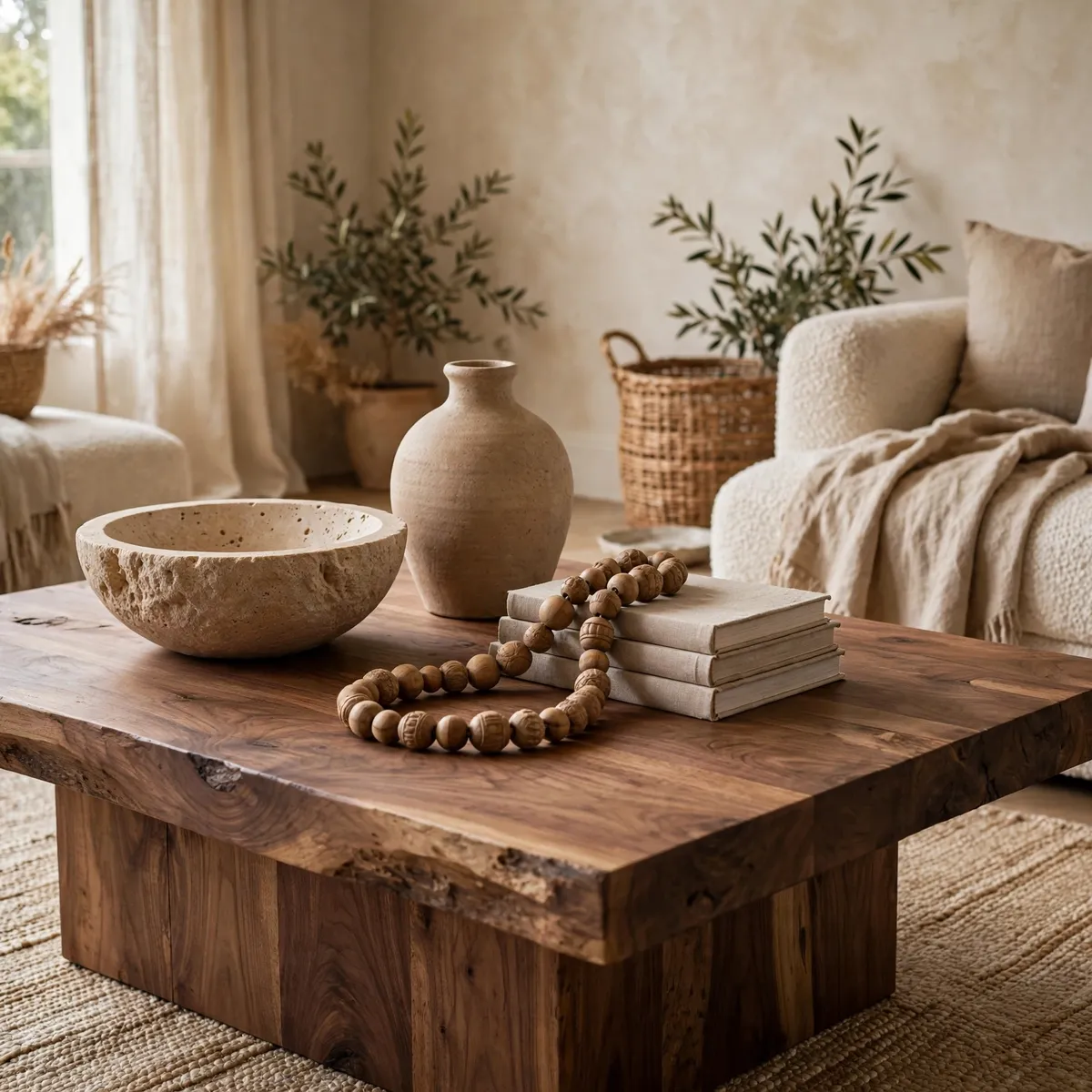
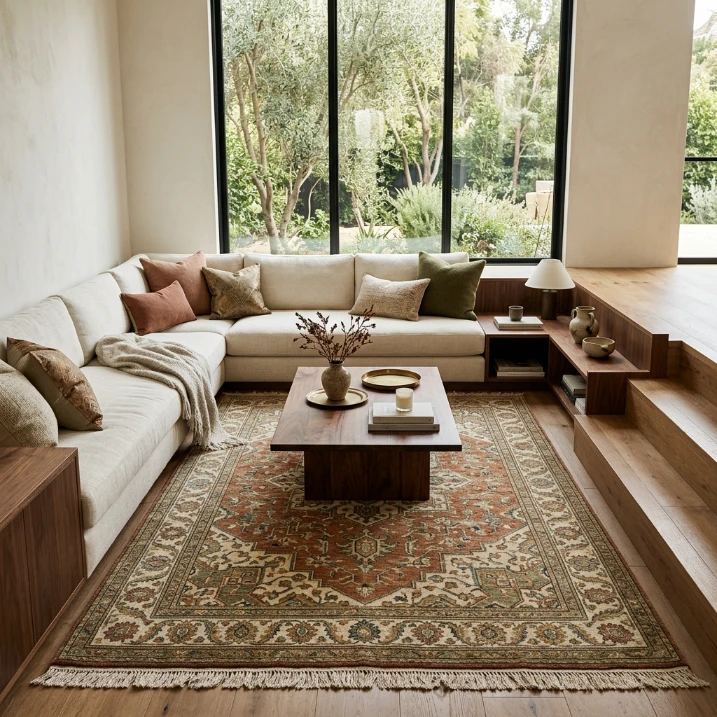
The current direction in coffee table styling is unmistakably organic: travertine and marble with visible veining, walnut and oak with visible grain, handmade ceramics with matte finishes. These materials add depth without adding pattern, so a table can feel rich while staying calm. A raw travertine bowl, a ribbed ceramic jug, or a carved wooden bead garland brings in texture that a glossy manufactured object can’t. Pair them with a sculptural piece — an abstract ceramic form or a hand-carved object — and the table gets a gallery-like focal point that still feels warm and natural.
Quick tips
- Mix no more than three material families or the table looks busy.
- Matte finishes photograph and read as more expensive than high-gloss ones.
- Natural stone bowls can double as catch-alls for keys and small items.
9. Coffee Table Decor Ideas for Round Tables
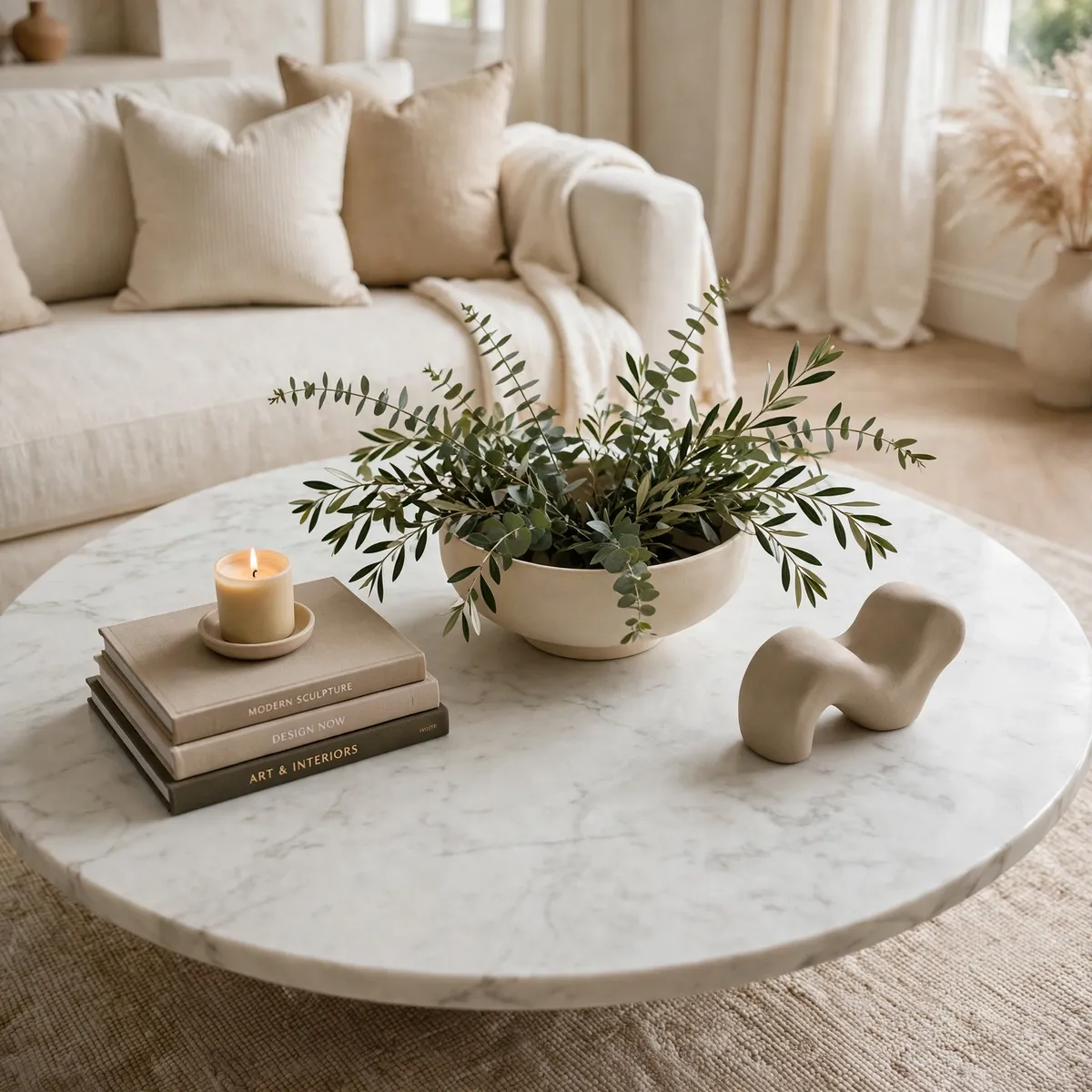
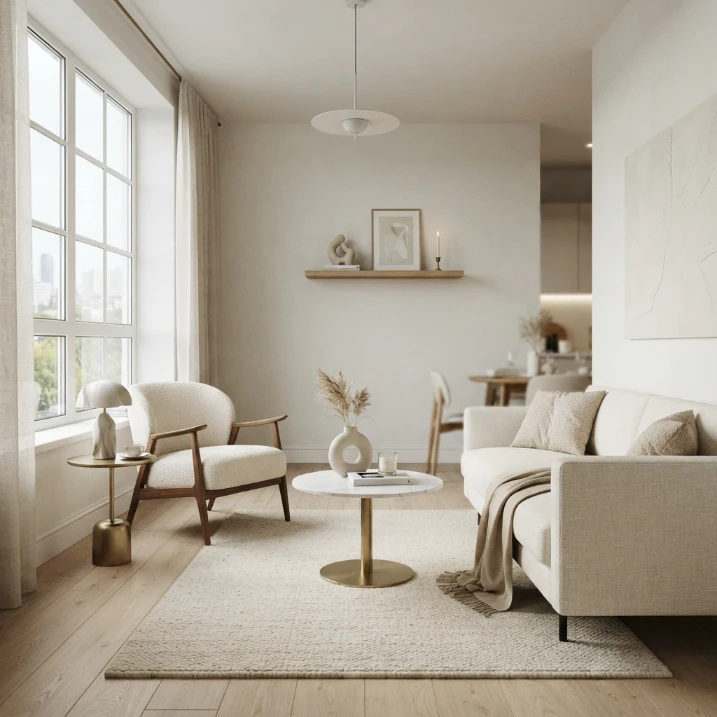
Round coffee tables need a different choreography than rectangular ones. On a rectangle, styling runs left to right; on a round table, it should radiate from the center. Start with one low, wide anchor in the middle — a shallow bowl, a low tray — and arrange smaller items around it in a loose curve, like petals around a center. Keep the overall silhouette low and soft: tall objects in the middle of a round table block the line of sight between people sitting opposite each other. Because the surface is smaller, restraint pays off — three to four pieces total is usually plenty.
Quick tips
- Center: one low, wide anchor (bowl or tray).
- Around it: two or three small objects following the table’s curve.
- Finish: one tiny vertical accent, like a small bud vase, kept low.
10. Don’t Forget the Bottom Shelf
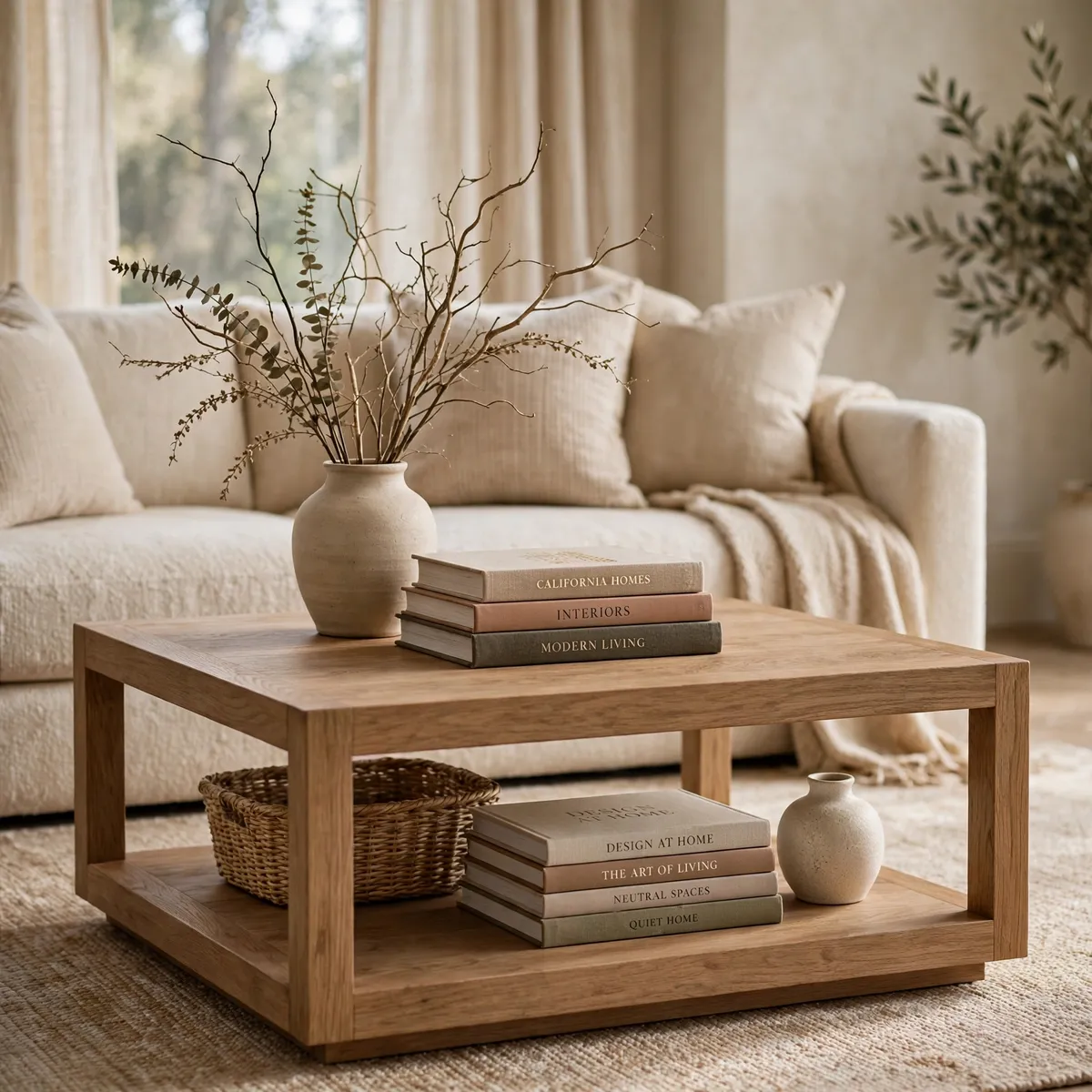
Two-tier coffee tables give you a second surface, and an ignored bottom shelf is a styling opportunity going to waste. Treat it with the same logic as the top but dialed down: a neat stack of books, a woven basket for throws or magazines, one small vase or object. The bottom shelf is also where practical things can live without cluttering the top — reading glasses, the remote, a charging cable tucked into a lidded box. Keep it airier than the top: the eye reads a crowded lower shelf as storage, not styling, so leave real breathing room between items.
Quick tips
- Baskets on the bottom shelf hide the mess while looking styled.
- Stack books horizontally in short, neat piles — never wedge them in vertically.
- One object on the bottom shelf can echo the top (same material or color) to tie the two levels together.
11. Keep It Functional for Everyday Life
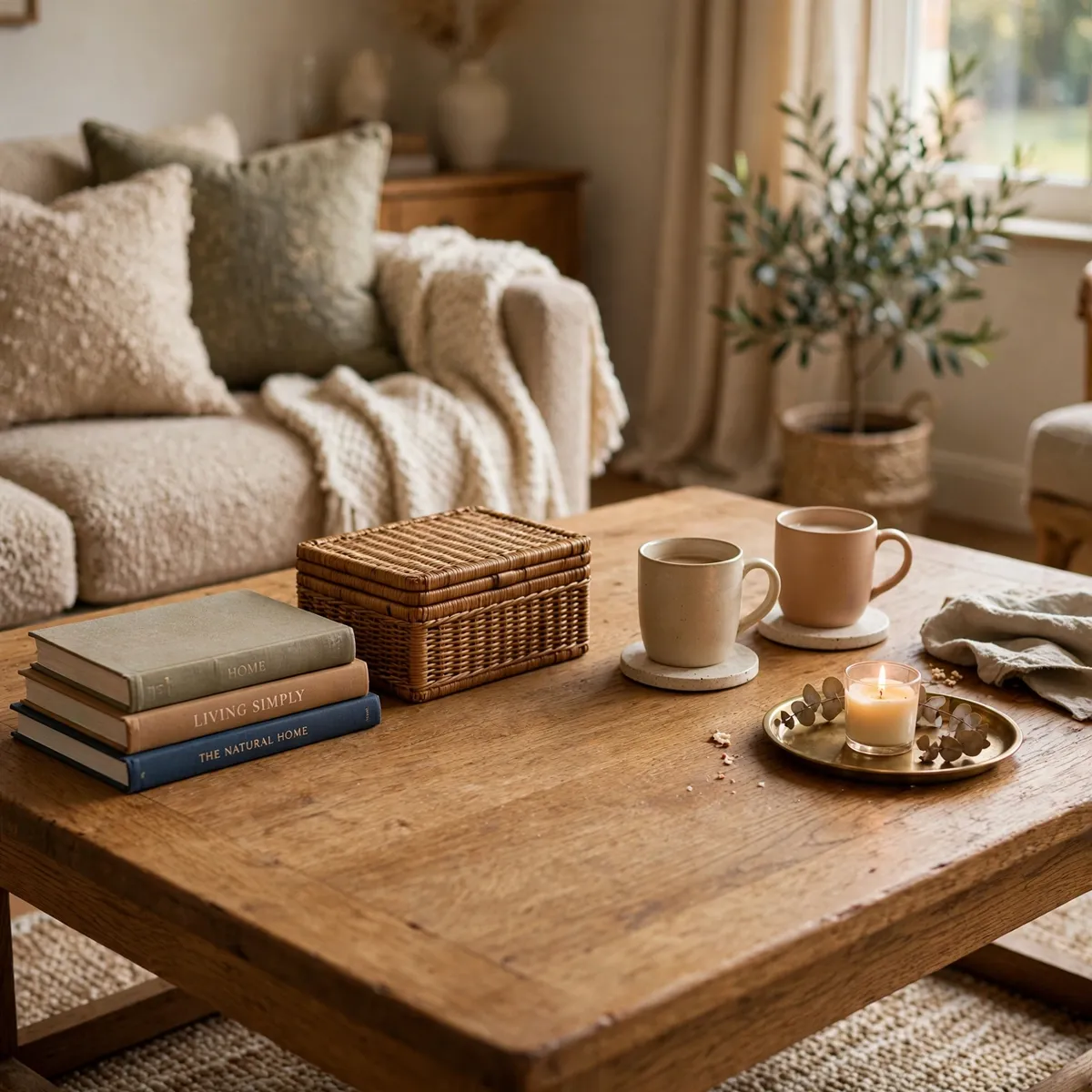
The prettiest coffee table in the world fails if nobody can set down a mug. Design the styling around how you actually live: coasters that are always within reach, a lidded box for the remotes, and — most importantly — honest empty space.
A good rule is to decorate about two-thirds of the table and leave the rest clear. On a small coffee table, go even further: one tray holding three small items plus one stack of books is a complete look, and it keeps the surface usable. Furniture should serve the household first and the photograph second; the tables that stay styled longest are the ones that never need to be dismantled before movie night.
Quick tips
- Decorate two-thirds; keep one-third clear for drinks and snacks.
- Every item should survive being nudged — avoid precarious stacks.
- Use a tray so the whole vignette can be lifted off in seconds when you need the full surface.
12. Give It a Seasonal Refresh
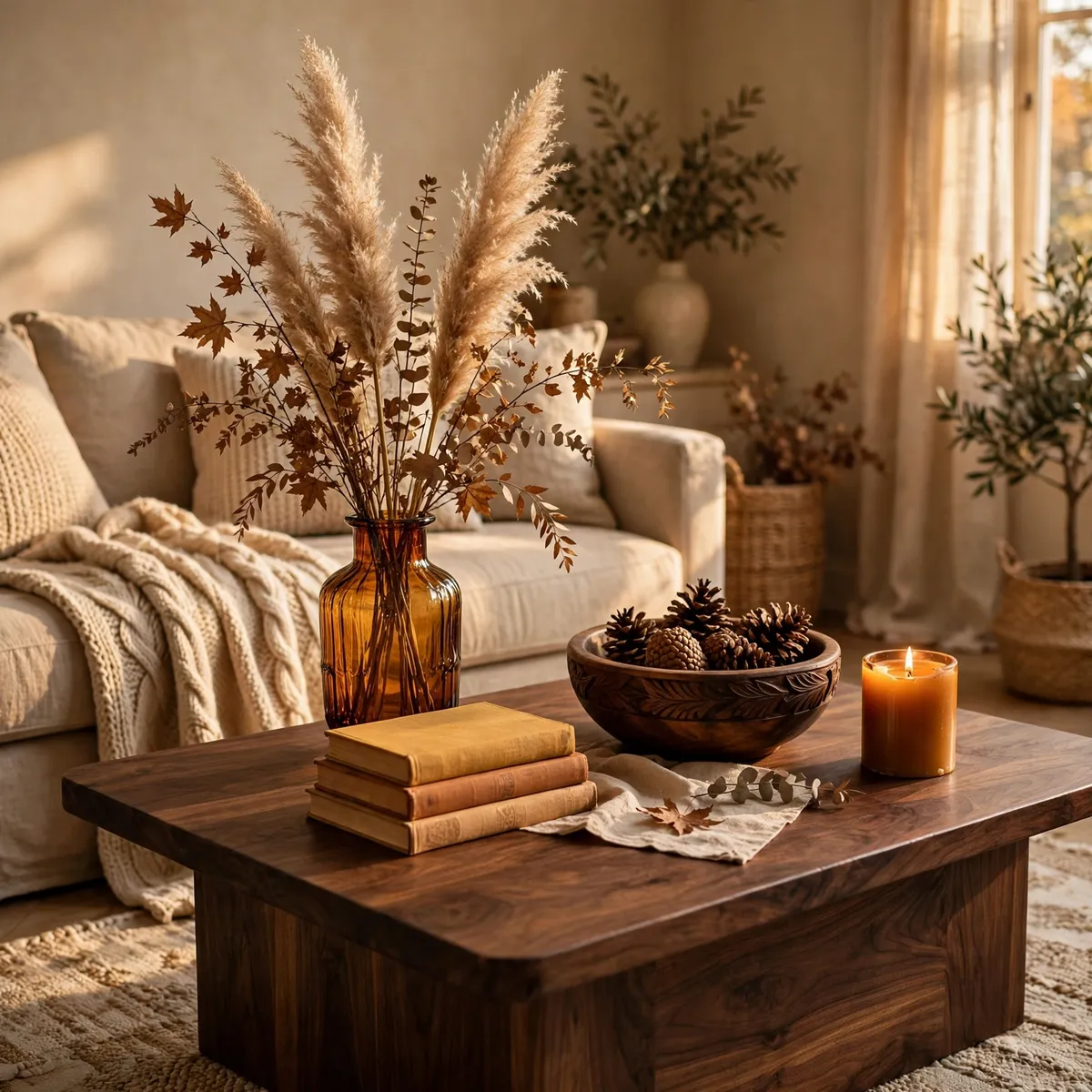
Swapping just two or three pieces with the season keeps a coffee table feeling current without a full restyle. In autumn, trade fresh greenery for dried pampas grass or branches, add an amber-toned candle, and set out a carved wooden bowl with pinecones or acorns. Come spring, reverse it: fresh stems, a lighter book cover, a pale ceramic. The base layer — books, tray, storage box — stays the same all year; only the top notes change. It’s the lowest-effort, highest-impact habit in home styling, and it makes the whole living room feel considered without spending anything.
Quick tips
- Change only the top layer (stems, candle, small bowl) — keep the base.
- Warm tones (amber, rust, walnut) for autumn; pale and green for spring.
- Store the off-season pieces in one box so the swap takes ten minutes.
Frequently Asked Questions
What should I put on my coffee table?
A reliable combination is a stack of books, a tray holding a candle and a small vase, and a lidded box for everyday clutter. Add one taller piece — branches or a sculptural vase — and something living or natural, like greenery or a candle, and you have a complete look that works in almost any style.
How do I style a coffee table without clutter?
Corral small items on a tray so they read as one vignette instead of scattered clutter, limit yourself to three or four groupings, and leave at least a third of the surface empty. If it still feels busy, remove one whole grouping rather than rearranging — the culprit is usually quantity, not placement.
How do you style a round coffee table?
Style from the center outward: one low, wide anchor in the middle (a bowl or tray), with two or three smaller items arranged in a curve around it. Keep everything low so it doesn’t block conversation between people sitting opposite each other, and use fewer pieces than you would on a rectangular table.
How many items should be on a coffee table?
Most designers aim for three to five groupings rather than counting individual items. A stack of books with a candle on top counts as one grouping. Odd numbers and varied heights matter more than an exact count — and the table should still have empty space for drinks and daily life.
Conclusion
Great coffee table styling isn’t about owning the right objects — it’s about giving the objects you have a structure: something tall, something flat, something that gathers the small things together, and room left over for living. Start with the three-part formula of books, tray, and box, vary your heights, and let one or two natural materials do the decorative work. Refresh the top layer with the seasons, and the coffee table will quietly carry the whole living room for years.