Small Balcony Decor Ideas That Make a Tiny Space Feel Bigger
Most small balconies fail for one reason: too much furniture fighting for too little floor. The small balcony decor ideas that actually work do the opposite — measure first, keep the floor mostly clear, and build upward and outward with slim folding furniture, vertical plants, one grounding rug, and layered warm lighting. That combination can make even a 3-by-6-foot balcony feel like a real outdoor room instead of a storage shelf with a view.
These twelve ideas run in the order that matters: plan the space, choose fitting furniture, add greenery without crowding the floor, then layer light, privacy, and comfort. Every idea is renter-friendly, most are budget-friendly, and none require drilling.
1. Small Balcony Decor Ideas Start With Measuring, Not Shopping
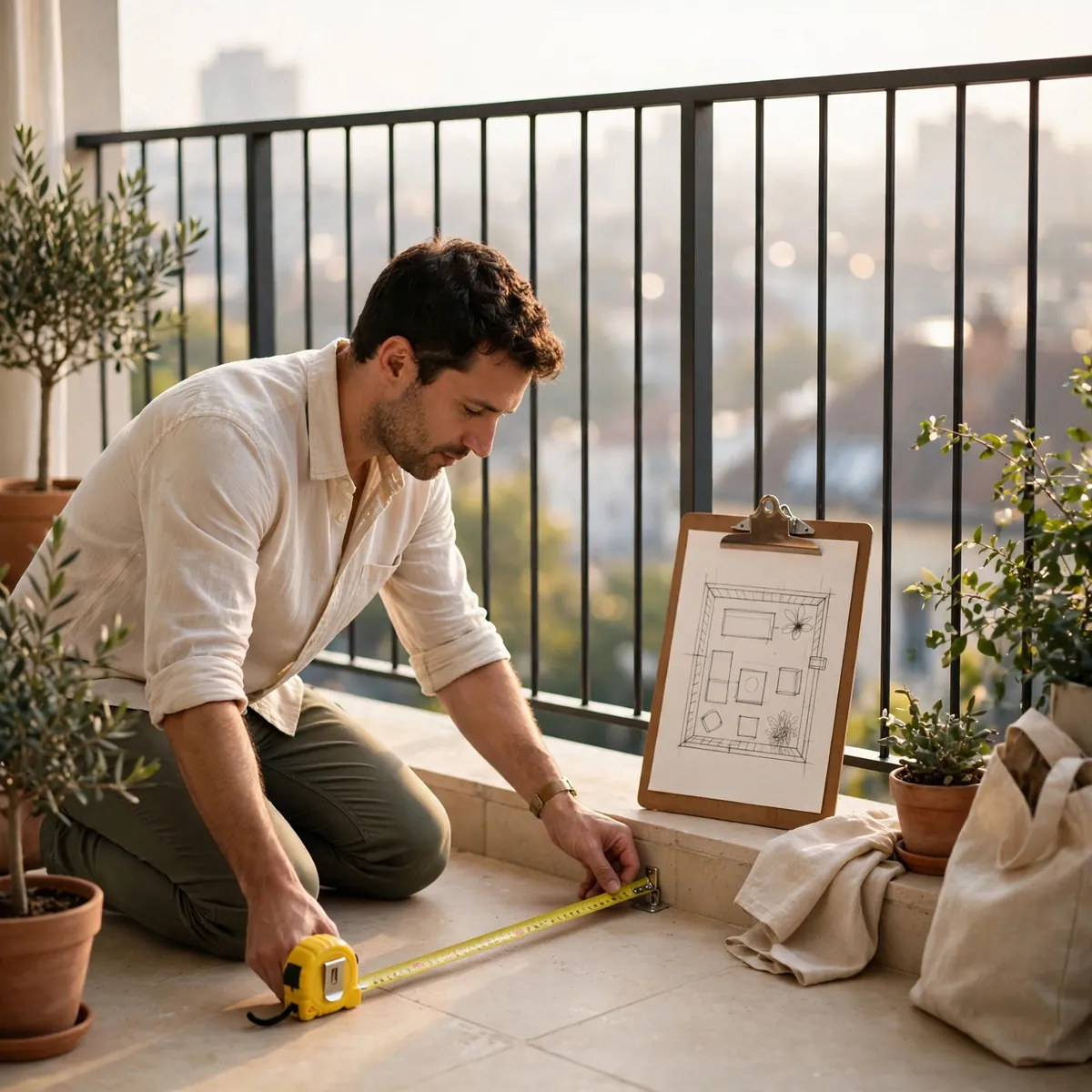
Every good small balcony starts with a tape measure, not a shopping cart. Measure the full width and depth, then mark the two things that shrink your usable space: the arc of the door swing and the walkway you need to step outside comfortably — usually about two feet of clear path. Sketch it on paper, even roughly, and you will immediately see which corners are real estate and which are traffic.
While you measure, check two things most people skip: your building’s rules on railing hangings and weight limits — wet soil in ceramic planters gets heavy fast — and where the sun lands morning, noon, and evening, which decides plant placement and where you’ll actually sit. Plan in this order:
- Measure width, depth, door swing, and railing height.
- Mark the walkway and keep it permanently clear.
- Note sun exposure through the day for plants and seating.
- Check weight limits and railing rules before buying heavy pieces.
Quick tips
- Keep at least 24 inches of clear walkway from door to railing.
- Photograph the empty balcony from the doorway — it reveals dead corners.
- Ask your building about weight limits before loading up large planters.
2. Choose Slim Folding Furniture That Disappears
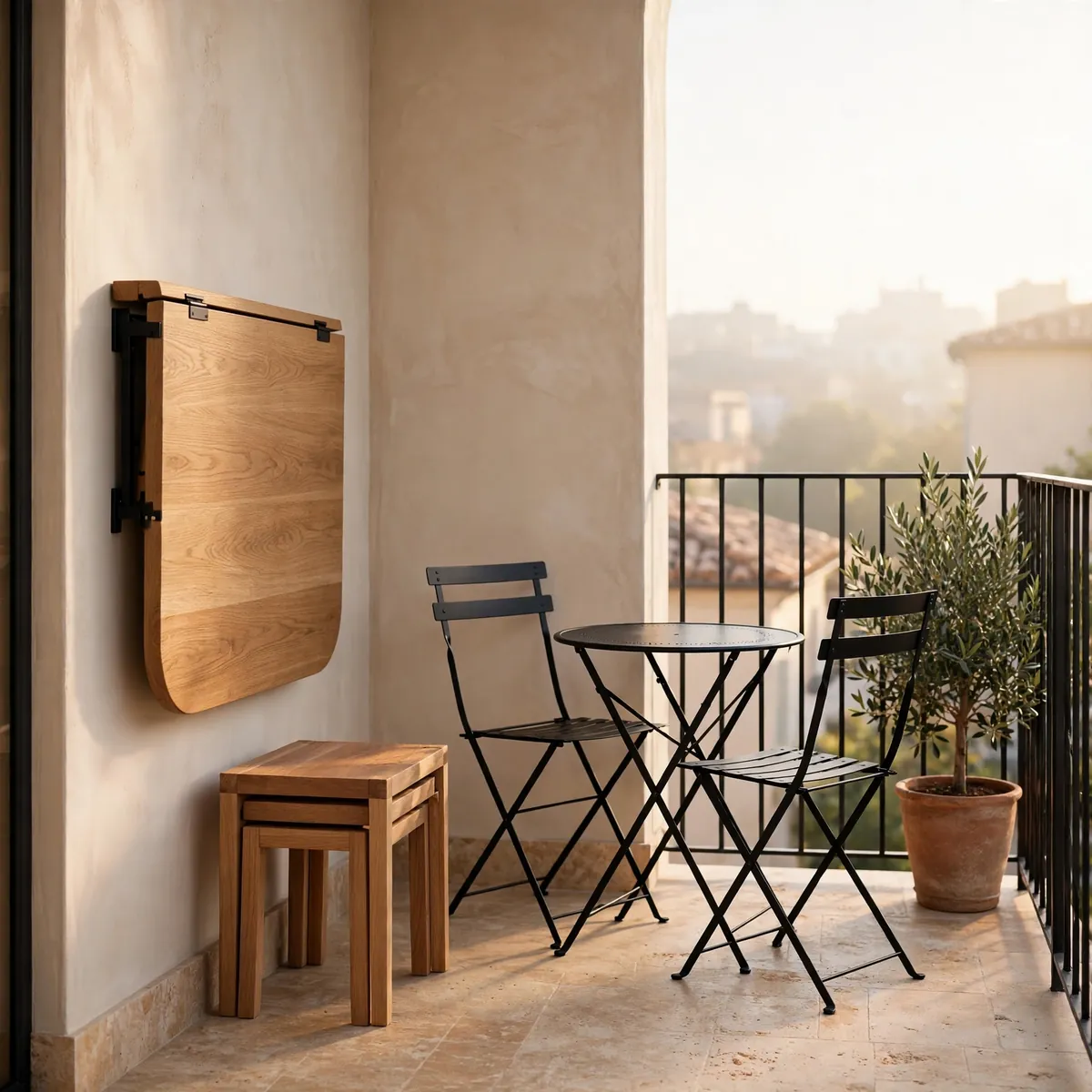
On a small balcony, furniture should earn its footprint twice: once when you use it and once when you don’t. A two-person bistro set with folding chairs tucks flat against the railing in seconds, and a wall-mounted drop-leaf table gives you a full dining surface for morning coffee, then folds to a slim shelf when the day is done. Stackable stools are the quiet heroes here — pull them out for guests, stack them in a corner when it’s just you.
Avoid buying a “small” version of big furniture — a scaled-down loveseat still eats the whole balcony. Slim pieces with visible legs keep sightlines clear, which is what makes tight spaces feel bigger. Powder-coated metal and teak fold well and survive weather, so they stay out all season.
Quick tips
- Pick folding or stackable pieces you can clear in under a minute.
- Choose open frames and visible legs to keep sightlines clear.
- A wall-mounted drop-leaf table is the best dining option for narrow balconies.
3. Grow Up, Not Out: Vertical Greenery
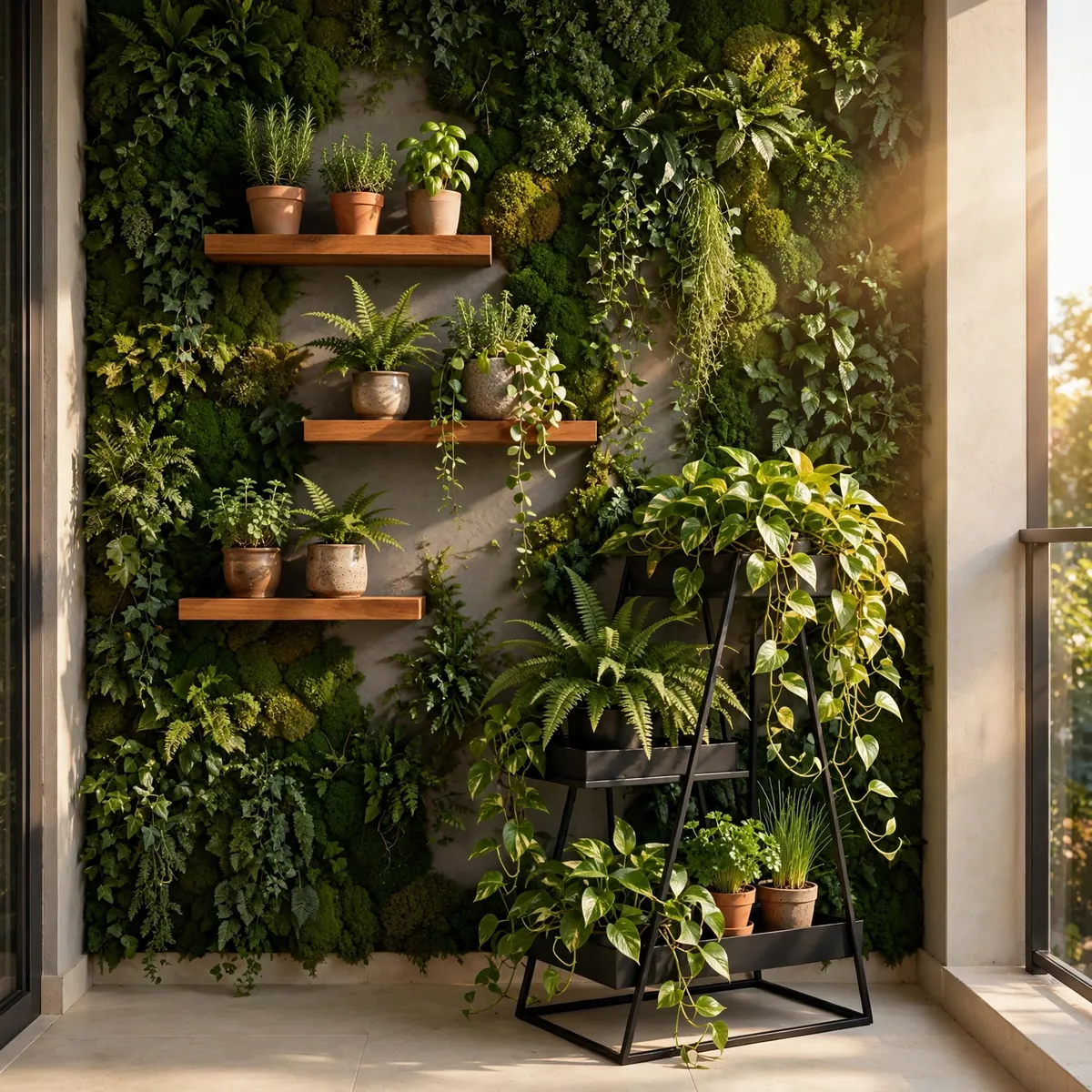
Walls and railings are free square footage most balconies waste. A tiered plant stand holds five or six plants in the footprint of one pot, wall-mounted shelves turn a blank wall into a garden, and hanging planters use the air above the railing where nothing else fits. Going vertical keeps the floor walkable while the greenery does the visual work of making the space feel lush and finished.
Mix heights and textures for a collected look rather than a nursery shelf: trailing pothos spilling from the top shelf, upright herbs in the middle, something flowering at eye level. If you rent, lean on freestanding tiered stands and over-the-railing hangers instead of anything that needs screws. And group plants with similar water needs together — a thirsty fern next to a drought-tolerant succulent means one of them is always unhappy.
Quick tips
- One tiered stand replaces four or five floor pots.
- Hang planters above railing height to use dead air space.
- Group plants by water needs so care stays simple.
4. Rail Planters: Green Without Losing a Single Step
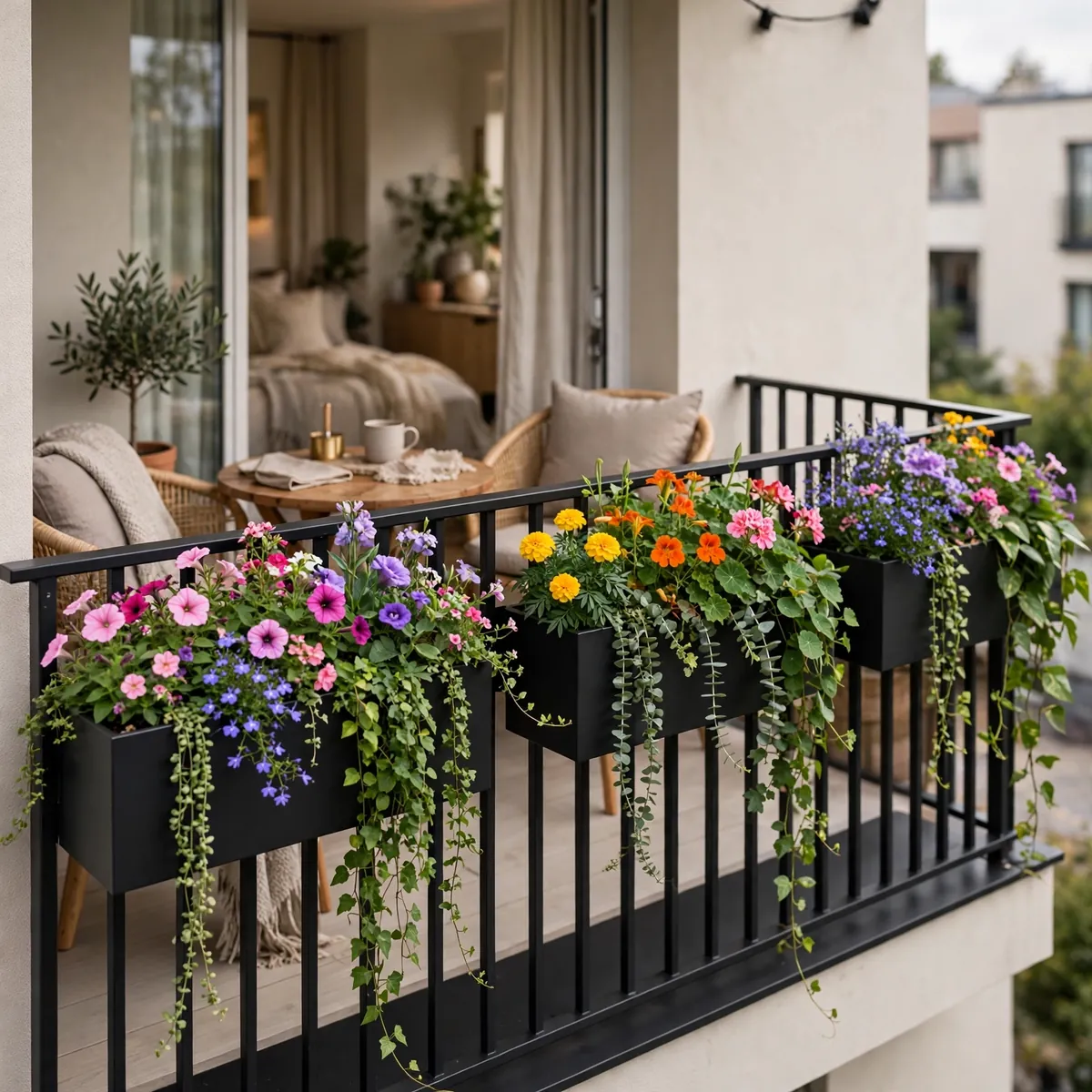
Rail planters are the highest-return move on a small balcony: they add a full row of flowers or herbs using zero floor space. Saddle-style planters hook over the railing, and a row of them along the front rail reads as a garden bed from inside the apartment — which matters, because you see your balcony from indoors far more than you sit on it.
Plant rail boxes for the view from inside, not just from the balcony itself. Trailing plants like ivy, string-of-pearls, or sweet potato vine spill over the outside and look gorgeous from the street; upright flowers like geraniums, petunias, or marigolds face inward where you see them. Line metal planters with coco liners to protect the railing finish, and check that your building allows over-rail planters before you load them up.
Quick tips
- Plant trailing varieties on the outer edge, upright blooms facing inward.
- Use coco liners so metal planters don’t scratch the railing.
- Confirm over-rail planters are allowed by your building first.
5. Anchor Everything With One Outdoor Rug
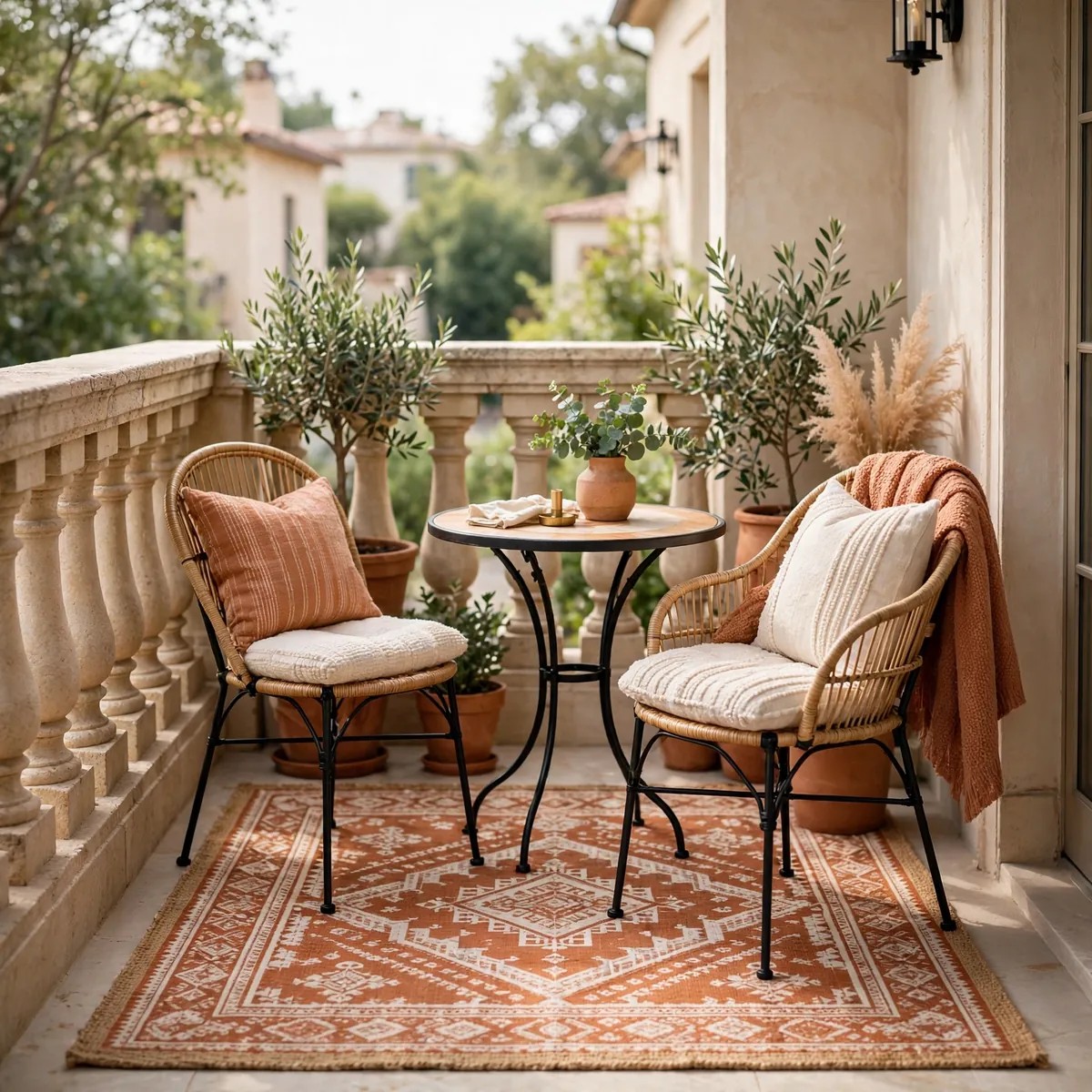
A rug is the fastest way to make a concrete slab feel like a room. One well-chosen outdoor rug defines the seating zone, softens hard flooring underfoot, and pulls the furniture together so the balcony reads as intentional rather than improvised. On a small balcony you want exactly one rug, sized to fit under the front legs of your seating — wall-to-wall carpeting the whole slab makes it feel smaller, not bigger.
Choose flat-weave polypropylene: it hoses clean, dries fast, and won’t fade by August. Stripes or simple geometrics draw the eye outward and make narrow balconies feel wider. In wet climates, roll the rug up during long rainy stretches so moisture never sits underneath.
Quick tips
- One rug only, sized to sit under the front legs of seating.
- Stripes running outward make narrow balconies feel wider.
- Flat-weave polypropylene hoses clean and dries fast.
6. Layer Warm Lighting for Day-to-Night Balconies
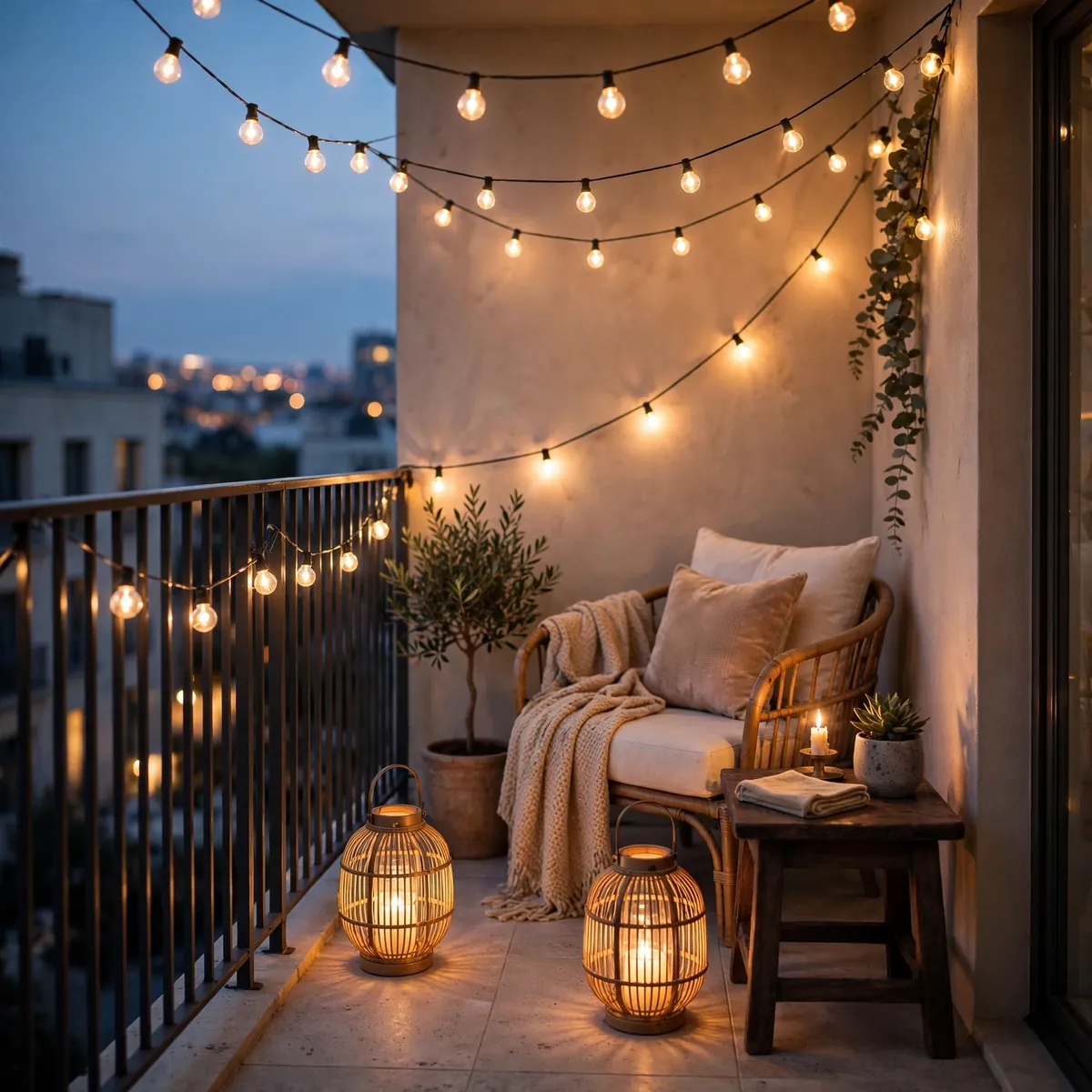
The difference between a balcony you use and a balcony you photograph is lighting. A single harsh overhead light kills the mood; three small warm sources create it. Start with string lights draped along the railing or overhead — look for warm white in the 2700 to 3000K range, which reads as candlelight rather than office. Add a solar lantern or two at floor level for a low glow, and finish with a candle or LED pillar on the table for the close-up warmth that makes evening tea feel like an occasion.
Solar options have become excellent — they charge by day and switch on at dusk, no outlet needed. Keep lighting warm and low: a glow you sit inside, not a floodlight. Lit edges push the darkness back, which makes the balcony read larger at night.
Quick tips
- Stick to warm white light, 2700–3000K, for a candlelit feel.
- Use three small sources (overhead, floor, table) instead of one bright one.
- Solar lanterns and string lights need no outlet and switch on automatically.
7. Add Privacy Without Blocking the Light
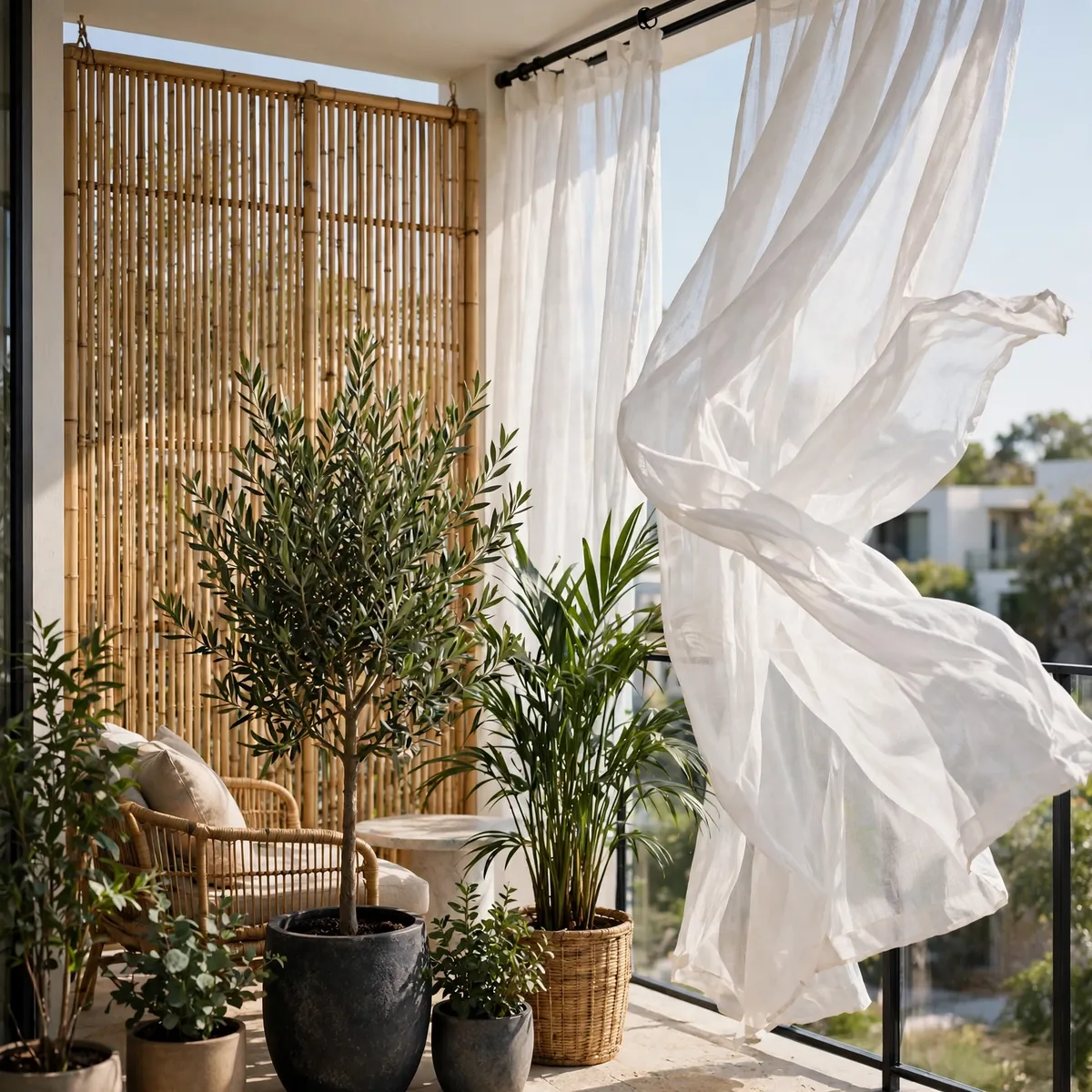
Privacy is the number-one reason small balconies go unused — nobody relaxes feeling on display. The trick is screening sightlines without turning the balcony into a dark box. Slatted wood or bamboo screens block the direct view from neighboring balconies while letting light and breeze filter through the gaps. Sheer outdoor curtains on a tension rod do the same job softly: they blur the view in and out, move beautifully in a breeze, and can be drawn back when you want the open sky.
Tall planters are the prettiest screen of all. A row of bamboo, ornamental grass, or lavender in tall narrow planters along the exposed side gives you living privacy that smells good and changes with the seasons. Combine two layers — say, a slatted screen on the most exposed side and tall planters on the other — and the balcony feels secluded from every angle. For larger outdoor spaces facing the same problem, these deck privacy ideas show how the same screening principles scale up to full-size decks.
Quick tips
- Slatted screens block views but keep light and airflow.
- Sheer outdoor curtains on a tension rod need no drilling.
- Tall planters with bamboo or grasses make living privacy screens.
8. Build One Cozy Seating Nook, Not a Lounge Set
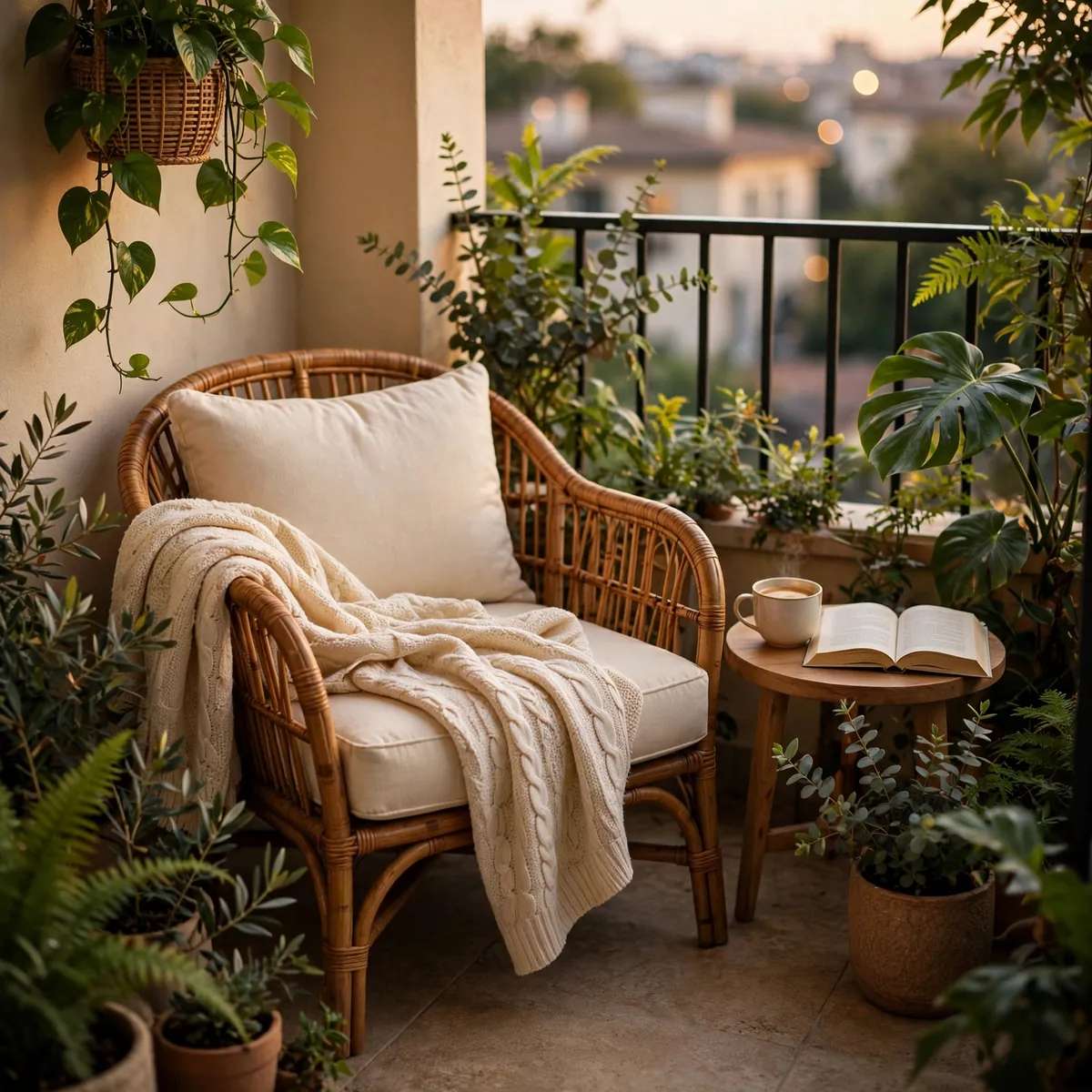
A small balcony doesn’t need a conversation set — it needs one perfect spot. One comfortable chair with a deep cushion, a soft throw, and a small side table for tea is a complete outdoor room. It fits in a corner, leaves the walkway clear, and honestly gets used more than a cramped two-seater ever would, because there’s always exactly one inviting place to land.
Choose the corner with the best view and the least wind, then layer for comfort: an outdoor-rated cushion thick enough to sit in for an hour, a throw in a washable fabric for cool evenings, and a side table just big enough for a book and a cup. A papasan-style or deep rattan armchair curls around you and reads as intentional design rather than “the chair that didn’t fit inside.” Keep the palette to two or three colors carried through from the rug, and the nook will look styled instead of assembled.
Quick tips
- One great chair beats a cramped seating set every time.
- Claim the corner with the best view and least wind.
- Layer cushion, throw, and side table for true linger-longer comfort.
9. Choose Weatherproof Materials That Survive the Season
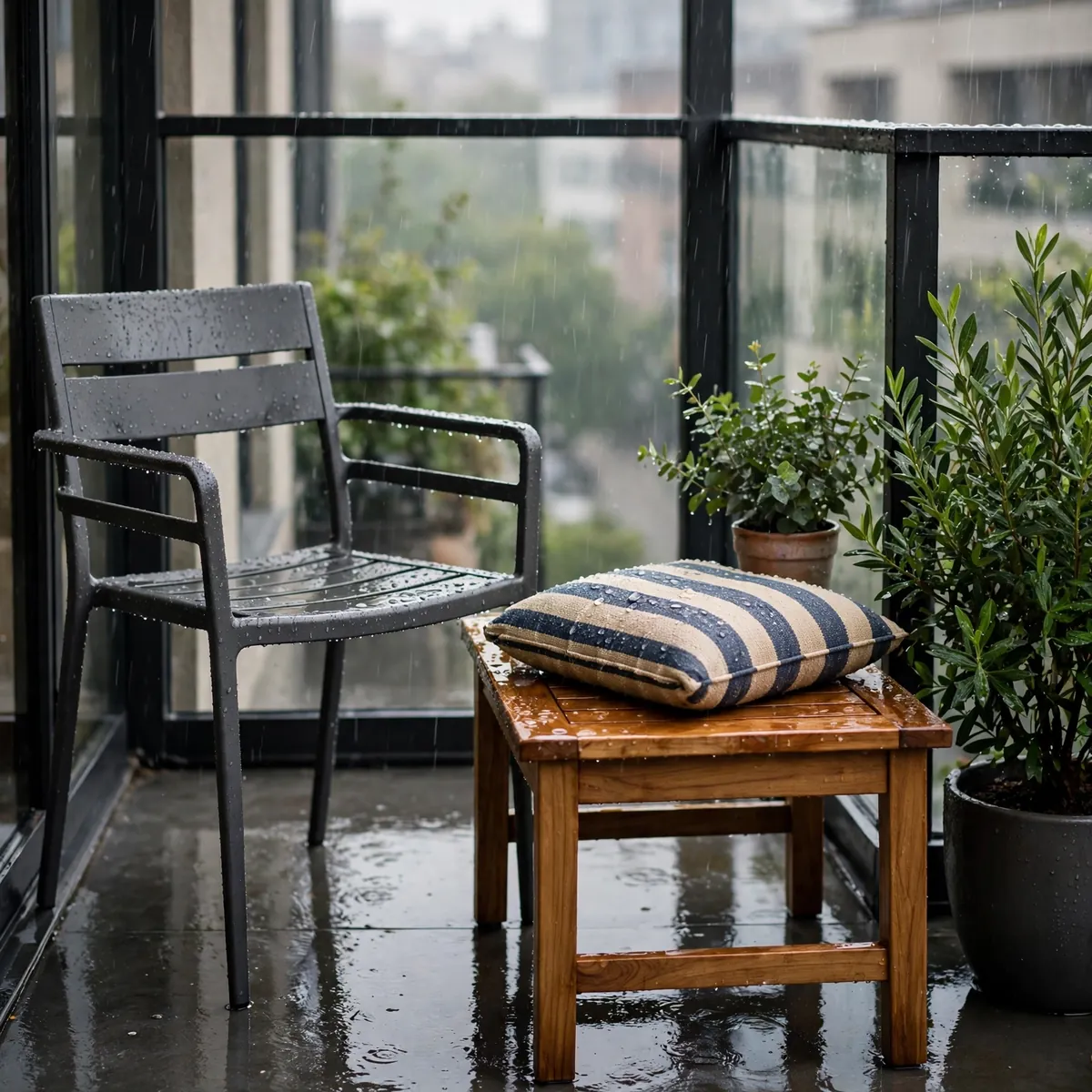
Balcony furniture lives outside in sun, rain, and dust, so materials decide whether your setup looks good in October or tired by July. Powder-coated metal resists rust and wipes clean, teak and acacia weather to a handsome silver-grey if you let them (or keep their honey tone with an annual oiling), and solution-dyed acrylic fabrics hold their color through seasons of sun that would bleach ordinary cushions in weeks.
On a small balcony you see every piece up close, so buy fewer, better pieces — one good bistro set outlasts three cheap ones. Store cushions during storms and hose everything monthly so city dust never builds into grime.
Quick tips
- Powder-coated metal, teak, and solution-dyed acrylic are the durable trio.
- Up close, quality shows — buy fewer, better pieces.
- Store cushions during storms; hose everything monthly.
10. Keep It Renter-Friendly: No Holes, No Drama
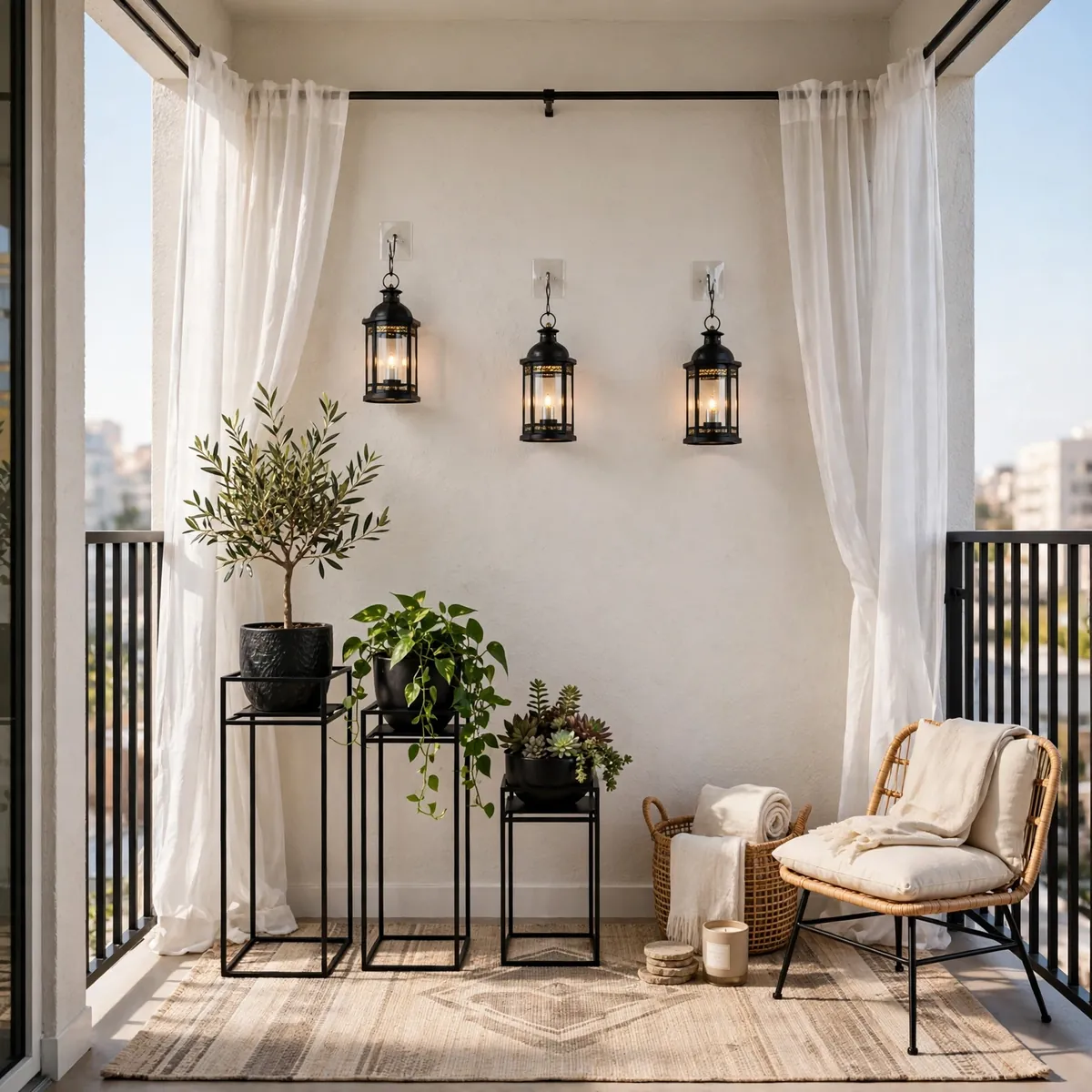
Almost every small balcony idea here works without drilling a single hole, which is the whole game for renters. Freestanding tiered plant stands replace wall-mounted shelves. Over-the-railing planters replace screwed-in boxes. Tension rods hold sheer curtains inside the door frame or between railing posts. Heavy-duty removable outdoor hooks carry string lights and hanging lanterns, and they peel off cleanly when the lease ends.
Think in terms of “lift and leave”: everything should be removable in an afternoon. Choose a rug that lays flat without adhesive, furniture light enough to carry inside, and planters with saucers so water never stains the slab below — your deposit will thank you. Photograph the empty balcony on move-in day so any wear-and-tear conversation later starts from evidence, not memory.
Quick tips
- Tension rods, over-rail hooks, and removable adhesive hooks replace every drill.
- Use saucers under all planters to protect the slab and your deposit.
- Photograph the empty balcony on move-in day for your records.
11. The Small-Budget Version Looks Just as Good
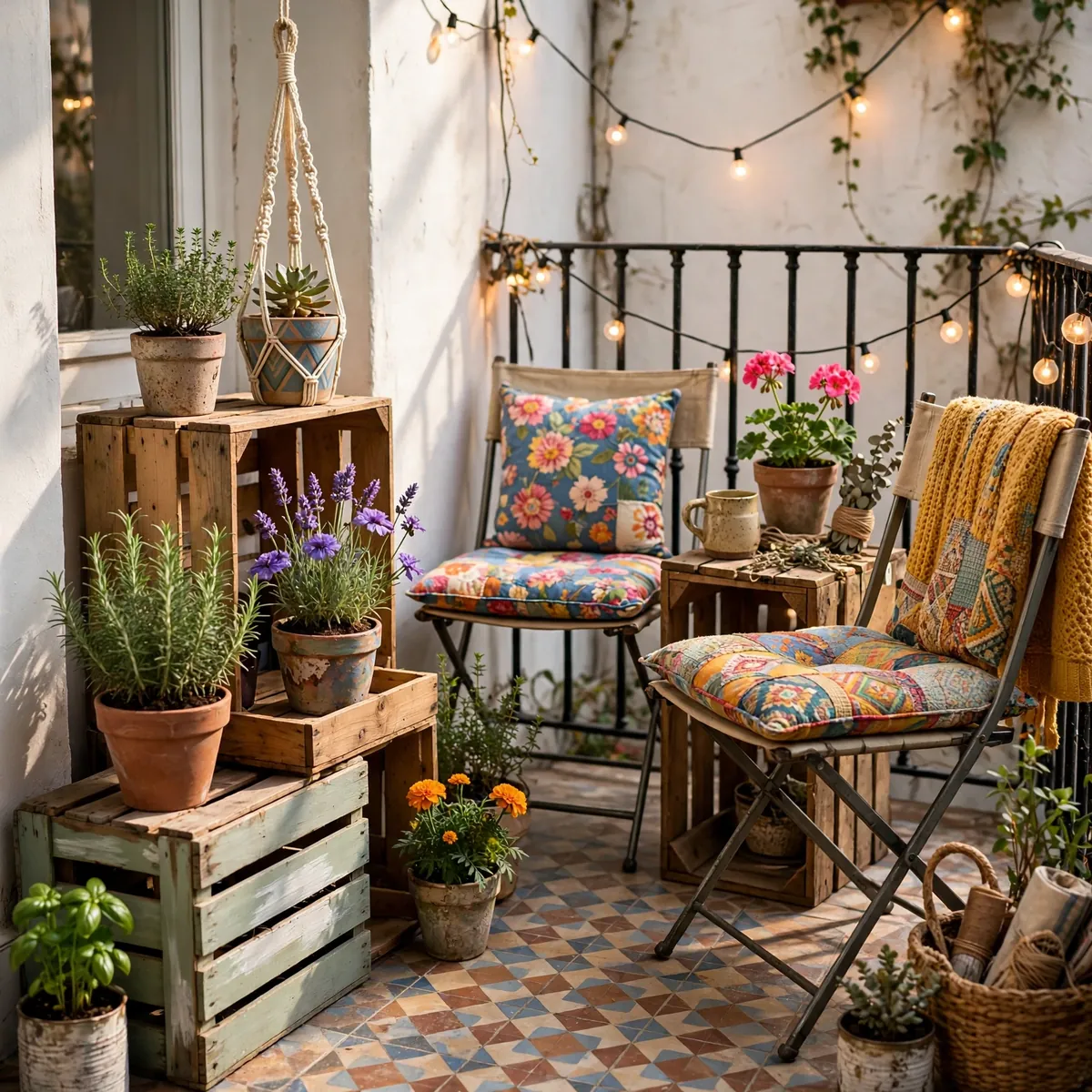
A beautiful small balcony is mostly styling, and styling is mostly free. Wooden crates — from the grocery store or a marketplace listing — flip on their sides into rustic plant stands and side tables. Thrifted or sale-rack cushions in one color family look deliberate, not cheap, when everything matches. A single strand of warm string lights costs less than a takeaway dinner and does more for evening atmosphere than any furniture upgrade.
Spend where it shows and save where it doesn’t: put the budget into the rug and lighting, which transform the space, and go thrifty on planters and side tables, which plants and styling will disguise anyway. Propagate cuttings from friends’ pothos and spider plants instead of buying full pots — free plants that already like indoor-outdoor life. Do one corner well before spreading thin across the whole balcony; a finished nook beats a half-decorated slab.
Quick tips
- Spend on the rug and lighting; thrift the planters and tables.
- Crates make excellent free plant stands and side tables.
- Finish one corner completely before decorating the rest.
12. Pick Plants That Actually Thrive in Small Spaces

The best balcony plants are the ones you won’t replace in August. Herbs — basil, mint, rosemary, thyme — love containers and earn their keep in the kitchen. Lavender handles heat while scenting the air; pothos and spider plants forgive missed waterings. Geraniums and marigolds bloom for months in small pots.
Match the plant to your sun, not your wishes: a north-facing balcony wants ferns, hostas, and impatiens; a sun-blasted south-facing one wants lavender, succulents, and geraniums. Start with five or six plants, not fifteen — a small balcony garden should look curated, and you can always add. And respect weight: soil is heavy, wet soil heavier, so use lightweight fiberglass or plastic planters for large arrangements and check your building’s load limits before going big.
Quick tips
- Herbs, lavender, pothos, and geraniums are nearly foolproof in containers.
- Match plants to your actual sun exposure, not the look you want.
- Use lightweight planters for big arrangements and respect weight limits.
Frequently Asked Questions
How do I decorate a small apartment balcony?
Start by measuring and keeping the walkway clear, then add one slim folding furniture piece, a single outdoor rug, and vertical or rail planters so the floor stays open. Finish with warm layered lighting. Renters should stick to freestanding, tension-rod, and removable-hook solutions so nothing damages the space.
What furniture works best for a narrow balcony?
Folding bistro sets, wall-mounted drop-leaf tables, and stackable stools work best because they give you full use when needed and nearly vanish when they don’t. Choose pieces with open frames and visible legs so sightlines stay clear and the balcony feels wider than it is.
How do I create privacy on a balcony without blocking light?
Use slatted wood or bamboo screens, sheer outdoor curtains on a tension rod, or tall planters with bamboo, grasses, or lavender. All three block sightlines while letting daylight and breeze through, unlike solid panels or heavy fabrics that darken the space.
How can I make a balcony cozy at night?
Layer three small warm light sources: string lights overhead or along the railing (2700–3000K), a solar lantern at floor level, and a candle or LED pillar on the table. Add a soft throw on the chair, and the balcony becomes somewhere you linger rather than glance at.
Conclusion
A small balcony doesn’t need more stuff — it needs better decisions. Measure first, keep the floor clear, furnish slim and foldable, grow upward, and let one rug and a few warm lights do the heavy lifting. Whether you rent or own, whether the budget is generous or nearly zero, these ideas scale to whatever slab, railing, and skyline you’re working with. Start this weekend with the tape measure and the string lights; the rest will follow naturally.