20 Heartwarming Grandmacore Kitchen Ideas That Feel Like a Hug ♥ [Nostalgic Bliss]
Why a Grandmacore Kitchen Feels Like Home
A grandmacore kitchen is not a style you copy — it is a feeling you curate. It is emotional design rather than pure aesthetics: comfort, memory, and the quiet beauty of things that look loved rather than staged. Sunlight on worn wood, the smell of something baking, a mug collection with history — these are its materials, and they share one rule: nothing should feel brand new.
Here is the definition worth holding onto: the best grandmacore kitchens feel remembered, not styled. They balance softness — layers of textiles, vintage ceramics, natural materials — with structure: warm wood tones and classic layouts that keep the pattern in check. These 20 grandmacore kitchen ideas show how to layer patterns, textures, and vintage finds the thoughtful way — it is never about how much you add, but how carefully you place it.
1. Build a Sunlit Breakfast Nook for Slow Mornings

A built-in corner bench does something an island stool never can: it encloses you. That tucked-in feeling is the emotional core of this style, and a breakfast nook is where it lives. Choose a round table to soften the corner’s lines, let a skylight or big window do the mood lighting, and pile on comfort — a slightly worn table finish is not a flaw, it is a requirement, because perfect surfaces hold no memories. Mix florals, stripes, lace, and patchwork inside one soft, muted tonal family so the layering reads cozy instead of chaotic. Finish with textured cushions you actually want to sink into. This is the corner where tea gets refilled and conversations stretch past breakfast — the room within the room that makes the kitchen the heart of the house.
Quick tips
- Keep all patterns in one muted tonal family for cohesion.
- A worn table finish adds instant history — never refinish it.
2. Hang Your Mugs Like They Matter

A row of hanging mugs creates vertical rhythm and turns everyday objects into decor. Mount a wooden peg rail under a shelf and hang your most-loved mugs where you can see them. Group jars, books, and florals nearby by purpose or material — glass with glass, ceramic with ceramic. Embrace pieces that are used but loved: a chipped rim, a faded decal. Slight imperfection is the grandmacore kitchen aesthetic.
Quick tips
- Hang mugs you actually drink from, not a matching set.
- Mix wood, glass, and ceramic for natural texture variety.
3. Style Open Shelves Like a Life, Not a Display
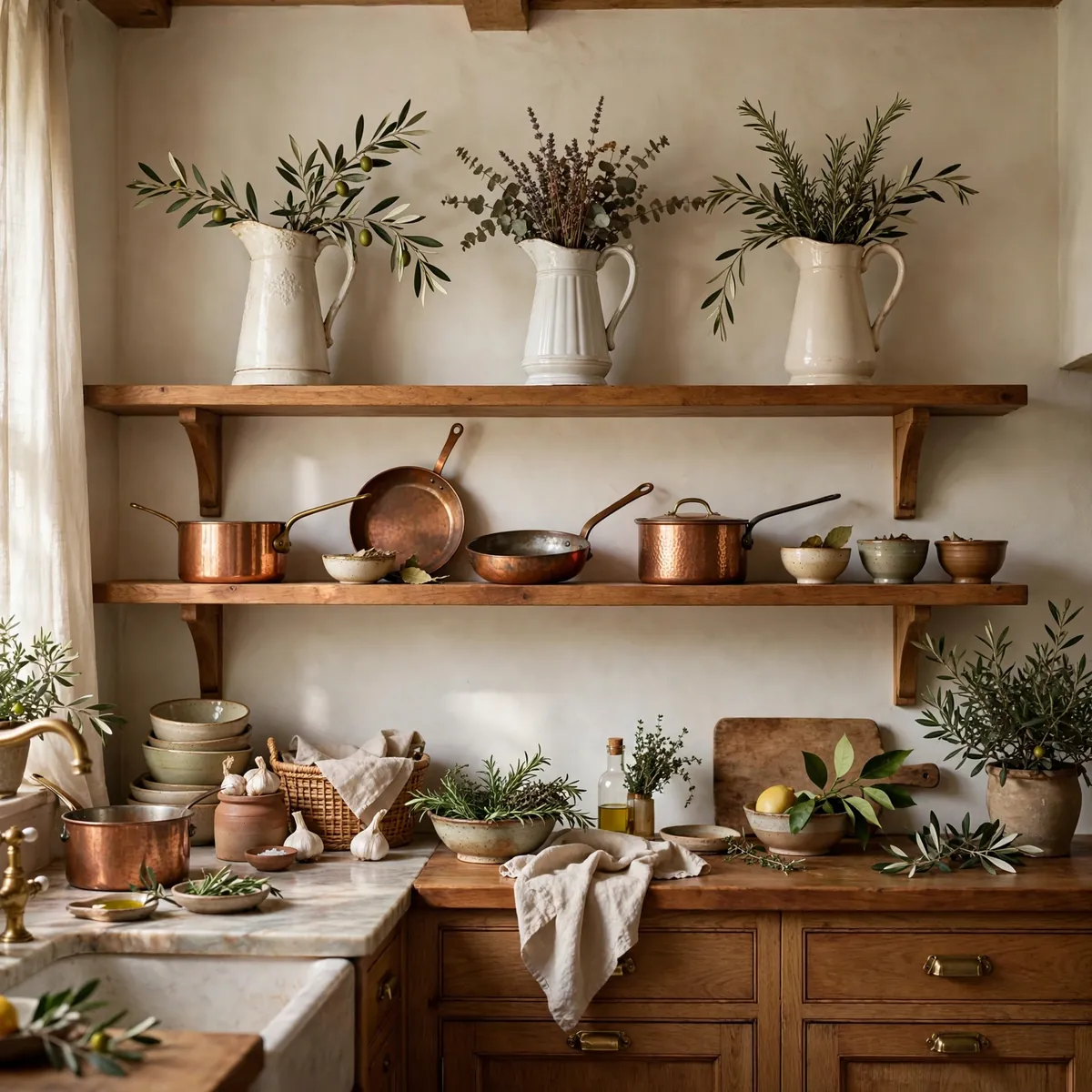
Open shelves in a grandmacore kitchen should read as a lifestyle, not a display. Layer heights and depths — tall pitchers behind, small bowls in front — and lean into an earthy palette of greens, warm woods, and copper. Mismatched cookware is the point. Just leave breathing room between groups; a crowded shelf feels like a flea market, a curated one feels like home. For more on keeping layered displays calm, these coastal kitchen ideas share the same restrained, texture-first approach.
Quick tips
- Leave empty space between groups — air makes it curated.
- Repeat two materials across every shelf for cohesion.
4. Create a Vintage Wall Gallery That Works
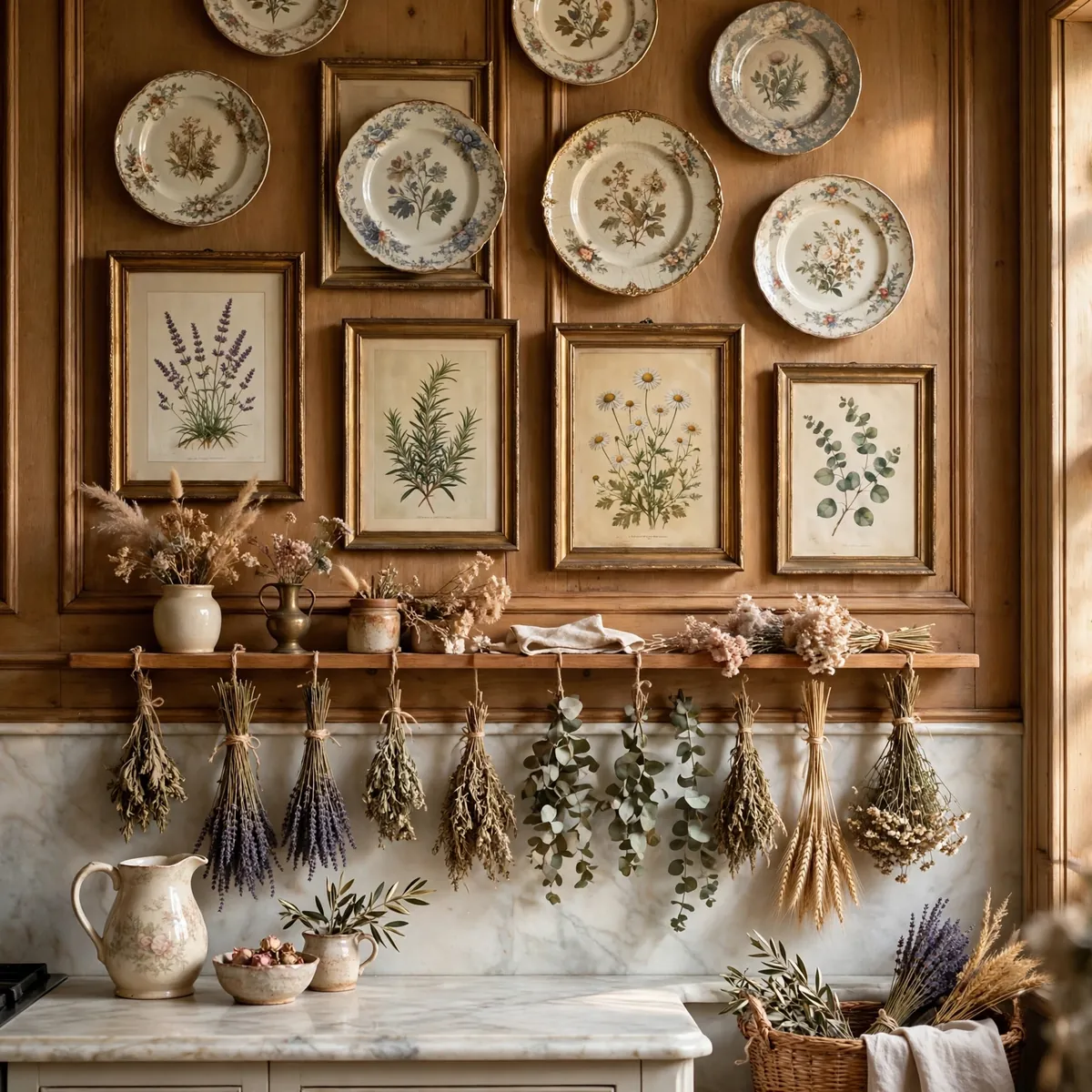
Plates, paintings, and dried herbs can share one wall if you anchor it. Start with one central piece — a large frame or a decorative plate — and let smaller items orbit it. A mounted shelf creates a grounding horizontal line. Blend decorative and usable elements: a chalkboard for the grocery list, hanging lavender, a framed botanical print. Keep the color story tight — creams, muted florals, warm woods — and the grandmacore kitchen wall reads as collected, never like a museum.
Quick tips
- Start with one central anchor piece, then build outward.
- Mix usable items (herbs, chalkboard) with decorative ones.
5. Style One Rustic Shelf With Heirloom Accents
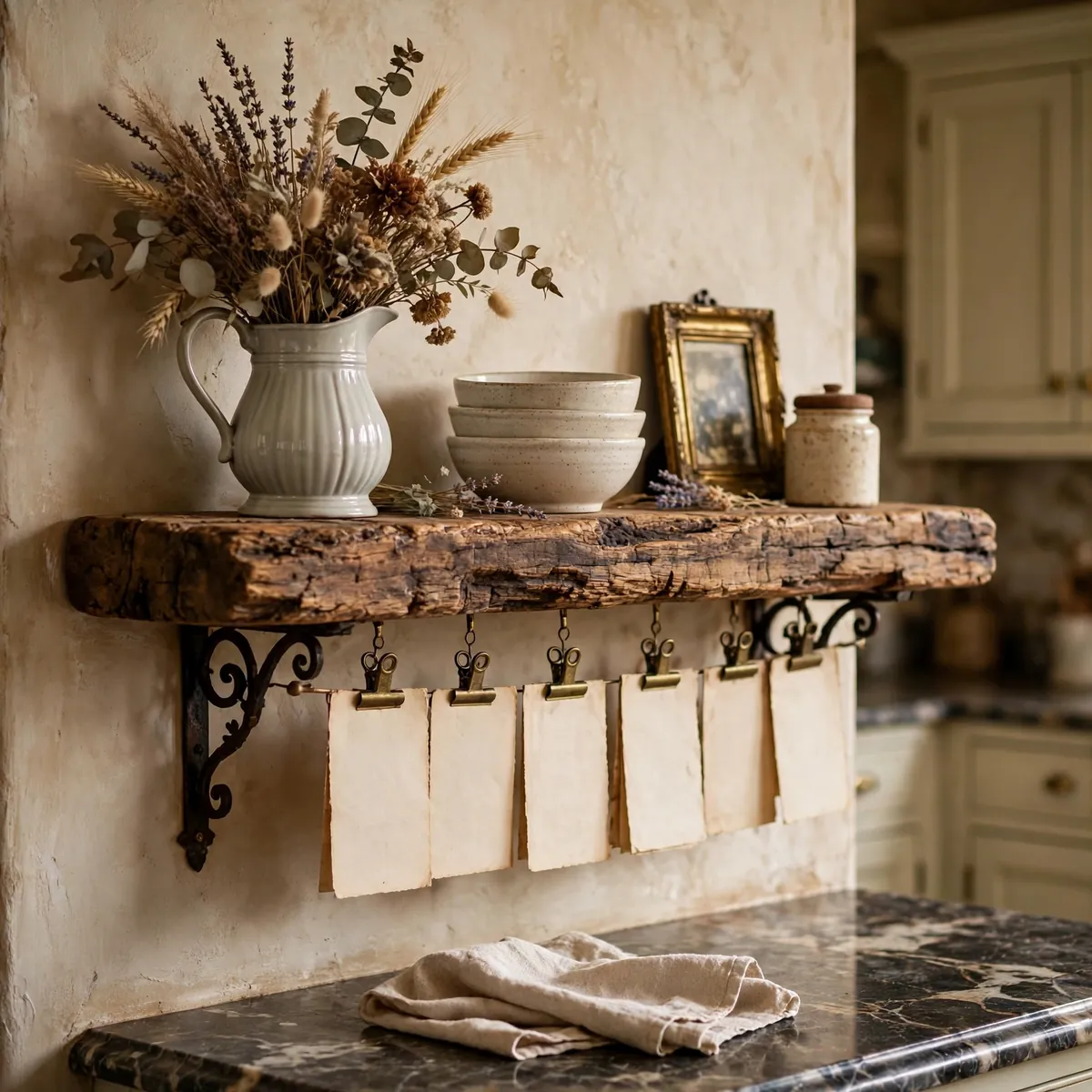
A chunky wood shelf gives delicate objects the weight they need — the contrast between heavy timber and soft ceramics is pure grandmacore kitchen charm. Group items in threes with varied heights: a tall ironstone pitcher, a stack of bowls, a small framed photo. Anchor with one larger object, then add dried flowers. Clip handwritten recipe cards beneath the shelf; the storytelling turns a shelf into a memory.
Quick tips
- Group items in threes with varied heights.
- Clip mini recipe cards below for a storytelling touch.
6. Hang Baskets From the Ceiling

Overhead layering draws the eye up and adds depth without touching counter space. Hang wicker baskets at varying heights from a beam — the repetition builds rhythm, and natural texture keeps the room cohesive. Vary the heights so it feels gathered rather than stored; three to five baskets is plenty.
Quick tips
- Vary hanging heights for a gathered, not stored, look.
- Keep to natural textures so the cluster stays cohesive.
7. Let an Antique-Style Stove Be the Anchor
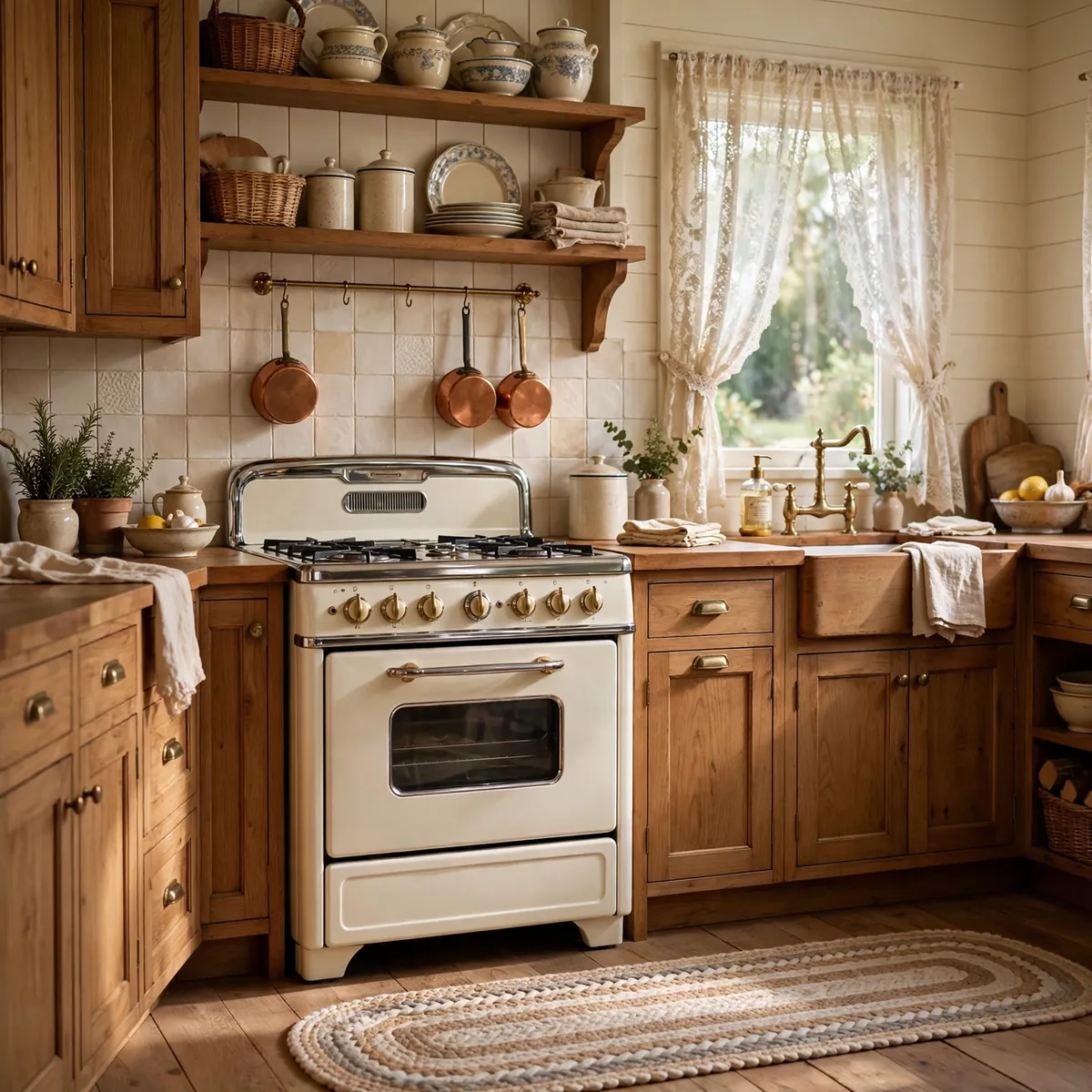
If you have one standout piece — an antique stove, a reclaimed hutch, a farmhouse table — let it anchor the room and let everything else support it. No real vintage range? A cream retro-style stove plus lace curtains and a braided rug recreates the same warmth. Keep the palette quiet and let soft window light plus warm wood tones do the layering. One hero piece, loved for decades, outweighs a kitchen of new things.
Quick tips
- One standout piece per kitchen — never two competing.
- Support the hero with textiles, not more furniture.
8. Give the Island Open Rustic Storage
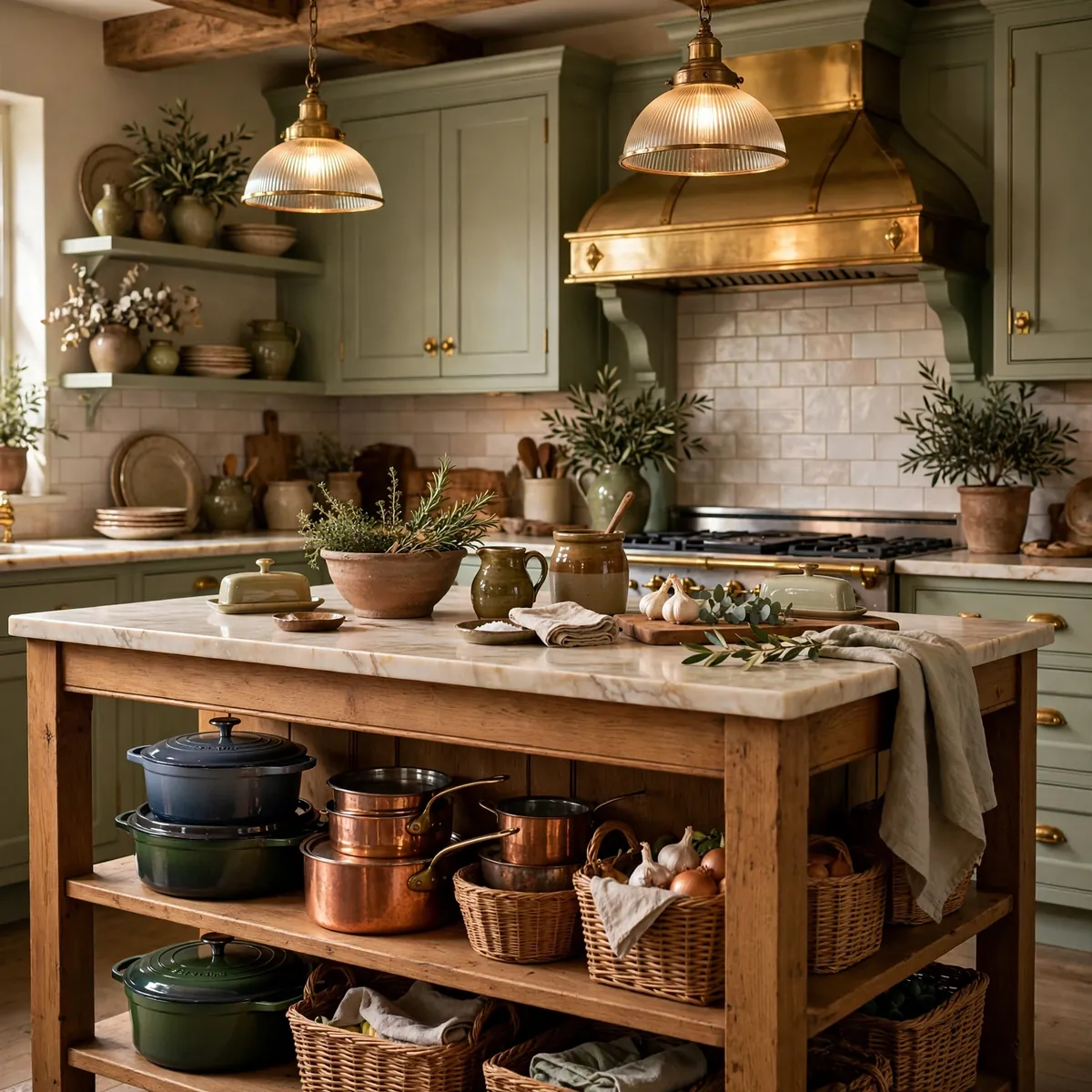
An island with open shelving underneath works triple duty: storage, display, and anchor. Keep cookware accessible — stacked dutch ovens, copper pots, woven baskets for linens. Keep materials consistent: warm wood, soft greens, earthy ceramics. Style lightly and keep pathways clear; an island should invite gathering, not block it.
Quick tips
- Display only cookware you actually use.
- Keep the island’s tones matched to the cabinetry.
9. Go Bold With Floral Wallpaper and Copper
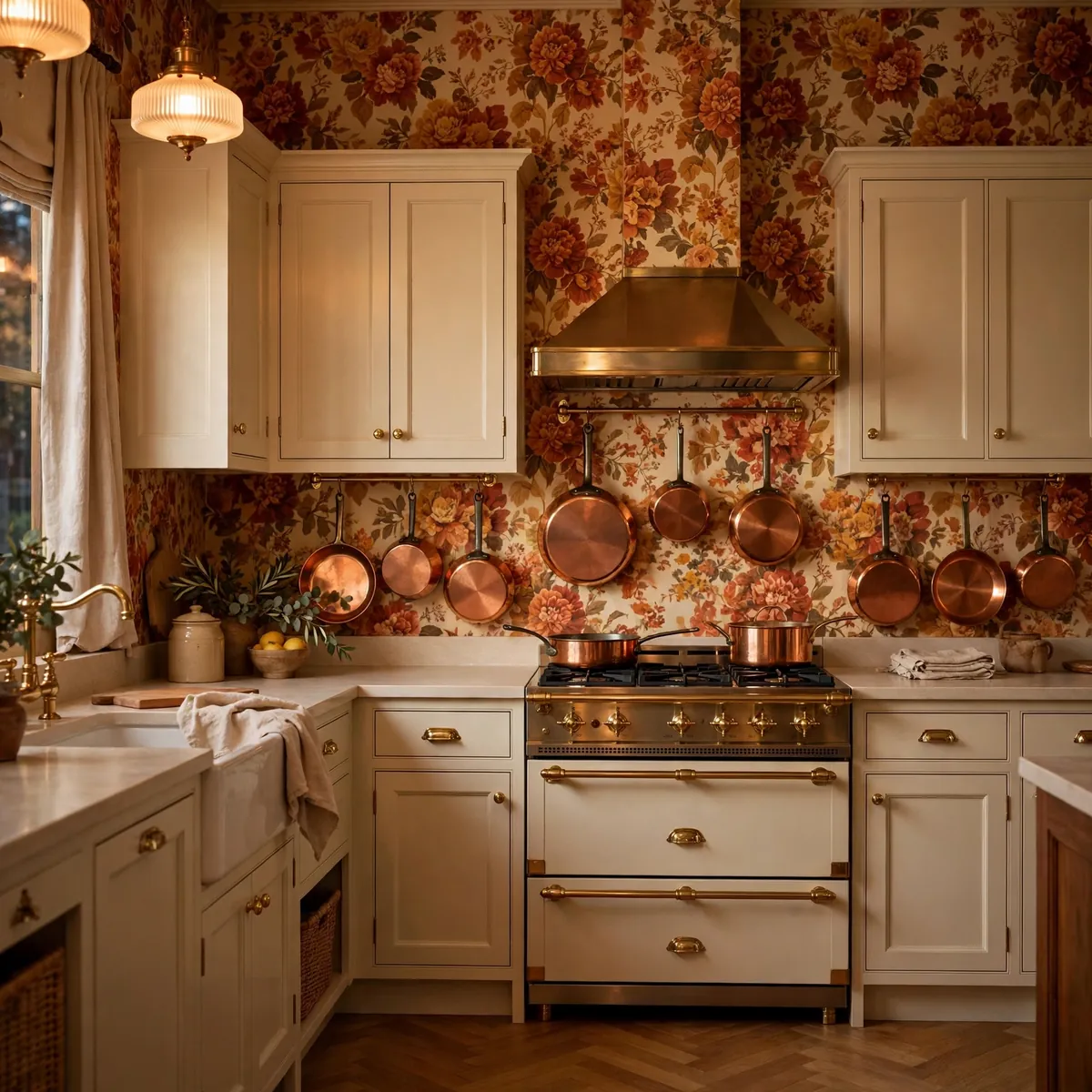
Bold floral wallpaper works when everything else plays along. Going big with pattern requires repetition: let copper pans echo the wallpaper’s warm tones, repeat its colors in textiles, and balance the busy wall with neutral cabinetry. Copper and brass pick up the print’s warmth and keep the room glowing, not loud.
Quick tips
- Repeat the wallpaper’s tones in metals and textiles.
- Keep cabinetry neutral when the walls go bold.
10. Skirt the Sink and Layer Soft Textiles
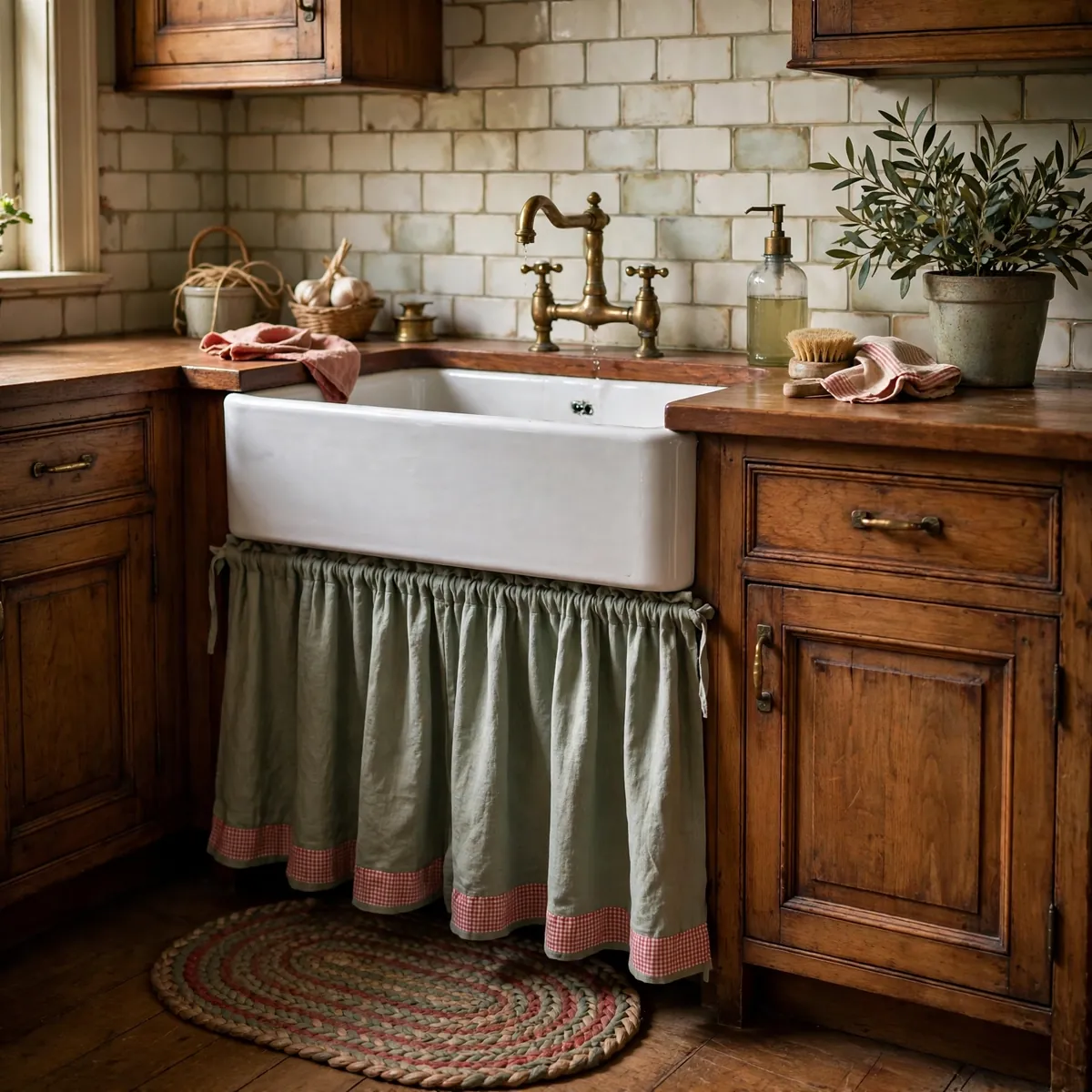
A fabric skirt under the sink softens hard cabinetry edges in one move — no renovation required. Layer a curtain panel with a small rug beneath, and the corner feels lived-in. Work in muted greens, warm woods, and faded reds; washed-out colors read as authentic. Start with one textile moment — a potted plant, a vintage soap dispenser.
Quick tips
- Choose washable fabrics — sink corners see splashes.
- Muted, washed-out colors read as authentic.
11. Hang Gingham Cafe Curtains
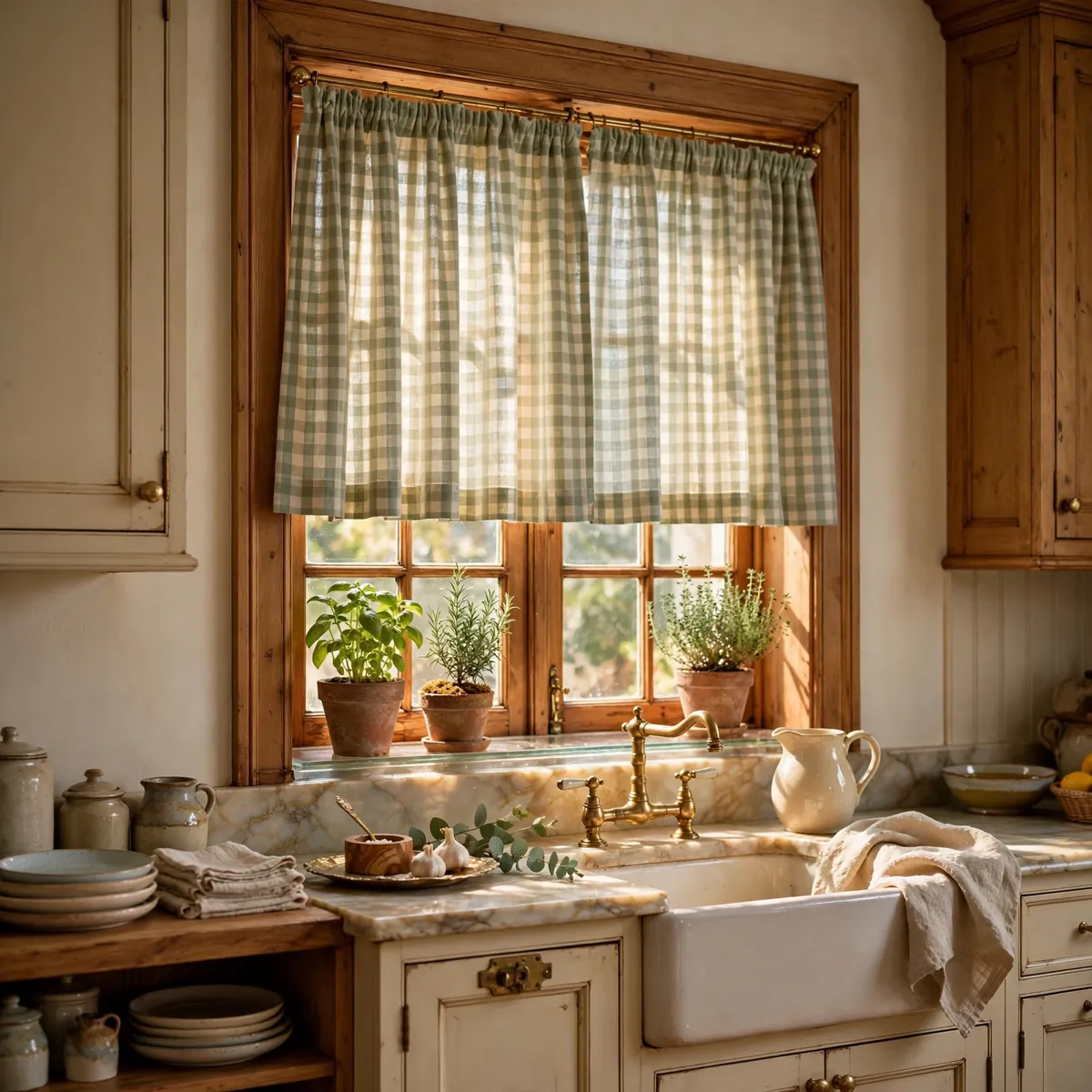
Few things say grandmacore kitchen faster than gingham cafe curtains. The half-height style keeps sills clear for plants and lets in maximum light while adding pattern where the eye rests. Choose a soft check — sage, dusty red, or blue on cream — in a light fabric that filters sun gently. Hem them just below the sill for the classic cottage line.
Quick tips
- Cafe length keeps sills free for plants and jars.
- Soften the check — muted beats primary colors here.
12. Let Butcher Block Counters Earn Their Patina
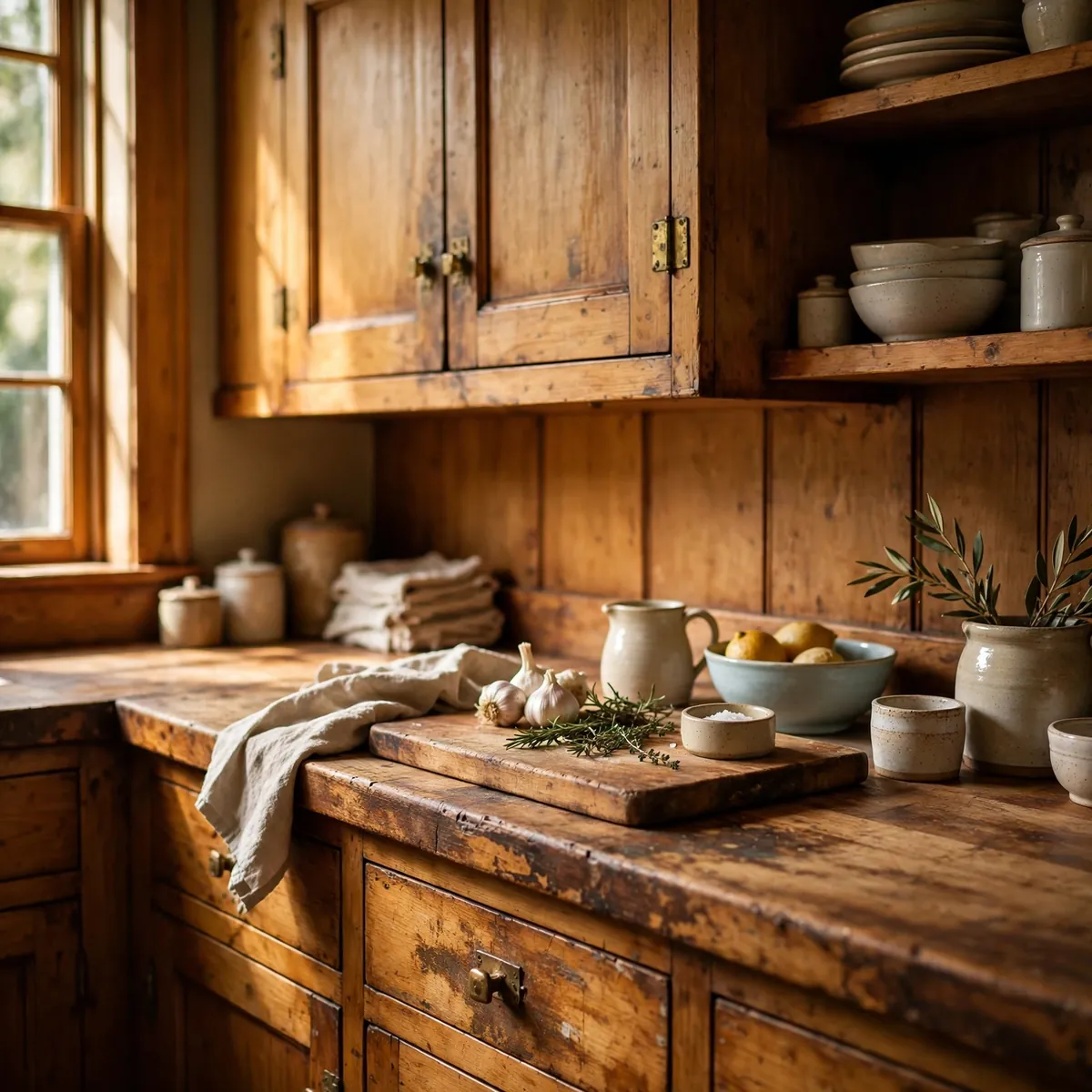
Butcher block is the only countertop that gets more beautiful with use, making it the natural choice here. Knife marks and oil stains become a record of every meal — patina you can’t buy. Oil it regularly, embrace the marks, and pair it with warm wood cabinetry for a golden workspace. No surface holds more history than a well-used wooden counter.
Quick tips
- Oil monthly to keep the wood rich and protected.
- Let marks accumulate — patina is the point.
13. Display Glass Jars Like a Pantry Apothecary

Fill clear glass jars with flour, sugar, beans, and pasta, and your pantry becomes decor. Line them on open shelves, add handwritten labels, and the everyday turns beautiful. Transparency keeps the display light; matching jars turn mismatched contents into one cohesive collection. Practical grandmacore kitchen nostalgia — how pantries looked before packaging took over.
Quick tips
- Decant into matching jars for instant cohesion.
- Handwrite labels for the personal touch.
14. Carve Out a Dedicated Tea Corner
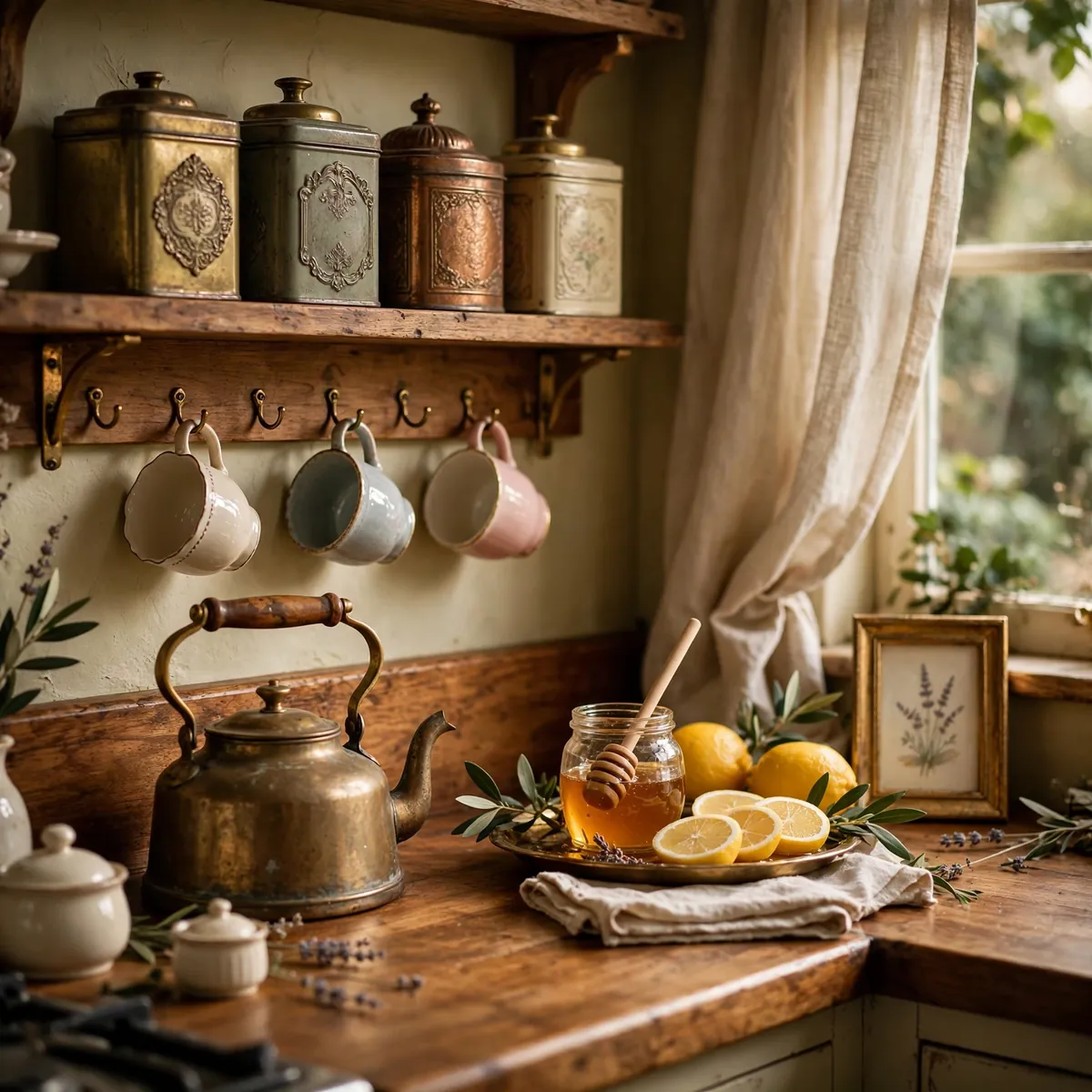
A tea corner is grandmacore in miniature: a kettle, a row of tins, favorite cups on hooks, a tray for honey and lemon. Give tea its own permanent home on one counter stretch — the ritual, everything in reach and loved, is comfort made visible. Add a tiny framed quote and the corner is complete.
Quick tips
- Keep everything tea-related in one reachable zone.
- A tray corrals the small items beautifully.
15. Swap Hardware for Brass and Porcelain
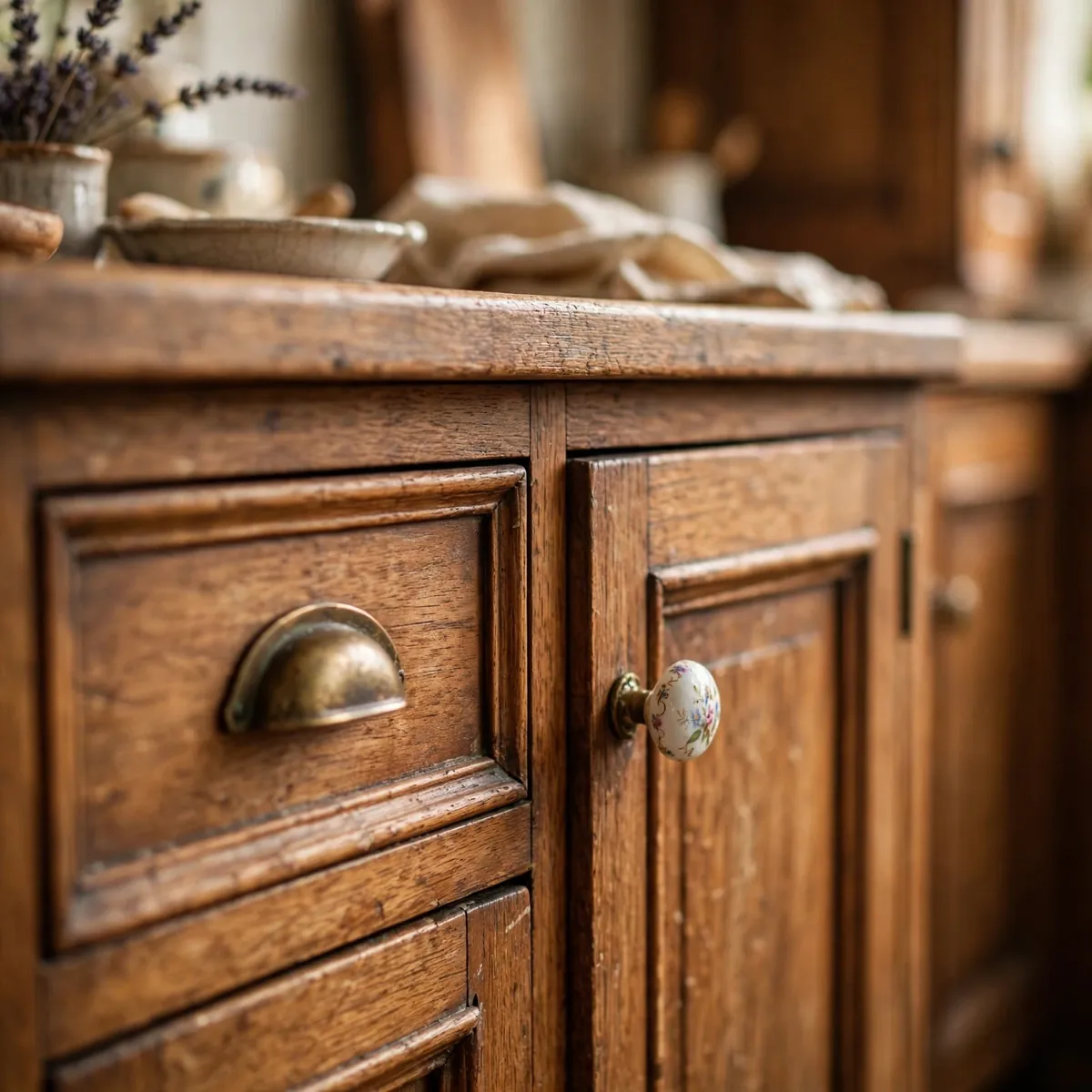
Hardware is jewelry, and here it should feel inherited. Swap modern pulls for aged brass cup handles or porcelain knobs with tiny floral motifs. Warm metal plus delicate ceramic adds history to plain cabinetry — a one-afternoon project the eye registers every time a door opens.
Quick tips
- Mix brass cups on drawers with porcelain knobs on doors.
- Aged finishes beat shiny new ones here.
16. Keep Fresh Flowers and Herbs on the Sill
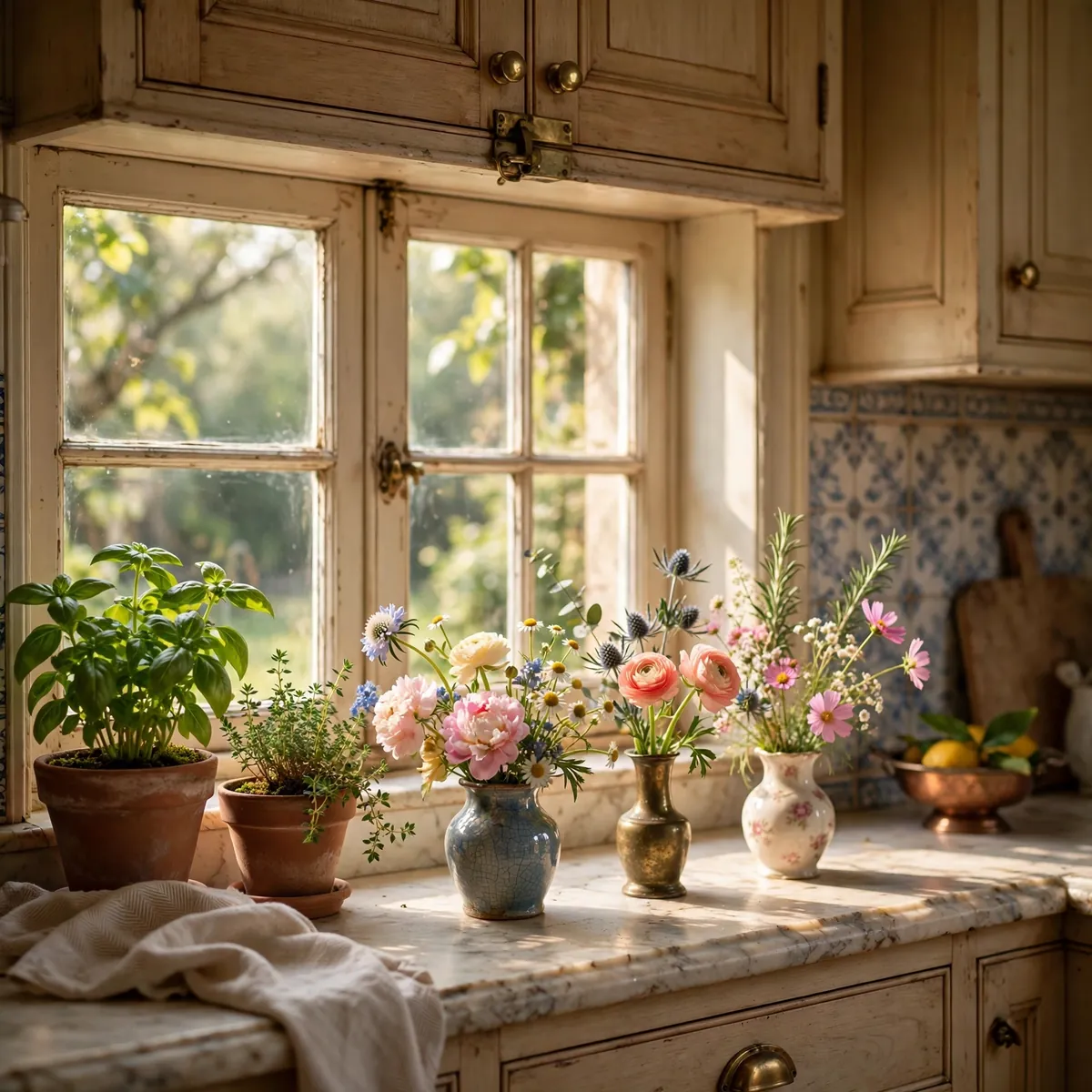
Living things make a grandmacore kitchen feel loved faster than anything. Keep seasonal fresh flowers — nothing fussy — and a row of potted herbs on the sunniest sill.
- Grow herbs you cook with: basil, thyme, rosemary.
- Use mismatched small vases, not one big arrangement.
- Refresh water every two days.
- Rotate pots weekly so all sides get light.
Quick tips
- Seasonal, simple flowers beat formal arrangements.
- Terracotta pots keep the sill feeling earthy.
17. Layer Braided Rugs Underfoot
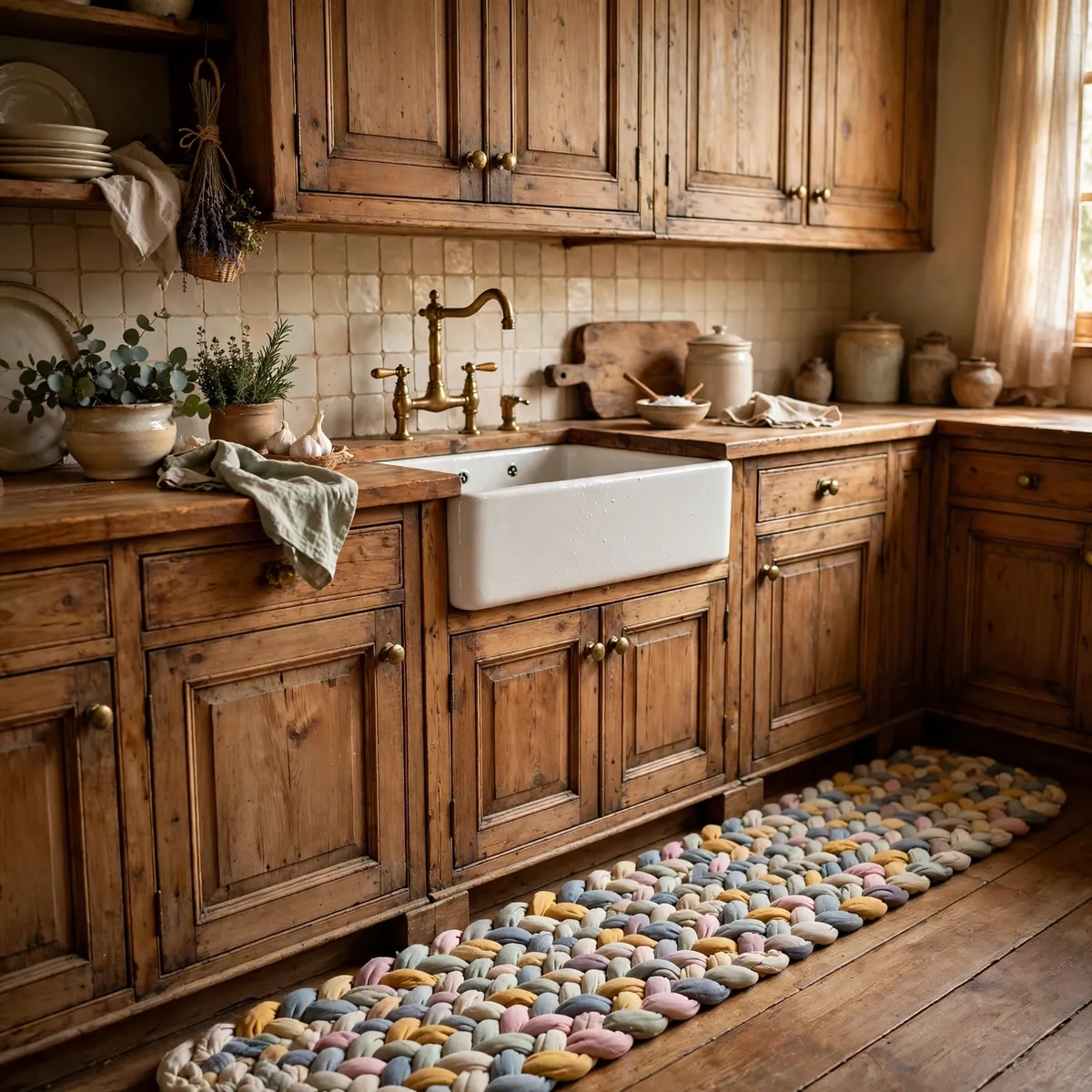
Cold floors are the enemy of cozy. Lay a braided cotton or wool rug along the work zones — sink, island — and the kitchen feels softer and warmer. Braided rugs bring the handmade texture this style thrives on, and their muted weaves tie every tone together. Choose washable weaves for real-life kitchens.
Quick tips
- Place rugs where you stand longest: sink and stove.
- Choose washable weaves for working kitchens.
18. Display a Collection of Vintage Enamelware
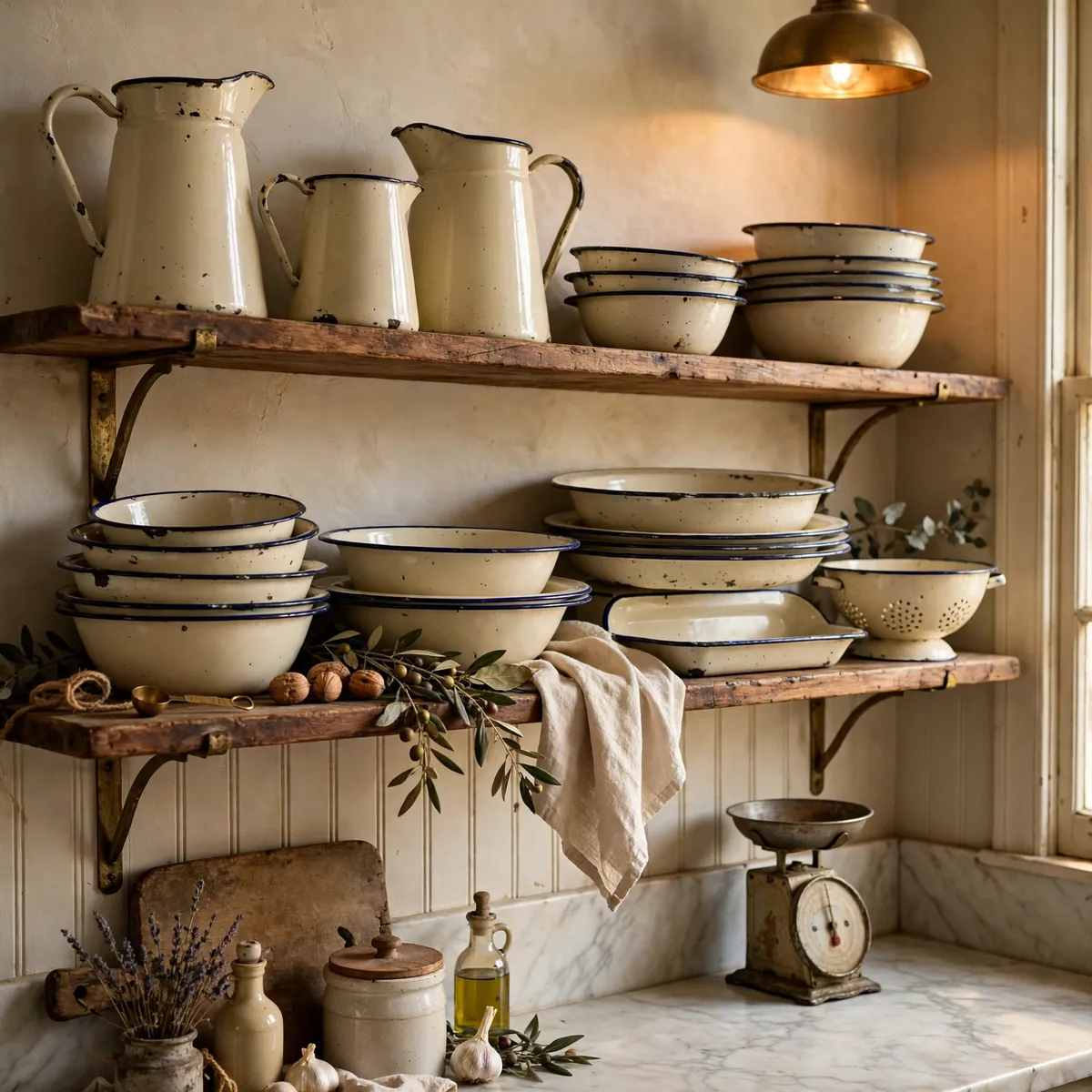
Cream enamelware with a navy or green rim is shorthand for this style: pitchers, bowls, and platters stacked on open shelves or hung by their handles. Sturdy, useful, and beautiful — exactly what it prizes. Hunt them at flea markets; the chips and wear marks make each piece yours. Group by rim color for a cohesive display.
Quick tips
- Group pieces by rim color for a collected look.
- Chips and wear are character — never hide them.
19. Choose Vintage-Look Flooring
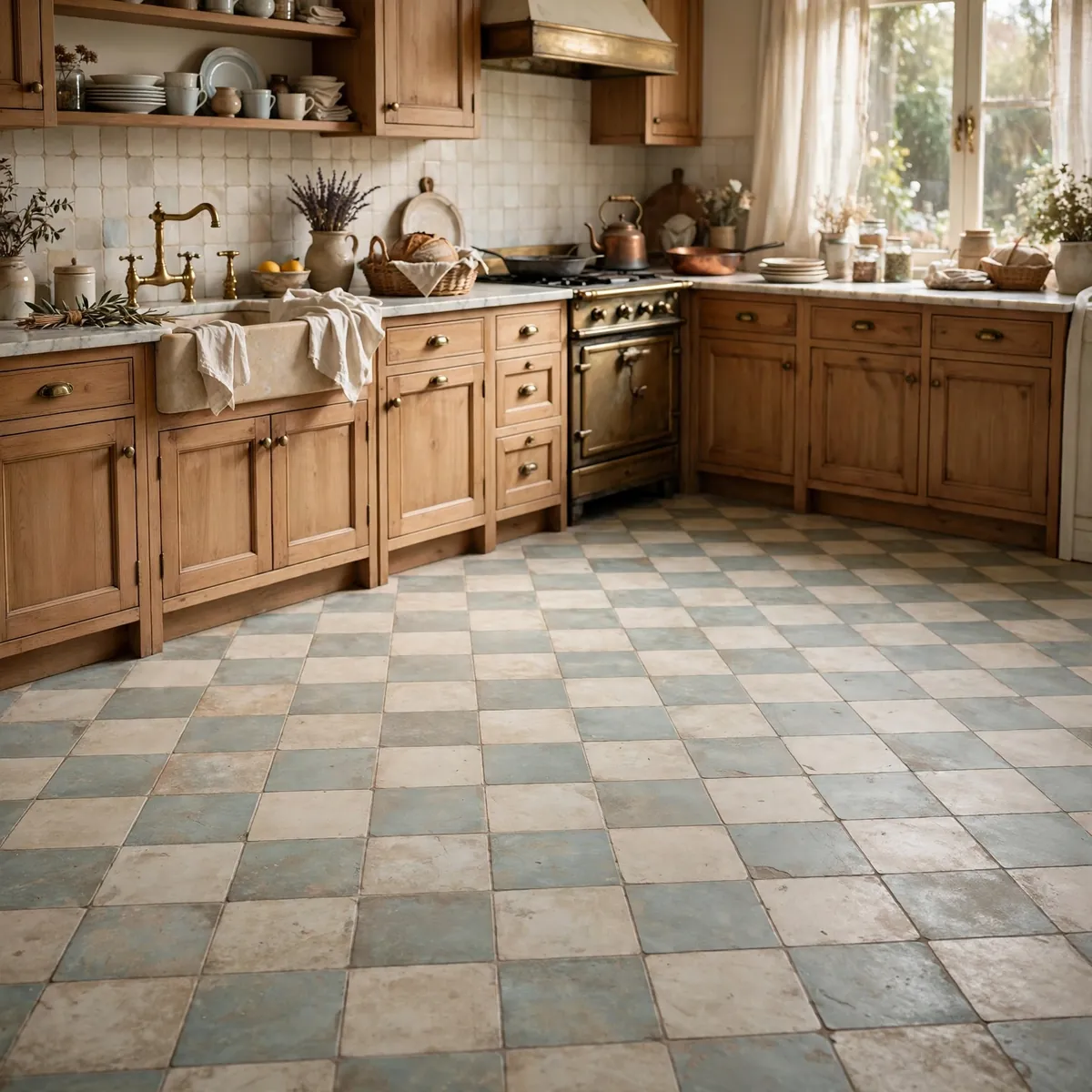
The floor sets the tone before anything else. A checkerboard in muted tones, a vintage-patterned tile, or quality patterned linoleum grounds a grandmacore kitchen in history. Keep the pattern soft — faded rather than graphic — so it reads as original to an old house. Pair with simple cabinetry so the floor is the pattern star.
Quick tips
- Faded, muted patterns read as authentic, not new.
- Keep cabinetry simple when the floor carries the pattern.
20. Style Cookie Jar and Cake Stand Moments
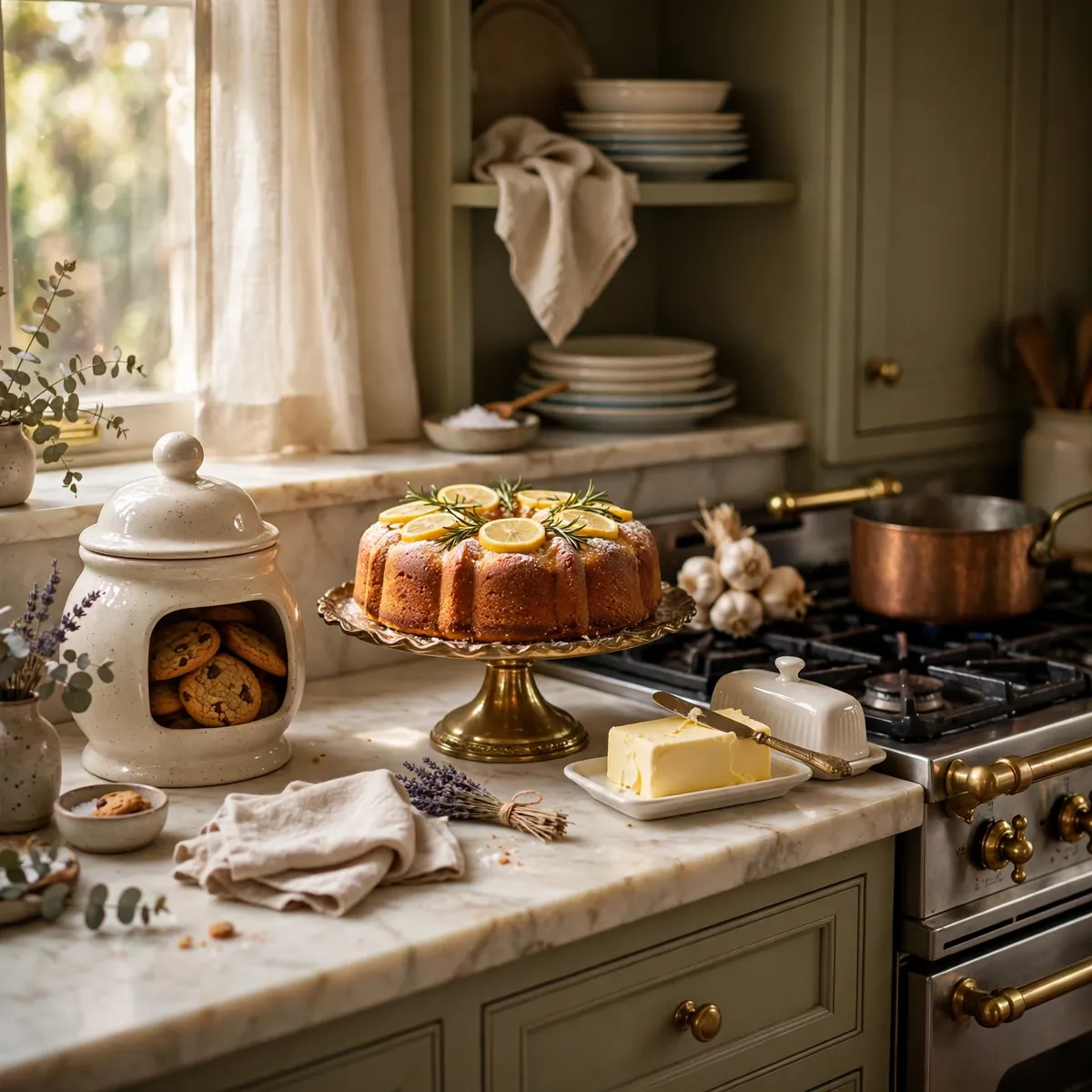
Every grandmacore kitchen needs its small rituals on display: a cookie jar that’s always full, a cake stand holding today’s bake, a butter dish by the stove. These moments make the kitchen feel inhabited rather than decorated. Keep them in reach and real — an empty cake stand is decor, a full one is a promise. Rotate with the seasons: berries in summer, a pumpkin loaf in fall.
Quick tips
- Keep display food real and reachable, not decorative.
- Rotate the display with the seasons.
Frequently Asked Questions
What is a grandmacore kitchen?
A grandmacore kitchen is a style built around emotional comfort: warm woods, layered textiles, vintage finds, and lived-in details that make a kitchen feel loved for decades. The goal is a space that feels remembered, not styled — nothing brand new or overly staged.
How is grandmacore different from farmhouse style?
Farmhouse leans rustic and architectural — shiplap, apron sinks, barn doors. A grandmacore kitchen is softer and more personal: florals, lace, gingham, heirloom pieces, and the warmth of a grandmother’s house. It can live inside a farmhouse shell, but its heart is nostalgia, not rusticity.
How do I get the grandmacore kitchen look without clutter?
Anchor everything with a cohesive palette and repeated materials. Layer patterns and vintage finds in one muted tonal family, repeat two or three materials throughout, and leave breathing room on shelves. It is about thoughtful placement, not volume — edit until every piece earns its place.
What colors work best in a grandmacore kitchen?
Warm, slightly washed-out tones: creams, soft greens, dusty reds, faded blues, warm woods. Sun-faded colors read as authentic. Avoid high-contrast or neon-bright; muted and mellow is the entire palette.
The Remembered Takeaway
A grandmacore kitchen is not about vintage for vintage’s sake — it is about feeling right. Start with one corner that holds a memory: a nook, a shelf of mugs, a skirted sink. Layer textiles and pattern inside a calm palette, let things show their age, and resist the urge to stage. The kitchens we love longest are the ones that love us back. ♥