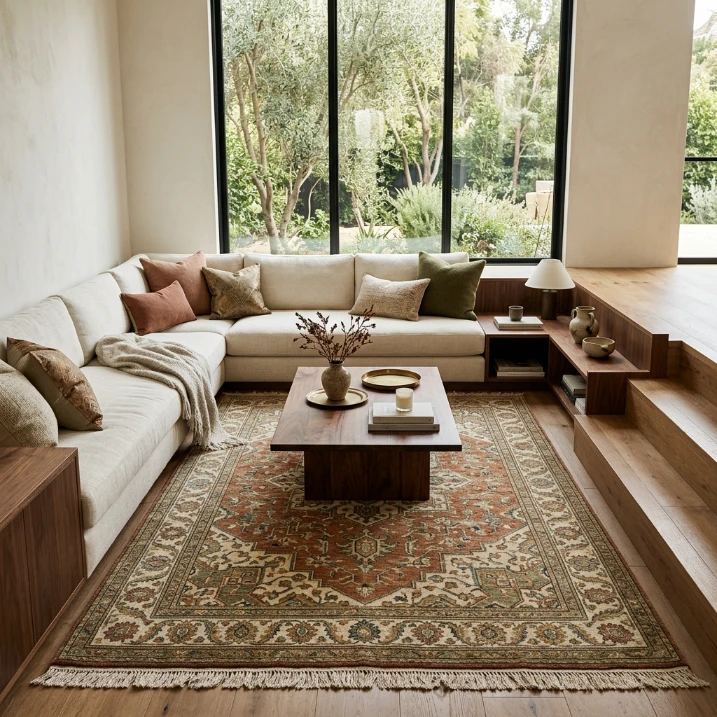
26 Rustic Living Room Ideas to Create a Stunning, Warm and Inviting Retreat
Rustic living room ideas work because they make a room feel warm, lived in, and genuinely welcoming. A rustic living room is built from honest materials and soft textures: exposed wood beams, a stone fireplace, worn leather, woven baskets, and linen that softens with every wash. When those elements come together, the room feels calm and grounded rather than rough or unfinished.
You do not need a cabin in the woods or a full renovation to get the look. Start with one strong anchor, such as a reclaimed wood coffee table or a chunky wool throw, and build around it. Layering matters more than spending: a jute rug under a wool rug, a linen cushion beside a leather chair, and warm lamplight over cool daylight all add depth without clutter. Even a small room can carry the style well, and the principles behind small living room ideas apply here too. This guide brings together 26 rustic living room ideas, from beam ceilings and stone walls to affordable changes like plaid cushions and terracotta pots, each with a concrete example and quick tips.
Key Takeaways
What defines a rustic living room?
Natural materials, visible texture, and comfortable furniture define it. Wood, stone, leather, wool, linen, and iron do most of the work, while the palette stays warm and earthy.
Can a rustic living room look modern?
Yes. Balance rough textures with clean lines: pair a raw wood table with a simple linen sofa, keep the palette calm, and leave breathing space around each piece.
How do I make a small rustic living room feel bigger?
Use lighter woods, pale walls, and mirrors to reflect light, and choose furniture with visible legs. One large rug beats several small ones, and a single focal point keeps the room from feeling crowded.
What is the easiest way to start on a budget?
Start with textiles and lighting. Add a wool throw, linen cushions, a jute rug, and warm-toned lamps, then add one wooden piece when you find the right one.
Which colours suit a rustic living room best?
Warm neutrals suit it best: cream, warm oak, honey, and stone grey. Accents of sage, terracotta, navy, and forest green add depth without breaking the calm, earthy feeling.
What Makes a Living Room Feel Rustic?
A living room feels rustic when natural materials, visible grain, and honest craftsmanship set the tone, with wood, stone, leather, wool, and iron doing more work than paint or pattern.
Rustic style is less about a particular era and more about a feeling. A room feels rustic when you can see how things are made: the grain in a wooden beam, the uneven surface of a stone wall, and the weave of a linen curtain. Texture is the second ingredient, layering rough against soft, so a smooth leather sofa sits beside a nubby wool throw and a cool stone hearth sits beside a warm timber mantel. Colour supports the effect, with warm neutrals as the base and deeper accents added sparingly.
How Do You Keep a Rustic Living Room from Looking Dated?
You keep a rustic living room from looking dated by mixing old textures with clean lines, editing ruthlessly, and letting light and breathing space balance the heavier natural materials.
The most common mistake is adding too much at once: antlers, plaid, and dark wood in a single room. One or two character pieces are enough. Let a beam ceiling or a stone fireplace be the statement and keep the rest calmer. Good lighting matters too: warm bulbs, a dimmer switch, and table lamps soften dark wood and heavy stone, while natural light keeps the room bright by day.
What Colors Work Best in a Rustic Living Room?
The best colours for a rustic living room are warm neutrals such as cream, warm oak, honey, and stone grey, deepened with sage, terracotta, navy, forest green, or burgundy in cushions, throws, and art.
Start with a pale, warm base on the walls so the room stays bright, then add mid-tone wood and one or two deeper accents. The table below compares four rustic directions. Whichever direction you choose, repeat each accent colour at least twice in the room, perhaps in a cushion and a piece of art, so the palette feels intentional.
| Rustic style | Colour palette | Key materials | Best for |
|---|---|---|---|
| Cabin rustic | Warm oak, honey, deep brown | Log wood, stone, wool | Cosy rooms and fireplaces |
| Farmhouse rustic | Cream, sage, soft grey | Painted wood, linen, iron | Bright family living rooms |
| Lodge rustic | Charcoal, forest green, leather brown | Dark timber, stone, antler | Large rooms with high ceilings |
| Modern rustic | Cream, stone grey, black accents | Oak, linen, matte metal | Small or open-plan spaces |
1. Exposed Wood Beam Ceiling
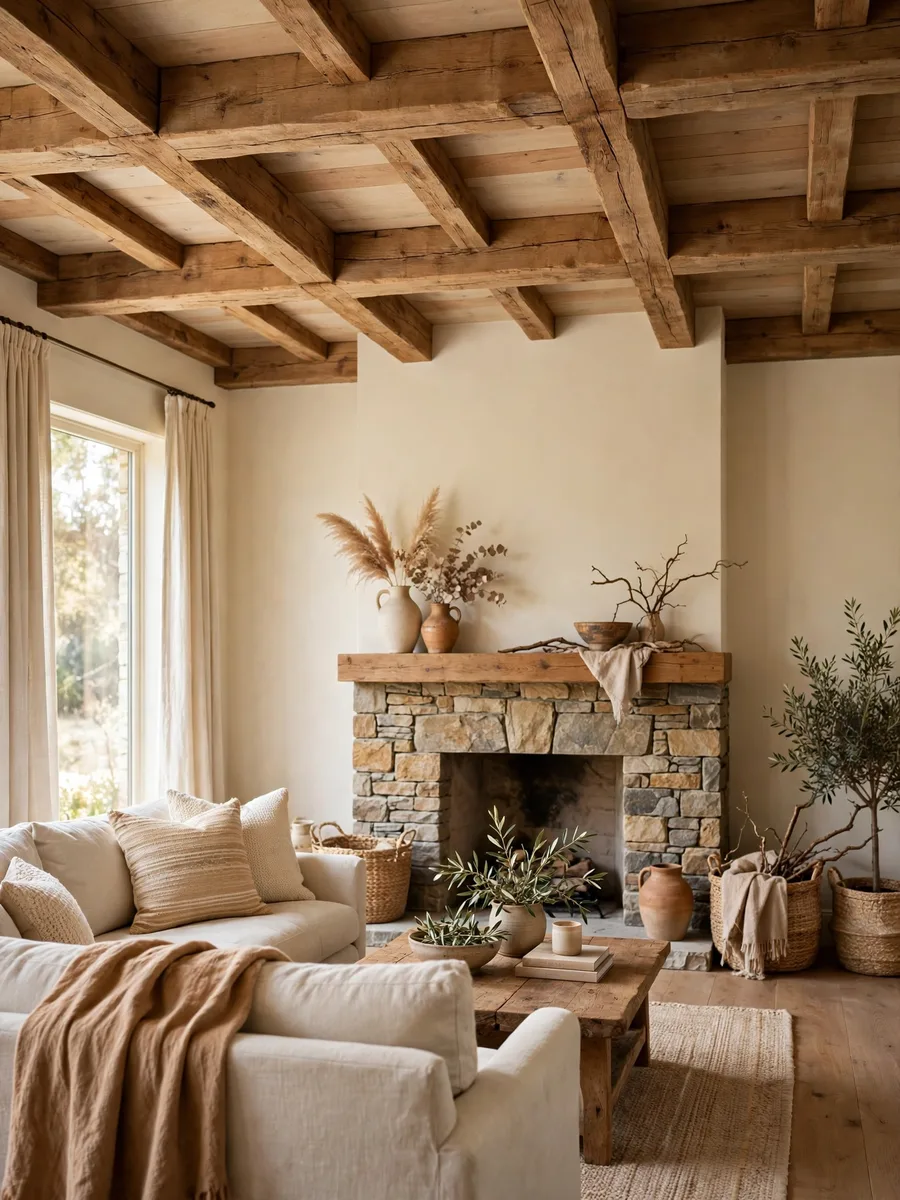
An exposed wood beam ceiling gives a living room a rustic soul fast. The beams draw the eye upward and make a new room feel full of history.
For example, three wide oak beams across a white-walled room instantly warm the space.
Quick tips: Match the beam tone to your floor or coffee table, and keep ceiling lights simple so the beams stay the feature.
2. Stone Fireplace Focal Wall
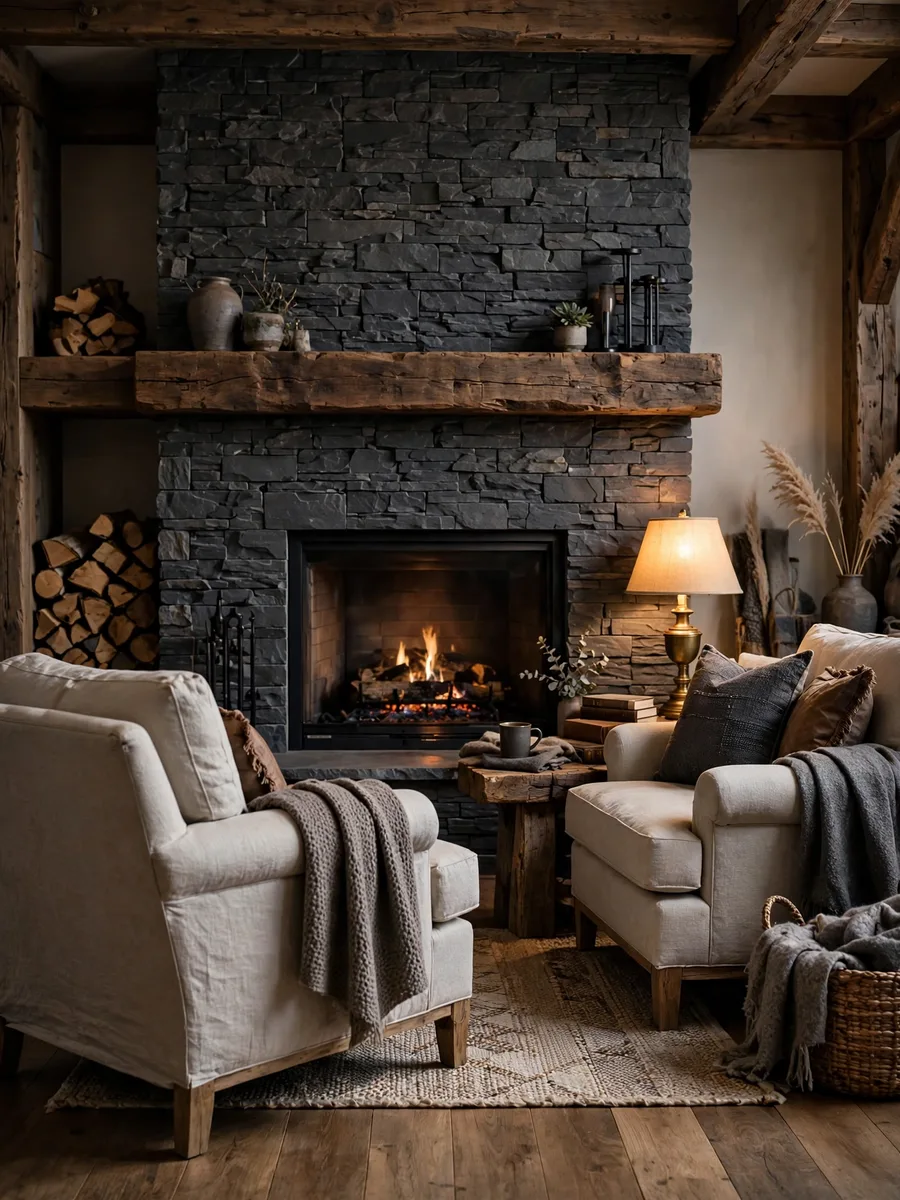
A stone fireplace gives a rustic living room its natural centre. The rough texture anchors the seating area, and the hearth becomes the gathering place on cold evenings.
For example, a charcoal-grey stacked stone fireplace with a thick timber mantel and two linen armchairs creates a reading spot that feels both grand and welcoming.
Quick tips: Choose stone in a grey that matches your rug or sofa undertones, and seal natural stone so soot wipes off easily.
3. Reclaimed Wood Accent Wall
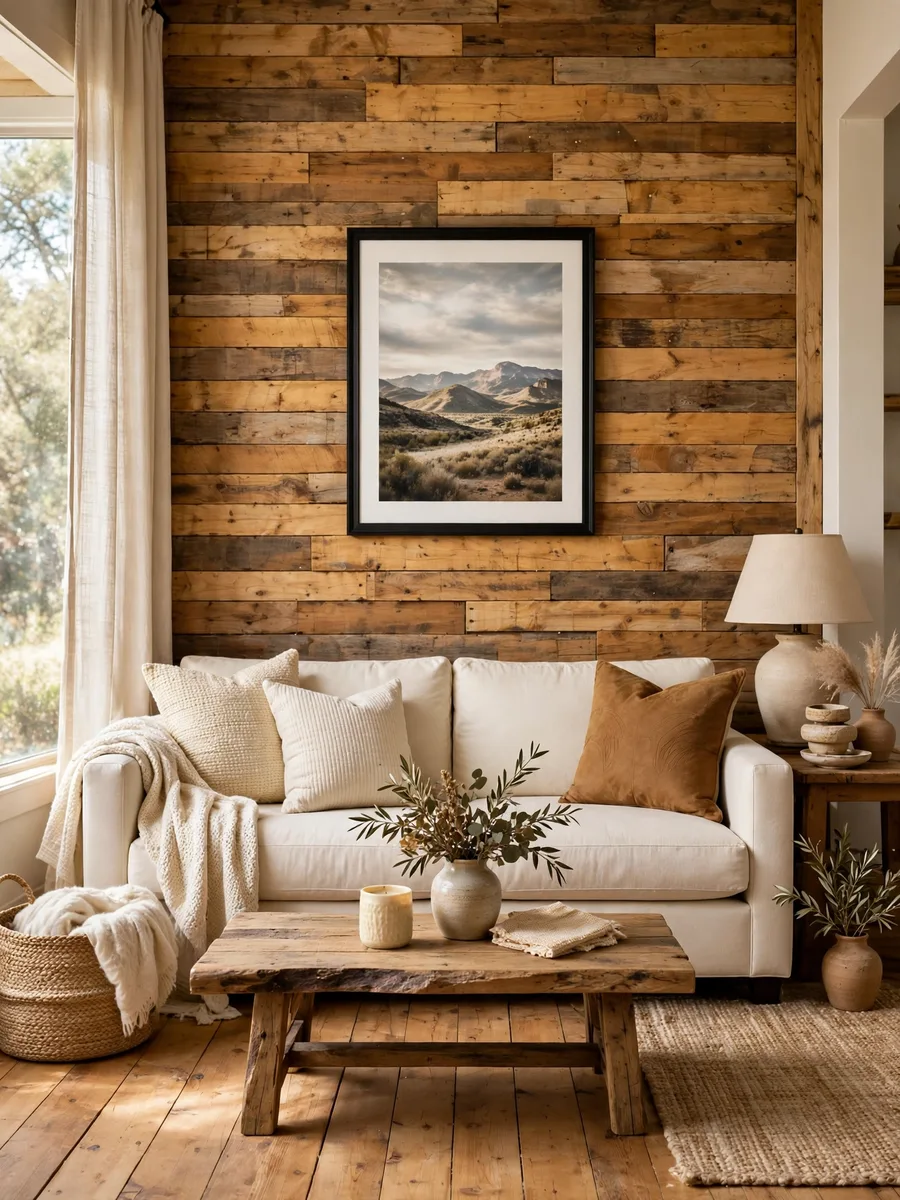
A reclaimed wood accent wall adds warmth and texture without taking over the room. Each plank carries its own grain, so the wall feels layered and alive.
For example, one reclaimed wood wall behind a cream sofa turns a plain room into one with a clear focal point.
Quick tips: Use the wood on one wall only, keep the other walls plain, and check reclaimed boards are cleaned and sealed first.
4. Leather Sofa with Linen Throws
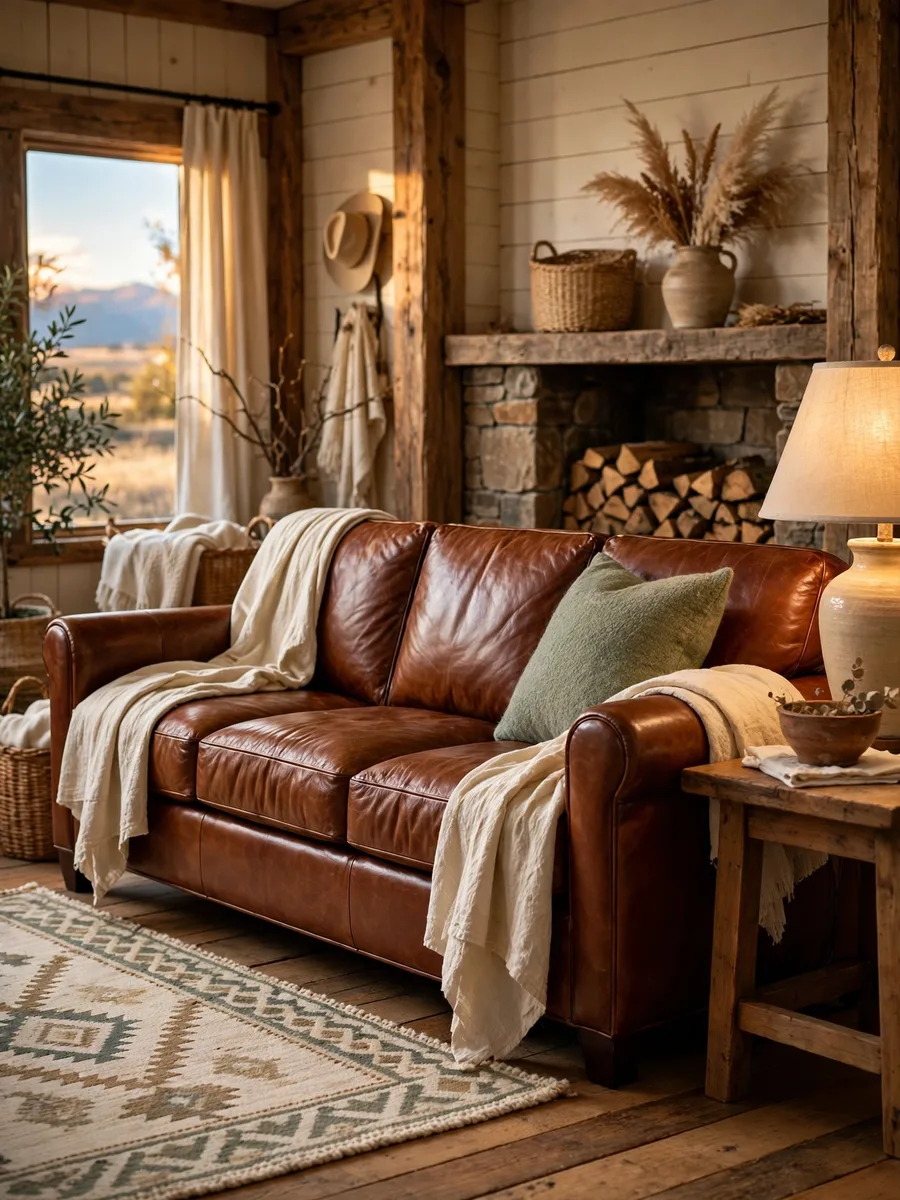
A leather sofa is a rustic classic because it improves with age. Cognac leather warms a neutral room, develops a soft patina, and stands up to daily use better than pale fabric.
For example, a three-seat cognac leather sofa with cream linen throws and a sage wool cushion feels relaxed and expensive at once.
Quick tips: Condition leather twice a year, keep it out of direct sunlight, and choose washable linen throws for easy care.
5. Chunky Knit and Wool Textiles
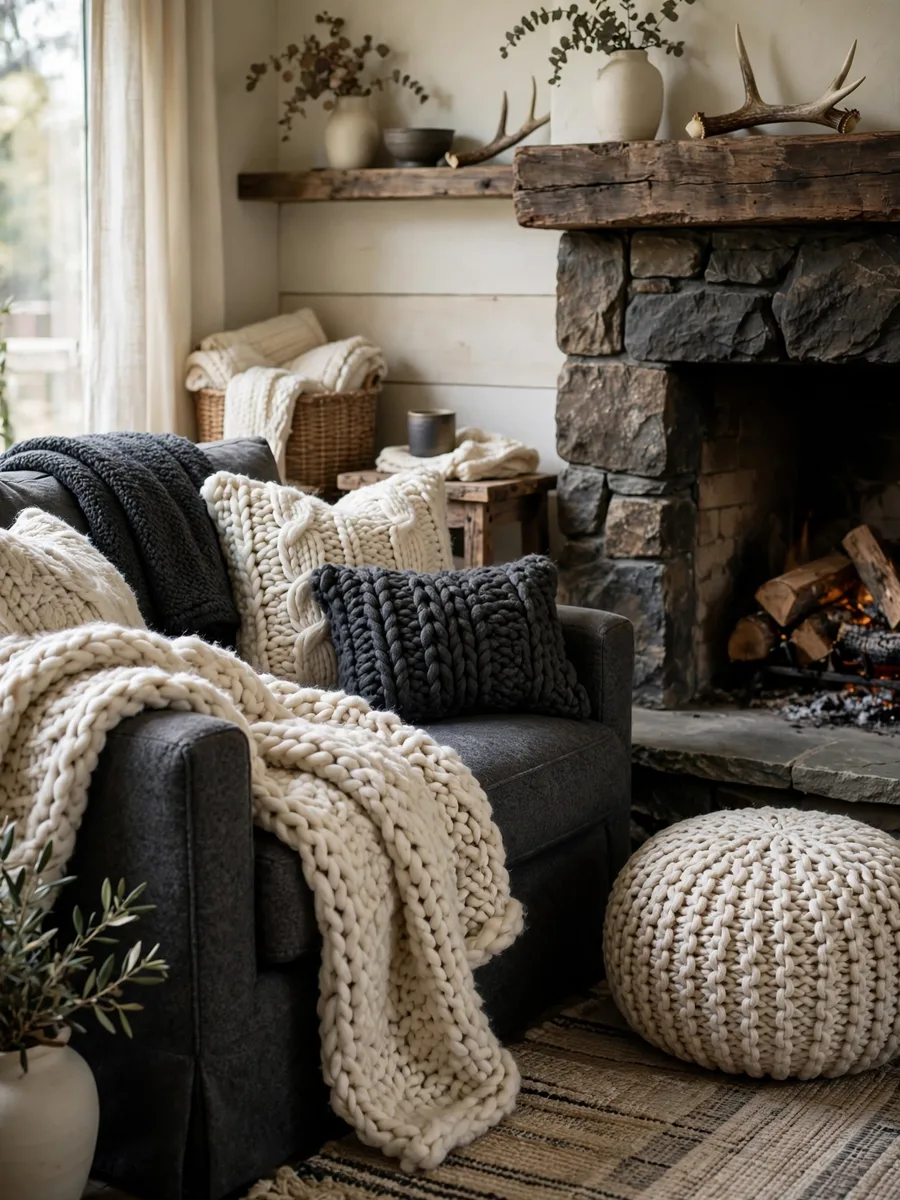
Chunky knit and wool textiles make a rustic living room feel cosy rather than just woody. A thick cream throw, a knitted pouf, and wool cushions add softness that balances stone and timber.
For example, a chunky cream knit throw over a charcoal wool blanket on the end of a sofa gives guests something to reach for on a cold evening.
Quick tips: Mix one chunky knit with smoother wool or linen for contrast, and air wool outside instead of washing it too often.
6. Wrought Iron Lighting
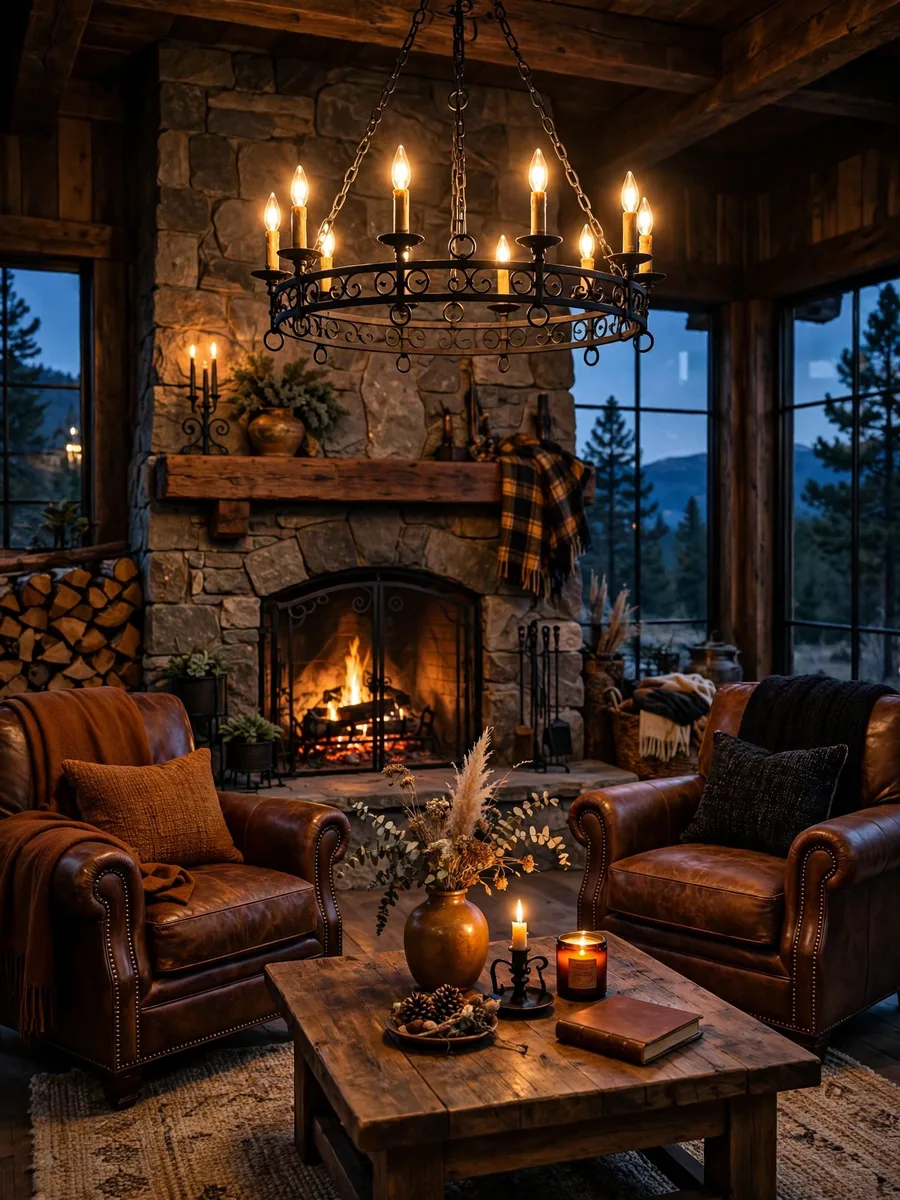
Wrought iron lighting adds a handcrafted, old-world touch that suits rustic rooms. A black iron chandelier or iron wall sconces give the room structure and a warm glow.
For example, a simple ring-shaped iron chandelier with warm amber bulbs hung low over a wooden coffee table makes evening conversations feel intimate.
Quick tips: Use warm-white bulbs around 2700K for a golden glow, and keep iron finishes matte black so they read as rustic, not industrial.
7. Rustic Coffee Table from Reclaimed Timber
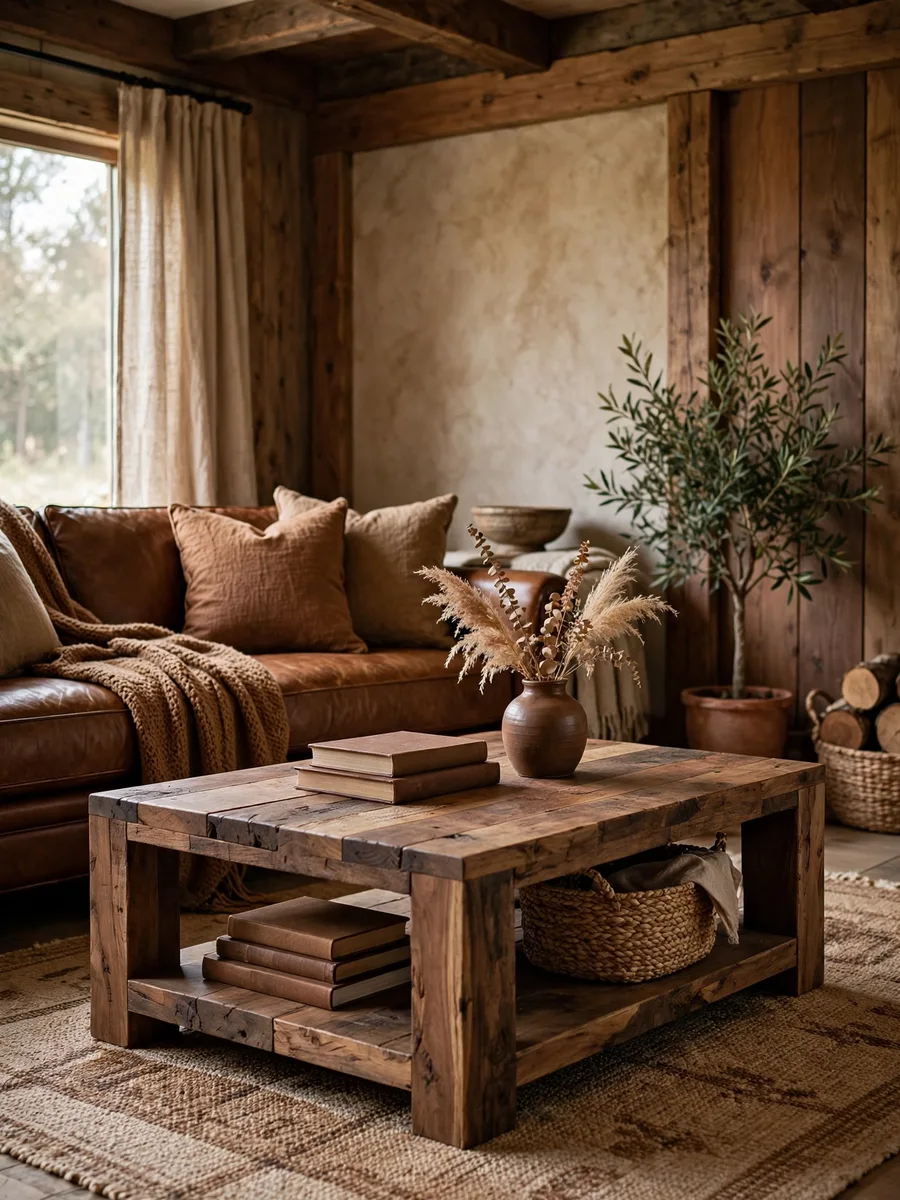
A coffee table made from reclaimed timber is both a practical surface and a piece of rustic sculpture. The thick top and visible grain ground the seating area, and no two tables look alike.
For example, a low reclaimed timber table with a shelf for books and a woven basket underneath gives a family room storage and style in one piece.
Quick tips: Leave breathing space around the table for easy movement, and use coasters on raw timber to protect it from rings.
8. Layered Natural Fiber Rugs
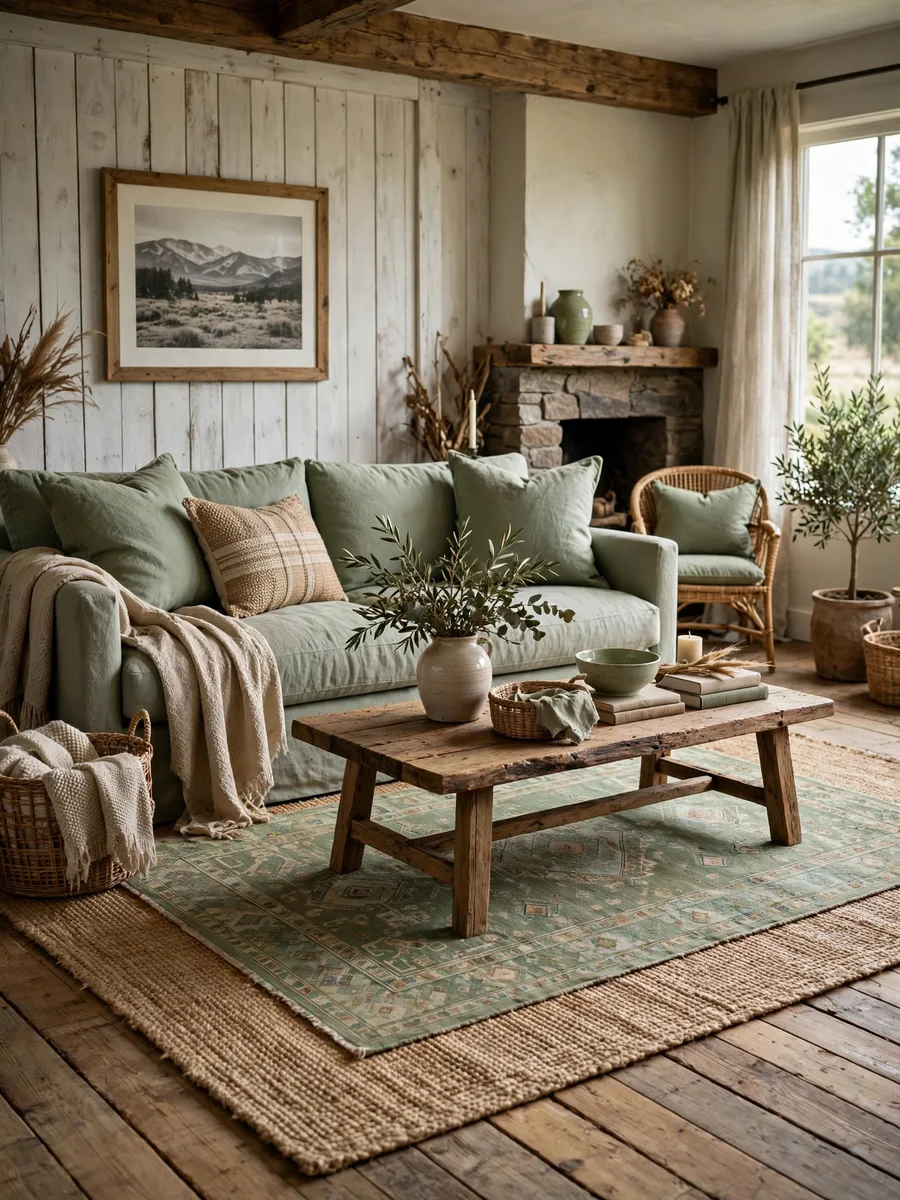
Layered natural fiber rugs bring softness and pattern to a rustic floor without a fussy design. A large jute rug as the base, with a smaller sage rug layered on top, defines the seating area.
For example, a jute rug under the sofa topped with a sage patterned rug warms a wooden floor and ties the sage cushions into the room. For more combinations, browse living room rug ideas for wood floors and neutral furniture.
Quick tips: Use a rug pad under jute to stop slipping, and make the base rug large enough that the front legs of all seating sit on it.
9. Open Shelving with Vintage Finds
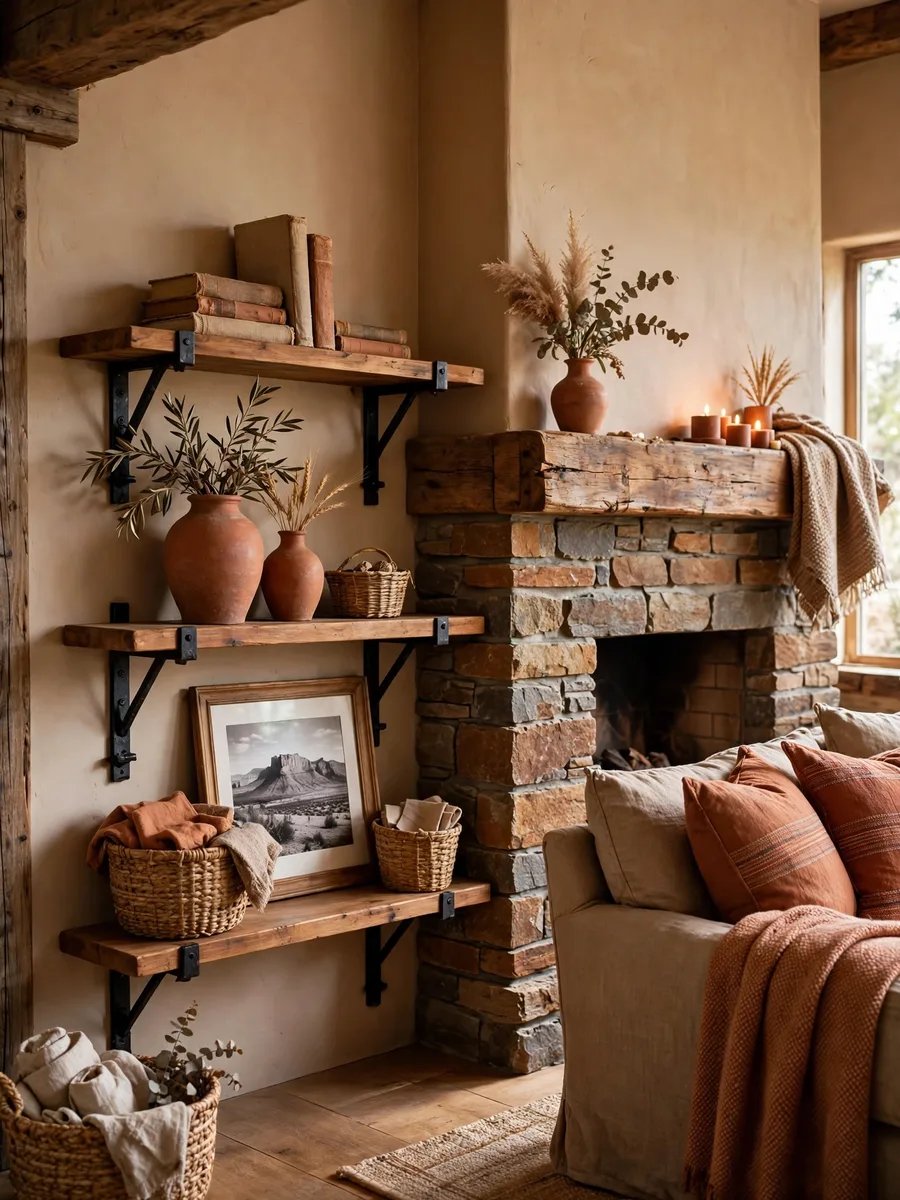
Open shelving with vintage finds lets a rustic living room show its personality. Thick wooden shelves on iron brackets, styled with old books, pottery, and baskets, feel collected over time.
For example, two wooden shelves beside a fireplace, holding stacked books, a terracotta vase, and a framed photograph, give the wall interest at eye level.
Quick tips: Group objects in odd numbers, repeat one material such as terracotta across shelves, and dust open shelves weekly.
10. Antler or Branch-Inspired Decor
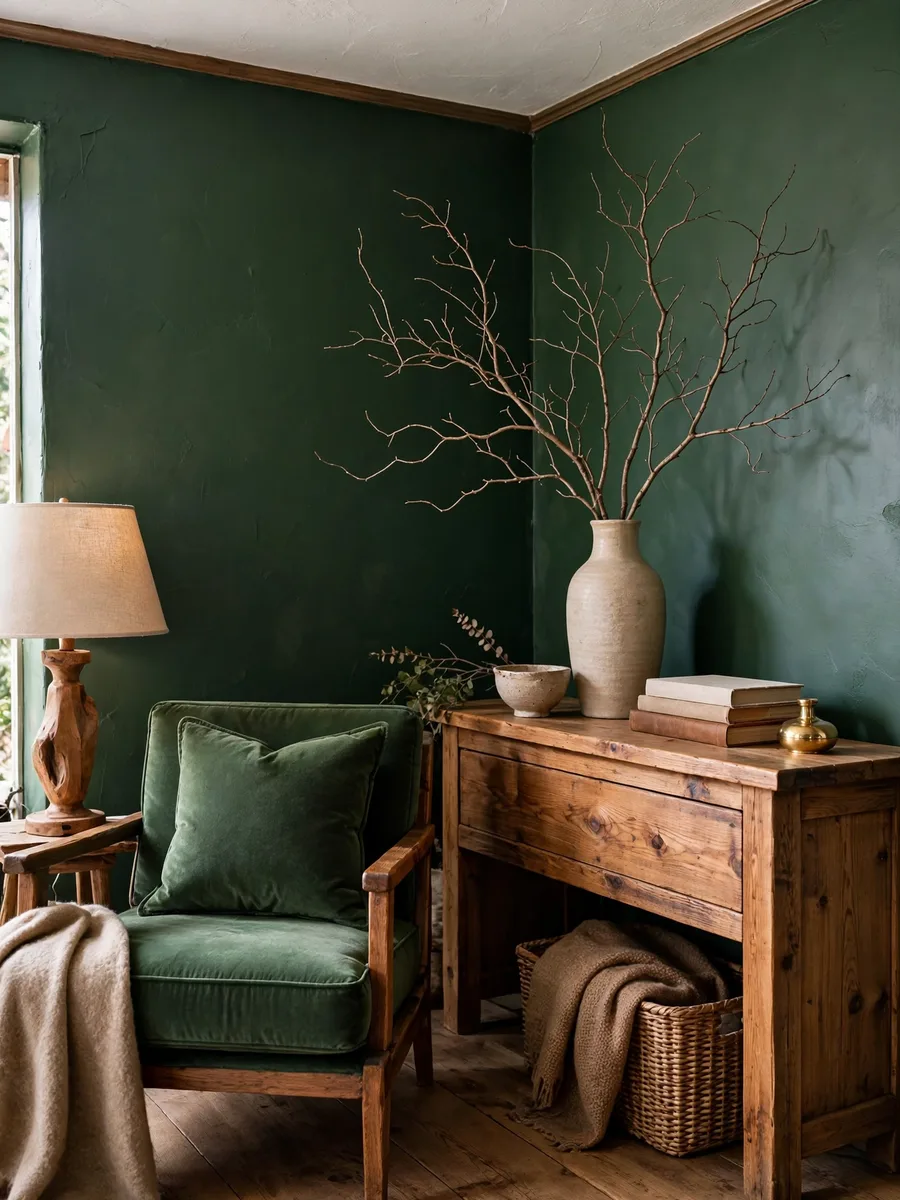
Branch-inspired decor brings a quiet nod to nature into a rustic living room. A sculptural branch in a tall vase or a driftwood candle holder adds organic shape.
For example, a tall vase of bare branches on a sideboard, beside a forest green cushion and a wooden lamp, gives a plain corner a natural focal point that changes with the seasons.
Quick tips: Use one branch piece per room, keep it in scale with the furniture, and choose faux antler over real antler for a kinder option.
11. Sliding Barn Door Room Divider
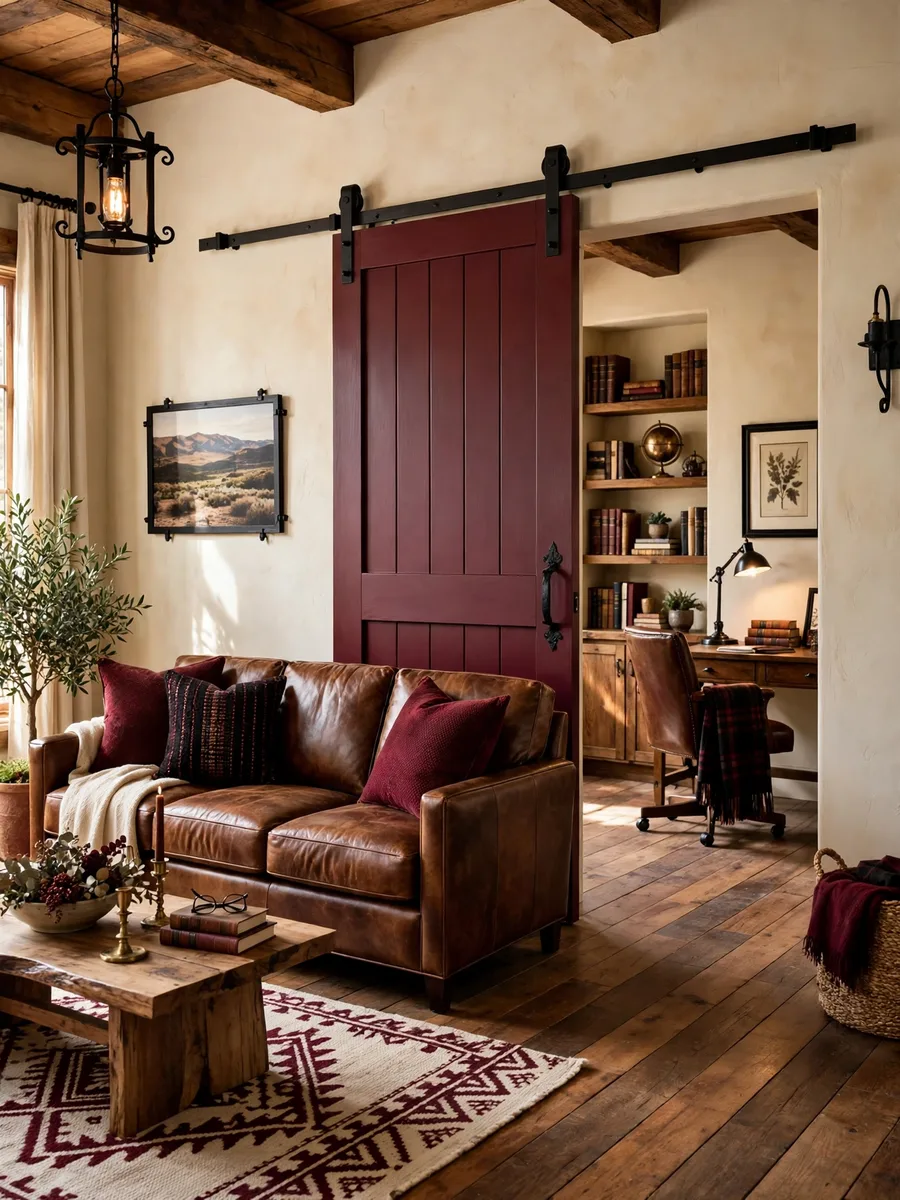
A sliding barn door is a practical rustic feature that also makes a strong statement. Mounted on a black iron rail, it can close off a living room from a hallway and save floor space.
For example, a deep burgundy barn door with black iron hardware between a living room and a study gives the room a rich accent colour when closed.
Quick tips: Measure the rail at twice the door width, fit a soft-close mechanism to stop slamming, and paint the door in a colour already used in your cushions.
12. Cozy Window Seat with Cushions
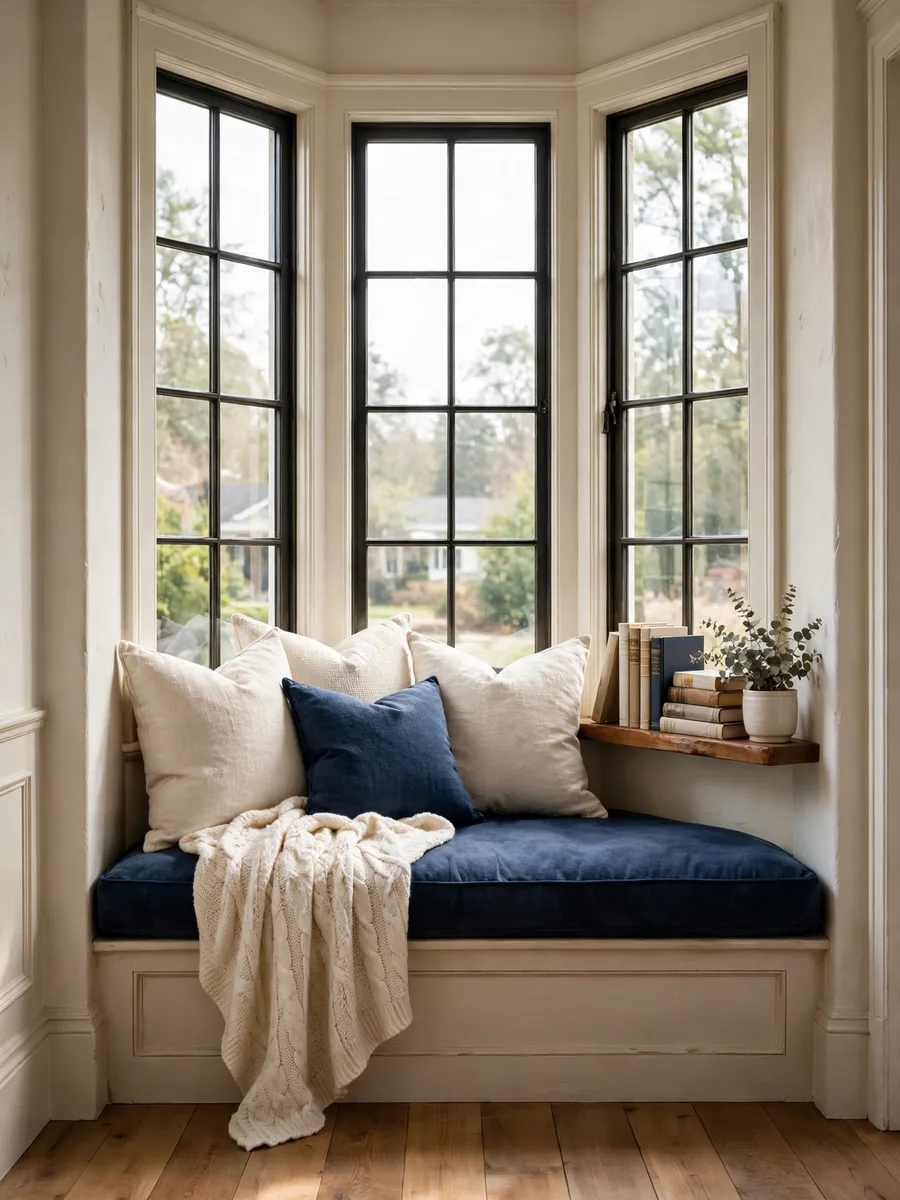
A cozy window seat turns an unused bay window into the most loved spot in a rustic living room. A thick navy cushion and a folded throw make it a reading nook by day.
For example, a window seat with navy cushions, a cream knit throw, and a small wooden shelf for books becomes the first place children and guests head for.
Quick tips: Use a firm foam base so the seat stays comfortable, add washable cushion covers, and keep a basket underneath for throws.
13. Live Edge Wood Mantel
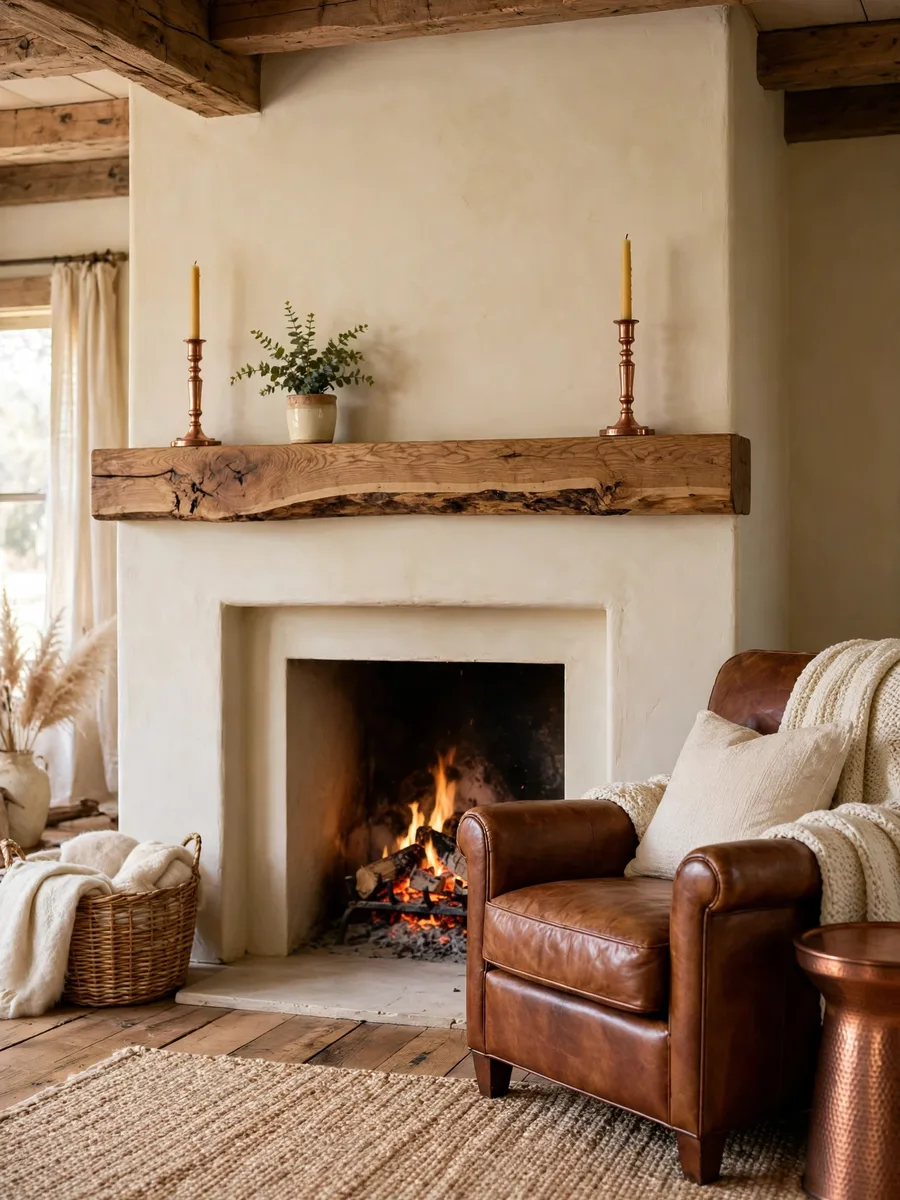
A live edge wood mantel keeps the natural shape of the tree, with one wavy edge that makes the fireplace feel handcrafted. Copper candlesticks on top pick up the warm tones in the wood.
For example, a thick live edge oak mantel over a cream plaster fireplace, styled with two copper candlesticks, gives a simple fireplace a bespoke, artisan feeling.
Quick tips: Seal the live edge to stop splinters, keep mantel decor low so the fire remains visible, and match the wood tone to a nearby table.
14. Plaid and Buffalo Check Patterns
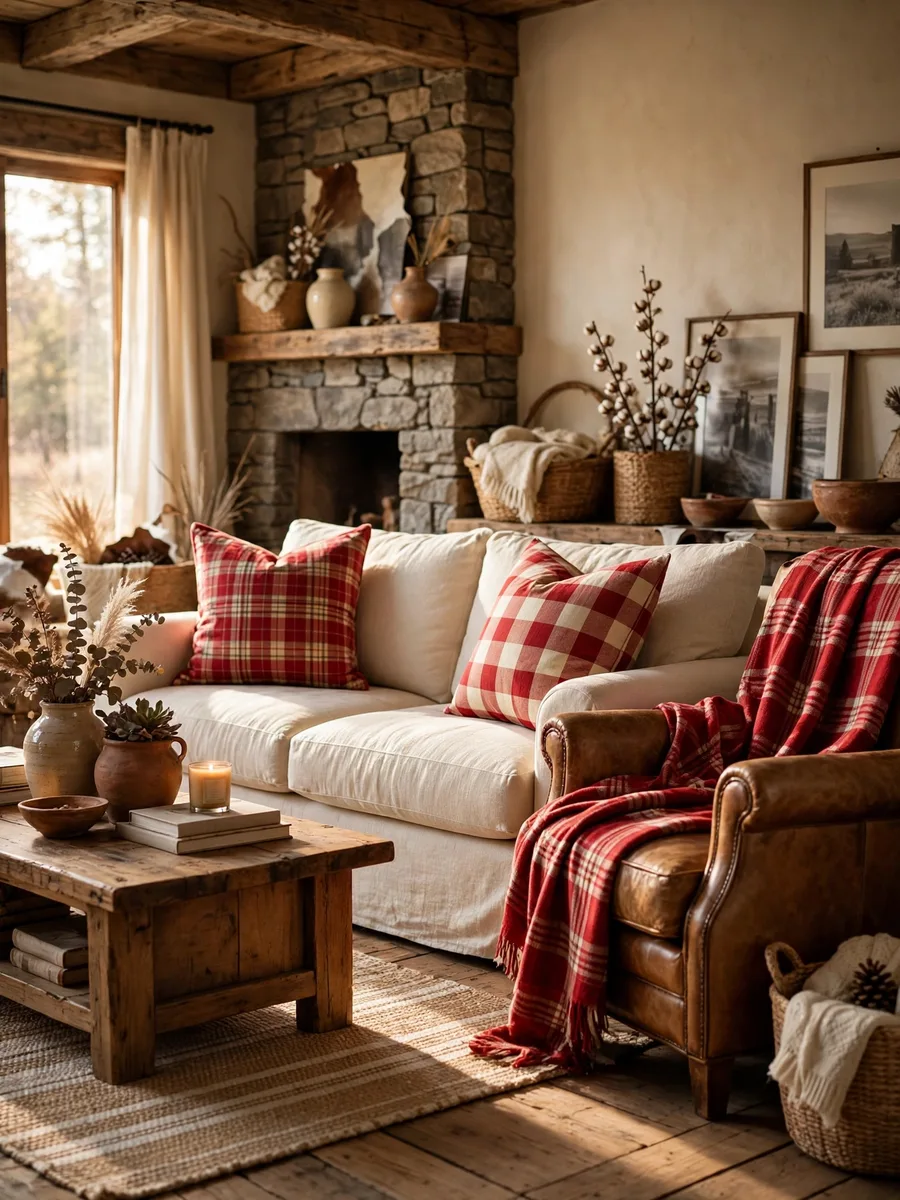
Plaid and buffalo check are the patterns most people associate with rustic style, and used sparingly they add warmth and tradition. A red buffalo check throw gives the room a cosy cabin feeling.
For example, two red plaid cushions on a cream linen sofa, plus a matching throw over a nearby chair, tie the seating area together and add a cheerful note in winter.
Quick tips: Use plaid in one or two places only, keep the check in proportion to the cushion, and pair it with plain textures to avoid a busy look.
15. Earthy Gallery Wall
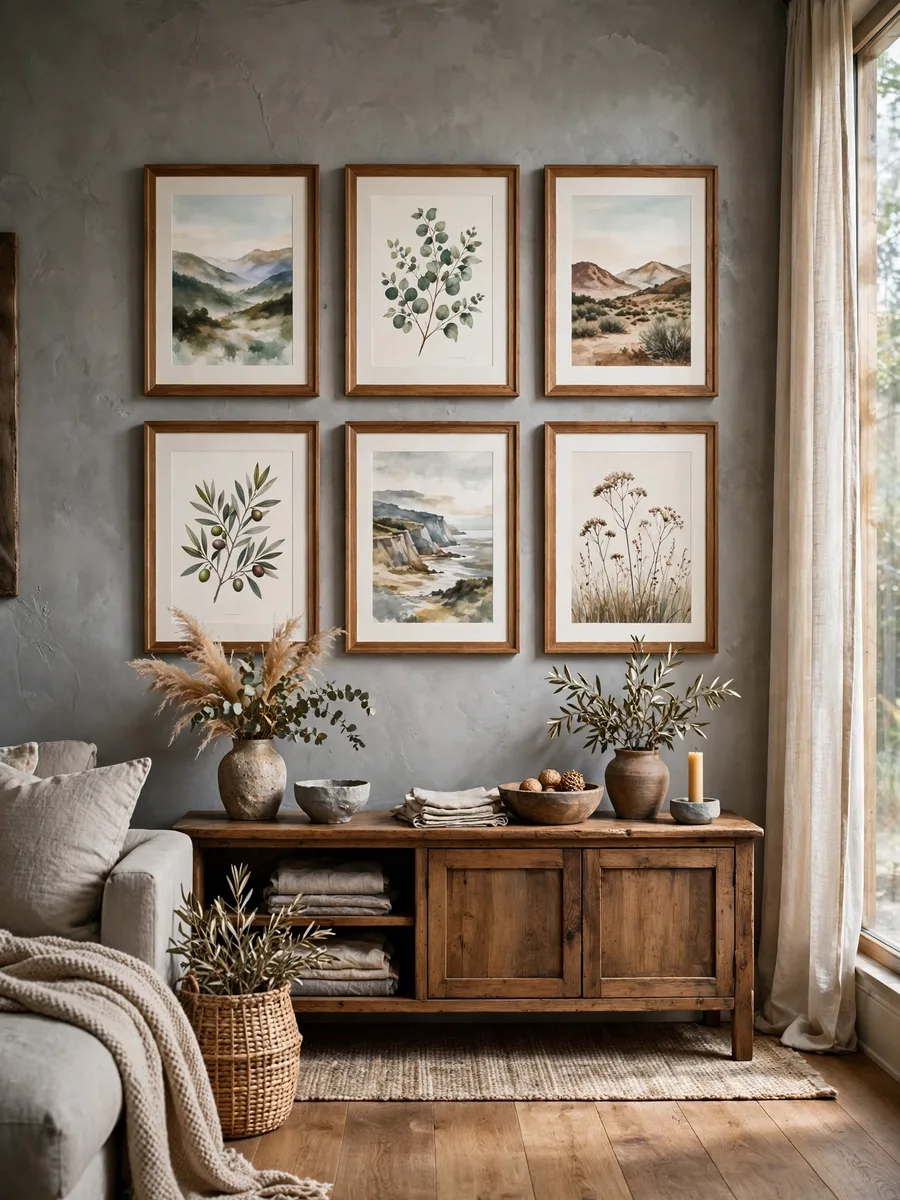
An earthy gallery wall brings art and memory into a rustic living room without bright, clashing colours. Landscape photographs and botanical prints in stone grey and cream feel calm and personal.
For example, six framed prints above a low wooden sideboard, mixing a mountain landscape and a family photograph in matching wood frames, give a blank wall a story.
Quick tips: Lay the arrangement on the floor first, keep two inches between frames, and use one frame colour throughout for a unified look.
16. Indoor Plants in Terracotta Pots
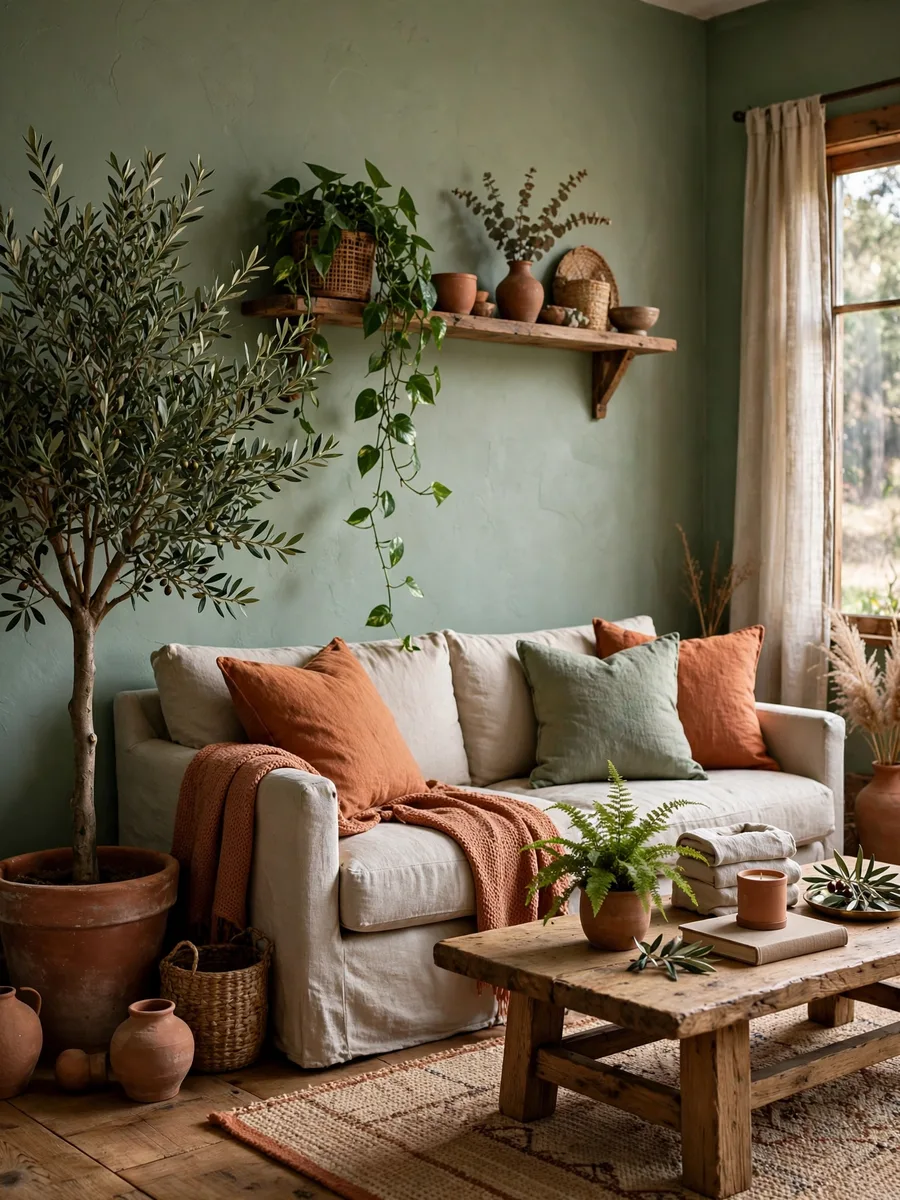
Indoor plants in terracotta pots are one of the simplest ways to soften a rustic living room. The warm orange-brown of terracotta suits wood and stone perfectly, and green leaves add life against sage walls.
For example, a large olive tree in a terracotta pot beside the sofa and a small fern on the coffee table bring two heights of green into the room.
Quick tips: Choose plants that suit your light levels, use saucers under terracotta to protect wood, and group plants in threes for a natural look.
17. Rustic Dining Nook in the Living Room
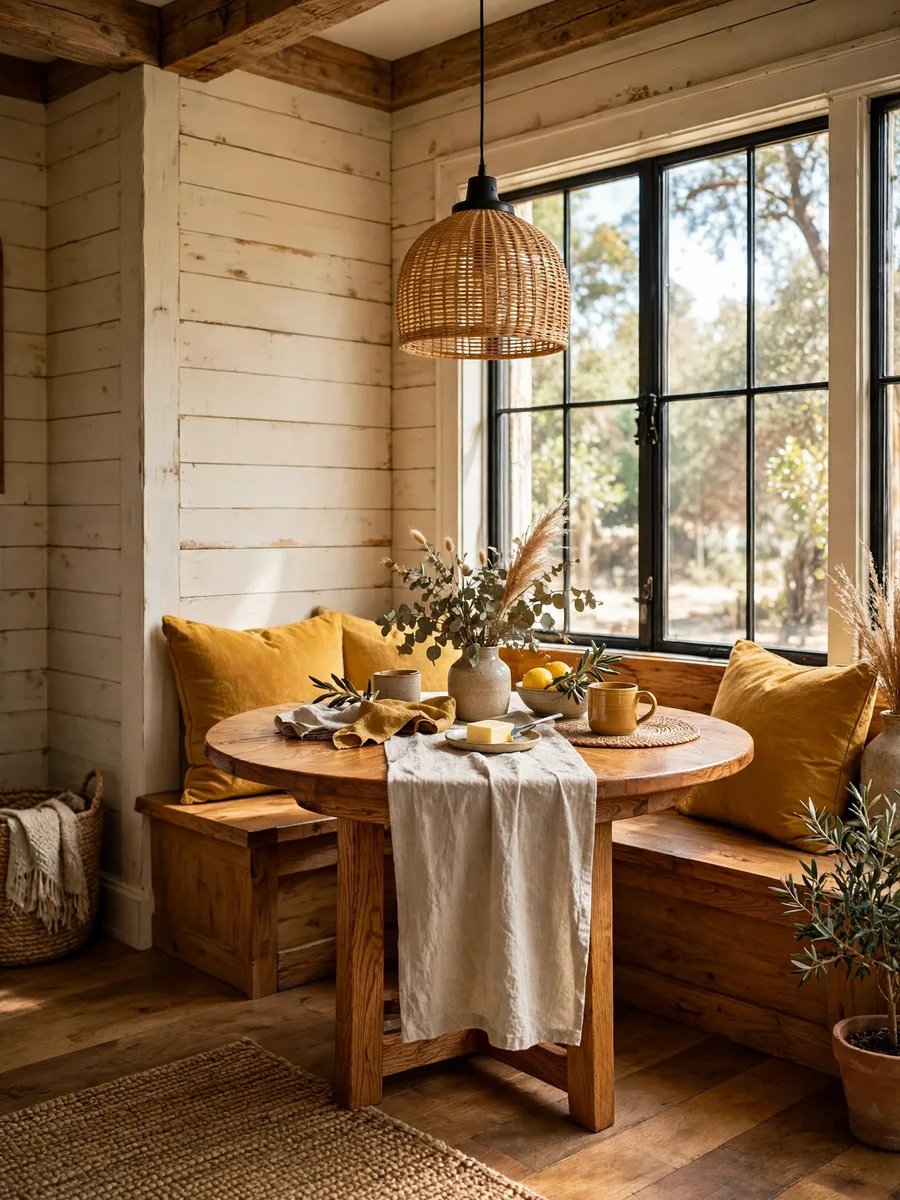
A rustic dining nook inside a living room makes the space work harder without a renovation. A small wooden table, benches, and a pendant light create a spot for breakfast, homework, or board games.
For example, a round honey-oak table with a built-in bench under a window, dressed with mustard cushions, turns an empty corner into a family gathering spot.
Quick tips: Keep the nook table small enough to leave a clear walkway, use wipeable cushions for meals, and hang the pendant low enough to light the table.
18. Vintage Trunk as a Side Table
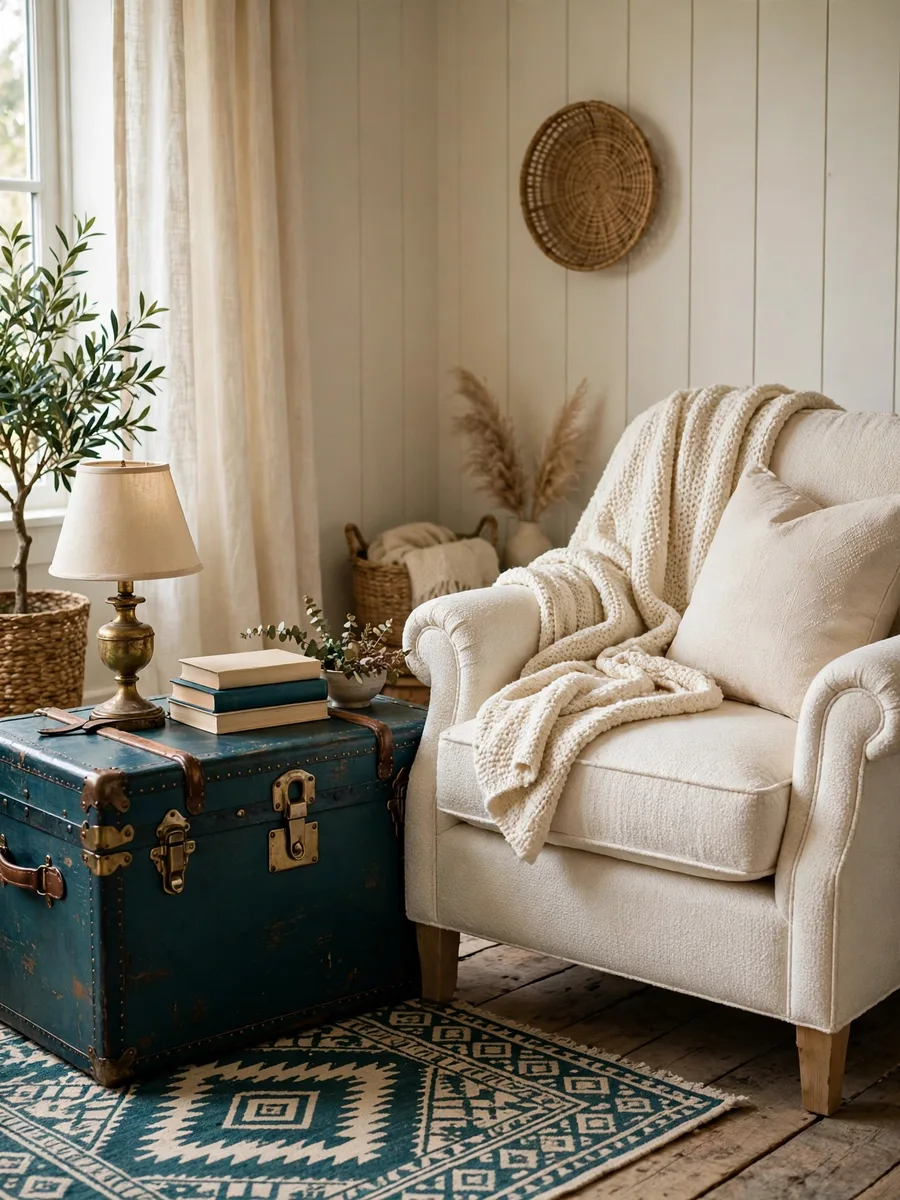
A vintage trunk as a side table adds character, storage, and a sense of history to a rustic living room. An old trunk beside a sofa holds blankets, photo albums, or games, and its worn surface tells a story.
For example, a deep teal painted trunk beside a cream armchair, topped with a small lamp and a stack of books, gives the corner colour and purpose.
Quick tips: Check the trunk opens easily and has no musty smell, add felt pads underneath to protect floors, and keep the top clear enough for a cup of tea.
19. Warm Candlelight and Lanterns
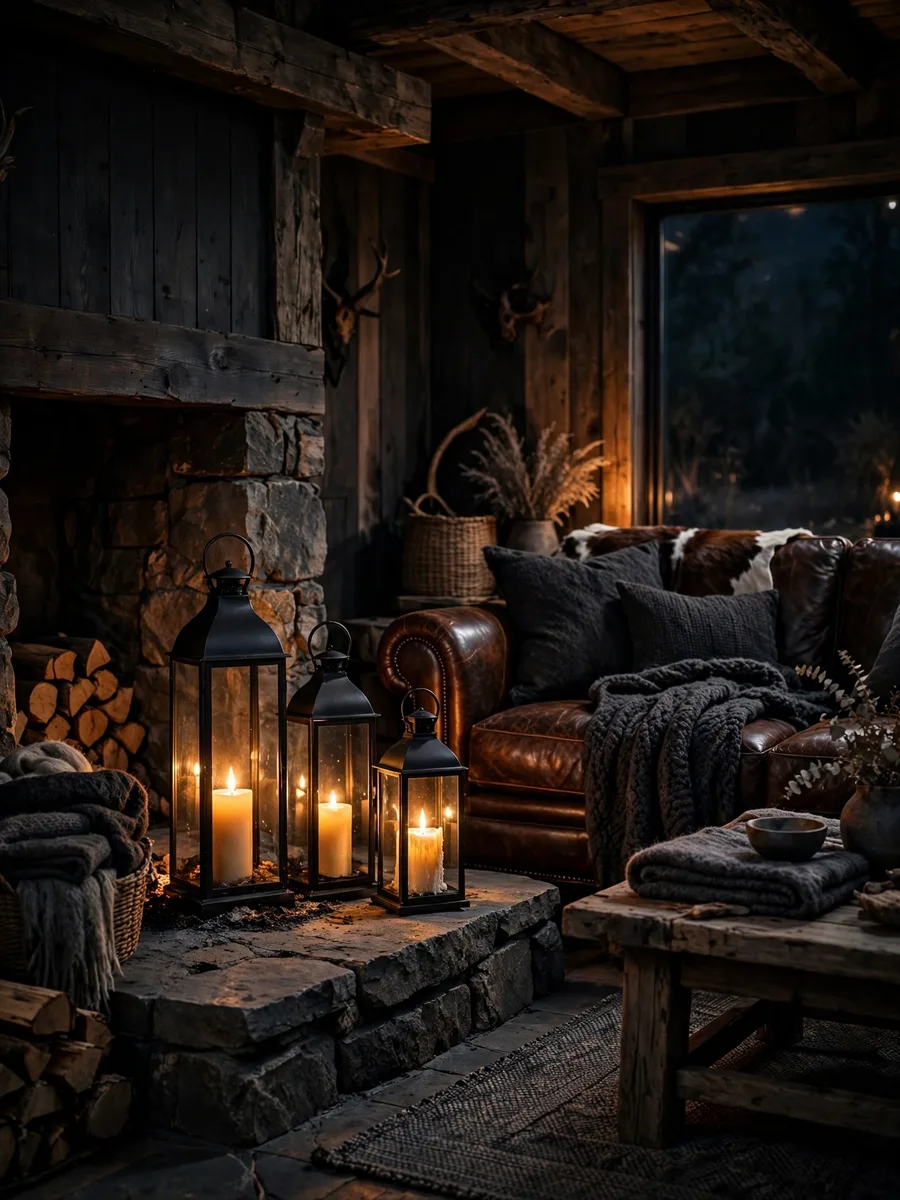
Warm candlelight and lanterns are the finishing touch that makes a rustic living room glow after dark. Lanterns in black metal or aged wood cast a soft amber light.
For example, three lanterns of different heights on a stone hearth create a focal point that draws the family to the fireplace even when the fire is not lit.
Quick tips: Group lanterns in odd numbers, vary their heights, and never leave real candles burning unattended.
20. Textured Plaster or Limewash Walls
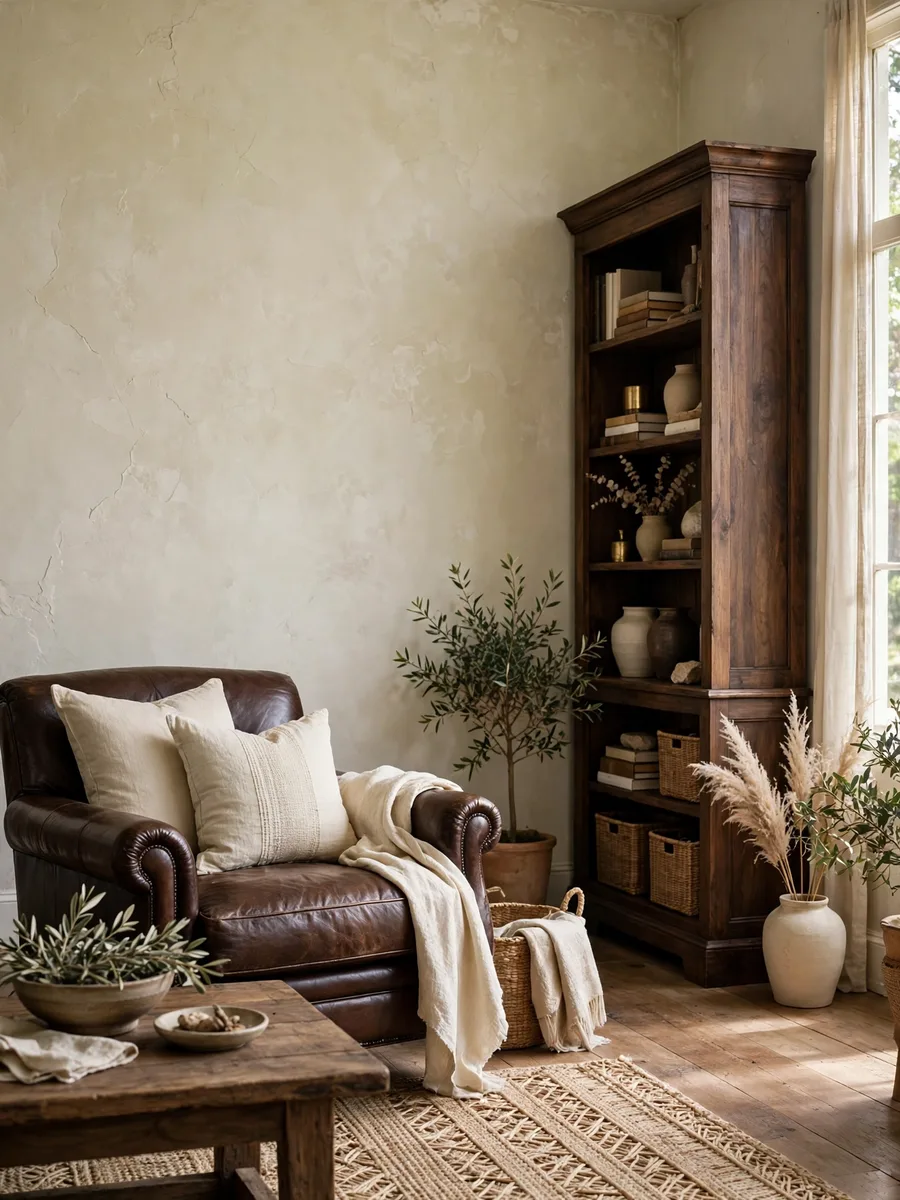
Textured plaster or limewash walls give a rustic living room a soft, hand-finished surface that flat paint cannot match. The subtle movement catches light, while soft cream keeps the room bright.
For example, limewash walls in soft cream behind a dark wood bookcase make the furniture stand out, and the texture hides small imperfections.
Quick tips: Test limewash on a small area first, as the colour dries lighter than it looks wet, and use a matte sealer in high-traffic areas.
21. Rustic Bookcase with Curated Objects
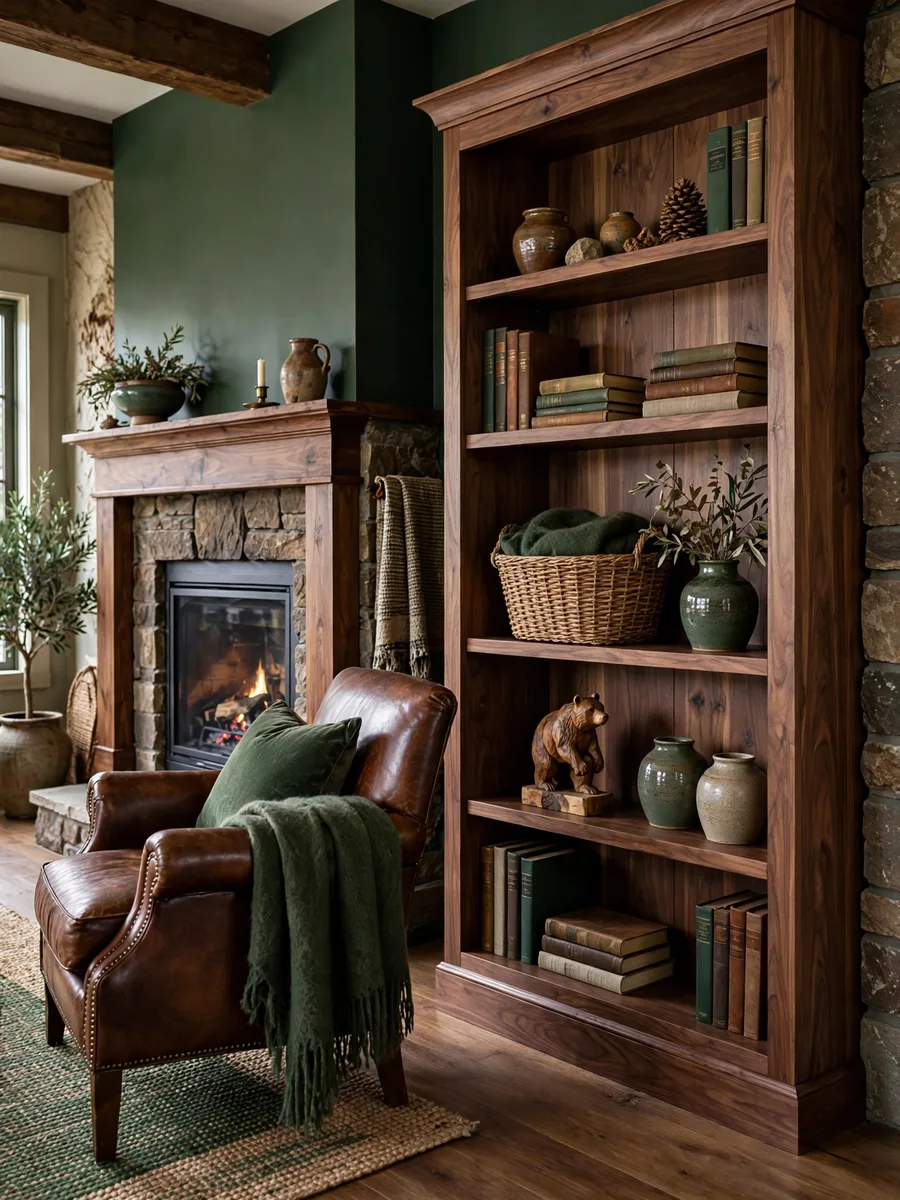
A rustic bookcase with curated objects turns storage into decoration. A tall walnut bookcase filled with books, baskets, and pottery gives the room warmth.
For example, a walnut bookcase beside the fireplace, with books stacked horizontally on one shelf and a woven basket on another, feels intentional rather than cluttered.
Quick tips: Mix horizontal and vertical book stacks, leave one shelf partly empty, and repeat a material such as wood or ceramic across shelves.
22. Oversized Floor Cushions and Poufs
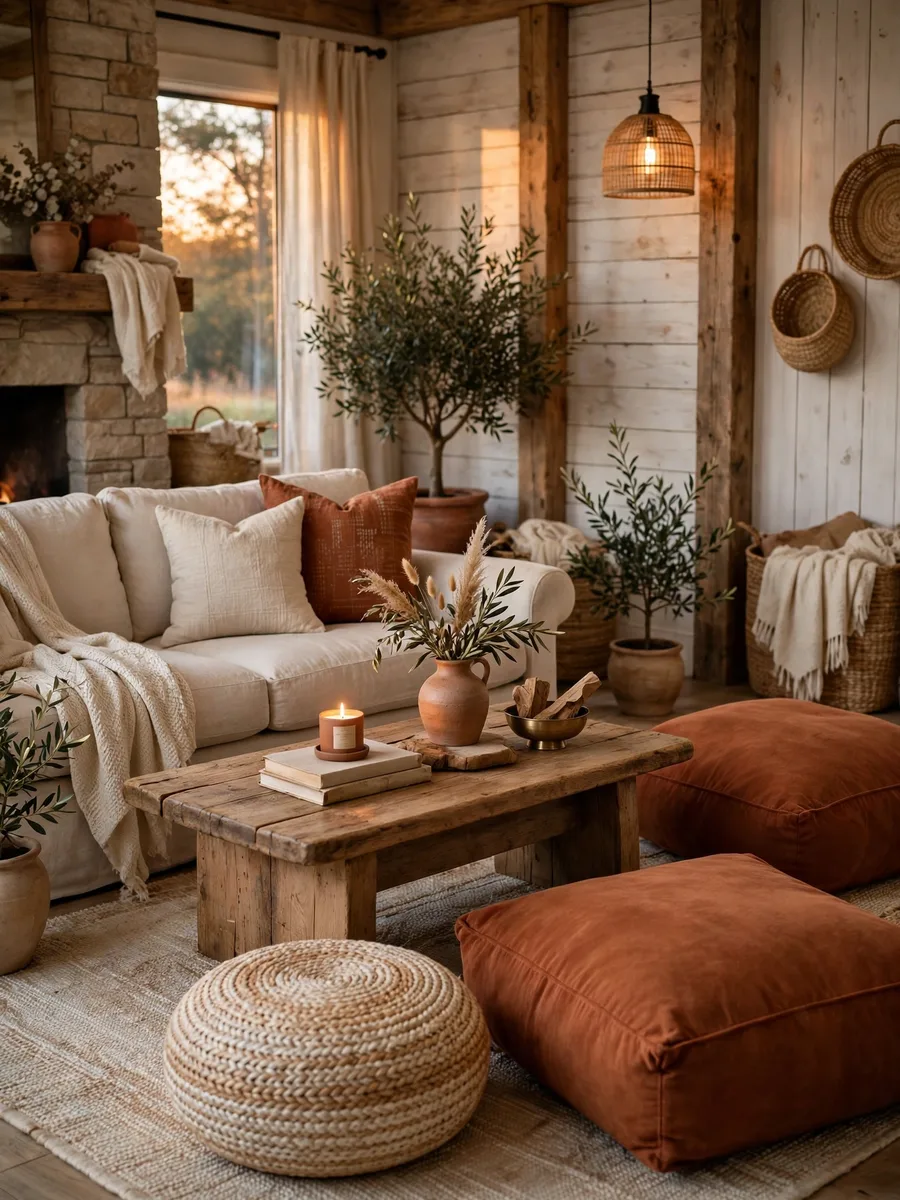
Oversized floor cushions and poufs make a rustic living room feel relaxed and family-friendly. They give children a place to sprawl and guests an extra seat.
For example, two large rust floor cushions and a round woven pouf near the coffee table turn a quiet corner into a games area on family nights.
Quick tips: Choose firm, well-filled cushions that hold their shape, store them in a basket when not in use, and pick washable covers for family rooms.
23. Metal and Wood Mixed Media
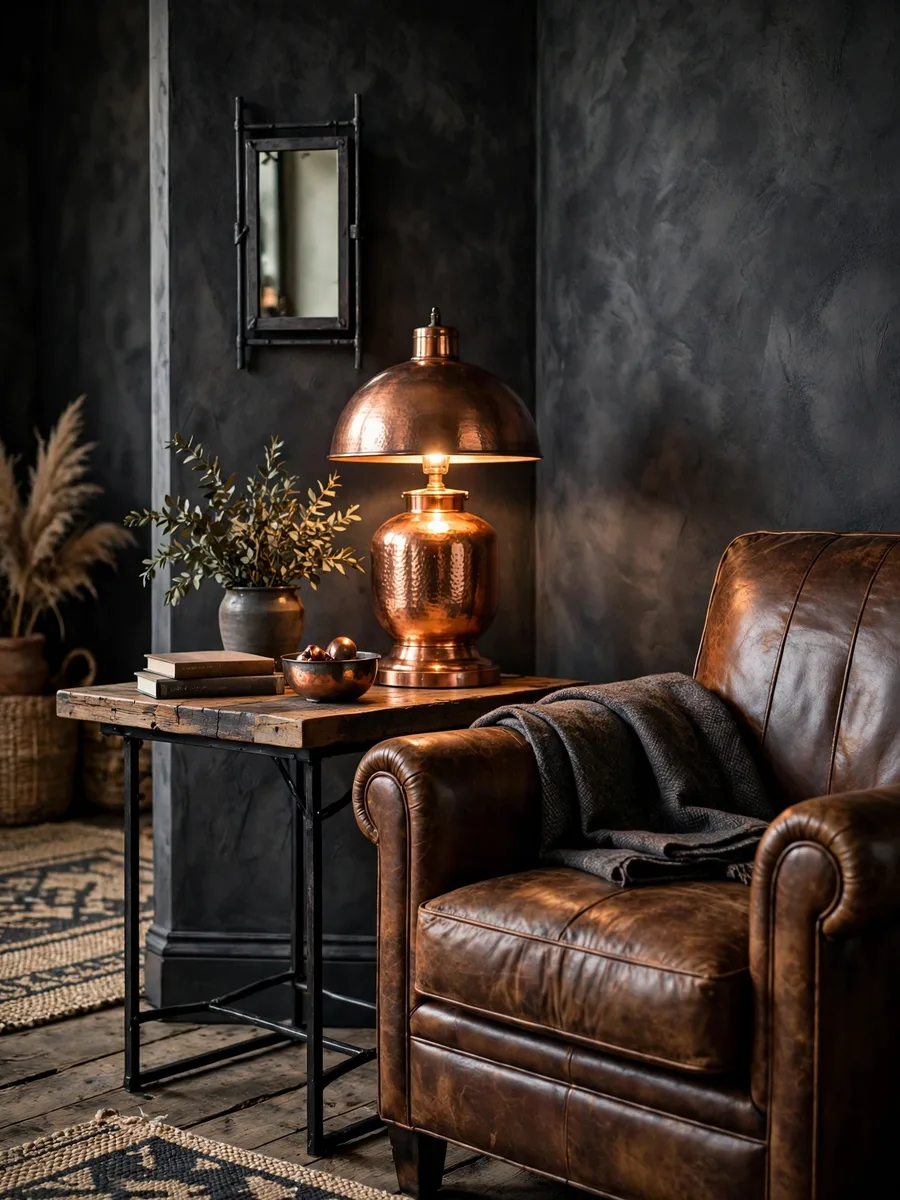
Mixing metal and wood is a hallmark of rustic style, because the contrast between warm timber and cool metal keeps the room balanced. Charcoal iron, copper, and wood work together when metals are used sparingly.
For example, a wooden side table with black iron legs and a copper table lamp create a corner where each material has a clear role.
Quick tips: Limit yourself to two metals in one room, keep the wood tone consistent, and use matte finishes for a softer rustic look.
24. Cozy Reading Corner by the Fire
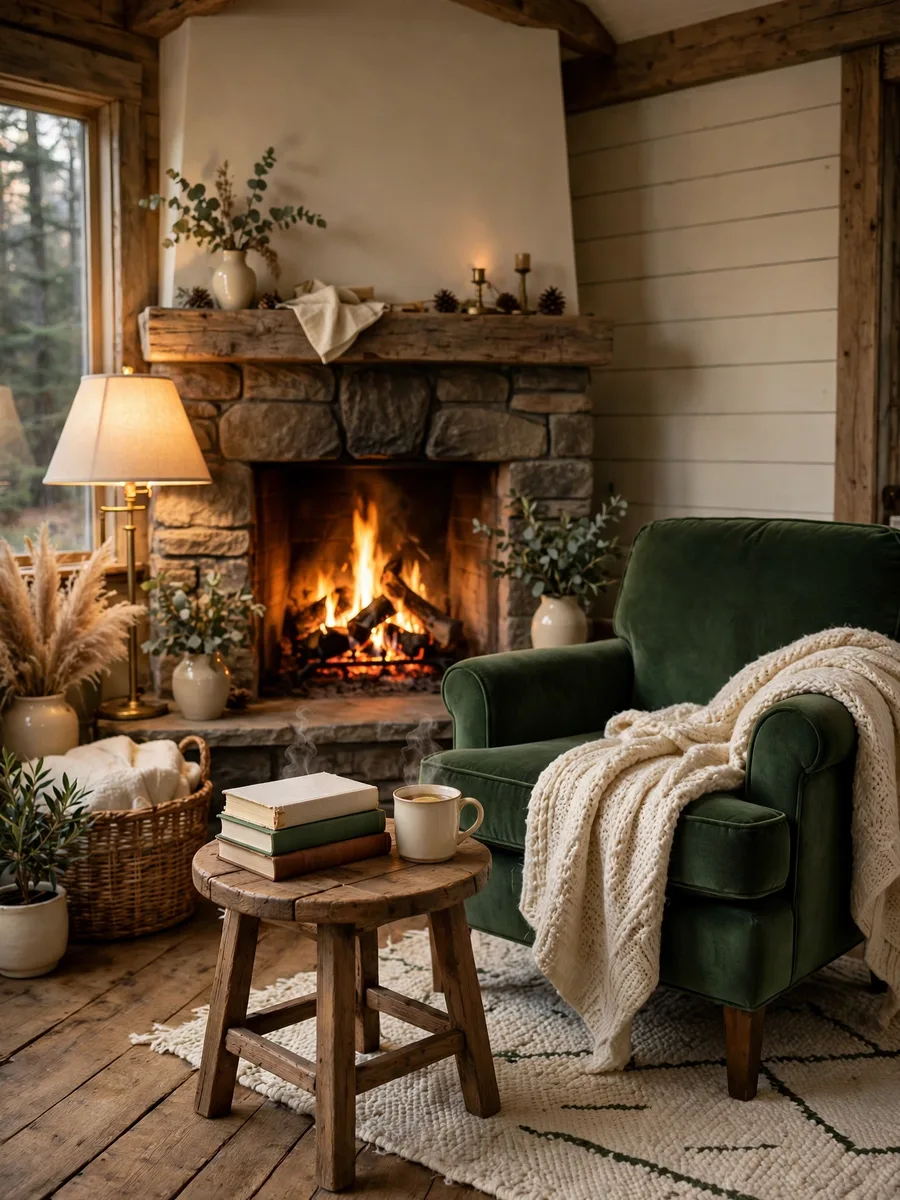
A cozy reading corner by the fire is the heart of a rustic living room in winter. A forest green armchair, a small wooden side table, warm lamplight, and a folded wool throw turn a corner into a personal retreat.
For example, an armchair angled toward the fire, with a forest green cushion and a stack of books on the side table, invites someone to sit down with a novel on a rainy afternoon.
Quick tips: Place the chair close enough to feel the fire but far enough to stay safe, add a lamp at shoulder height for reading, and keep books within reach.
25. Natural Stone Side Tables
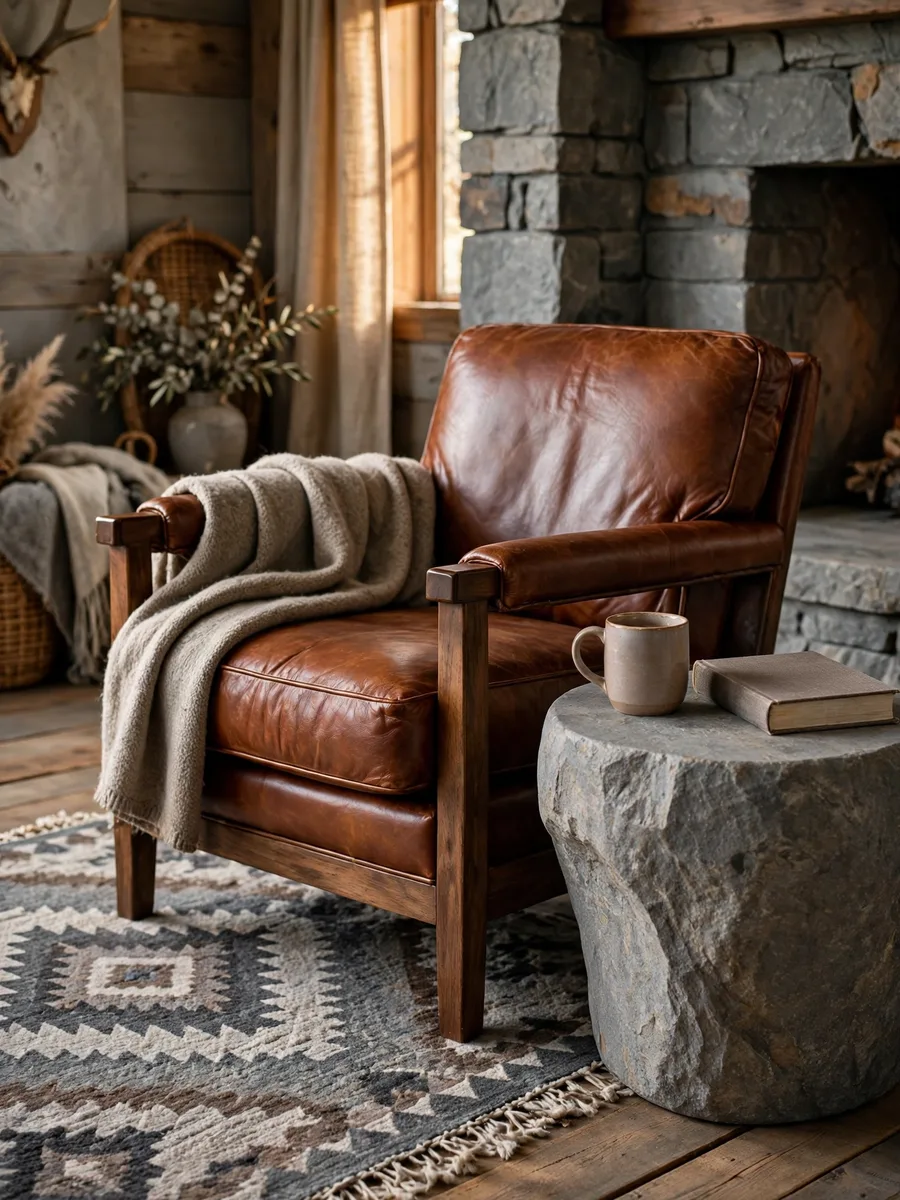
Natural stone side tables bring a cool, sculptural element into a warm rustic room. A grey stone table beside a leather sofa adds weight and texture without another wood tone, and each stone top has unique veining.
For example, a round grey stone side table beside a cognac leather armchair, holding a ceramic mug and a book, gives the seating area a solid surface that contrasts beautifully with soft leather.
Quick tips: Seal stone tops to prevent staining, use felt pads under the base on wood floors, and keep the table height level with the sofa arm.
26. Rustic Window Treatments with Linen Drapes
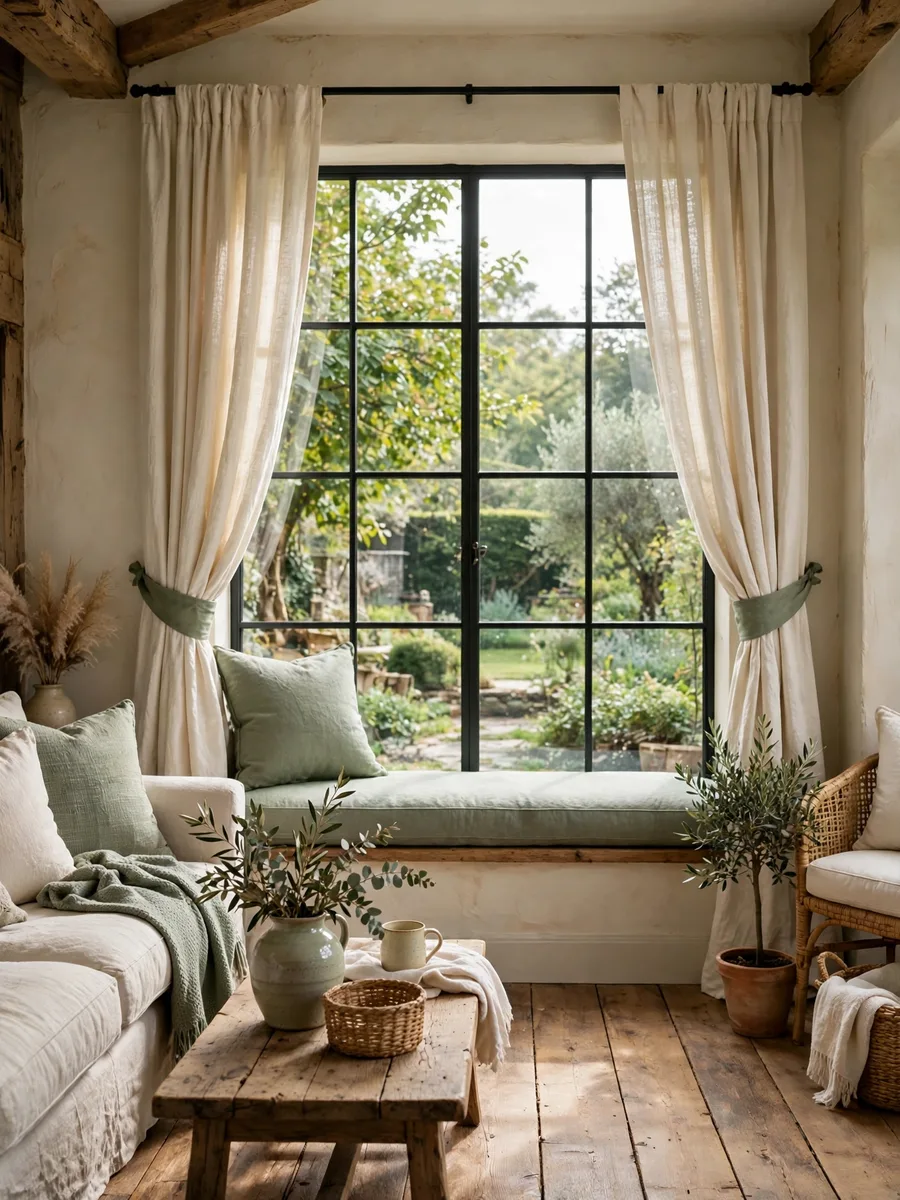
Rustic window treatments with linen drapes soften the room and frame the view without blocking the light. Cream linen drapes with a sage tieback add gentle movement and filter daylight well.
For example, floor-length cream linen drapes on either side of a large window frame the garden view and make the window feel like a feature.
Quick tips: Hang drapes high and wide so windows look larger, let them just touch the floor, and wash linen gently to keep it soft.
Frequently Asked Questions
How can I make my living room look rustic without it looking dated?
Mix rustic textures with clean lines and modern lighting, and edit your decor so only one or two character pieces take centre stage. Keep walls light and avoid filling every surface with themed objects.
What is the best color for a rustic living room?
Warm neutrals are the best base, including cream, warm oak, honey, and stone grey. Add depth with sage green, terracotta, navy, or forest green in cushions and throws.
How do I make a small living room look rustic?
Choose lighter woods, pale walls, and a single focal point such as a beam ceiling. Use one large rug, furniture with visible legs, and mirrors to reflect light, and add rustic character through wool throws and linen cushions rather than heavy dark furniture.
Can I mix rustic and modern styles in one living room?
Yes, rustic and modern styles mix well when wood and stone provide warmth and clean-lined furniture provides structure. Pair a reclaimed timber table with a simple linen sofa and keep the palette calm. The key is balance, so neither style overwhelms the other.
How can I decorate a rustic living room on a budget?
Start with textiles and lighting, which change a room quickly for little money. Add a wool throw, linen cushions, a jute rug, and warm lamps, then look for one second-hand wooden piece at a time. Thrifted baskets and terracotta pots add rustic character for very little.
Conclusion
Rustic living room ideas work best when they are layered slowly and chosen with care, not bought all at once. Start with one strong anchor, whether that is a stone fireplace, a beam ceiling, or a beautiful leather sofa, then add texture, colour, and light around it until the room feels warm and welcoming. The 26 ideas in this guide give you a place to begin, from structural features to small affordable changes.
The real test of a rustic living room is simple: does it invite you to sit down, put your feet up, and stay a while? When natural materials, soft textiles, and warm light come together, the answer is yes. Choose the ideas that fit your home, try one or two this weekend, and let the room grow into the warm retreat you imagined.