12 Brilliant Mudroom Decor Ideas That Turn a Cluttered Drop Zone Into a Beautiful, Organized Entry
The best mudroom decor ideas give every coat, shoe, bag, and key a clear home, so mess never piles up by the door. A mudroom works when storage is easy to reach, surfaces wipe clean, and the space still looks inviting. You do not need a large room or a full renovation. A sturdy bench, hooks at the right height, baskets for each person, and a durable floor can turn even a narrow corner into a tidy drop zone.
Think of your mudroom as the hardest-working room in the house, even if it is only a few feet wide. It catches muddy boots, wet umbrellas, sports bags, and mail. Without a system, all of that lands on the floor. With a simple system, putting things away takes seconds. The mudroom decor ideas below focus on practical storage first and pretty details second, so the room looks good because it works well.
If your entry is especially tight, borrow a few tricks from small entryway decor ideas, like slim hooks, a narrow bench, and one basket per person. The goal is the same in any size space: less clutter, more calm when you come home.
Key Takeaways
What is the easiest mudroom upgrade? Add a bench with hooks above it and a basket or bin below for each person. It solves seating, hanging, and shoe storage in one spot.
How do you keep a mudroom from looking messy? Hide the clutter in closed baskets and labeled bins, and leave only a few pretty things visible, like a plant or a framed print.
What floor works best in a mudroom? Tile, luxury vinyl, or sealed stone, because all three handle mud, water, and heavy foot traffic without staining.
Do you need built-ins for a good mudroom? No. Freestanding benches, wall hooks, and stackable baskets work just as well, especially in rentals or small homes.
How do you make a mudroom feel welcoming? Add warm lighting, a washable rug, a mirror, and one natural texture like wood, rattan, or linen.
What Makes Mudroom Decor Ideas Work So Well?
A mudroom works well when everything has a place within arm’s reach of the door, so putting things away is faster than dropping them on the floor.
The difference between a mudroom that stays tidy and one that falls apart usually comes down to three things: a seat, a hook for every coat, and a bin for every pair of shoes. Get all three right, and the room almost cleans itself.
| Your space | Best setup | Why it works |
|---|---|---|
| A narrow hallway nook | Wall hooks, a slim bench, and two baskets | Keeps the walkway clear |
| A dedicated mudroom | Built-in cubbies, a long bench, and closed cabinets | Hides bulky gear out of sight |
| A garage entry | Open shelving, a boot tray, and a washable rug | Handles mud before it reaches the house |
| A rental home | Freestanding bench, adhesive or screw-in hooks, and crates | Moves with you, no renovation needed |
Start with storage, then add color and texture. A coat of paint or brass hooks can change the whole feel for very little money, as long as the storage underneath already works.
1. A Bright Built-In Bench With Woven Baskets
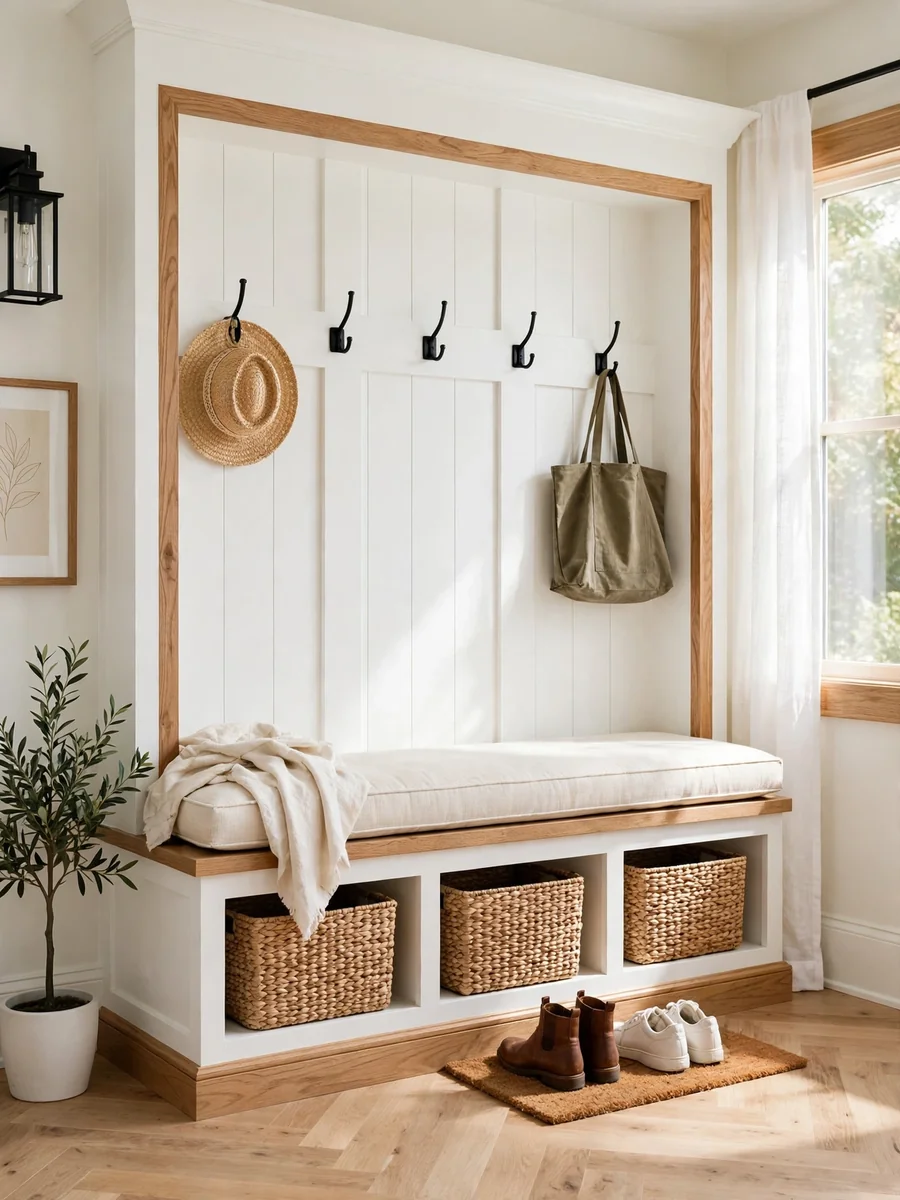
A built-in bench is the classic mudroom move for a reason. Picture a white bench with natural oak trim, three woven seagrass baskets tucked underneath, and a row of black hooks above it. Each family member gets one basket for shoes and one hook for a coat, so there is no guessing where things belong.
For example, try a 48-inch bench with a cream cushion, two baskets for kids’ sneakers, and one larger basket for hats and gloves. A small tray on the bench holds keys and sunglasses.
Quick tips:
- Choose baskets that slide out easily, so kids actually use them.
- Label each basket with a small wooden tag.
- Keep one basket empty for guests and overflow.
2. Sage Green Lockers With Brass Hooks
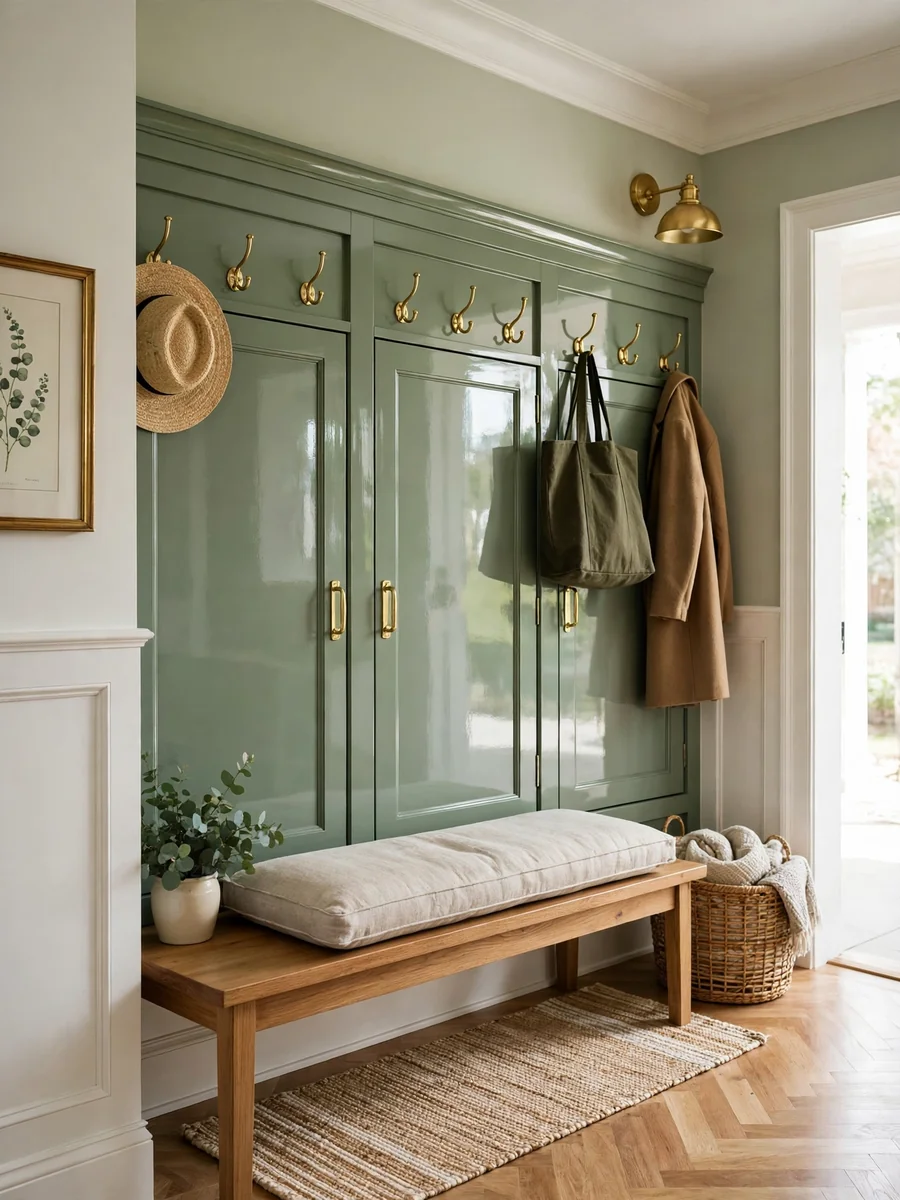
Sage green lockers feel calm, fresh, and a little bit vintage, especially when paired with warm brass hooks. Each locker becomes a personal cubby: coat on the hook, bag on the bench below, shoes in the cubby underneath.
Try it in a family mudroom with four lockers painted in a soft sage green, brass double hooks inside each one, and a natural wood bench running along the base. A small chalk label on each locker door makes it easy for kids to find their spot without asking.
Quick tips:
- Use double hooks so a coat and a backpack fit in one locker.
- Paint the inside of lockers a lighter shade so dark corners stay visible.
- Add a bench cushion in oatmeal linen to soften the green.
3. A Navy Cabinet Wall With Walnut Details
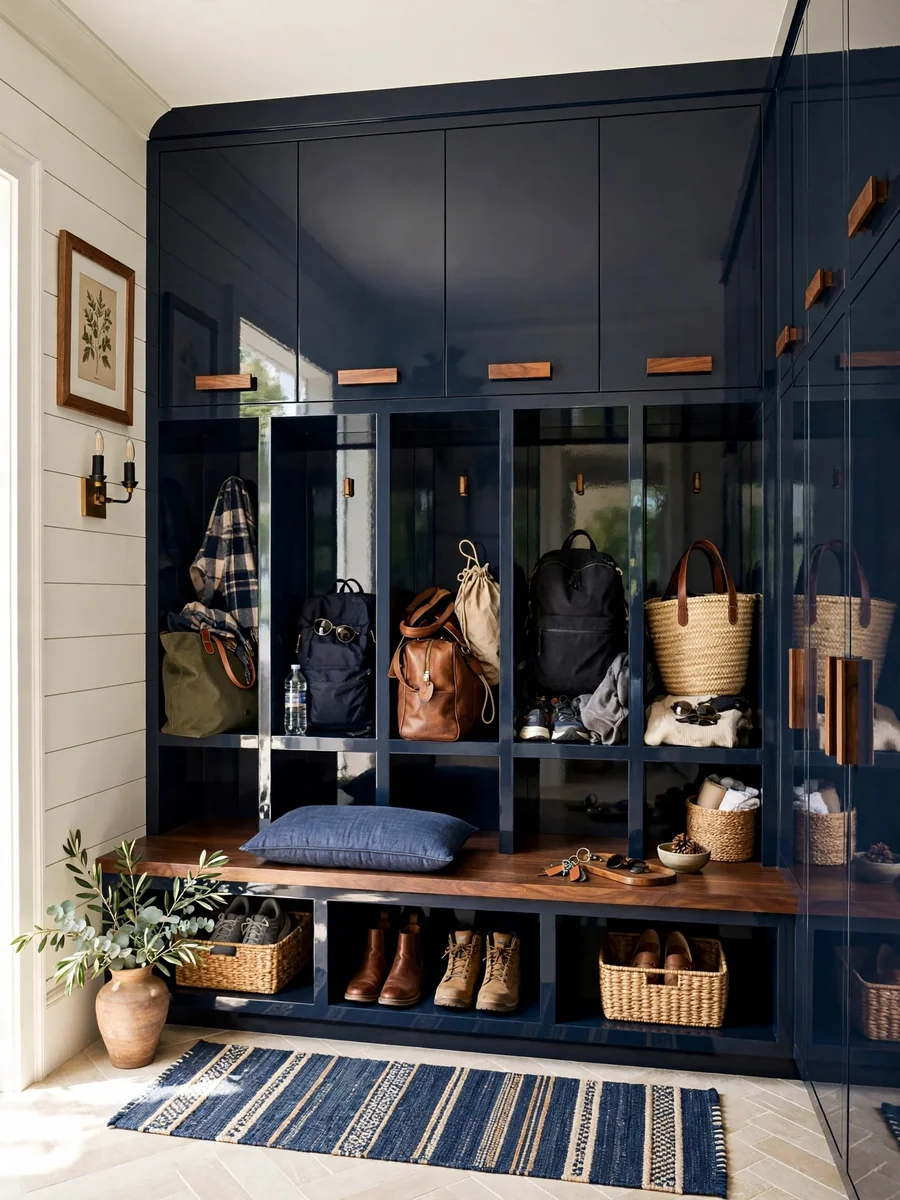
Navy cabinetry gives a mudroom a polished, grown-up feel, and walnut wood keeps it warm instead of cold. Closed upper cabinets hide out-of-season gear, while open cubbies below hold everyday shoes and bags.
Imagine a full wall of navy cabinets beside the back door, with a walnut bench seat and walnut drawer pulls. School bags hang on hooks inside the open section, so the closed doors stay neat.
Quick tips:
- Keep everyday items in open cubbies and seasonal items behind doors.
- Use walnut sparingly, on the bench and pulls, for the warmest effect.
- Add a round mirror above the bench to bounce light around.
4. Charcoal Hooks and a Cream Bench for a Clean Contrast
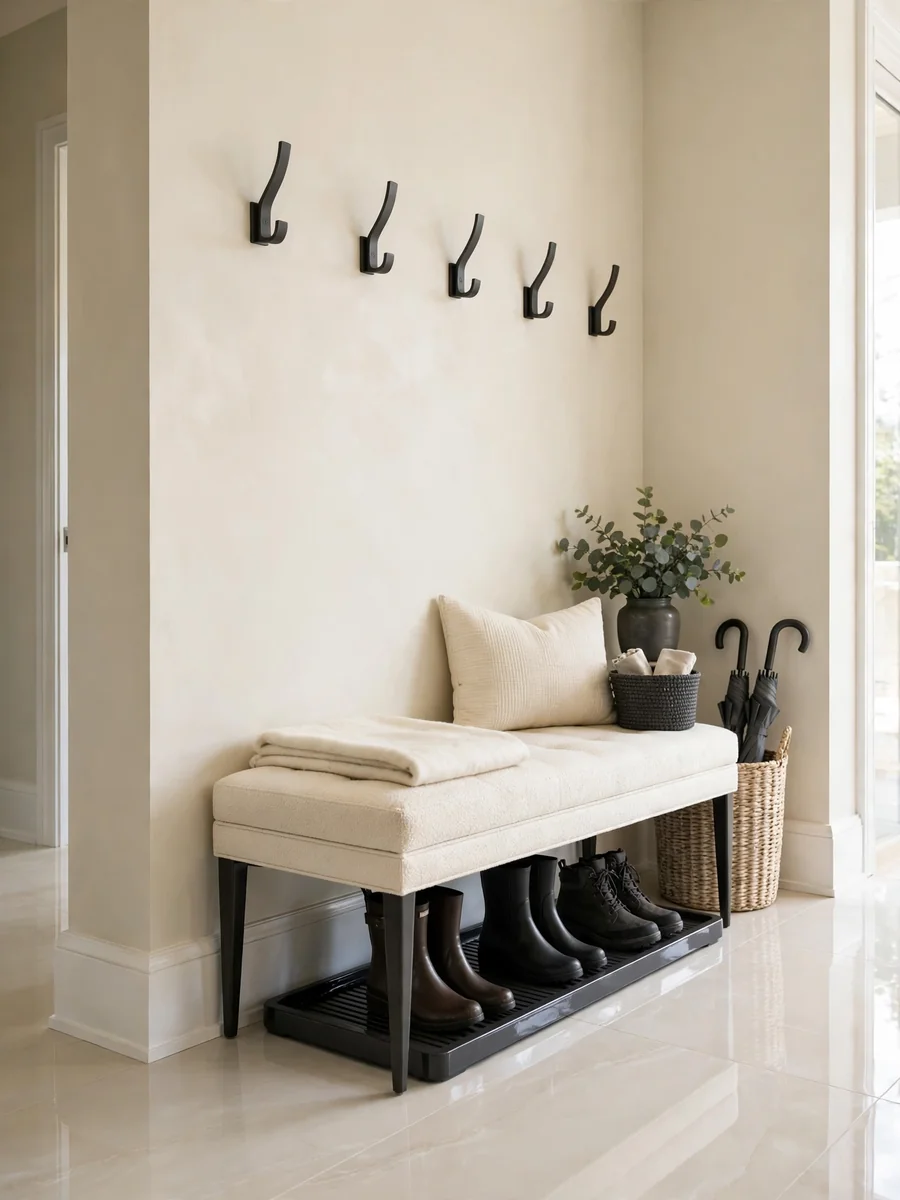
Charcoal and cream is a simple pairing that always looks clean. Matte charcoal hooks stand out against a cream wall, and a cream bench with dark legs grounds the whole arrangement without feeling heavy.
A good example is a small mudroom corner with a cream upholstered bench, three charcoal metal hooks at adult height and two lower hooks for kids, plus a charcoal boot tray underneath. The contrast makes the hooks easy to find, which means coats actually get hung up.
Quick tips:
- Mount kids’ hooks at 48 inches so they can reach them alone.
- Choose a washable bench cover in cream for easy cleaning.
- Keep the wall behind the hooks wipeable with satin paint.
5. Terracotta Tile and Beige Walls for a Warm Welcome
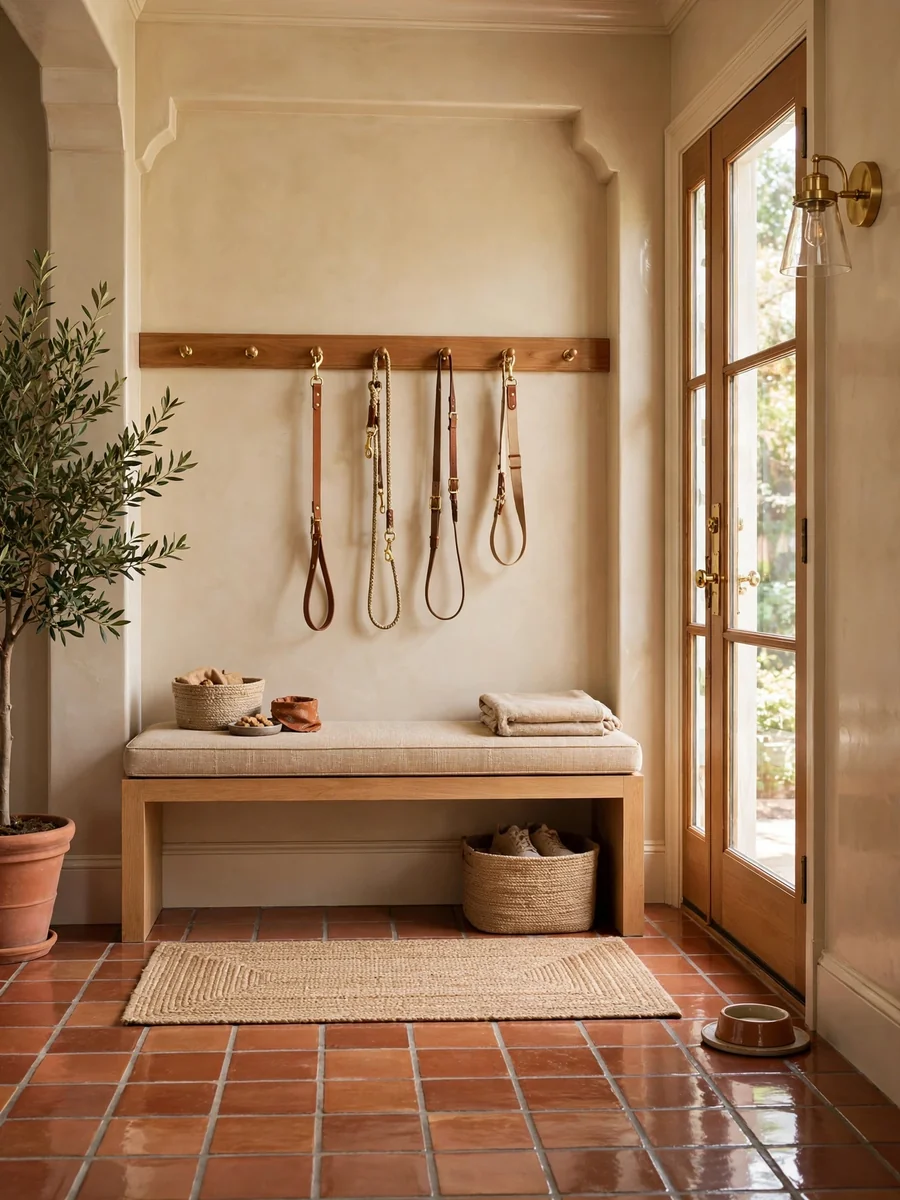
Terracotta tile is made for mudrooms. It hides dirt, handles wet boots, and adds instant warmth that plain white tile never gives. Pair it with soft beige walls and natural wood, and the room feels sunny even on a gray morning.
Picture a back entry with terracotta square tiles, beige plaster walls, a light oak bench, and a jute rug on top of the tile. Dog leashes hang on a wooden peg rail by the door, and a ceramic bowl holds treats, so the whole routine, from walk to wipe-down, happens in one place.
Quick tips:
- Choose matte terracotta tile so it is less slippery when wet.
- Seal the grout once a year to keep it stain-free.
- Layer a washable jute runner over the tile for softness.
6. Soft Gray Shiplap With Black Hardware
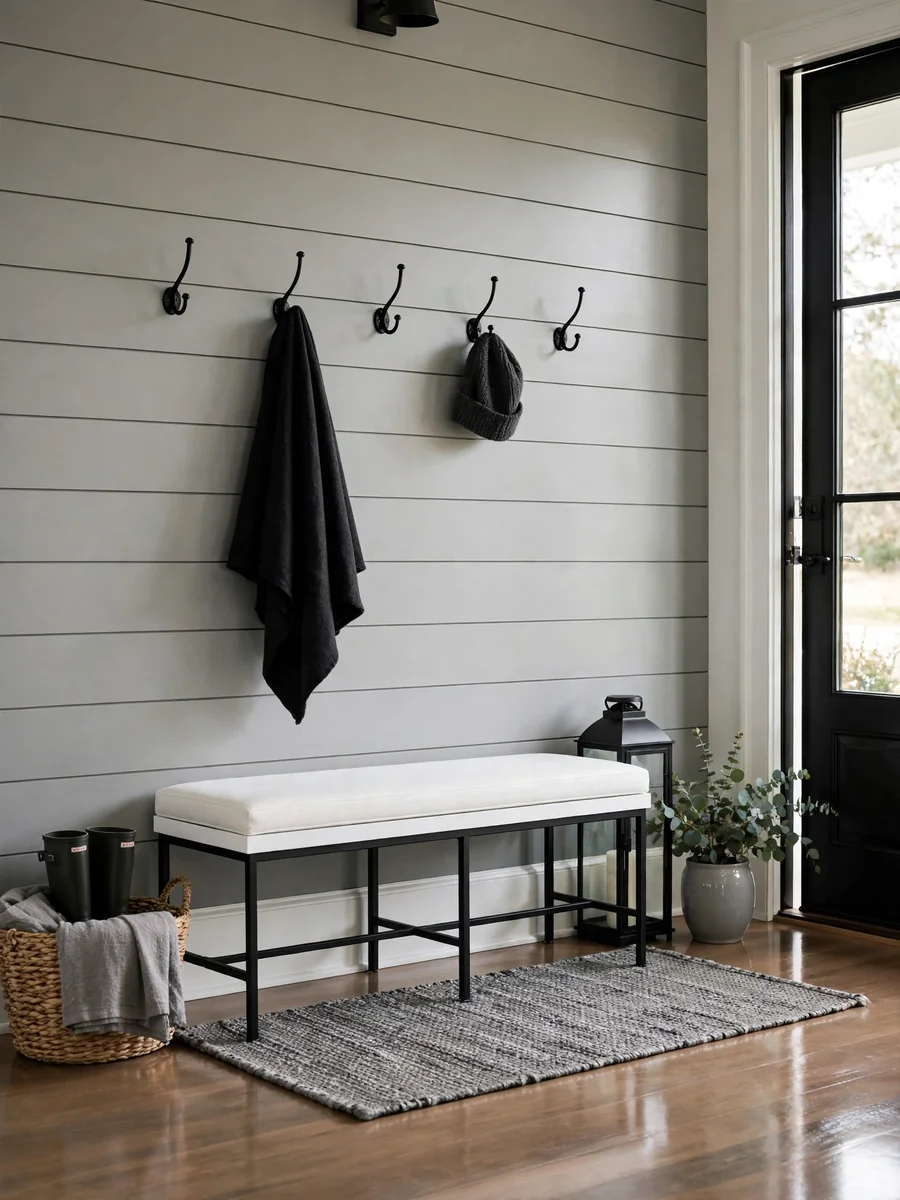
Soft gray shiplap adds texture to a plain mudroom wall without making the room feel busy. Black hooks, black basket handles, and a black-framed mirror give it a crisp, modern finish that works in almost any home.
For example, a farmhouse-style entry with horizontal gray shiplap, a white bench with black metal legs, and three black iron hooks above it feels tidy and timeless. A gray woven rug and a small potted eucalyptus on the bench finish the look without adding clutter.
Quick tips:
- Run shiplap horizontally to make a narrow room feel wider.
- Match all hardware in matte black for a pulled-together look.
- Keep decor to one plant and one print so the wall stays calm.
7. Cream Open Shelving With Rattan Baskets
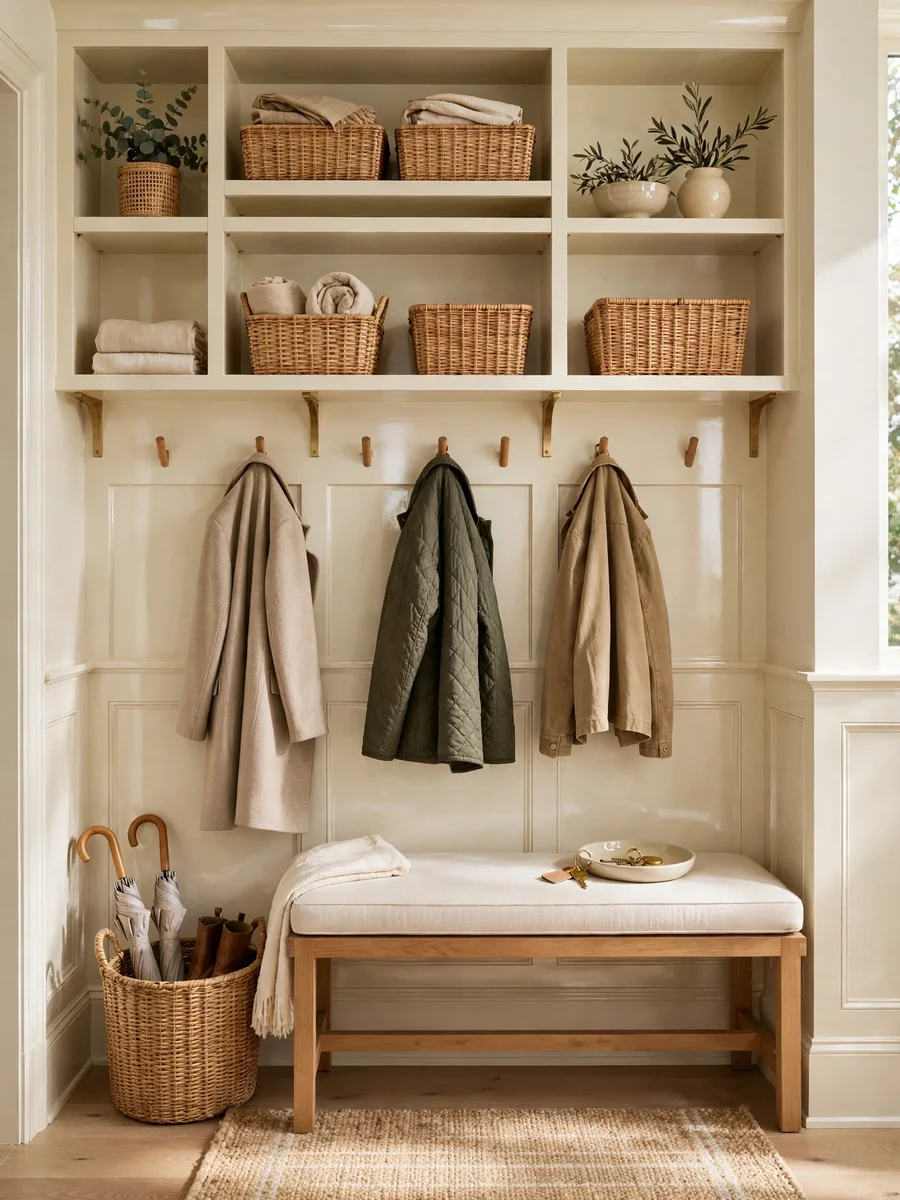
Cream open shelving keeps a mudroom feeling light and airy, while rattan baskets add warmth and hide the mess. It is a great choice for a small space where closed cabinets would feel too heavy.
Try two cream shelves above a simple bench, with rattan baskets on each shelf: one for scarves, one for gloves, one for sunscreen and sunglasses in summer. A row of wooden pegs below the shelves holds coats, and a small ceramic dish on the bench catches keys.
Quick tips:
- Use same-size baskets so open shelves look intentional, not random.
- Put the most-used basket at arm height, not on the top shelf.
- Dust open shelves weekly, since they show everything.
8. Forest Green Built-Ins With Gold Accents
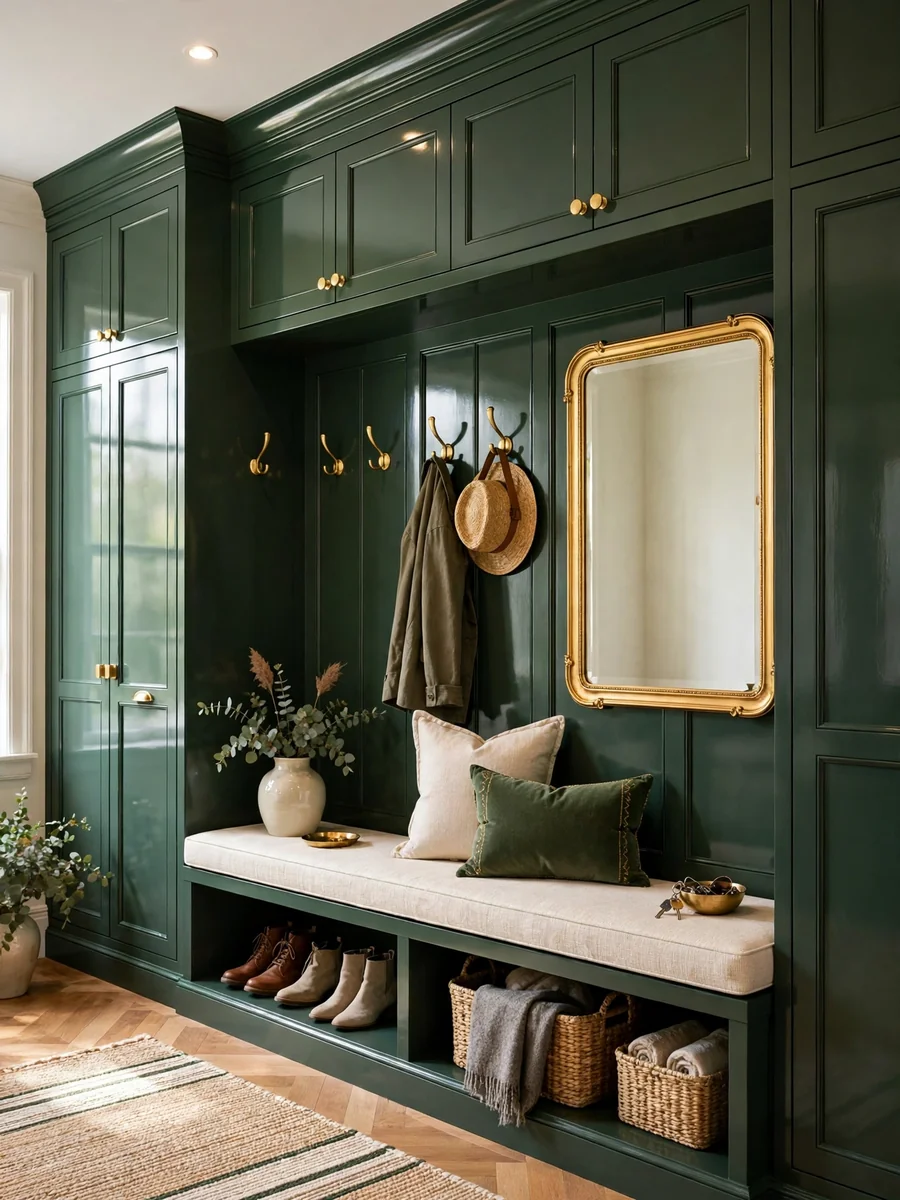
Forest green built-ins feel rich and grounded, and gold hooks lift the whole look from practical to polished. This pairing works beautifully in a traditional home, especially with a patterned runner and a warm wood floor.
Imagine a mudroom with floor-to-ceiling forest green cabinets, brushed gold hooks, a cream bench cushion, and a small gold-framed mirror. Each family member has a tall cabinet for coats and a drawer for shoes, so nothing is left out except a vase of fresh greenery on the bench.
Quick tips:
- Use brushed gold, not shiny gold, for a softer, more classic finish.
- Balance dark green with a light bench cushion and pale walls nearby.
- Add motion-sensor lights inside tall cabinets for dark mornings.
9. Dusty Blue Beadboard With a Wooden Bench
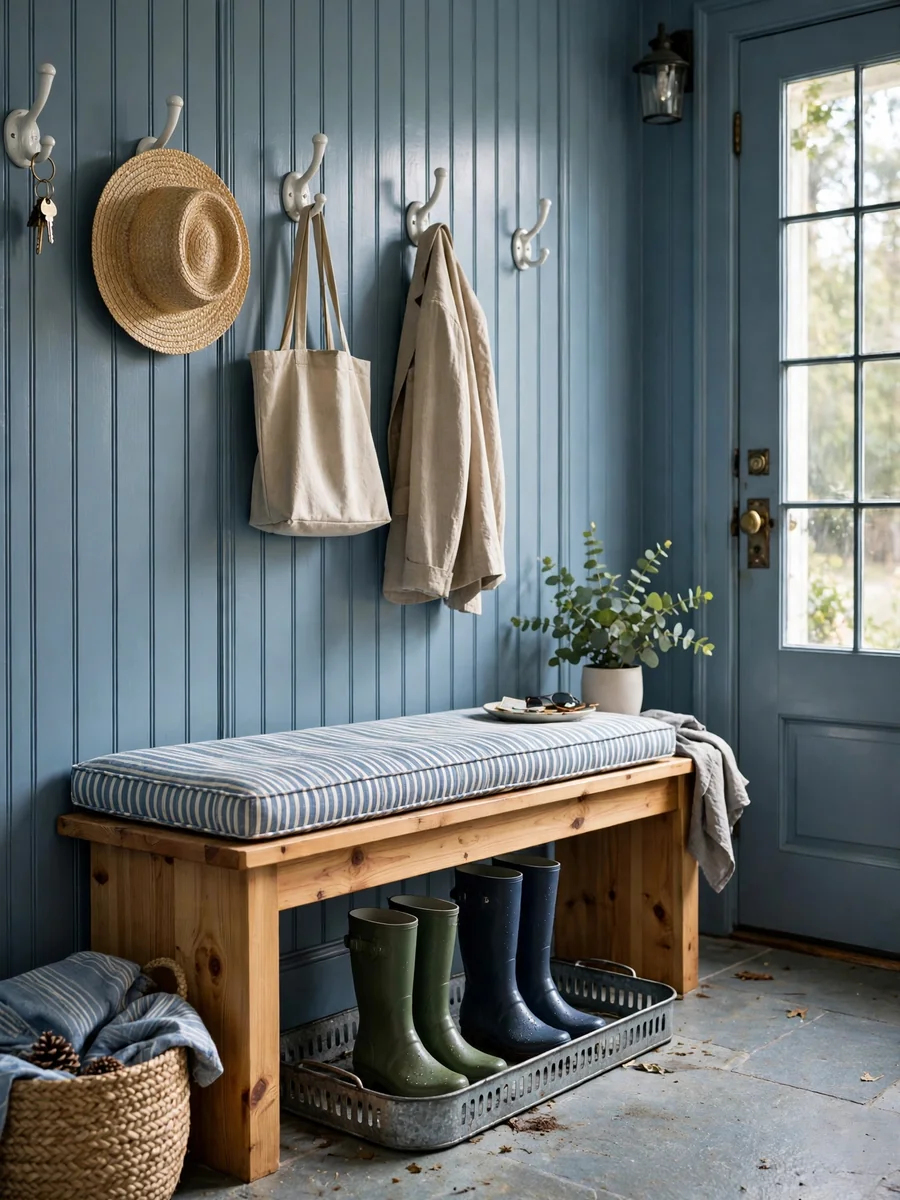
Dusty blue beadboard gives a mudroom a coastal, cottage feel without going full beach theme. The vertical panels add charm, the blue keeps it calm, and a natural wood bench warms it up.
A lovely example is a side entry with dusty blue beadboard halfway up the wall, a pine bench with a striped blue-and-white cushion, and white ceramic hooks above. Rain boots line up in a galvanized tray below the bench, and a woven tote holds umbrellas by the door.
Quick tips:
- Paint beadboard in a washable satin finish for muddy fingerprints.
- Use a striped cushion to tie the blue and wood together.
- Keep a boot tray by the door all year, not just in winter.
10. A Sleek Black Mudroom With a Marble Bench Top
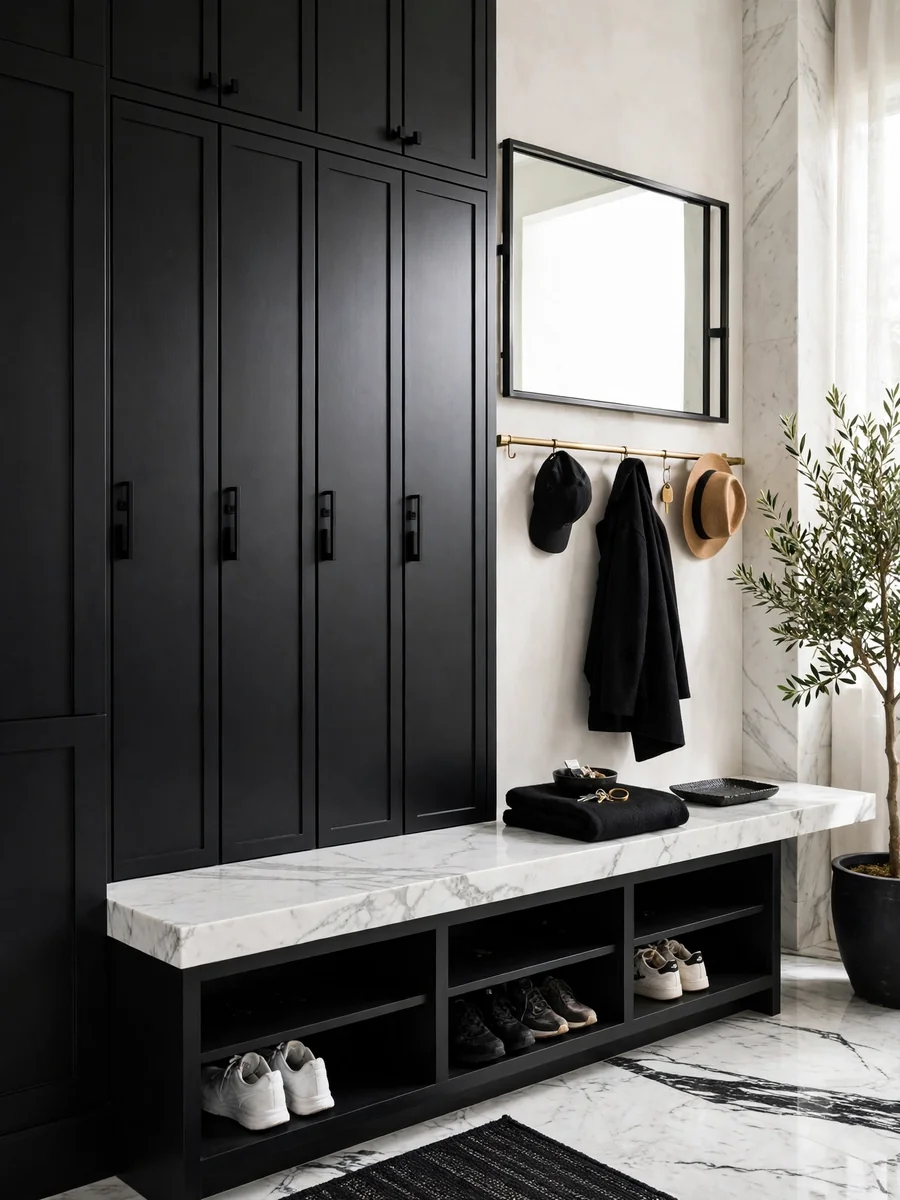
Black cabinetry sounds bold for a mudroom, but with a white marble bench top it looks sleek rather than dark. The marble wipes clean, resists scratches from bags and keys, and gives the room a touch of luxury.
Picture a modern entry with matte black lockers, a white marble bench slab, black open cubbies for sneakers, and a slim brass rail for coats. A black-framed mirror and a single orchid keep it feeling like a boutique hotel entry.
Quick tips:
- Seal marble once a year so it resists stains from wet bags.
- Use matte black, not gloss, to hide fingerprints and scuffs.
- Keep the marble bench clear except for one decorative piece.
11. Warm Beige Plaster and Copper Hooks for an Earthy Entry
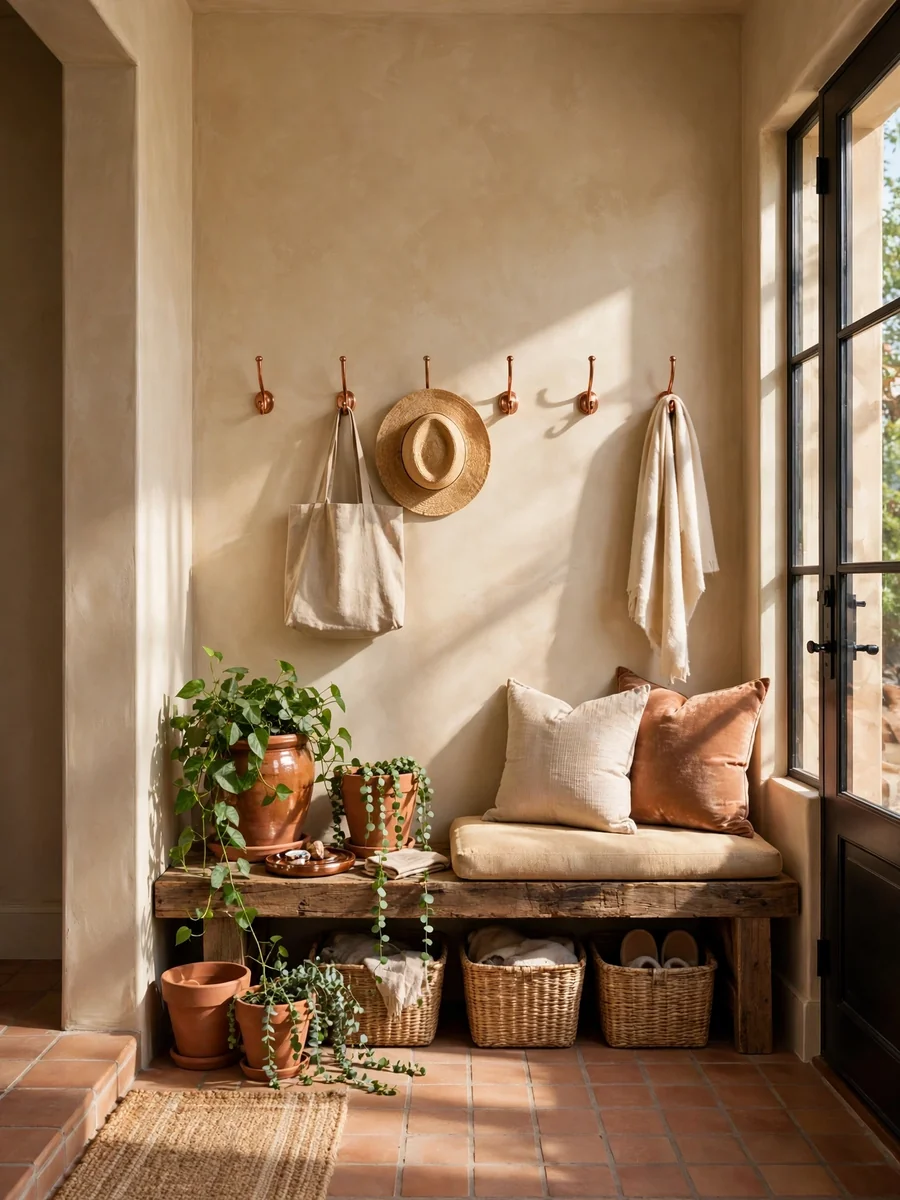
Warm beige plaster walls and copper hooks create a mudroom that feels earthy, soft, and handmade. Copper ages beautifully, developing a deeper tone over time, which suits a home with natural wood and linen textures.
For a concrete example, think of a sunlit entry with beige limewash walls, a reclaimed wood bench, five copper hooks in a row, and terracotta pots holding a trailing plant. Canvas totes hang from two hooks for market trips, while coats take the other three, so the wall stays balanced and useful.
Quick tips:
- Let copper age naturally, or polish it twice a year if you prefer shine.
- Pair beige walls with wood tones, not stark white, for warmth.
- Hang a linen curtain over open shoe storage to soften the look.
12. Olive Cabinetry With Ivory Seating for a Quiet, Classic Mudroom
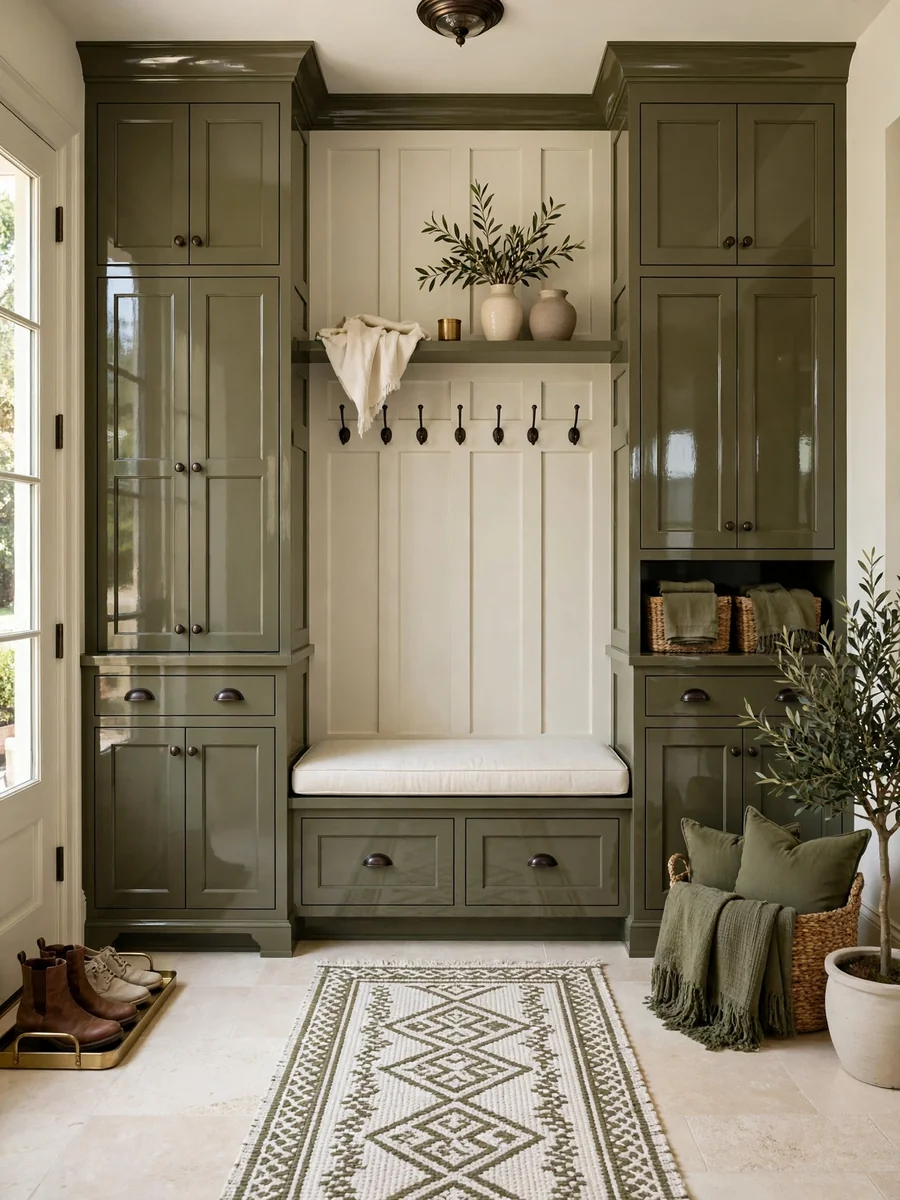
Olive cabinetry is a quieter alternative to sage or forest green, and it pairs beautifully with ivory seating. The result is a mudroom that feels classic, calm, and easy to live with for years, without chasing trends.
Consider a mudroom with olive shaker-style cabinets, an ivory bench cushion in performance fabric, dark bronze hooks, and a woven runner in ivory and olive.
This is the kind of room where everything has a place, and the colors are restful enough that the room never feels loud, even when four people are rushing out the door at once.
The long bench gives kids a place to sit while they lace up shoes, the closed cabinets swallow backpacks and sports gear, and the ivory cushion brightens the whole corner so it feels like a real room rather than a passageway, which is exactly what a hardworking entry should do, day after day, in every season, for every member of the household.
That same calm palette also connects nicely to the rest of the home. If your entry opens onto a corridor, take a cue from hallway decor ideas and repeat one color, like olive or ivory, in the hallway runner or artwork, so the mudroom feels like part of the house instead of a separate utility zone.
Quick tips:
- Choose performance fabric for ivory cushions so stains lift easily.
- Repeat the olive tone in one hallway accent for a connected feel.
- Use closed cabinets for bulky sports gear and open hooks for daily coats.
Mudroom Decor Ideas: Your Questions Answered
What should every mudroom have?
Every mudroom needs a seat, hooks for coats, storage for shoes, and a spot for keys and small essentials. Add a mirror and good lighting, and the room becomes both practical and pleasant to use.
How do I organize a small mudroom?
Use the wall, not the floor. Wall hooks, a slim bench, and baskets underneath keep the floor clear. Give each person one hook and one basket, and keep only daily items in the mudroom, moving seasonal gear elsewhere.
What is the best color for a mudroom?
Light neutrals like cream, soft gray, and sage green keep a small mudroom feeling open, while darker colors like navy or forest green work well in larger rooms with good light. Choose a washable paint finish either way.
How do I keep mud out of the house?
Place a boot tray and a washable rug right inside the door, and make it a habit to leave shoes there. A small brush by the door for pets’ paws helps too, and a durable tile or vinyl floor makes cleaning quick.
Can I create a mudroom without a dedicated room?
Yes. A bench, a row of hooks, and a few baskets in a hallway corner or beside the back door create a working mudroom in almost any home. Even a single wall can hold the whole system.
Conclusion
A great mudroom is not about size or budget. It is about a simple system you will actually use: a bench to sit on, hooks for coats, baskets for shoes, and a floor that handles real life. Pick one idea that fits your space, start with storage, and add color after. Within a weekend, your drop zone can go from the messiest spot in the house to one of the calmest. These mudroom decor ideas give you a clear place to start.