How to Make a Single Wide Trailer Living Room Feel Considered
A single wide trailer living room has a very specific design challenge: the room usually has to handle everyday lounging, television time, storage, circulation, and the visual connection to the rest of the home without much width to spare. That does not mean it has to look cramped or temporary. The right proportions, lighting, color, and furniture can make the room feel intentional from the moment you walk in.
The key is not to squeeze more decoration into the space. It is to make each choice earn its place. A sofa should fit the traffic path. Storage should use vertical space. Curtains should support the windows instead of swallowing them. Even a small color change can make the room feel more finished when it connects several pieces together.
These ideas focus on making a single wide trailer living room comfortable, polished, and personal while respecting the narrow footprint that makes this type of home different from a conventional house.
Start With the Room’s Natural Traffic Path
Before buying anything, trace how you move through the room. In many single wide homes, the living room sits along a main route between the entry, kitchen, hallway, or bedrooms. A beautiful sofa is still the wrong choice if it forces everyone to squeeze around it.
Keep the primary walkway visually open and place the largest furniture pieces along the least disruptive wall. If you need extra seating, use compact occasional chairs or an ottoman rather than adding another deep sofa. The goal is to make movement feel automatic instead of having to navigate around furniture.
Choose Furniture That Looks Light, Not Tiny
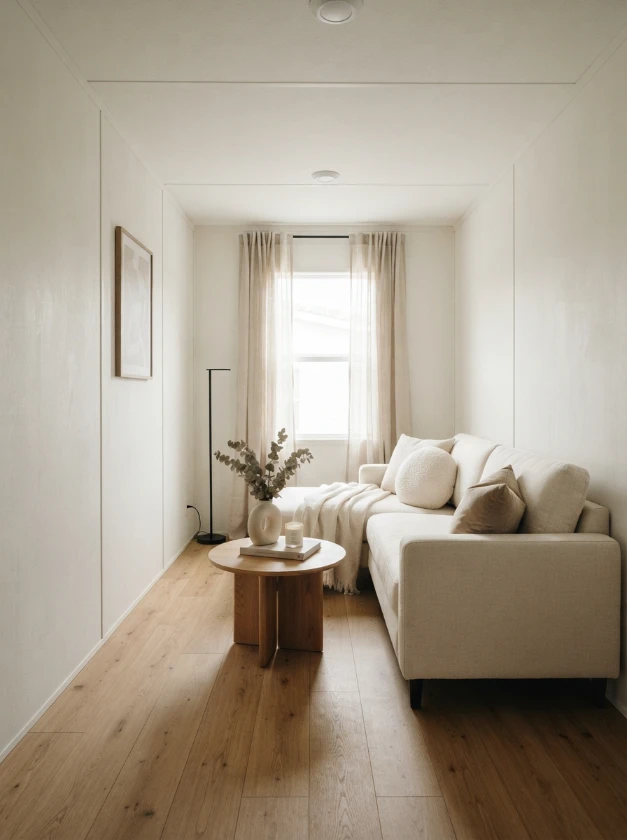
Small does not always mean suitable. A very tiny sofa can make the room feel unfinished, while an oversized sectional can make it feel blocked. Look for a medium-scale sofa with relatively slim arms, a moderate seat depth, and visible legs.
Furniture with exposed legs is especially useful because you can see more of the floor beneath it. That uninterrupted floor line makes the room feel lighter without requiring less comfort. Pair the sofa with one rounded chair or a compact accent chair if the layout allows it.
Let One Long Wall Carry the Visual Weight

Instead of spreading storage, artwork, and furniture across every wall, give one long wall a clear purpose. It might hold the sofa, a low media unit, or a combination of shelving and art.
This creates a strong visual line through the room. The remaining walls can stay quieter, which gives the eye somewhere to rest. In a narrow home, restraint often creates more sophistication than adding another decorative object.
Use a Soft Neutral Base With One Strong Accent
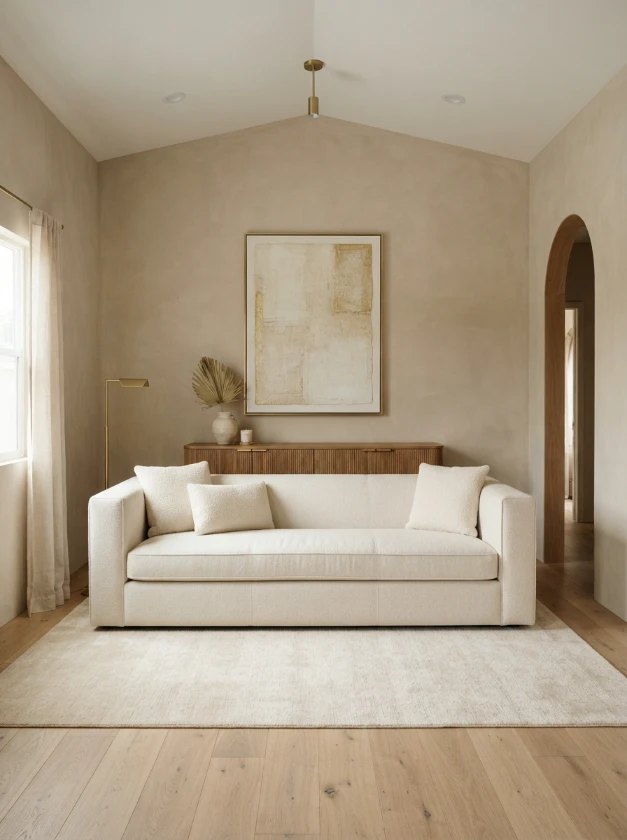
A neutral foundation works particularly well when the room has limited width. Warm white, oatmeal, soft beige, pale greige, or muted sage can keep the walls and larger furniture visually calm.
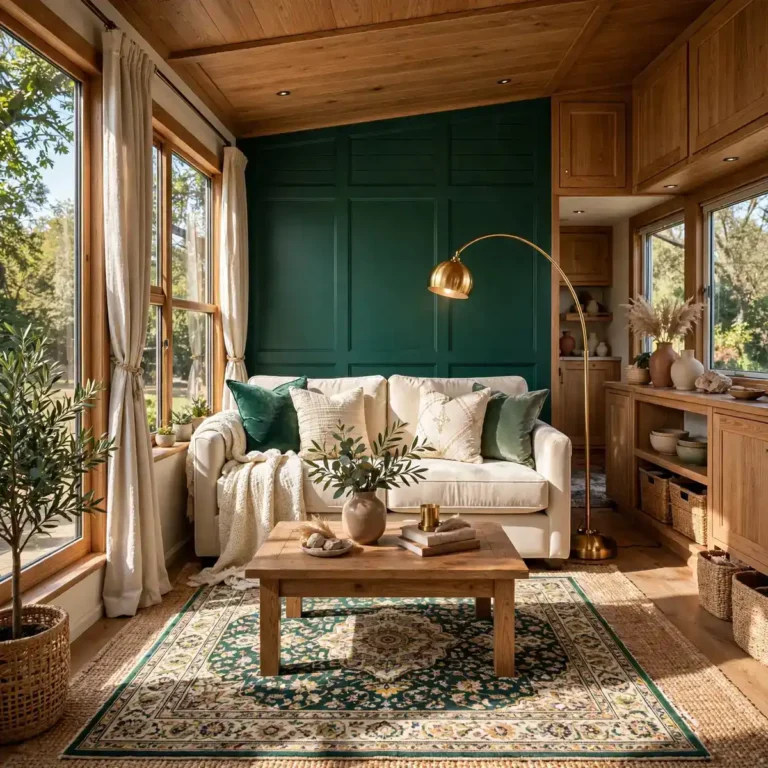
Then choose one accent color to repeat through two or three smaller elements. Rust through a cushion and ceramic vase, muted blue through artwork and a throw, or olive through pillows and plants can give the room personality without breaking it into separate visual zones.
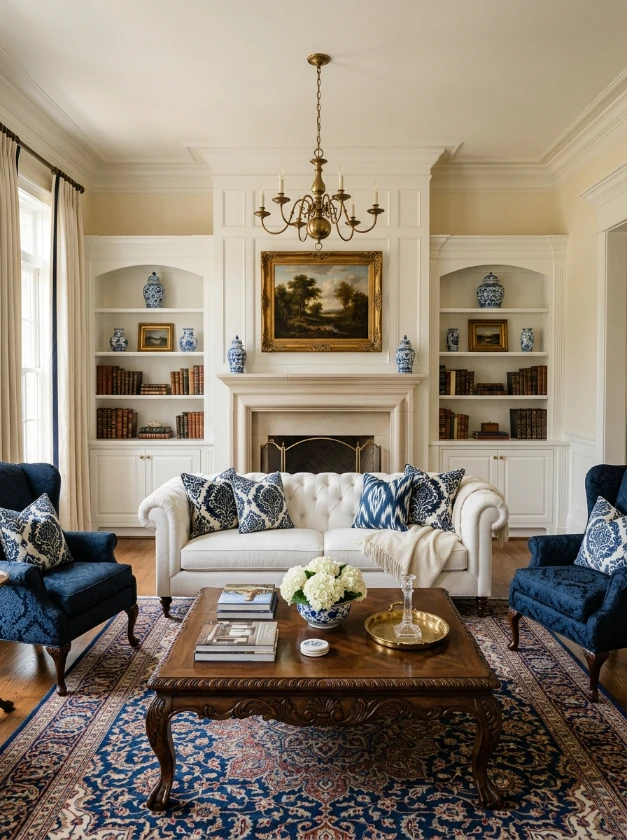
For another approach to living room color, see our blue and white living room ideas for ways to build a cohesive palette without overwhelming the space.
Make the Windows Feel Taller

Window treatments can change the perceived proportions of a trailer living room. Instead of mounting curtains directly at the top of a short window, place the rod slightly higher and let the panels fall close to the floor when the layout permits.
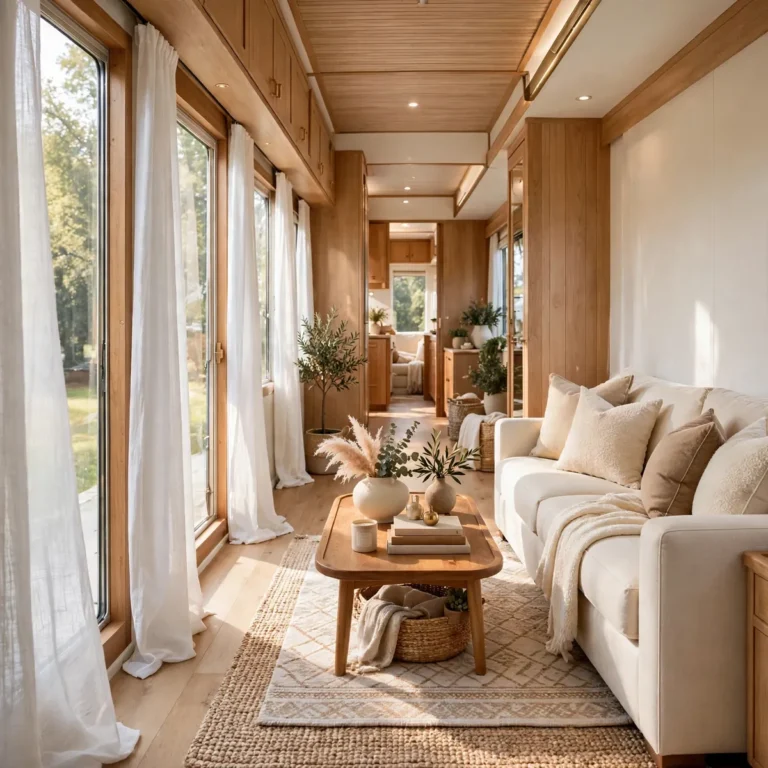
Choose linen-look, cotton, or other lightweight panels in a color close to the wall. This creates a continuous vertical line rather than a dark frame around the window. During the day, keep the panels open so natural light can travel as far into the room as possible.
Use a Mirror Where It Can Actually Reflect Light

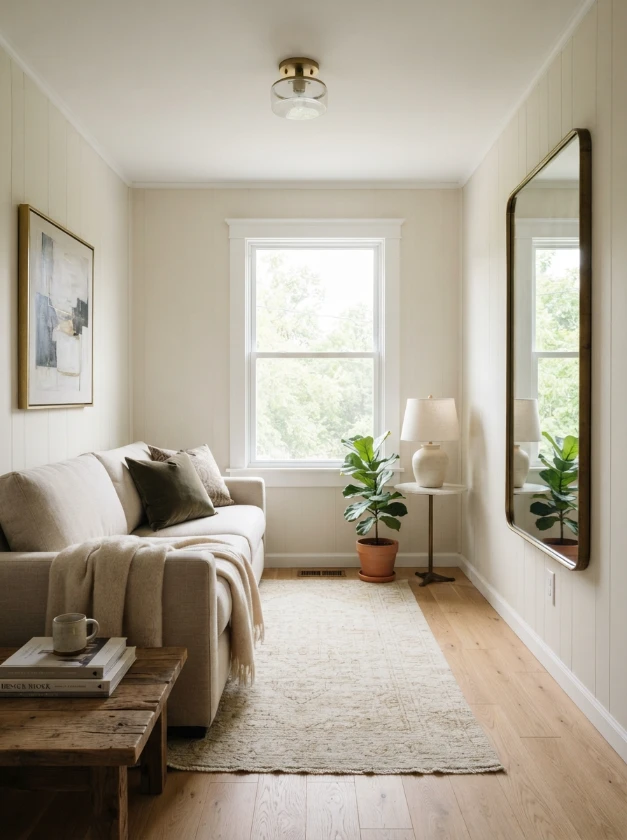
A mirror is most useful when it has something worthwhile to reflect. Place a large mirror opposite or angled toward a window so it can bounce daylight into a darker portion of the room.
A single generous mirror usually looks more polished than several small mirrors scattered across a narrow wall. A slim wood, aged brass, or simple black frame can also reinforce the room’s design direction without adding much visual weight.
Turn the TV Wall Into a Clean Composition
The television does not have to dominate the room. Mounting it directly to the wall can remove the bulk of a deep entertainment cabinet. Underneath, use a shallow floating console or a narrow cabinet if storage is necessary.
Keep the styling around the screen restrained. One piece of artwork, a low plant, or a small stack of books is enough. Too many objects around a television create a busy rectangle inside an already narrow room.
Build Storage Upward Instead of Outward
When floor space is limited, walls become valuable real estate. Tall, narrow shelving can hold books, baskets, framed art, and a few personal pieces without taking over the seating area.
Floating shelves are another option when you want a lighter appearance. Leave some empty shelf space rather than filling every level. That negative space is part of the design and helps small rooms look calmer.
If you enjoy this lighter storage approach, our unique floating shelves article has more ideas for giving a living room wall function and character.
Give the Seating Area a Clear Boundary
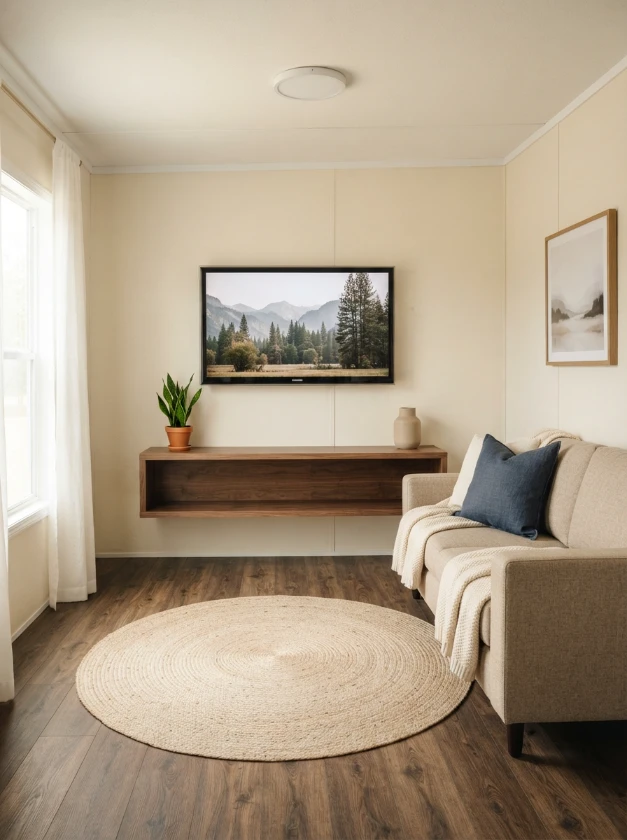
In a single wide floor plan, the living room can blend into the kitchen or dining area. A properly sized rug helps establish where the living zone begins and ends without adding a physical divider.
Choose a rug large enough for at least the front legs of the main seating to sit on it. A low-contrast pattern can add interest while still allowing the furniture to remain the main focus. If the room is already visually busy, a textured solid rug may work better.
Choose a Coffee Table That Respects the Walkway
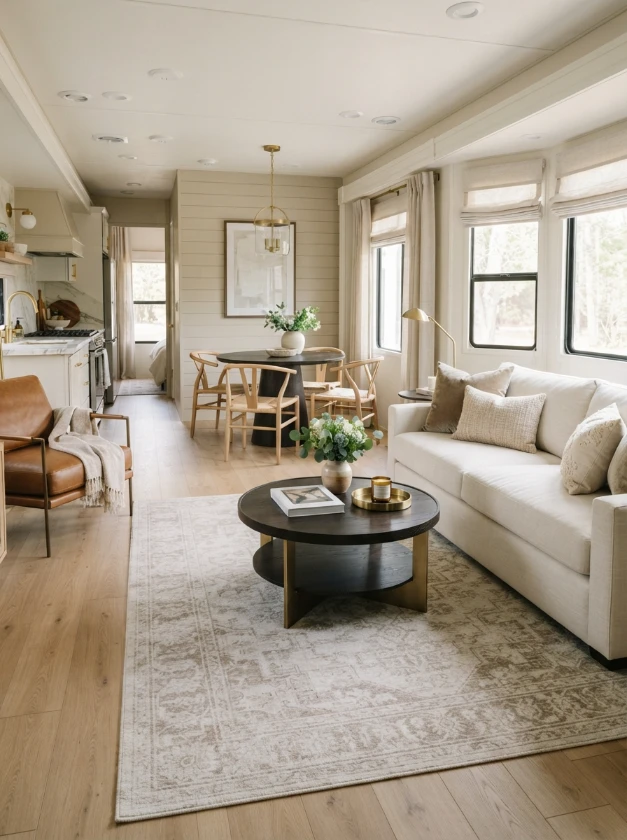
A coffee table should support the seating arrangement without becoming an obstacle. Rounded or softly oval shapes are often easier to navigate around than sharp rectangular corners in a narrow passage.
You can also replace a traditional coffee table with a storage ottoman and a slim tray. This gives you a place for drinks and books while adding flexible seating and hidden storage.
Layer Lighting Instead of Relying on One Ceiling Fixture
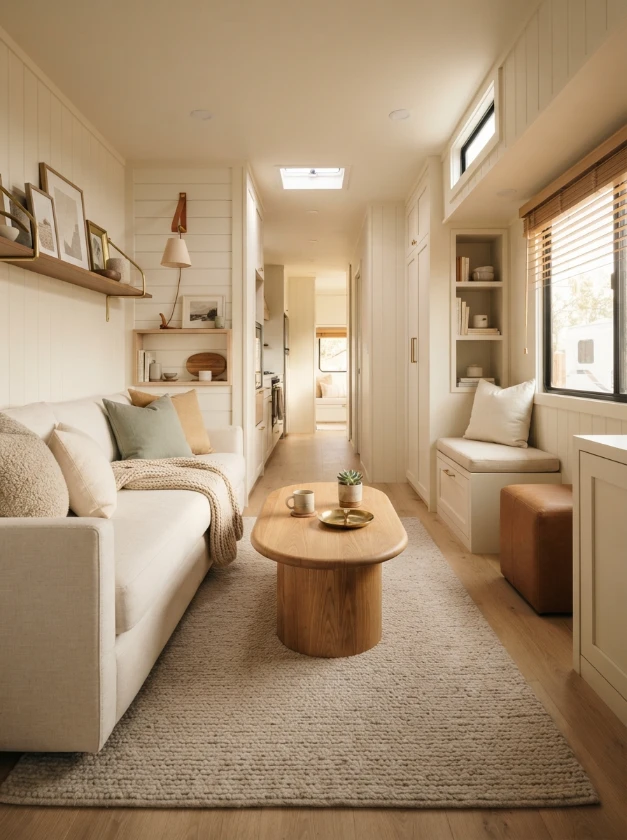
Good lighting can make a compact trailer living room feel considerably more finished. Start with the existing ceiling light, then add lighting at different heights: a floor lamp beside a sofa, a table lamp on a console, or a small reading light near a chair.
Warm, consistent bulbs create a more comfortable evening atmosphere. If the room has a darker corner, place a lamp there rather than adding more decorative pieces. Light can solve a visual imbalance without taking up floor space when you choose a slim fixture.
Add Texture Before Adding More Color
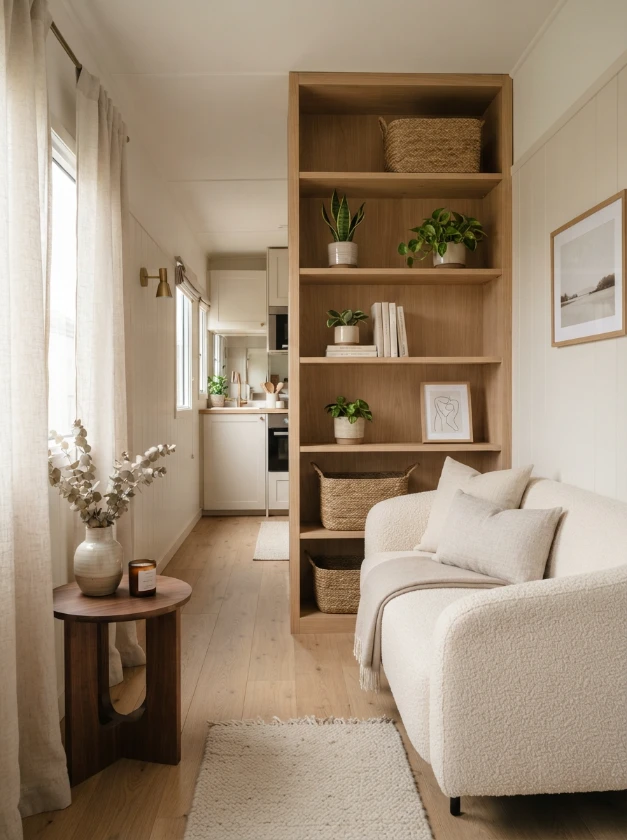
If a neutral living room feels plain, reach for texture before introducing five new colors. A woven basket, linen cushion, chunky throw, natural wood table, ceramic lamp, or subtly patterned rug can create depth while keeping the palette controlled.
This approach is especially useful in a small footprint because texture gives the eye something to notice without creating strong visual divisions. A few different materials can make a simple palette feel rich.
Use One Personal Focal Point

A considered room should feel like someone actually lives there. Choose one object or feature that carries personality: a large piece of art, an inherited cabinet, a colorful vintage chair, a collection of travel books, or a sculptural lamp.
Give that feature enough space around it to be noticed. When every wall has a statement piece, none of them feels special. One strong focal point can make an otherwise simple room feel intentional and memorable.
Keep the Floor Visually Continuous
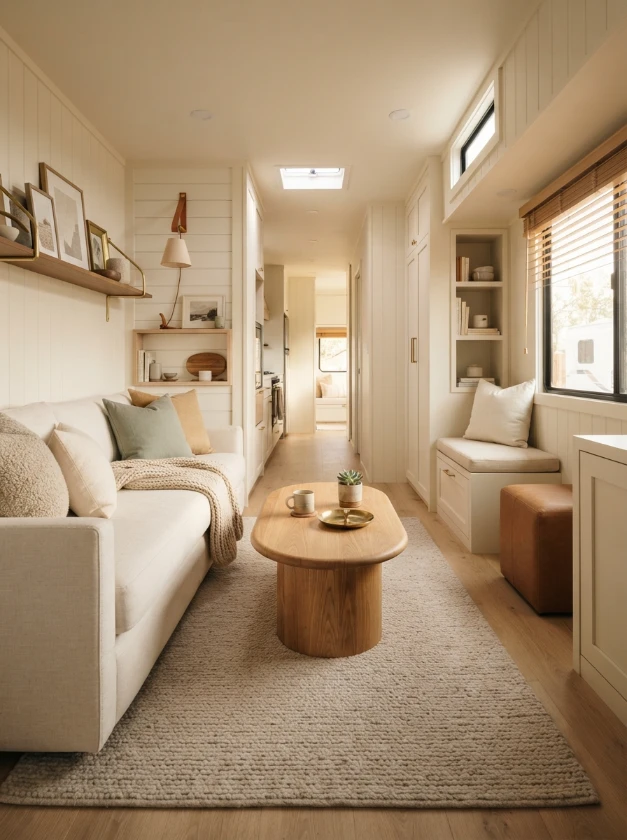
Too many small mats and separate floor coverings can visually chop up a narrow room. When possible, let the main flooring run continuously through the living area and use one well-sized rug to define the seating zone.
If you are updating flooring, a consistent finish can help the room connect more naturally with an adjacent kitchen or dining area. The fewer abrupt visual breaks you create, the more spacious the entire connected area tends to feel.
Make the Room Personal Without Making It Crowded
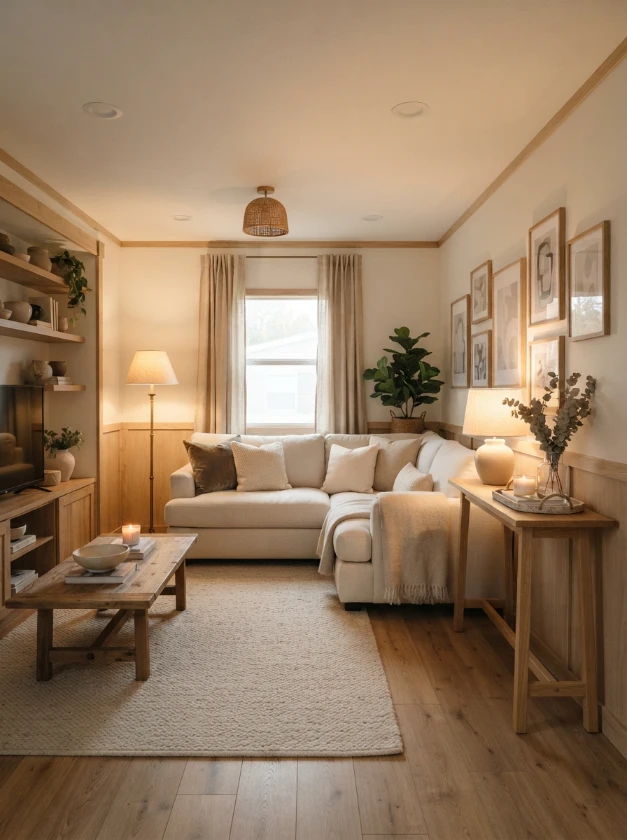
The finishing stage is where many small living rooms become overdecorated. Instead of adding accessories until every surface is full, choose a small group of things you genuinely like and edit them carefully.
Keep frequently used surfaces mostly clear. Use baskets to contain everyday items, keep decorative objects grouped rather than scattered, and remove anything that blocks a window, walkway, or useful surface. A room feels more luxurious when its practical needs are organized rather than hidden under layers of decor.
Final Thoughts
Making a single wide trailer living room feel considered is less about pretending it is a larger house and more about designing honestly around its proportions. Choose furniture that fits the room, protect the traffic path, use walls for storage, bring in light, and repeat a small number of colors and materials.
The most successful result will not come from one dramatic makeover. It comes from several decisions that support one another. When the sofa, rug, lighting, curtains, storage, and decor all respect the same narrow footprint, the room starts to feel cohesive, comfortable, and deliberately designed.