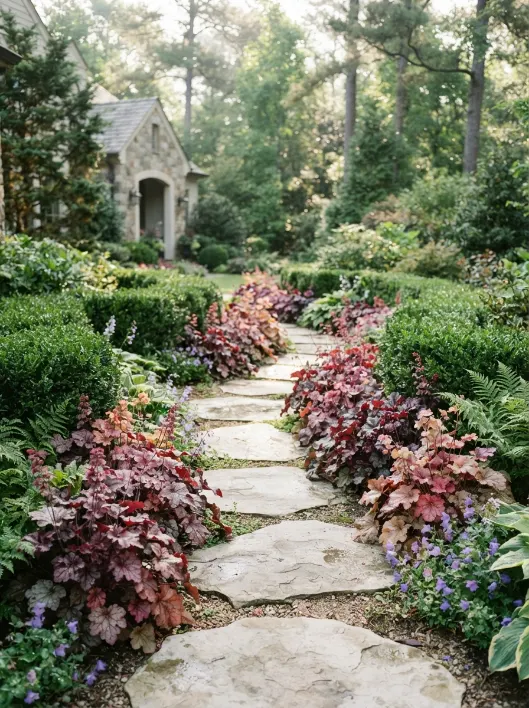
River Rock Landscaping: 10 Brilliant Ideas That Transform Your Yard
River rock landscaping is the use of smooth, rounded stones — in varied sizes, colors, and depths — to shape paths, beds, drainage, and focal points that look natural and need little upkeep. River rock landscaping can make an outdoor space feel natural, polished, and thoughtfully designed without demanding constant maintenance. The secret is not simply spreading stones across bare ground. It is using shape, color, scale, texture, and planting to create visual movement and clear outdoor zones.

Inspired by the flowing pathways, layered stone edges, dry creek beds, and earthy palettes found in natural landscapes, these ideas show how to use rounded river stones in a way that feels intentional rather than random. Choose a consistent palette, vary stone sizes with purpose, and allow plants to soften the hard surfaces.
1. Frame A Sunken Fire Pit With River Rock
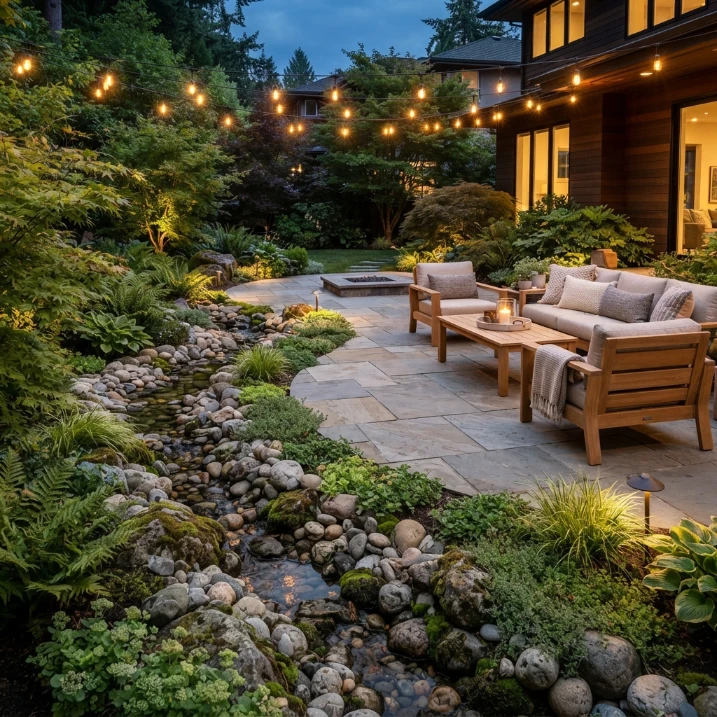
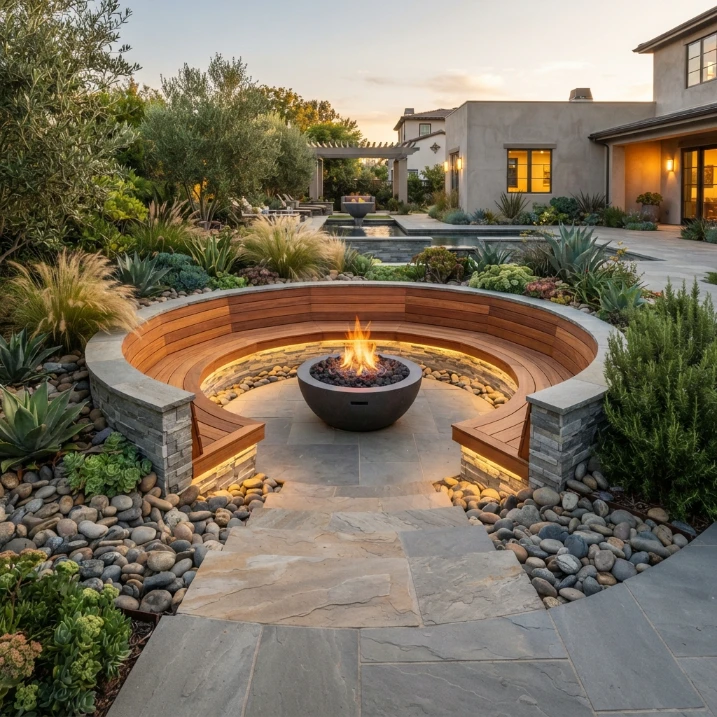
A sunken fire pit becomes more inviting when its geometric seating is surrounded by rounded river stones. Use larger rocks around the outer edge and smaller gravel closer to the seating area. Warm built-in lighting, timber chairs, and drought-tolerant grasses create a relaxed boutique-hotel feeling. For a durable finish, frame the fire ring with 3–5 in rock and keep a heat-safe inner ring between the stone and the flames.
2. Create A Curved River Rock Pathway
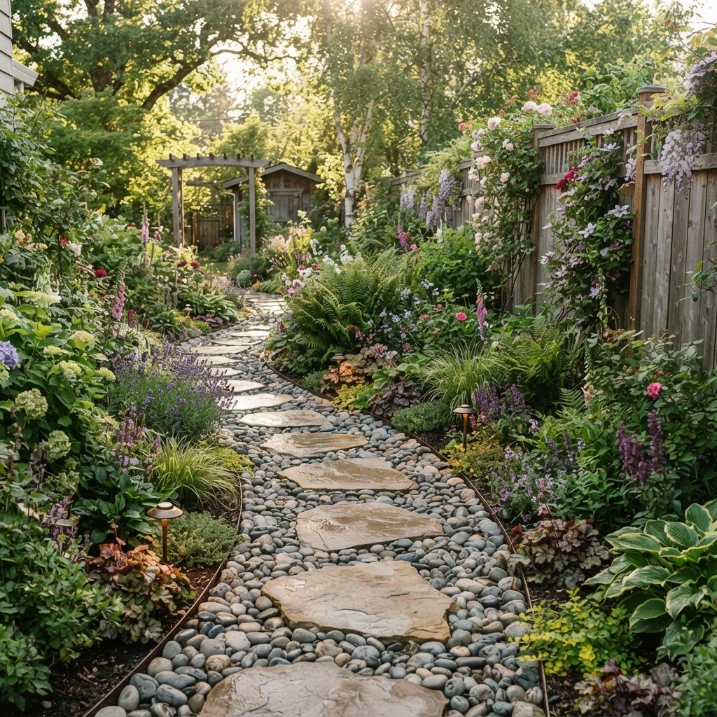
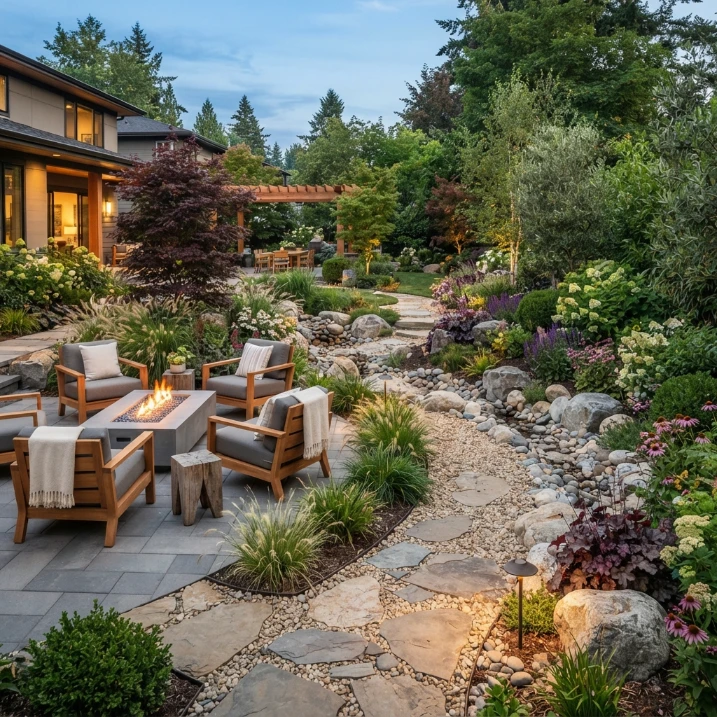
A gently curved pathway gives the garden a sense of movement and makes a small yard feel more spacious. Set flat stepping stones into a bed of smooth river rock, keeping the gaps comfortable and consistent. Add low path lights and shade-loving plants along the edges for evening atmosphere. Use 1–2 in rock between large flat steppers, edge the path firmly so stones do not migrate, and treat it as a practical DIY outdoor project for a weekend build.
3. Build A Dry Creek Bed That Looks Natural
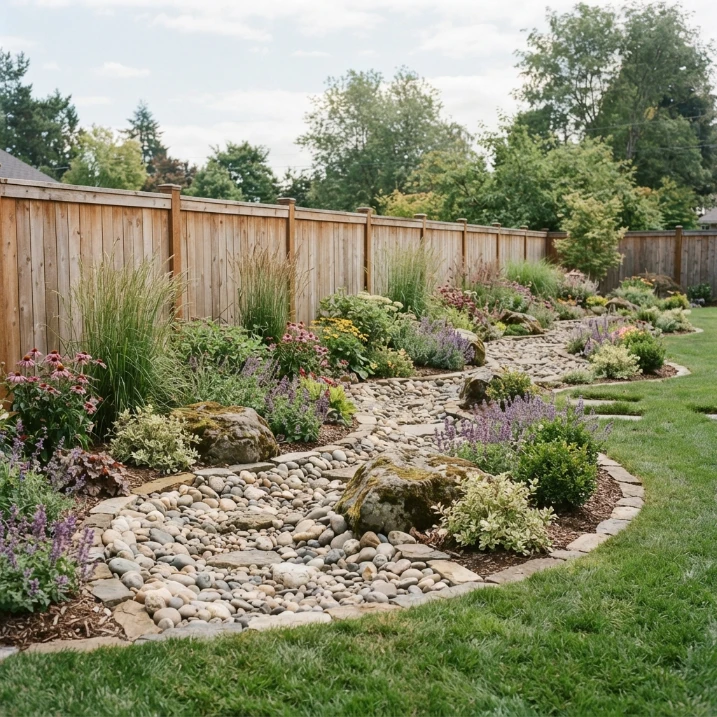
A dry creek bed is one of the most useful river rock landscaping ideas for a yard with drainage problems or an awkward empty strip. Shape the channel with gentle bends, place larger stones at turns, and fill the center with smaller stones. Native grasses, flowering plants, and boulders make the feature look like a natural watercourse. Line the channel with landscape fabric, lay the stone 3–4 in deep, set anchor boulders at the bends, and size the channel to carry roof runoff.
4. Surround A Pond With Layered Stone Edges
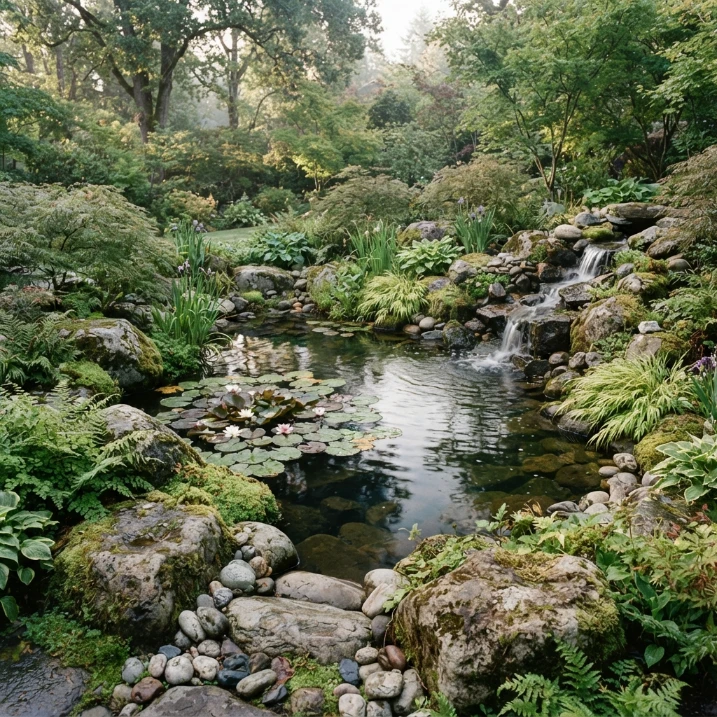
For a pond or small water feature, use large boulders closest to the water and gradually transition to medium and small river rocks. This layered edge avoids a hard artificial line. Water lilies, ferns, moss, and soft grasses add a peaceful green frame while a small waterfall introduces sound and movement. Layer the edge with large anchor stones, medium fill, and small gravel at the waterline, keeping the liner fully hidden.
5. Sculpt A Modern Foundation Garden
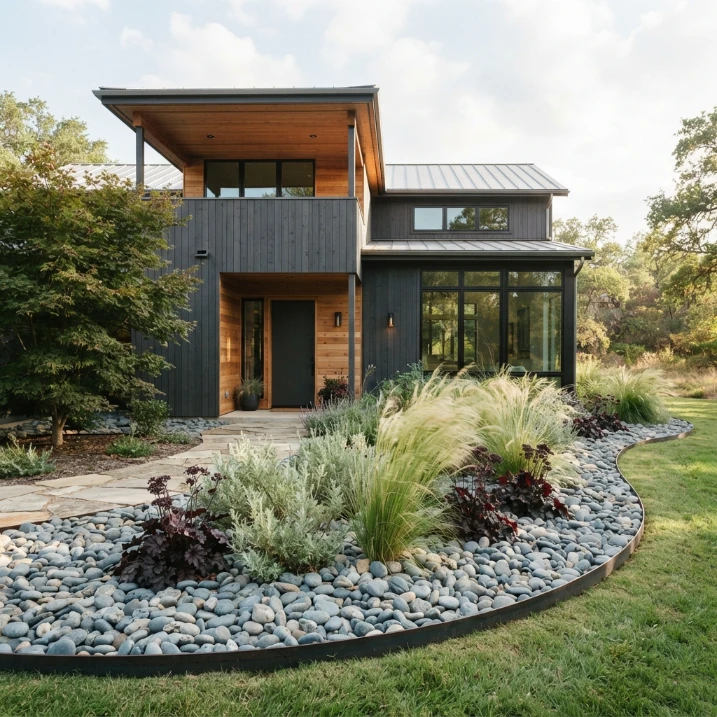
Replace tired mulch around the front of the house with a carefully edged river rock bed. Keep the stone color close to the home’s architecture: blue-gray rocks suit charcoal siding, while tan and brown stones complement brick and warm timber. Layer tall shrubs at the back, medium plants in the middle, and low groundcover near the edge. For a balanced look, use a 60% medium, 25% large, and 15% small size mix, with plants grouped in drifts rather than single specimens.
6. Design A Circular Fire Pit Patio
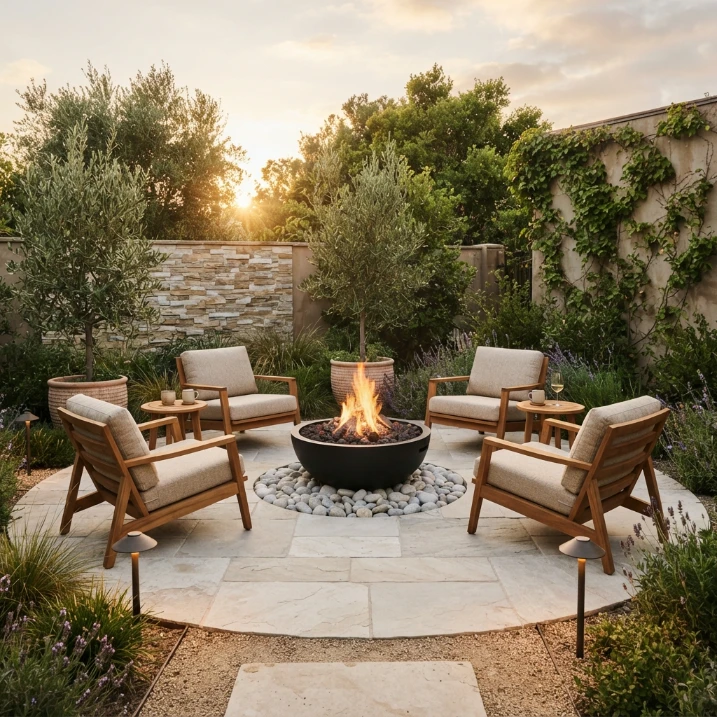
A circular patio naturally gathers attention around the fire bowl. Create a crisp ring of river rock between pavers and the fire feature, then repeat the same stone color in nearby borders. Wood seating, metal details, and warm lighting prevent the space from feeling too cold or overly hard. Keep the circular ring crisp, with a loose gravel center that drains well and stays comfortable underfoot.
7. Add A River Rock Stream Beside A Patio
A dry stream beside a patio creates the impression that water is flowing through the garden. Keep the shape simple, with wide gentle curves rather than sharp zigzags. Mix rounded stones with a few larger accents, then add creeping groundcover between selected areas for a settled, established look. For a living-water effect, add a recirculating pump and a lined channel, with stones mortared at the spill so the flow stays in place.
8. Turn A Fence Line Into A Garden Feature
An empty fence strip can become a strong landscape feature when filled with a flowing river rock bed. Make the bed wider near a focal plant and narrower between planting groups. Repeat grasses, shrubs, or flowering perennials so the stones connect the entire length of the yard. Keep the fence-line bed 12–18 in wide, with shade plants set behind the stone for depth.
9. Combine River Rock With Woodland Planting
For a softer, storybook garden, allow river rocks to blend into planting beds instead of using a rigid border. Pair them with ferns, hostas, woodland flowers, mossy textures, and natural timber. The goal is controlled irregularity: the path should feel organic while still remaining safe and easy to follow. Set ferns and hostas in drifts between gray-tan rock, letting the planting soften the stone without hiding it.
10. Create A Calm Modern Zen Garden
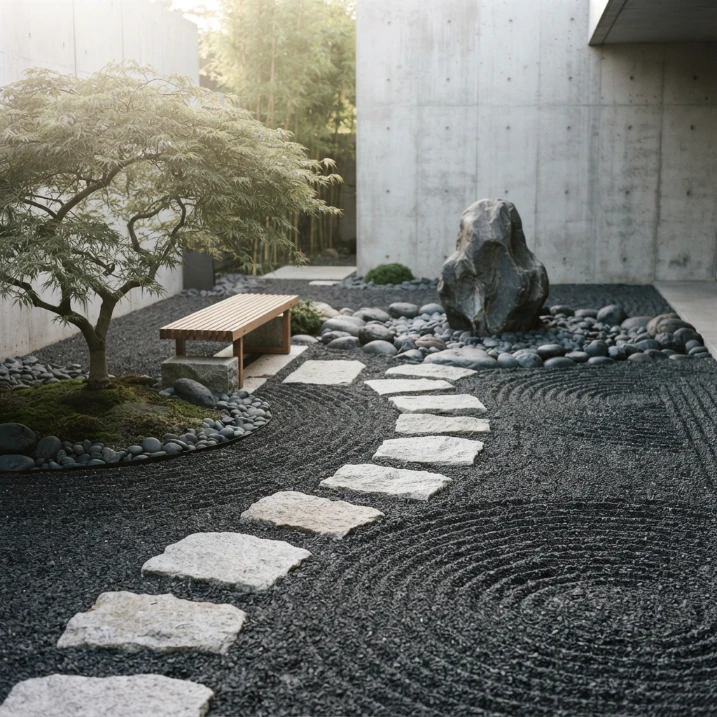
Use river rock as a transition between dark gravel, pale stepping stones, and sculptural plants. Keep the palette restrained with charcoal, soft gray, muted green, and warm wood. One Japanese maple, a sculptural boulder, or a simple bench can become the focal point while the surrounding space stays quiet. Keep the zen garden restrained: a raked gravel field, one upright focal stone, and only a few carefully placed plants.
River Rock vs Mulch: When Stone Wins
Stone wins for drainage strips, hot and dry spots, slopes, and areas where mulch washes away or gets kicked out of place. Mulch wins for rich planting beds that need organic matter and frequent replanting.
For front-yard beds, combine the two: an 8-12 in rock border with 2-3 in mulch inside keeps edges tidy while feeding the soil.
How To Choose River Rock Colors And Sizes
Color should support the home and plants rather than compete with them. Gray and blue-gray feel modern, tan and brown feel warm and rustic, white looks bright but shows dirt quickly, and darker stones create strong contrast. Use smaller stones for paths and narrow borders, medium stones for beds, and larger rocks for water edges, drainage points, and visual anchors.
River rock sizes and depths at a glance
| Rock size | Best use | Depth |
|---|---|---|
| Small gravel 0.5-1 in | Paths and infill | 2-3 in |
| Medium river rock 1-3 in | Beds, borders, creek beds | 3-4 in |
| Large rock 3-6 in | Anchors, edging, fire pits | 4-5 in |
| Boulders 12 in and up | Focal points | Set one-third to one-half below grade |
How To Keep River Rock Landscaping Looking Beautiful
Prepare the ground before placing stone. Remove weeds, shape the area, check drainage, install suitable edging, and use landscape fabric only where it makes sense for the planting plan. Keep rocks away from tree trunks, avoid blocking drainage routes, and refresh the layout when plants grow. River rock is durable, but it still benefits from occasional leaf removal and repositioning after heavy rain.
River Rock Landscaping FAQs
What size river rock should I use?
Match the size to the job: small gravel for paths and infill, medium rock for beds and borders, and larger stone for anchors and edges. Check the table above for a quick guide.
How deep should river rock be?
Aim for 3-4 in in planting beds, with a thinner layer on paths so stones stay stable underfoot.
How much river rock do I need?
Multiply length by width by depth, then add 10-15% extra for settling and uneven ground. Underestimating is the classic mistake, so rounding up is safer than running short.
How do I keep weeds out of river rock?
Start with landscape fabric under the stone, add firm edging to stop stones from spreading, and top up thin spots each season. Pull any seedlings by hand while they are small, before their roots take hold.
Is river rock good for drainage?
Yes, river rock is permeable, so water can drain through it rather than pooling on the surface. It channels runoff away from beds and stabilizes slopes.
Final Thoughts
The most successful river rock landscaping designs balance hard and soft elements. Let stones guide movement, frame plants, define outdoor rooms, and solve practical problems while greenery adds life and softness. With a clear palette, thoughtful curves, and varied stone sizes, even a simple yard can feel layered, calm, and professionally designed.