What Happens When You Finally Design Your Backyard Corner Properly With These Backyard Corner ideas
Backyard corner ideas are designs that turn the unused angle where two fences meet into a seating, planting, cooking, or relaxing zone. Backyard corner ideas can turn one of the least-used parts of an outdoor space into a place that feels intentional, comfortable, and connected to the rest of the yard. A fence corner already gives you two boundaries, so it is a natural starting point for a seating nook, planting bed, fire feature, water garden, or shaded retreat.
The best approach is to decide what the corner should do before buying furniture or plants. Once the purpose is clear, the structure, materials, lighting, and planting become much easier to choose.
Give The Corner One Clear Purpose
The strongest backyard corner ideas begin with one job. A corner can become a place to drink coffee, gather around a fire, grow layered plants, cook outdoors, or simply create a beautiful view from the house.
A clear purpose also prevents overcrowding. A hammock and small table may be enough for quiet relaxation, while an entertaining zone may need built-in seating and a fire feature. Check sunlight, drainage, privacy, access, and distance from the house before deciding on the final layout.
Frame A Seating Nook With A Pergola

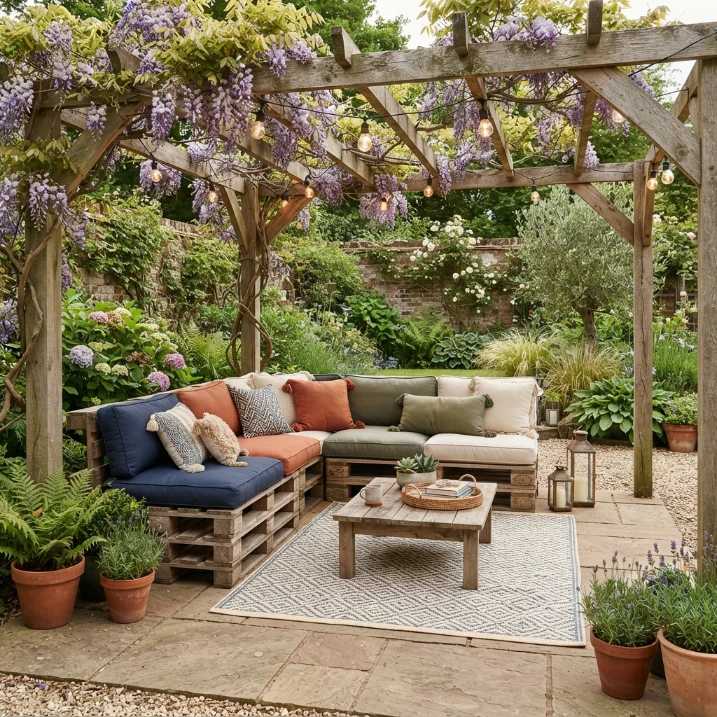
A pergola can give a neglected corner an architectural identity immediately. A simple dark timber structure creates contrast against greenery and gives climbing plants a place to grow.
Place a compact sectional, two lounge chairs, or a built-in bench beneath it. A round coffee table softens the straight lines of the fence and pergola. Gravel or large-format pavers can define the ground plane, while a vertical planting wall adds privacy without taking much floor space.
For relaxed backyard corner ideas, keep the furniture low and let the pergola provide most of the visual structure. For example, a 10×10-foot dark-timber pergola over a two-seat rattan loveseat and a 24-inch round coffee table leaves room for a narrow gravel path along the fence.
Tuck A Compact Outdoor Kitchen Into The Corner
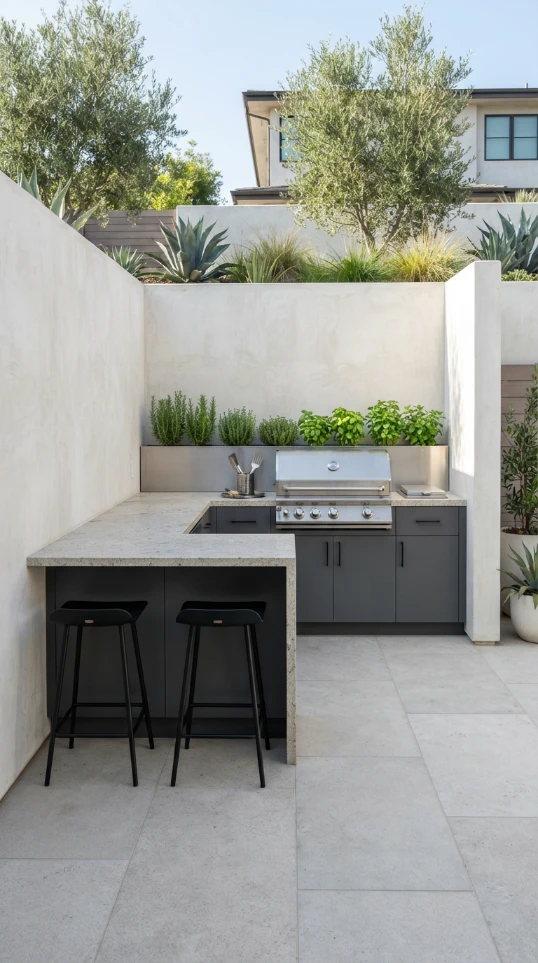
An L-shaped outdoor kitchen is one of the most useful backyard corner ideas when two walls can provide natural boundaries. Counters can run along the walls, keeping the cooking area compact while leaving the middle open.
Use durable materials such as sealed concrete, stainless steel, stone-look porcelain, and weather-resistant cabinetry. A narrow herb planter can sit beside the prep zone so useful greenery becomes part of the design.
If space allows, add two or three bar stools along the outside counter. This creates a social edge while keeping guests away from the cooking area. For example, a 6-foot L-shaped counter in sealed concrete with a small grill, a bar fridge, and two backless stools fits a 8×8-foot corner and keeps the middle open.
Build A Fire Pit Corner With Built-In Seating
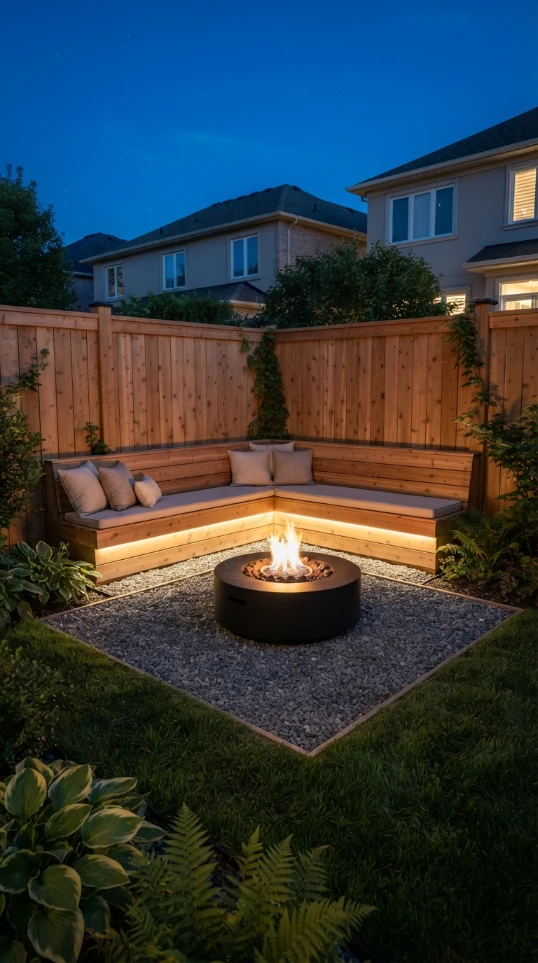
A fire pit gives a backyard corner a strong focal point after sunset. Instead of scattering chairs around a portable fire bowl, use an L-shaped bench that follows the fence lines.
Keep the fire feature centered and follow the safety clearances specified for the product. Gravel or suitable noncombustible paving can define the fire area, while planting softens the perimeter.
For evening backyard corner ideas, low landscape lights along the path or beneath the seating can make the zone easier to navigate. Warm illumination also brings out the texture of timber and stone. For example, a 36-inch round gas fire bowl centered on a 10×10-foot gravel pad with an L-shaped cedar bench seats four to six people.
Keep at least 10 feet between the fire feature and fences, overhanging branches, and anything flammable, and check the product manual for its own clearance rules. A clear gravel pad under and around the fire bowl also stops sparks reaching dry grass and gives seating a safe, level base.
Backyard Corner Seating At A Glance
| Corner type | Best for | Space needed |
|---|---|---|
| Pergola nook | shade + lounging | ~10×10 ft |
| Fire pit corner | evening gatherings | ~10×10 ft + safety clearance |
| Hammock retreat | quiet relaxation | one tree or stand + ~8×8 ft |
| Bistro corner | tiny corners | ~4×4 ft |
| Stone arch nook | formal yards | ~8×8 ft + masonry work |
Shape A Curved Tropical Planting Bed

Not every corner needs furniture. A curved planting bed can turn a sharp fence junction into a softer landscape feature.
Place taller plants toward the fence, medium shrubs in the middle, and low grasses or flowers along the front. This layered composition gives the planting depth and keeps the corner attractive from several viewing angles.
For a tropical-inspired look, combine palms with agave, ornamental grasses, broad-leaf plants, and dark mulch where the climate allows. In colder regions, choose hardy plants with similar shapes instead. For example, one windmill palm at the back, three agaves in the middle, and a front edge of blue fescue grass gives the curve a layered tropical look.
Create A Storybook Garden Nook With Layered Lighting
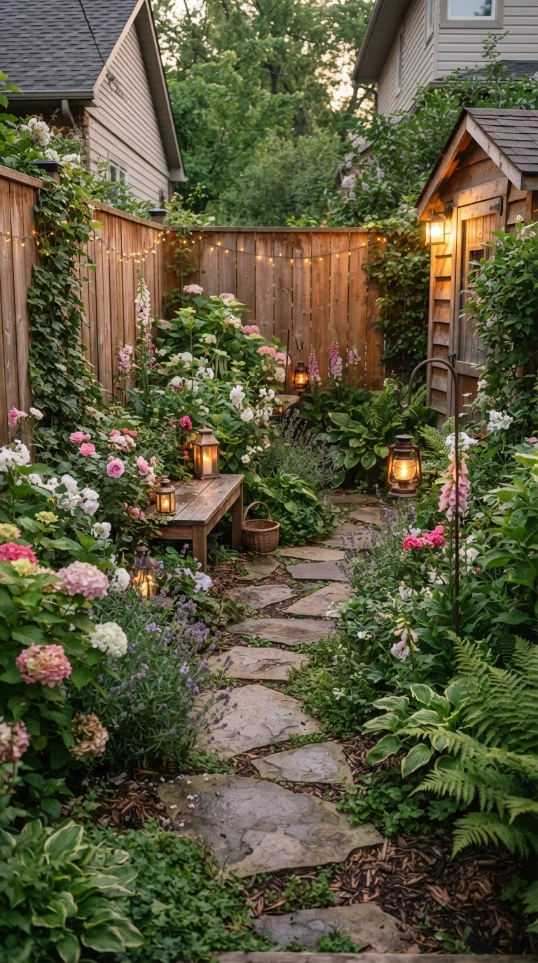
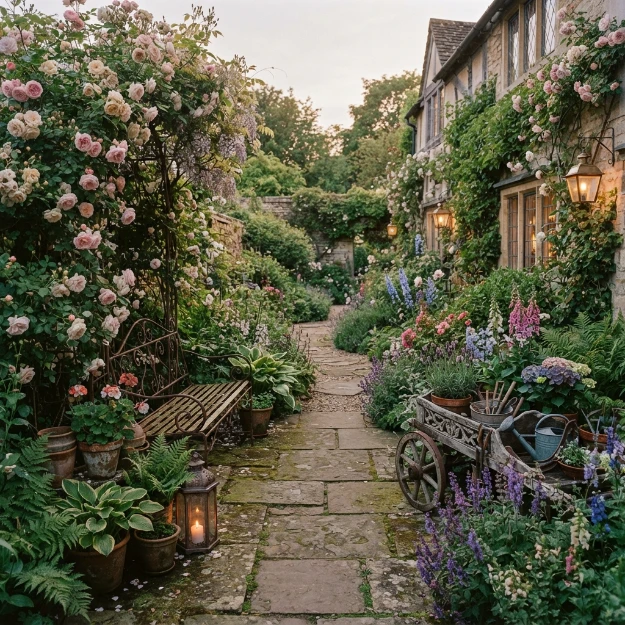
A small corner can feel special when the design focuses on atmosphere rather than size. A narrow stone path, compact bench, flowering plants, and a few lanterns can create a garden destination without taking over the yard.
Use several gentle light sources rather than one harsh floodlight. Path lights can mark movement, lanterns can create warm points of light, and a discreet wall fixture can illuminate the seating area.
These backyard corner ideas work especially well when the materials stay natural. Stone, timber, terracotta, and greenery create a garden-room feeling without excessive decoration. For example, a 4-foot wooden bench, two solar lanterns, and a 3-foot-wide stepping-stone path make a reading corner out of a 5×5-foot space.
For reading, add a weatherproof basket for books and a cushion that stays put in light wind. Dappled shade from a small tree, a pergola slat, or a light canopy keeps pages readable without glare.
Turn A Shaded Corner Into A Hammock Retreat
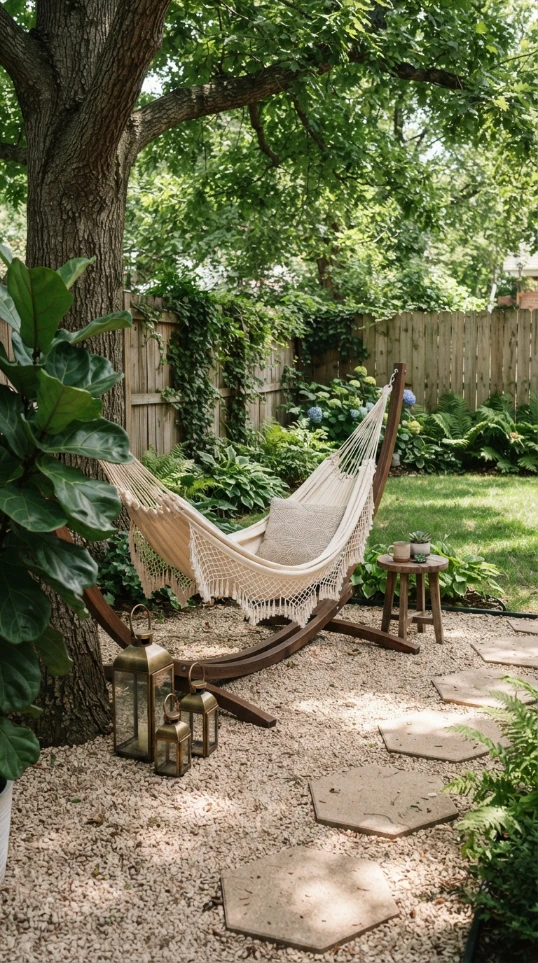
A shaded fence corner can be better suited to relaxation than a sunny patio. If you have a suitable mature tree or a properly engineered hammock stand, create a simple retreat around it.
Use gravel for drainage and add a few stepping stones leading toward the hammock. A small wooden side table provides a practical place for a drink without filling the corner with furniture.
Keep the planting restrained. One or two large leafy plants can frame the hammock while leaving enough open space for the area to feel restful. For example, a double cotton hammock on a 15-foot steel stand with one teak side table and two large hostas framing the ends keeps the retreat simple.
Use An Arbor As A Vertical Focal Point

An arbor solves a common problem in backyard corners because it introduces height. A tall arch draws the eye upward and gives the corner more visual scale.
Painted wood or dark metal creates useful contrast against green planting. Train a suitable climbing plant over the structure so the arbor gradually becomes part of the landscape.
For compact backyard corner ideas, an arbor can add a strong focal point without using much ground area. A small bench or two compact chairs beneath the arch can create a simple destination. For example, a 7-foot dark-metal arbor planted with one clematis on each side becomes a green doorway within two growing seasons.
Design A Stone Arch Seating Nook
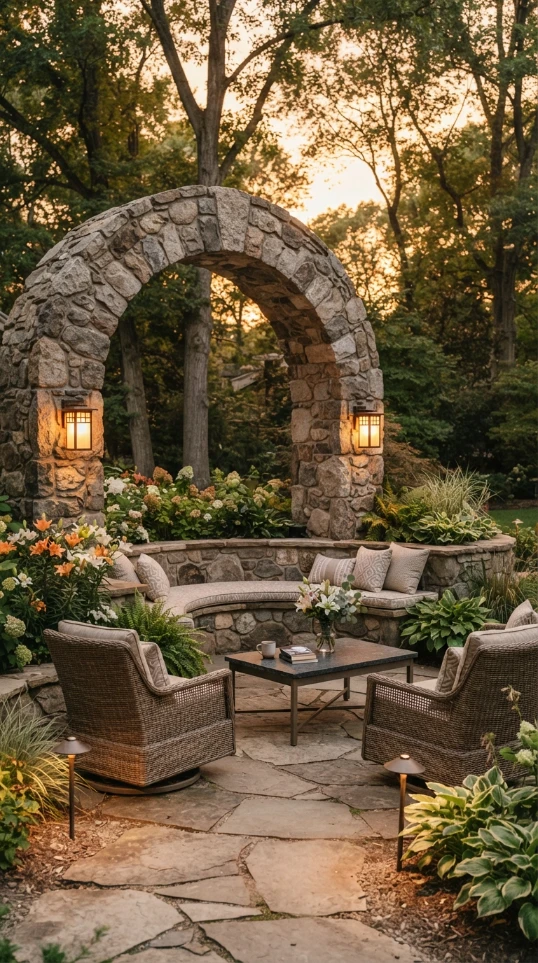
For a more architectural outdoor space, a stone arch can become the centerpiece. Build the seating around the shape rather than treating the arch as an isolated decoration.
A curved masonry bench can echo the arch, while woven chairs and outdoor cushions add comfort. Pale stone pairs well with flowering plants, dark foliage, and warm evening lighting.
Keep the hardscape controlled. One main paving material, one seating finish, and a restrained planting palette can make the structure feel sophisticated. For example, a curved limestone bench about 6 feet long under a pale-stone arch, with two woven chairs and cream cushions, suits a formal corner.
Add A Small Water Feature Or Koi Pond

Water is especially effective in a backyard corner because the surrounding fences naturally contain the sound and visual focus. A small pond, recirculating stream, or stone waterfall can make the space feel calmer without requiring a large footprint.
Use irregular natural stone around the water instead of a perfectly geometric border. Aquatic plants can soften the edge, while ferns and moisture-tolerant plants help the feature blend into the garden.
If you keep fish, plan for suitable filtration, water quality, shade, maintenance, and climate conditions. The feature should remain manageable long after installation. For example, a 3-foot recirculating basalt-column fountain on a gravel bed needs only a small pump and a weekly top-up of water.
For a smaller budget, a solar bubbler or a simple birdbath adds the same sound and movement without wiring. It runs while the sun shines, needs only a sunny spot and occasional topping up, and still draws birds into the corner.
Soften The Corner With A Curved Flower Bed
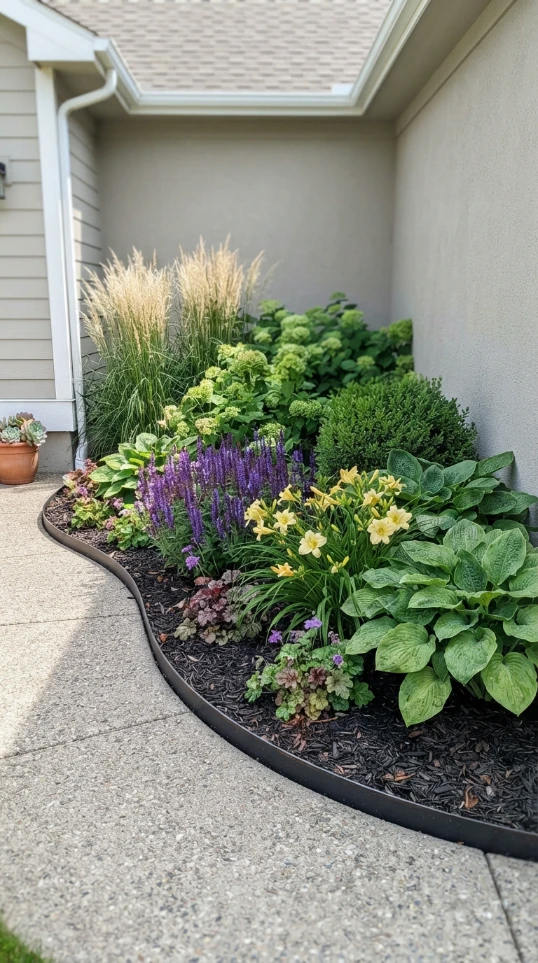
A curved flower bed is one of the easiest backyard corner ideas to adapt to an existing lawn. Instead of letting grass meet the fence at a hard angle, sweep the planting line into a gentle curve.
Use one taller feature plant, several medium fillers, and lower plants along the edge. Repeat colors in small groups rather than planting every available flower.
Lavender, soft yellow flowers, ornamental grasses, and green foliage can create a calm palette. Choose plants according to local sunlight, soil, rainfall, and watering needs. For example, one tall rose standard at the back, five lavender plants in the middle, and a front edge of alyssum repeats one calm palette along the curve.
Plan the bed for succession: spring bulbs open the season, summer lavender carries color and scent, and ornamental grasses hold structure into autumn. Layering in that order keeps the curve interesting long after the first flowers fade.
Use Gravel And Lighting To Make A Small Corner Feel Finished
Sometimes the missing ingredient is not another feature but a clear ground plane. Gravel can define a seating or planting zone, improve drainage, and visually separate the corner from the lawn.
Use brick, stone, metal, or concrete edging to keep the gravel contained. Then add a small number of landscape lights where they serve a real purpose.
The best backyard corner ideas often depend on this balance of structure and softness: a defined edge, a comfortable surface, layered planting, and warm light. For example, a 6×6-foot pea-gravel pad edged in brick with three low solar path lights turns a muddy corner into a finished mini-patio.
Layer the light: low solar path lights mark the edges, one or two lanterns add warm pools of light for sitting, and a single wall fixture near the seating gives enough brightness for evenings without glare. Keep the fixtures low and warm so the corner still feels calm after dark.

Grow A Vertical Herb Garden On The Fence
A fence is wasted planting space in most corners. Wall planters, a simple trellis, or a reclaimed pallet fixed to the fence turn that vertical surface into a working herb garden without using any ground space.
Plant basil, mint, and thyme where they are easy to reach, and keep mint in its own pot so it does not take over. A narrow gravel strip below catches drips and keeps the corner tidy.
Make A Tiny Corner Work With A Bistro Set
A three-piece bistro set is made for corners that are too small for a full table. Two chairs and one small round table fit where a larger set would crowd the fences.
Set the table on a diagonal so the chairs pull out toward the open yard, not into the fence. One tall pot beside the set adds height without taking up a seat.
Screen The Corner For Privacy Without A Wall
Privacy does not have to mean a tall solid wall. A row of evergreen shrubs along the fence softens the boundary and blocks views year-round without making the corner feel boxed in.
For faster cover, add a trellis panel and train climbers up it, or hang outdoor curtains from a simple frame. Both options let air and light through while making the seating feel sheltered. See our backyard privacy ideas for more screening options.
Build A Low-Maintenance Rock And Gravel Corner
A rock and gravel corner suits dry, sunny spots where lawn struggles. Set a few large boulders as anchors, fill between them with gravel, and leave the planting loose and natural.
Add succulents, ornamental grasses, and other drought-tolerant plants in small groups, and top the gravel with a stone edging. The result needs little watering and stays tidy through the seasons.
Repeat Materials So The Corner Belongs To The Whole Yard
A corner can look disconnected when every finish is different from the rest of the landscape. Borrow one or two materials from nearby areas instead.
If the patio uses warm timber, repeat it in a bench or planter. If the main walkway uses pale stone, carry that finish into the corner. If the house has black window frames, a dark pergola or arbor can create a subtle visual connection.
This does not mean matching everything. It simply gives the eye repeated elements that make the corner feel like part of one landscape. For example, if the patio is warm teak, a teak bench and two teak planters in the corner tie the whole yard together.
Keep Small Corners Open Enough To Breathe
One of the most important backyard corner ideas is knowing when to stop. Fences already frame the area, so too many objects can make the space feel cramped.
Choose one focal point, one seating or planting strategy, and a small number of supporting details. Leave some visible ground and wall space.
An outdoor corner often feels more expensive when the important features have room around them. The goal is not to make every inch useful. It is to make the entire corner feel intentional. For example, one focal point, one bench, and three pots is plenty for a 4×4-foot corner — leave at least a third of the ground visible.
How do you decorate a backyard corner?
Start with one clear purpose, such as seating, planting, or relaxing, so the corner does not become a dumping ground. Then add one structure, like a pergola, arbor, or bench, and finish with planting and soft lighting that suit the space and sunlight.
What is the best seating for a small backyard corner?
A three-piece bistro set suits the smallest corners because two chairs and a small table fit where a full set would crowd the fences. If the corner is a little larger, a built-in bench along one fence saves floor space and seats more people without extra chairs.
How much space do you need for a backyard corner fire pit?
Allow about a 10×10-foot area for the fire feature, seating, and safe movement, plus clearance from fences, plants, and anything flammable. A gravel pad under the fire bowl, room for four to six seats, and clear access around the seating make the corner both comfortable and safe.
What plants work best in a backyard corner garden?
Layer plants by height, with taller plants at the fence, medium shrubs in the middle, and low flowers or grasses along the edge. Match plants to the corner’s sun or shade, and choose low-maintenance picks such as lavender, ornamental grasses, and hardy shrubs for a bed that stays tidy.
How do you make a backyard corner private?
Start with an evergreen hedge or shrubs along the fence for year-round screening, then add a trellis with climbers where you need faster cover. Freestanding screens or outdoor curtains can add shelter around seating without building a solid wall, while still letting air and light through.
Final Thoughts
The most successful backyard corner ideas do not treat the fence junction as leftover land. They give it a purpose, frame that purpose with the right structure, and soften the space with plants, texture, and lighting.
You might choose a pergola lounge, outdoor kitchen, fire pit, hammock, arbor, flower bed, or water feature. Begin with the way you want to use the corner and work outward from there.
A neglected patch does not need a huge renovation to become memorable. With a defined boundary, a thoughtful focal point, suitable plants, and a little evening light, an awkward corner can become one of the most inviting parts of the backyard. For more outdoor inspiration, see our DIY outdoor projects guide.