Top 16 Stunning Above Ground Pool Deck Ideas for a Stylish Yard
An above ground pool is a freestanding pool whose steel or resin walls sit on top of the ground, and smart decking, cladding, and landscaping decide whether it looks temporary or built-in. An above ground pool can become much more than a place to cool off during summer. With the right .deck, materials, landscaping, lighting, and outdoor furniture, it can become the centerpiece of your backyard. It also works well as a garden pool
A thoughtfully designed above ground pool deck can make the pool feel integrated with the rest of the property instead of looking like a separate structure placed in the yard. The key is to think about the entire outdoor setting rather than focusing only on the pool itself.
From sleek composite decking to warm natural wood, there are plenty of ways to create a polished outdoor retreat. You can also introduce built-in seating, pergolas, planters, privacy screens, layered lighting, and carefully selected furniture to make the area more comfortable and visually cohesive.
Here are stylish ways to give your pool area a more intentional, finished look.
Start With a Deck That Feels Like Part of the Backyard
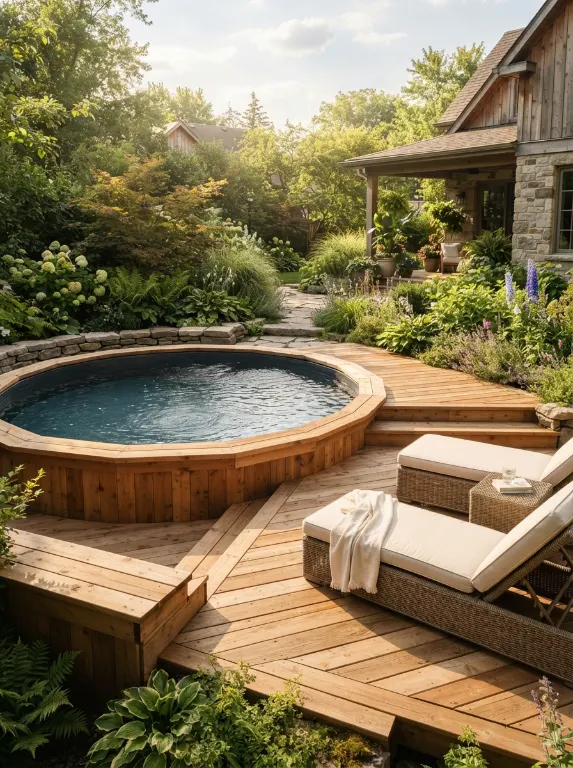
The deck should connect the pool with the rest of your outdoor space. Instead of treating it as a simple platform, consider how people will move between the house, pool, lawn, patio, and garden.
A wider deck can provide room for loungers and seating while also creating a safer transition around the water. If space is limited, even a compact wraparound platform can make a noticeable difference.
Think about the shape of the pool and the architecture of your house before choosing the deck layout. Straight lines can complement contemporary homes, while softer landscaping and natural wood can work beautifully with cottages, farmhouses, and traditional properties.
The goal is balance. The pool should remain the focal point without making the backyard feel dominated by one structure. For example, a wraparound composite deck with a matching skirt board can hide the steel wall completely and give the pool a built-in look.
Choose a Decking Material That Fits Your Climate

The material you choose affects appearance, maintenance, comfort, and long-term performance. Before making a decision, consider your local weather, amount of direct sunlight, rainfall, and how much maintenance you are willing to handle.
Composite Decking for a Clean, Low-Maintenance Look
Composite decking is an attractive option when you want the appearance of wood without regular staining and sealing.
Modern composite boards are available in warm brown, gray, charcoal, and natural wood-inspired finishes. A medium or light tone can help keep the outdoor area visually bright, while darker decking creates a more dramatic contemporary appearance.
Composite can work especially well around an above ground pool because its consistent finish creates a polished transition between the pool structure and surrounding landscaping.
When choosing composite, pay attention to surface temperature, slip resistance, drainage requirements, and manufacturer installation recommendations.
Natural Wood for Warmth and Character
Natural wood creates a completely different atmosphere. Cedar, redwood, and other suitable outdoor woods bring organic color and texture to the backyard.
Wood works particularly well if you want a rustic, cottage, farmhouse, or relaxed coastal appearance. The natural grain also helps soften the hard edges of decking and pool equipment.
The trade-off is maintenance. Outdoor wood generally requires appropriate sealing and periodic care to protect it from moisture, insects, weathering, and splitting.
Wood-Plastic Composite for a Practical Middle Ground
Wood-plastic composite can provide a balance between appearance, durability, and cost.
The exact performance depends on the product, so compare warranties, installation requirements, heat retention, surface texture, and resistance to moisture before choosing one.
For homeowners who want a relatively easy-care deck without committing to premium natural wood, this category can be worth considering. For example, a light-gray composite board stays cooler underfoot than dark wood on a sunny patio and needs only an occasional wash.
Above Ground Pool Deck Options at a Glance
| Deck option | Cost and effort | Best for |
| Full wraparound deck | highest, most permanent | a resort look and easy access |
| Partial deck | medium | a seating ledge on a budget |
| Corner deck | lowest | small yards and simple entry |
| Multi-level deck | high | sloped yards and zoning |
| Paver patio surround | medium | a clean, ground-level finish |
Create a Modern Minimalist Pool Retreat
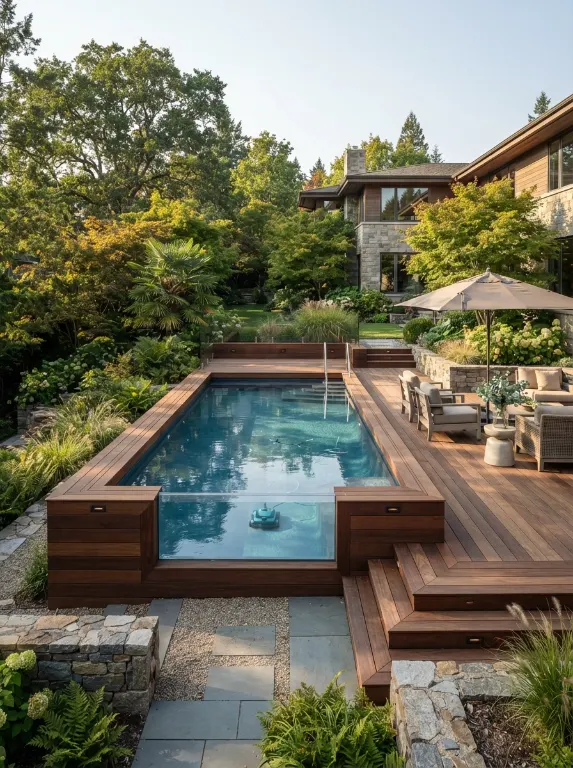
A modern minimalist approach works particularly well when the house already has clean architectural lines.
Use a restrained palette of warm gray, charcoal, cream, natural wood, and black accents. Keep the furniture simple and avoid filling every available space.
A broad deck surrounding the pool can create a strong architectural frame. Built-in planters, integrated steps, slim railings, and discreet lighting can make the entire setting feel more intentional.
Choose streamlined lounge chairs instead of bulky furniture. Large-format outdoor cushions in neutral fabrics can add comfort without introducing visual clutter.
For an especially polished result, repeat one or two materials from the house. For example, black window frames can be echoed through dark outdoor furniture or railing details. For example, a charcoal deck, white loungers, and a single black planter can keep the whole retreat calm and uncluttered.
Bring Rustic Warmth With Natural Wood

A rustic pool setting can make the backyard feel relaxed and welcoming.
Choose warm wood tones, natural stone, woven furniture, oversized planters, and soft outdoor textiles. Instead of making every element perfectly coordinated, allow different natural textures to work together.
A weathered wood deck can look beautiful against green grass and mature trees. Cedar tones, stone edging, gravel paths, and large ceramic planters can reinforce the natural character.
String lights can add a gentle evening glow, while lantern-style fixtures provide practical illumination around stairs and pathways.
This approach is especially effective for cabins, cottages, farmhouse-style properties, and homes surrounded by mature landscaping. For example, cedar decking, a stone fire bowl, and woven chairs can make a woodland backyard feel like a cabin retreat. For a smaller, budget-friendly alternative, try the same cedar and stone details around a stock tank pool.
Give the Space a Coastal-Inspired Feel

You do not need to live near the ocean to create a coastal-inspired pool area.
Focus on light colors, breathable fabrics, pale wood, soft gray decking, natural textures, and plenty of greenery. Avoid overusing obvious nautical decorations. A sophisticated coastal backyard is usually more about atmosphere than themed accessories.
A light deck paired with cream lounge cushions can make the space feel airy and relaxed. Add pale blue or muted green through a few carefully chosen accessories rather than covering the entire area in beach colors.
A pergola can provide shade while also giving the pool zone architectural definition. Outdoor curtains can soften the structure and create a more private retreat. For example, pale-gray decking, cream cushions, and a white pergola can give a landlocked yard a breezy seaside feel.
Use a Multi-Level Layout for More Function

If your backyard has enough room, different levels can help separate activities.
One level can surround the pool, another can hold dining furniture, and a lower section can transition into the lawn or garden.
This arrangement can make a large backyard feel more organized while giving each zone a clear purpose.
For smaller properties, the same concept can be achieved through subtle changes in flooring, furniture placement, planters, or elevation rather than building several large platforms.
Always consider drainage, structural requirements, access, and local building regulations when planning elevated or multi-level structures. For example, an upper deck for swimming, a mid-level dining terrace, and a lower lawn path can zone a sloped yard without fences.
Add Built-In Seating Around the Pool
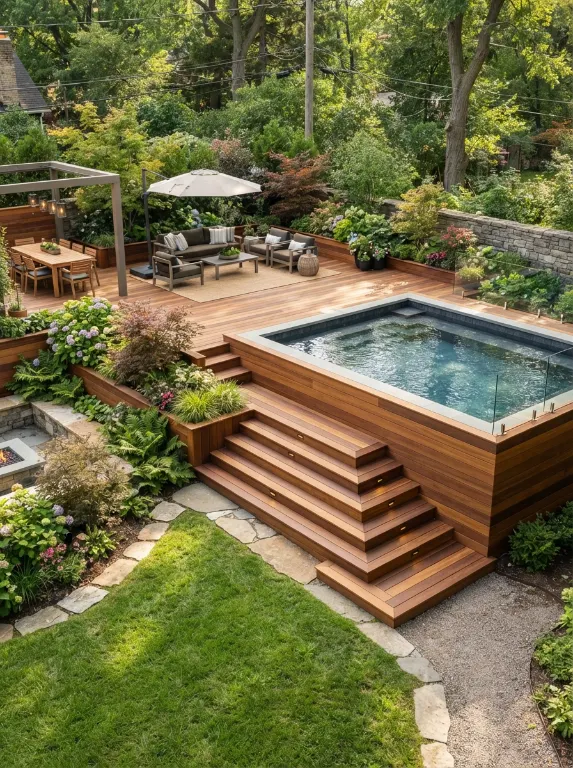
Built-in seating is one of the easiest ways to make a pool deck feel custom-designed.
A bench can run along one side of the deck, creating additional seating without taking up the same amount of floor space as several individual chairs.
You can also build seating into a raised planter or create a corner lounge beside the pool.
Use outdoor-rated cushions and fabrics designed for sun and moisture exposure. Neutral upholstery works well for a timeless appearance, while muted green, blue, terracotta, or rust can introduce seasonal color.
Built-in seating is particularly useful for entertaining because it creates a natural gathering area without overcrowding the deck. For example, an L-shaped bench with hidden storage can seat eight guests and hold pool toys out of sight.
Frame the Pool With Landscaping

Landscaping can completely change how an above ground pool looks.
Instead of placing the pool directly beside a large empty lawn, create layers around it. Low ornamental grasses, shrubs, flowering plants, and decorative stones can soften the transition between the deck and garden.
Use plants at different heights to create depth. Low plants can frame the deck while taller shrubs can provide privacy farther away.
Avoid planting anything that drops excessive leaves, berries, or debris directly over the pool if regular cleaning would become inconvenient.
A simple planting palette often looks more sophisticated than using too many unrelated plant varieties. For example, stone-look panels around a round pool, edged with low grasses, can turn the wall into a garden feature.
Add a Pergola for Shade and Structure
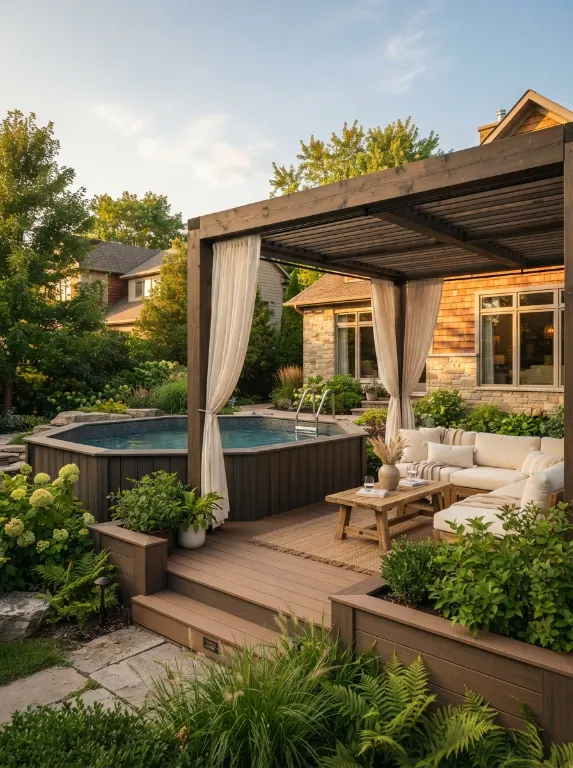
A pergola can turn the pool deck into a more complete outdoor room.
Position it beside the pool rather than necessarily covering the entire swimming area. This leaves the water open to sunlight while creating a dedicated lounge or dining zone.
Use a slim timber pergola for a natural look or a darker architectural structure for a modern backyard.
Outdoor curtains, climbing plants, or adjustable shade panels can increase privacy and comfort. Just make sure the structure is appropriately engineered for your climate and installed according to local requirements. For example, a small shade sail stretched over the lounge corner beside the pergola can add afternoon shade without blocking the view of the water.
Use Lighting to Change the Evening Atmosphere

Good lighting makes an outdoor pool area useful after sunset.
Instead of relying on one bright fixture, layer several types of illumination.
Consider:
- Low pathway lights
- Step lighting
- Warm wall sconces
- Pendant lights beneath a pergola
- Landscape uplighting
- Decorative lanterns
- Under-bench lighting
Keep the lighting warm and subtle. The goal is to create visibility and atmosphere without making the backyard feel overly bright.
Lighting along steps deserves particular attention because clear visibility is important around elevated decking and wet surfaces. For example, string lights along the deck rail plus underwater LEDs can make evening swims feel warm and safe.
Make the Stairs a Design Feature
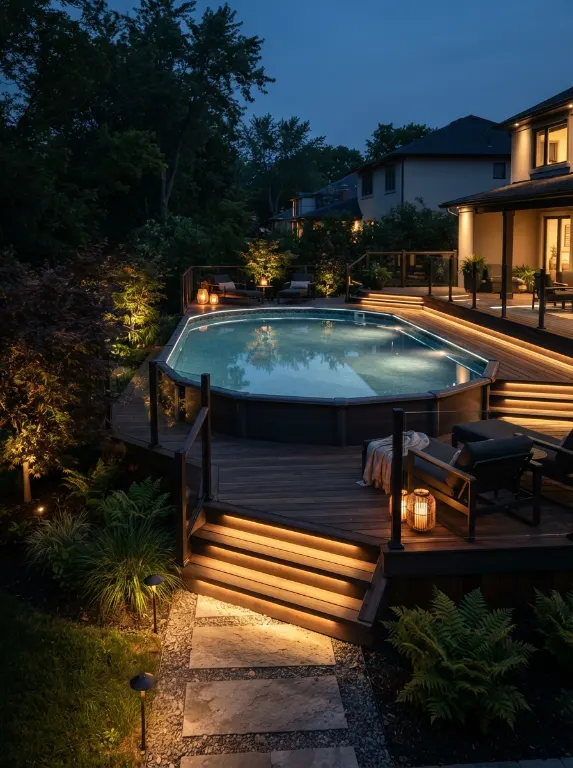
Pool deck stairs are often treated as purely functional, but they can become part of the overall design.
Wide stairs can create a more substantial entrance, especially around larger decks. Simple horizontal lines work well with modern homes, while wider wood steps can complement rustic settings.
Add discreet lighting to the stair area and make sure the surface is suitable for outdoor use.
Where required, follow local safety rules for handrails, barriers, access, and deck construction. For example, a corner deck with wide, non-slip steps into the water can give children and older swimmers a confident, easy entry.
Create a Comfortable Poolside Lounge
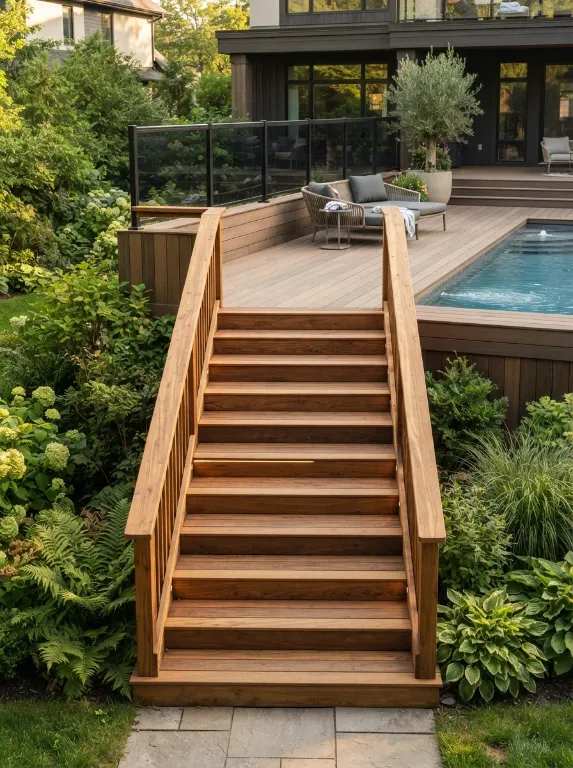
The deck should encourage people to stay rather than simply provide access to the water.
Create one dedicated lounge zone with two or more comfortable chairs, a small table, and an outdoor rug where appropriate.
A larger backyard might accommodate a sectional sofa, coffee table, dining table, and several loungers.
Keep furniture placement practical. Leave comfortable circulation paths between seating, stairs, the pool edge, and the house.
Choose materials designed for outdoor exposure, particularly if the furniture will remain outside throughout the season. For example, two rattan loungers, a side table, and a striped umbrella in one corner can create a shaded reading spot beside the water.
Add Privacy Without Making the Yard Feel Closed In
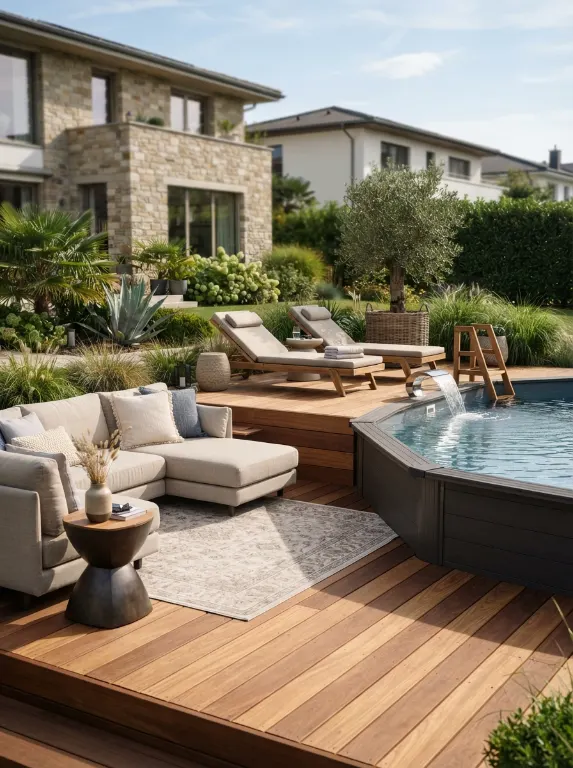
Privacy can make a pool area significantly more comfortable.
A solid fence is one option, but landscaping can provide a softer alternative. Layered shrubs, ornamental grasses, hedges, trellises, and strategically placed trees can create screening without making the backyard feel enclosed.
Vertical slatted screens are another attractive choice for contemporary properties.
The best privacy solution depends on your property, neighboring homes, local regulations, and the direction of sunlight. For example, a lattice privacy screen with climbing jasmine can block a neighbor’s view while adding scent and softness to the deck.
Coordinate the Deck With Your Home
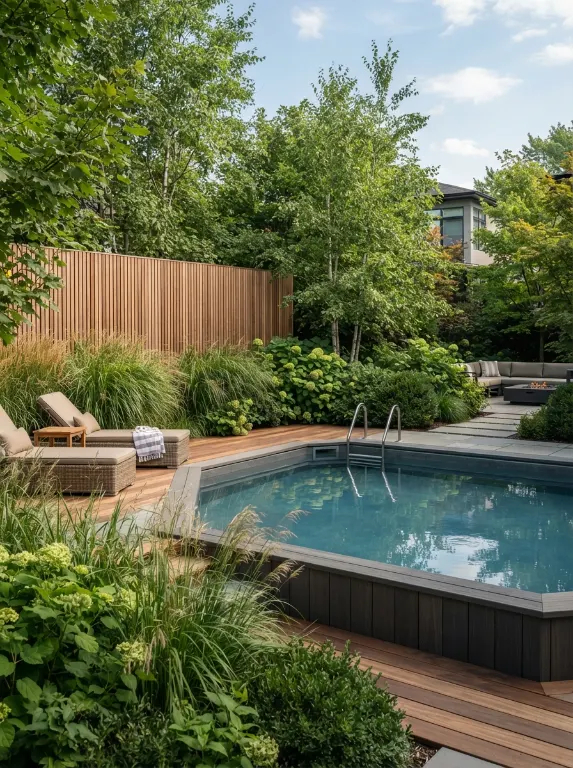
One of the biggest design mistakes is choosing a deck color that has no relationship to the house.
Look at your exterior siding, roof, doors, windows, stonework, and existing patio materials.
You do not have to match everything exactly. Instead, repeat a few visual elements.
For example:
- Warm brown siding can work with walnut-toned decking.
- White siding can pair beautifully with gray or natural wood.
- Dark windows can be echoed through black furniture.
- Stone walls can be complemented with natural timber.
- Beige stucco can work with warm taupe and cream outdoor finishes.
These connections make the pool area feel like an intentional extension of the property. For example, gray decking matched to gray window frames and black metal chairs can tie the pool to a modern house exterior.
Keep the Pool Area Visually Balanced
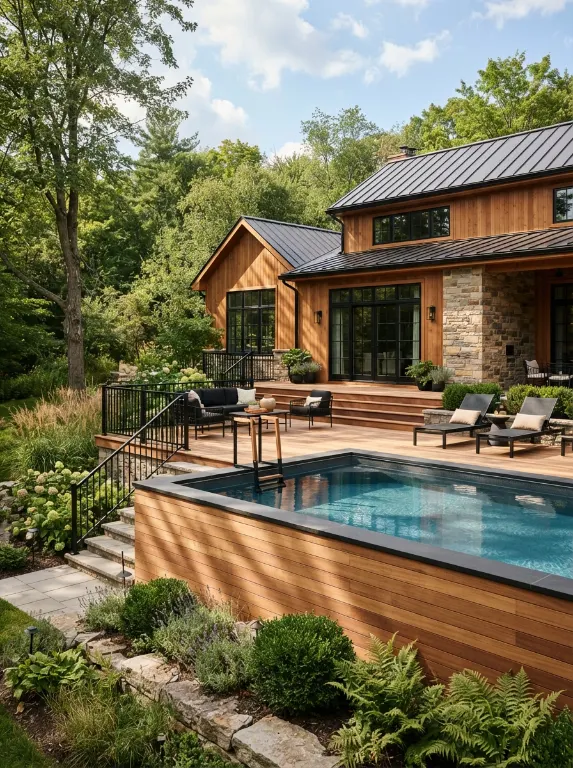
A beautiful deck does not need to contain every outdoor feature.
Too many furniture pieces, planters, decorative objects, colors, and structures can make the area feel crowded.
Choose a clear focal point and build the design around it.
If the pool has a strong shape, let the deck frame it. If the surrounding garden is beautiful, keep the furniture simple so the landscape remains visible.
Balance is especially important for smaller backyards where every square foot has a visual impact. For example, one large planter, two loungers, and a single lantern can balance a small deck without crowding it.
Plan for Maintenance From the Beginning
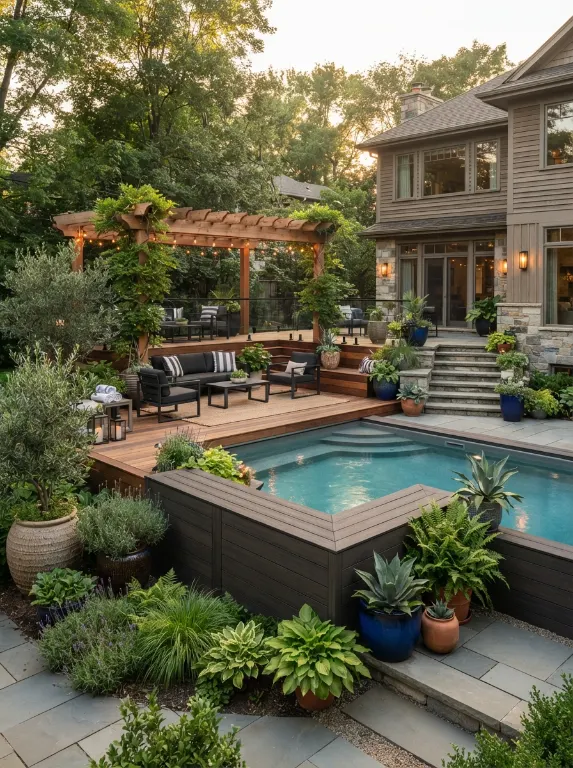
A stylish outdoor space should also be practical.
Think about where water will drain, how leaves will be removed, where pool equipment will be stored, and how furniture will be protected during severe weather.
Leave appropriate access to equipment and avoid creating narrow spaces that are difficult to clean.
Choose materials according to the maintenance routine you can realistically manage. A beautiful material that requires more care than you have time for may not be the best long-term choice. For example, a removable deck panel beside the pump and a leaf net stored in a nearby bench can make weekly cleaning take only a few minutes.
The Finishing Details Make the Difference
Once the major construction and landscaping are complete, smaller details can make the above ground pool area feel finished.
Add a few carefully selected accessories such as:
- Large ceramic planters
- Outdoor cushions
- Woven baskets
- Neutral outdoor rugs
- Lanterns
- Weather-resistant side tables
- Decorative stone
- Sculptural planters
- Soft outdoor throws
Keep the accessories consistent with the overall design instead of treating them as separate decorations.
The result should feel relaxed and naturally assembled. For example, potted palms, a bamboo screen, and woven lanterns in one corner can create a tropical nook without changing the whole deck.
How to Hide Above Ground Pool Walls
Wood or stone-look cladding panels are the quickest way to soften a bare wall, especially when the panels match the deck or the house trim. Lattice with climbing vines adds height and movement, while tall planters can screen the lower wall and frame an entry path. A simple deck skirt closes the gap beneath the deck edge, and paint matched to the surrounding garden helps the whole structure recede. Keep the look practical too: leave removable access panels over the pump and filter so routine checks and repairs stay easy.
Above Ground Pool Safety Basics
Start with access control: a locking gate or a removable ladder stops unsupervised entry when the pool is not in use. Choose non-slip steps and decking, and keep the walking surface clear of toys, hoses, and wet leaves. Children should always have adult supervision in and around the water, even if they can swim. Set a clear cover routine, keeping the pool covered when it is closed and checking that the cover is secure. Finally, keep electrics, chargers, and extension leads well away from splashes, and use outdoor-rated fittings only.
Above Ground Pool FAQs
Can you partially bury an above ground pool?
Yes, many models allow semi-inground installation, but check the manual and local rules first.
How long does an above ground pool last?
Typically 10-20 years with liner and pump care.
Do above ground pools need a fence?
Most areas require a barrier, so check local rules.
How do I keep an above ground pool clean?
Skim the surface, run the filter daily, and balance the chemicals weekly.
Can you leave an above ground pool up in winter?
Yes, with winterizing – lower the water, add a winter cover, and protect pipes from freezing.
Final Word
An above ground pool does not have to look temporary or disconnected from the rest of your backyard. With the right deck proportions, durable materials, landscaping, lighting, furniture, and architectural details, it can become one of the most attractive parts of your outdoor space.
Start with the structure, then build the atmosphere around it. Choose materials that suit your climate, create useful zones, soften hard edges with landscaping, and repeat colors or textures from your home.
Whether your style is modern, rustic, coastal, or Craftsman-inspired, the most successful pool decks feel connected to their surroundings.
The goal is not simply to build something around the water. It is to create an outdoor space where the pool, deck, garden, and home feel like one cohesive setting.