18 Brilliant Deck Privacy Ideas for a More Comfortable Outdoor Space
A deck should feel like an extension of your home, not a place where you constantly wonder whether the neighbors can see you. The right deck privacy ideas can make an outdoor area feel calmer, more comfortable, and much more intentional without turning it into a completely enclosed space.
Privacy does not always mean building a tall solid wall around your deck skirting too. In many homes, the best solution comes from combining screening, plants, furniture placement, shade, and architectural details. This creates separation while still allowing sunlight, fresh air, and an open view.
Whether you have a small elevated deck, a spacious backyard design entertaining area, or a narrow outdoor platform, there are plenty of ways to create a more private setting while keeping the space stylish.
1. Add a Slatted Privacy Screen

A vertical slatted screen is one of the most versatile ways to make a deck feel more secluded. The narrow gaps between the boards allow light and airflow through while reducing direct views from neighboring properties.
For a contemporary look, use warm natural wood with evenly spaced vertical boards. Dark-stained timber can create a more dramatic appearance, while pale cedar gives the deck a lighter and more relaxed feel.
A slatted screen does not have to cover the entire deck. Installing one strategically beside the seating area can provide enough separation without making the outdoor space feel boxed in.
2. Create a Green Privacy Wall

Plants can soften the appearance of a deck while providing natural screening. Tall ornamental grasses, bamboo varieties suitable for your climate, evergreen shrubs, or climbing plants can all help create a living barrier.
Large planters are especially useful when you cannot permanently alter the property. Position several containers along the exposed edge of the deck and choose plants with different heights and textures.
The result is more than privacy. A green screen introduces movement, color, and a stronger connection between the deck and the surrounding garden.
3. Use Tall Planters Around the Seating Area

Sometimes the entire deck does not need privacy. You may simply want to shield a dining table, lounge chair, or conversation area.
Tall planters make this easy.
Choose oversized containers and combine them with upright plants to create visual boundaries around the seating zone. This approach works particularly well for smaller decks because the planters can define separate areas without requiring a permanent structure.
For a polished look, repeat the same planter finish throughout the space rather than mixing too many styles.
4. Install a Pergola With Privacy Panels
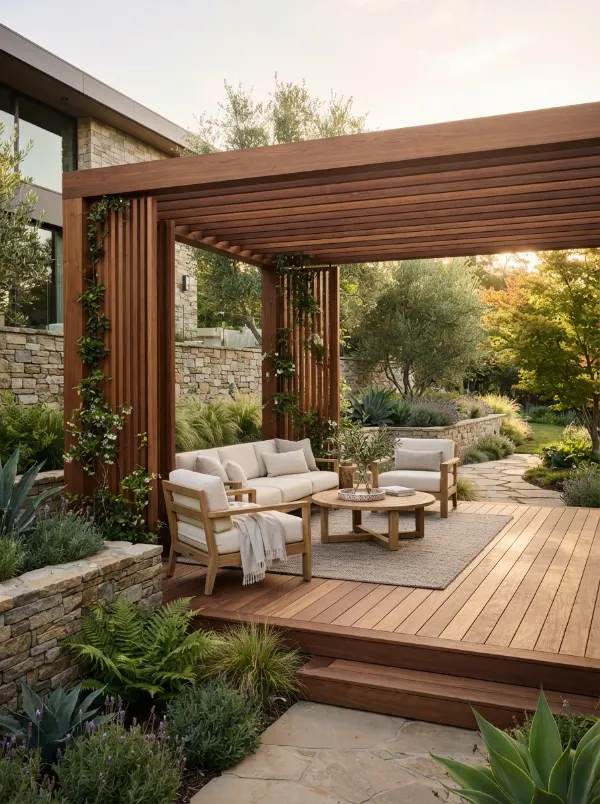
A pergola can provide shade from above while also creating opportunities for privacy along the sides.
Add narrow timber panels, climbing plants, outdoor curtains, or decorative screens to one or two sides. This creates a more intimate outdoor room while keeping the top partially open.
A wood pergola works beautifully with neutral outdoor furniture, natural stone, textured cushions, and warm lighting.
If the deck is used for evening entertaining, add subtle lighting to the pergola structure for an inviting atmosphere.
5. Hang Outdoor Curtains

Outdoor curtains can make a deck feel surprisingly private without requiring a permanent wall.
Install weather-resistant curtain panels along a pergola, covered deck, or sturdy overhead frame. Keep them open during the day and close them when you want more privacy.
Light-colored fabric creates an airy appearance, while charcoal, taupe, or warm beige can give the deck a more sophisticated character.
Choose outdoor-rated fabric designed to handle moisture and sunlight so the curtains remain practical as well as attractive.
6. Position Furniture to Improve Privacy

Privacy is not always a construction project. Sometimes changing the arrangement of your furniture can make a major difference.
Instead of placing every chair toward the garden or street, create a conversational arrangement where seating faces inward. A sectional sofa can work particularly well because its back naturally creates a visual barrier.
Place taller furniture, planters, or storage pieces along the most exposed side and keep the main seating area behind them.
This simple change can make the deck feel more private without adding another structure.
7. Combine Wood and Greenery

One of the most attractive approaches is to combine a solid material with plants.
For example, a warm timber privacy panel can form the foundation while climbing vines or tall planters soften its edges. This prevents the screen from looking too heavy and helps it blend with the surrounding landscape.
The combination works across several design styles, from modern and contemporary decks to rustic and organic outdoor spaces.
Keep the palette restrained for a more expensive-looking result. Natural wood, muted greenery, stone, and neutral textiles work particularly well together.
8. Try a Decorative Outdoor Screen

Privacy panels do not have to look like fences.
Decorative metal screens with geometric patterns can provide partial screening while becoming a design feature in their own right. They work especially well behind a dining area, outdoor sofa, or fire feature.
Choose a pattern that complements the architecture of your home rather than competing with it.
A simple geometric design can give a modern deck a sophisticated architectural detail while still allowing light to pass through.
9. Use a Privacy Fence as a Design Feature

If your deck needs stronger screening, a privacy fence can be designed to look intentional rather than purely functional.
Horizontal timber boards create a clean contemporary appearance. Vertical boards can make a fence feel taller and more architectural.
You can also break up a long fence with planter boxes, built-in seating, lighting, or sections of decorative screening.
Instead of treating the fence as something separate from the deck, connect its materials and colors with the rest of the outdoor design.
10. Add a Green Screen With Climbing Plants

Climbing plants can transform a simple frame into a living privacy screen.
Install a sturdy trellis along the exposed side of the deck and train suitable climbing plants across it. Depending on your climate, options may include jasmine, clematis, climbing roses, or other locally suitable varieties.
The advantage is that the screen becomes softer and more natural over time.
Before planting, check the mature size and growing behavior of the plant. A beautiful privacy screen should not become a maintenance problem later.
11. Build a Narrow Privacy Wall

When space is limited, a narrow privacy wall can provide a useful amount of separation without consuming much floor area.
A low or partial wall can be paired with a raised planter, timber screen, or decorative panels. This layered approach often looks more sophisticated than a single tall barrier.
Use the wall to frame the deck rather than surround it completely.
That distinction helps maintain the feeling of an outdoor room rather than an enclosed courtyard.
12. Create a Private Outdoor Dining Zone
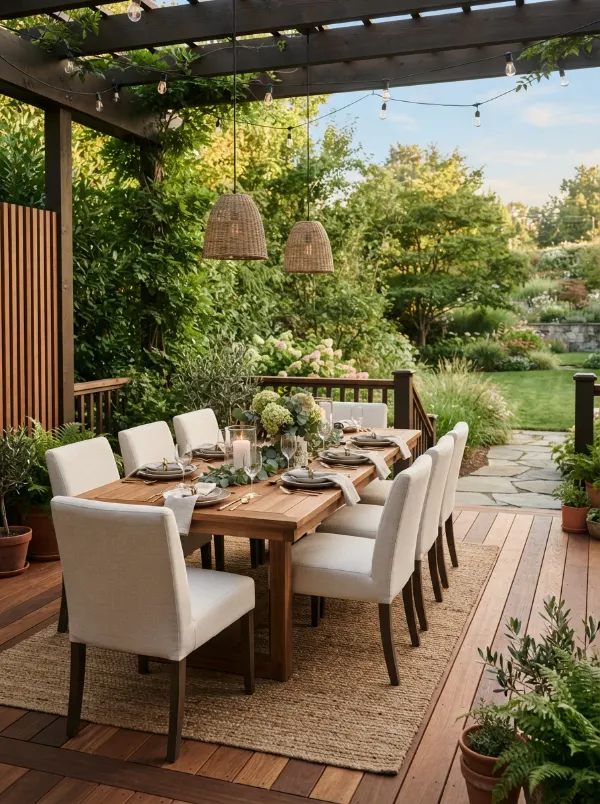
If your main concern is privacy while eating, focus the screening around the dining table instead of the entire deck.
A pergola, tall planters, outdoor curtains, or a partial screen can create a defined dining area.
Choose a round or rectangular table according to the available space, then position greenery or screening behind the chairs most exposed to neighboring views.
This makes the dining area feel intentional and gives the deck a stronger sense of purpose.
13. Add Layered Privacy Instead of One Large Barrier

Layering is often more effective than relying on one massive privacy feature.
For example, combine a medium-height wood screen with tall planters and a pergola. Each element blocks part of the view, but together they create much stronger privacy.
Layering also adds depth.
Instead of seeing one flat wall, you see different textures, heights, shadows, and materials. This makes the deck more visually interesting.
14. Use Lighting to Create Evening Privacy

Outdoor lighting can influence how private a deck feels after sunset.
Rather than using one bright overhead fixture, layer warm lighting throughout the space. Add subtle lights to steps, planters, railings, walls, or pergola posts.
Avoid excessive brightness directed toward neighboring properties. The goal is to create a comfortable glow within your own outdoor area.
Warm illumination can make a screened deck feel particularly inviting during evening gatherings.
15. Make a Small Deck Feel More Private

Small decks can benefit from privacy improvements even more than large ones because every design decision is visible.
Use slim vertical screens, narrow planters, compact furniture, and wall-mounted lighting. Avoid filling the entire perimeter with bulky structures.
A small deck usually benefits from one strong privacy feature combined with a few softer elements.
For example, a narrow slatted panel behind a compact sofa can provide enough screening while keeping the remaining sides visually open.
16. Match the Privacy Design to Your Home

The most successful privacy solution usually feels connected to the architecture of the house.
A modern home may suit clean horizontal or vertical timber screens. A traditional property may look better with painted wood, latticework, or structured greenery.
Look at the existing exterior materials before choosing your privacy treatment.
Repeating one or two colors from the house can make the deck feel like a planned part of the property rather than an addition.
17. Keep Privacy Comfortable, Not Completely Closed
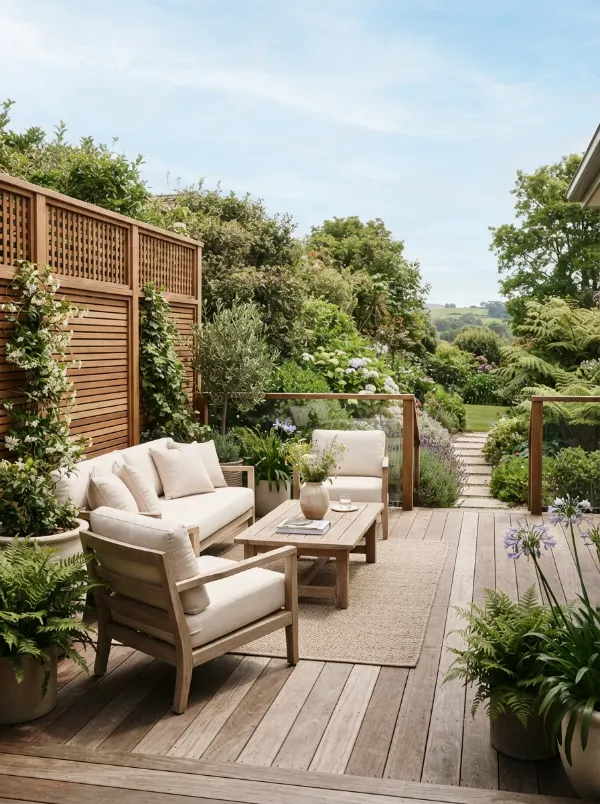
The purpose of privacy is to make the deck more comfortable, not to eliminate every connection with the outdoors.
Leave some openings where possible. Preserve views toward attractive parts of the garden and allow natural light to enter.
A partially screened deck can often feel more relaxing than a completely enclosed one because it gives you protection without removing the sense of being outside.
Think about where you actually need privacy and screen those areas first.
18. Choose Materials That Age Well Outdoors

A privacy structure is exposed to weather, so material choice matters.
Wood brings warmth and character but may require periodic maintenance. Powder-coated metal can provide a more contemporary appearance with relatively straightforward upkeep. Composite materials can also be useful where low maintenance is a priority.
Whatever you choose, consider sunlight, rain, humidity, cleaning requirements, and the overall style of the property.
A beautiful screen is much more useful when it remains attractive after years of outdoor exposure.
How to Choose the Right Deck Privacy Solution
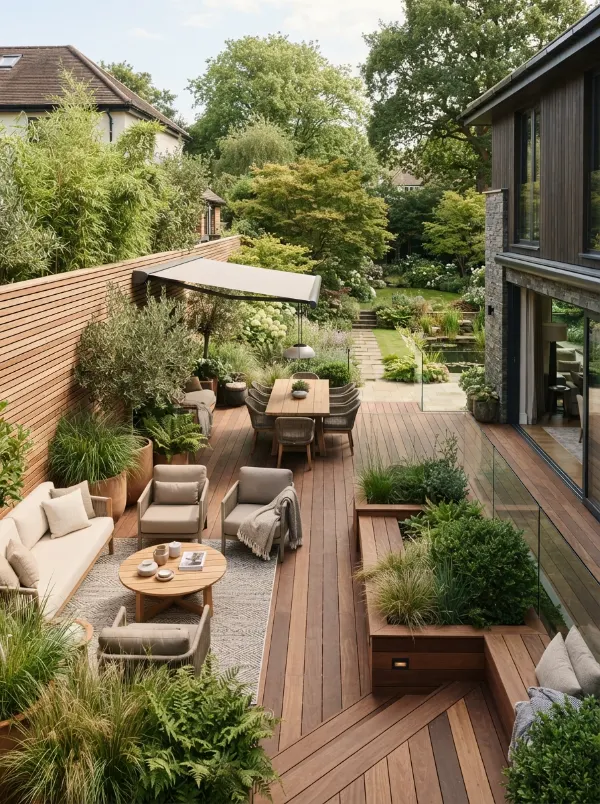

Before buying materials or starting construction, look at the deck from different positions.
Stand where you normally sit. Then look toward neighboring properties, nearby roads, upper windows, and other areas from which the deck may be visible.
Ask yourself three questions:
- Where is privacy actually needed?
- Do I want complete screening or partial separation?
- Which areas should remain open for light and views?
Once you know the answers, the right solution becomes easier to identify.
For a small privacy problem, planters or curtains may be enough. A larger visual exposure may call for a pergola, slatted wall, fence, or combination of several elements.
Final Word
Good deck privacy ideas do more than block unwanted views. They help turn an exposed outdoor area into a place where you can relax, dine, read, entertain, and spend time comfortably.
The best design does not necessarily create the tallest wall. It creates the right amount of separation using thoughtful materials, greenery, furniture placement, shade, and lighting.
Whether you choose a warm timber screen, a living plant wall, outdoor curtains, a pergola, or a combination of several solutions, focus on creating privacy that still feels connected to the garden and the sky.