20 Stunning Warm Neutral Kitchen Ideas That Feel Instantly Cozy ♥ [Soft & Sumptuous]
Why the Warm Neutral Kitchen Feels So Rich Right Now
A warm neutral kitchen is built on color that behaves like candlelight: creamy whites, soft taupes, warm greiges, and honeyed wood tones that glow instead of glare. Unlike cool gray kitchens that can feel clinical, warm neutrals wrap a room in comfort while staying timeless enough to outlast every trend cycle.
Here is the definition worth holding onto: a great warm neutral kitchen is layered, not flat. One neutral is just a background; three or four of them — warm white, greige, taupe, caramel wood — become a palette with real depth. These 20 warm neutral kitchen ideas show how to build that depth through materials, light, and texture rather than bold color.
1. Start Your Warm Neutral Kitchen With Warm White Cabinetry
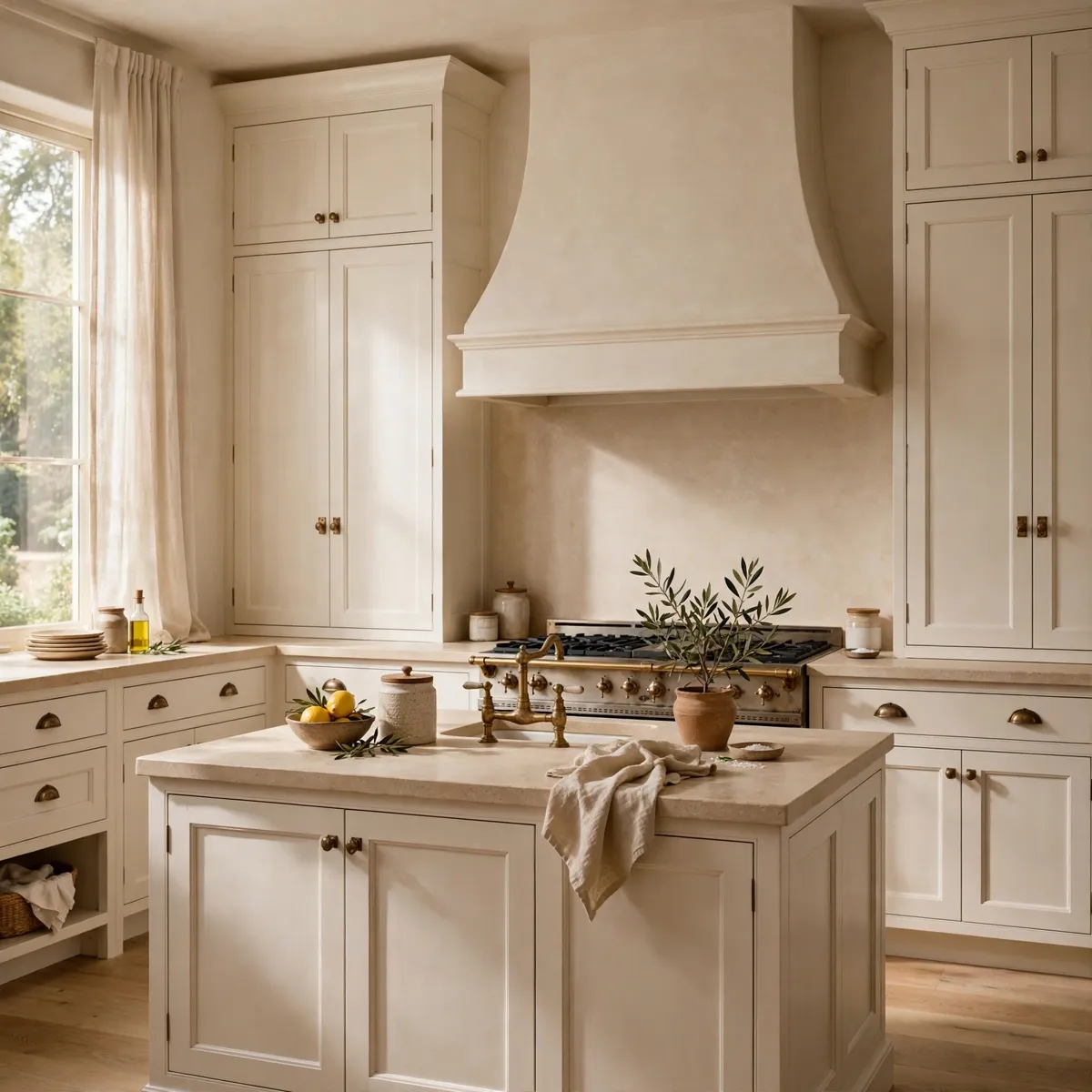
Warm white cabinetry is the foundation nearly every cozy neutral kitchen is built on. Look for whites with yellow or beige undertones — the kind that read creamy at noon and golden at dusk — rather than anything blue-white. Pair with simple Shaker fronts and the cabinetry disappears into softness while the room’s textures do the talking.
Quick tips
- Test paint samples on the cabinet doors, not just the wall.
- Satin finishes hide fingerprints better than matte in a working kitchen.
2. Go Quietly Two-Tone With Greige Lowers
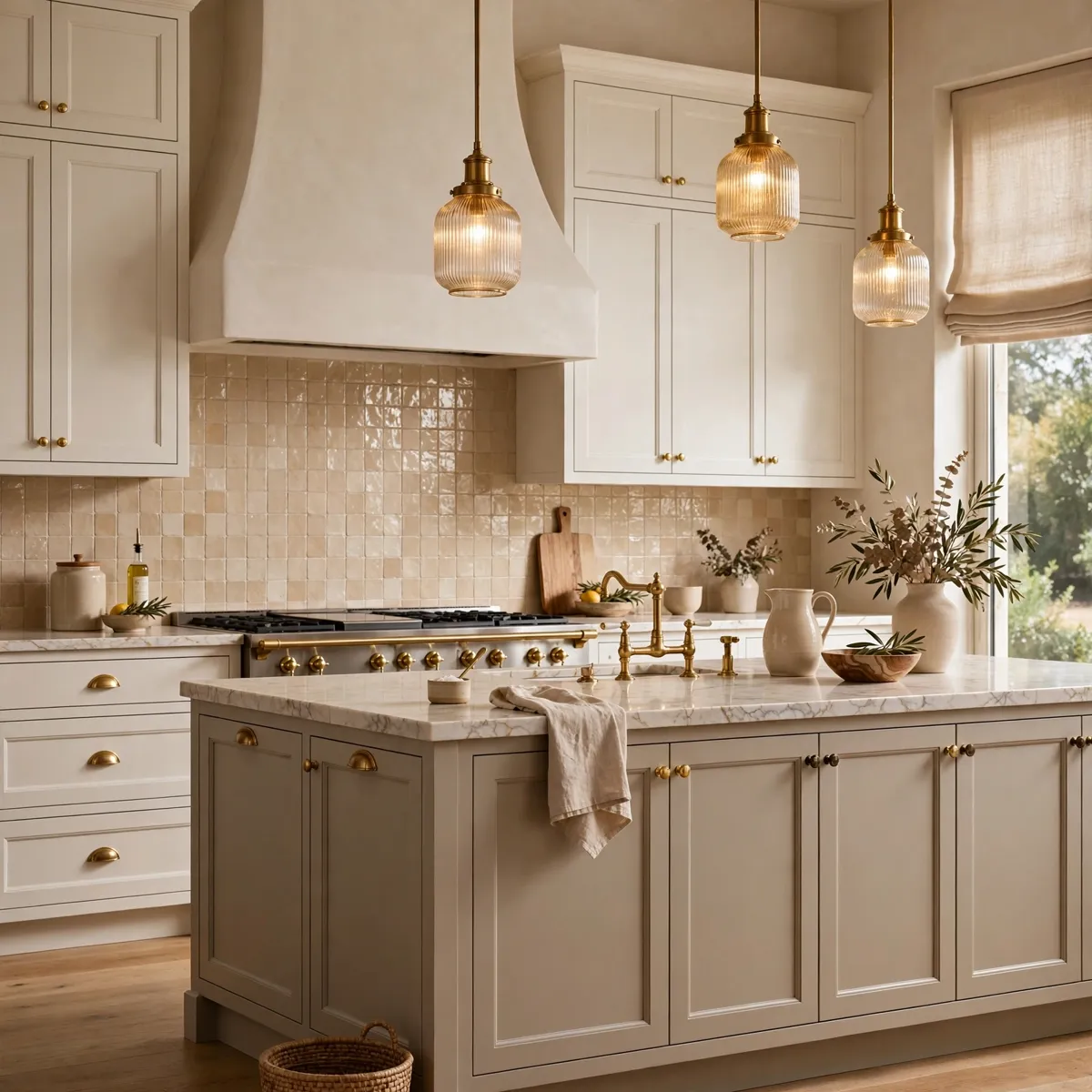
Paint the lower cabinets a warm greige and keep the uppers warm white for contrast you feel rather than see. The darker lowers ground the room while the pale uppers keep it airy. This is one of those warm neutral kitchen ideas that adds depth without introducing a single real color.
Quick tips
- Keep both tones in the same warm undertone family.
- Carry the greige onto the island for a cohesive look.
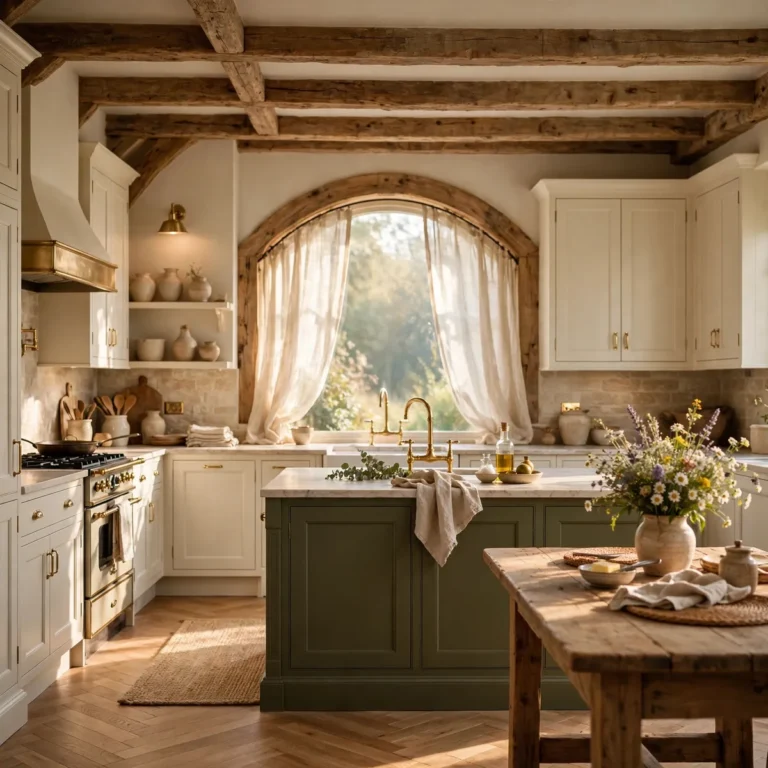
Or let a muted sage take the island instead — its gray undertones read as a neutral while giving the room one quiet star. Creamy whites and warm woods around it keep the green feeling calm, not colorful.
3. Let a Warm Oak Island Anchor the Room

A white oak or honey-toned island brings the one thing an all-painted kitchen needs: living grain. The wood’s natural variation keeps the palette from feeling flat, and its warmth ties together warm white cabinetry and stone counters. Choose a simple slab or softly rounded profile and let the grain be the decoration.
Quick tips
- White oak stains beautifully if you want a custom tone.
- Repeat the island wood in open shelves for cohesion.
4. Warm the Walls With Creamy Plaster

Flat paint can make neutrals feel sterile; creamy limewash or plastered walls have movement, shadow, and warmth baked in. Here, textured walls catch the light differently through the day, so the room shifts from soft morning cream to golden evening glow. It is the single biggest atmosphere upgrade for the money. And if the ceiling allows it, exposed rustic wood beams above a pale kitchen balance clarity with warmth — white keeps things fresh, timber keeps them grounded.
Quick tips
- Limewash works beautifully behind open shelving.
- Seal plaster in splash zones so it wipes clean.
5. Choose Honed Stone Counters Like Warm Sand

Honed limestone, travertine, or warm quartzite in sandy beige brings the worktop into the warm neutral kitchen palette instead of contrasting with it. Matte and full of subtle movement, these stones never shout. Pair with simple warm white cabinetry and let the counter be the quiet luxury of the room.
Quick tips
- Honed finishes hide etching better than polished stone.
- Seal natural stone yearly in a hardworking kitchen.
6. Add a Warm Beige Zellige Backsplash
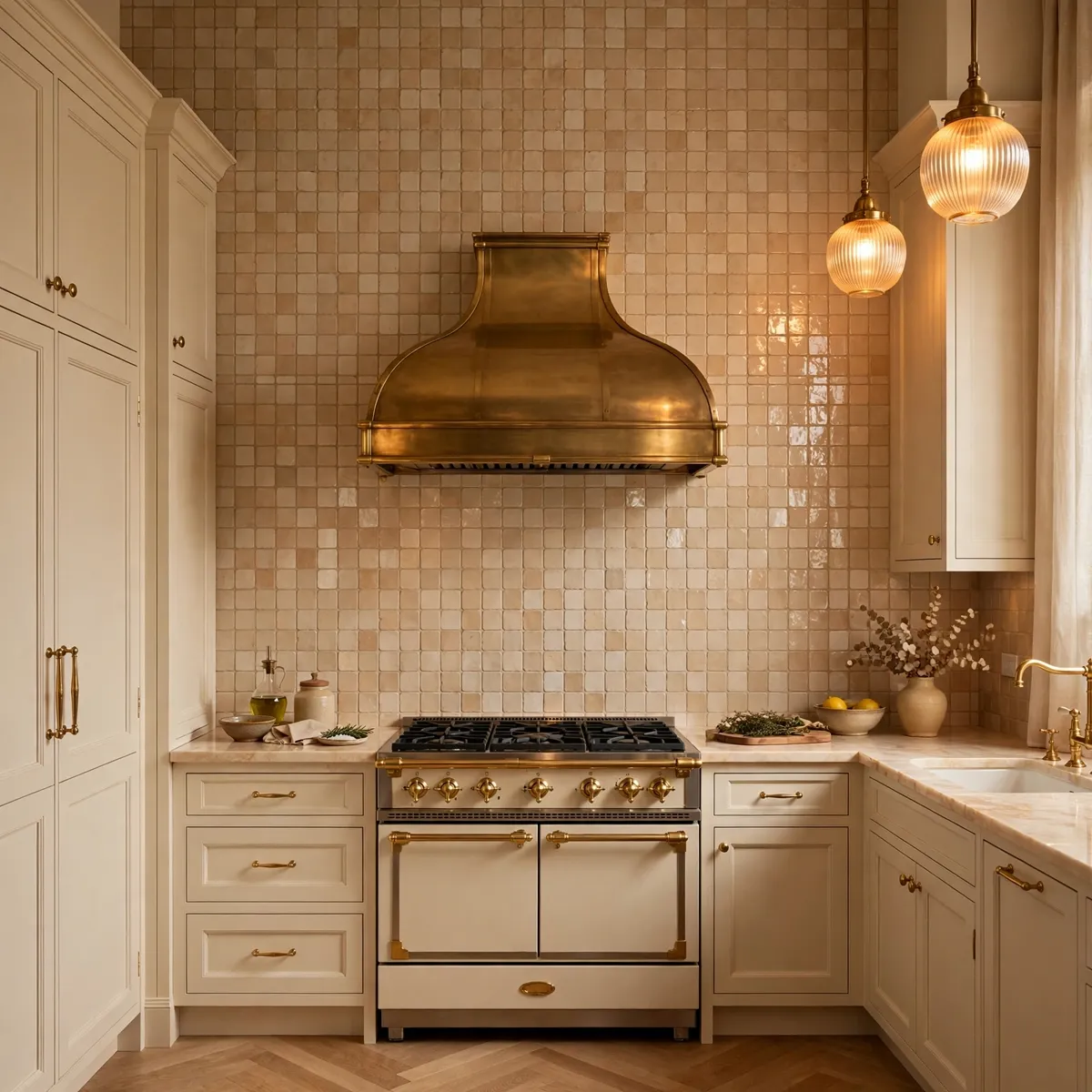
A handmade-look zellige backsplash in warm beige or pale caramel catches light and gives the room an artisan backdrop. The imperfect glaze plays beautifully against flat cabinet fronts, adding craft where paint cannot. Run it to the ceiling behind the range for maximum glow.
Quick tips
- Order samples first — beige tile shifts in different light.
- Stacked vertically, zellige makes low ceilings feel taller.
7. Light It Like Candlelight
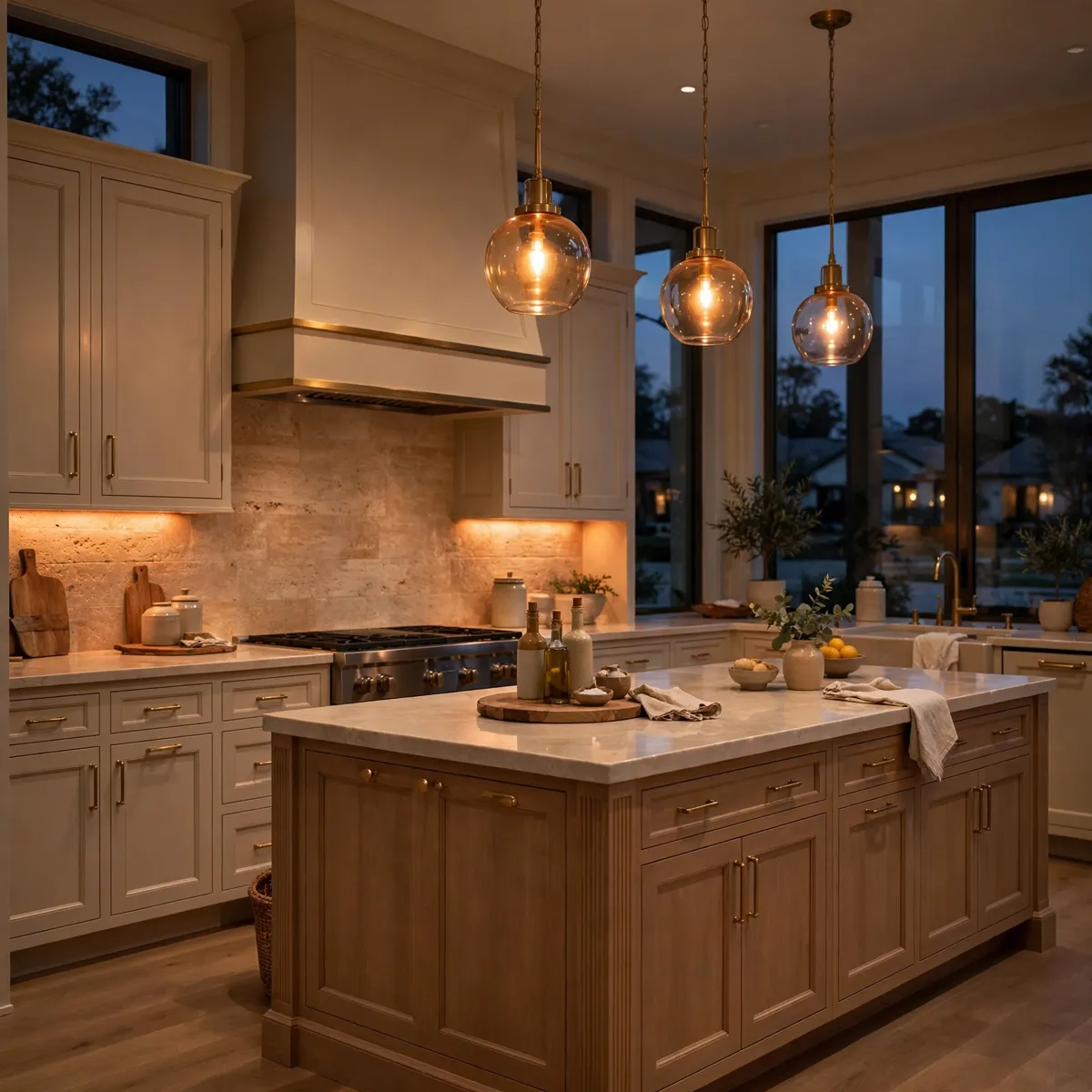
Lighting is what separates a warm neutral kitchen from a beige one, and this is where the whole design either glows or falls flat. Cool daylight bulbs will murder every warm tone you have chosen, so commit to 2700K everywhere — under-cabinet strips that wash the backsplash in amber light, a soft toe-kick glow that makes the cabinetry appear to float, pendants on dimmers for evening, and one warm picture light over open shelves so the ceramics read like a gallery wall. Layer at least three sources so the room changes mood with the day: bright and working at noon, golden and lingering at dinner. Avoid visible downlight grids that break the ceiling plane; warm pools of light beat flat brightness every time in a neutral palette, because shadow is what gives beige its depth. When the light is right, even the simplest cream kitchen looks expensive — and when it is wrong, even marble looks dull.
Quick tips
- Use 2700K bulbs on dimmers throughout the kitchen.
- Hide strip drivers inside cabinets, never on display.
8. Style Warm Wood Open Shelves

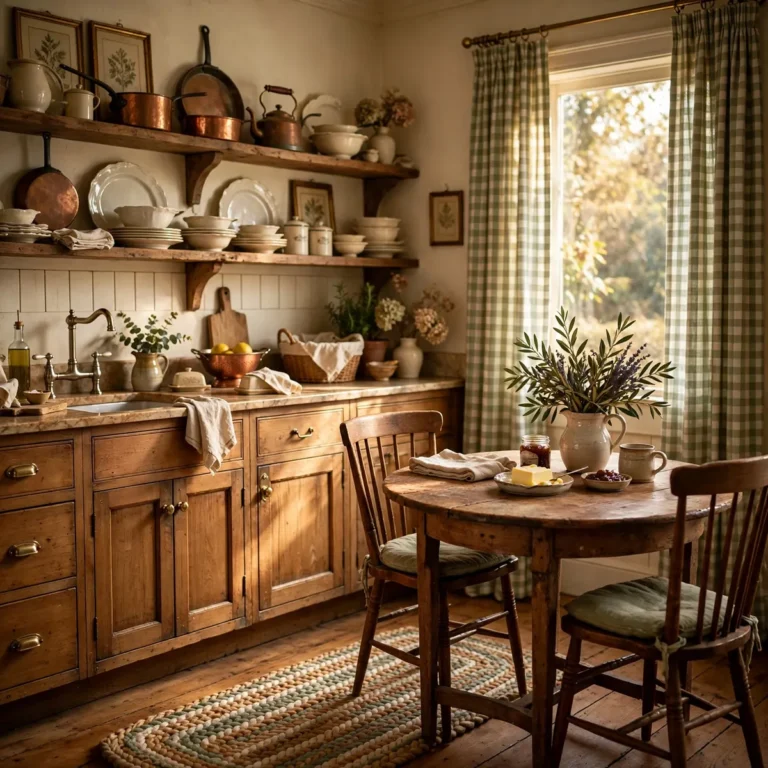
Two runs of warm wood open shelving break up a wall of painted cabinets and add the honeyed tone every soft palette needs. Style them sparsely — handmade ceramics, a stack of linen napkins, a small olive tree — and leave generous breathing room between objects. Air is the luxury here.
Quick tips
- Match the shelf wood to the island or floors.
- Display only what you actually reach for weekly.
9. Paint a Taupe Pantry Moment
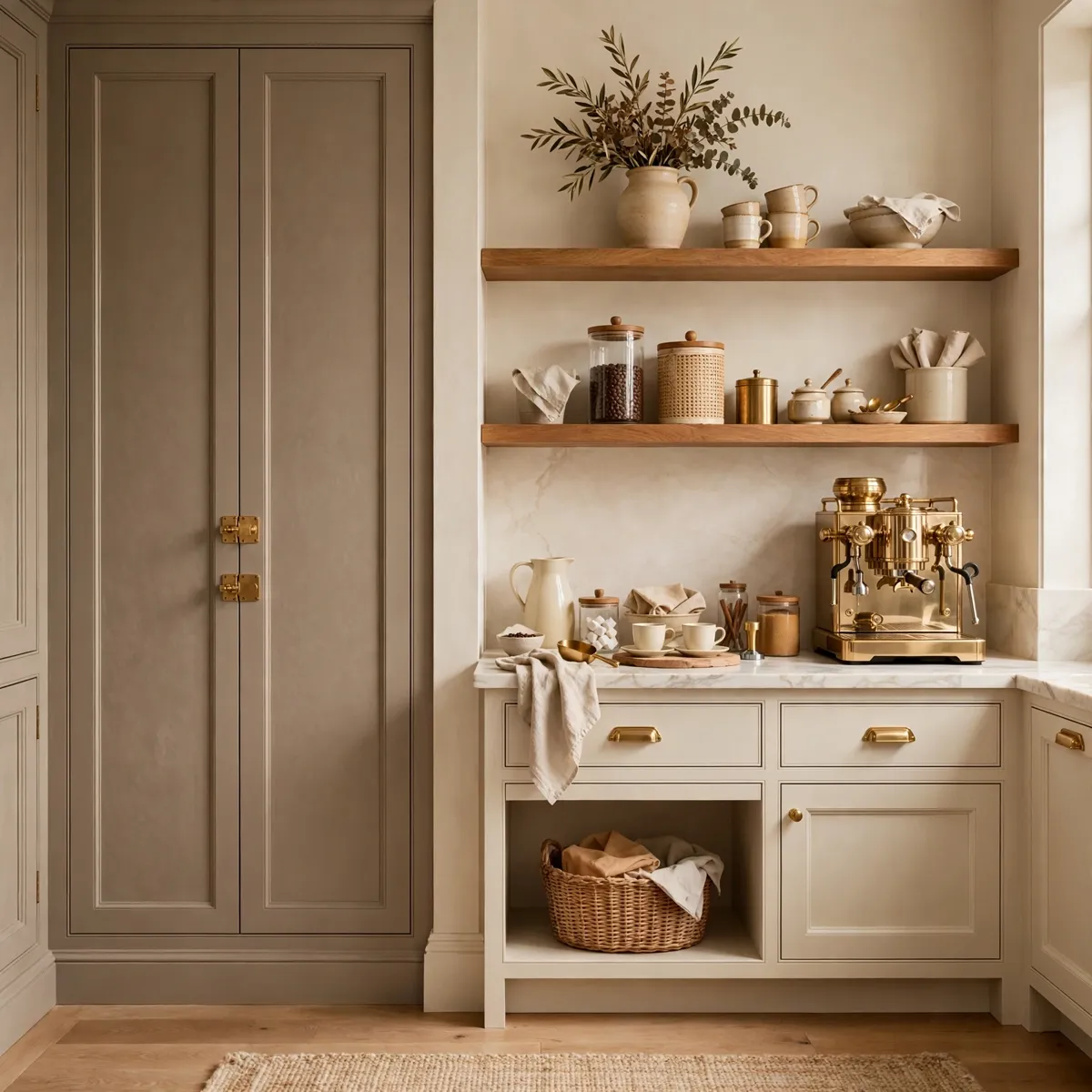
One deeper moment — a taupe pantry wall, a warm putty-colored hutch, a muddy beige coffee station — gives the room its sense of depth. The darker tone makes everything around it look lighter by contrast, and it photographs beautifully. Keep it to one zone so the room stays calm.
Quick tips
- Test taupe in evening light before committing.
- Echo the deeper tone in one textile, like a runner.
10. Dress It in Linen and Texture
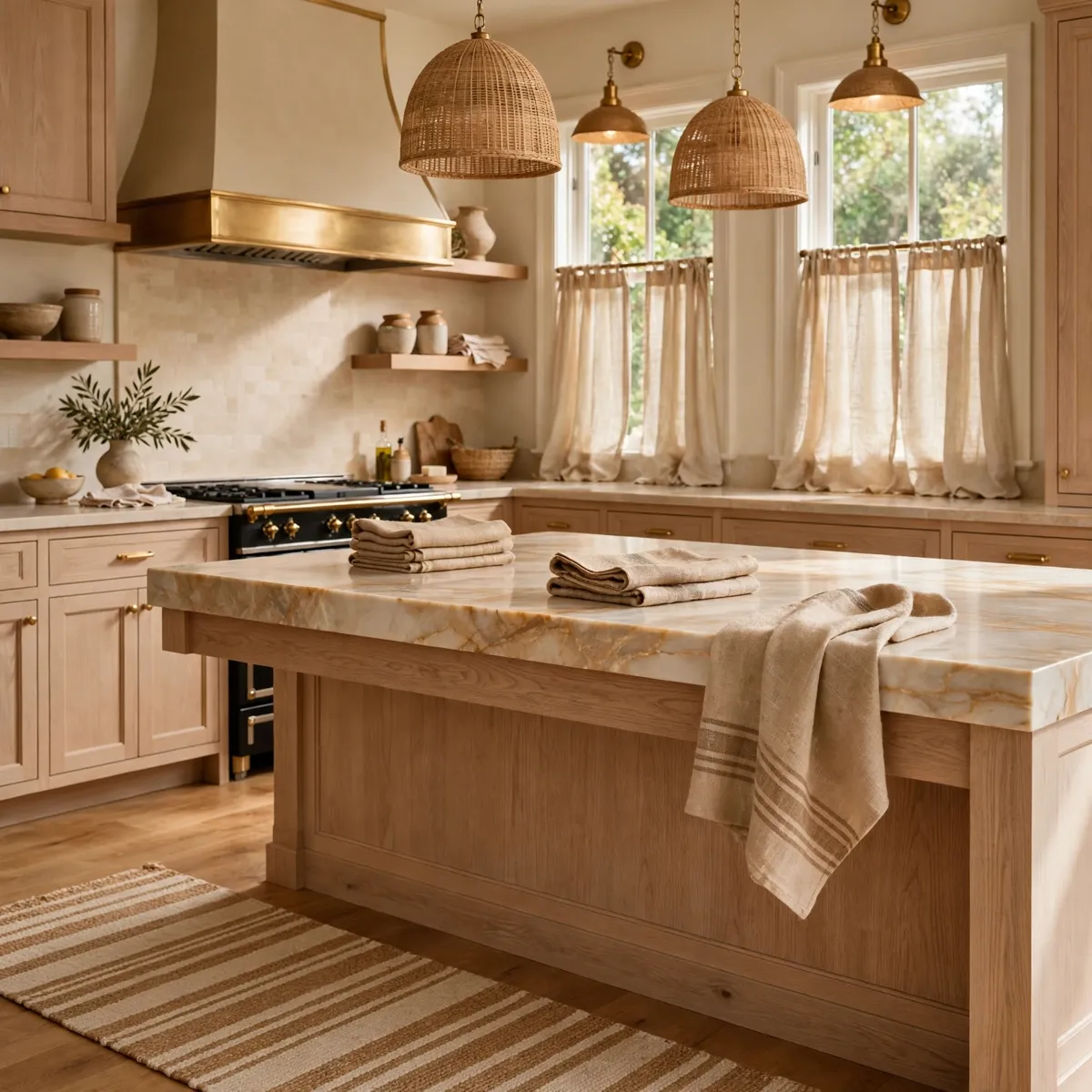
Textiles are the fastest way to warm up a neutral kitchen: a striped jute runner, simple linen cafe curtains, a stack of grain-sack towels. Natural fibers wrinkle beautifully and wash endlessly — the opposite of fussy. In a warm neutral kitchen, texture does the job that color does elsewhere.
Quick tips
- Stick to two natural textures per sightline.
- Choose washable everything — kitchens are working rooms.
11. Choose Unlacquered Brass Fixtures

Unlacquered brass ages into a soft patina that looks collected rather than installed — exactly the energy a warm neutral kitchen aims for. A brass bridge faucet, cup pulls, and one brass picture light over open shelves tie the room together like jewelry. The golden metal picks up every warm undertone in the palette.
Quick tips
- Unlacquered brass patinas; lacquered stays shiny — choose deliberately.
- Repeat brass three times minimum for a deliberate look.
12. Build a Cream Banquette Nook

A built-in banquette in cream bouclé or warm linen turns an eat-in corner into the coziest seat in the house. Here, upholstery is an invitation — soft seating says linger, while hard chairs say hurry. Add a round oak table and striped cushions for a nook that works from coffee to homework.
Quick tips
- Performance fabrics survive real family breakfasts.
- Storage benches hide the clutter a nook collects.
13. Ground It With Warm Stone Floors

Warm limestone or travertine-look tile underfoot anchors the whole design in the most literal way. The earthy tones hide real life beautifully — crumbs, paw prints, dropped flour — while the matte finish keeps the room soft instead of shiny. Run large-format tiles with minimal grout for a calm plane.
Quick tips
- Match grout color to the tile for invisible seams.
- Radiant heat under stone floors is worth every penny.
14. Pull Up Caramel Leather Stools
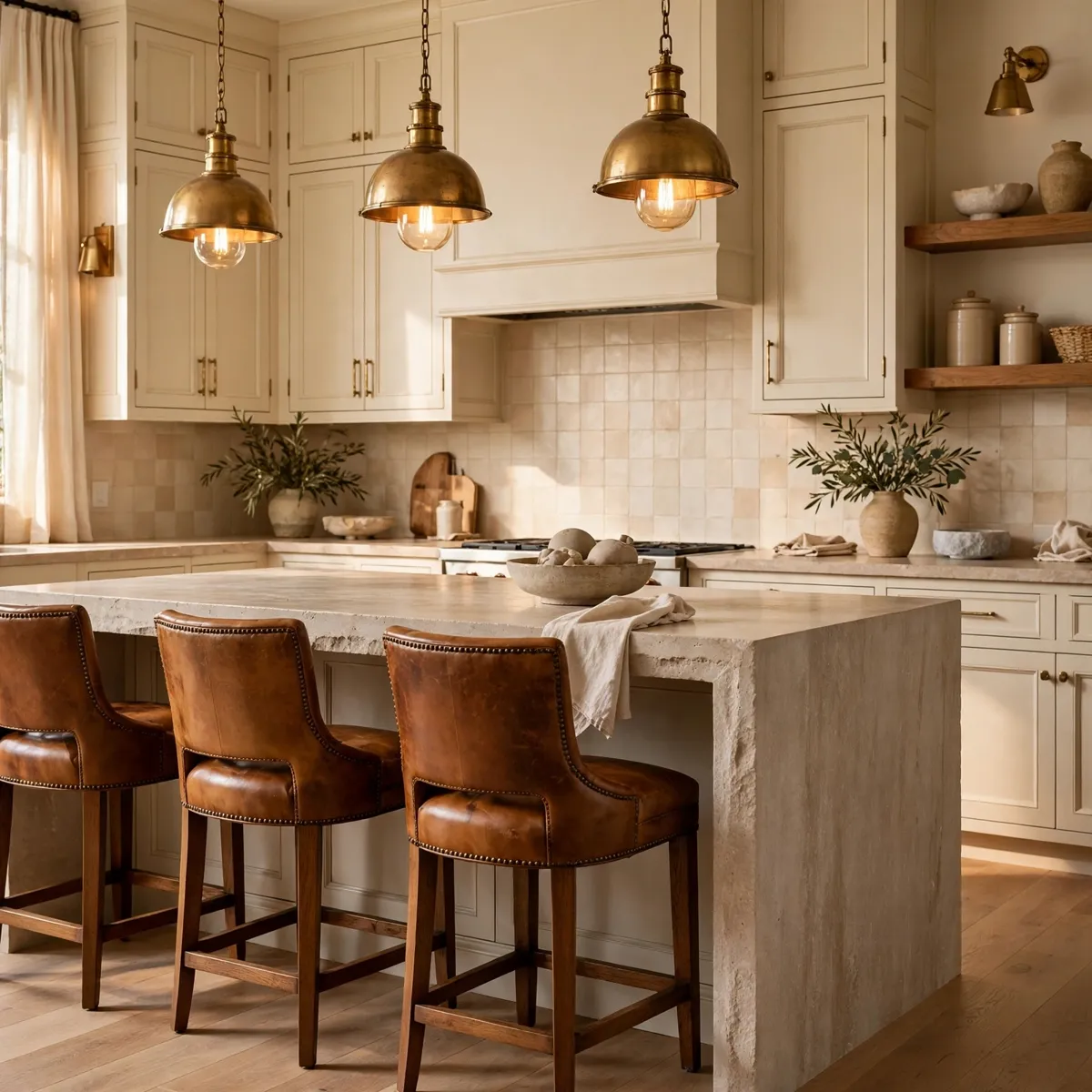
Caramel leather counter stools are the warm neutral kitchen’s signature move: rich, touchable, and better with age. Against cream cabinetry and a stone island, the cognac tone adds the depth that paint alone cannot. Choose simple silhouettes and let the leather be the star.
- Pick full-grain leather — it patinas, bonded leather peels.
- Keep the stool silhouette simple so the material shines.
- Condition the leather twice a year in a sunny kitchen.
Quick tips
- Counter height is 24–26 inches; bar height is 28–30.
- Swivel bases make island seating far more usable.
15. Clad the Hood in Honeyed Oak

A wood-clad range hood in honeyed oak becomes the warm focal point of the cooking wall. Against warm white cabinetry, the timber hood reads like furniture — substantial, crafted, and quietly luxurious. Keep the profile simple and let the grain carry it. If honeyed oak feels too light, a deep walnut hood brings the same furniture-like presence with more drama — just balance it with bright counters and good lighting.
Quick tips
- Match the hood wood to the island or shelves.
- Check ventilation clearance before cladding any hood.
16. Add Soft Black for Quiet Definition
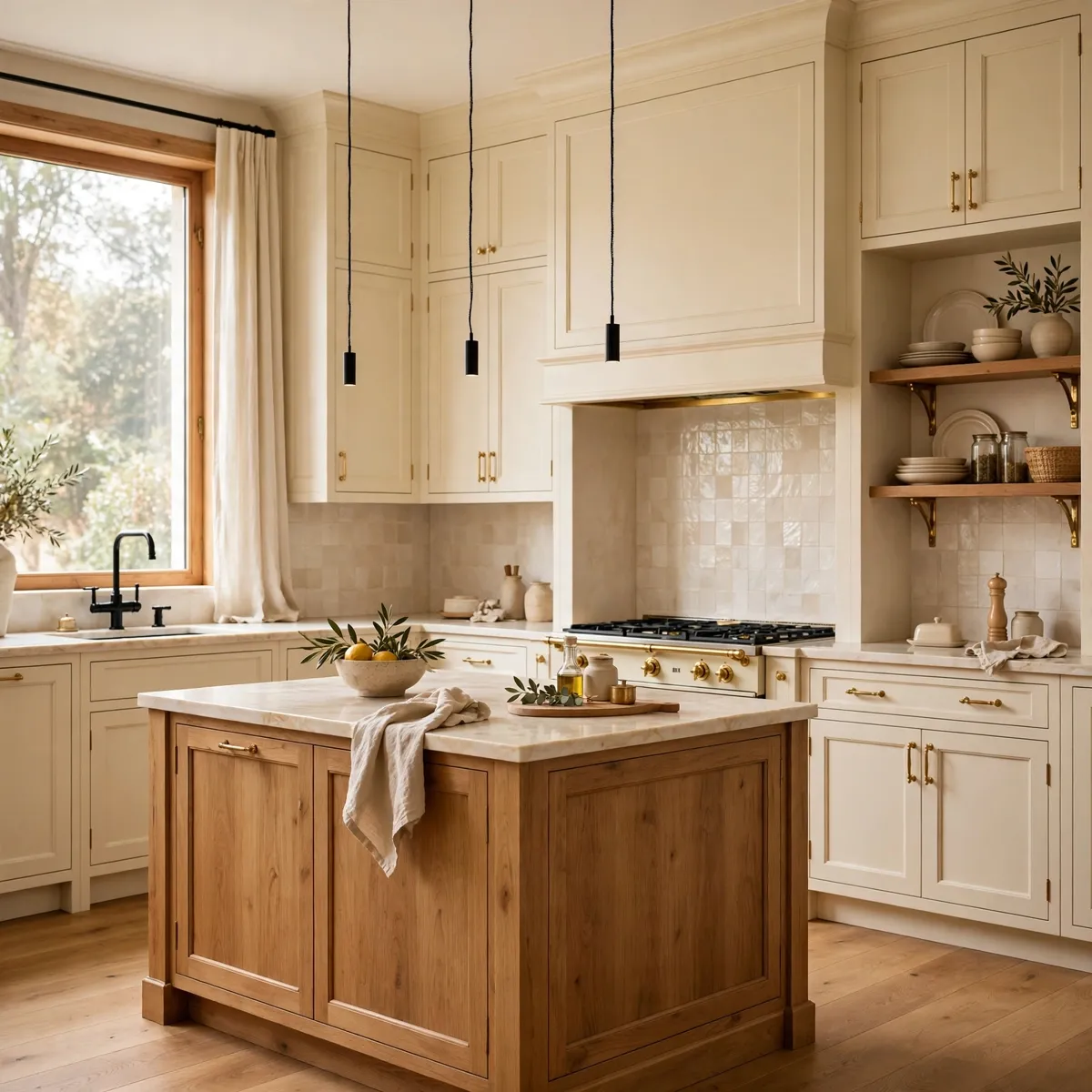
Even the softest palette needs one deep note. Matte black faucets, slim black pendant cords, or dark bronze hardware give a warm neutral kitchen definition the way eyeliner defines a face — a little goes a long way. Keep black to fixtures and hardware so it reads as jewelry, not heaviness.
Quick tips
- One black element per zone is plenty.
- Matte finishes read softer than glossy black.
17. Warm Up With Butcher-Block Counters

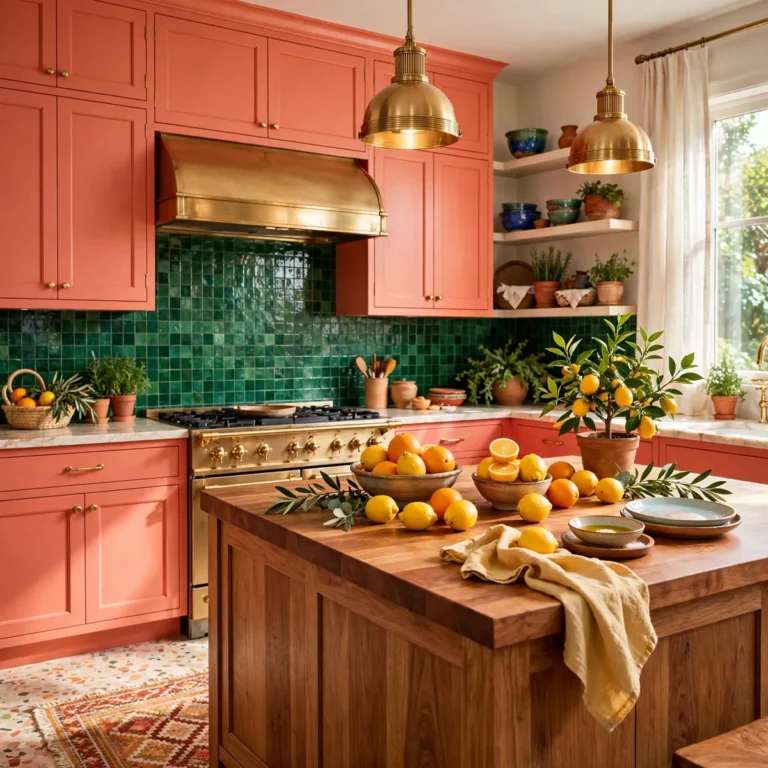
Butcher-block counters bring literal warmth to the worktop — honeyed, touchable, and forgiving. Here, wood counters on the island paired with stone on the perimeter give you two textures and twice the interest. Oil them regularly and they only get more beautiful.
Quick tips
- End-grain blocks handle knife work best.
- Keep a dedicated oil bottle by the sink as a reminder.
18. Hang One Glowing Pendant

One sculptural pendant — alabaster, paper lantern, or handblown amber glass — becomes the jewelry of the room. Hung low over the island, it casts the golden pool of light that makes every neutral around it glow. Scale it generously; undersized lighting is the most common mistake.
Quick tips
- Hang pendants 30–36 inches above the counter.
- A dimmer on the statement light is non-negotiable.
19. Keep the Island Creamy and Calm

Not every island needs to make a statement. A creamy waterfall island in warm quartz or plastered fronts keeps a warm neutral kitchen serene — one continuous calm surface for prep, homework, and gathering. When the island whispers, the textures and light around it get to speak.
Quick tips
- Waterfall edges make simple islands feel custom.
- Keep island styling to a bowl of fruit and one cutting board.
20. Edit With Texture, Not More Color
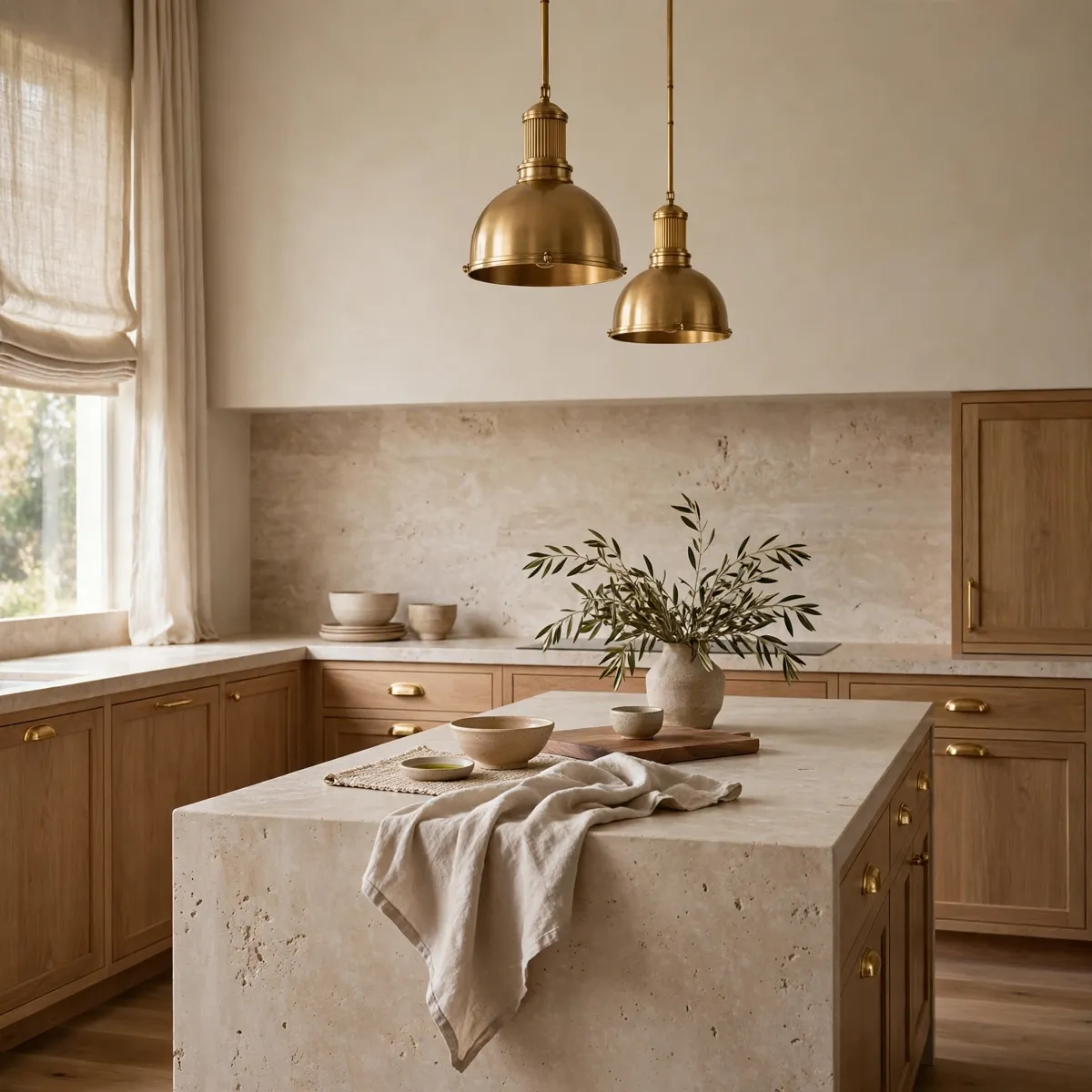
The final layer is restraint. A warm neutral kitchen succeeds when every surface adds texture rather than color — the same discipline behind great minimalist kitchen ideas. Walk the room with a basket and remove anything that fights the palette. What remains should feel collected, calm, and ready for slow mornings.
Quick tips
- If it needs dusting weekly, question whether it stays.
- Negative space is a design material — leave some.
Frequently Asked Questions
What colors make a warm neutral kitchen?
Creamy whites, warm greiges, soft taupes, warm beiges, and honeyed wood tones — every color with a yellow or red undertone rather than a blue or gray one. A warm neutral kitchen typically layers three to four of these tones so the palette has depth instead of reading flat.
How do you keep a neutral kitchen from looking flat?
Layer texture and light: mix plastered walls, honed stone, woven fibers, and wood grain, then light everything at 2700K. Neutrals look flat when every surface has the same finish — vary matte, honed, woven, and glazed and the palette comes alive.
Warm white or cool white cabinets — which is better?
Warm white, for most homes. Cool whites can read clinical next to natural materials, while warm whites harmonize with wood, brass, and stone. Choose a white with visible yellow or beige undertones and test it on the actual cabinet doors in your own light.
Can a warm neutral kitchen work in a small space?
Absolutely — small kitchens suit warm neutrals well. Keep the palette light and tonal, use glossy handmade-look tile to bounce light, choose floating shelves over heavy uppers, and let one glowing pendant do the decorating. Restraint makes small kitchens in this palette feel bigger and calmer.
The Warm Takeaway
A warm neutral kitchen is not the absence of color — it is color at its most comforting. Start with warm whites, layer in greige and taupe, add honeyed wood and brass, and light it all like candlelight. Edit until the room breathes, and you will have a kitchen that feels like a hug every single day. You do not need a full redo to get there — swapping hardware, layering in texture, or updating a single finish can transform the room in a weekend. ♥