




Antique Home Decor Ideas: 12 Ways to Mix Vintage Finds Into Modern Rooms
Antiques belong in modern homes. The designers getting it right this fall follow a simple rule: one hero antique per room, breathing room around it, and one repeated material to tie the old piece to everything new. This fall, the pieces they’re reaching for most are marble busts, vintage bar carts, moody oil portraits, and rugs with visible age — each one adds history and texture without asking you to redecorate the whole house.
Below are 12 specific antique home decor ideas, each built around a single find and the styling move that keeps it looking collected rather than cluttered.
The 3 Rules That Keep Antiques Looking Collected, Not Cluttered
Before the ideas, the framework. Every antique home decor idea below follows these three rules, and they’ll save you from the flea-market-jumble look.
- One hero per room. Let a single antique be the star — a bust, a bar cart, a portrait. Supporting vintage accents are fine, but two large competing antiques in one room start to feel like a shop.
- Give it breathing room. Negative space is what separates “curated” from “crowded.” A bust needs an uncluttered shelf; a portrait needs a calm wall. If you have to squeeze a piece in, it doesn’t belong there.
- Repeat one material. Pick up the antique’s material somewhere else in the room — aged brass in the lamp, worn wood in the frame, linen in the upholstery. That single echo is what makes old and new feel like they were chosen together.
1. A Marble Bust on the Bookshelf
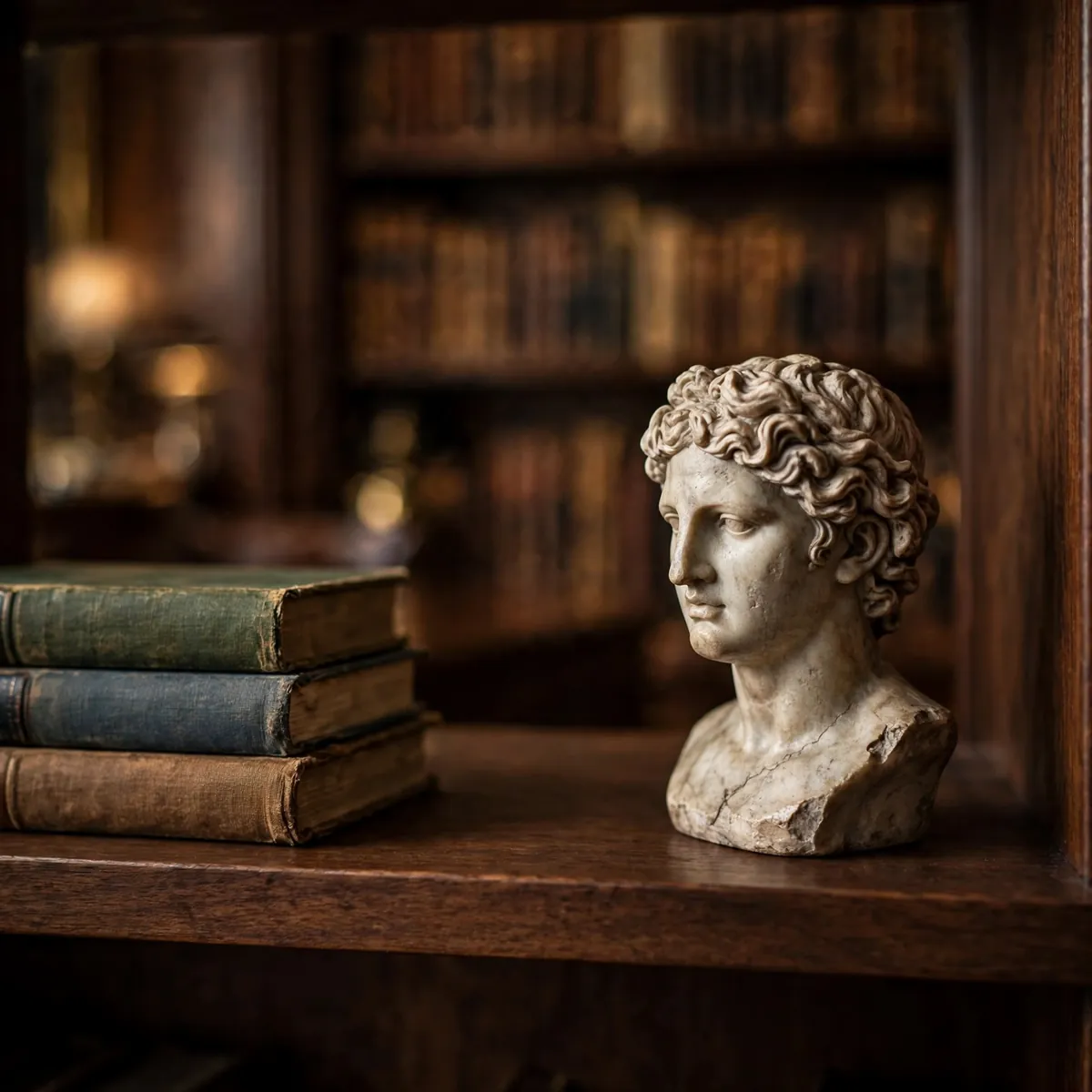
Nothing says “collected over a lifetime” like a small marble or plaster bust tucked among books. The sculpted face breaks up the straight lines of book spines, and the aged stone finish reads as art rather than clutter. Place it slightly off-center on a shelf, flanked by a short stack of books on one side and open space on the other. The contrast between the classical form and everyday paperbacks is exactly the old-meets-new tension designers are after this fall.
Quick tips
- Plaster busts cost a fraction of marble and age beautifully — look for chips and wear, which add character.
- Keep the shelf around it edited: books plus the bust plus one small object, nothing more.
- A bust also works on a mantel, entryway console, or desk — anywhere it gets a little breathing room.
2. A Vintage Bar Cart, Styled for Fall
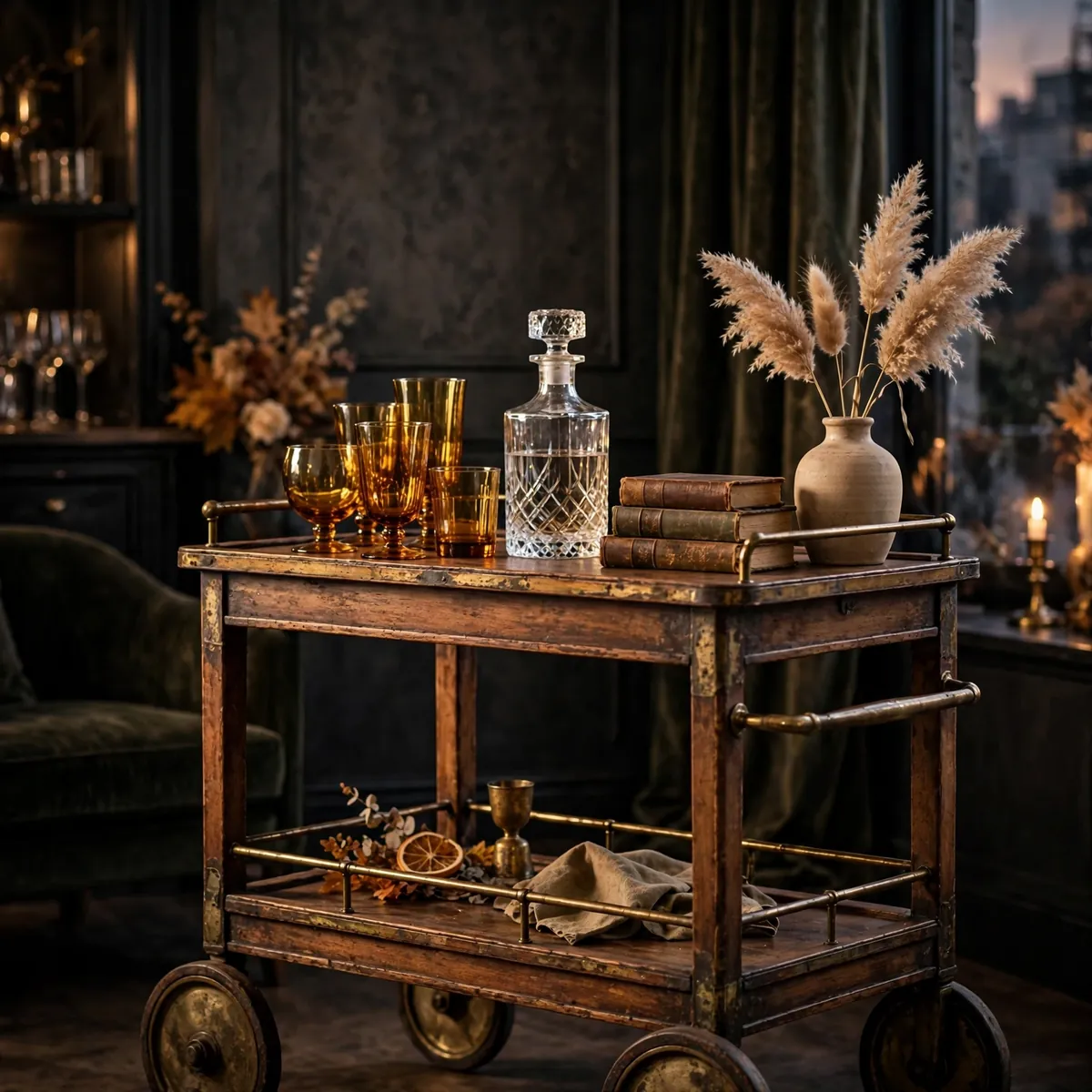
The bar cart is back, and the versions designers want have natural wood, aged finishes, and worn brass details — not chrome. Style it for the season: amber glassware, a decanter, a small stack of vintage cocktail books, and something dried and sculptural like pampas stems or preserved eucalyptus. Park it where it can be seen from the sofa so it functions as both furniture and vignette.
Quick tips
- Check casters roll smoothly and the frame is sturdy before buying — wobble ruins the look.
- Group glassware by tone (ambers together, clears together) instead of mixing randomly.
- In small rooms, a bar cart doubles as an entryway console or bedside table.
3. One Oversized Antique Portrait
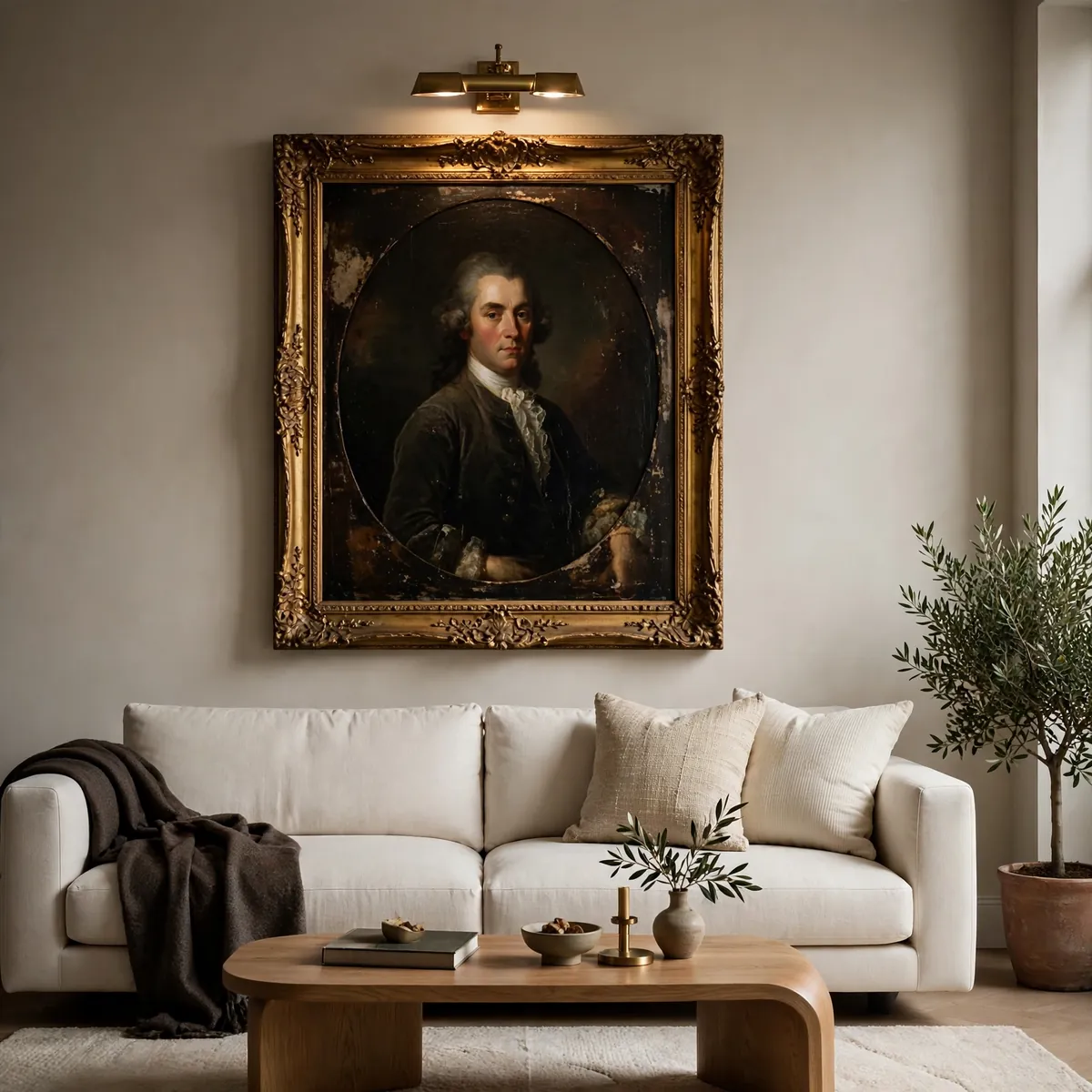
A single large oil portrait — preferably dark, moody, and a little mysterious — hung above a light, modern sofa is one of the strongest moves in this list. The heavy gilt frame and somber subject matter create deliberate contrast with clean upholstery, and the painting becomes the room’s conversation piece. Hang it lower than you think, so the center sits near eye level when seated.
Quick tips
- Unsigned 19th-century portraits are affordable at estate sales; condition of the canvas matters more than the artist’s name.
- Keep the wall around it calm — no competing art within several feet.
- A picture light above the frame makes it feel intentional rather than inherited-by-accident.
4. A Character Rug Layered Over Jute
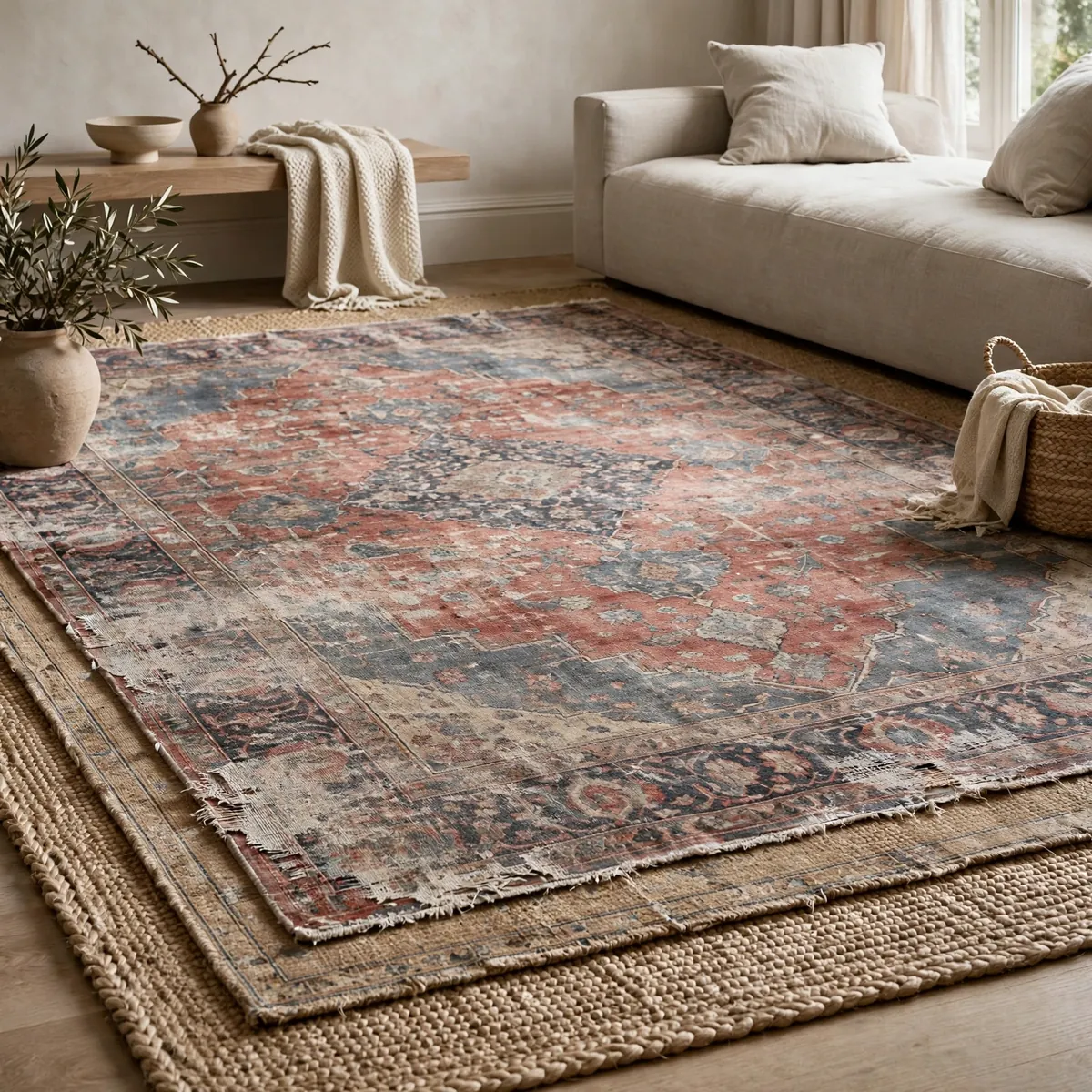
Rugs with visible age — faded reds, worn patches, uneven dye — are trending because their imperfections do what new rugs can’t: they add history underfoot. Layer a smaller antique Persian or Oushak over a larger natural jute or sisal rug. The neutral base keeps the pattern from overwhelming the room, and the layered edge reads as relaxed and collected. This also lets you use a rug that’s too small or too worn to stand alone.
Quick tips
- The top rug should cover roughly two-thirds of the base rug for the best proportion.
- Low-pile antique rugs layer best; thick piles slide and bunch.
- A rug pad between the layers stops slipping and protects both pieces.
5. A Row of Aged Brass Candlesticks
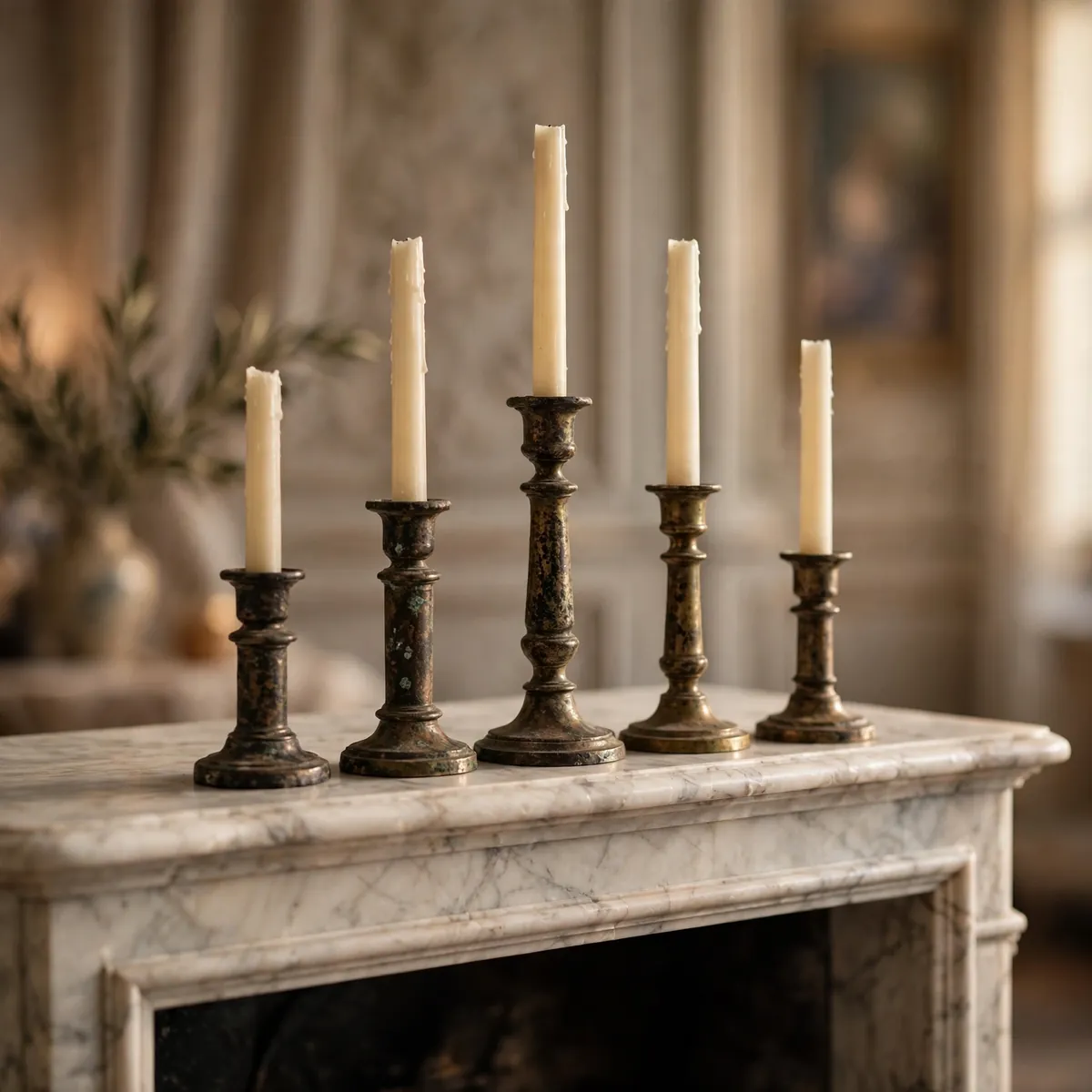
Unlacquered brass that’s gone dark and mottled with age has a warmth that polished new brass can’t imitate. Gather candlesticks in varied heights — three to five — and run them down the center of a dining table or across a mantel. The repetition of one aged material is the “repeat one material” rule in its simplest form, and candlelight on old brass is flattering to the whole room.
Quick tips
- Don’t polish away the patina — a soft cloth is enough; darkened crevices are the point.
- Odd numbers group more naturally than even ones.
- Mix heights by at least a few inches so the row has rhythm.
6. A Foxed Antique Mirror
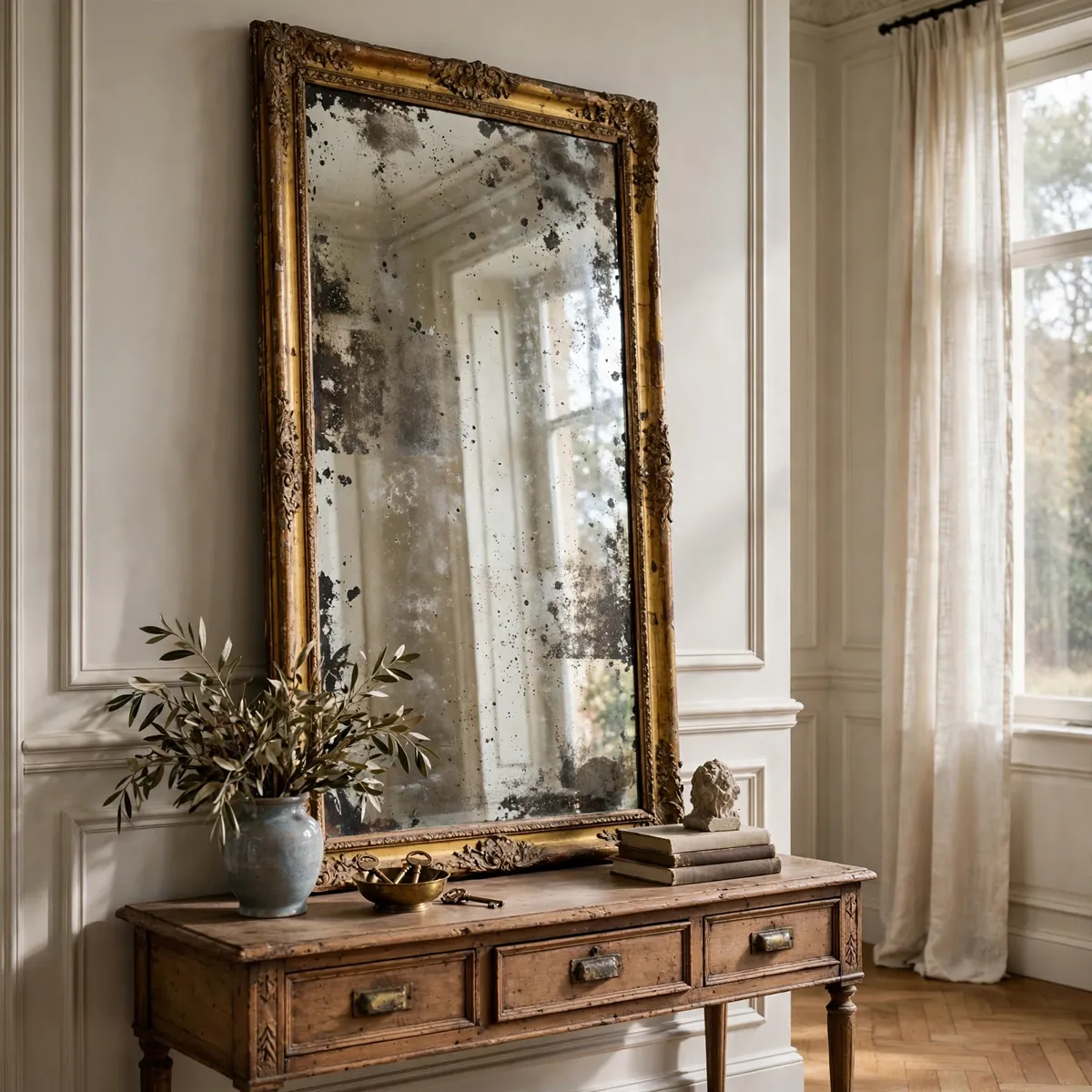
Foxing — the cloudy spots and darkened patches on old mirror glass — turns a mirror from a reflective surface into a piece of art. A foxed mirror bounces light around softly instead of sharply, which flatters both the room and everyone in it. Lean a tall one against the wall on a mantel or console, or hang a smaller gilt mirror in an entryway where it catches daylight.
Quick tips
- Leaning a heavy mirror is safer on carpet or with wall anchors — never leave it freestanding on hard floors where it can slide.
- Foxing can’t be faked convincingly; buy the real thing rather than a distressed reproduction.
- Keep the frame’s gilt finish as found — over-restoring kills the value and the look.
7. A Vintage Trunk as a Coffee Table
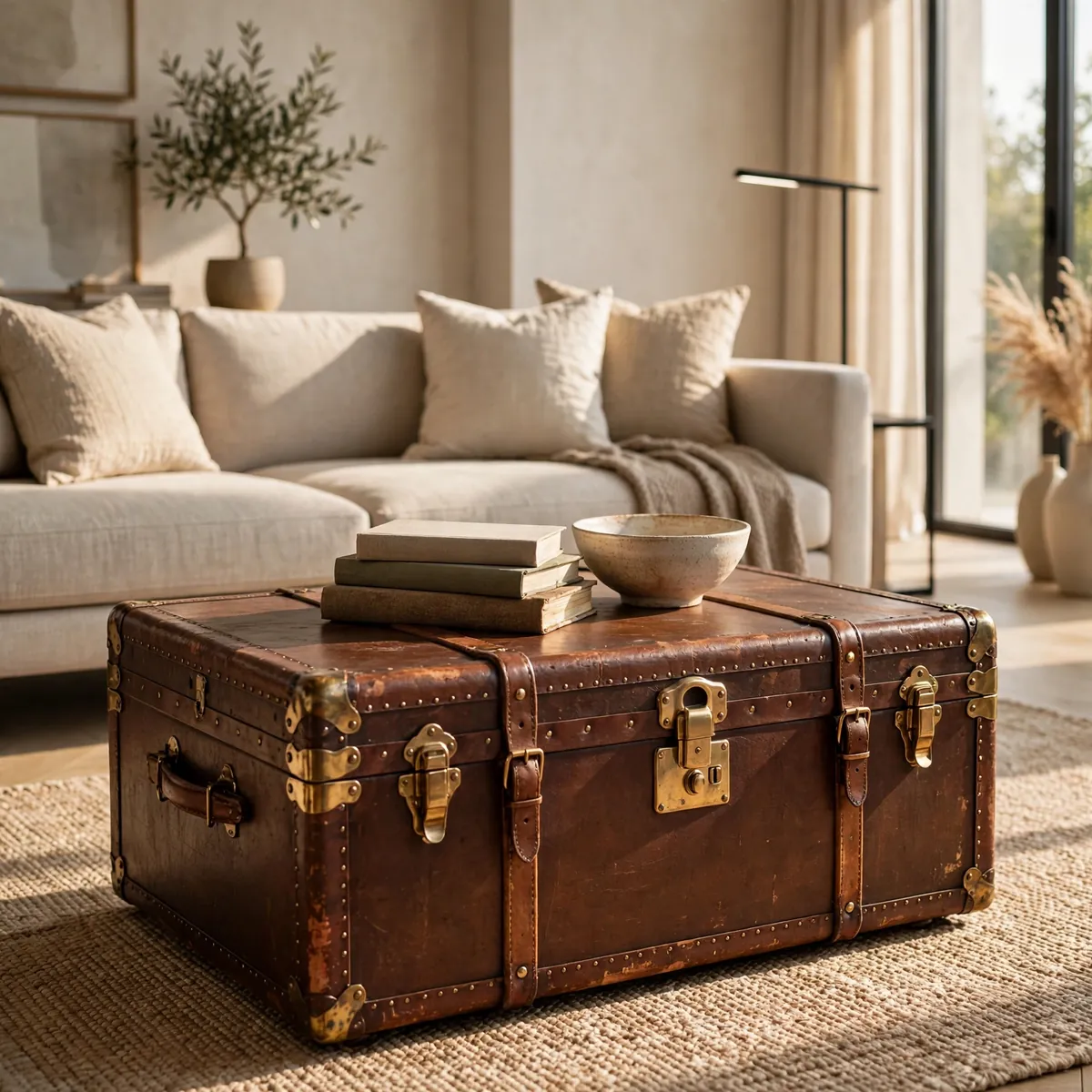
A leather-bound or wood campaign trunk does double duty: surface on top, storage inside. In a living room of clean-lined modern seating, the trunk’s hardware, straps, and worn corners supply all the texture the room needs. Style the top the way you would any coffee table — a stack of books, a small bowl — and leave the rest of the lid visible so the trunk itself stays the focus.
Quick tips
- Measure first: trunk height should sit within a few inches of your sofa seat height.
- Check the interior for musty smell before buying — line it with cedar if needed.
- Flat-top trunks work best; dome tops send everything sliding off.
8. A Salon Wall of Small Gilt Frames
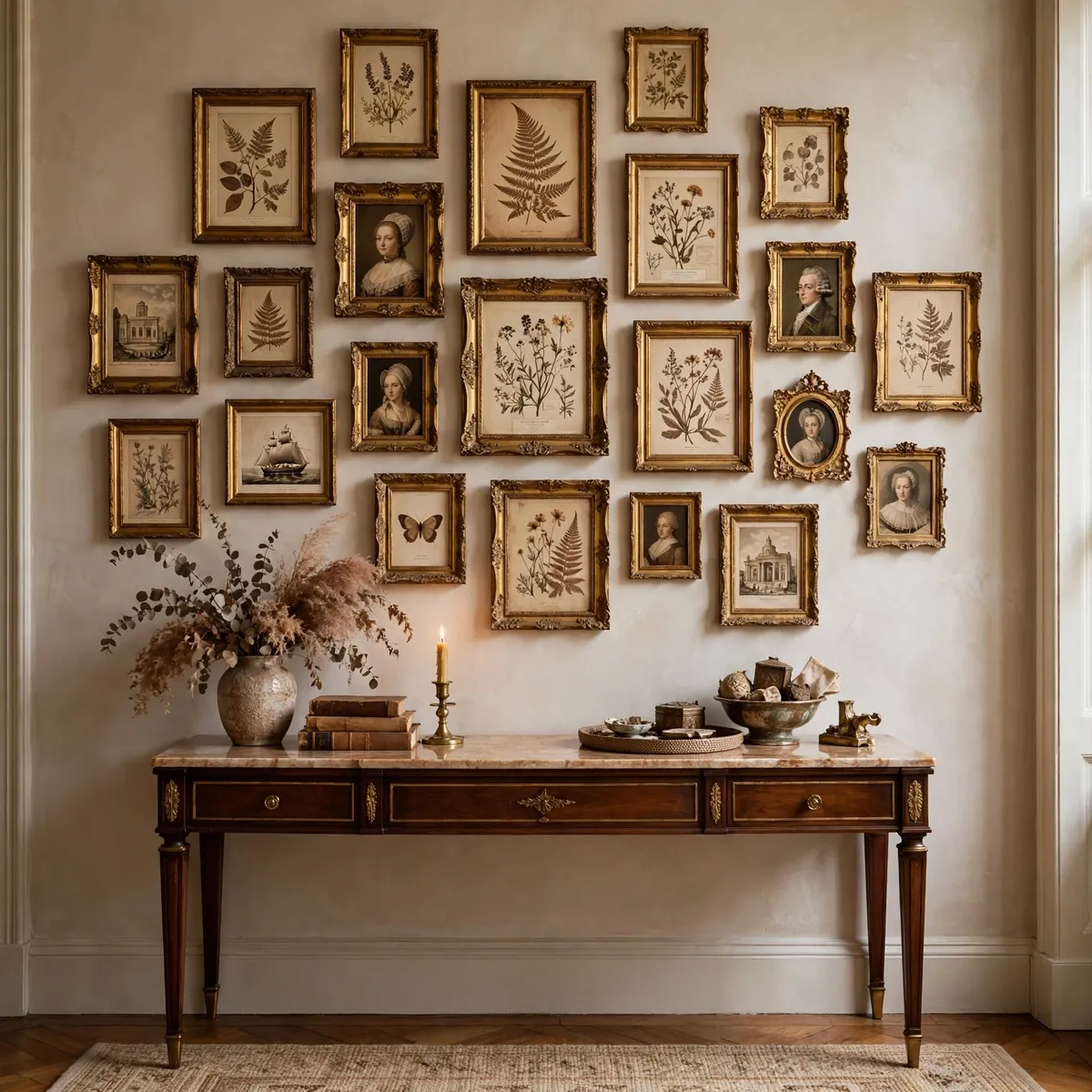
Instead of one large piece of art, build a salon-style wall from small antique frames — mismatched gilt frames holding botanical prints, miniature portraits, etchings, or old maps. The variety of frames is the point, but the contents should share a loose palette (sepia, black and white, muted botanicals) so the wall reads as one composition rather than a yard sale.
Quick tips
- Lay the arrangement on the floor first and photograph it before hanging anything.
- Keep two to three inches between frames — tighter reads as clutter, wider reads as sparse.
- Start from the center and work outward for the most balanced result.
9. An Antique Armoire for Modern Storage
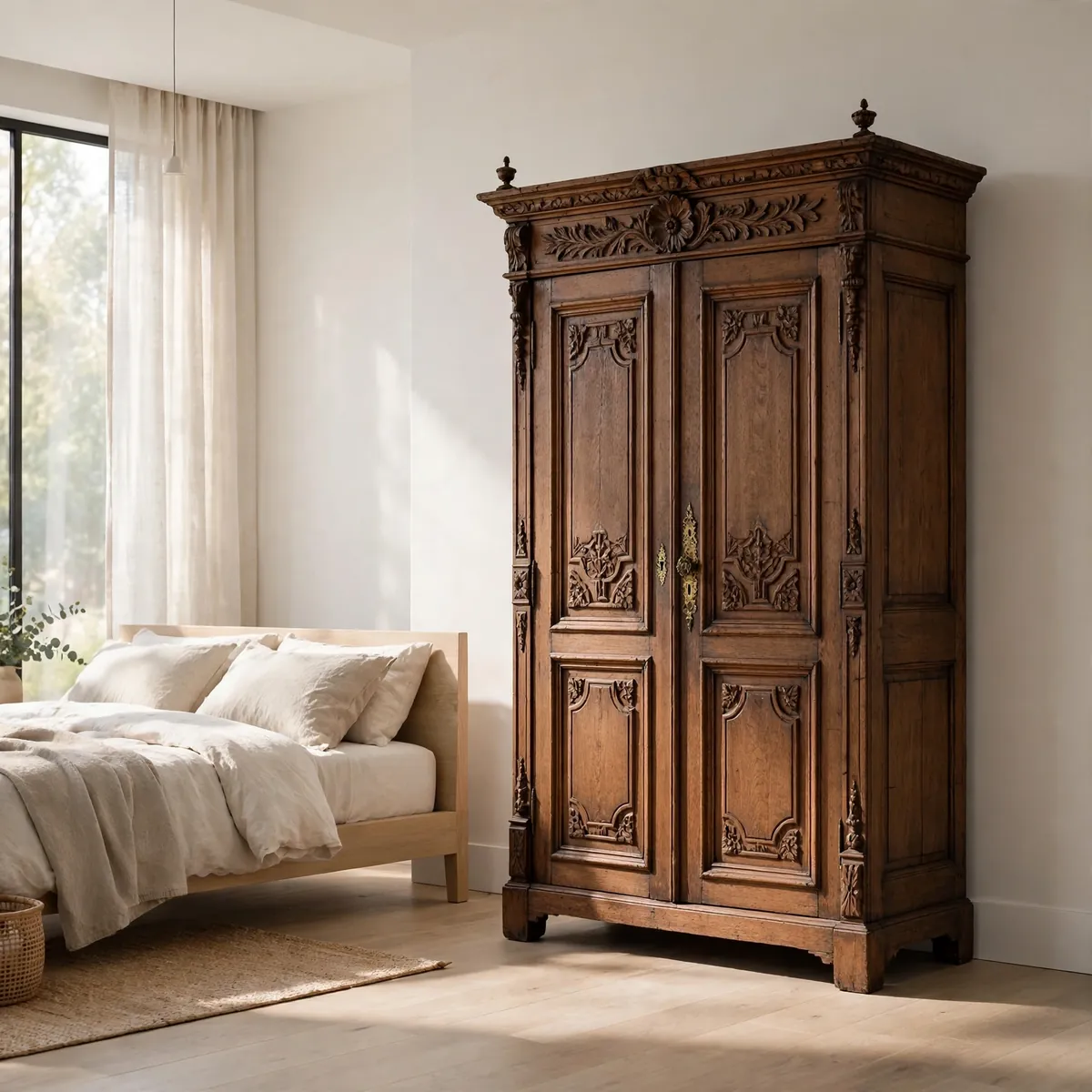
One large case piece — an armoire, secretary, or linen press — gives a modern room instant architecture. Use it to hide the things modern life requires: a TV behind closed doors, a bar setup, extra linens, or office supplies. Because it’s the room’s hero antique, let it stand mostly alone on its wall rather than crowding furniture against it.
Quick tips
- Measure doorways and stairwells before buying — armoires are the number one piece that doesn’t fit through the door.
- Check that doors close flat and drawers run smoothly; warped case pieces are expensive to fix.
- Inside, add battery puck lights to make the contents feel considered.
10. Vintage Textiles as Soft Layers
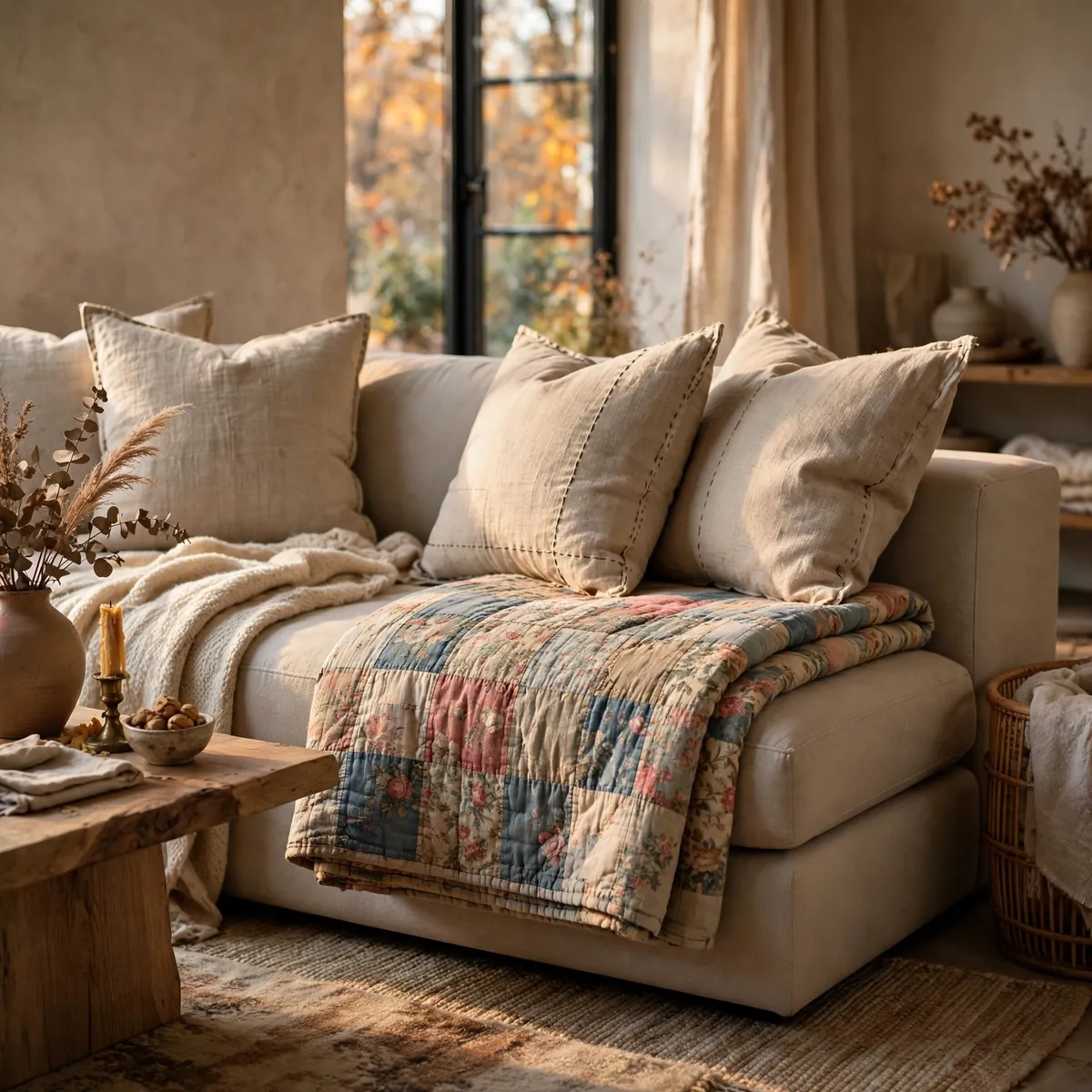
Fold a vintage quilt across the foot of a modern sofa, swap in pillow covers made from grain sacks or embroidered linens, or run a faded runner down a hallway. Old textiles bring pattern and softness that new fabric rarely achieves, and they’re the easiest antiques to live with — no restoration, no heavy lifting, and simple to rotate seasonally. For fall, look for warm plaids, faded florals, and anything with visible hand-stitching.
Quick tips
- Wash vintage linens gently by hand first — old fibers are fragile when wet.
- One or two textile pieces per room is enough; more starts to feel themed.
- Fold rather than drape quilts for a tailored look that suits modern furniture.
11. Stacks of Antique Books

Leather-bound books with worn spines and marbled edges are styling workhorses: stack them as risers under lamps and vases, pile them on a side table next to a reading chair, or line a low shelf with them spine-out. Group by color — deep greens and browns together, tans together — and the stack reads as intentional decor instead of leftover library.
Quick tips
- Buy by the foot from estate sales for the best prices; condition of bindings matters more than titles.
- Three to five books per stack is the sweet spot — taller stacks topple and look fussy.
- Top the stack with one small object, like a brass dish or a stone, to finish the vignette.
12. Ironstone Pitchers With Fall Branches
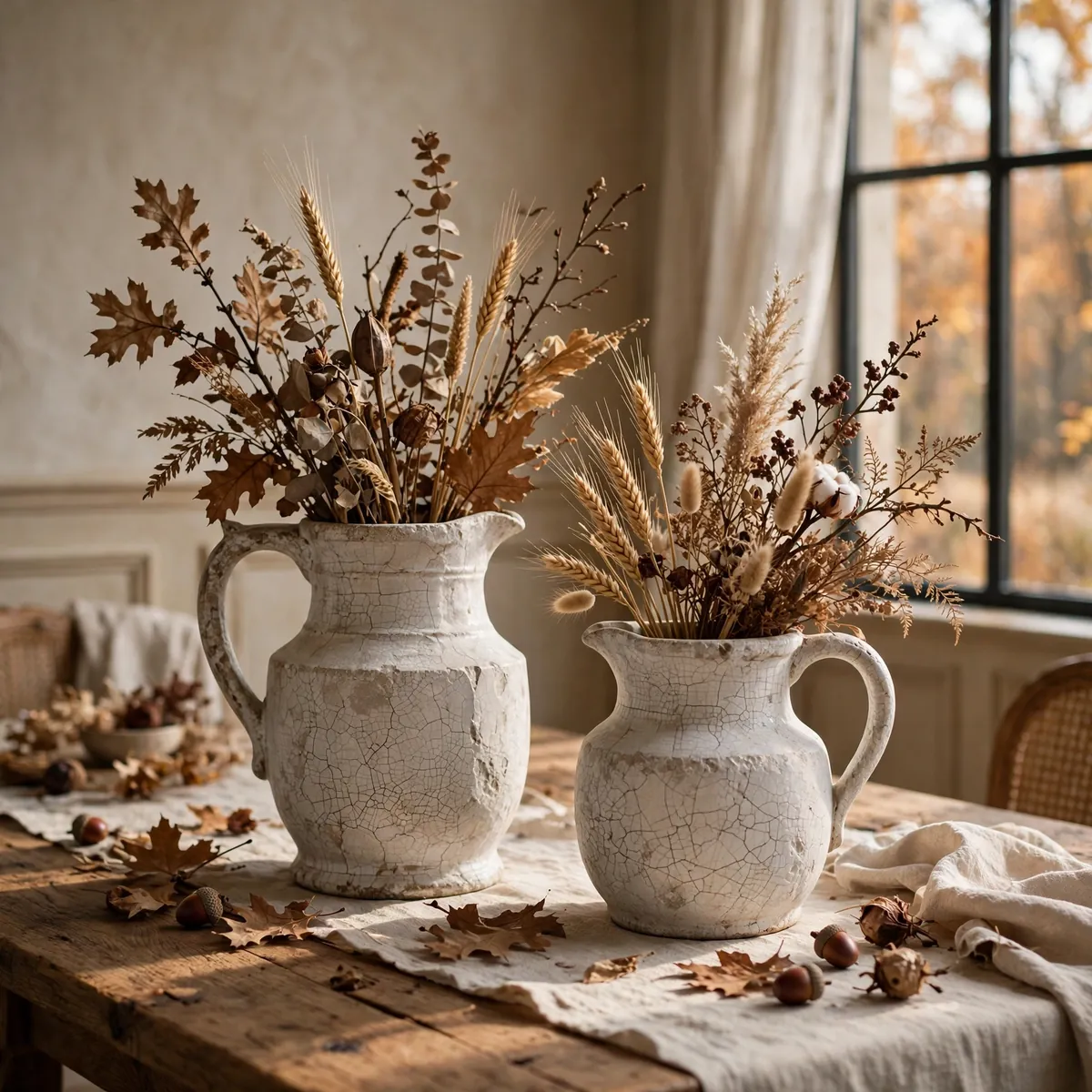
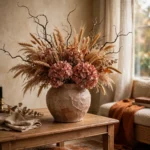
Chunky white ironstone pitchers — crazed, stained, and all the better for it — are the perfect fall vessel. Fill one with dried branches, wheat stems, or preserved oak leaves and set it on a dining table, kitchen island, or entryway console. The aged white ceramic against dried botanicals is a quieter, longer-lasting version of a fall centerpiece, and the pitcher itself works year-round with fresh flowers in spring.
Quick tips
- Crazing (fine cracks in the glaze) is desirable — it proves age and adds texture.
- Group two or three pitchers of different heights for a stronger statement.
- Keep dried arrangements away from direct sun so they don’t bleach out by December.
Frequently Asked Questions
What antiques are trending for fall 2026?
Designers are highlighting four categories this fall: marble busts and carved face sculptures, vintage bar carts with aged wood and brass details, striking antique oil portraits, and rugs with visible character and wear. Each works as a single hero piece in a modern room.
How much of a room should be vintage?
Less than you think. One hero antique per room, supported by a few small vintage accents, with the rest of the furniture modern — roughly an 80/20 split toward modern. That ratio keeps the room feeling current while the old pieces supply all the character.
How do I clean antique brass and wood without ruining the patina?
Use a soft dry cloth for dust and mild soap with water for grime, then dry immediately. On unlacquered brass, never use harsh polish — the darkened patina in the crevices is what gives the piece its age and value. Always test any cleaner on a hidden spot first.
Where is the best place to find affordable real antiques?
Estate sales and flea markets offer the best prices, especially on the last day when sellers negotiate. Architectural salvage yards are strong for mirrors and lighting. Online, buy from sellers with long histories and clear photos of flaws — and always buy the best quality you can afford, since well-made pieces were built to last centuries.
Conclusion
These antique home decor ideas prove decorating with antiques isn’t about filling a house with old things — it’s about choosing a few pieces with history and giving them the space to stand out. Start with one hero per room, repeat a single material to bridge old and new, and let patina do the talking. If you love the aged, collected look beyond the living room, our vintage garden decor ideas show how to bring the same character outdoors.