26 Stunning Kids Bedroom Decor Ideas That Grow With Your Child
Kids bedroom decor ideas work best when the room is built in two layers: a calm, durable base that lasts for years, and swappable personality on top — bedding, art, decals and rugs that change as fast as your child does. The best kids bedroom decor ideas balance sleep, play, storage and study in one small room, with furniture at your child’s height. These 26 ideas cover toddlers to teens, small rooms and shared rooms, so you can start with one change this weekend.
Start with the bones — wall color, bed, dresser and lighting — then let your child pick the fun layers. If you are decorating from scratch for a baby who will grow into this room, these nursery decor ideas show how to set up the earliest version of the same space, and the ideas below take it from toddler years right through to teens.
Kids Bedroom Decor Ideas: Key Takeaways
What is the best way to decorate a kids bedroom? Build a calm neutral base — warm white or pale sage walls, a sturdy bed and dresser — then add personality through bedding, wall art, decals and rugs that swap out in an afternoon.
How do you decorate a kids room so it lasts for years? Spend on the pieces that last — bed, dresser, lighting — and save on the pieces kids outgrow. A duvet cover changes the whole look in five minutes, so the room grows without a renovation.
What does every kids bedroom need? A bed, a nightstand, a place for clothes, low storage a child can reach, a reading spot and a desk once homework starts — plus a rug that marks the play zone.
How do you keep a kids bedroom tidy? Store daily items between knee and shoulder height, keep about a third of the floor open, rotate toys every two weeks, and give every toy one labeled home.
How Do You Match Kids Bedroom Decor to Your Child’s Age?
Children need different things from their room at every age, so match the decor to the stage they are in now.
| Age | What matters most | Decor that works |
|---|---|---|
| Toddler (2–4) | Safety and easy reach | Low bed, open bins, soft rug, washable fabrics |
| Big kid (5–9) | Play and personality | Bold color, reading nook, gallery wall of their art |
| Tween (10–13) | Homework and privacy | Real desk, better lighting, headboard they choose |
| Teen (14+) | A grown-up feel | Adult art and bedding, same sturdy furniture |
1. How Do You Start Kids Bedroom Decor With a Calm Neutral Base?
Start kids bedroom decor with a calm neutral base because warm white, soft greige or pale sage walls suit any theme, so the room can be re-themed with bedding and art instead of repainting.
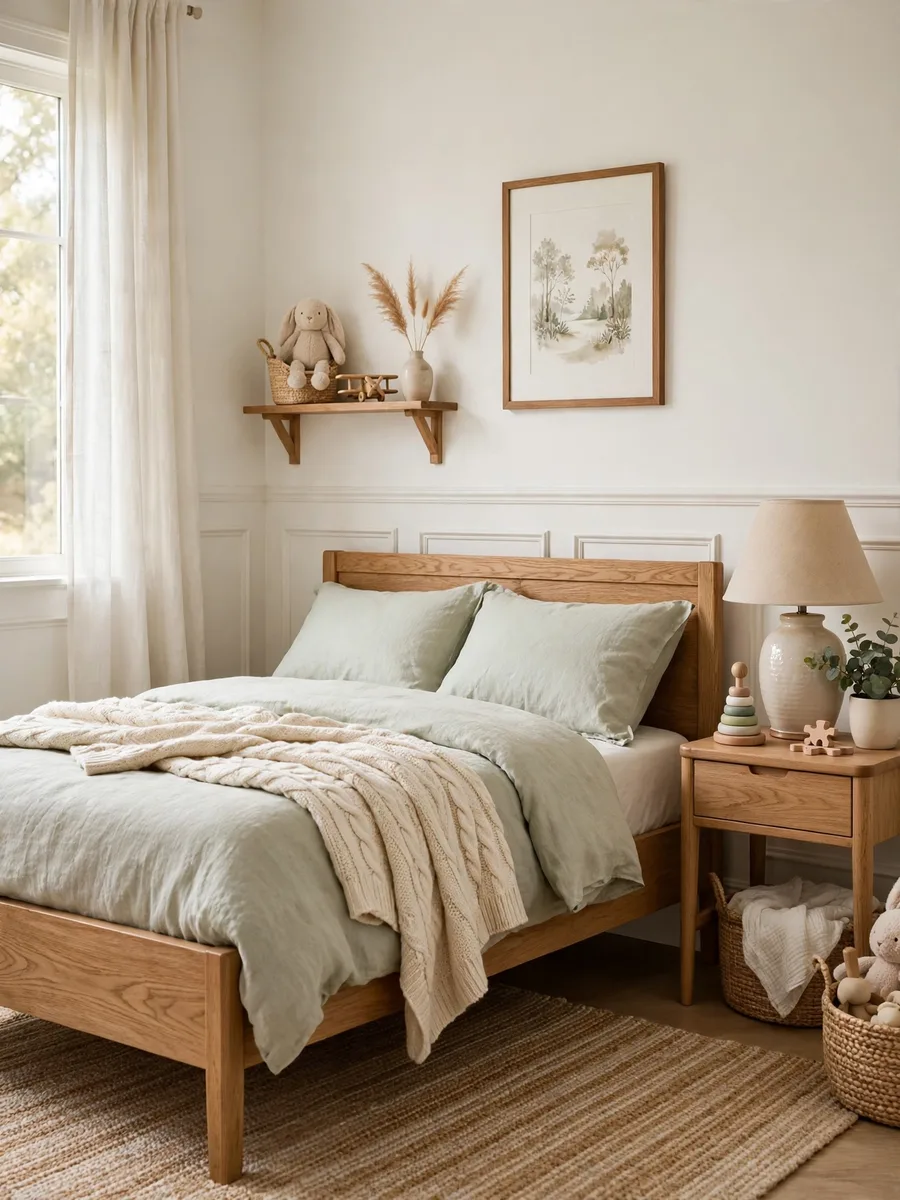
A concrete example: warm white walls, a natural oak bed and pale sage bedding feel fresh at age four and still right at twelve, with only the cushions changing.
Quick tips
- Use eggshell or satin paint so crayon and fingerprints wipe off easily.
- Keep the ceiling the lightest shade in the room to lift the space.
2. What Makes One Accent Wall the Easiest Big Change?
One accent wall is the easiest big change because a single wall of dusty blue, soft terracotta or sage green gives the room its color in one afternoon, without committing all four walls.
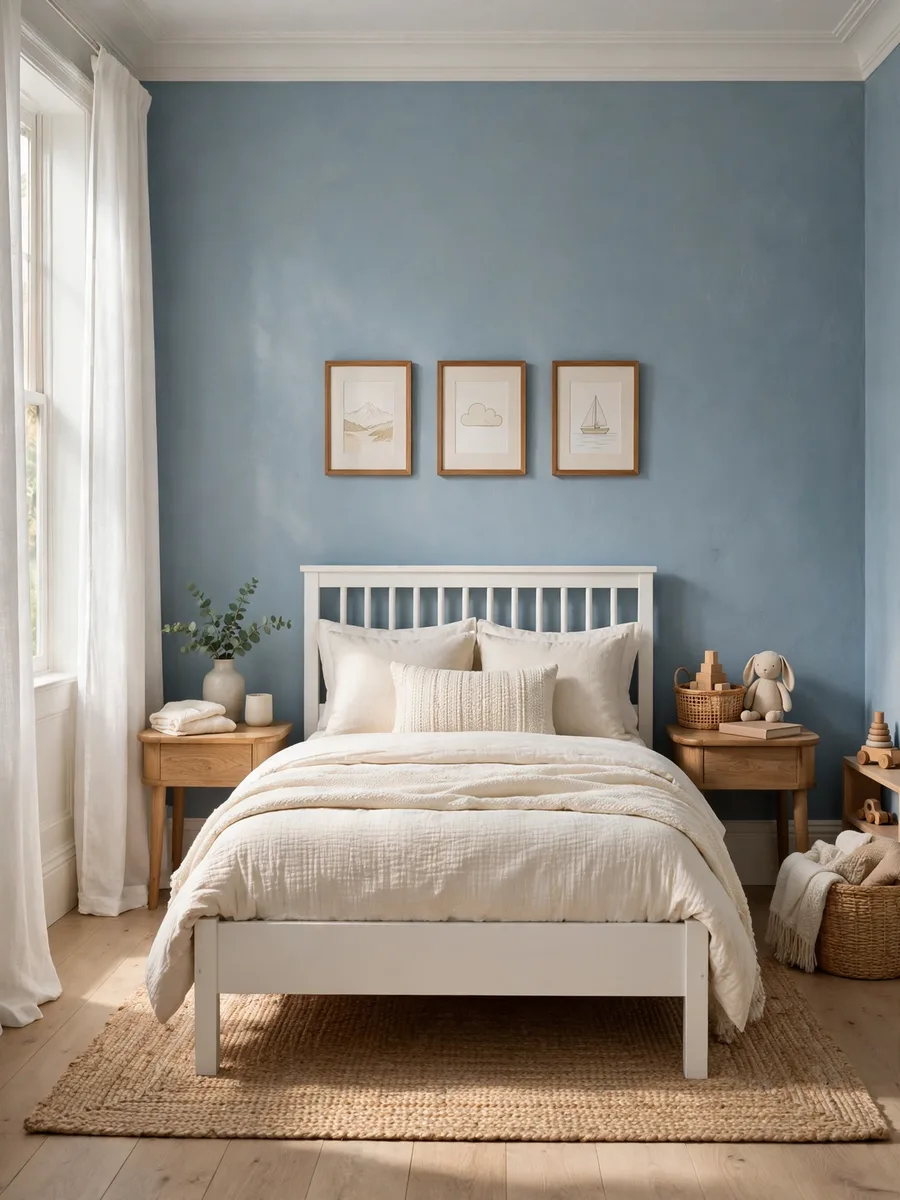
A concrete example: a dusty sky-blue wall behind a white wooden bed, with cream bedding and a woven rug, finishes a plain room for the price of one can of paint.
Quick tips
- Paint the wall your child sees when they wake up, not the one behind the door.
- Let your child choose the color from three options you pre-picked.
3. How Do You Choose a Bed That Grows With Your Child?
Choose a bed that grows with your child by picking a classic twin bed in solid wood with a simple headboard, because a twin mattress lasts from about age three to adulthood.
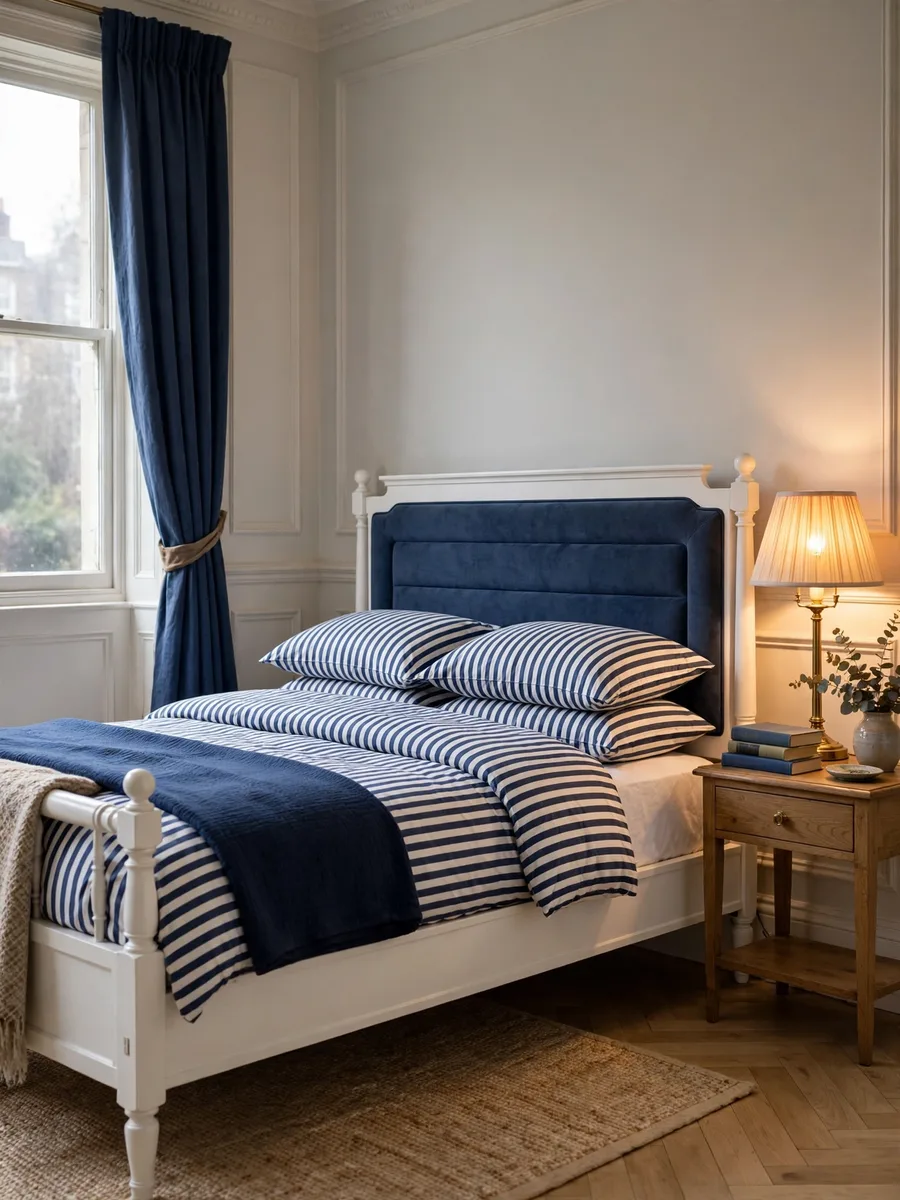
A concrete example: a white wooden twin bed with a low padded headboard works for a toddler with a guard rail, then for a teen with linen bedding, on the same frame.
Quick tips
- Buy the best mattress you can afford; the frame can be simple.
- Leave at least 24 inches of clear walkway on the side your child climbs in and out of.
4. Why Is Swappable Bedding the Smartest Theme Trick?
Swappable bedding is the smartest theme trick because a new duvet cover changes the whole look of the room in five minutes, for far less than repainting or new furniture.
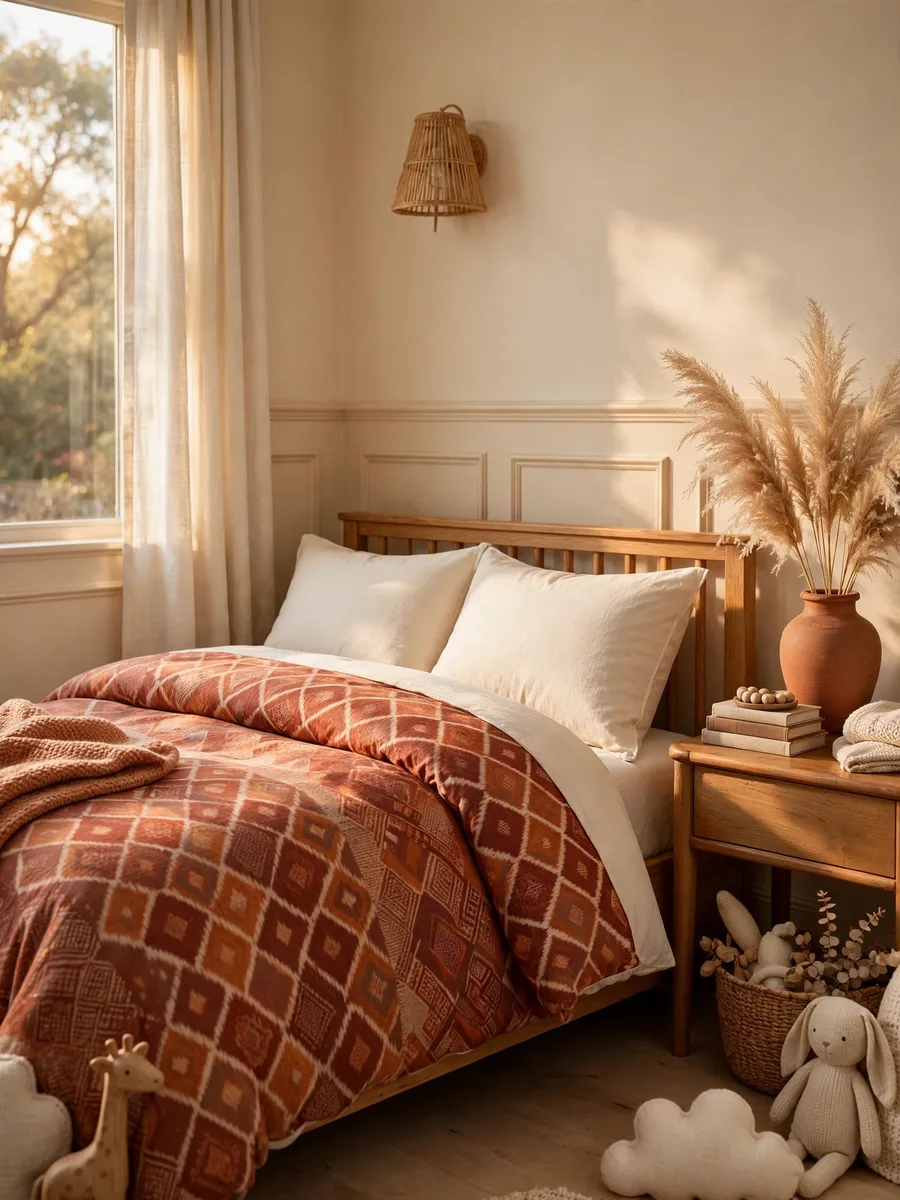
A concrete example: a cream insert in a terracotta patterned cover, with matching pillowcases, makes the bed the theme while the walls stay calm.
Quick tips
- Keep two covers in rotation so one can wash while the other is on the bed.
- Match the cover to the rug, not the walls, for a pulled-together look.
5. How Do You Build a Reading Nook Kids Actually Use?
Build a reading nook kids actually use by giving it a soft seat, good light and books at arm’s reach, because a nook only works when a child can settle in without help.
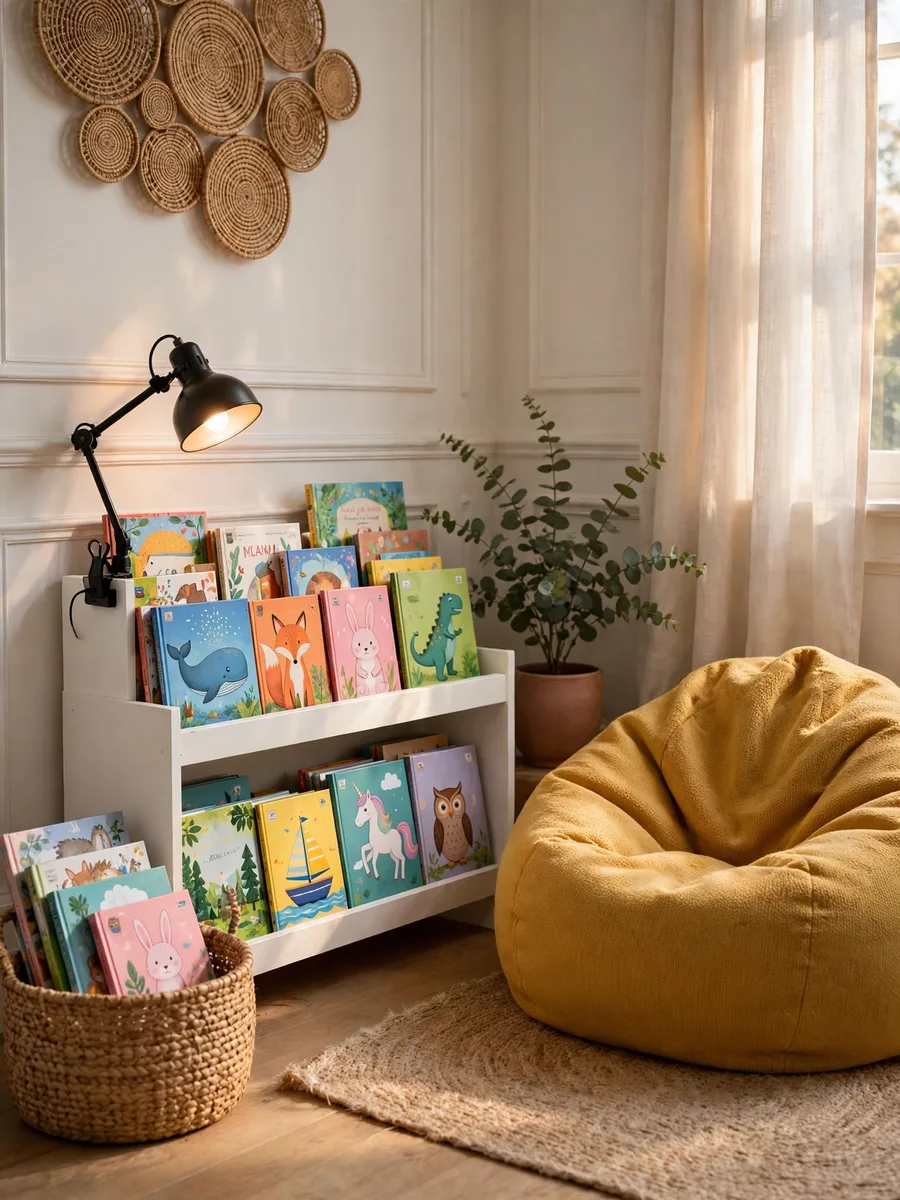
A concrete example: a mustard beanbag beside a low white bookshelf, with a clip-on lamp and a basket of picture books, becomes a six-year-old’s favorite evening spot.
Quick tips
- Face book covers outward so the nook looks inviting and books are easy to find.
- Add a small blanket basket so the nook feels cozy in winter.
6. What Makes a Gallery Wall of Their Art So Personal?
A gallery wall of their art makes a room personal because nothing else in the house is as unique as your child’s own drawings, and it costs almost nothing to build.
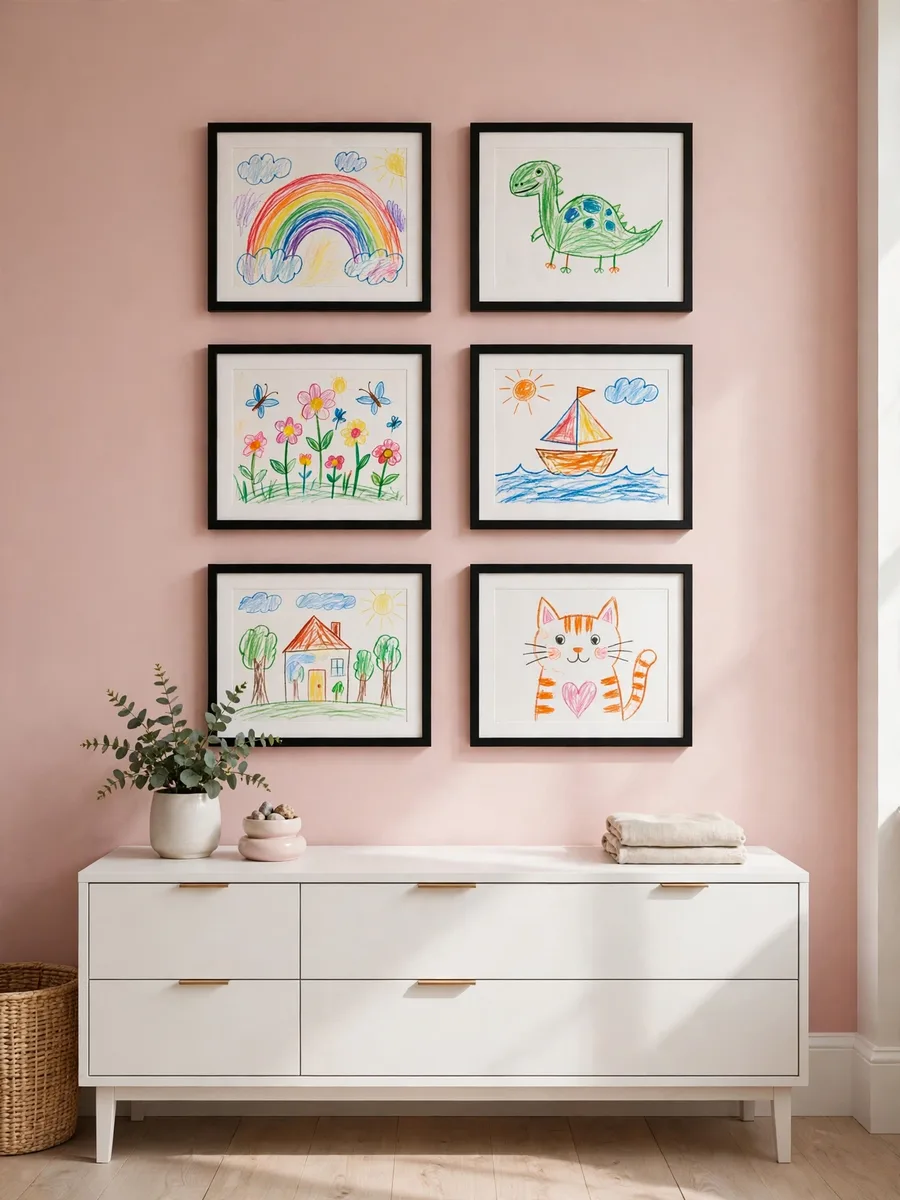
A concrete example: six slim black frames in a grid above a low dresser, each holding a different drawing, turn a plain blush-pink wall into a gallery your child shows every visitor.
Quick tips
- Use matching frames so many different drawings still look tidy together.
- Keep one empty frame ready so new art has a home immediately.
7. How Do Peel-and-Stick Decals Change a Room in an Afternoon?
Peel-and-stick decals change a room in an afternoon because they add stars, animals or trees to a plain wall with no paint, no nails and no damage when they come off.
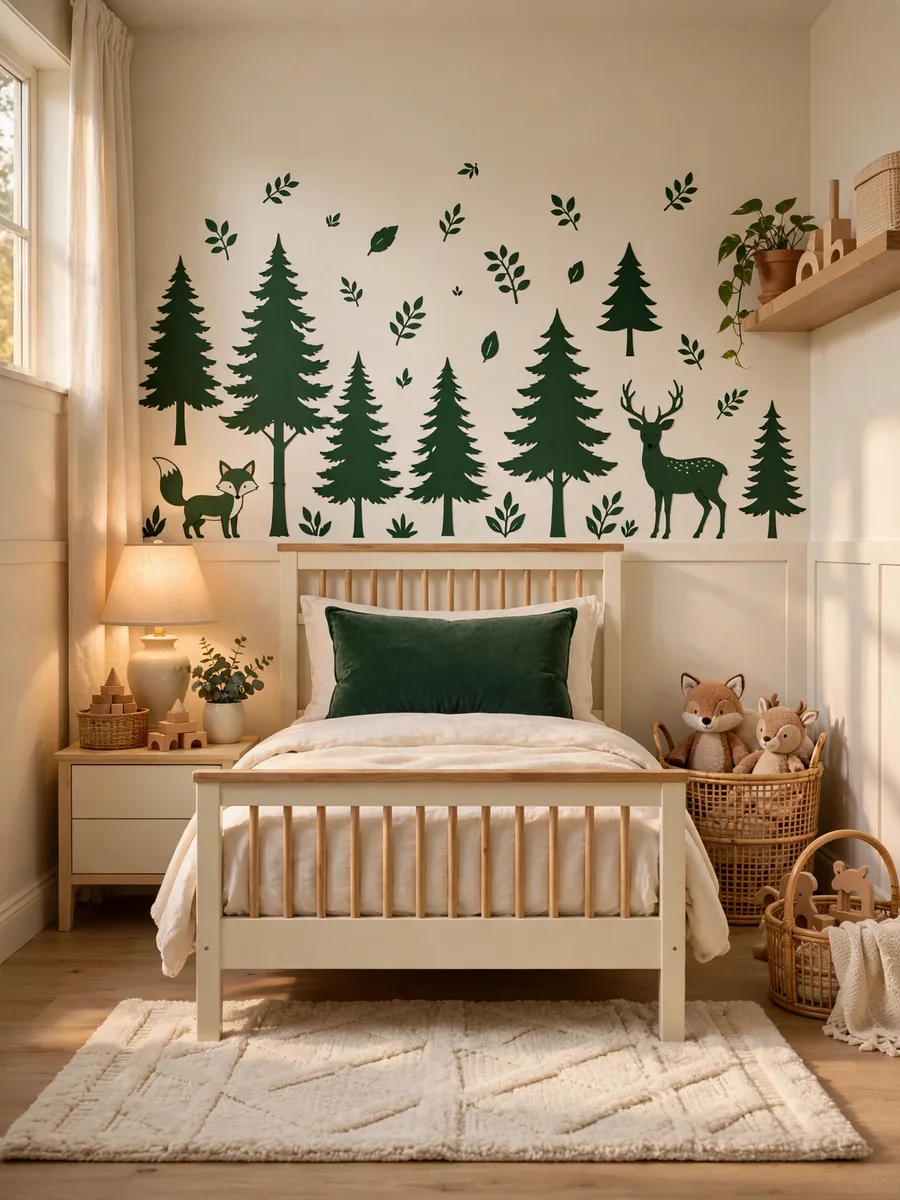
A concrete example: forest-green decals of trees, a fox and a deer above a cream bed give a toddler room a woodland feel that peels off cleanly later.
Quick tips
- Apply decals to smooth, clean paint so they stick flat and peel off cleanly.
- Keep decals above furniture height on the wall your child faces at bedtime.
8. Where Should the Homework Corner Go?
The homework corner should go in the best natural light in the room, usually beside a window, because daylight keeps a child alert and a dedicated spot tells them it is time to focus.
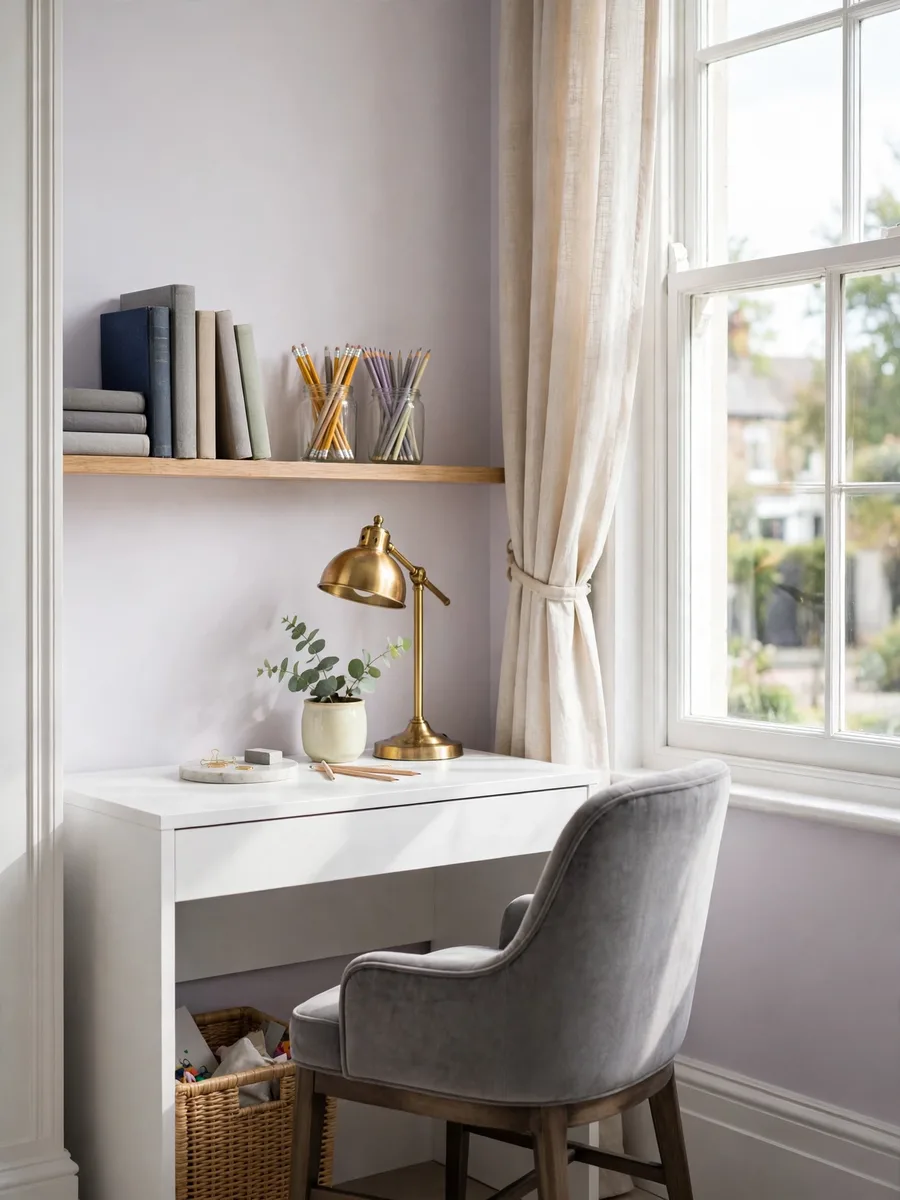
A concrete example: a compact white desk, grey chair and brass lamp beside the window give an eight-year-old a proper study spot in under a square meter.
Quick tips
- Keep the desk facing the room, not the wall, if your child gets distracted easily.
- Add a desk around age seven or eight, when homework becomes regular.
9. How Do Low Open Bins Make Tidying Easy for Kids?
Low open bins make tidying easy for kids because a child can only put away what they can reach, and an open bin is faster to use than a lid or a drawer.
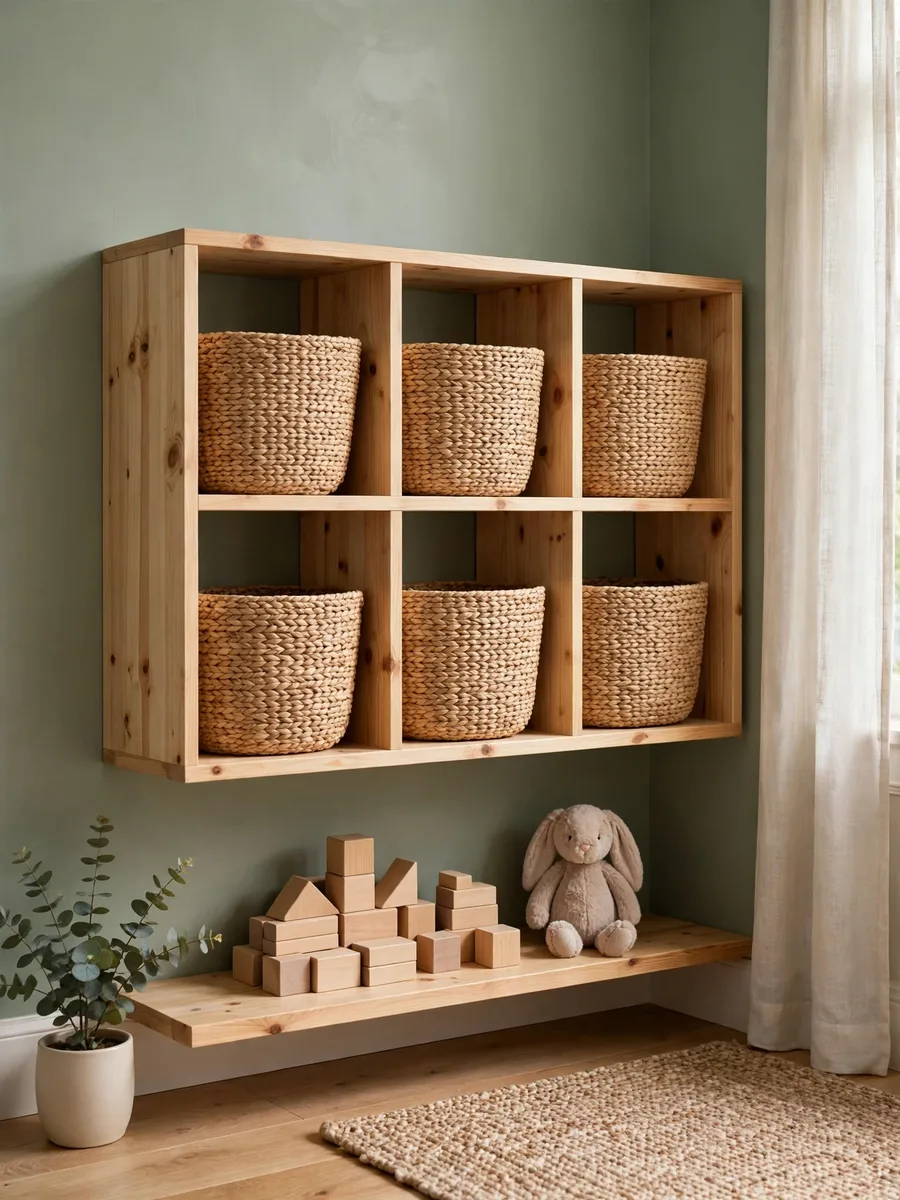
A concrete example: a natural pine cubby with six woven baskets — blocks, cars, dolls — lets a four-year-old tidy the whole floor in five minutes.
Quick tips
- Label bins with pictures, not words, for children who cannot read yet.
- Keep daily toys at knee-to-shoulder height and seasonal toys up high.
10. Why Does a Bed Canopy Feel Like a Secret Hideaway?
A bed canopy feels like a secret hideaway because a soft curtain around the bed turns an ordinary bed into a fort, a castle or a quiet reading den in a child’s imagination.
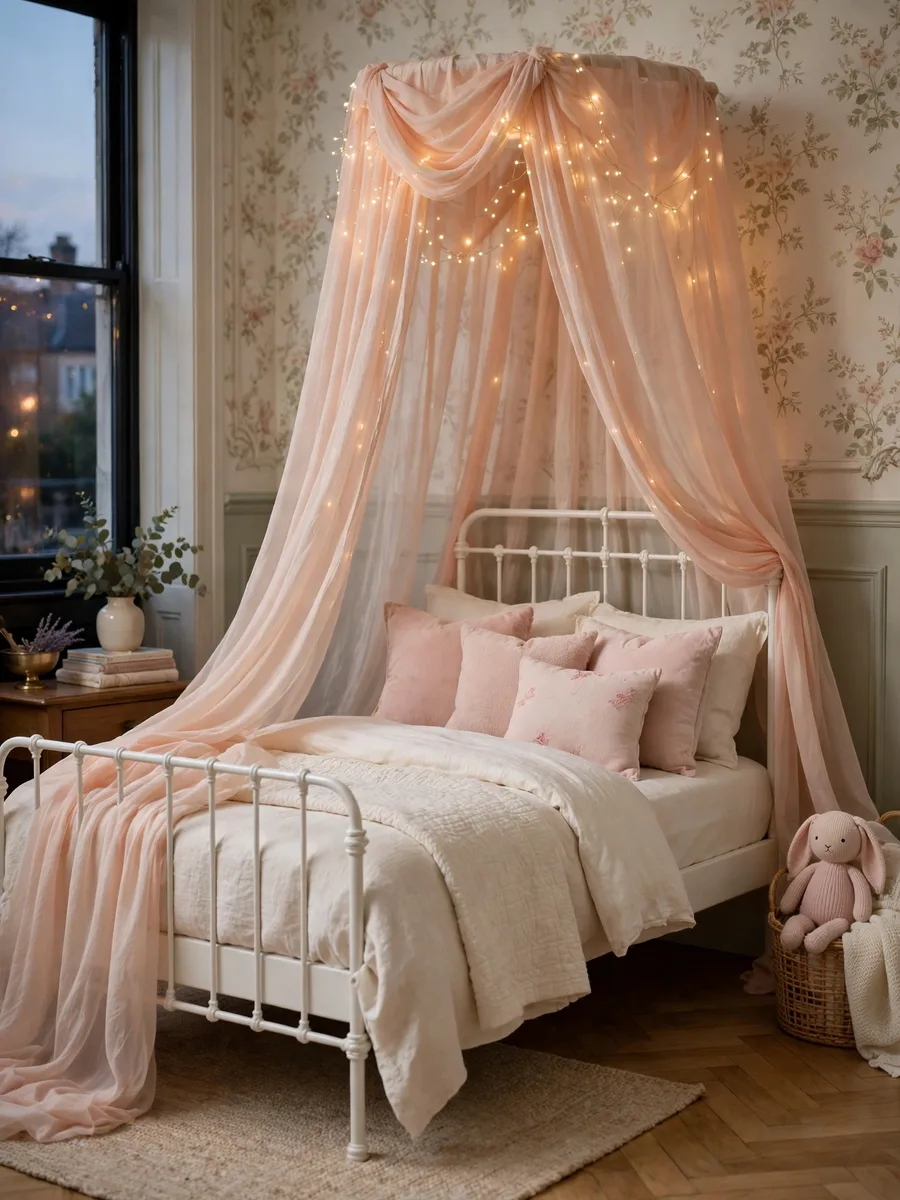
A concrete example: a soft peach voile canopy over a white iron bed, with fairy lights woven through the top, turns bedtime into the best part of the day for a five-year-old.
Quick tips
- Choose washable fabric so the canopy survives dust and the occasional juice spill.
- Keep the canopy clear of the lamp and any heat source.
11. When Is a Loft or Bunk Bed the Right Choice?
A loft or bunk bed is the right choice when floor space is tight and your child is at least six, because it frees up 20 to 30 square feet underneath for a desk, a reading nook or a dresser.
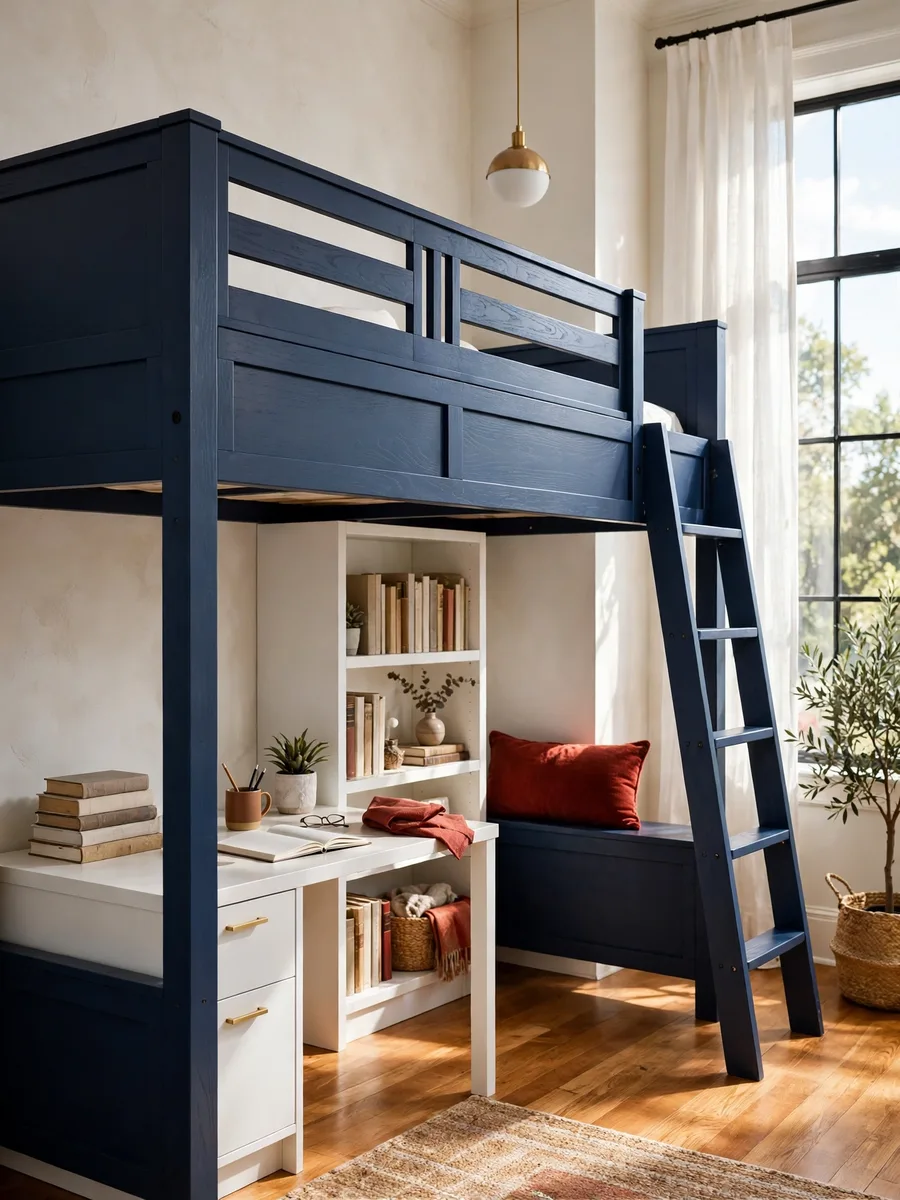
A concrete example: a navy loft bed with a desk tucked underneath, in a room barely nine feet wide, gives a seven-year-old sleep and study space where a normal bed would leave no floor at all — and if the whole room is tight, these small bedroom ideas show more ways to win back floor space.
Quick tips
- Never put a child under six on a top bunk — safety guidance is clear on this.
- Anchor the bed to the wall so it cannot wobble or tip.
12. How Does a Rug Define the Play Zone?
A rug defines the play zone because a soft, colorful rug on the floor tells a child exactly where play happens, and it cushions knees, blocks and building projects.
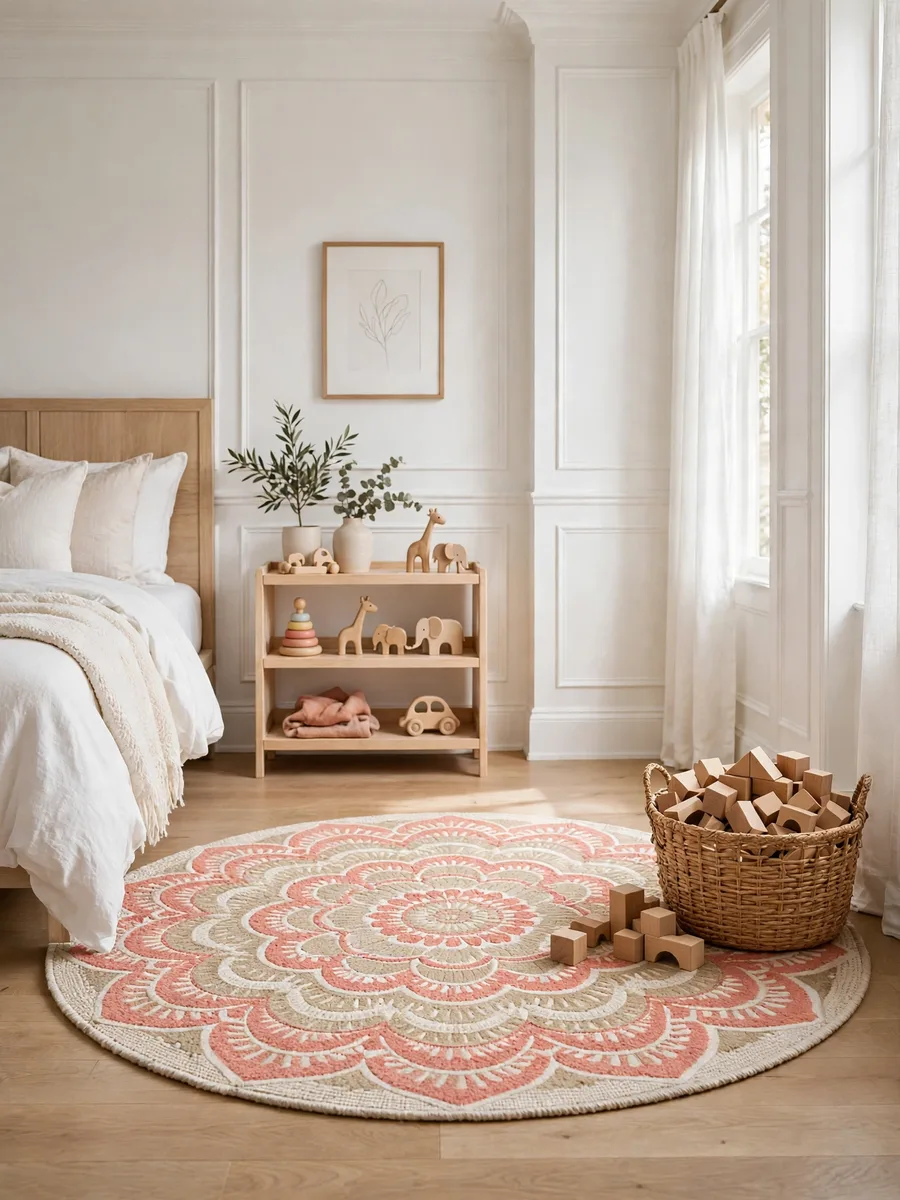
A concrete example: a round coral-and-cream rug in the middle of the room, with a basket of wooden blocks beside it, marks the play corner so clearly that toys rarely wander.
Quick tips
- Use a non-slip pad underneath so the rug never slides during play.
- Pick a low-pile rug — it is easier to build blocks on and easier to vacuum.
13. What Makes a Statement Light the Room’s Jewelry?
A statement light is the room’s jewelry because one beautiful pendant, star lamp or colorful shade lifts a plain room the way a necklace lifts a simple outfit.
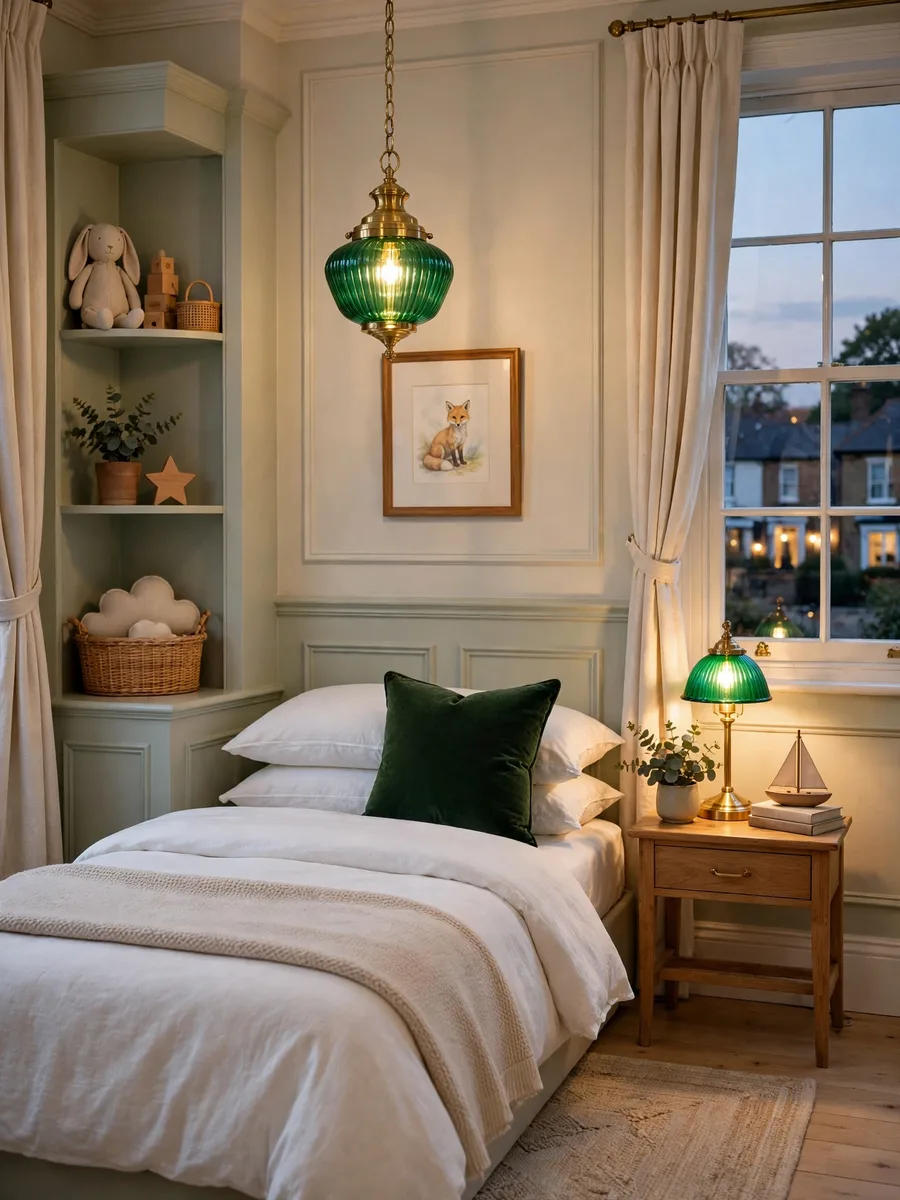
A concrete example: a brass pendant with an emerald glass shade over a white bed, with a small matching nightstand lamp, makes a simple room feel designed rather than just furnished.
Quick tips
- Use warm white bulbs around 2700K to 3000K for a calmer evening feel.
- Put the main light on a dimmer so bedtime light can be softened.
14. How Do You Create a Dress-Up Corner That Stays Tidy?
Create a dress-up corner that stays tidy with one low rail, a mirror at child height and a single basket for accessories, because dress-up only stays fun when the costumes are easy to reach and easy to put back.
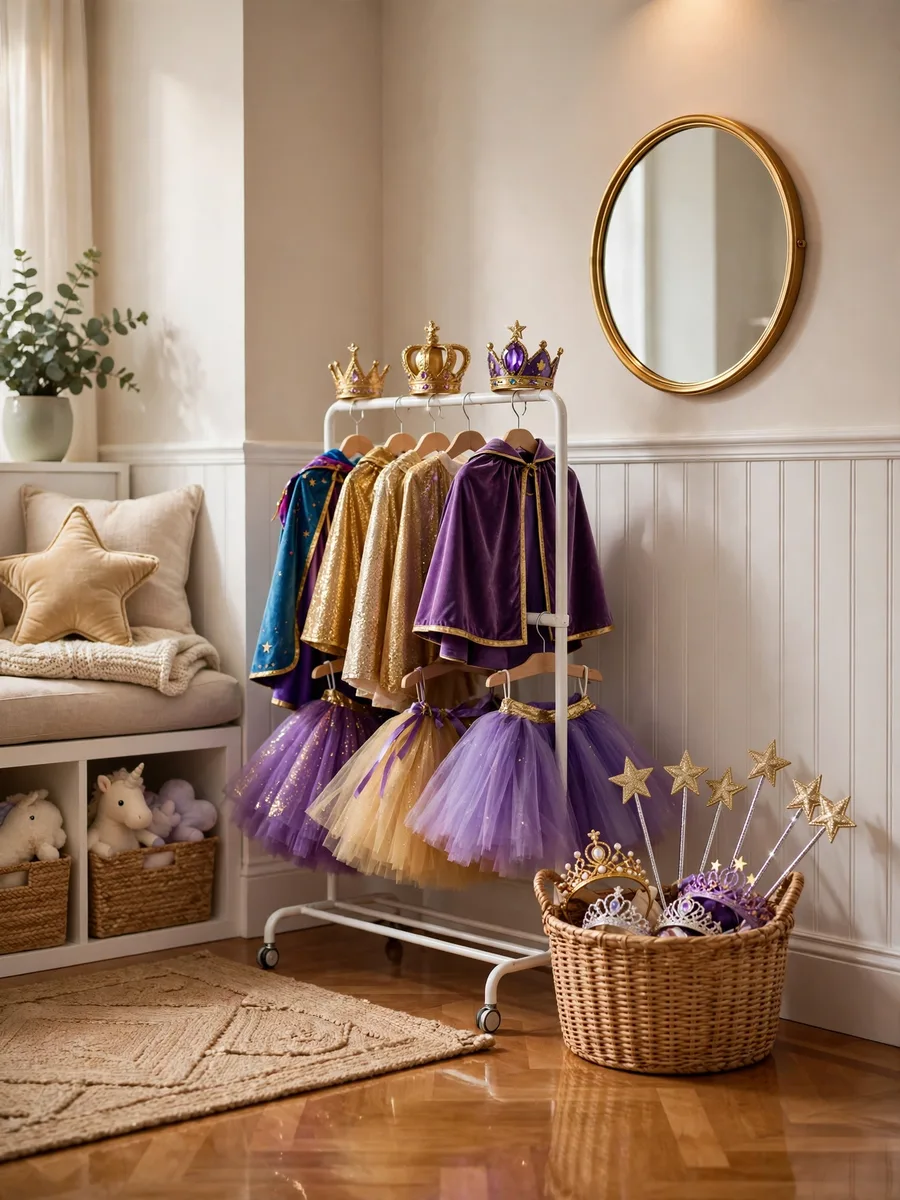
A concrete example: a small white rail of capes, crowns and tutus in a purple-and-gold corner, with a round mirror and a basket of wands, keeps a four-year-old’s games in one happy corner.
Quick tips
- Limit the rail to six or eight costumes so choosing stays easy.
- Rotate costumes seasonally to keep the corner feeling fresh.
15. Why Do Book Ledges Beat a Tall Bookcase?
Book ledges beat a tall bookcase because they display books with their covers facing out, so a child picks a book by its picture — and the ledge doubles as wall art.
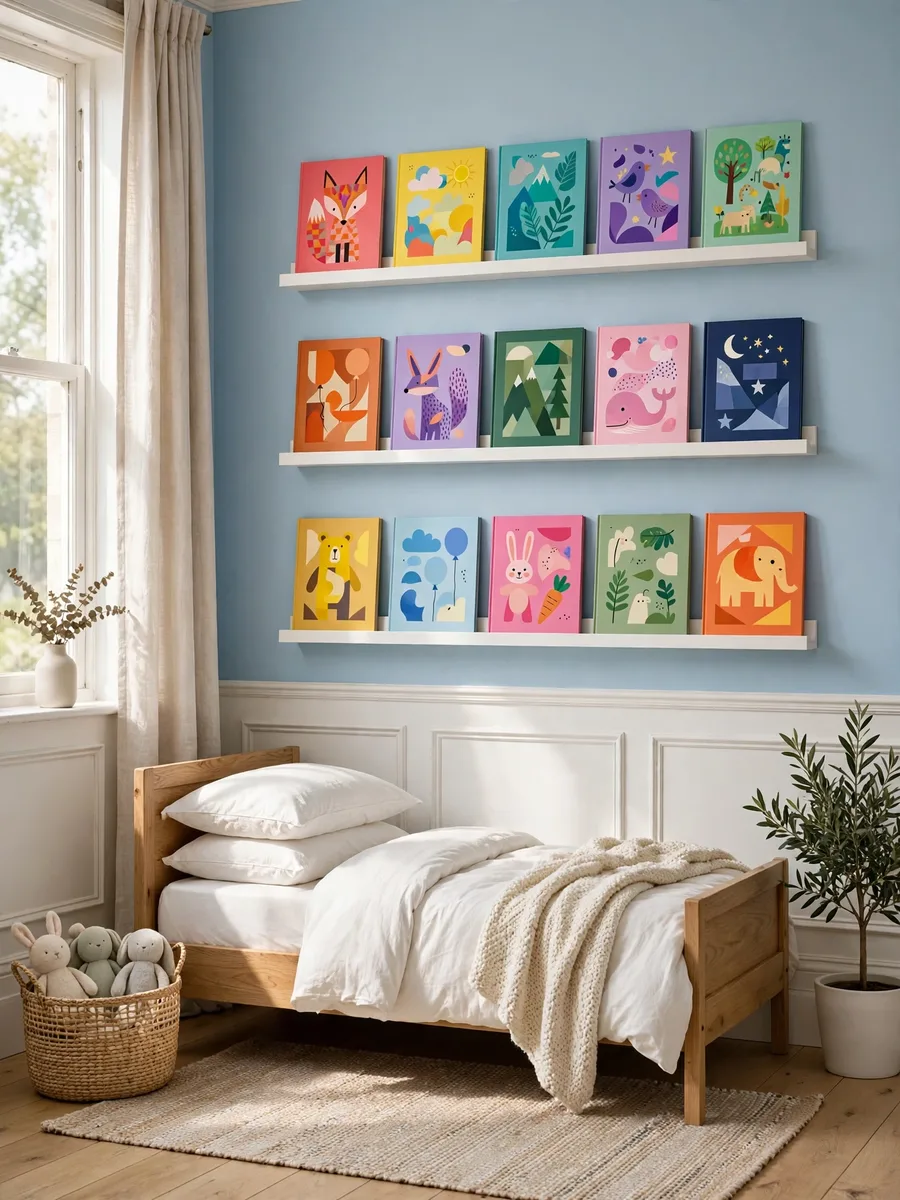
A concrete example: three white ledges on a sky-blue wall, holding colorful picture books with covers showing, turn a plain wall into a mini library a five-year-old browses like a bookshop.
Quick tips
- Fix ledges into wall studs so they hold a full row of heavy books safely.
- Swap the front-facing books weekly to keep the display exciting.
16. How Do You Use a Theme Without Painting the Walls?
Use a theme without painting the walls by putting it in textiles and accessories — bedding, curtains, cushions and wall art — so the theme changes in an afternoon when interests move on.
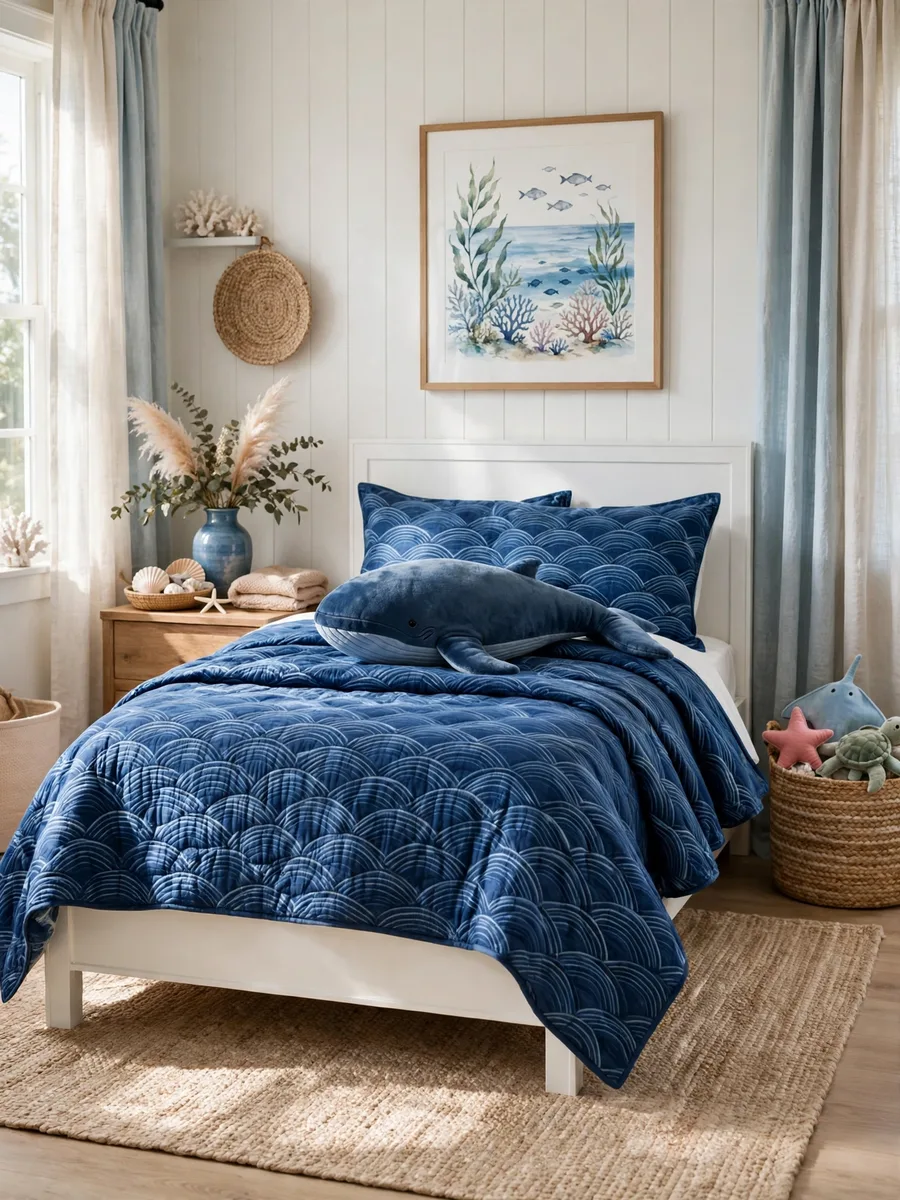
A concrete example: an ocean theme in deep blue bedding, a whale cushion and a framed sea print above a white bed feels like the sea — and becomes a space theme next year with just a new duvet cover.
Quick tips
- Keep the theme to three or four items so the room never feels like a stage set.
- Let your child pick the theme; rooms built on their real interests age better.
17. What Makes Blackout Curtains Worth the Cost?
Blackout curtains are worth the cost because they block early summer light and street light, so your child falls asleep faster and stays asleep longer on bright evenings.
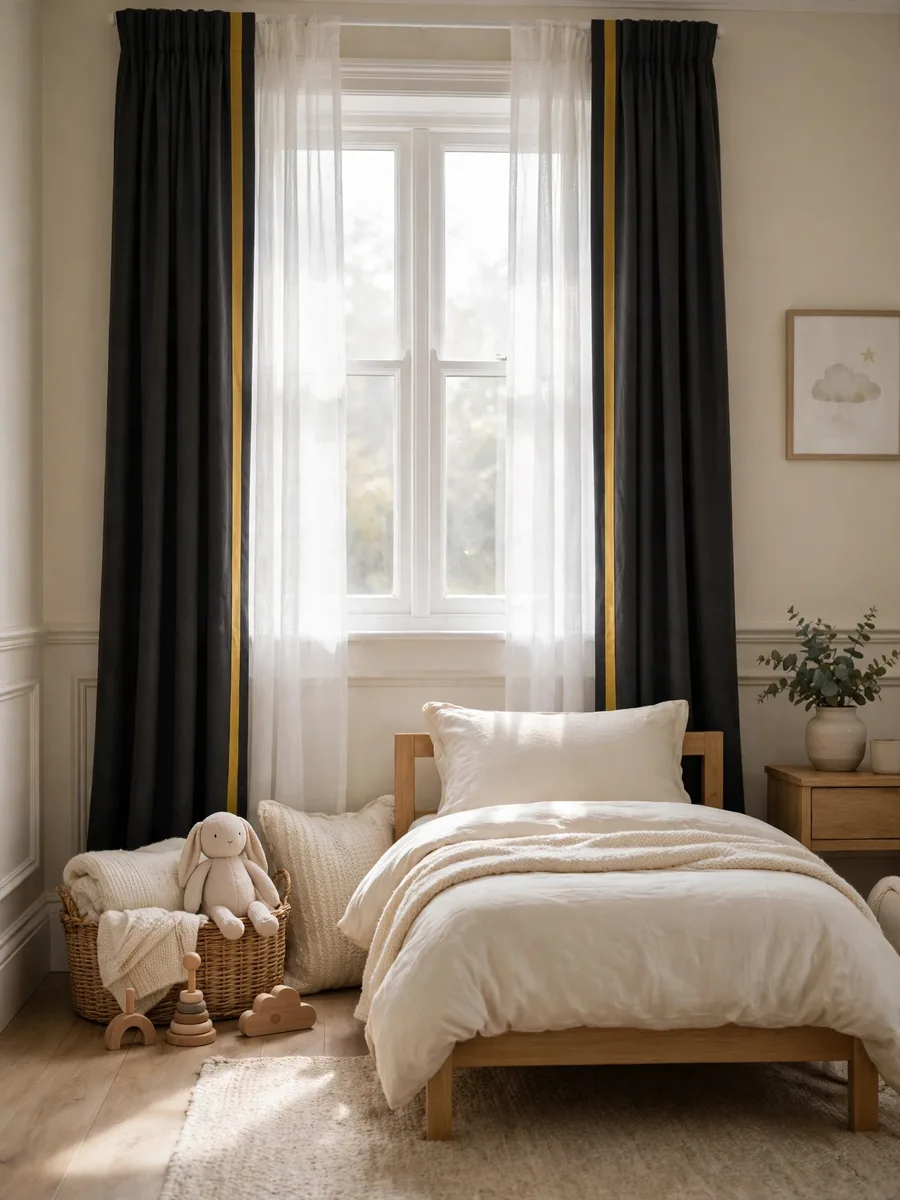
A concrete example: charcoal blackout curtains with a mustard trim, layered over sheer voile, keep a toddler’s room dark at 7 p.m. in June while still looking soft by day.
Quick tips
- Measure past the window frame on all sides so no light leaks around the edges.
- Choose cordless blinds or curtains — window cords are a safety risk for young children.
18. How Do You Split a Shared Kids Bedroom Into Two Zones?
Split a shared kids bedroom into two zones by giving each child their own bed wall, rug and color, because a clear boundary stops most arguments before they start.
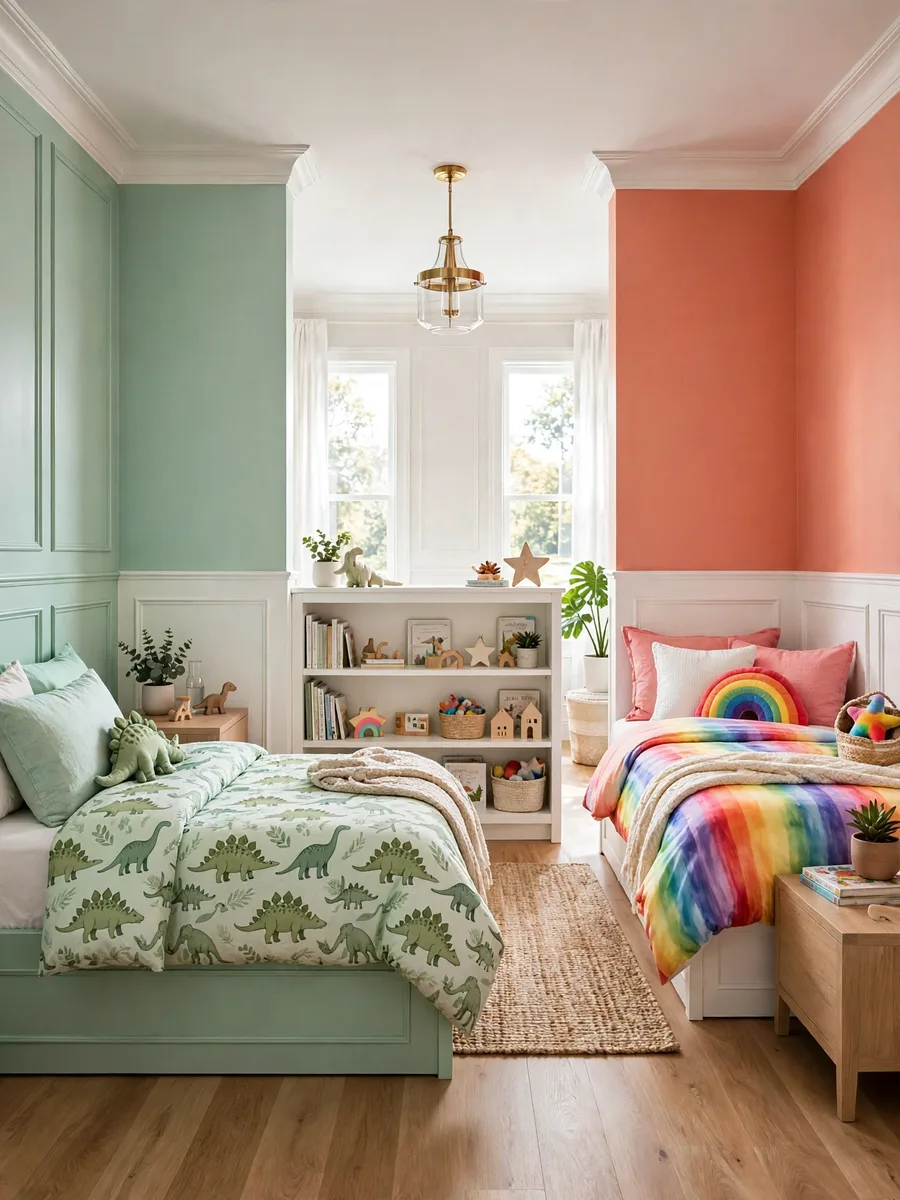
A concrete example: two twin beds in a long room — mint green with a dinosaur duvet on one side, coral with a rainbow duvet on the other — with a low bookcase between them, gives two siblings a room that feels like two rooms.
Quick tips
- Give each child one shelf that is theirs alone, even in a shared room.
- Use a low divider, like a bookcase, so the room still feels open.
19. How Do You Pick a Desk That Adjusts as They Grow?
Pick a desk that adjusts as they grow by choosing a height-adjustable or extendable desk, because a desk that fits at age seven is too low by age eleven.
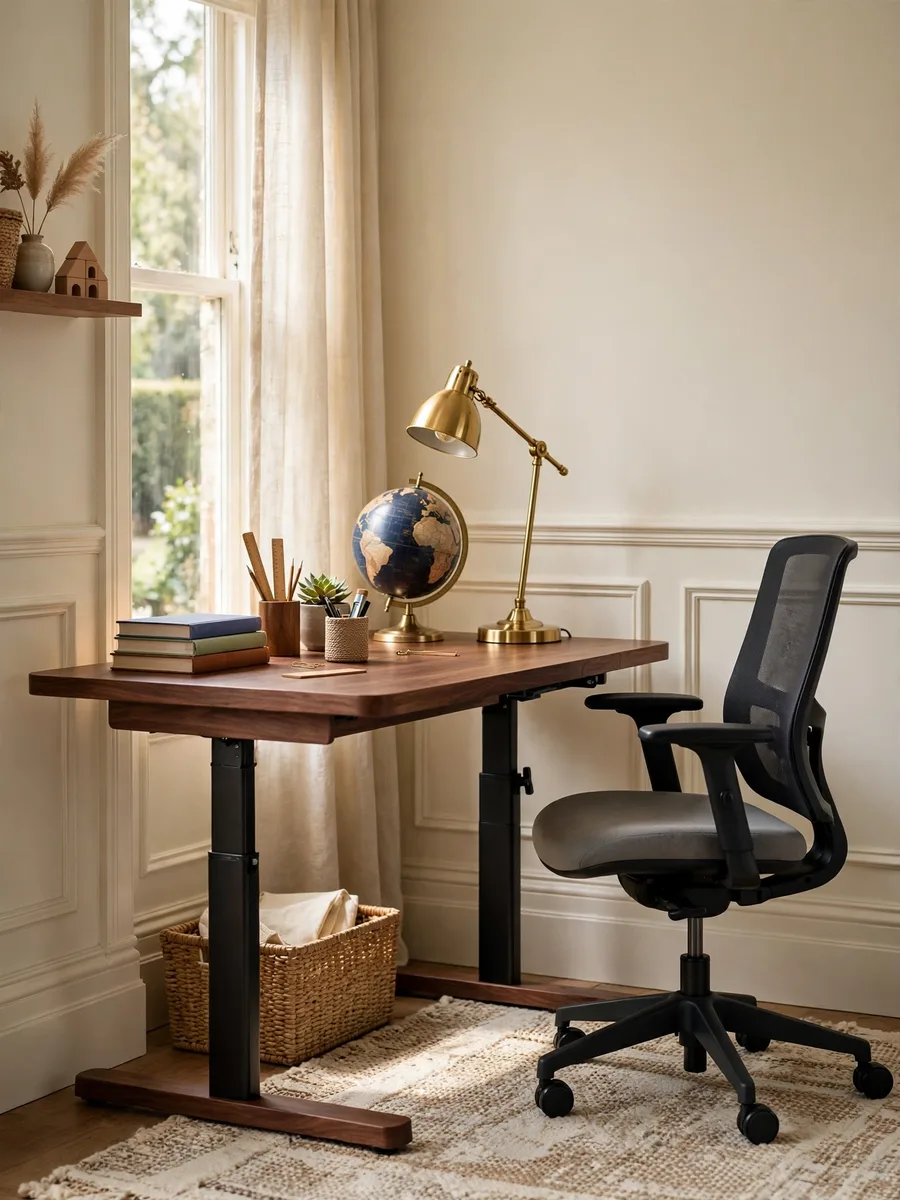
A concrete example: a walnut desk with crank-adjustable height beside a cream wall, with a chair that rises as the child grows, serves a nine-year-old’s homework today and a teenager’s laptop work in five years.
Quick tips
- Check that the desk surface is at least 36 inches wide for books and a laptop.
- Keep the desk near the window for the best daylight while studying.
20. Why Do Wall-Mounted Shelves Save So Much Floor Space?
Wall-mounted shelves save floor space because they store books, toys and treasures on the wall instead of the floor, leaving the middle of the room free for play.
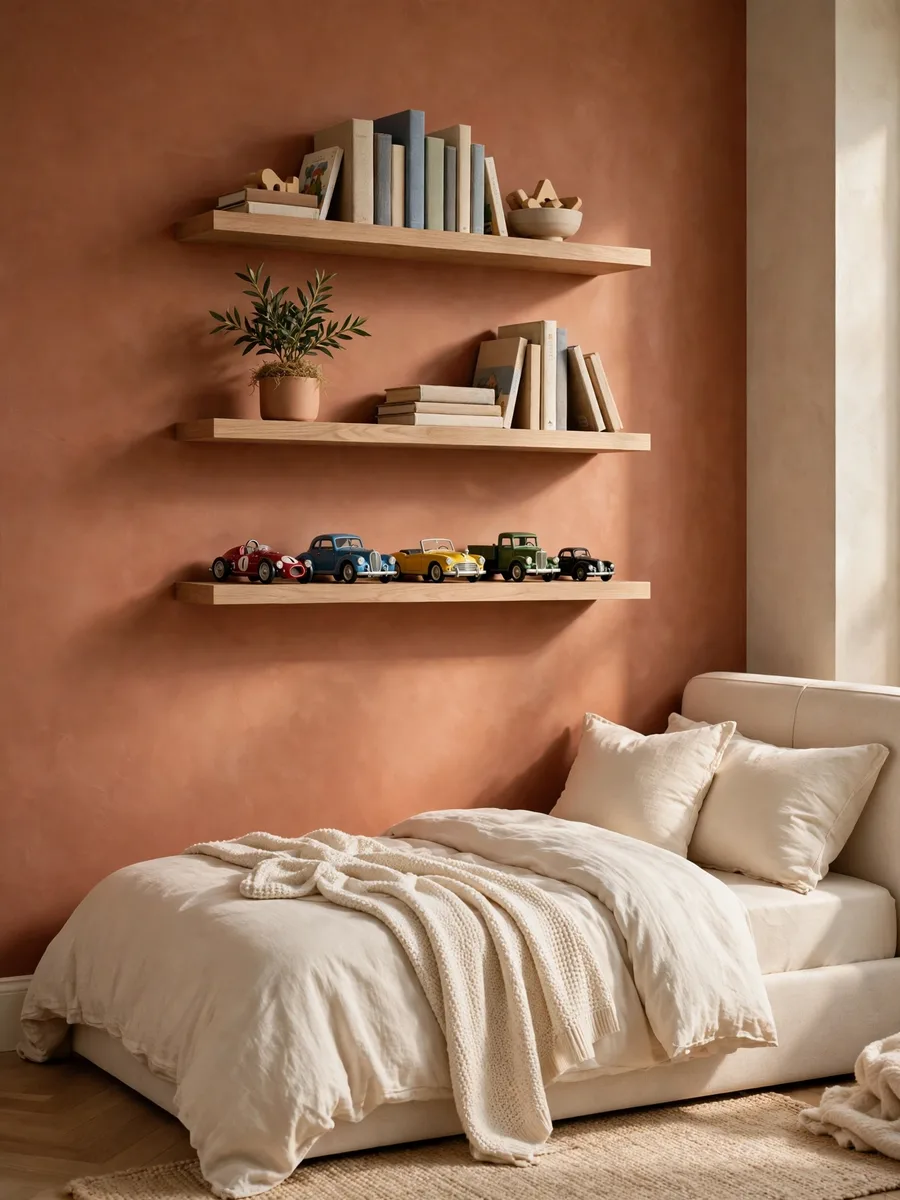
A concrete example: three floating oak shelves on a terracotta wall, holding books, a plant and a toy car collection, replace a whole bookcase where every square foot counts.
Quick tips
- Anchor every shelf to a wall stud; a shelf of books is heavy.
- Keep display shelves high and daily-use shelves at child height.
21. How Do You Turn a Window Into a Cozy Seat?
Turn a window into a cozy seat by adding a cushion, a few pillows and a small shelf of books to a deep windowsill, because a window seat gives a child their own quiet corner.
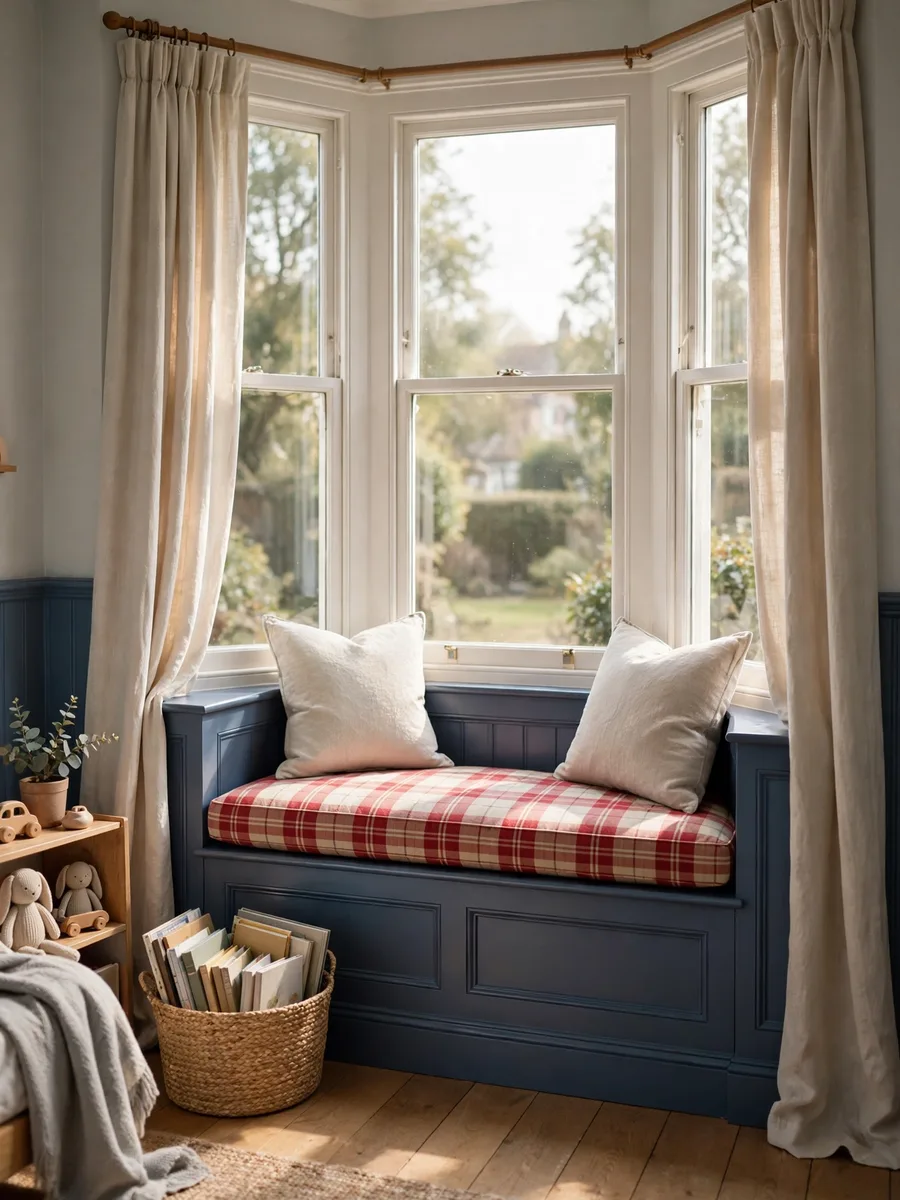
A concrete example: a deep bay window with a red-and-cream plaid cushion, two linen pillows and a basket of books turns an unused corner into the spot where an eight-year-old reads on rainy afternoons.
Quick tips
- Use a washable cushion cover so muddy shoes and sticky hands are no problem.
- Add a small clip-on light so the seat works after dark too.
22. Where Do You Display Collections Without Clutter?
Display collections without clutter on one dedicated ledge or shelf, because a single edited display looks curated while the same objects spread across every surface look messy.
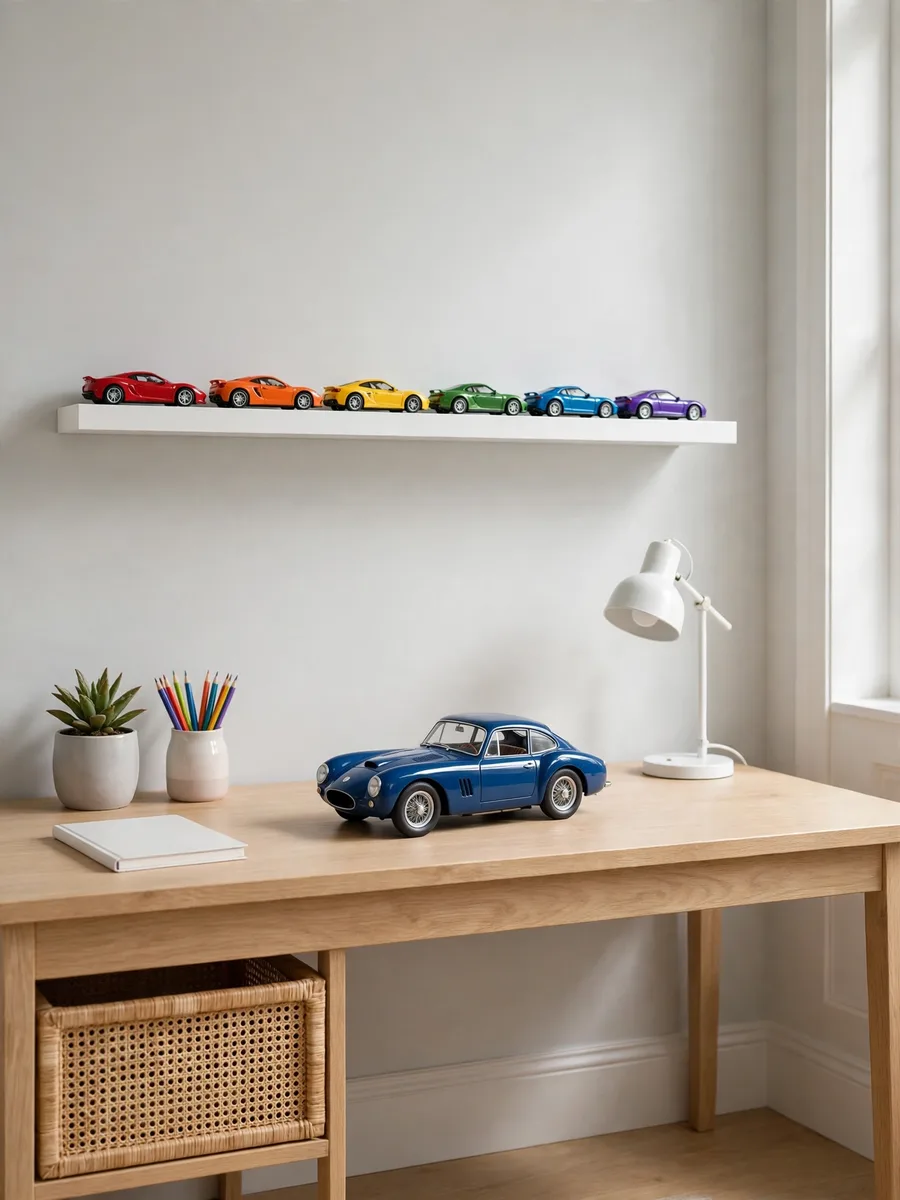
A concrete example: a single white ledge above a desk holding a rainbow row of model cars, with one favorite in front, lets a nine-year-old show off a prized collection without the room turning into a toy shop.
Quick tips
- Edit the display every few months so it stays a collection, not a pile.
- Keep one shelf for display and the rest of the room for play.
23. What Makes the Right Night Light So Important?
The right night light is important because a soft warm glow helps a child who wakes in the dark feel safe enough to fall back asleep, without lighting the room like daytime.
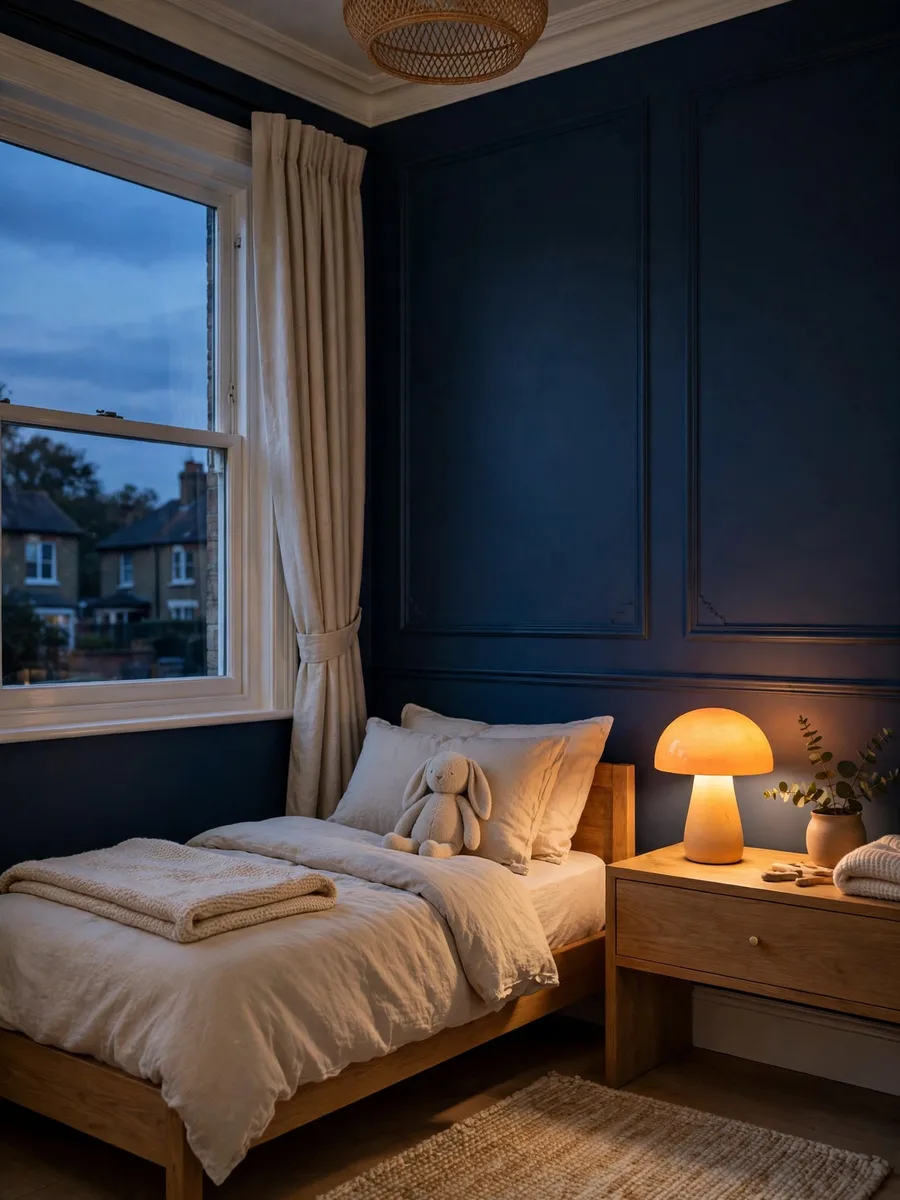
A concrete example: a small amber mushroom lamp on a low nightstand, on its dimmest warm setting, gives a three-year-old just enough light to see the door — and lets parents check in without waking them.
Quick tips
- Pick warm light, around 2700K, and keep it dim — bright light wakes children up.
- Use a timer so the light turns itself off after your child falls asleep.
24. Why Is Washable Paint a Must in a Kids Bedroom?
Washable paint is a must in a kids bedroom because crayon, fingerprints and the odd splash of juice are part of childhood, and washable paint lets you wipe them off instead of repainting.
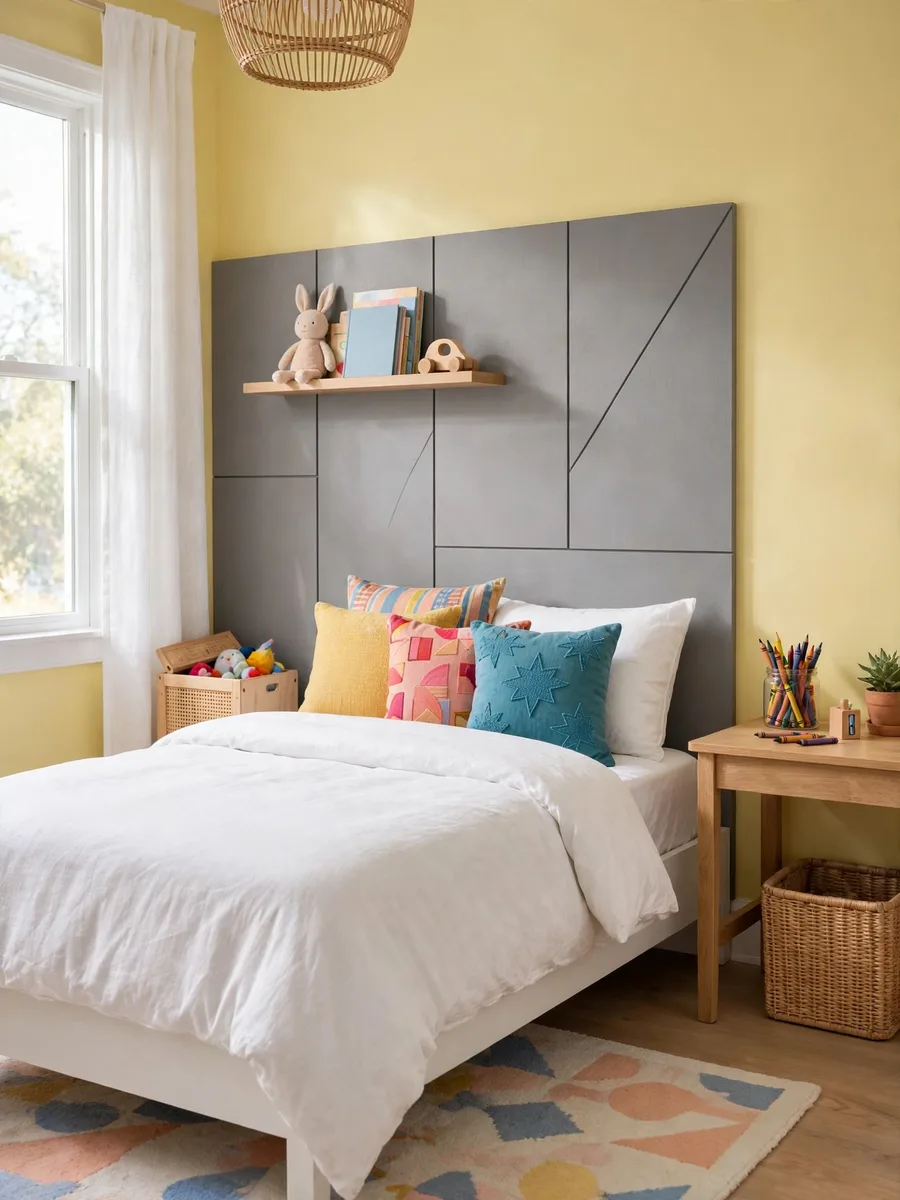
A concrete example: soft yellow walls in washable satin, with a grey wipeable panel behind the bed, survive a five-year-old’s felt-tip phase with a damp cloth instead of a paintbrush.
Quick tips
- Test the paint with a crayon mark before you commit to a whole room.
- Keep a small pot of the wall color for quick touch-ups.
25. How Does a Toy Rotation Station End the Mess?
A toy rotation station ends the mess because keeping only about a third of the toys out at a time means fewer toys on the floor, and the stored toys feel new again when they rotate back in.
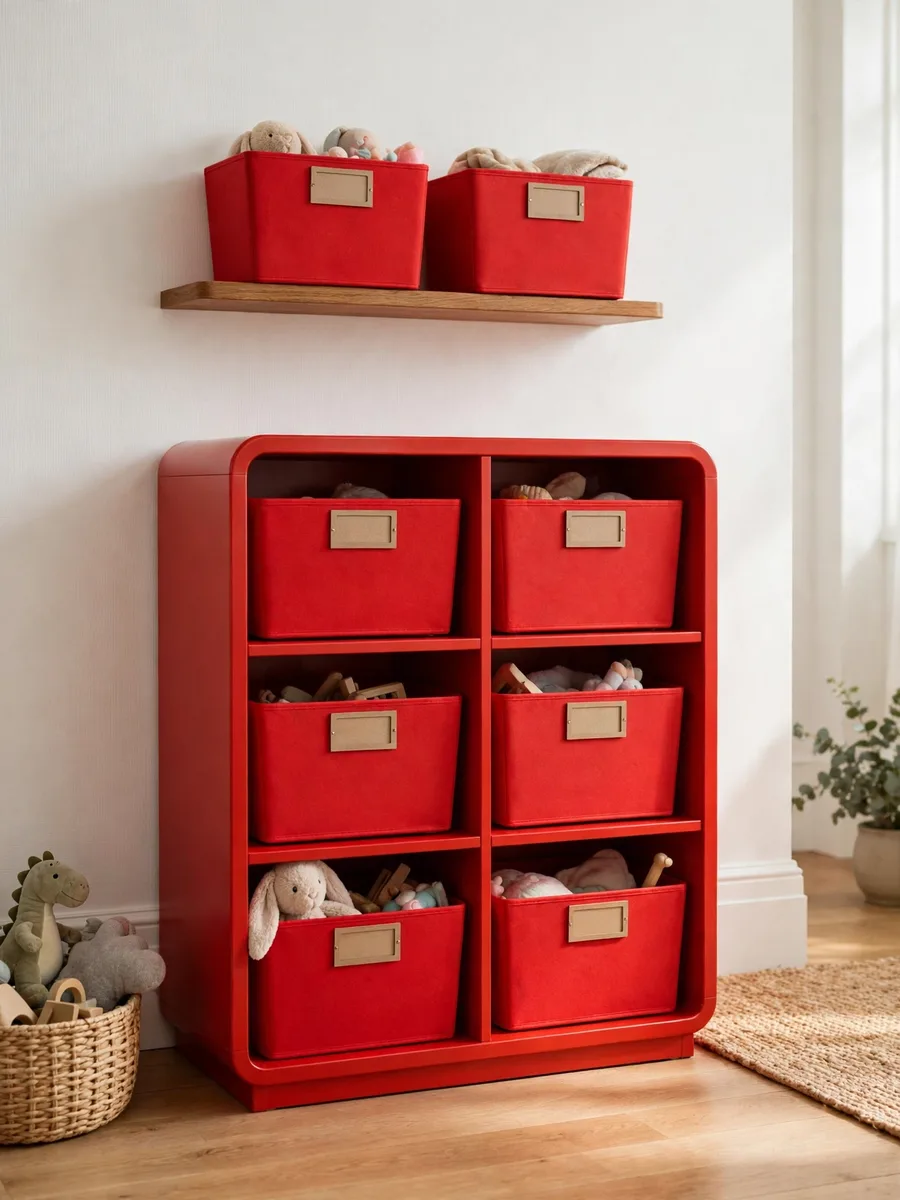
A concrete example: a bright red unit with six labeled bins — blocks, cars, dolls, puzzles, art and dress-up — plus a “this week” shelf with just two bins out, keeps a six-year-old’s room tidy and the toys exciting.
Quick tips
- Rotate toys every two weeks, and let your child choose what comes out next.
- Donate toys your child has outgrown when a new box comes in.
26. How Do You Personalize a Room With Their Name?
Personalize a room with their name by putting it on the wall above the bed in wooden letters, a framed print or a light-up sign, because a name makes the room unmistakably theirs.
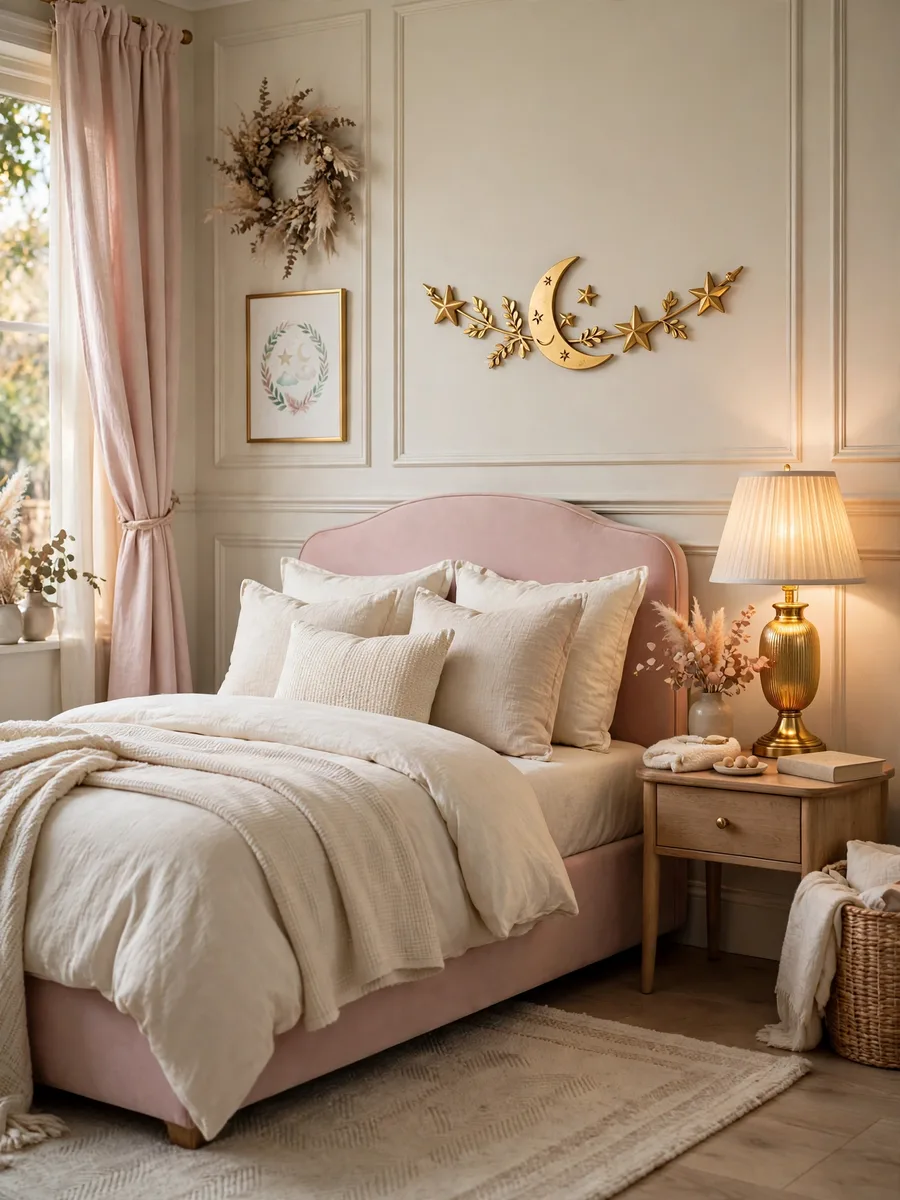
A concrete example: gold wooden letters spelling out a child’s name above a blush-pink bed, with a small framed birth print beside them, make the room belong to exactly one person.
Quick tips
- Hang letters at a height your child can see from the bed.
- Choose a finish that matches the room’s metals, like gold or brass.
Kids Bedroom Decor Ideas: Frequently Asked Questions
How do I decorate a kids room so it lasts for years?
Invest in a neutral, durable foundation — calm wall color, a sturdy bed and dresser — and put the personality into pieces that swap out in an afternoon: bedding, wall art, removable decals, rugs and lighting. A room built this way only needs its layers changed, not a renovation.
What colors work best in a kids bedroom?
Neutral walls — warm white, greige, pale sage or soft blue — with colorful bedding and art give you the most flexibility. When your child wants a new look in two years, you swap textiles instead of repainting. Bold colors work best as a single accent wall, not all four walls.
At what age can a child use a loft or bunk bed?
The Consumer Product Safety Commission recommends children be at least six years old for the top bunk. Loft beds with a desk underneath work well for ages eight to sixteen because they free up floor space for a study area, with guardrails on both sides.
How do I organize a small kids bedroom?
Divide the room into four zones — sleep, store, play and study — and store daily items at kid height, between knee and shoulder. Use under-bed bins and over-the-door organizers, keep about a third of the floor open, and rotate toys every two weeks.
What is the best paint color for a small kids bedroom?
Soft, light and warm colors work best: warm white, pale sage, light peach or dusty sky blue reflect light well and make walls feel farther apart. Keep the ceiling the lightest shade, and save bold colors for bedding or one accent piece.
Conclusion
A great kids bedroom is not the most expensive one — it is the one built to grow. Start with a calm base, choose furniture that lasts, and let the fun layers change as your child does. Pick three or four of these 26 kids bedroom decor ideas this weekend, and you will have a room that feels made for them today and still works next year.