19 Stunning Barndominium Ideas Exterior for a Small Barn House
A barndominium is a barn-style home built on a steel frame, and its exterior works best when strong barn lines meet warm, residential details. A barndominium can look simple at first glance, but the right exterior choices can turn a practical barn-inspired structure into a striking home. The most successful designs balance strong architectural lines with warm materials, thoughtful landscaping, and details that make the property feel personal. If you are planning a new build or refreshing an existing rural-style home, these barndominium ideas exterior can help you create a welcoming facade with lasting appeal. For a related take, see these mobile home exterior ideas as well.
1. Start With a Clear Exterior Shape

The best barn-style homes usually have a simple silhouette. A long rectangular body, a clean gable roof, or a carefully planned cross shape gives the exterior a confident presence. Avoid adding too many competing rooflines or decorative features. Let the main form do the work, then use doors, windows, and landscaping to add character. For example, a 40×60-foot rectangle with one cross gable keeps the form clear and confident.
2. Use a Restrained Color Palette
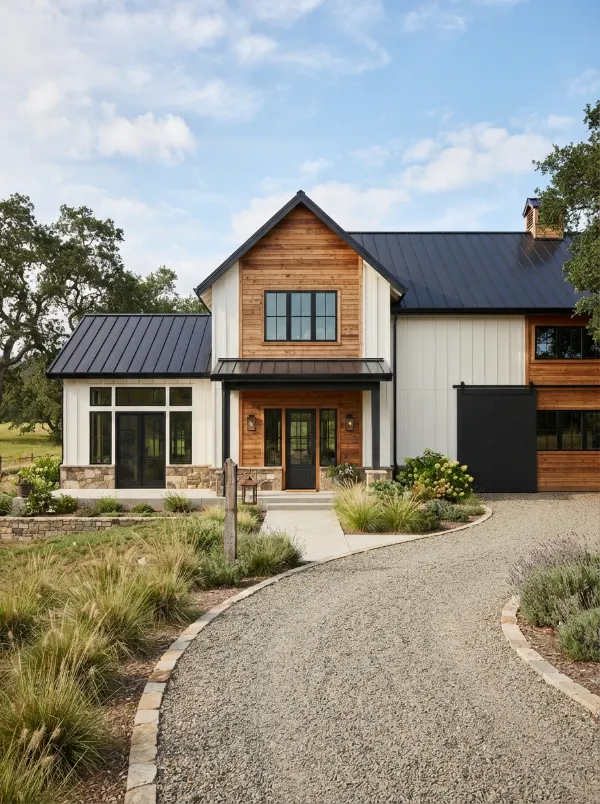
Choose two or three exterior colors rather than covering every surface in a different shade. Charcoal, warm white, black, taupe, olive, and natural wood are reliable choices. A dark metal roof with light siding feels crisp, while a black-and-wood combination creates a more modern farmhouse effect. Keep trim consistent so the whole home feels intentional. For example, a charcoal roof with warm-white siding and black trim keeps the palette calm and crisp.
3. Mix Metal With Natural Wood
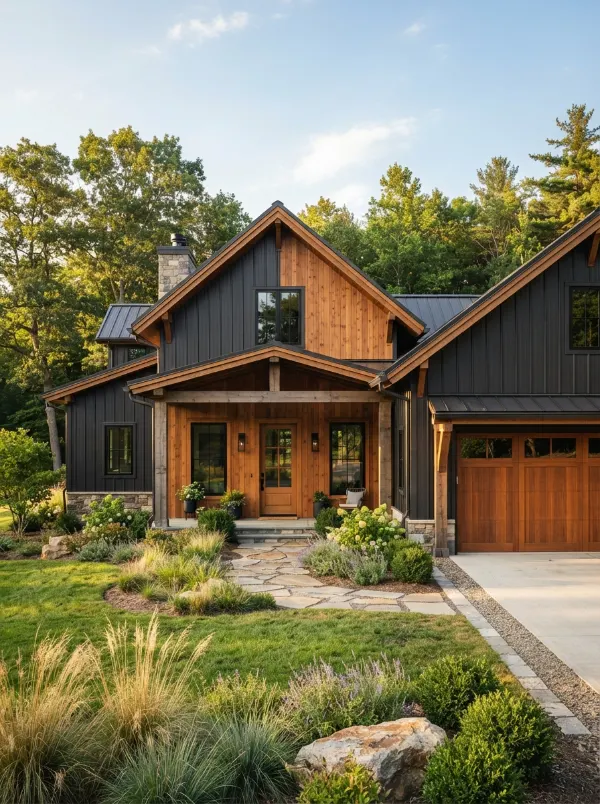
Corrugated metal gives a barndominium its recognizable agricultural character, but too much metal can feel cold. Balance it with cedar, oak-toned timber, or wood-look cladding around the entry, porch, or garage. The contrast between smooth metal and warm wood adds depth without requiring excessive ornament. For example, cedar boards around the entry soften corrugated metal and add warmth where guests arrive.
4. Make the Front Door a Focal Point
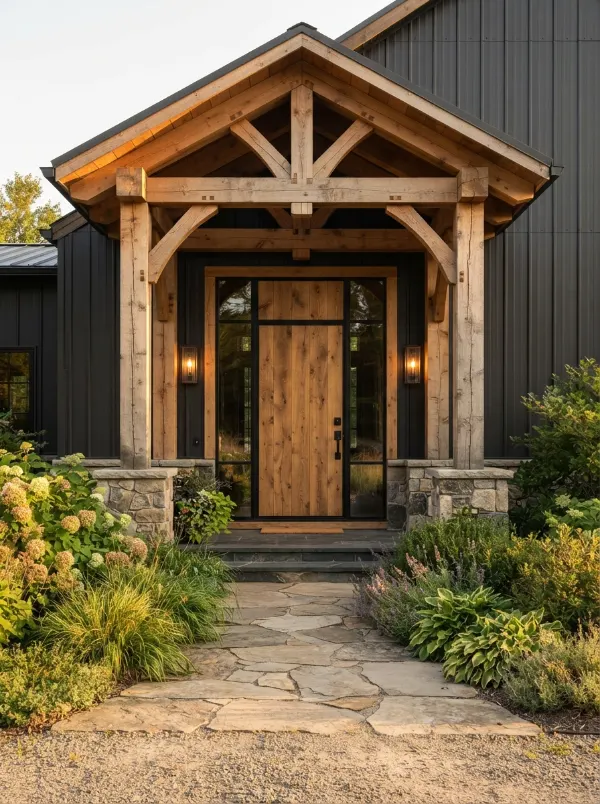
A generous front door can make a large barn-style facade feel welcoming. Consider a stained wood door, a black steel-and-glass design, or a double door with simple hardware. Frame it with timber posts, wall sconces, or a small covered porch. The entry should be easy to see from the driveway and should feel connected to the path leading toward it. For example, a stained fir double door with black steel hardware makes the entry feel crafted and welcoming.
5. Add a Covered Front Porch
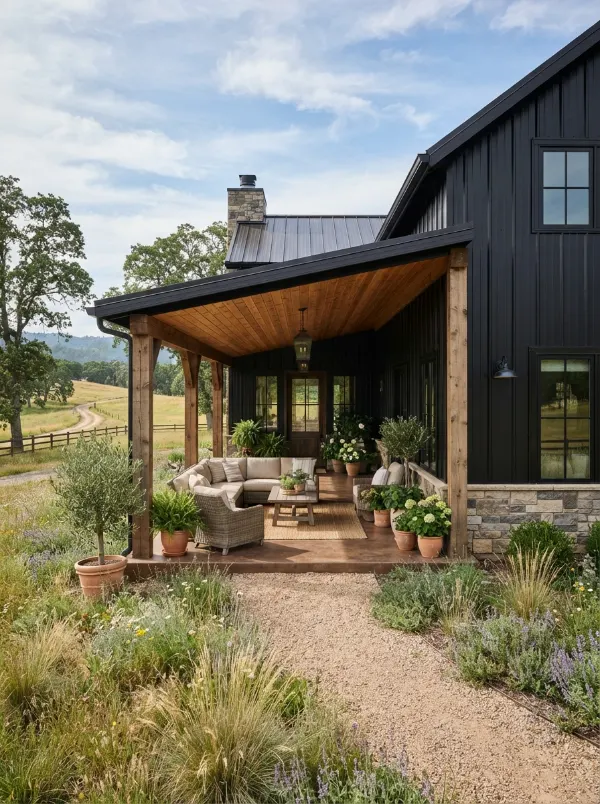
A covered porch softens the strong geometry of a barndominium and creates useful outdoor living space. Use substantial posts, a simple ceiling, and durable seating. A porch does not need to run across the entire front; even a compact entry porch can provide shade, shelter, and a stronger sense of arrival. For example, a 10-foot-deep entry porch with two chunky timber posts gives shade, shelter, and a clear sense of arrival.
6. Choose Windows for Balance
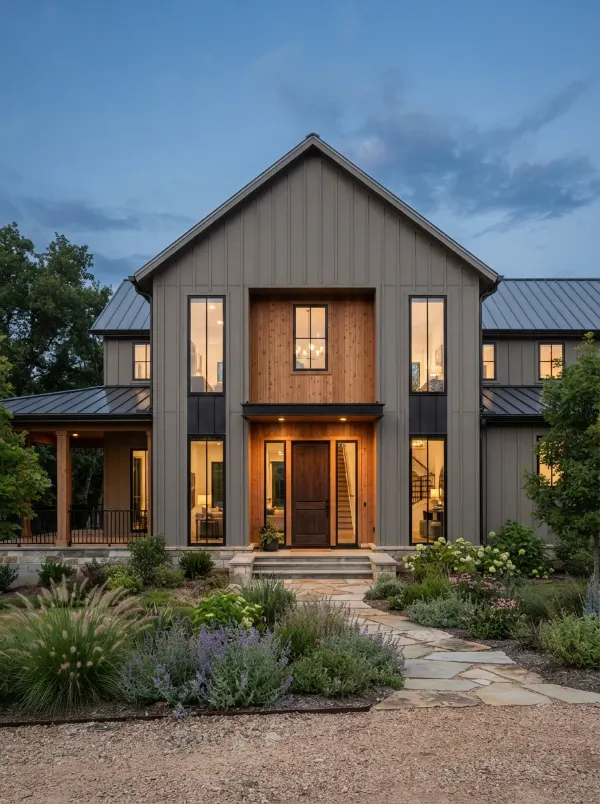
Window placement matters as much as window style. Tall black-framed windows suit modern barn exteriors, while divided-light windows create a more traditional farmhouse look. Group windows in balanced sections and consider the interior furniture layout before finalizing their positions. Large glazing can bring in natural light, but it should still support the proportions of the facade. For example, three tall black-framed windows grouped over the living room bring in light while keeping the facade balanced.
7. Give the Garage Door Architectural Presence
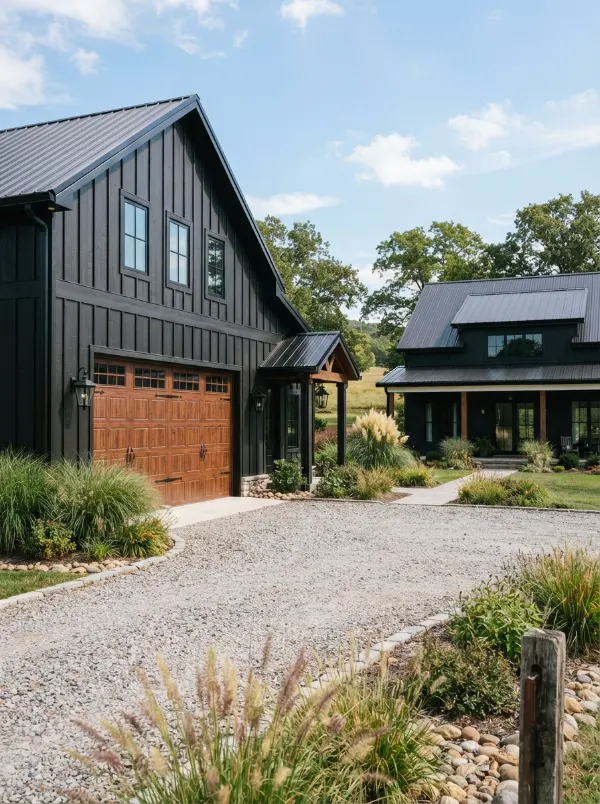
On many barndominiums, the garage occupies a large portion of the exterior. Treat the garage door as a design feature instead of an afterthought. Wood-look panels, black carriage-style hardware, or a clean full-glass design can make the garage feel integrated with the home. Match its color to the roof or window frames for a cohesive appearance. For example, a wood-look sectional door matched to the roof color helps the garage read as part of the house.
8. Add Vertical Accents to Tall Walls
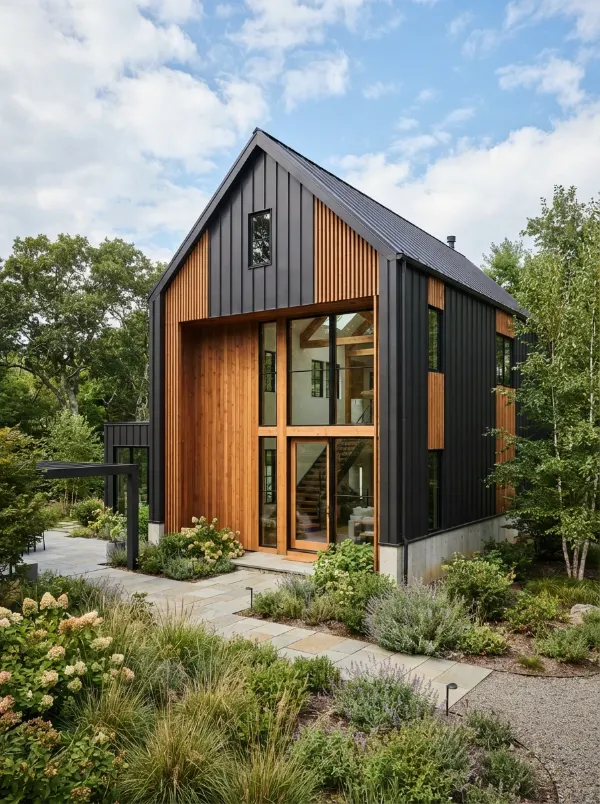
Large barn walls can appear flat without visual breaks. Vertical siding, timber battens, tall windows, or a contrasting entry section can add scale and rhythm. Use these accents selectively. One strong vertical feature often looks more polished than several small decorative additions. For example, vertical board-and-batten on the entry gable only adds height without breaking up the whole wall.
9. Use Exterior Lighting With Purpose
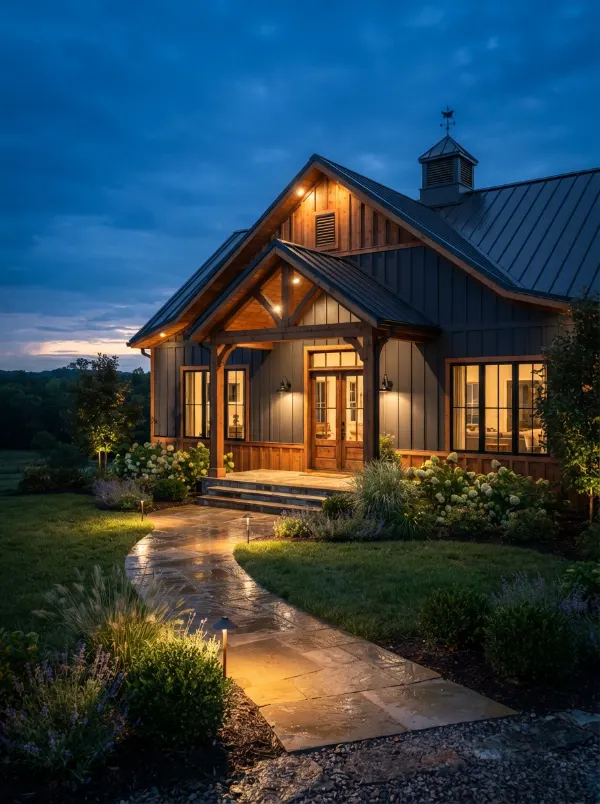
Lighting should highlight architecture and improve safety. Place sconces beside the front door, downlights under the porch roof, and subtle fixtures along walkways. Warm white light usually feels more welcoming than a harsh blue tone. Choose fixtures with simple silhouettes so they support the barn aesthetic rather than competing with it. For example, 2700K sconces flanking the door plus path lights every 8 feet make the approach safe and welcoming after dark.
10. Design the Driveway as Part of the Facade
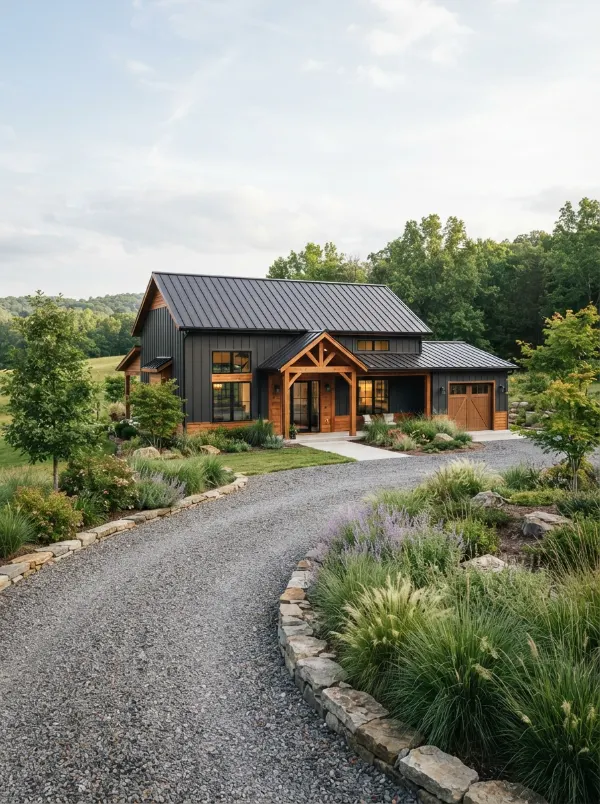
A driveway is one of the first elements visitors see. Gravel suits a rural setting, while concrete, pavers, or exposed aggregate create a more refined look. Add a gentle curve, planted edges, or a defined parking court where the site allows. The driveway should guide the eye toward the entrance and connect naturally with the surrounding landscape. For example, a curved gravel drive edged with native grasses guides visitors gently toward the entrance.
11. Frame the Home With Layered Landscaping
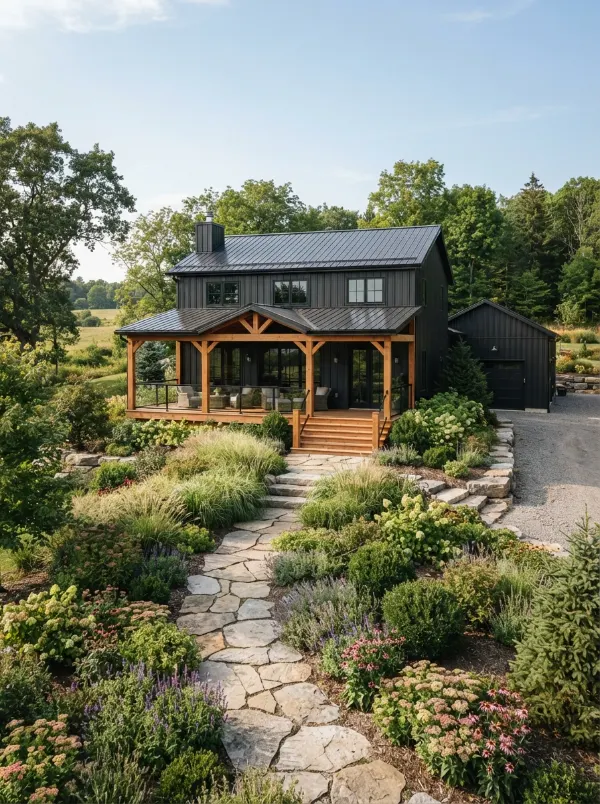
Use landscaping to anchor the building to its site. Start with larger trees or shrubs, add medium-height planting near the porch, and finish with low grasses or flowering plants along paths. Native plants are often easier to maintain and can make the property feel established. Keep foundation planting intentional so the architecture remains visible. For example, a layered bed of evergreen shrubs, ornamental grasses, and low perennials anchors the house to its site.
12. Add a Modern Farmhouse Fence
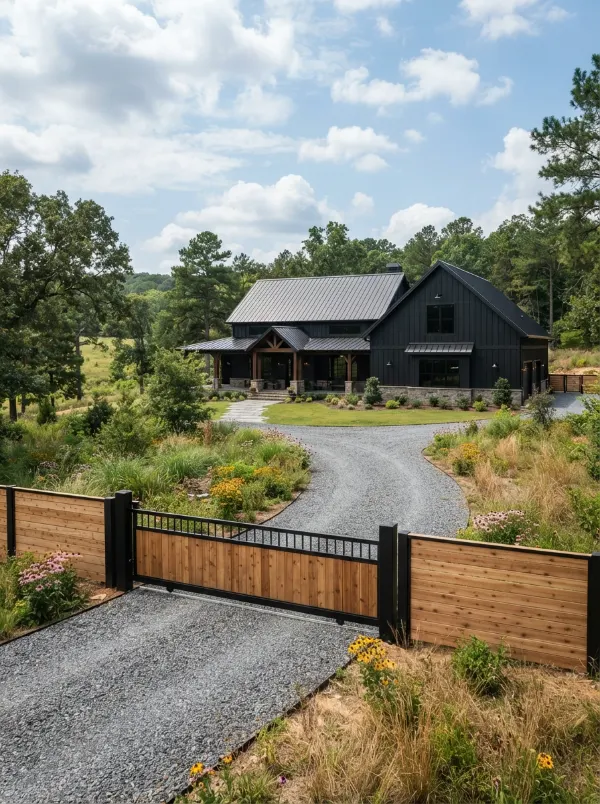
A fence can define the property without making it feel closed off. Horizontal wood fencing, black metal panels, split-rail fencing, and mixed-material designs all work well with barn-inspired architecture. Repeat one exterior material from the home in the fence or gate to create a visual connection. For example, a horizontal cedar fence repeating the porch timber ties the boundary to the house.
13. Consider a Bold Roof Color
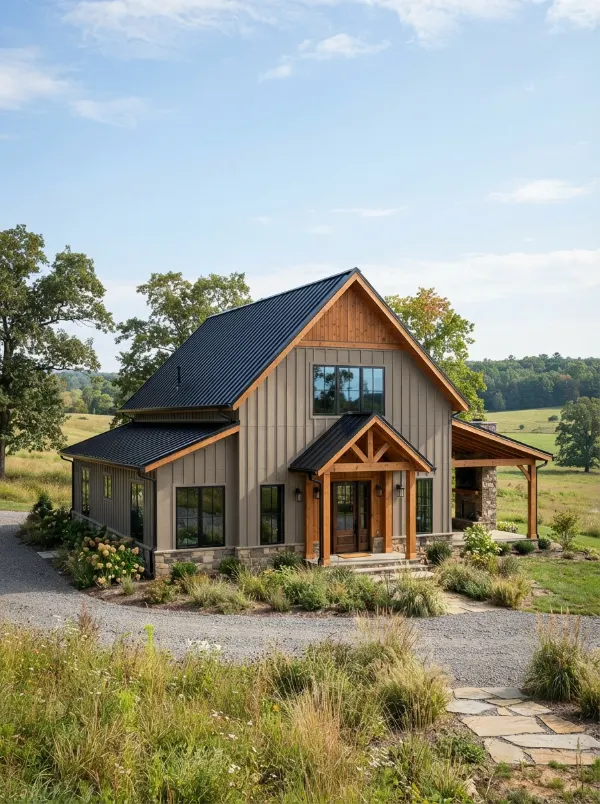
The roof covers a large visual area, so its color has a major effect. Matte black creates a contemporary statement, bronze feels warm and earthy, and dark gray is versatile. In a wooded or rural setting, a muted tone may blend beautifully with the landscape. Check the roof color against the siding and nearby buildings before making a final choice. For example, a matte-black standing-seam roof gives the whole exterior a clean, contemporary edge.
14. Use Stone Only Where It Adds Weight
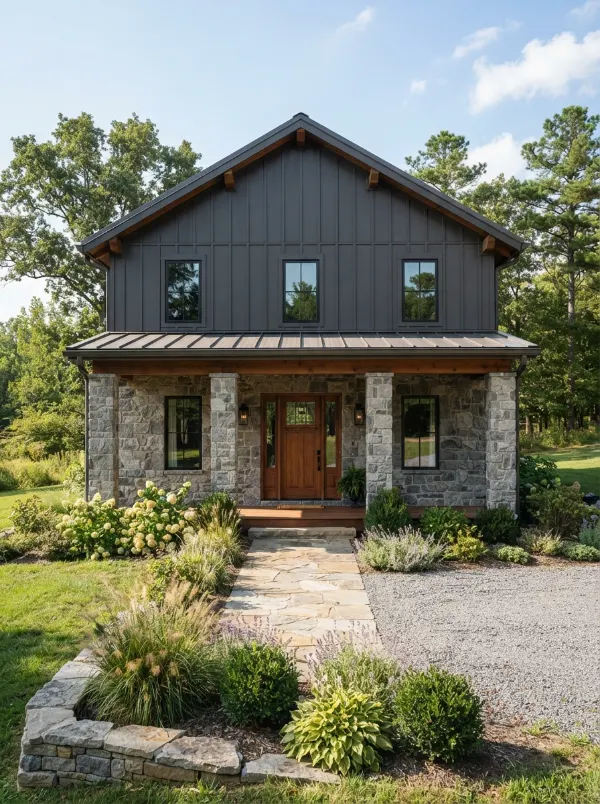
Stone veneer can make a tall or expansive exterior feel grounded. Use it around the base, chimney, porch columns, or entry wall instead of covering every surface. Gray stone supports a modern palette, while warm limestone and fieldstone create a more rustic appearance. The goal is contrast and texture, not visual heaviness. For example, fieldstone limited to the porch columns and chimney base adds weight exactly where it is needed.
15. Create an Outdoor Living Zone
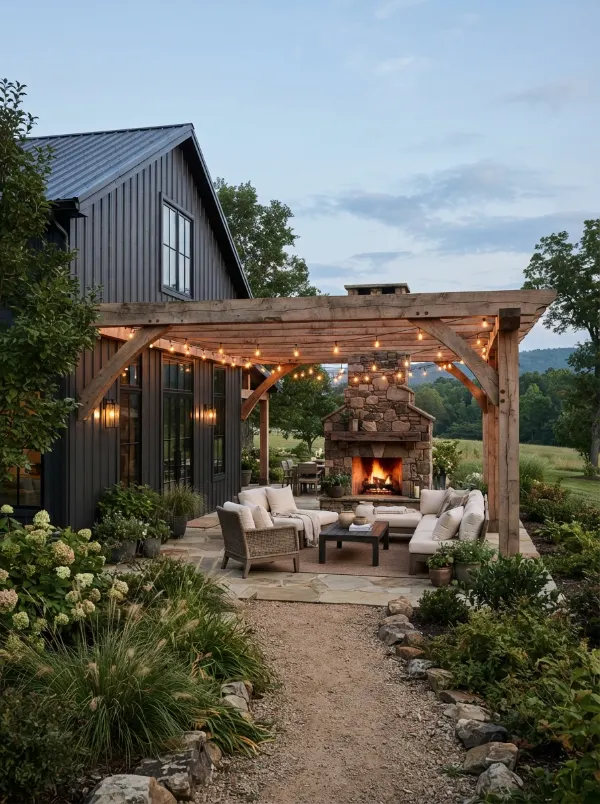
Extend the home’s design beyond the walls with a patio, pergola, fire area, or outdoor dining space. Repeat the same colors and materials used on the facade. A timber pergola beside a metal-sided home, for example, can connect the building to the garden while adding a comfortable place to relax. For example, a timber pergola with a stone fire pit area off the living room creates a comfortable outdoor room.
Barndominium Exterior Styles at a Glance
| Style | Siding and roof | Best for |
|---|---|---|
| Modern farmhouse | white board-and-batten, black standing-seam roof | rural and suburban lots |
| Industrial | dark steel siding, simple gable | low-maintenance contemporary look |
| Rustic lodge | wood + stone base, timber trims | wooded mountain sites |
| Contemporary | charcoal metal, large glass gable | open views and clean lines |
16. Keep Details Consistent
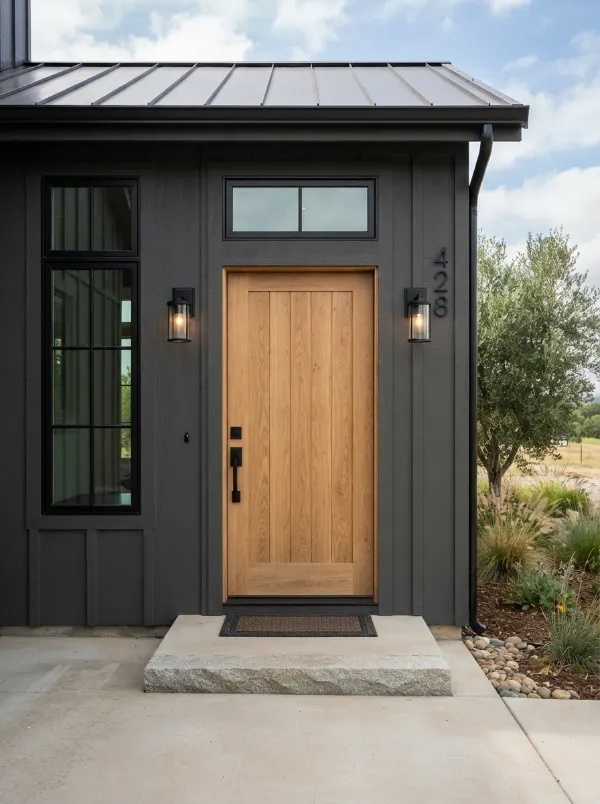
Small details have a large effect when they repeat. Match the finish of door hardware, exterior lights, railings, and house numbers. If the home uses black window frames, black sconces and a black mailbox can reinforce the palette. Consistency makes the exterior look designed rather than assembled piece by piece. For example, black sconces, mailbox, and house numbers in the same matte finish make the details feel deliberately coordinated.
17. Plan for Weather and Maintenance
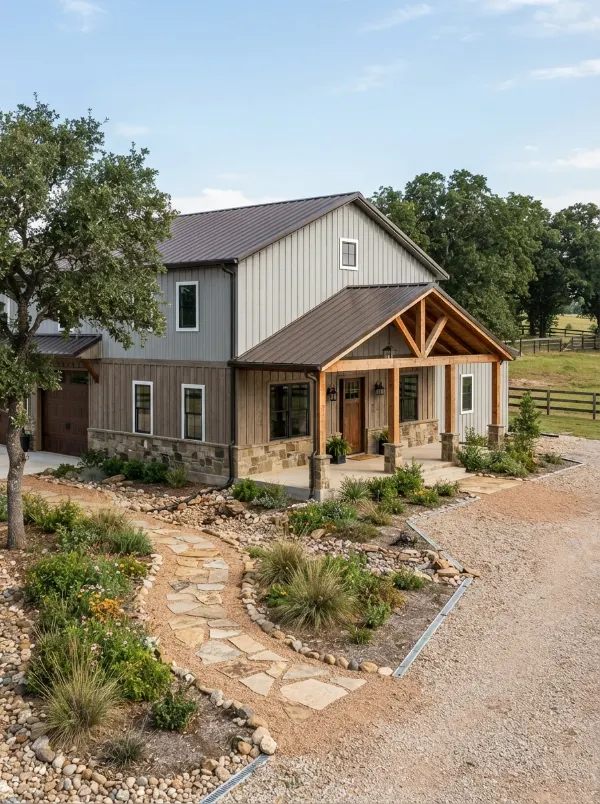
Exterior beauty should be supported by practical materials. Choose siding, roofing, decking, and finishes suited to the local climate. Think about drainage, snow or rain loads, sun exposure, and access for cleaning. Durable choices may cost more at the beginning but can protect the appearance of the home for years. For example, fiber-cement or steel siding rated for the local snow/rain load with clear drainage protects the design for years.
18. Add Personality Through One Signature Feature
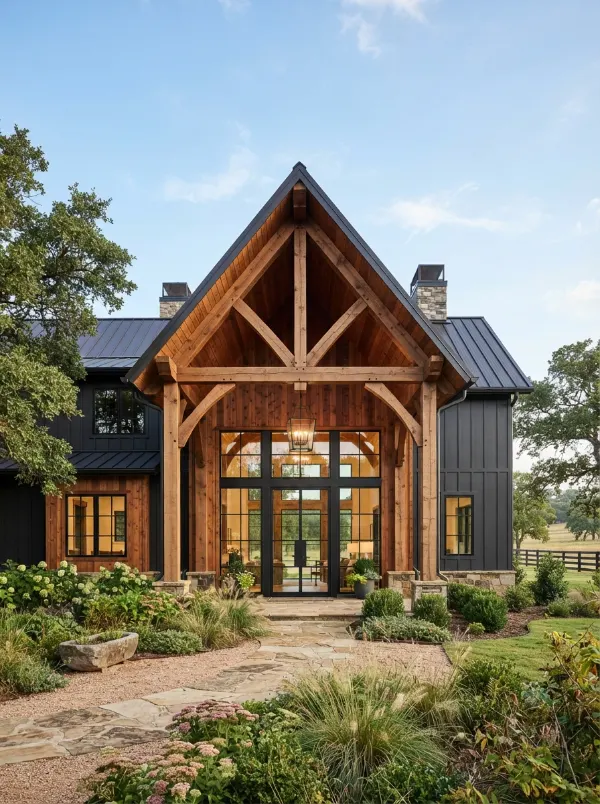
Choose one feature that makes the home memorable: an oversized timber entry, a dramatic porch, a cupola, a contrasting gable, or a beautifully framed view. One signature detail is usually more effective than many unrelated accents. It gives the exterior a recognizable identity while keeping the overall design calm. For example, one oversized timber entry frame as the signature gives the home an identity without extra decoration.
19. Make the Landscape Feel Finished
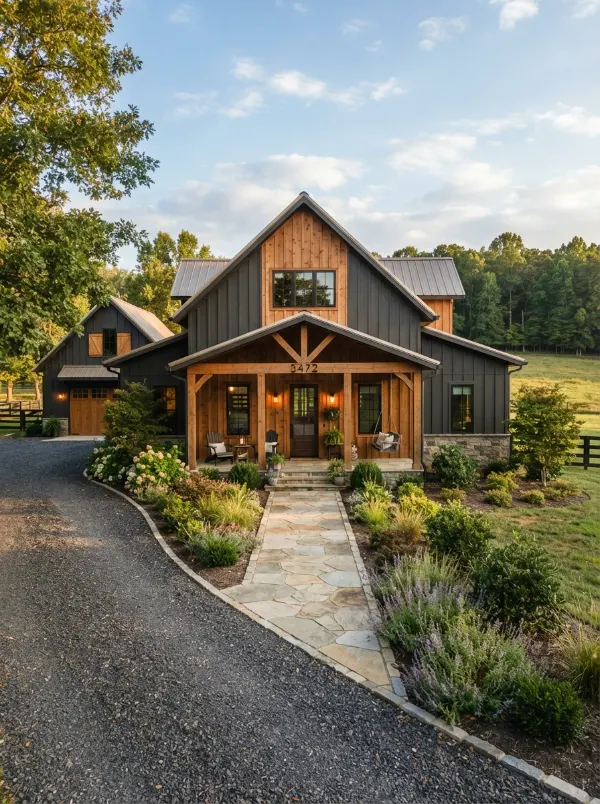
Complete the exterior with practical finishing touches such as a clear walkway, planted borders, seating, house numbers, and a defined place for bins or equipment. These details may seem small, but they help the property feel cared for. A polished barndominium is not only about the building; it is about how every outdoor element works together. For example, a lit walkway, planted borders, and a screened bin store finish the property so it feels cared for from the road.
How to Combine These Ideas Successfully
Before choosing finishes, create a simple exterior mood board with your siding, roof, windows, door, lighting, and landscape materials. Limit the palette, repeat finishes, and check how the home looks from the road as well as from the garden. A successful barndominium exterior feels balanced from a distance and interesting up close.
Barndominium Exterior on a Budget
Start with the elements people notice first: a quality front door, a simple covered porch, and warm, well-placed lighting can transform the whole facade without a large budget. Keep the main shape a simple rectangle, which costs less to build and finish than a complex footprint. Choose one accent material, such as wood or stone, and repeat it sparingly instead of mixing several expensive finishes. Finally, phase the landscaping over time, starting with paths, planting beds, and a few hardy shrubs, and add the rest as the budget allows.
Small Barndominium Exteriors
Small barndominiums look best when the design stays simple and vertical. One well-proportioned gable, tall windows, and light siding make the home feel taller and brighter, while a compact porch gives a clear, welcoming entry without eating into the footprint. Add vertical accents, such as board-and-batten siding or slim timber battens, to draw the eye upward and add height. Keep trim, color, and materials consistent so the small exterior reads as one calm, finished composition.
FAQs
What colors work best for a barndominium exterior?
Black, charcoal, warm white, taupe, olive, and natural wood are popular because they complement metal siding and rural landscapes.
How can I make a barndominium look less industrial?
Add wood accents, a covered porch, warm lighting, soft landscaping, and a welcoming front door to balance the metal structure.
Is stone necessary on a barndominium?
No. A small amount of stone can add weight and texture, but wood, metal, and thoughtful landscaping can create a complete exterior without it.
How can I make a barndominium exterior look less industrial?
Start with wood accents around the door, porch, and gables to soften the metal shell, then add a covered porch that gives the entry a residential scale. Warm 2700K lighting, soft landscaping with shrubs and grasses, and a welcoming front door in a warm finish complete the change, so the home reads as a house first and a barn second.
Can a wraparound porch be added to a barndominium later?
Yes, if the footings and roof tie-in are planned from the start, and it is usually simpler on a single-story wall where the roofline can be extended cleanly. Get a structural check first to confirm the existing frame, footings, and drainage can support the new porch before building.
Final Thoughts
The strongest barndominium designs combine the practical character of a barn with the comfort and detail of a modern home. Focus on proportion, material contrast, a welcoming entry, useful outdoor space, and a landscape that supports the architecture. With a clear plan and a restrained palette, your exterior can feel bold, warm, and timeless.