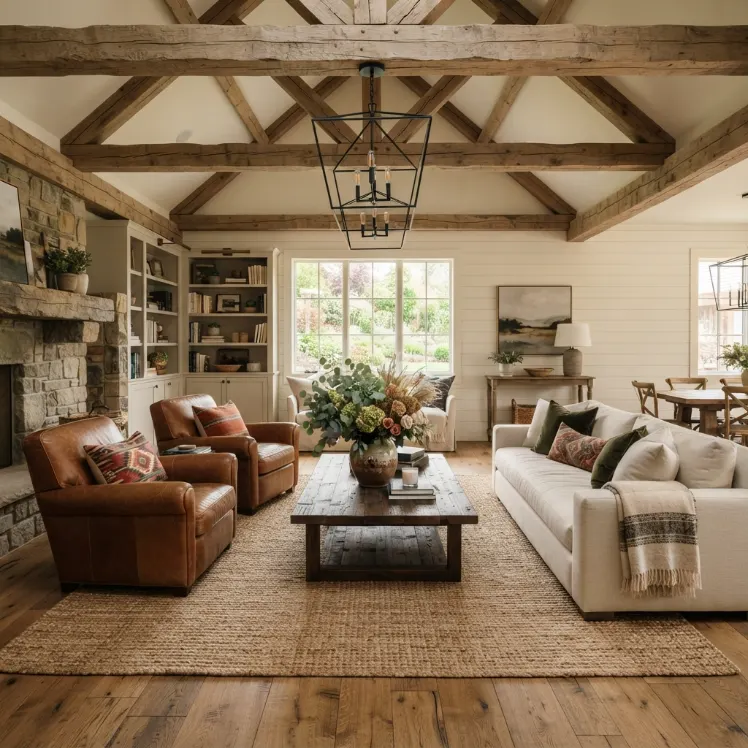
15 Gorgeous Plate Wall Ideas Mix Patterns Like a Pro (No Design Skills Needed)
A blank wall can make a beautiful home feel unfinished, especially when the rest of the room already has color, texture, and personality. One of the simplest ways to change that is to use something you may already have at home: decorative plates.
These plate wall ideas show how a collection can become more than wall decor. Plates can introduce pattern, repeat a color from the room, soften a plain surface, and give a dining room, kitchen, entryway, or living room a collected feeling. If you like calm, edited interiors, you can also see our Japandi kitchen ideas for another approach to balancing warmth, texture, and simplicity.
The key is not finding a perfectly matching set. The most interesting displays usually have a visual connection rather than identical pieces. A shared color, subject, material, shape, or era can make very different plates feel like they belong together.
Below are practical ways to build a plate wall that feels intentional without looking overly planned.
1. Start With One Plate That Has Presence
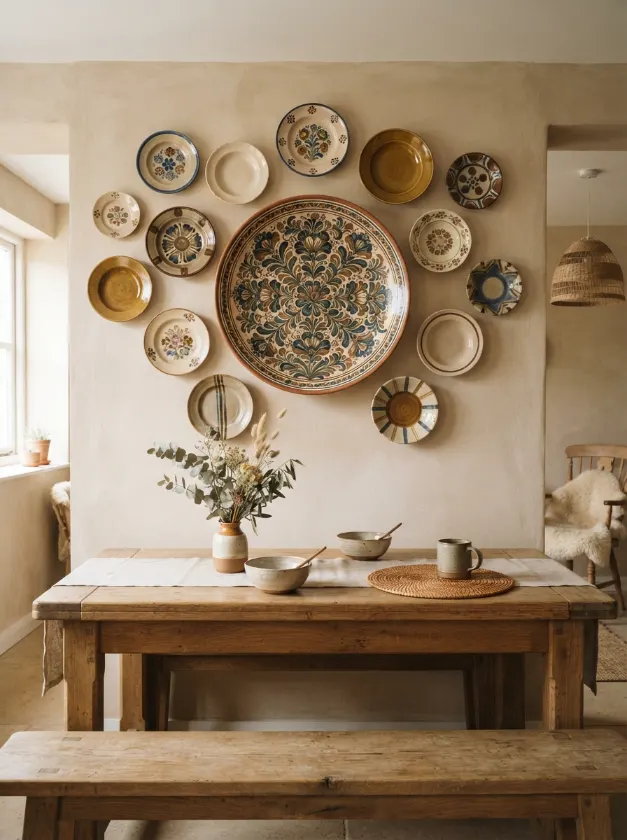
Every successful plate display needs somewhere for the eye to land. Start with one larger platter, an unusual ceramic piece, or a plate with a strong pattern. Treat it as the anchor.
Place the anchor slightly off center if you want a relaxed collected look. Smaller plates can then grow around it. This approach is easier than trying to decide the exact position of every piece before you begin.
In my experience, choosing the anchor first also prevents a common mistake: buying lots of small plates and then realizing there is nothing large enough to give the arrangement structure.
2. Use One Color to Connect Different Patterns
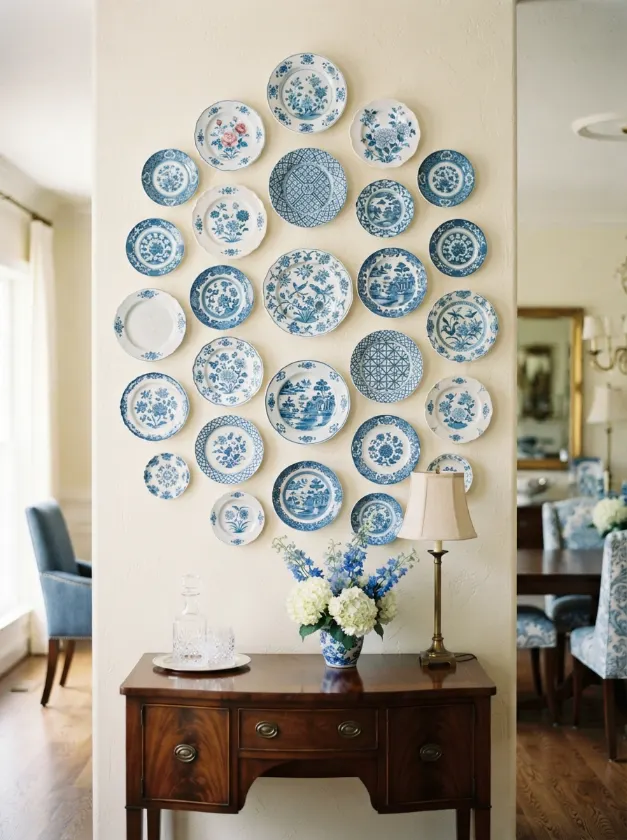
Mixing patterns becomes much easier when the plates share one dominant color. Blue and white is an obvious example, but olive, cream, terracotta, soft green, black, or muted yellow can work just as well.
The patterns do not need to match. Florals, stripes, botanical drawings, geometric borders, and small illustrations can sit together when the color keeps the collection visually connected.
If you are nervous about starting a plate wall, choose a two-color palette first. You will have plenty of pattern variety without making the wall feel visually scattered.
3. Mix Round Plates With Ovals and Platters
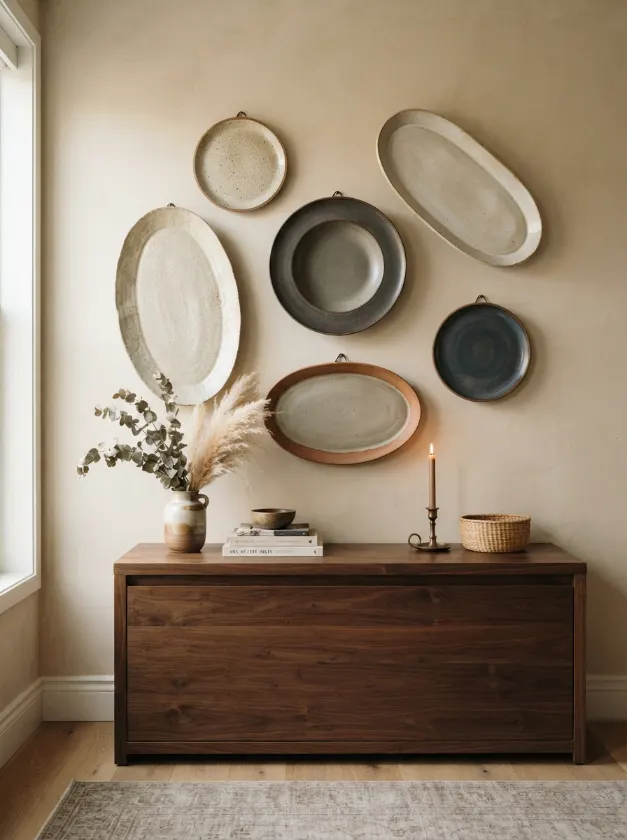
A wall made entirely of identical circles can look repetitive. Adding oval platters or elongated serving pieces gives the eye a different shape to notice.
Use the larger shapes as anchors and place smaller round plates around them. You can create a loose diamond, oval, or asymmetrical cluster depending on the wall and furniture underneath.
This is especially useful above a console, sideboard, or dining bench where the display needs enough visual weight to relate to the furniture below.
4. Let Botanical Patterns Repeat Across the Wall

Botanical plates are easy to combine because leaves, flowers, branches, and herbs naturally create a common visual language. You can mix different illustrations without making the collection look random.
Try combining a large floral plate with smaller fern, leaf, or wildflower designs. The repetition of natural motifs creates rhythm while the different scales keep the arrangement interesting.
For a softer look, place botanical plates against a warm white, sage, beige, or muted clay wall.
5. Add Woven Pieces Between the Plates
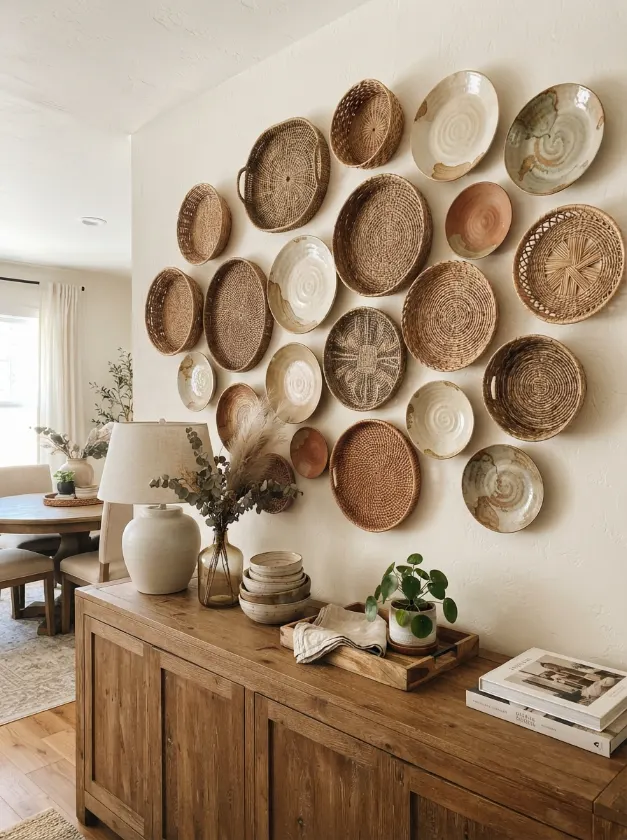
A plate wall does not have to contain plates only. Small woven baskets, shallow rattan trays, or natural fiber pieces can break up repeated ceramic patterns.
The contrast between smooth glazed pottery and rough woven texture gives the arrangement more depth. It also helps when you have several busy patterns that might otherwise compete with one another.
Use woven pieces sparingly. One between several plates is usually enough to create a visual pause.
6. Try a Formal Symmetrical Plate Display
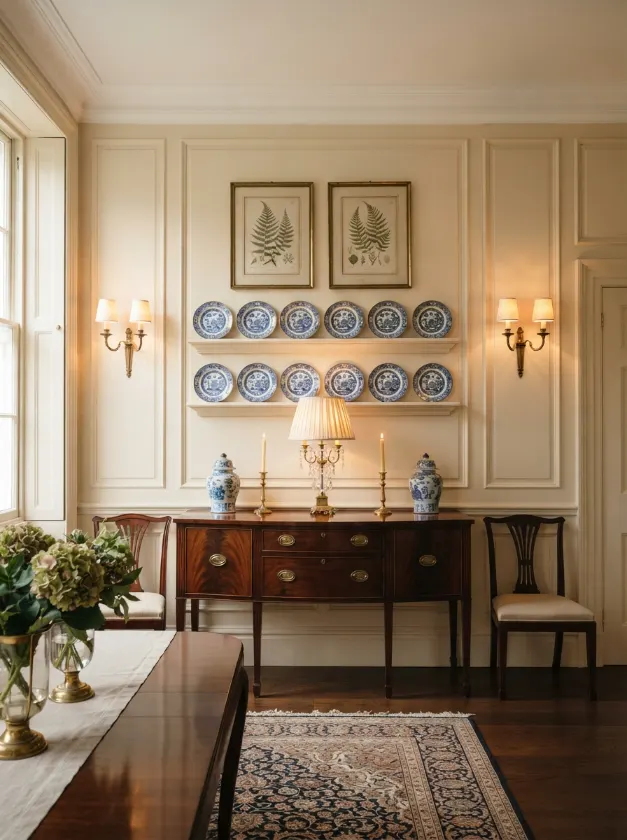
Not every plate wall needs to feel casual. Symmetry can look polished above a dining room sideboard, fireplace, or long console.
For this approach, choose plates with similar sizes and repeat the layout on both sides of a central piece. Matching shelves or narrow picture ledges can make the display feel architectural.
This style works particularly well when the rest of the room has balanced furniture, traditional details, or a restrained color palette.
7. Create a Blue and White Plate Wall

Blue and white is one of the easiest palettes for mixing decorative plates because the combination can support many different motifs without becoming visually heavy.
Look for floral scenes, geometric borders, landscapes, birds, botanical illustrations, and simple blue brushwork. Different shades of blue can add variation while the white background keeps the collection calm.
Use one or two larger oval platters to interrupt a long row of circular plates. This small change can make a large arrangement feel much more intentional.
8. Mix Vintage Florals With Fruit Motifs
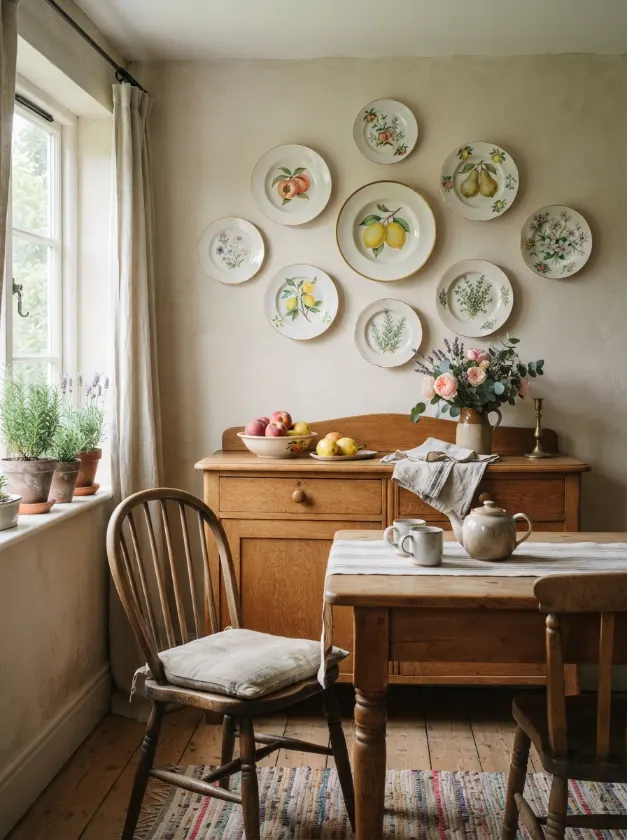
Fruit and floral plates can work together surprisingly well. Peaches, lemons, pears, berries, herbs, and flowers all have a natural connection that makes the combination feel collected.
Rather than alternating every motif in a strict pattern, group two or three related pieces together. Then place another motif nearby to create a relaxed rhythm.
This approach is particularly charming in kitchens, breakfast areas, dining rooms, and cottage-inspired interiors.
9. Use a Calm Wall Behind Bold Plates
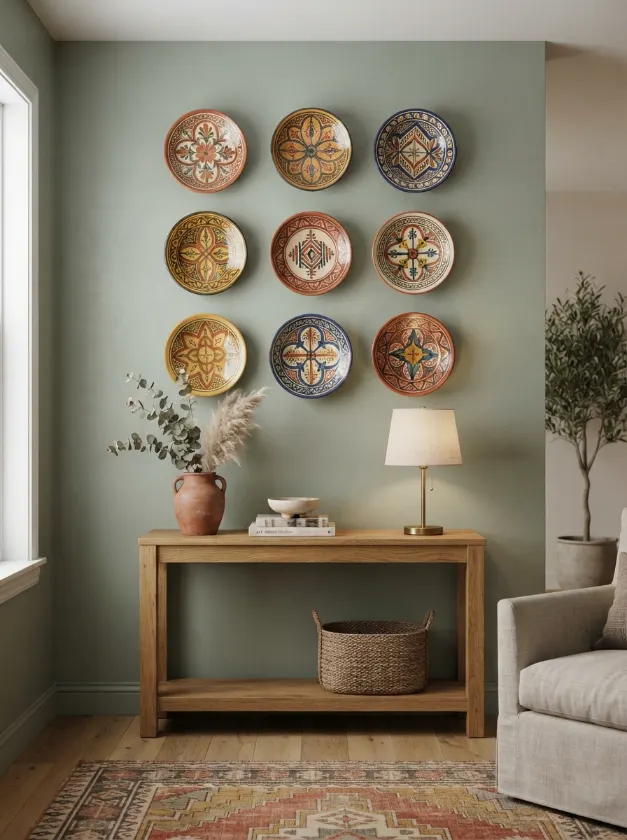
If your collection contains strong colors or detailed patterns, the wall behind it should do less work. A muted green, warm cream, soft beige, dusty blue, or earthy neutral can give the plates enough contrast without competing with them.
A calm background is especially helpful in a small dining nook or narrow kitchen wall. The display can be colorful while the overall room still feels comfortable.
If the wall already has wallpaper or a strong paint color, choose plates that repeat one of those colors instead of introducing several new ones.
10. Build a Plate Wall Around a Mirror
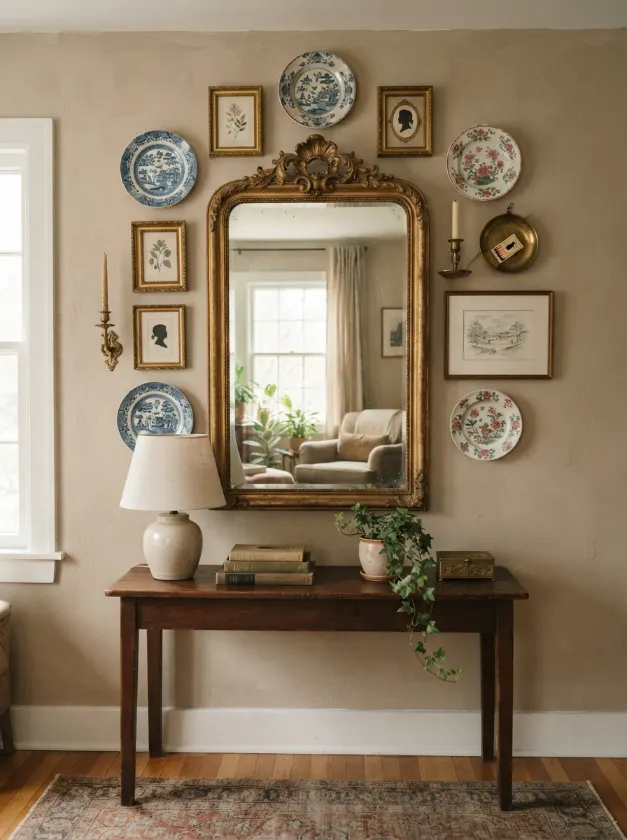
A mirror can become the center of a larger plate arrangement. Place the mirror in the middle and let plates, small framed pieces, or decorative objects build outward around it.
Repeat one finish, such as brass, antique gold, black, or natural wood, to connect the different elements. The repeated finish gives the arrangement a stronger sense of structure.
This idea works beautifully above a console because the mirror adds light while the plates provide pattern and personality.
11. Fill an Awkward Narrow Wall
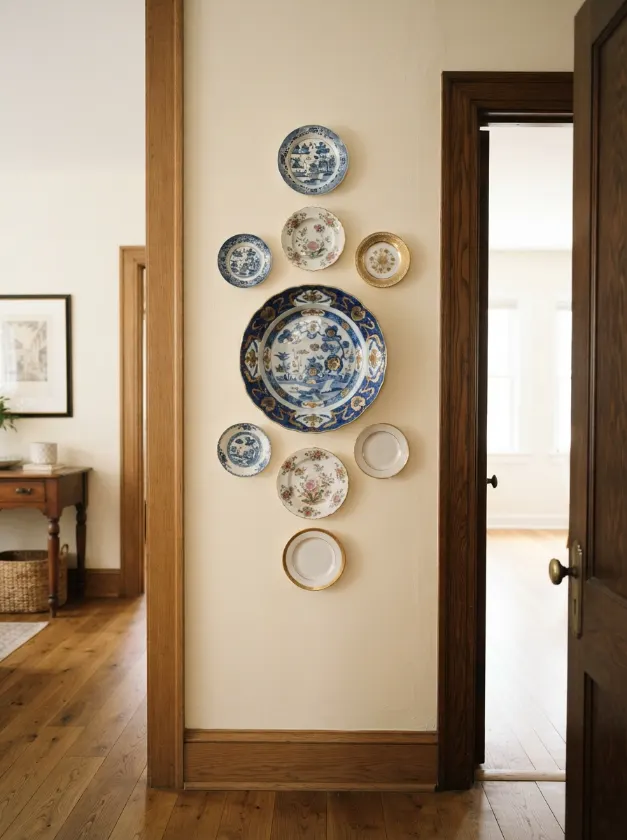
Small or awkward walls are often difficult to decorate with standard artwork. Plates work particularly well in these spaces because their shapes can follow a narrow vertical area.
Start with a larger plate near the center and gradually reduce the size toward the edges. Keep enough breathing room around door trim, corners, and light switches.
A narrow wall beside a doorway, breakfast nook, or pantry can become a useful decorative feature instead of an overlooked gap.
12. Create a Dense Collection With Handmade Texture
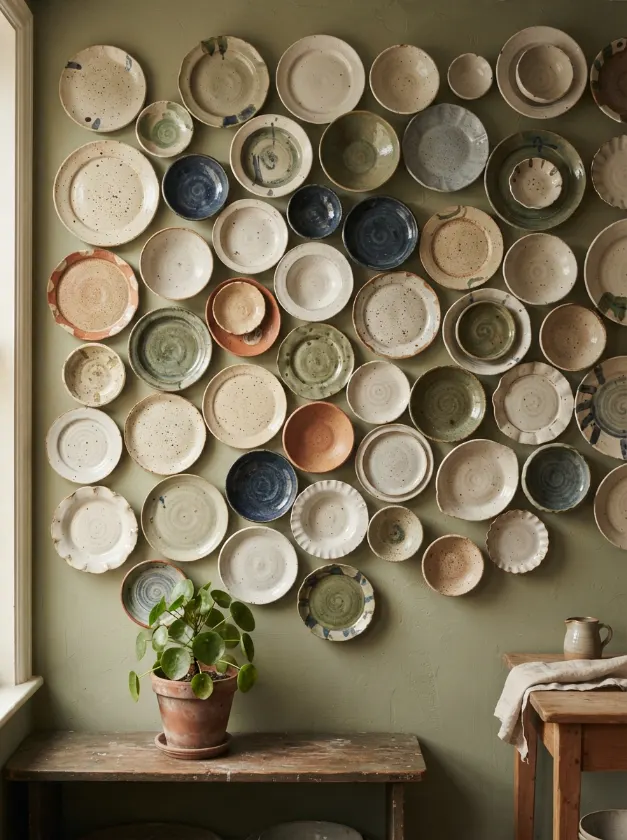
If you love a more abundant look, let the plates cover a larger portion of the wall. The secret is to keep some connection between the pieces so the collection feels intentional rather than crowded.
Handmade ceramics are particularly effective because small variations in glaze, edges, and surface texture prevent the display from looking mass produced.
Before making the arrangement permanent, step back several times. A dense collection can look completely different from a few feet away than it does when you are standing directly in front of it.
13. Use Warm Lighting to Highlight the Collection
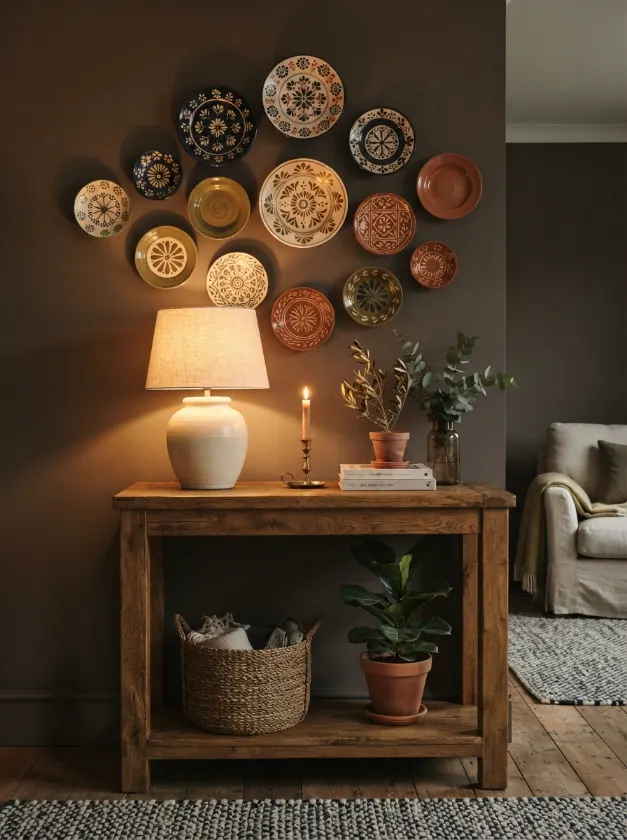
Lighting can change the entire character of a plate display. A warm wall light, table lamp, or nearby pendant can bring out the texture and glaze of ceramic pieces.
Place lighting where it illuminates the plates without creating harsh reflections. Warm light is especially effective with terracotta, cream, olive, mustard, navy, and antique finishes.
If your plate wall is above a console, a lamp below the arrangement can connect the wall display to the furniture and make the entire corner feel finished.
14. Leave Some Imperfection in the Layout
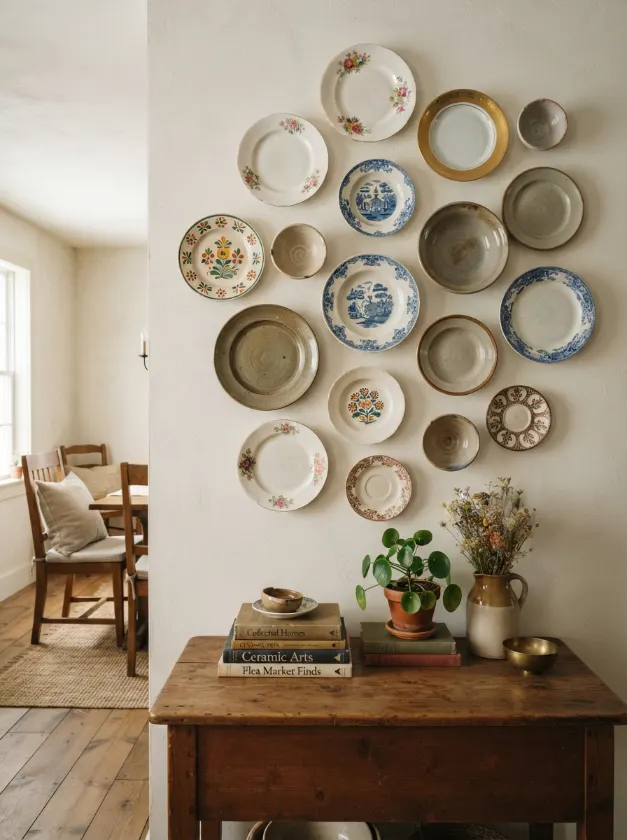
A plate wall can become less interesting if every gap is identical. Slight differences in spacing often make a collection feel gathered over time.
That does not mean hanging pieces randomly. Keep the overall shape balanced while allowing small variations between individual plates.
A useful method is to arrange the plates on the floor first, take a photo, and study the overall silhouette. Move pieces around until the arrangement feels balanced from a distance.
15. Let the Collection Grow Slowly

The best plate walls rarely need to be completed in one afternoon. Start with a few pieces you genuinely like and allow the collection to develop as you find new plates.
Vintage stores, flea markets, family cabinets, handmade pottery shops, and even your own kitchen cupboards can provide interesting pieces. Look for a connection rather than a perfect match.
Leave a small empty area if the arrangement needs it. A plate wall can become more personal when every piece has a reason for being there.
Pros and Cons of Plate Wall Decor
Pros
- Adds pattern and personality without taking up floor space.
- Works in kitchens, dining rooms, entryways, living rooms, and breakfast areas.
- Makes it easy to mix vintage, handmade, and modern pieces.
- Can be built gradually instead of purchased as one matching set.
- Uses unusual plates that may otherwise stay hidden in cabinets.
Cons
- Heavy ceramic pieces need secure hanging hardware.
- A very busy collection can overwhelm a small room.
- Dusting takes more time than cleaning a single framed artwork.
- Strict symmetry can become difficult when pieces have different sizes and shapes.
Frequently Asked Questions About Plate Wall Ideas
How do I arrange plates on a wall?
Start with one or two larger anchor pieces, then build outward with smaller plates. Keep the overall shape balanced while varying sizes and spacing. Lay the collection on the floor first so you can adjust the composition before putting holes in the wall.
How many plates do I need for a plate wall?
There is no fixed number. A small display can work with five to seven plates, while a larger wall may need fifteen or more pieces. The right number depends on the wall size, furniture underneath, and scale of the plates.
Should all the plates match?
No. Matching is optional. A shared color, subject, material, shape, or finish can connect mismatched plates and make the collection feel cohesive.
What room is best for a plate wall?
Kitchens and dining rooms are natural choices, but plate displays can also work above entryway consoles, living room sideboards, breakfast benches, and other walls that need pattern and texture.
How do I hang decorative plates safely?
Use hanging hardware designed for the weight and type of plate. For valuable or heavy ceramics, choose a secure mounting system rather than relying on a lightweight adhesive solution. Check the wall surface and hardware weight rating before installation.
Conclusion: Let Your Plate Collection Become the Artwork
A good plate wall does not need perfect symmetry or a matching dinnerware set. It needs a visual connection and a little patience.
Start with one piece that you love. Add a shared color, repeat a motif, mix a few shapes, and step back often while arranging everything. The goal is to create a collection that feels connected without looking overly planned.
If your walls feel plain, look at the plates you already own before buying new artwork. One forgotten platter or vintage dish may be the starting point for a display that gives the whole room more personality. For more ideas on making a home feel personal rather than overly matched, see our retro apartment aesthetic guide.