15 Sunroom Decorating Ideas for a Bright, Cozy Home
A sunroom already has one advantage most rooms have to work hard to create: natural light. Yet bright windows alone do not make the room comfortable. Too much bare glass can feel cold, oversized furniture can block the view, and the wrong fabrics can fade faster than expected.
The most useful sunroom decorating ideas treat the room as part of everyday life rather than a glass box filled with pretty furniture. A sunroom can be a morning coffee spot, a reading corner, a place for conversation, a plant-filled retreat, or a flexible family room.
In my experience, the best results come from solving comfort and layout first, then adding the visual details. That approach keeps the room attractive in photos while making it pleasant to use on an ordinary Tuesday.
1. Build the Room Around One Clear Purpose
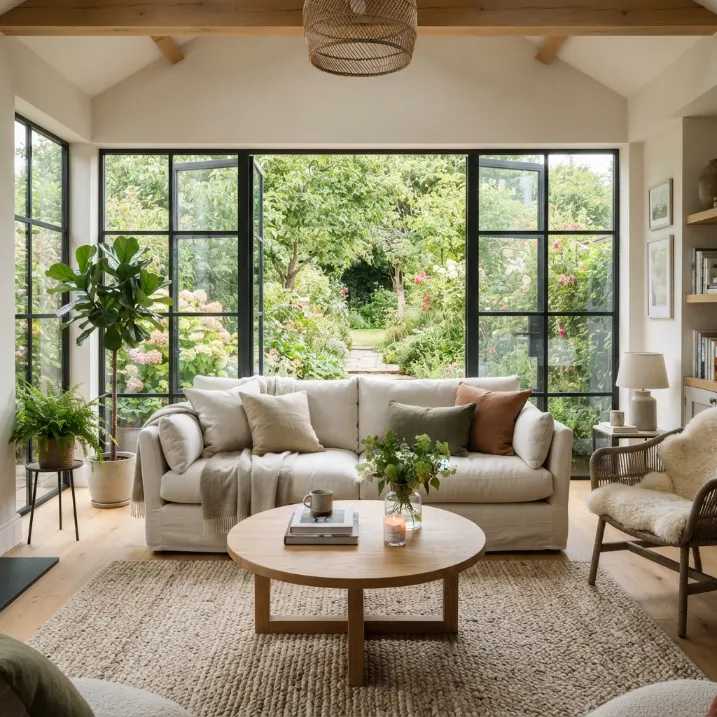
Start by deciding what you want to do in the sunroom most often. A room designed for reading needs different furniture from one used for family meals or entertaining.
Choose one main activity and let it guide the layout. A deep sofa works well for lounging, while a compact table and comfortable chairs make more sense for coffee or conversation. If the room needs two functions, give each one a defined zone instead of scattering furniture everywhere.
This simple decision prevents a common problem: a beautiful sunroom that becomes a storage area because nobody knows how to use it.
2. Let the Windows Stay the Star

Large windows are usually the strongest architectural feature in a sunroom, so furniture should support the view rather than compete with it. Keep tall pieces away from the main glass whenever possible.
Low sofas, slim chairs, and open shelving can preserve sightlines. Leave enough visual breathing room around the windows so daylight can reach the entire room.
If your garden view is especially attractive, arrange seating toward it. The scenery becomes part of the decor without adding another decorative object.
3. Create a Soft Neutral Sunroom With Warm Texture
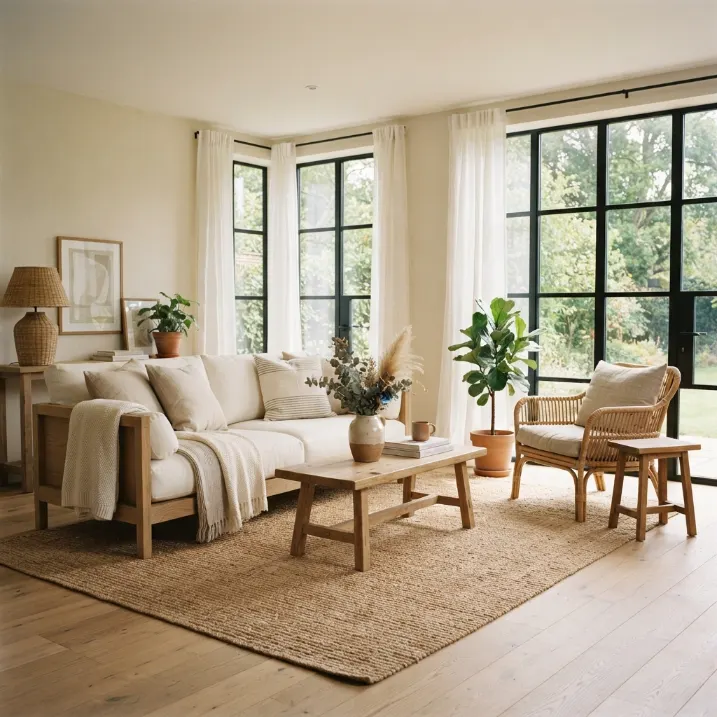
Warm whites, oatmeal, beige, light taupe, and natural wood can make a bright sunroom feel calm without making it bland. The key is texture.
Layer linen cushions, a woven rug, a wood coffee table, rattan details, and a soft throw. Each material catches daylight differently, giving a neutral palette more depth.
If everything is the same shade and finish, the room can look flat. A small mix of natural textures gives the eye something to follow while keeping the overall mood peaceful.
4. Add a Comfortable Reading Corner

A sunroom is naturally suited to reading because daylight provides useful illumination during the day. Choose a chair that supports your back, place a small table beside it, and add a lamp for evenings.
A footstool can make a compact chair feel more comfortable without taking up much floor space. Keep one basket nearby for books, blankets, or magazines.
For more ways to create a useful reading area, see our reading nook ideas. The same principles of comfortable seating, reachable storage, and good lighting work beautifully in a sunroom.
5. Bring in Plants, But Give Them Room to Breathe

Sunrooms are excellent places for plants, but more greenery is not always better. A crowded collection can block windows, reduce walking space, and make the room feel visually heavy.
Use a mixture of heights instead. One tall plant can anchor a corner, medium plants can soften a sideboard, and a smaller pot can sit on a table.
Before choosing plants, pay attention to the amount and direction of sunlight. Some plants prefer bright indirect light while others tolerate stronger exposure. Keep watering needs and temperature changes in mind too.
Our houseplants corner aesthetic ideas can also help you arrange greenery without losing the clean structure of the room.
6. Use Wicker and Rattan for a Natural Indoor-Outdoor Feel
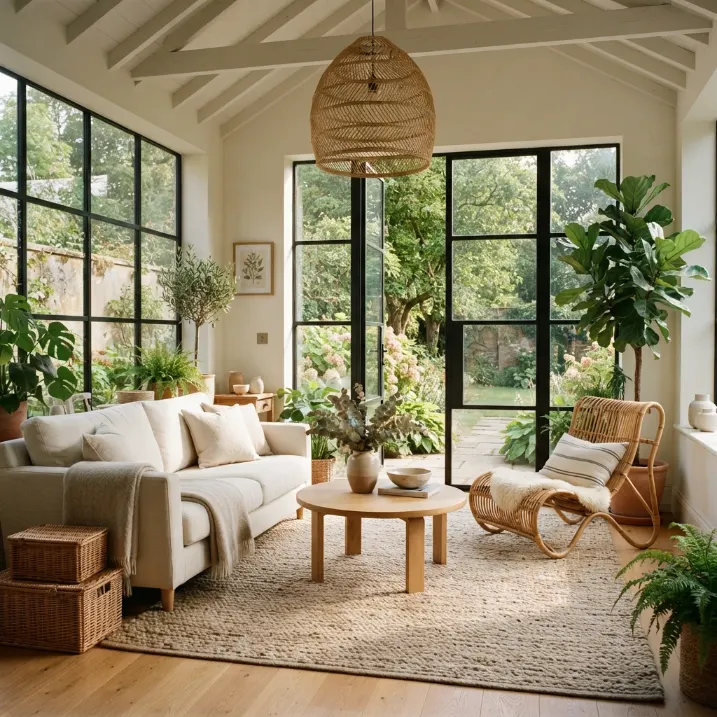
Wicker and rattan work naturally in sunrooms because their texture echoes outdoor furniture while still feeling warm indoors. A rattan chair, woven basket, cane cabinet, or wicker pendant can create that connection without turning the room into a patio.
Balance woven pieces with softer upholstery and solid wood. Too many matching woven items can make the room feel themed rather than collected.
One or two strong pieces are usually enough to establish the material story.
7. Choose Furniture That Can Handle Real Sunlight

Sunlight is beautiful, but constant exposure can affect fabrics, wood finishes, artwork, and flooring. That makes material choice an important part of practical sunroom design.
Look for fabrics and finishes suited to bright spaces, especially if the room receives strong afternoon sun. Durable upholstery, washable covers, and materials designed for higher exposure can make maintenance easier.
Also think about where each piece sits. Moving a delicate chair slightly away from direct rays may help it stay attractive longer.
8. Add Window Treatments for Heat and Glare Control

A sunroom can become uncomfortable if glare makes it difficult to read or the temperature rises sharply during the day. Window treatments give you control without giving up the room’s natural brightness.
Roman shades, woven shades, solar shades, and light curtains can soften intense sunlight. Choose a treatment based on the direction of the windows and how much privacy you need.
Layered treatments are useful if the room changes dramatically between morning and afternoon. You can keep the windows open and bright when conditions are comfortable, then reduce glare when needed.
9. Create a Small Sunroom Dining Area
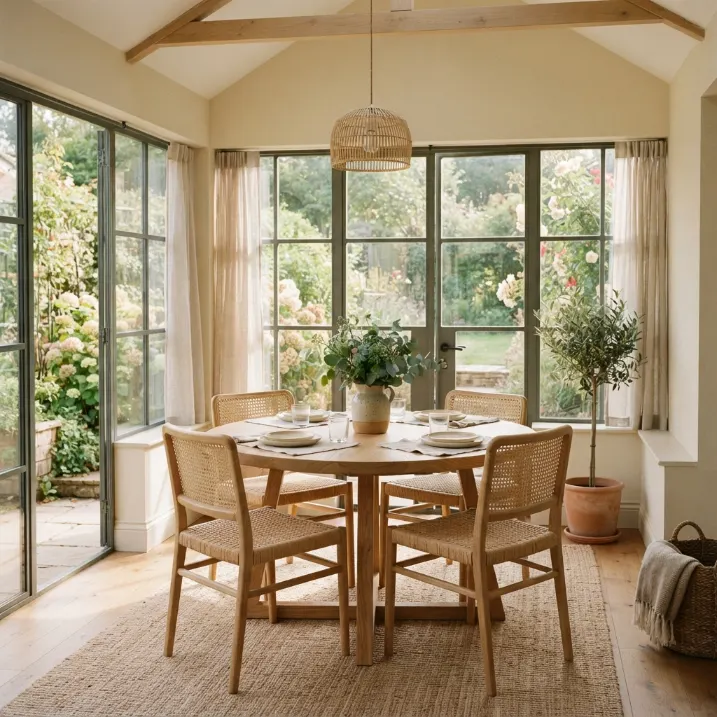
A compact dining table can turn a sunroom into one of the most enjoyable places for breakfast, coffee, or relaxed weekend meals. A round table is especially useful in smaller rooms because it makes movement around the seating easier.
Choose chairs that do not visually overwhelm the windows. Light wood, cane, upholstered seats, or simple painted chairs can all work depending on the rest of the home.
Keep the centerpiece low. A small vase of greenery or a simple bowl lets people enjoy the view across the table.
10. Make a Small Sunroom Feel Larger
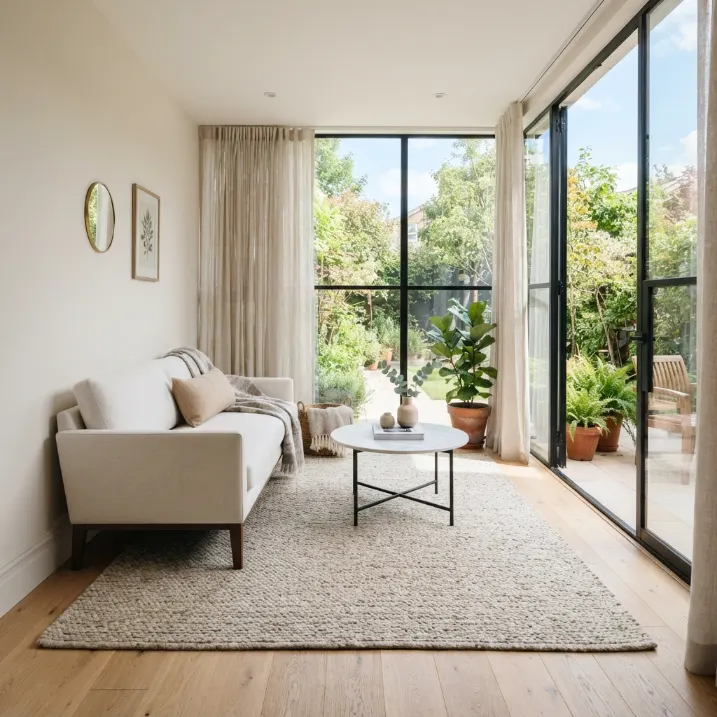
Small sunrooms benefit from furniture with visible floor space underneath. Leggy chairs and sofas can make the room feel more open than bulky pieces that sit close to the floor.
Use one properly sized rug rather than several small rugs. Keep pathways clear and avoid filling every corner simply because there is space available.
A mirror can also help, but place it thoughtfully. Reflecting a pleasant garden view or a bright section of the room is more useful than adding a mirror simply to fill a wall.
11. Add Warm Lighting for the Evening

Natural light should lead the design during the day, but a sunroom still needs a good evening lighting plan. Relying on one bright ceiling fixture can make the room feel flat after sunset.
Use layers instead. A floor lamp beside a sofa, a table lamp on a sideboard, and a warm pendant can create different levels of light for reading, conversation, or relaxing.
In my experience, warm bulbs make a major difference in glass-heavy rooms because they add softness after the outdoor light disappears.
12. Connect the Sunroom to the Rest of the Home
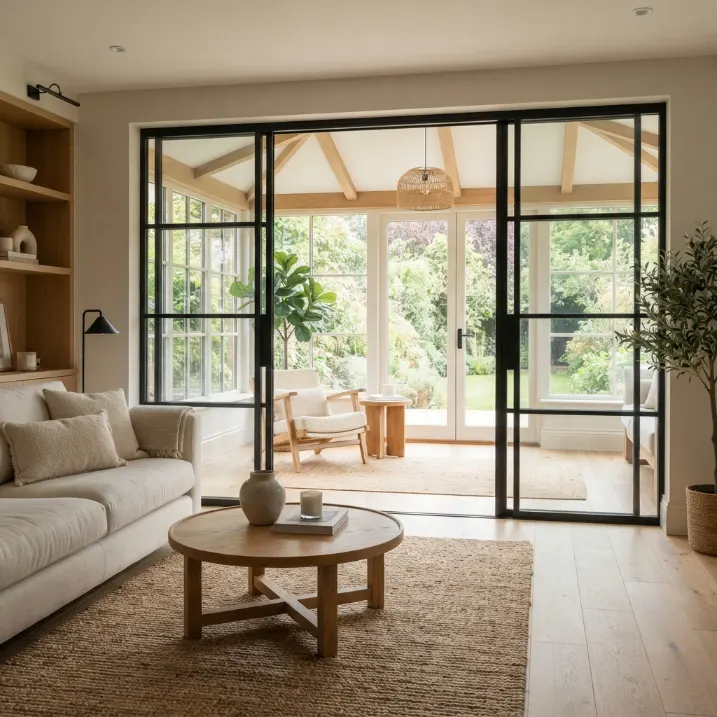
A sunroom should feel like a natural part of the house, not a separate design experiment. Repeat one or two colors, materials, or shapes from the nearby room.
For example, if the living room uses light oak and warm cream upholstery, carry those elements into the sunroom. If the rest of the home has black metal accents, a slim black frame or lamp can create continuity.
This does not mean every piece needs to match. A few repeated details are enough to make the transition feel intentional.
13. Use a Japandi Approach for a Calm Sunroom

Japandi principles can work especially well in a bright sunroom because they emphasize restraint, natural materials, useful furniture, and a calm visual rhythm.
Try pale oak, warm white, muted beige, linen, stone, and simple ceramic pieces. Choose furniture with clean lines and avoid filling every surface with accessories.
If you already like this style, our Japandi living room ideas offer more guidance on warm minimalism, natural textures, and balanced neutral palettes.
14. Give an Awkward Corner a Real Job

Many sunrooms have a narrow corner that seems too small for a full seating area. Instead of leaving it empty, give it one clear purpose.
A slim console can become a coffee station. A small chair can create a private reading spot. A narrow plant stand can build a layered green corner. Even a tiny desk can turn unused space into a quiet work area.
Measure before buying anything. In a small sunroom, a few inches can decide whether a corner feels useful or cramped.
15. Finish With Personal Details Instead of More Furniture

Once the layout, comfort, light, and materials are working, stop adding large pieces. The final layer should make the room feel like yours.
Use a favorite piece of artwork, a handmade ceramic vase, a stack of books, a woven basket, family photographs, or a textile you genuinely love. These details give the room personality without competing with the windows.
The most successful sunroom decorating ideas usually leave some empty space. A little restraint lets the architecture, daylight, plants, and personal objects work together instead of fighting for attention.
FAQs About Sunroom Decorating Ideas
How do I make a sunroom feel cozy?
Start with comfortable seating, a textured rug, warm neutral colors, soft cushions, and layered lighting. Plants and natural materials can add warmth without making the room feel crowded.
What furniture works best in a sunroom?
Choose furniture that fits the room’s scale and leaves clear paths around the windows. Sofas, lounge chairs, small dining tables, benches, and compact storage can work well depending on the room’s purpose.
How do I decorate a small sunroom?
Use fewer, better-sized pieces. Favor furniture that shows some floor underneath, keep pathways open, and choose one main function. A light palette and carefully placed plants can make the space feel more open.
Should I put curtains in a sunroom?
Curtains or shades can be very useful for controlling glare, heat, privacy, and strong afternoon sunlight. Choose a fabric and mounting style that suit the room’s exposure and your practical needs.
What colors look good in a sunroom?
Warm white, cream, beige, taupe, soft green, light wood, muted blue, and earthy tones all work well with natural daylight. Choose colors that also connect with the rooms next to the sunroom.
Conclusion
The best sunroom decorating ideas do more than make a bright room look attractive. They make the space easier to use, more comfortable throughout the day, and more connected to the rest of the home.
Start with the purpose of the room. Then plan the furniture around the windows, control glare and heat, add comfortable textures, bring in greenery thoughtfully, and finish with details that reflect your personality.
You do not need a huge budget or a completely new room to create a beautiful result. A better layout, a comfortable chair, useful lighting, and a few natural materials can change how the entire space feels.
For more home decorating inspiration, keep exploring Homesifying for practical ideas designed to look beautiful and work in real homes.