Modern Ceiling Design: 15 Ideas That Make a Room Feel More Intentional
A thoughtful modern ceiling design can quietly change the way an entire room feels. It can make a low room feel more open, soften hard architecture, frame a dining table, or give a plain space a finished look without adding more furniture. That is why modern ceiling design deserves more attention than it usually gets.
If you are building a calmer kitchen, you may also like our Japandi Kitchen ideas and Japandi Living Room ideas for more guidance on warm, minimal interiors.
The strongest ceilings are not simply decorative. They work with lighting, furniture placement, room proportions, and the materials already in the home. A good design gives the eye somewhere to rest while making everyday life feel more comfortable.
I have noticed that the rooms people save most often are rarely the ones with the most decoration. They usually have one clear architectural idea and enough breathing room around it. The ceiling can be that idea.
Below are 15 practical directions to consider, from subtle wood details to sculptural curves and simple lighting layers.
1. Warm Wood Slats That Add Texture Without Visual Noise
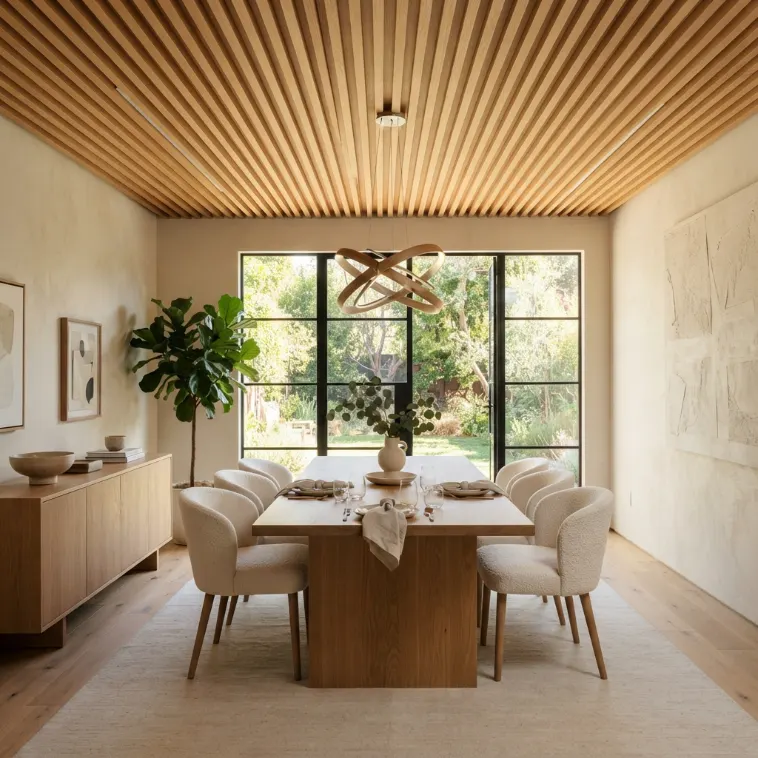
Wood slats are a natural starting point if you want warmth without covering the whole ceiling in decoration. Use slim oak, walnut, or ash-toned battens over a light ceiling so the grain becomes the main detail.
The important part is spacing. Tight slats create a stronger pattern, while wider gaps feel calmer. In a dining room, align the slats with the table to make the whole area feel connected. In an open-plan room, they can also help define the dining zone without building a wall.
For a polished result, repeat the wood tone somewhere below, perhaps in a console, dining chairs, or shelving. This small connection makes the ceiling feel planned rather than added later.
2. A Soft Cove Ceiling That Makes Lighting Feel Warmer

Cove lighting works especially well when the goal is atmosphere rather than a visible light fixture. A recessed strip around the perimeter creates a soft wash across the ceiling and upper walls.
Choose a warm white light for living areas, bedrooms, and dining spaces. Keep the cove line simple and continuous. Uneven gaps or overly complicated shapes can make the ceiling look busy.
One practical detail matters more than it seems: hide the LED source completely. You want to see the glow, not the individual diodes. If you are renovating, plan access for maintenance before the ceiling is closed.
3. A Shallow Tray Ceiling for Subtle Architectural Depth

A tray does not need to be deep to make a difference, especially in a modern ceiling design. A shallow recessed center can add enough shadow and dimension to break up a completely flat surface.
This approach is useful in rooms where you want architectural interest without a dramatic feature. Paint the tray and outer ceiling in the same color for a quiet effect, or use a slightly warmer shade inside the recess.
Furniture alignment also matters. If the tray sits above a bed, sofa, or dining table, center it carefully. The eye notices misalignment quickly, even when people cannot explain why a room feels slightly off.
4. Curved Ceiling Lines for Softer Modern Rooms
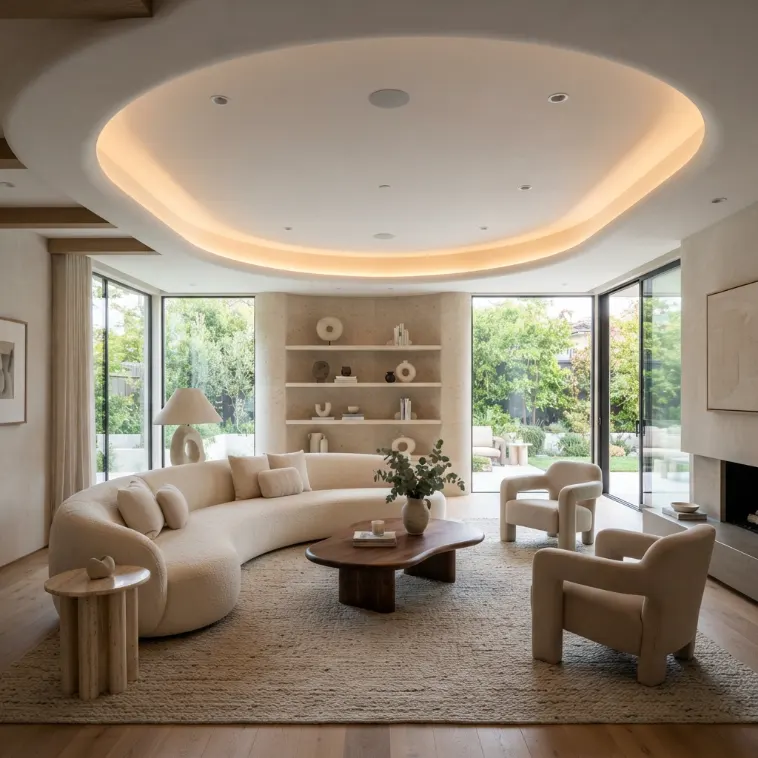
Straight lines can make contemporary rooms feel crisp, but too many hard edges can also make them feel rigid. A curved ceiling detail introduces movement and softens the overall geometry.
A curved cove can follow a seating area, wrap around a dining zone, or create a rounded transition between spaces. Keep the rest of the room relatively simple so the curve has room to work.
This is one place where scale is important. A tiny decorative curve may look accidental, while an oversized curve can dominate a small room. Sketch the shape against the room plan before committing to construction.
5. A Minimal Ceiling With One Strong Pendant

You do not always need layers, recesses, or complicated plasterwork. Sometimes the smartest modern ceiling design is a clean surface with one well-scaled pendant.
This works particularly well above a dining table, kitchen island, or reading chair, especially when a modern ceiling design needs one clear focal point. The ceiling stays quiet while the light provides the focal point.
Look at the room from different distances before choosing the fixture. A pendant that seems large in a showroom may look surprisingly small in a room with high ceilings. The fixture should relate to the furniture beneath it, not simply to the ceiling height.
6. White-on-White Layers for a Brighter Room
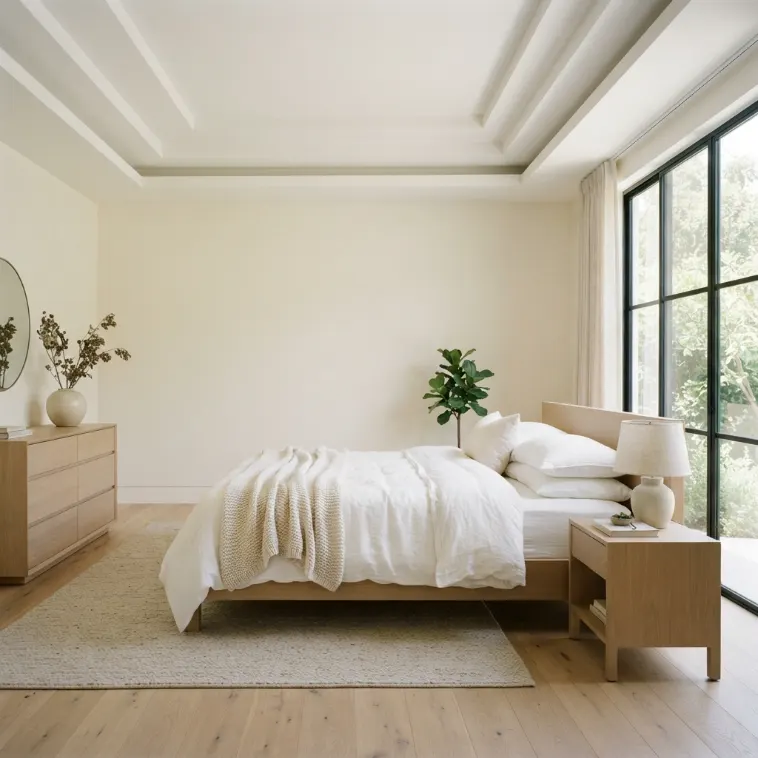
Layered white ceilings can add depth while keeping a room visually light. Use subtle changes in height, shadow lines, or trim rather than strong color contrast.
This can be especially helpful in smaller rooms where a dark ceiling may feel heavy. A crisp white outer layer with a slightly softer center can catch daylight beautifully and make the architecture easier to read.
The trick is to keep the details restrained. Too many steps, borders, and shapes can create the opposite effect. Think of the layers as quiet framing rather than decoration.
7. Dark Ceiling Accents for a More Grounded Mood
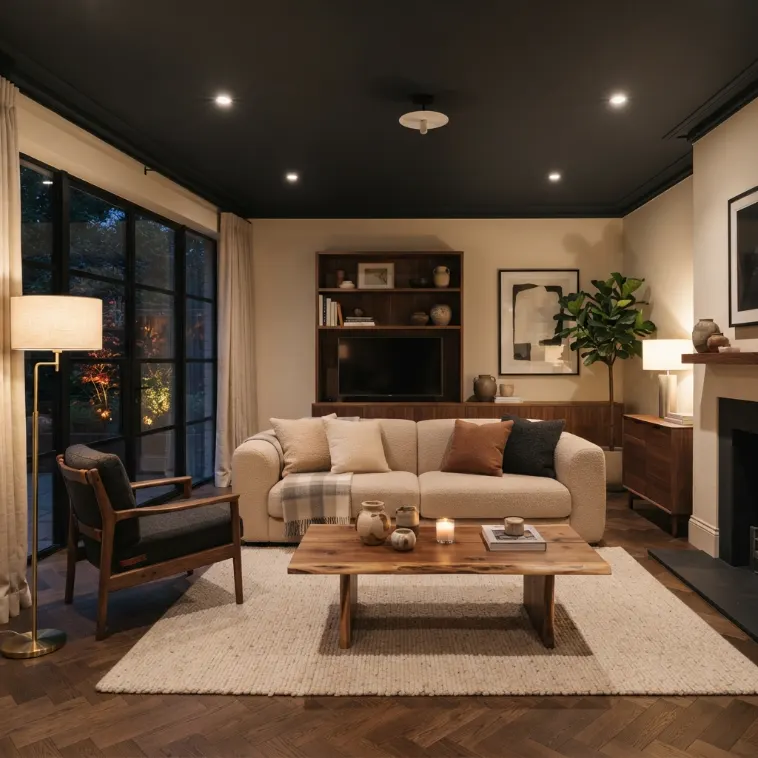
Dark ceilings can work beautifully in rooms with enough natural light. Charcoal, deep brown, muted olive, or soft black can visually lower a very tall room and create a more intimate atmosphere.
The safest approach is to repeat the darker tone somewhere else. A dark ceiling paired with black window frames, a walnut table, or deeper upholstery can feel intentional.
If the room is already small and dim, test the color first. Large ceiling surfaces absorb visual light, so the effect can be much stronger than a small paint sample suggests.
8. A Ceiling That Mirrors the Kitchen Island

In an open kitchen, a modern ceiling design can help define the island as the center of the room. A recessed rectangle, wood panel, or simple lighting zone placed directly above the island creates a visual connection between floor and ceiling.
This is more than decoration. It helps establish a hierarchy in a space that may contain cooking, dining, and living areas all at once.
Measure the island carefully before designing the ceiling feature. The ceiling element does not always need to match it exactly, but it should feel related. Pendant lights can then sit within the ceiling zone and reinforce the connection.
9. Natural Plaster Texture for a Softer Finish

If smooth drywall feels too perfect, a subtle plaster finish can introduce depth without adding a pattern. Limewash-inspired tones, mineral textures, and softly uneven surfaces work well with warm wood and natural fabrics.
Keep the texture fine enough that the ceiling still feels restful. The goal is gentle variation rather than a rough focal point.
Natural-looking finishes are particularly effective in rooms with daylight because the surface changes slightly as the sun moves. Before applying the finish across the whole ceiling, test it under both daylight and artificial lighting.
10. Recessed Linear Lighting for Clean Visual Rhythm
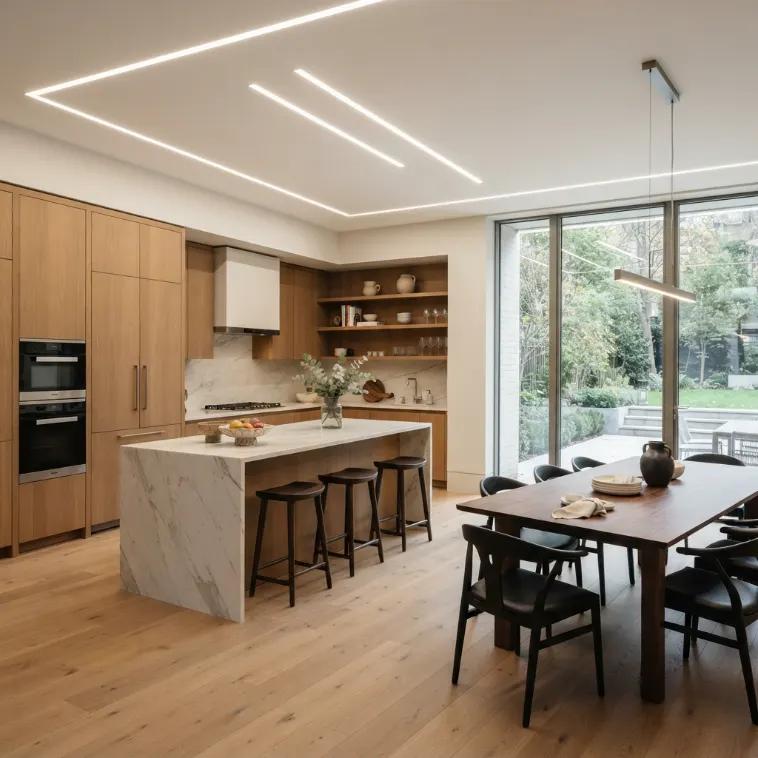
Long recessed light lines are a practical modern ceiling design choice because they provide functional illumination while keeping the ceiling visually organized. They work well in kitchens, hallways, offices, and open living spaces.
In a modern ceiling design, the key is alignment. Lines should relate to walls, cabinetry, furniture, or circulation paths. Randomly placed strips often make a ceiling feel disconnected from the room below.
Use a few strong lines rather than covering every surface with light. Layer them with table lamps, floor lamps, or pendants so the room does not depend on one ceiling source for every activity.
11. A Wood-Framed Ceiling That Highlights a Dining Zone

A framed wood ceiling can make a dining area feel like a defined destination without closing it off from the rest of the room. Use a rectangular border, warm timber inset, or slatted center above the table.
This idea is especially useful in open-plan homes where the dining area needs some visual identity.
Keep the wood finish consistent with nearby cabinetry or flooring. It does not have to be an exact match, but similar undertones help. Add a simple pendant at the center and let the wood frame do most of the visual work.
12. Sculptural Geometry for a Statement Room
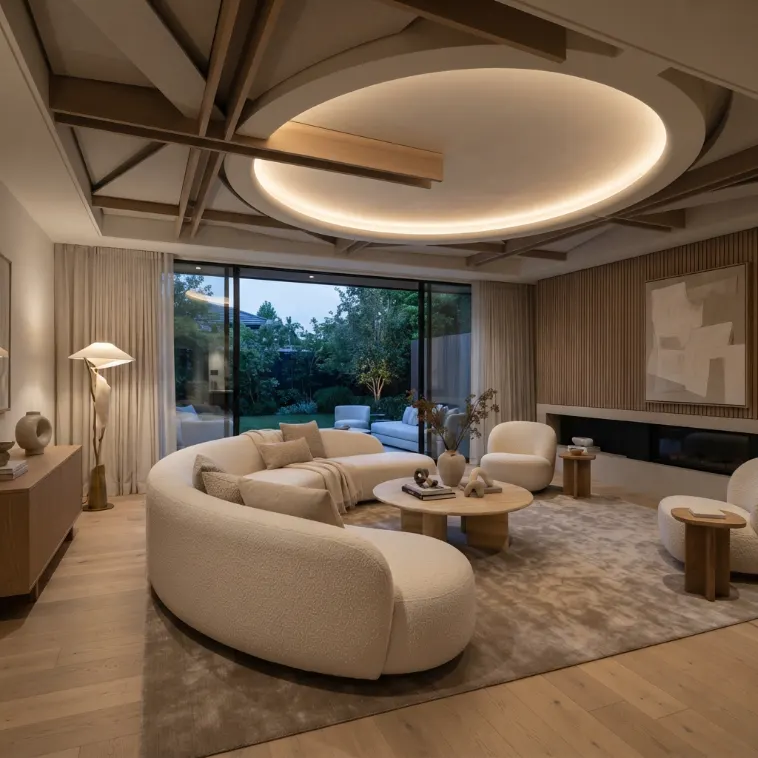
If the room needs a stronger focal point, a modern ceiling design can use geometric forms such as circles, arches, overlapping rectangles, or softly angled planes.
In a modern ceiling design, use one dominant shape and repeat its language subtly below. For example, a circular ceiling feature can echo a round table or curved chairs.
Before choosing a complex form, check the ceiling height and sightlines. A dramatic feature needs enough visual distance to be understood. In a compact room, a simpler version of the same geometry usually feels more balanced.
13. A Ceiling With Concealed Lighting Around the Perimeter

A concealed perimeter glow can make walls appear softer and give the ceiling a floating quality. It is a useful solution for bedrooms and living rooms where direct overhead light can feel too harsh.
Use a continuous line whenever possible. Breaks in the glow can make the effect look unfinished.
Also consider what the light will illuminate. If the upper wall has beautiful plaster, paneling, or artwork, the glow can emphasize it. If the wall has imperfections, use a wider light recess and test the result before final installation.
14. Mixed Materials That Keep a Large Room From Feeling Flat

Large rooms can handle more than one ceiling material. Wood, plaster, painted drywall, and acoustic panels can be combined if each material has a clear role.
For example, a central wood panel can anchor a seating area while the surrounding ceiling stays matte and neutral. The contrast adds depth without requiring decorative objects.
The biggest mistake is adding materials simply because there is empty space. Every change should relate to a function, a zone, or an existing material. Repetition is what keeps a mixed ceiling from becoming visually scattered.
15. A Simple Ceiling Plan That Will Still Look Good Years From Now

The most useful modern ceiling design may be the one that does not depend on a short-lived trend. Clean proportions, warm materials, practical lighting, and thoughtful alignment tend to remain useful even as furniture and colors change.
Before building anything, ask three questions. What should the ceiling help illuminate? Which part of the room should it frame? And what existing material should it connect with?
I have found that answering those questions first prevents many expensive design mistakes. A ceiling does not need to be dramatic to make a room feel finished. It needs to make sense with everything around it.
FAQs About Modern Ceiling Design
What is a modern ceiling design, and what does it include?
A modern ceiling design is a planned ceiling treatment that combines clean forms, useful lighting, suitable materials, and good proportions. It can be very simple, such as a flat ceiling with a pendant, or more architectural, such as a tray, cove, wood panel, or sculptural form.
What ceiling design makes a room look bigger?
A modern ceiling design that uses light colors, simple layers, perimeter lighting, and well-placed recessed lighting can help a room feel more open. Keeping the ceiling visually uncluttered is often more important than adding complex details.
Are cove ceilings still a good choice?
Yes. A restrained cove can provide soft ambient light and architectural depth without making the ceiling visually busy. Good installation and concealed light sources are important for a clean result.
What materials work well for modern ceilings?
Painted drywall, natural wood, plaster, acoustic materials, and carefully used metal details can all work. The best choice depends on the room, ceiling height, lighting needs, maintenance, and the materials already present.
Should the ceiling match the walls?
It does not have to. A matching color creates a calm, continuous look, while a slightly different shade or material can add depth. The choice should support the proportions and mood of the room.
Conclusion: Let the Ceiling Do More With Less
A well-planned modern ceiling design can change a room without filling it with more stuff. The strongest ideas use proportion, light, texture, and alignment to make the architecture feel intentional.
Start with the problem your room has. Maybe it feels flat, too dark, too tall, visually divided, or simply unfinished. Then choose the ceiling detail that solves that specific problem.
That approach is more useful than copying a trend exactly. Whether you choose warm wood, a shallow tray, concealed lighting, a curved detail, or a completely simple surface, the goal is the same: make the room work better and feel better to live in.