28 Serene Japandi Bathroom Ideas for a Calm Spa-Like Retreat
Japandi bathroom ideas blend Japanese minimalism with Scandinavian warmth to create a calm, spa-like room: light wood, warm neutrals, natural stone, matte black fixtures, and clear, uncluttered surfaces. The style fits a bathroom naturally because the room already runs on water and stone, so a deep soaking tub, a floating oak vanity, and one or two handmade ceramic pieces feel right at home there. These 28 ideas show how to build that quiet feeling, whether you are planning a full remodel or refreshing a small powder room with towels, a wooden bath mat, and better light.
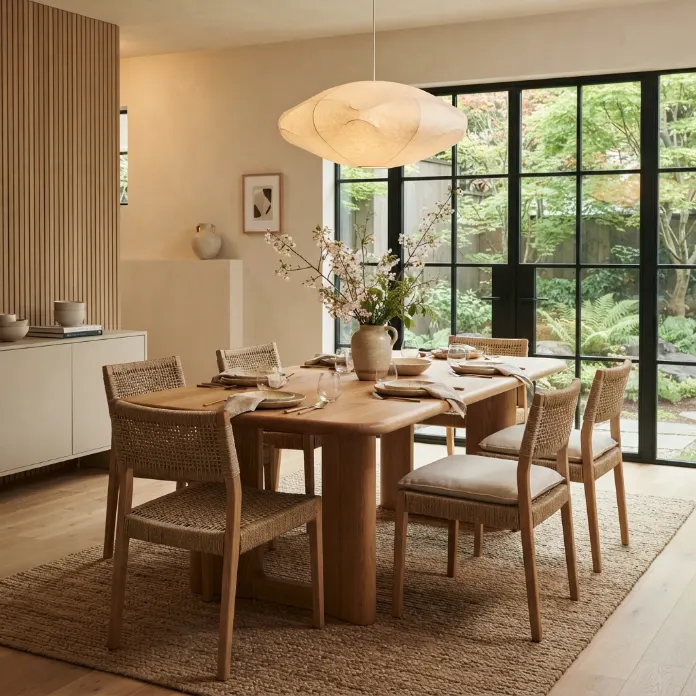
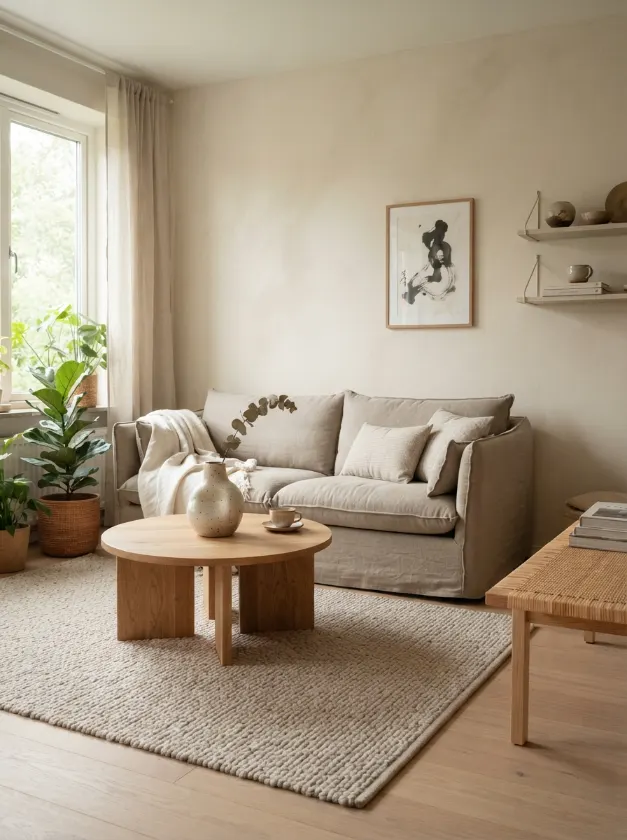
The same pale wood and linen palette runs through the whole house, so the bathroom is the natural next step once the living spaces are done — these japandi living room ideas show the shared mix of warm white, light oak, and matte black that ties the rooms together. Start with the biggest surface — the walls, the floor, or the tub — then add texture and warm light, and keep only what you use and love on display. A Japandi bathroom does not need a big budget or a full remodel; many of the ideas below cost little more than a new towel set, a wooden mat, or a tin of warm white paint.
Japandi Bathroom Ideas: Key Takeaways
What is a Japandi bathroom? A Japandi bathroom blends Japanese minimalism with Scandinavian warmth: warm neutrals, natural wood and stone, clean lines, matte finishes, and uncluttered surfaces that make daily routines feel calm and spa-like.
What colors work best in a Japandi bathroom? Warm white, cream, greige, sand, and soft sage, with pale oak wood and small charcoal or matte black accents on fixtures, mirror frames, and handles.
What materials should you choose? Sealed light wood such as white oak or teak, natural stone or matte stone-look tile, handmade ceramics, linen, and waffle cotton — all matte, never glossy.
Can Japandi work in a small bathroom? Yes. Its decluttered, minimal approach suits small rooms well: a floating vanity, a large mirror, light neutrals, and one open shelf make a compact bathroom feel open and serene.
1. How Do Warm Neutrals Set the Japandi Bathroom Mood?
Warm neutrals set the mood because they cover the largest surfaces — walls, floor, and tile — and a calm base lets wood grain and stone texture do the talking.
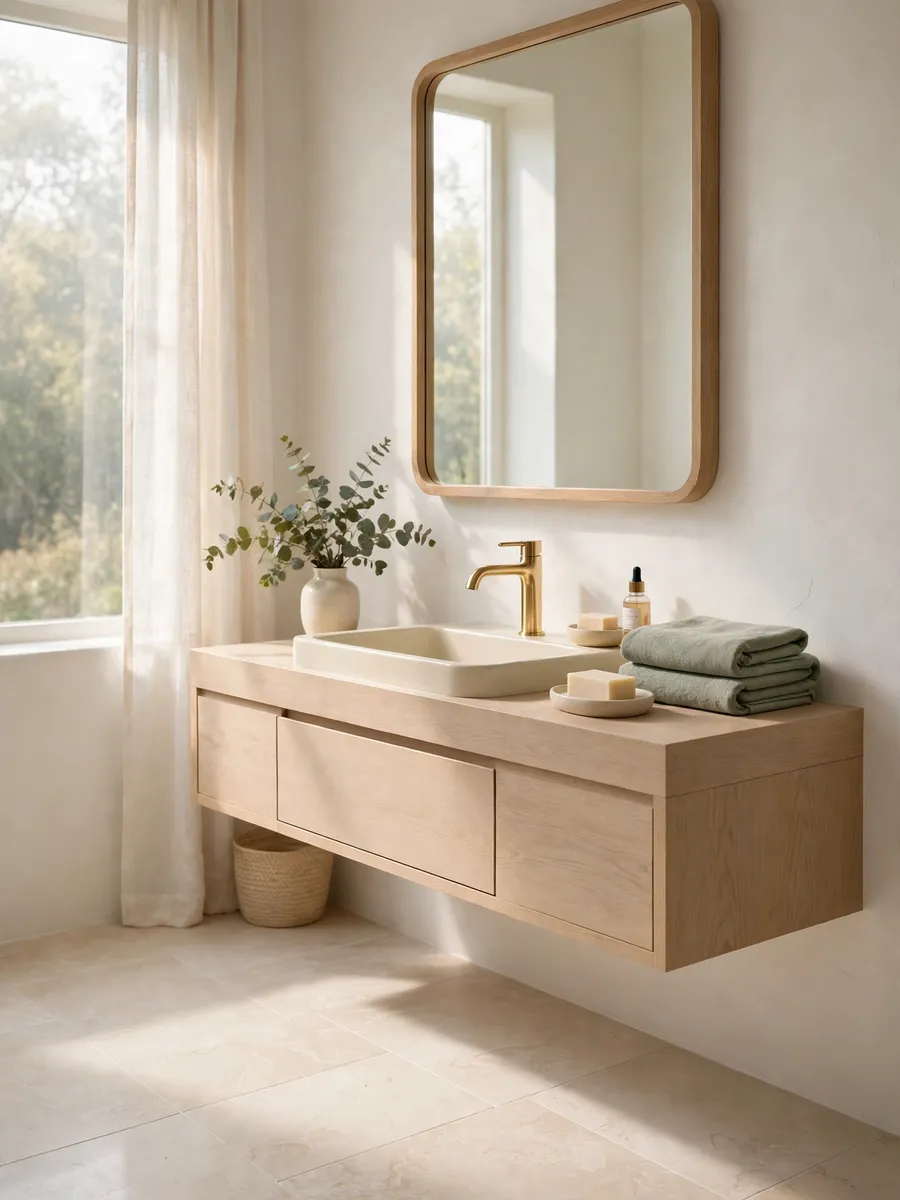
A concrete example: warm white walls, a pale oak vanity, sage green towels, and a cream stone floor make a plain white bathroom feel like a quiet spa without changing a single fixture.
Quick tips
- Pick one warm white and repeat it on walls, ceiling, and trim.
- Keep the palette to three neutrals plus one small dark accent.
2. Why Is a Deep Soaking Tub the Heart of a Japandi Bathroom?
A deep soaking tub is the heart of a Japandi bathroom because the Japanese bathing ritual is the style’s soul — a quiet, unhurried soak in a simple, beautiful tub.
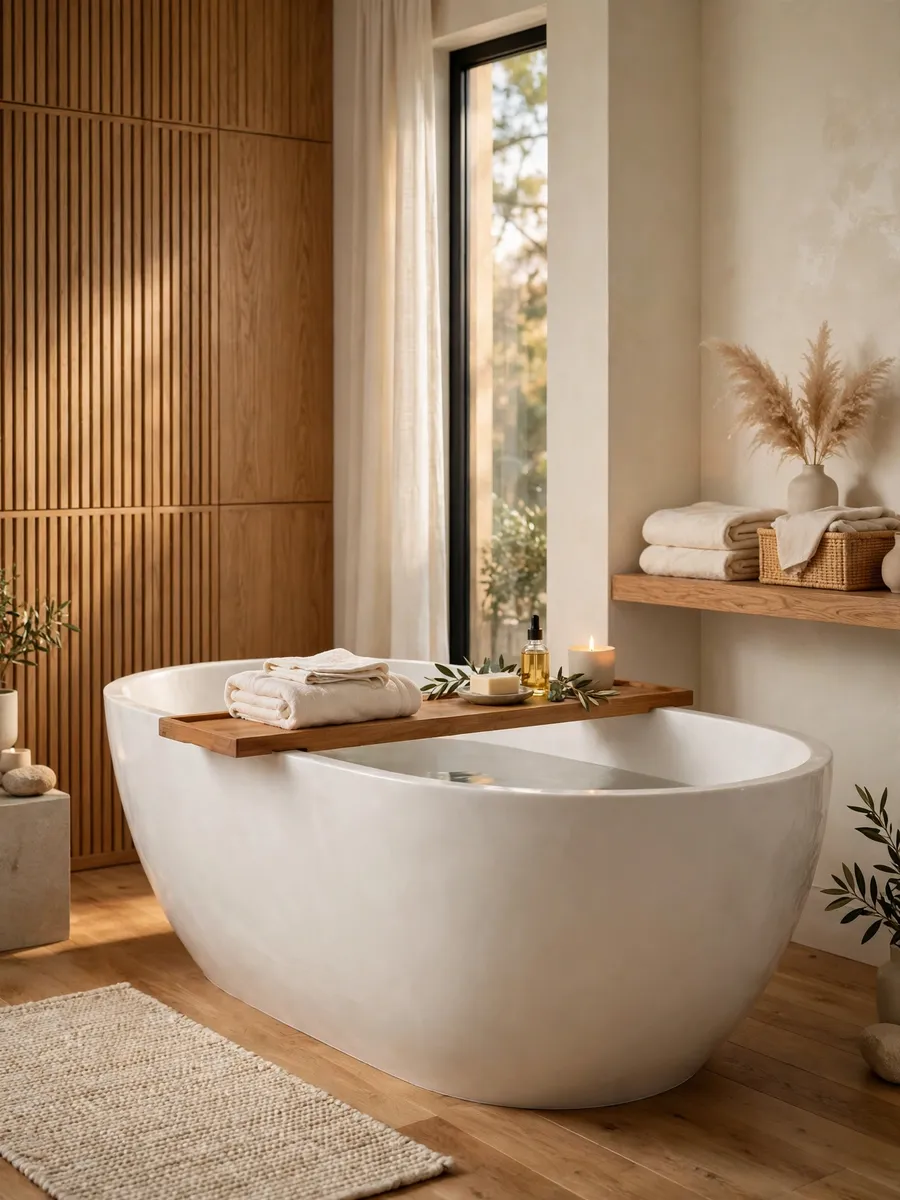
A concrete example: a freestanding white stone-resin tub, about 40 inches long, with a teak bath tray and a folded cream towel, turns an ordinary evening bath into a slow, spa-like ritual.
Quick tips
- Choose a deep tub over a long one — depth matters more than length.
- Leave clear space around the tub so it reads as a sculpture.
3. What Makes a Floating Oak Vanity So Calming?
A floating oak vanity calms the room because the open floor beneath it makes the bathroom feel larger, while the warm wood grain softens hard tile and glass.
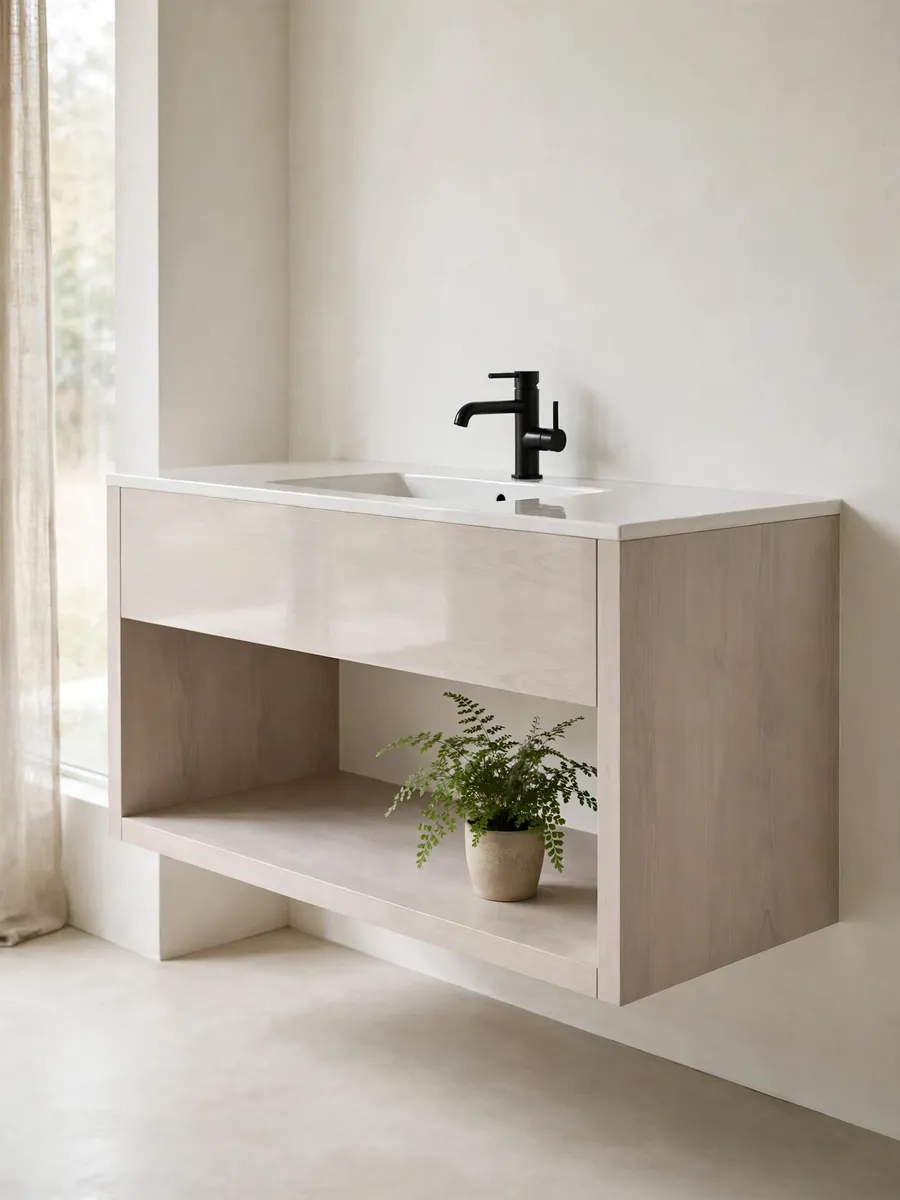
A concrete example: a wall-mounted pale ash vanity with a white ceramic basin, matte black faucet, and a single open shelf below holds towels and a small fern without touching the floor.
Quick tips
- Mount the vanity 8 to 10 inches off the floor for the floating look.
- Use a water-resistant oil finish so the wood survives steam.
4. How Does a Stone Vessel Sink Anchor the Vanity?
A stone vessel sink anchors the vanity because the bowl sits on top like a sculptural object, adding earthy weight to an otherwise light, floating setup.
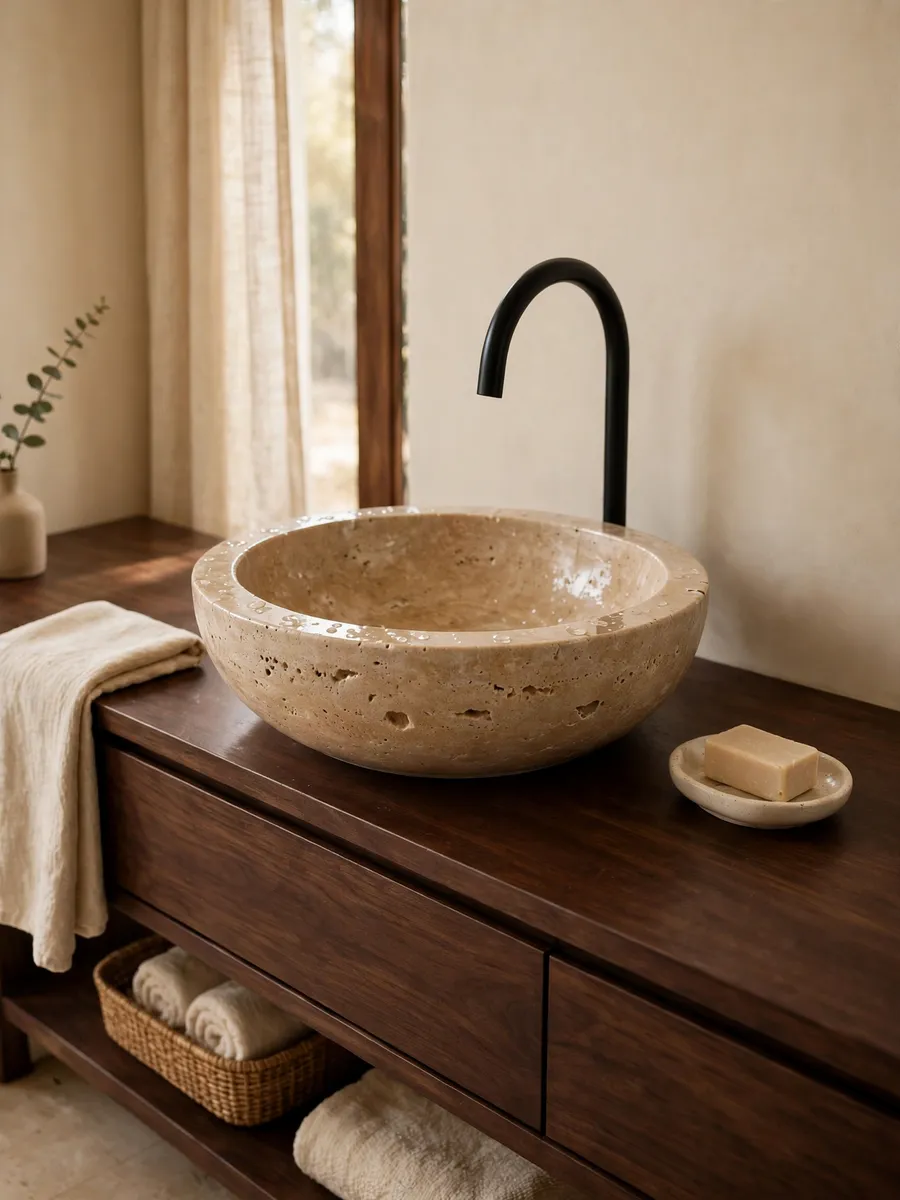
A concrete example: a round travertine vessel bowl on a dark walnut vanity, with a tall matte black faucet, makes a builder-grade bathroom look custom and calm.
Quick tips
- Choose a hand-finished stone bowl — small imperfections suit the style.
- Pair it with a tall faucet so water reaches the bowl easily.
5. Which Tile Pairing Works Best in a Japandi Bathroom?
Warm wood-look tile paired with matte stone-look tile works best, because the two materials carry the whole Japandi vocabulary: wood for warmth, stone for grounding calm.
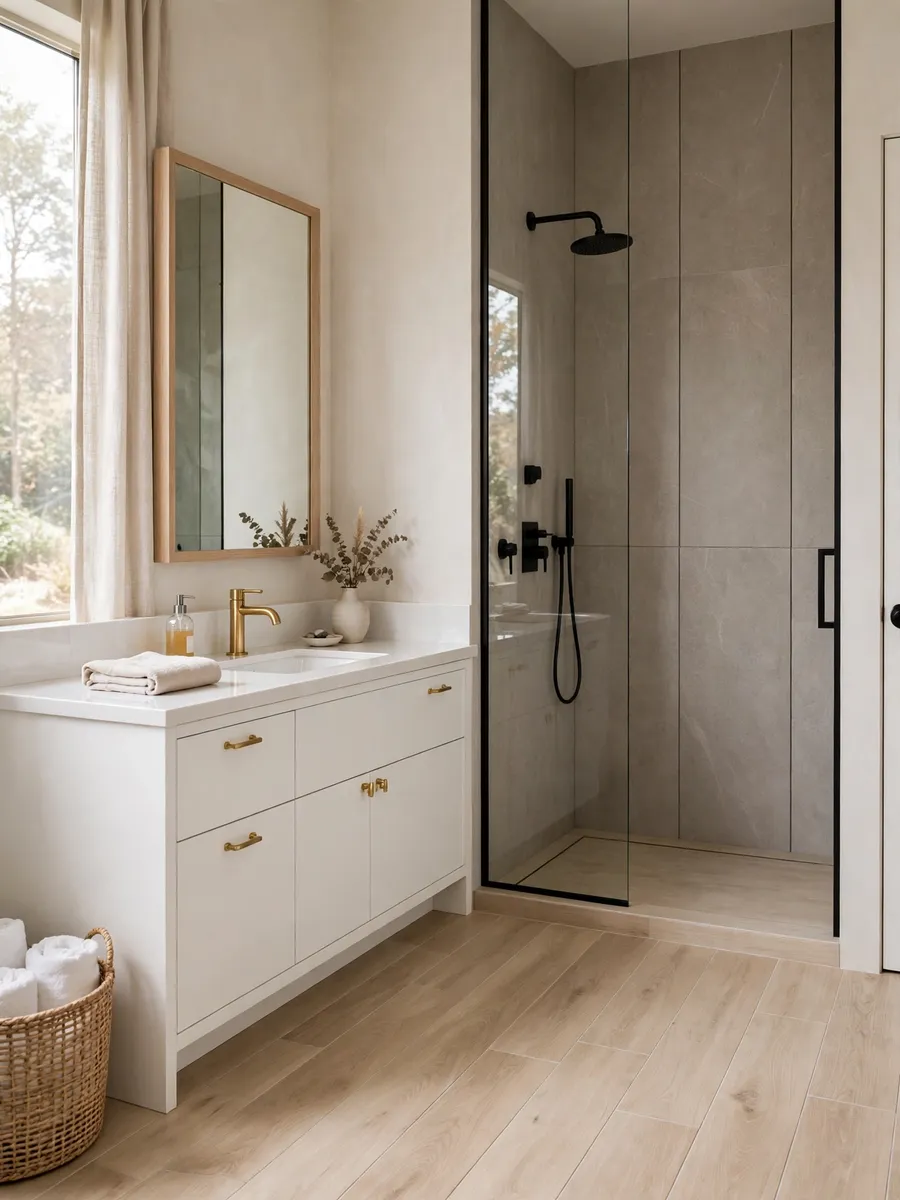
A concrete example: pale oak-look planks on the floor with large warm-grey stone-look tiles in a vertical stack on the shower wall, and these bathroom tile ideas show how the right pairing sets the room’s whole mood. Keep grout close to the tile color so the surfaces read as one quiet plane.
Quick tips
- Use matte tile only — gloss breaks the calm, quiet finish.
- Repeat one tile on the floor and one wall to tie the room together.
6. Why Are Matte Black Fixtures the Japandi Default?
Matte black fixtures are the Japandi default because their quiet, linear shapes add just enough contrast against pale wood and cream stone without shouting for attention.
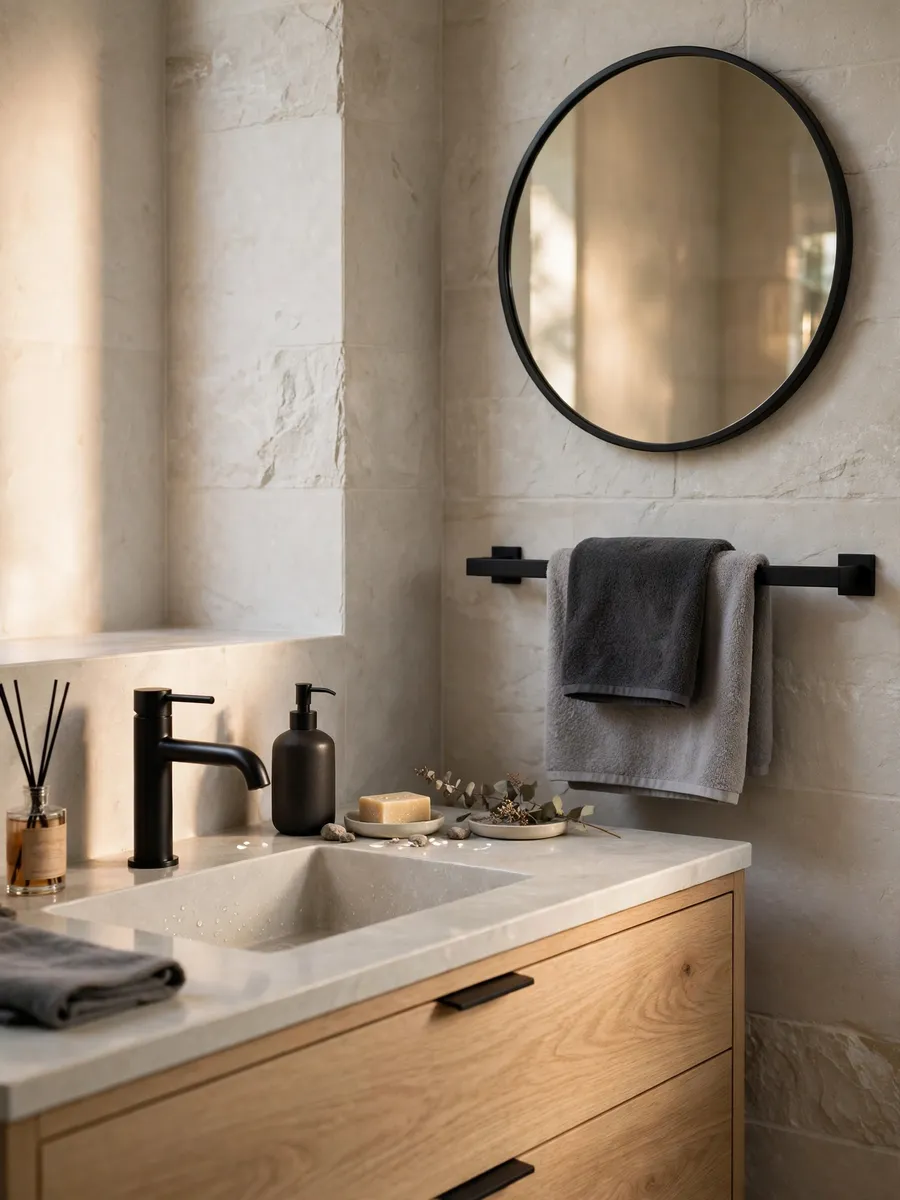
A concrete example: a matte black faucet, matching towel rail, and black-framed mirror against pale stone walls give a light bathroom the crisp punctuation it needs.
Quick tips
- Use matte black sparingly — faucet, showerhead, and one or two handles.
- Never mix more than two metal finishes in one bathroom.
7. How Do Open Wooden Shelves Keep a Japandi Bathroom Calm?
Open wooden shelves keep the room calm when they hold only a few beautiful things, because one shelf of rolled towels and a single plant reads as styling, not storage.
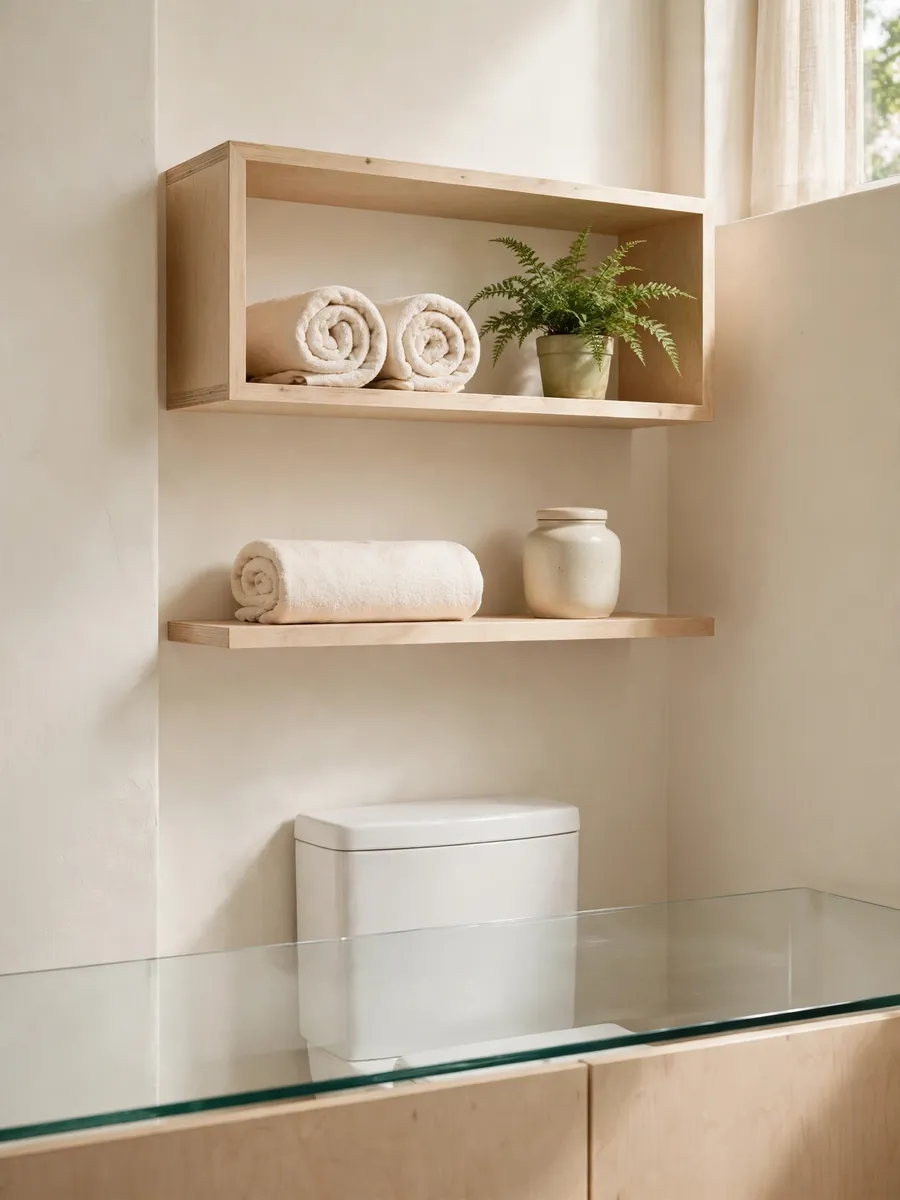
A concrete example: two light birch shelves above the toilet holding three rolled cream towels, a small potted fern, and one ceramic jar leave the vanity counter completely clear.
Quick tips
- Limit open shelves to one wall so the room stays uncluttered.
- Leave empty space on every shelf — breathing room is the point.
8. What Makes a Wooden Bath Mat Feel Like a Spa?
A wooden bath mat feels like a spa because stepping onto warm teak slats instead of cold tile turns an everyday moment into a small ritual.
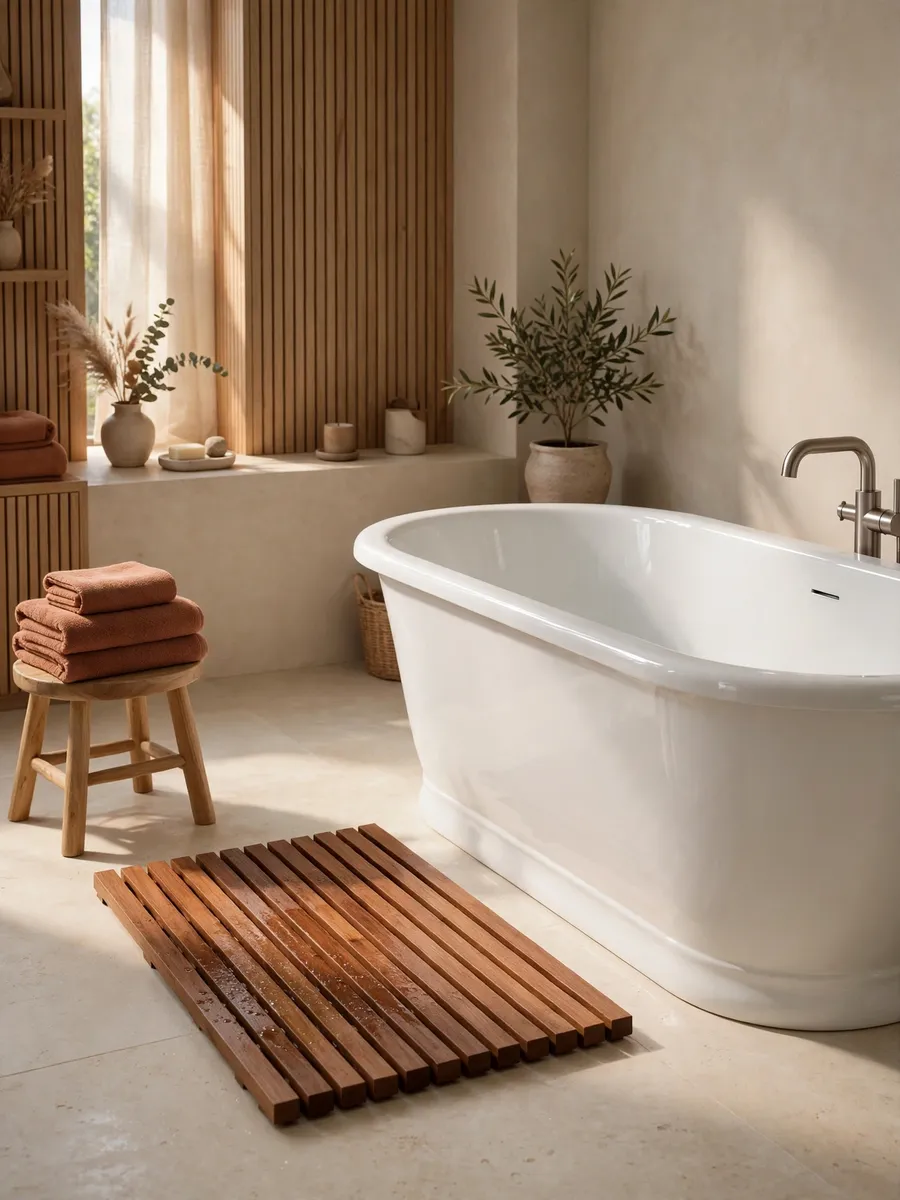
A concrete example: a teak slatted mat beside a freestanding tub, with terracotta towels and a cream stone floor, makes bare feet meet warm wood every single morning.
Quick tips
- Choose teak or sealed bamboo — both handle water and dry fast.
- Stand the mat upright after showers so air reaches both sides.
9. How Does a Shoji-Style Screen Add Privacy Without Blocking Light?
A shoji-style screen adds privacy without blocking light because its translucent paper or frosted panels filter daylight into a soft glow while hiding the tub or toilet from view.
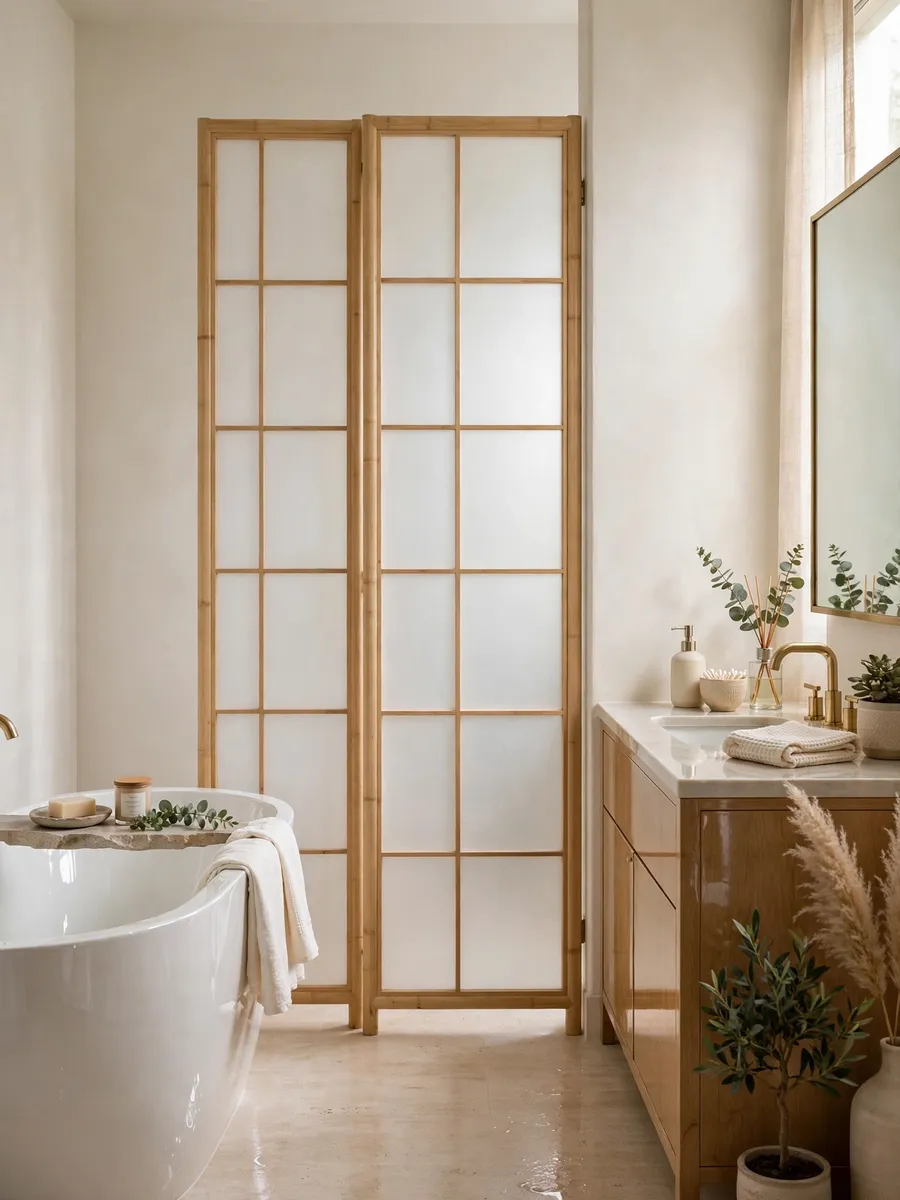
A concrete example: a light bamboo-framed screen with frosted panels between the soaking tub and the vanity gives the bath area privacy while the whole room stays bright.
Quick tips
- Use frosted glass or acrylic panels — real rice paper cannot handle steam.
- Keep the frame pale wood so the screen reads light, not heavy.
10. Why Is Linen the Best Window Treatment for a Japandi Bathroom?
Linen is the best window treatment because its soft, natural weave filters daylight into a warm glow, and it looks far calmer than blinds or shutters.
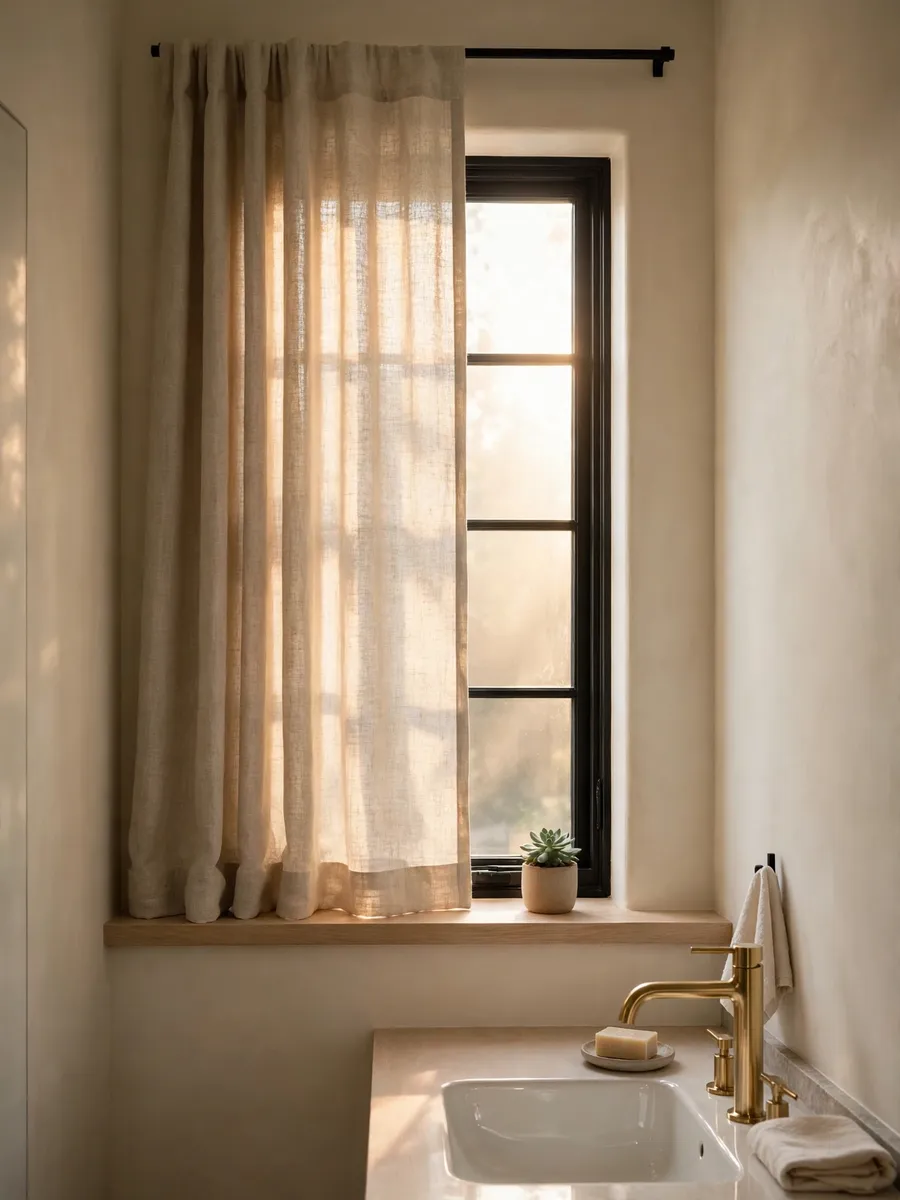
A concrete example: one panel of unbleached linen hung on a slim black rod over a small bathroom window lets in soft morning light while keeping the room private.
Quick tips
- Choose unbleached or oatmeal linen for the warmest light.
- Hang the panel to the floor so the window looks taller.
11. Which Plant Belongs in a Japandi Bathroom?
A snake plant or a single eucalyptus stem belongs in a Japandi bathroom, because one strong green shape adds life without clutter, and both love humidity.
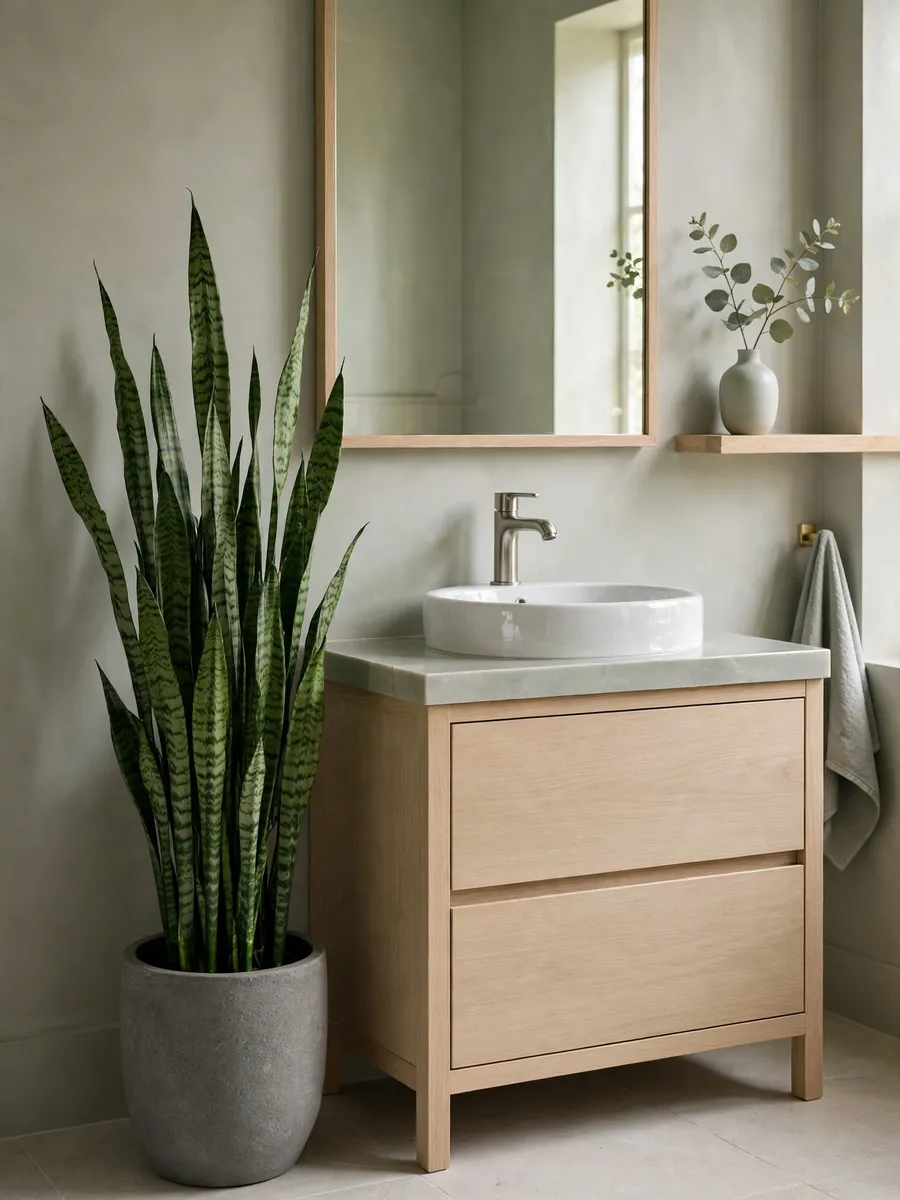
A concrete example: a tall snake plant in a matte stone-grey pot on the floor beside the vanity, with one eucalyptus stem in a ceramic vase on the shelf, greens the room in two quiet moves.
Quick tips
- One plant is enough — two at most, or the room stops feeling minimal.
- Use a plain ceramic or stone pot, never a patterned one.
12. How Do You Layer Warm Light in a Japandi Bathroom?
Layer warm light by combining one soft ceiling light with wall sconces and a dimmer, because face-level light at 2700K flatters skin and turns evening baths into a calm ritual.
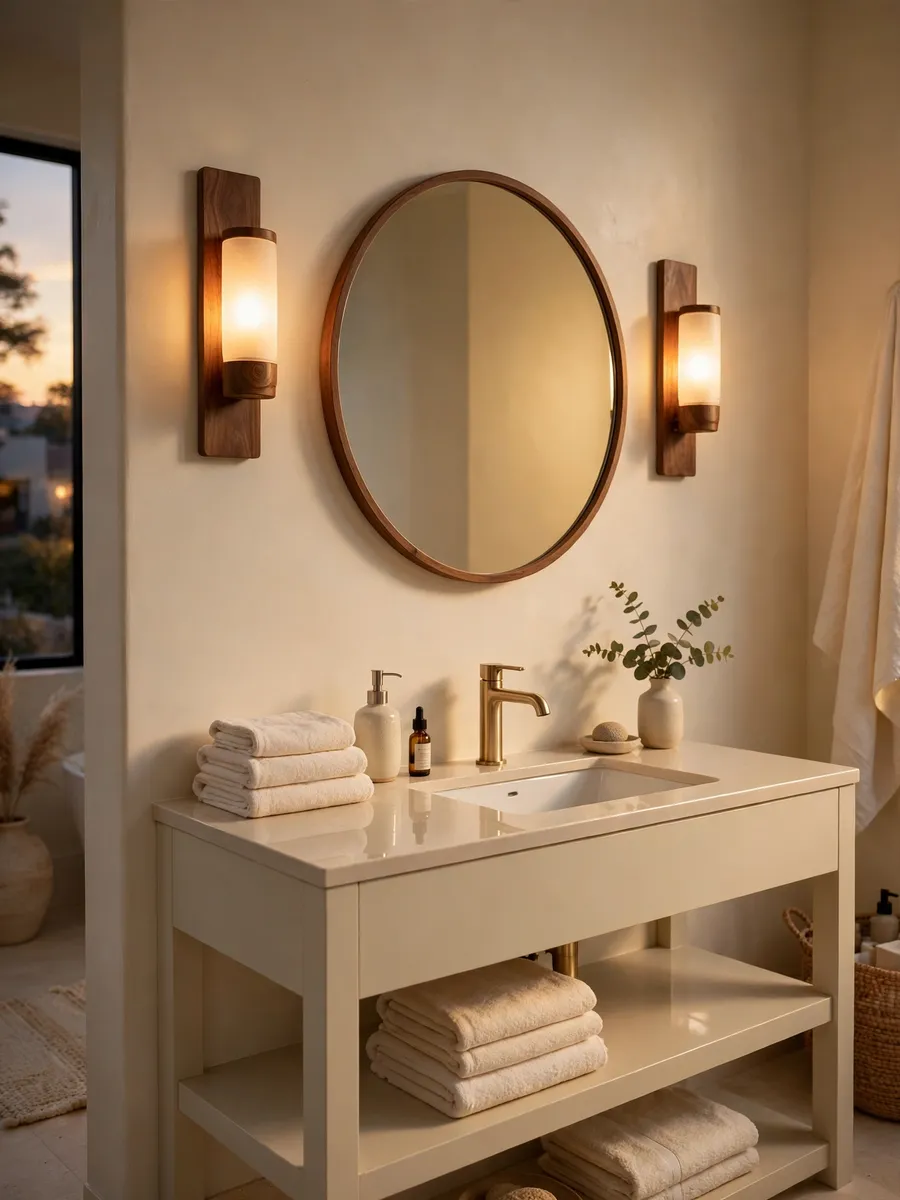
A concrete example: two walnut sconces with frosted glass shades beside the mirror, plus a dimmable ceiling light, let the same bathroom feel bright at 7 a.m. and candle-soft at 9 p.m.
Quick tips
- Keep every bulb warm white, around 2700K to 3000K.
- Put the sconces on a dimmer for evening soaks.
13. Why Does a Built-In Shower Niche Beat a Shower Caddy?
A built-in shower niche beats a caddy because shampoo and soap sit flush inside the wall, so the shower stays visually empty and nothing hangs, rusts, or clutters the glass.
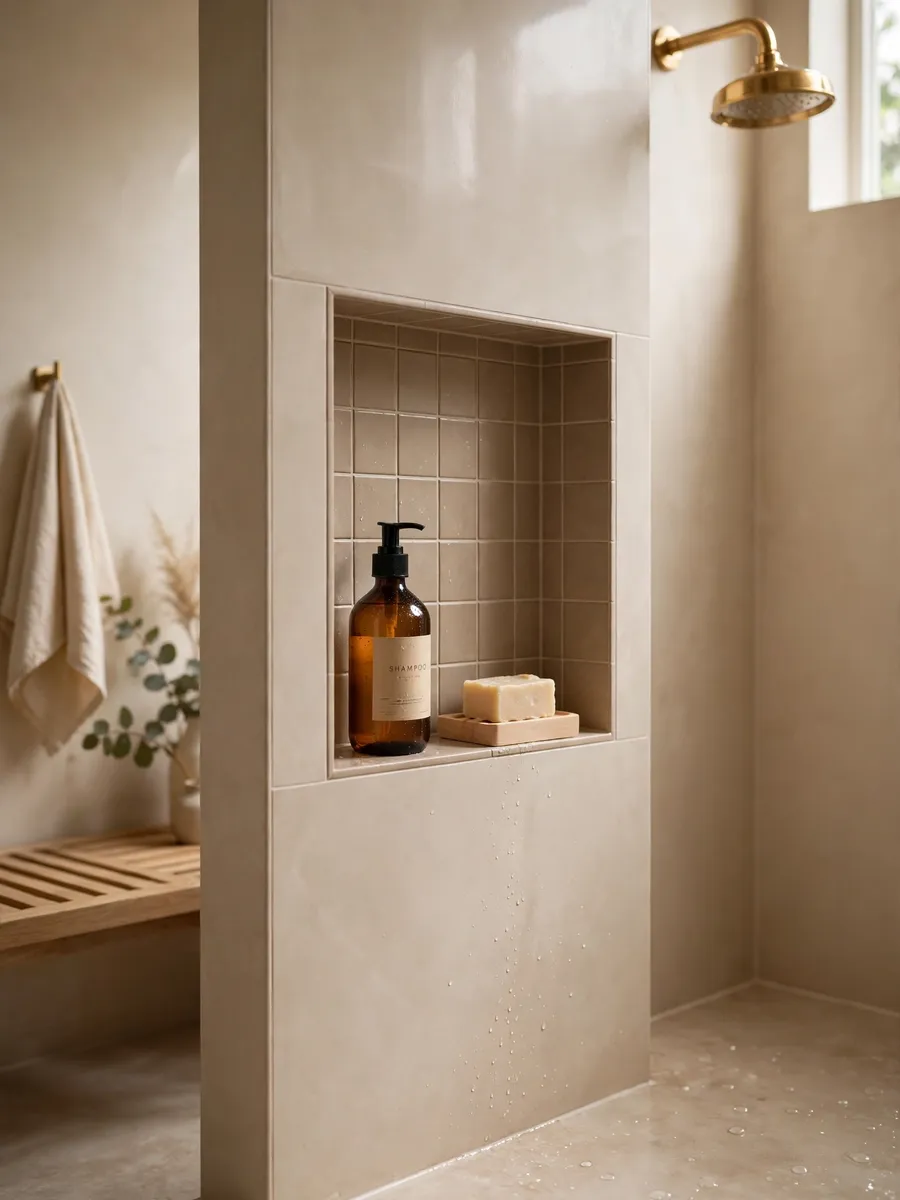
A concrete example: a tall sand-colored tile niche with two shelves, holding one amber glass shampoo bottle and a wooden soap dish, keeps a walk-in shower looking like a stone cave.
Quick tips
- Tile the niche in the same tile as the shower wall.
- Keep only daily essentials inside — the rest stays in a drawer.
14. What Makes a Wooden Shower Stool Worth the Space?
A wooden shower stool is worth the space because it doubles as a seat, a footrest for shaving, and a perch for a towel or a plant, all in one warm, simple object.
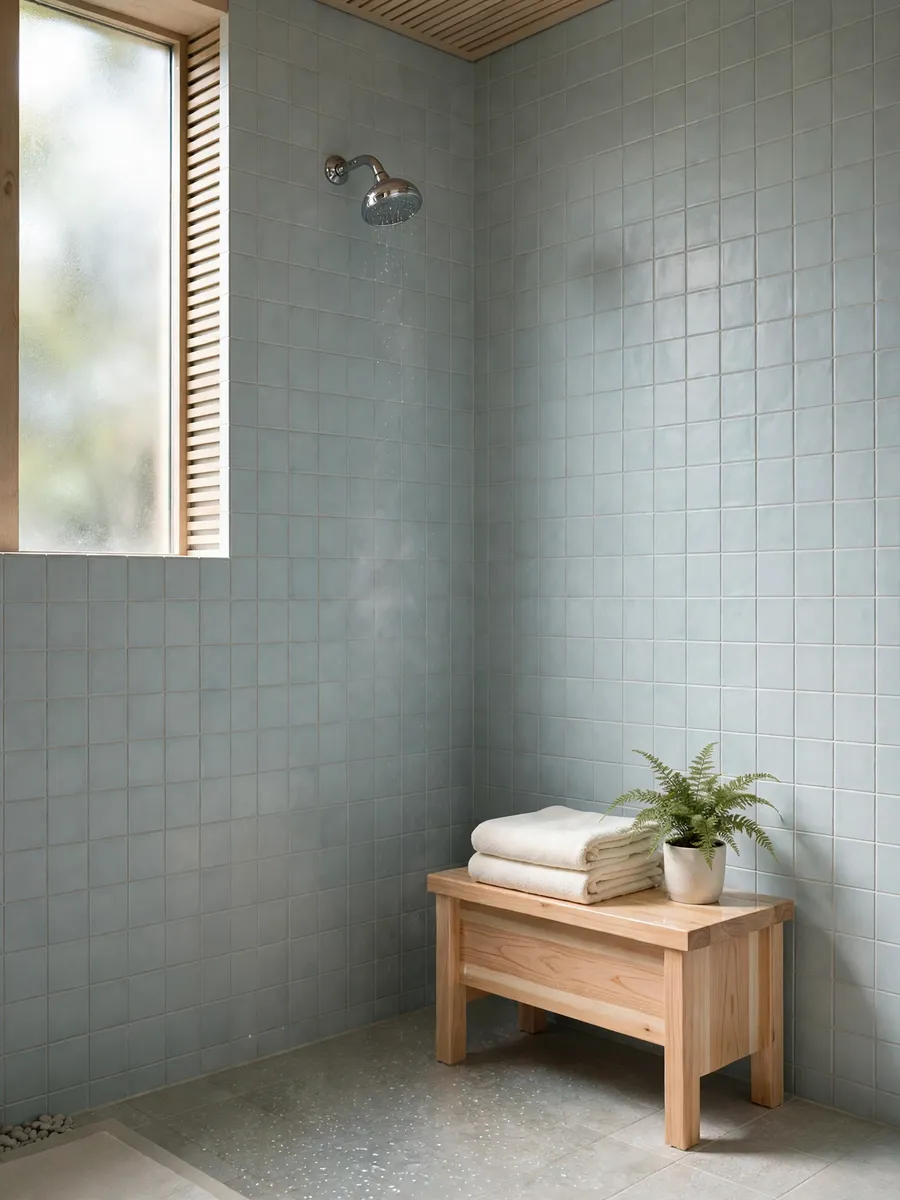
A concrete example: a low pale cedar stool in the corner of a walk-in shower, holding a folded cream towel and a small potted fern, makes the shower feel like a Japanese onsen.
Quick tips
- Choose teak or cedar — both resist water and dry quickly.
- Keep the stool low and simple so it never crowds the shower.
15. How Do Waffle and Linen Towels Complete the Japandi Look?
Waffle and linen towels complete the look because their textured, matte weave adds the soft, handmade layer that hard tile and stone need, in calm neutral colors.
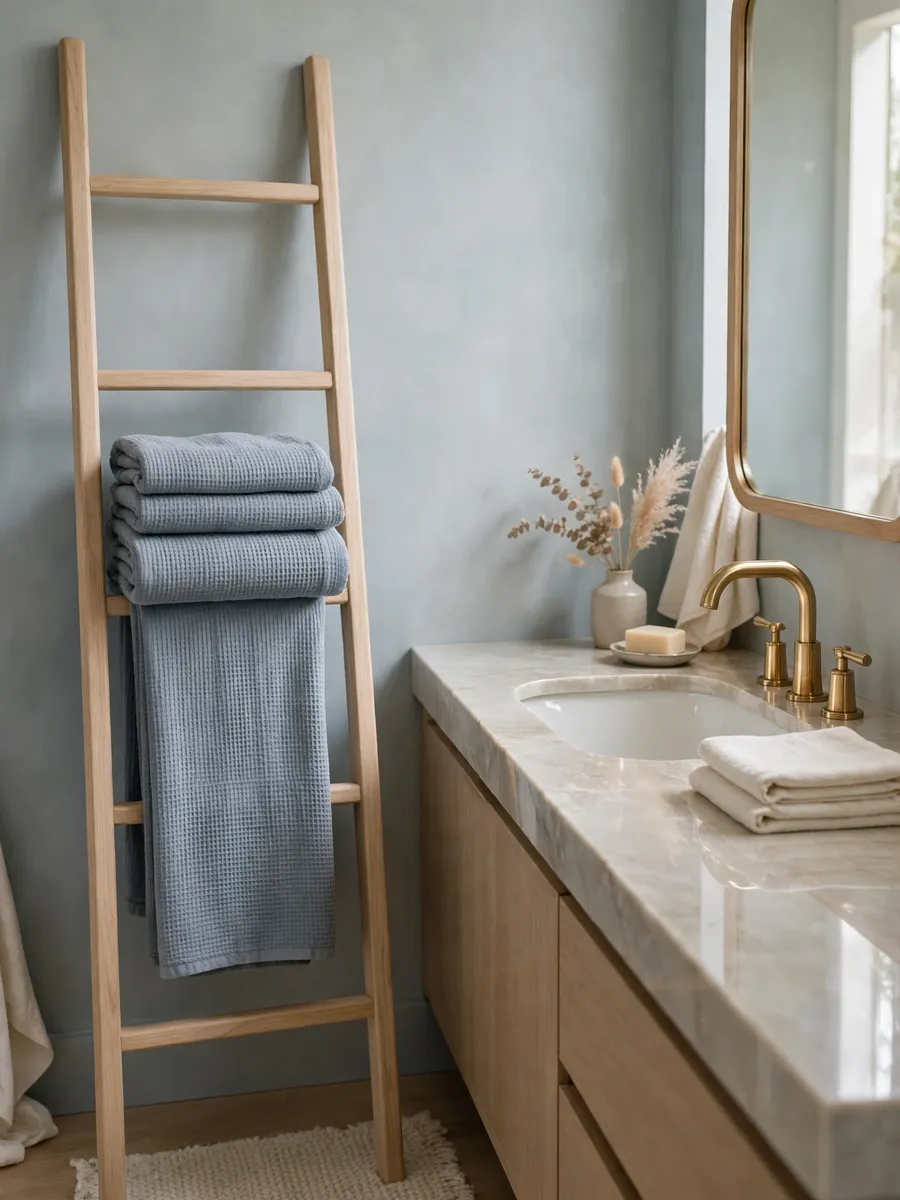
A concrete example: dusty blue-grey waffle towels folded on a wooden ladder, with cream linen hand towels by the sink, add quiet color and texture without a single pattern.
Quick tips
- Stick to one towel color family — cream, grey, or muted sage.
- Fold, never bunch, so the texture reads as intentional.
16. Which Mirror Shape Suits a Japandi Bathroom Best?
A round or soft-arched mirror suits a Japandi bathroom best, because its gentle curve softens the room’s straight tile lines and reads calm rather than sharp.
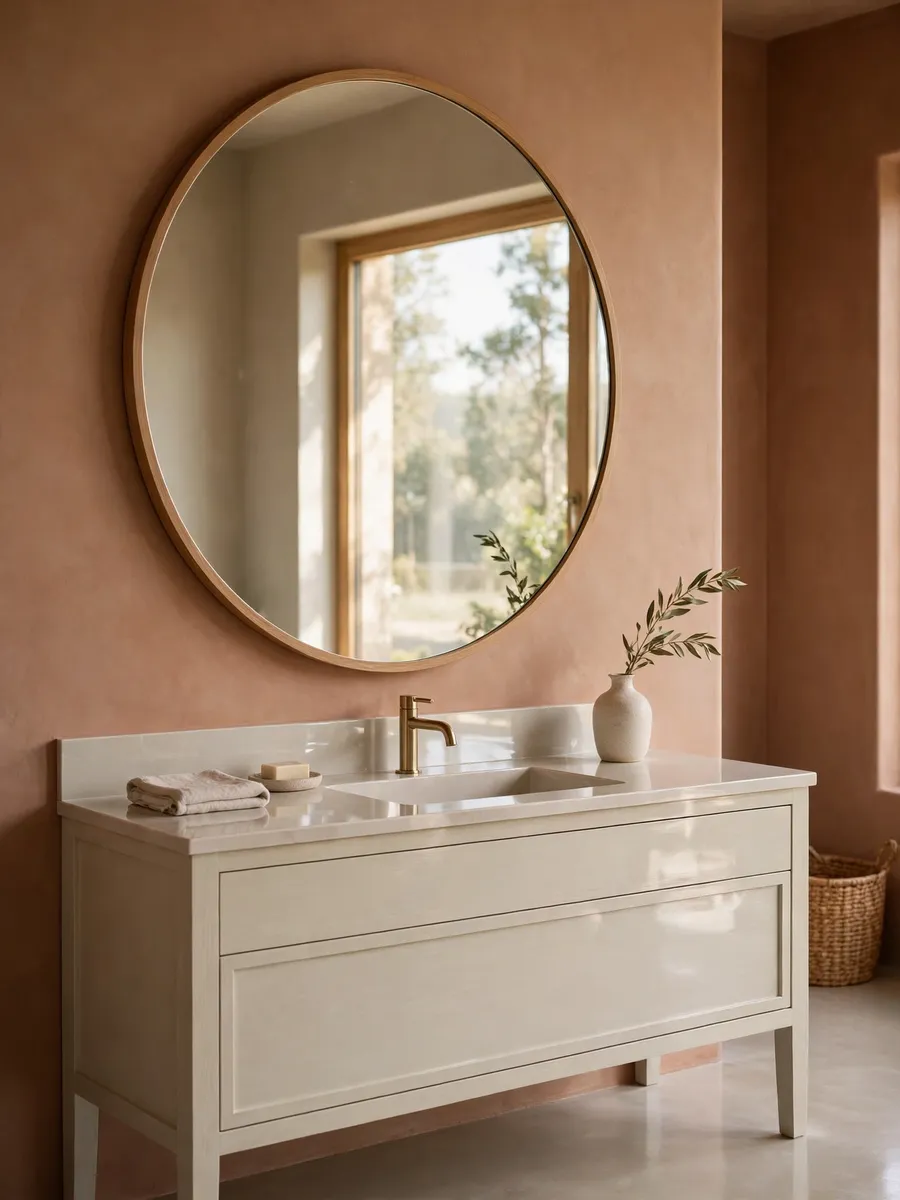
A concrete example: a large round mirror in a thin oak frame above a pale vanity, set against warm clay-colored walls, reflects window light and doubles the room’s sense of space.
Quick tips
- Go as large as the wall allows — one big mirror opens small rooms.
- Match the frame wood to the vanity for a pulled-together look.
17. Why Choose a Stone or Terrazzo Countertop?
A stone or terrazzo countertop grounds the vanity because its natural veining and speckled texture add earthy weight, while a plain white top can look flat and clinical.
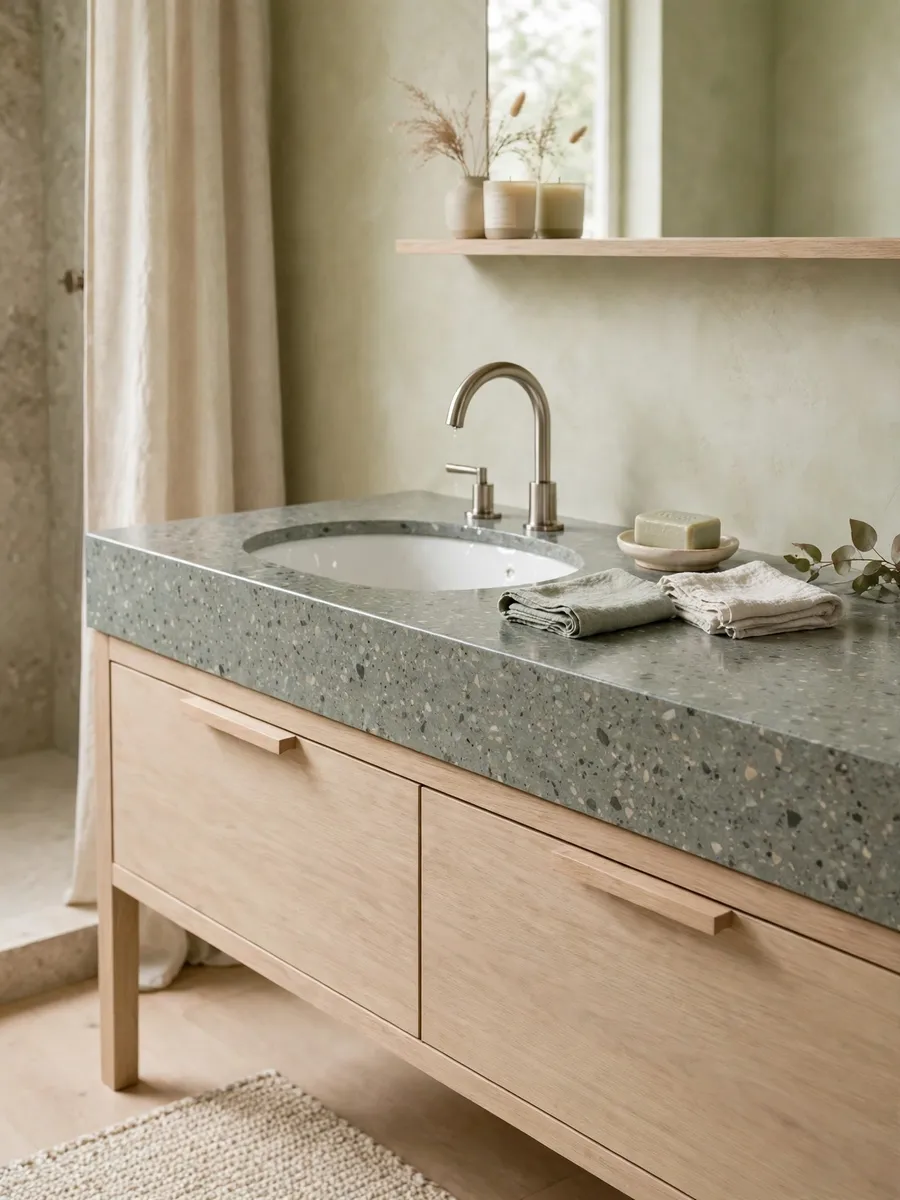
A concrete example: a honed sage-grey terrazzo top with cream and charcoal flecks on a pale oak vanity, with a single ceramic soap dish, makes the whole vanity feel crafted.
Quick tips
- Choose honed or matte finishes — polished stone looks too glossy here.
- Seal natural stone so water and soap never stain it.
18. How Does Japandi Work in a Small Bathroom?
Japandi works in a small bathroom because its decluttered, minimal approach makes a compact space feel open: light neutrals, a floating vanity, and one large mirror do most of the work.
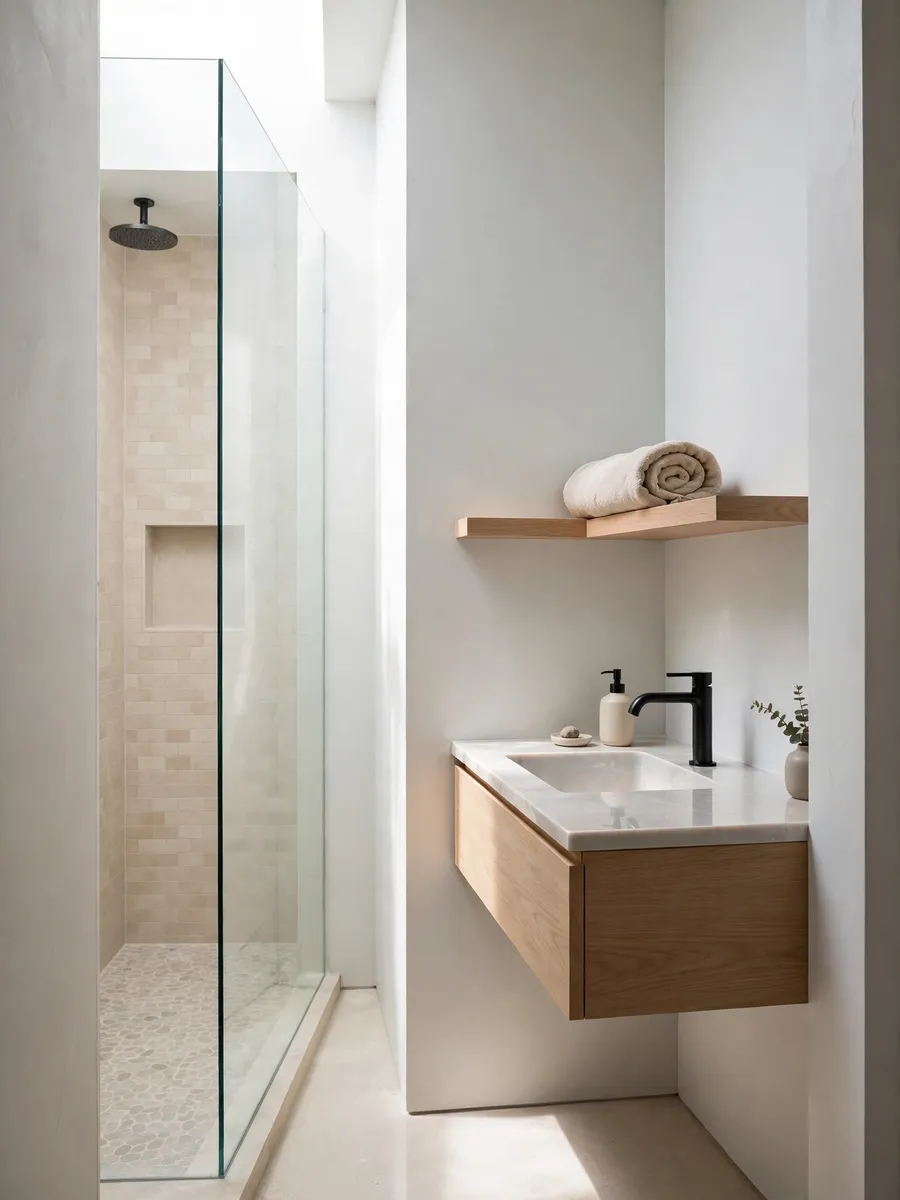
A concrete example: a narrow bathroom with pale ash walls, a wall-hung oak vanity, a frameless glass shower screen, and a single floating shelf feels twice its size.
Quick tips
- Use a glass shower screen, not a curtain, to open the sightline.
- Keep the floor visible — wall-hung fixtures free up floor space.
19. What Do Limewash Walls Add to a Japandi Bathroom?
Limewash walls add soft, cloudy texture that flat paint cannot, because the mineral wash catches light differently across the wall and gives the room a hand-finished, earthy depth.
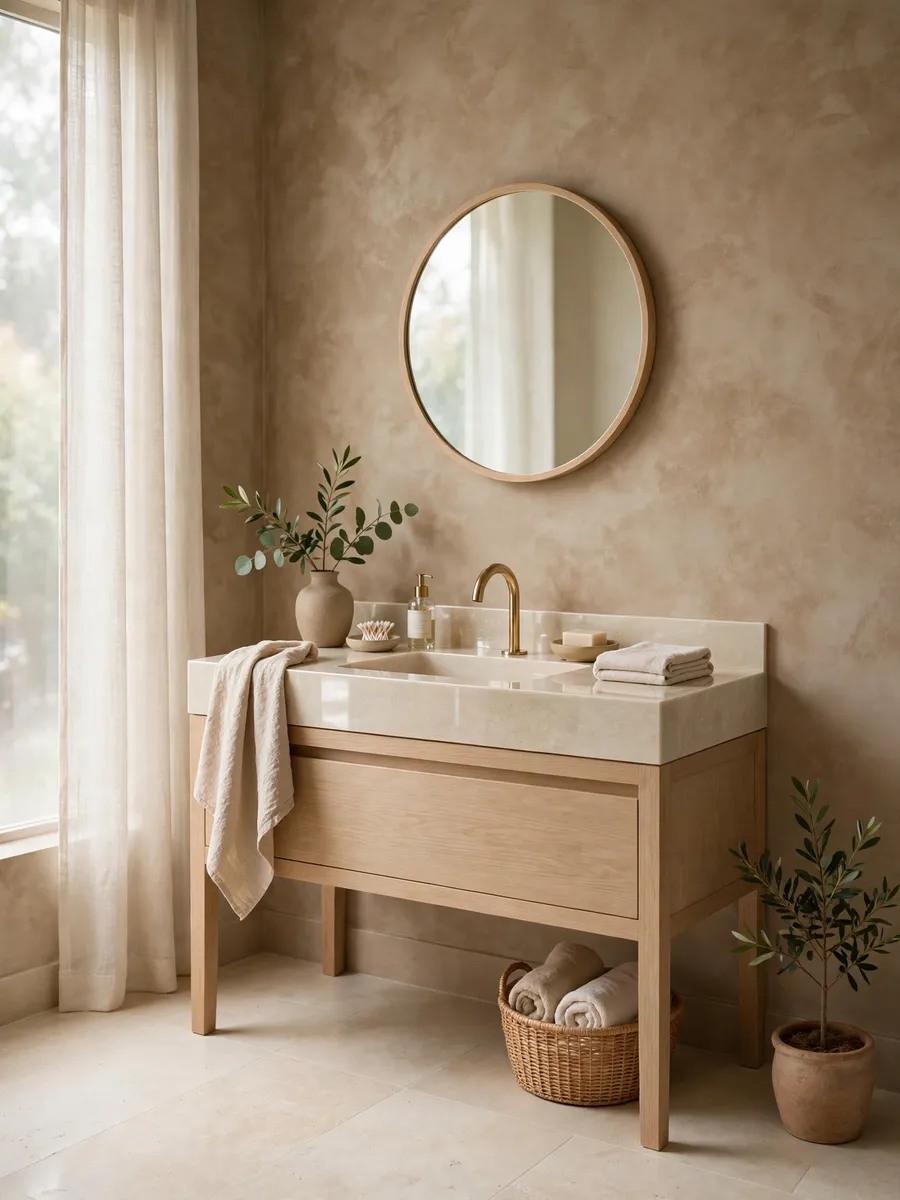
A concrete example: warm mushroom limewash on the walls, a pale oak vanity, and a cream stone floor make a small bathroom feel like a quiet room in a Kyoto guesthouse.
Quick tips
- Seal limewash in wet zones so steam never marks it.
- Keep the rest of the room simple — limewash is the texture.
20. Where Do Woven Baskets Fit in a Japandi Bathroom?
Woven baskets fit wherever you need flexible, visible storage — under an open vanity, on a shelf, or beside the tub — because they hide clutter while adding warm, natural texture.
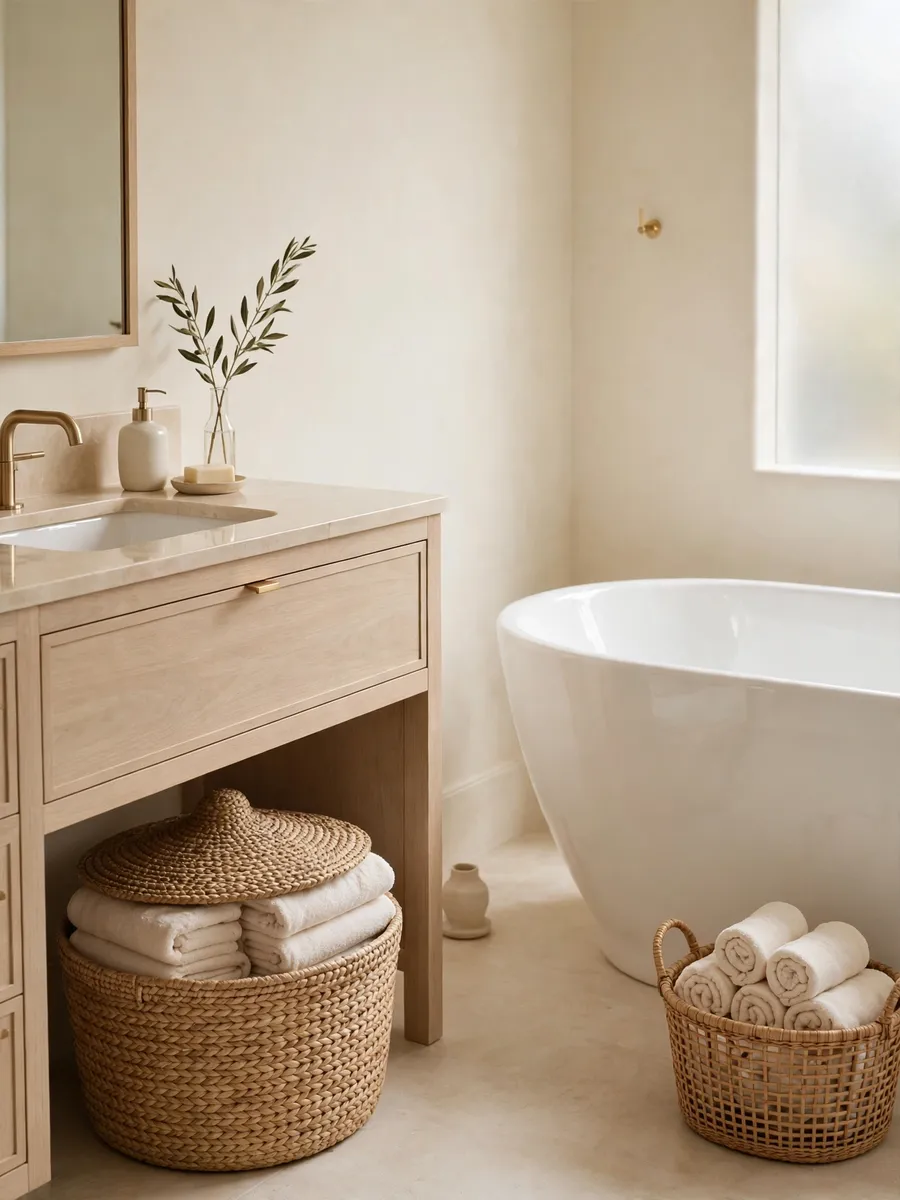
A concrete example: a lidded seagrass basket under a pale oak vanity holding spare towels, with a smaller rattan basket beside the tub for rolled washcloths, keeps the room tidy and warm.
Quick tips
- Use lidded baskets for supplies you want hidden, open ones for towels.
- Keep basket materials consistent — all seagrass, or all rattan.
21. How Do Handmade Ceramics Add Soul to the Vanity?
Handmade ceramics add soul because their slight unevenness and matte glaze embody wabi-sabi — the Japanese appreciation of imperfection — and no two pieces are alike.
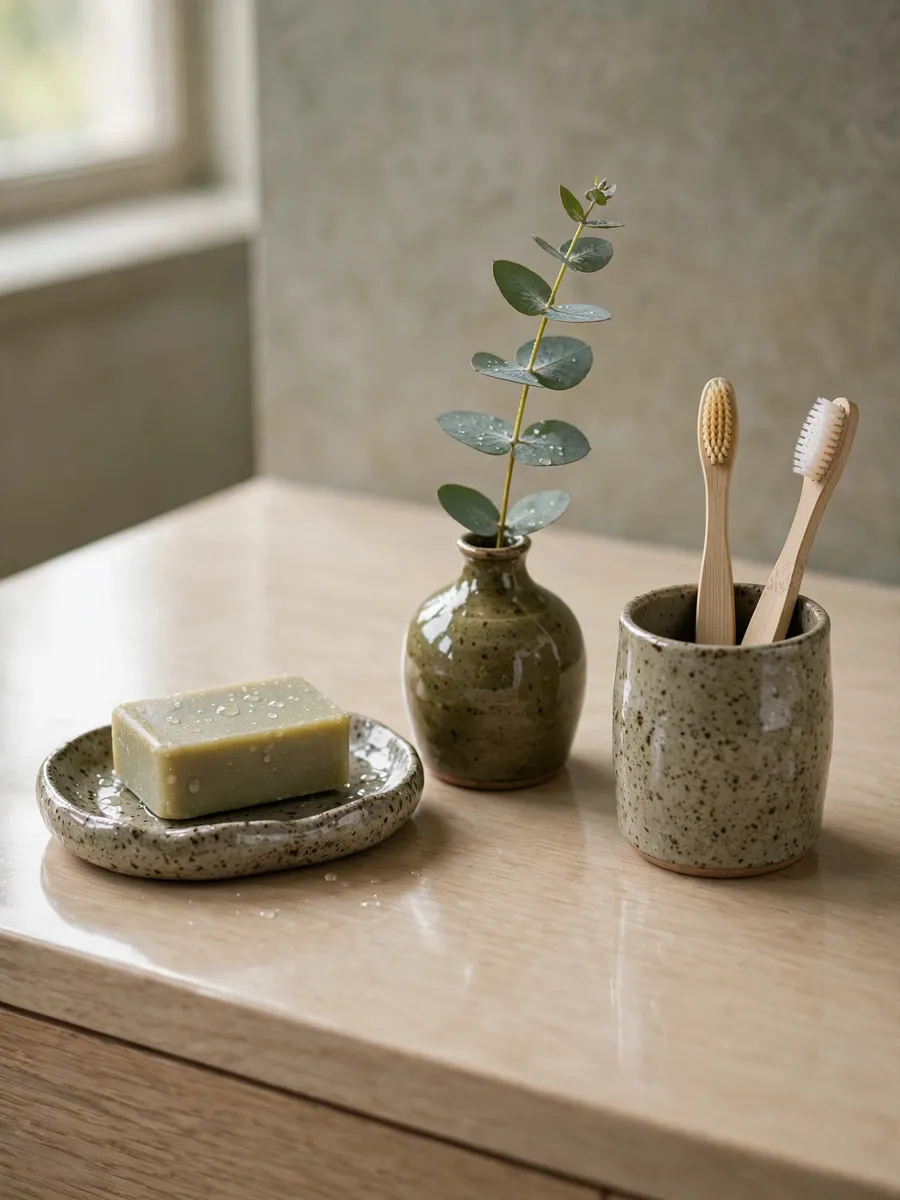
A concrete example: a speckled stoneware soap dish, a small olive-glazed bud vase with one eucalyptus stem, and a handmade toothbrush cup turn a plain vanity into a crafted display.
Quick tips
- Choose matte glazes in muted olive, sand, or charcoal.
- Limit ceramics to three pieces so the vanity stays calm.
22. Why Add a Wooden Towel Ladder to a Japandi Bathroom?
A wooden towel ladder adds storage without a cabinet, because it leans against the wall, holds folded towels at eye level, and its simple rungs suit the style’s clean lines.
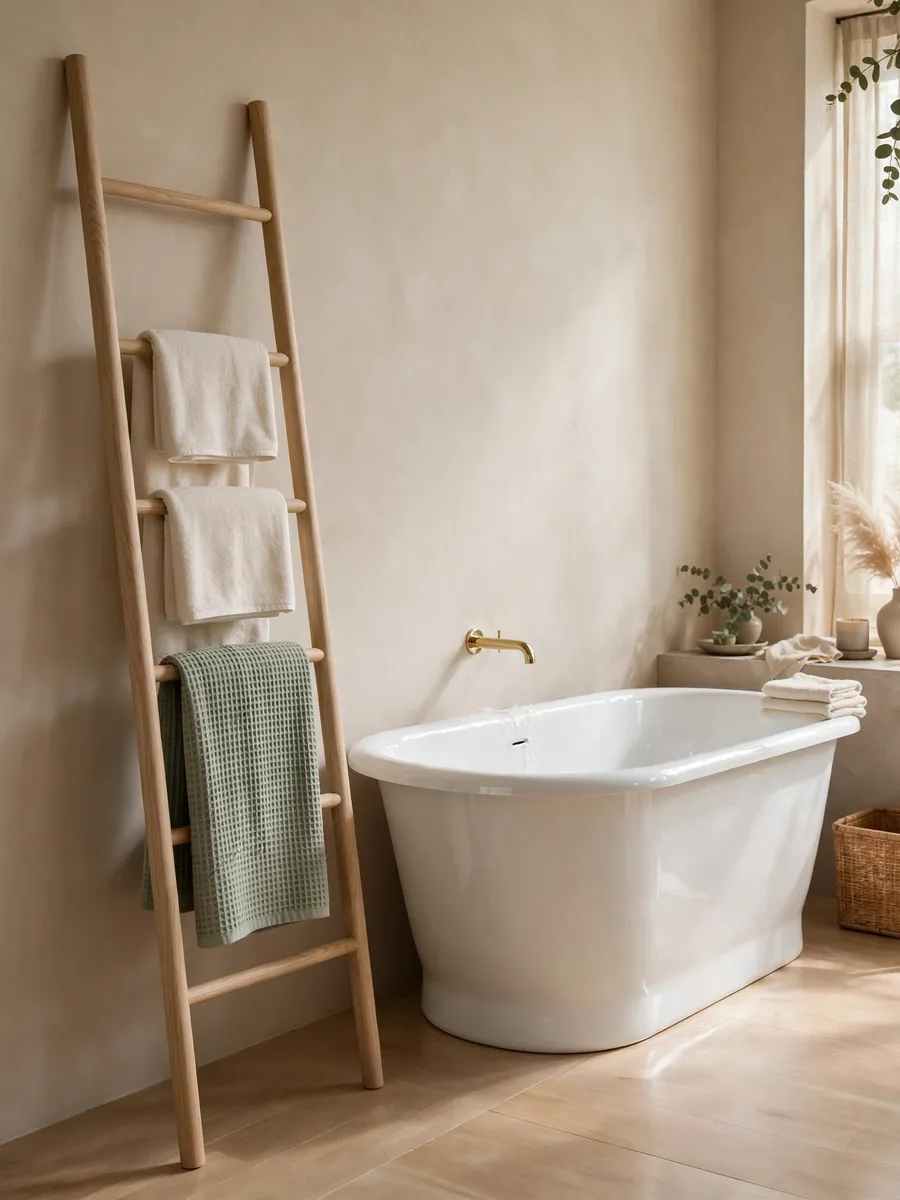
A concrete example: a warm greige wall, a pale oak ladder holding two folded cream towels and one sage waffle towel, beside a freestanding tub, fills an empty corner beautifully.
Quick tips
- Lean the ladder at a slight angle and secure the top to the wall.
- Keep towels folded, not draped, so the ladder looks tidy.
23. What Makes a Walk-In Shower Feel Japandi?
A walk-in shower feels Japandi when it is frameless and stone-lined, because a single glass panel and matte stone walls turn the shower into a quiet, cave-like retreat.
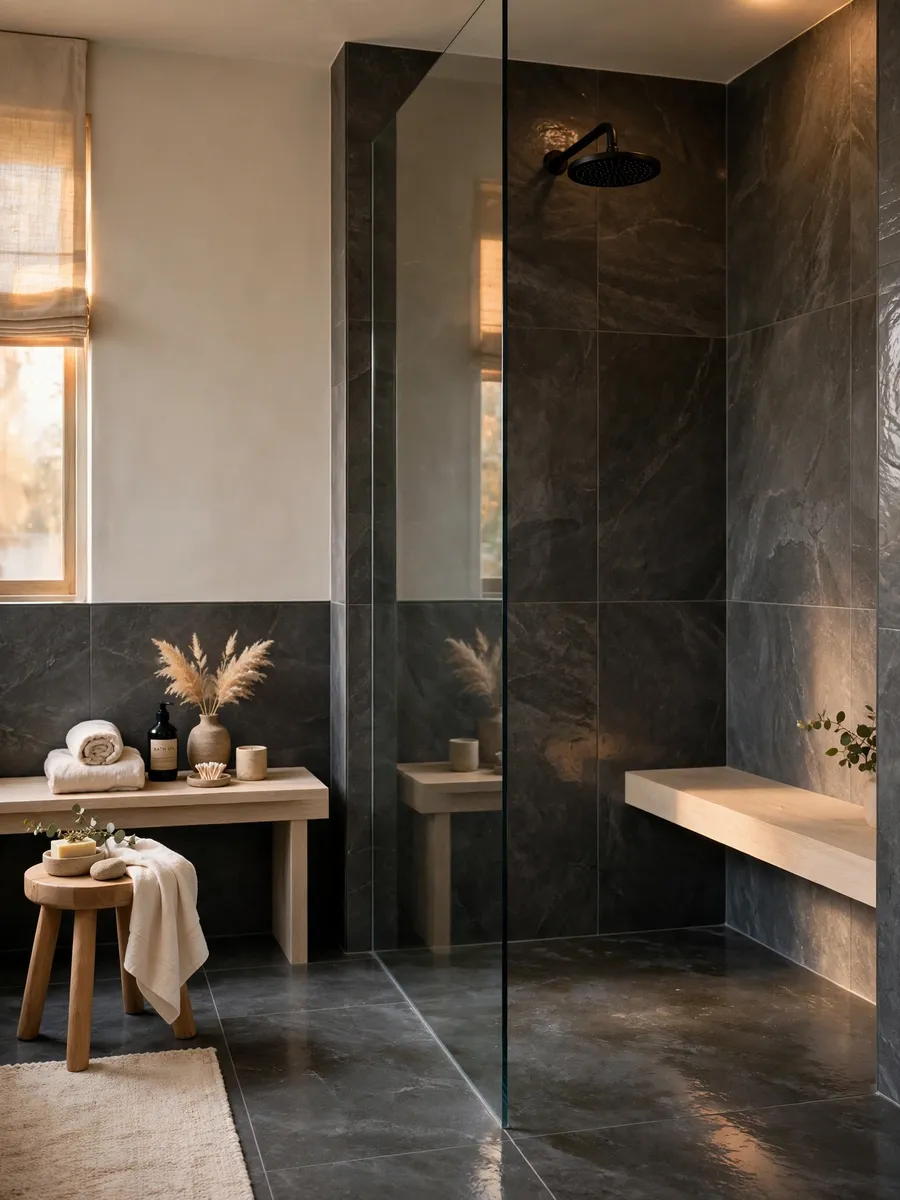
A concrete example: charcoal stone-look tiles, a pale oak bench, a matte black rain showerhead, and one wooden stool make a walk-in shower feel like a private onsen.
Quick tips
- Use one glass panel, not a full enclosure, to keep it open.
- Add a wooden bench or stool for the spa feeling.
24. Should You Choose a Wall-Hung Toilet for a Japandi Bathroom?
A wall-hung toilet suits a Japandi bathroom because the tank hides inside the wall, leaving only a clean bowl floating above the floor and nothing to break the room’s quiet lines.
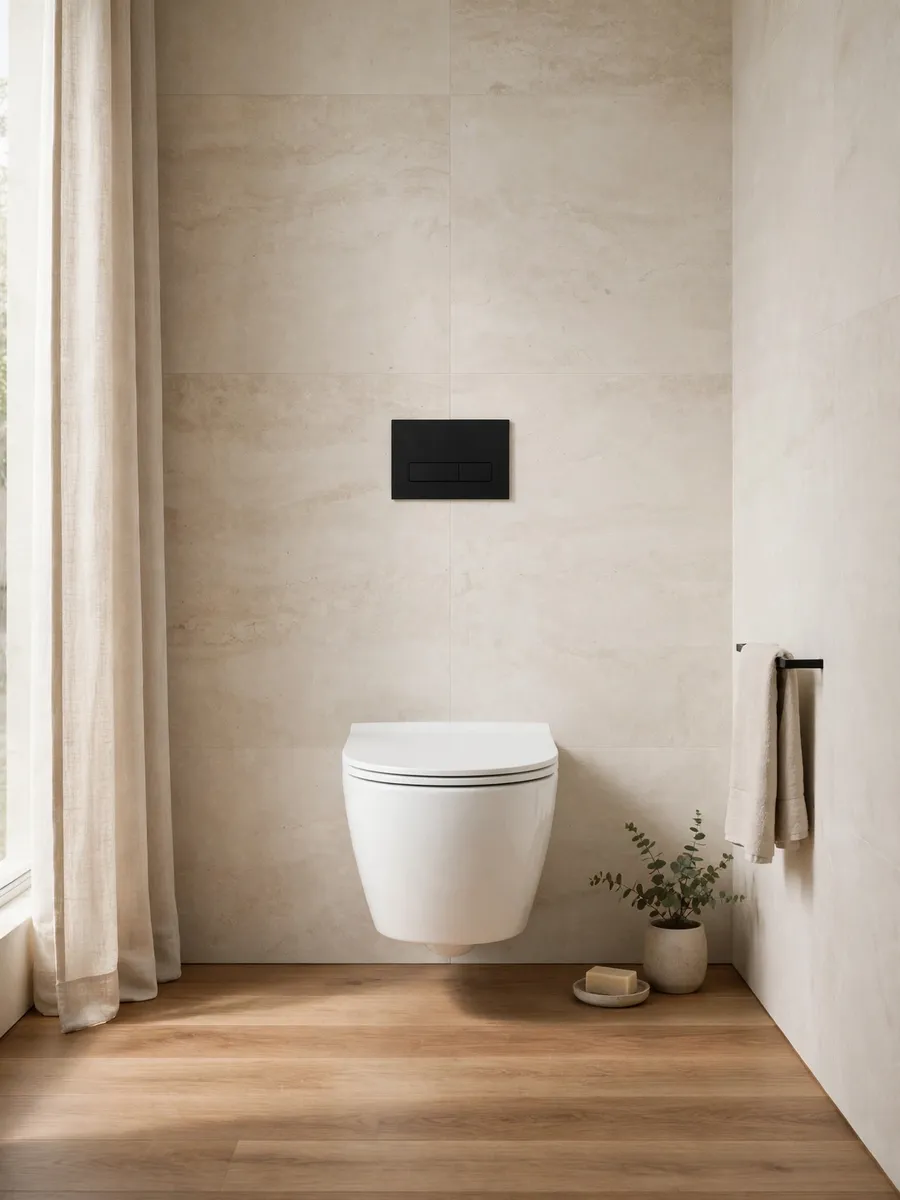
A concrete example: a wall-hung white toilet with a matte black flush plate against pale limestone walls, above a warm wood-look floor, makes even a small bathroom feel serene.
Quick tips
- Match the flush plate to your faucet finish for cohesion.
- Keep the wall behind the toilet completely clear.
25. How Does Natural Stone Flooring Ground the Room?
Natural stone flooring grounds the room because its weight, veining, and cool touch underfoot anchor all the light wood and linen above it.
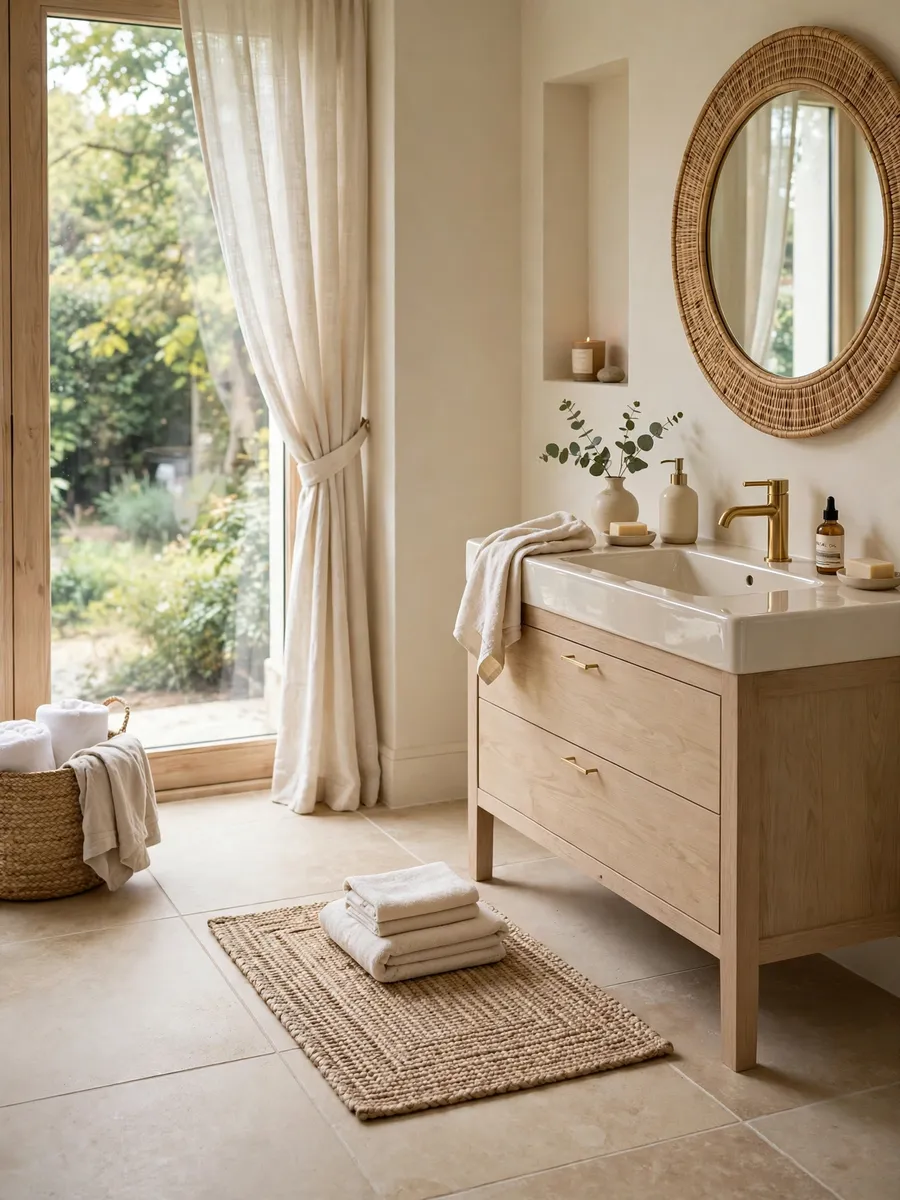
A concrete example: large warm-beige limestone tiles with a pale oak vanity, cream walls, and a woven bath mat make a bathroom feel calm and solid from the ground up.
Quick tips
- Use large-format tiles so grout lines stay few and quiet.
- Choose honed stone — polished stone is too slippery when wet.
26. How Do Scent and Candles Turn Bathing Into a Ritual?
Scent and candles turn bathing into a ritual because soft light and a calm fragrance — cedarwood, eucalyptus, or lavender — signal that this time is for rest, not routine.
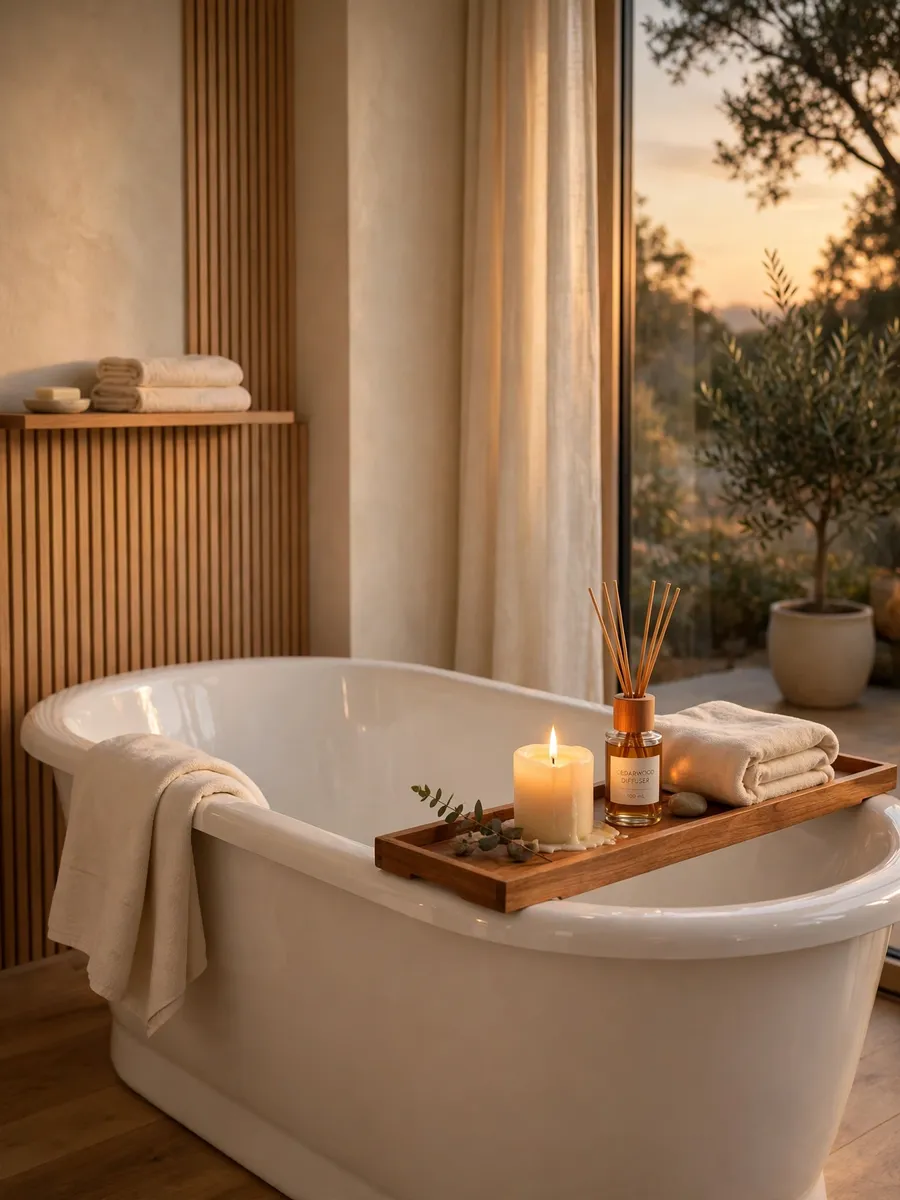
A concrete example: a cream pillar candle and a small cedarwood diffuser on a wooden tray beside the tub, lit as the bath fills, make an ordinary Tuesday evening feel like a spa appointment.
Quick tips
- Use flameless candles if children or pets share the bathroom.
- Keep candles away from towels and the shower curtain.
27. What Makes a Wooden Bath Tray the Perfect Finishing Touch?
A wooden bath tray is the perfect finishing touch because it spans the tub and holds a book, a candle, and a cup of tea — everything a slow soak needs, within reach.
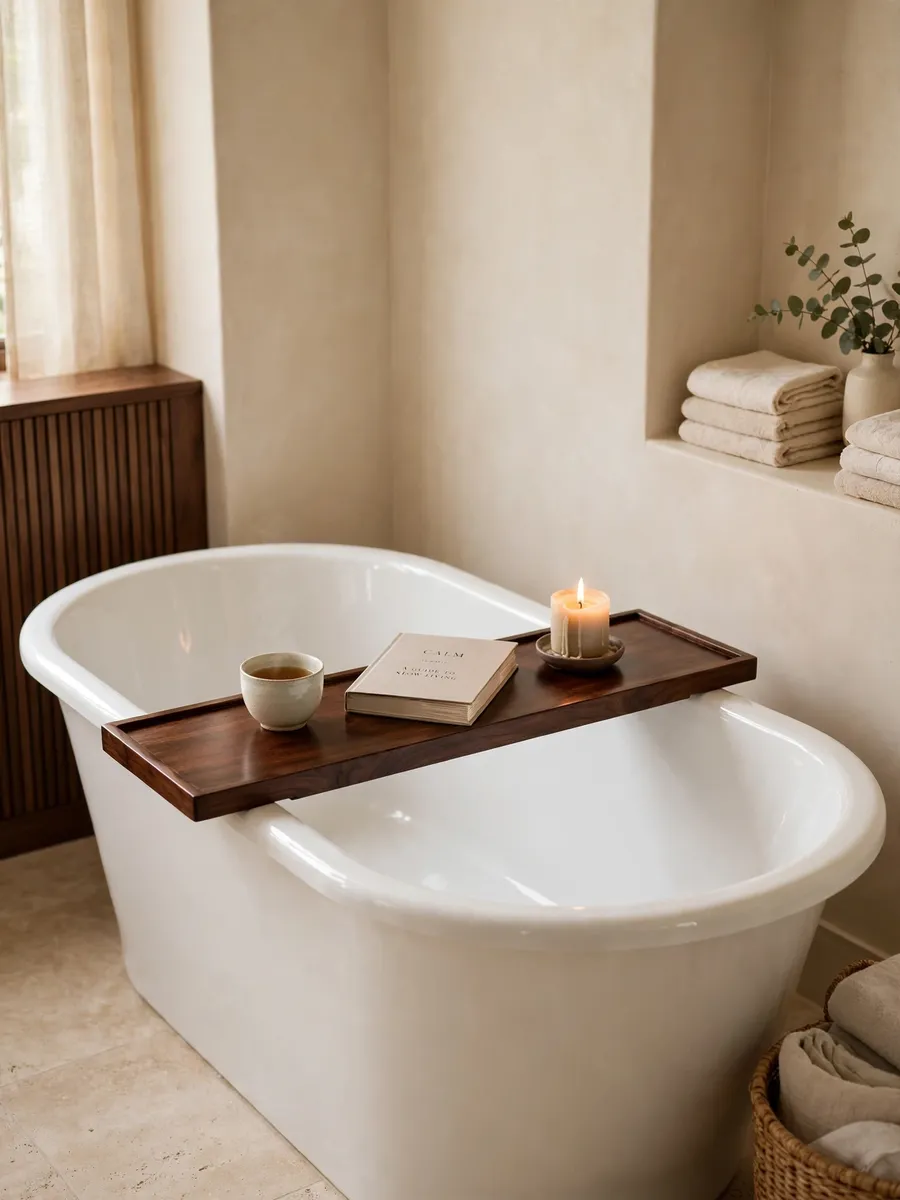
A concrete example: a dark walnut tray across a white freestanding tub, holding a small ceramic teacup, a paperback, and a lit candle, turns bath time into the best hour of the day.
Quick tips
- Measure the tub width first so the tray sits securely.
- Choose a tray with a book rest and a cup holder.
28. How Do You Keep Japandi Bathroom Counters Clear Every Day?
Keep counters clear by giving everything a home behind a drawer front, because a Japandi bathroom only works when the surfaces stay empty and the room’s calm survives daily use.
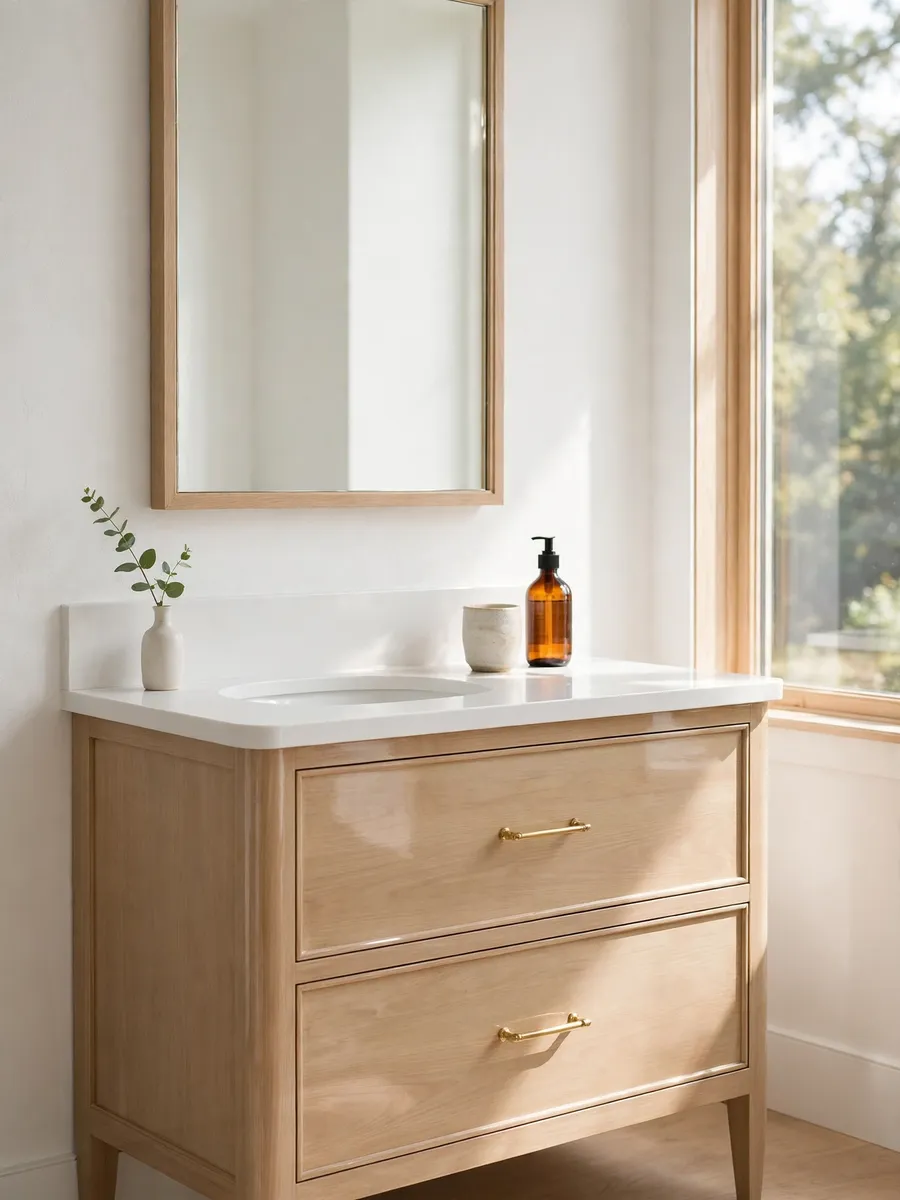
A concrete example: a pale oak vanity with deep drawers, a small tray holding only a soap bottle and a ceramic cup, and a five-minute nightly reset keep the counter clear for good.
Quick tips
- Keep only three objects on the counter — soap, one vase, one tray.
- Reset the counter every night so calm greets you each morning.
Japandi Bathroom Ideas: Frequently Asked Questions
What is a Japandi bathroom?
A Japandi bathroom blends Japanese minimalism with Scandinavian warmth. It uses warm neutrals, natural wood and stone, clean lines, matte finishes, and uncluttered surfaces to create a calm, spa-like room where daily routines feel like quiet rituals.
What colors work in a Japandi bathroom?
Warm neutrals carry the room: warm white, cream, greige, sand, and soft sage, with pale oak wood and small charcoal or matte black accents. Stick to one family of undertones so the simple palette stays cohesive.
Can you use wood in a bathroom?
Yes, as long as it is sealed and the bathroom has working ventilation. Use teak, sealed white oak, or cedar for vanities, bath mats, stools, and shelves, and keep raw or unsealed wood away from direct water.
What tile is best for a Japandi bathroom?
Matte stone-look or porcelain tile in warm grey, cream, or sand works best, often paired with wood-look tile on the floor. Matte finishes soften reflections and hide water spots better than gloss.
Do you need a soaking tub for a Japandi bathroom?
No. A deep soaking tub is the classic Japandi centerpiece, but the style works without one — a walk-in shower with stone tile, a wooden stool, and warm light delivers the same calm feeling in a smaller room.
Does Japandi work in a small bathroom?
Yes. Japandi is ideal for small bathrooms because its decluttered, minimal approach makes a compact space feel open and serene. Use a light neutral palette, a wall-mounted vanity, vertical storage, and one or two natural accents.
Conclusion
A Japandi bathroom is not about buying everything at once. Pick the palette, choose one natural material to lead — pale oak, warm stone, or handmade ceramic — fix the light, and let the small things, a wooden bath mat, a linen curtain, a single green stem, do the rest. These 28 japandi bathroom ideas work in any order and at any budget, so start with the one that bothers you most and let the calm spread from there. When the room feels quiet, uncluttered, and warm underfoot, you will know the style has landed — and every morning routine will feel a little more like a spa visit.